




Pierre Marechal
Rouen became an important centre for card-making whose influence extended far afield. Cards from Rouen are significant because they became the model from which our English pack subsequently evolved.
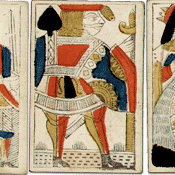
Pierre Marechal, Rouen, c.1567
After the development of the printing industry at the end of the 15th century, Rouen became an important centre for card-making whose influence extended far afield. The cards of Rouen are significant because many were produced for export to Britain and they became the model from which our English pack subsequently evolved.
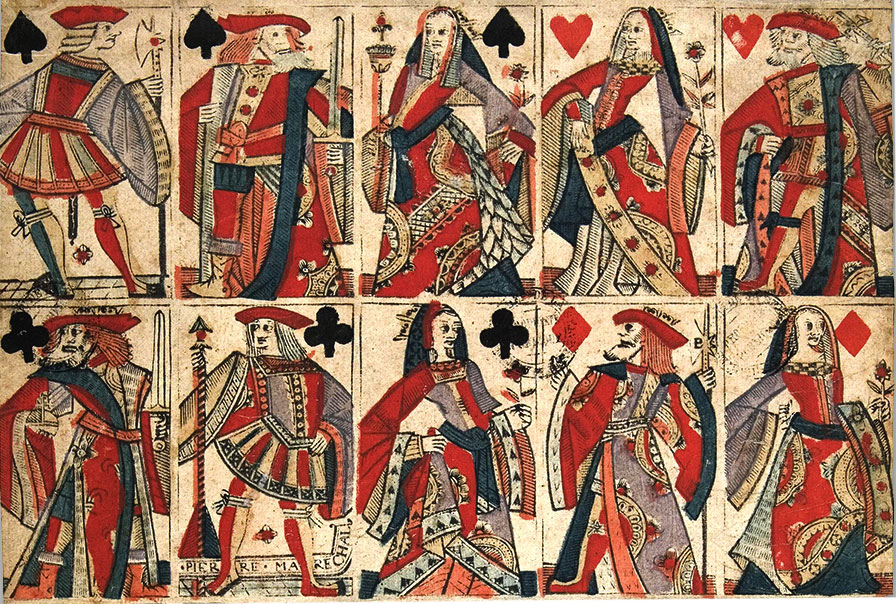
Above: two cards by Pierre Marechal, Rouen c.1567 (click image to zoom).
An archaic pack of cards made by Pierre Marechal c.1567 preserved in the archives at Rouen represents the model from which our English pack subsequently evolved. When England banned the importation of cards in 1628, English printers used Rouen court cards as inspiration for their own packs. The style of the costumes on English playing cards is late medieval, being descended from the Rouen models.
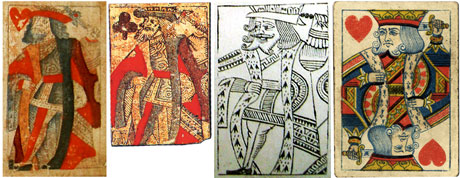
Above: four cards showing how modern anglo-american playing cards evolved from late fifteenth century French cards. The so-called 'Suicide King' originally held an axe.
The cards made in Rouen at that time were an eclectic mixture of features from cards made for various foreign markets, hence the origins of what became the "English" pattern are not one precise source, but a mixture of several earlier regional patterns.
Other examples of early Anglo-French cards also show details which appear in English cards. See also: Rick Davidson's Origins Playing Cards►
Facsimile editions
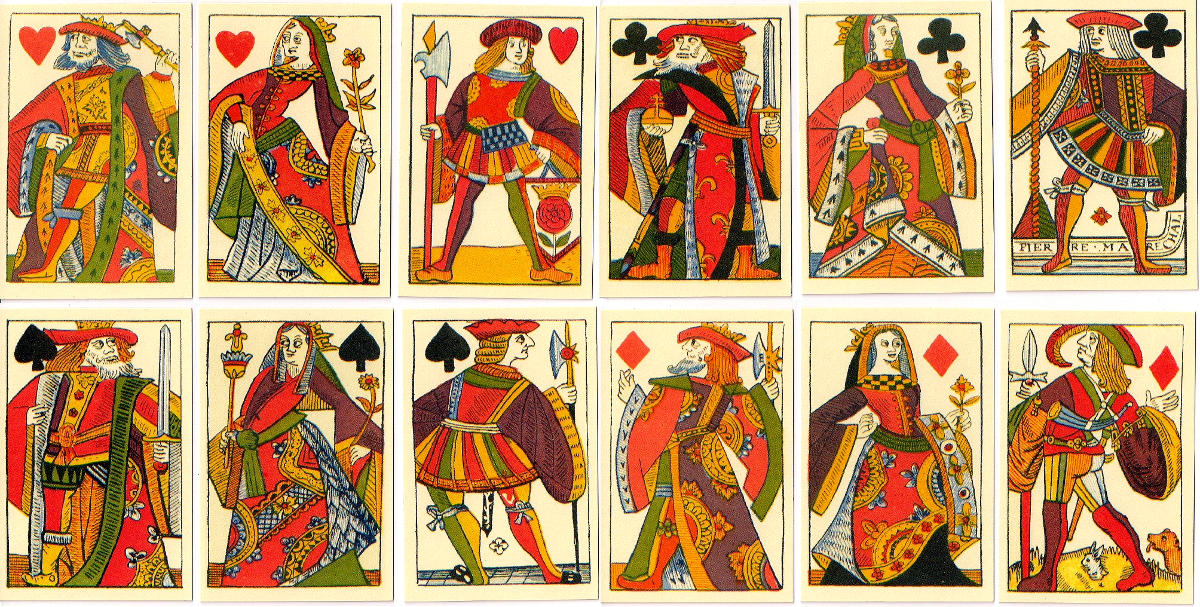
Above: recreation of Pierre Marechal of Rouen, c.1567 pack illustratied by Gurney Benham's in his 19030 book. The original Jacks of Hearts and Diamonds were missing but have been replaced with two similar cards also from Rouen. Published by Rose & Pentagram Design, 2006, read the review here. www.historicgames.com. Images courtesy Rod Starling.

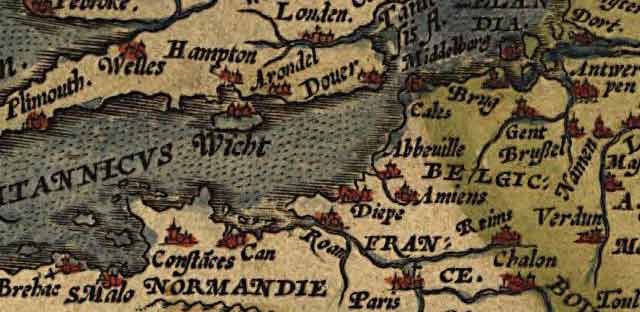
Packs of playing cards reached England from Rouen.
Some early English playing cards can be seen at: www.plainbacks.com→
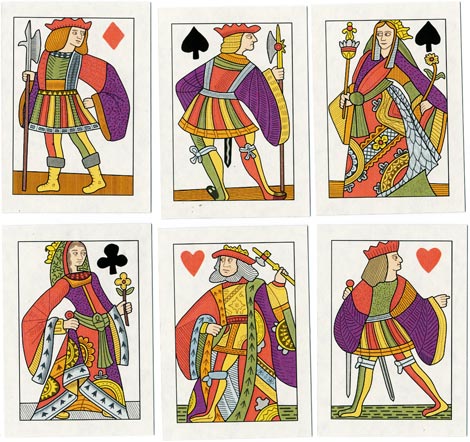
Above: a different facsimile with the Jacks of Hearts and Diamonds taken from different sources.

By Simon Wintle
Spain • Member since February 01, 1996
I am the founder of The World of Playing Cards (est. 1996), a website dedicated to the history, artistry and cultural significance of playing cards and tarot. Over the years I have researched various areas of the subject, acquired and traded collections and contributed as a committee member of the IPCS and graphics editor of The Playing-Card journal. Having lived in Chile, England, Wales, and now Spain, these experiences have shaped my work and passion for playing cards. Amongst my achievements is producing a limited-edition replica of a 17th-century English pack using woodblocks and stencils—a labour of love. Today, the World of Playing Cards is a global collaborative project, with my son Adam serving as the technical driving force behind its development. His innovative efforts have helped shape the site into the thriving hub it is today. You are warmly invited to become a contributor and share your enthusiasm.

Activity for Pierre Marechal
Sign in to comment or save this article.
Related Articles
Rouen Pattern - Portrait Rouennais
An attractive XV century French-suited design from Rouen became the standard English & Anglo-America...
The Parisian Tarot
The “Parisian Tarot”, early 1600s, with imagery and design synthesizing several influences.
Languedoc pattern - Portrait de Languedoc
The old Languedoc pattern was known at the beginning of the seventeenth century, if not before.
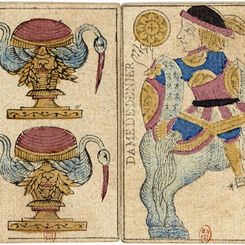
Pierre Roiné Aluette
Archaic form of Aluette published by Pierre Roiné, Nantes, c.1785.
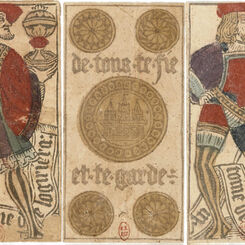
Antoine de Logiriera
Archaic Spanish-suited playing cards published in Toulouse by Antoine de Logiriera (1495-1518).
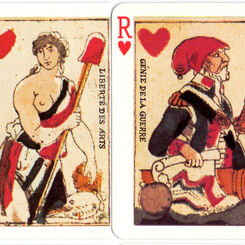
Jeu de l’an 2
“Jeu de l’an 2” by Grimaud is a facsimile of French Revolutionary cards first published by Veuve Mou...
Flemish Hunting Deck
Set of medieval playing cards with King, Queen, Knave and numeral cards from one to ten in each of f...
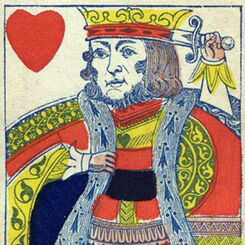
Suicide King
The King of Hearts, holding a sword behind his head, is sometimes nicknamed the “Suicide King”. He c...
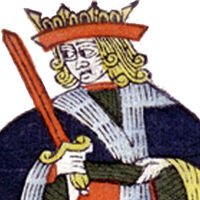
Benoist Laius
Spanish playing cards such as these were used in those parts of France where certain games were enjo...
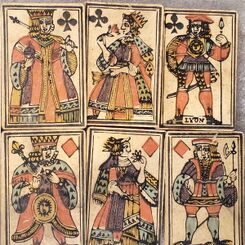
Lyon Pattern type iii
This pattern was used in various parts of eastern France but was ultimately replaced by the official...
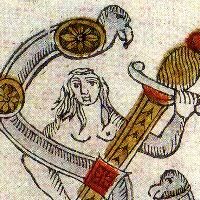
Joan Barbot
Joan Barbot, San Sebastian c.1765-1810.
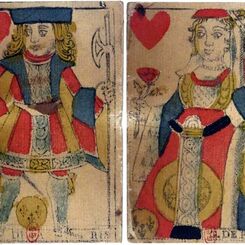
Paris Pattern
The Paris pattern was established as such around the middle of the seventeenth century (based, perha...
Early Anglo-French Cards
Cards produced in Rouen during the sixteenth century. It was cards like these which were imported to...
Cries of London
The cards were printed from copper plates, with the red suit symbols being applied later by stencil....
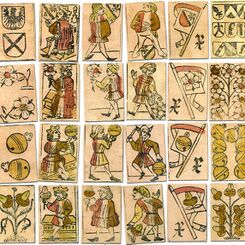
Antique Swiss Playing Cards, c.1530
The Swiss national suit system of shields, acorns, hawkbells and flowers originated sometime during ...
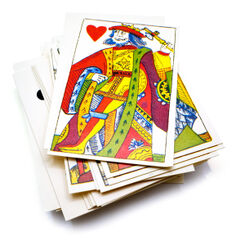
16th Century French Playing Cards based on Illustrations by Gurney Benham
This pack of cards by Rose & Pentagram is said to be based off Pierre Marechal, Rouen pack from the ...
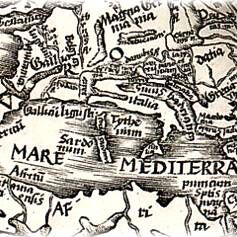
The History of Playing Cards
Playing cards appear in European records in the late 14th century, but their earlier history lies fu...
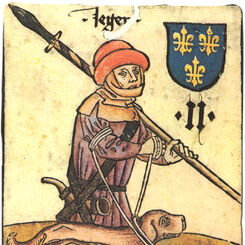
Hofamterspiel, c.1460
Hofamterspiel, c.1460
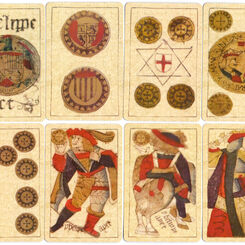
Phelippe Ayet, 1574
49 assorted cards were found hidden in the lintel of a doorway, in an old building in Toledo, during...
History of Court Cards
The court cards in English packs of playing cards derive from models produced by Pierre Marechal in ...
Most Popular
Our top articles from the past 60 days


Stephen Scharber
07 April 2026, 17:11SavedSaved this article to Stephen Scharber's Collection