



Guatemala
Playing Cards in Guatemala
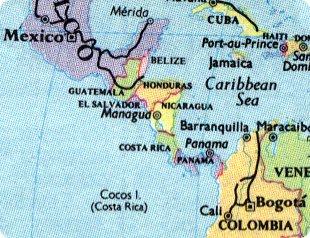
After the Spanish arrival in the Americas, expeditions were sent to Guatemala from 1519 onwards. Contact was soon followed by epidemic disease, which devastated indigenous populations. During the colonial period Guatemala formed part of the Viceroyalty of New Spain and was administered as the Captaincy General of Guatemala (Capitanía General de Guatemala), with the status of an Audiencia. Although the region did not yield the mineral wealth of Mexico or Peru, it became economically significant for agricultural and dyestuff production, including sugarcane, cacao, indigo (añil), cochineal red, and fine woods exported for ecclesiastical and courtly use in Spain.
Playing cards (barajas) were most likely introduced into Guatemala in the early decades of Spanish colonisation, carried by settlers and soldiers for whom card play was a familiar pastime. As elsewhere in the Spanish Americas, cards were used in taverns, military quarters and other informal gathering places, often in connection with gambling and social drinking. Their arrival coincided with a period of profound cultural disruption: Maya elites — including intellectuals, priests, astronomers and record-keepers — were systematically persecuted, and many indigenous texts were destroyed as works deemed contrary to Christian doctrine. Within this context of conquest and suppression, the Spanish pack of cards formed part of the everyday material culture of the colonisers, embedding European recreational practices within a transformed social landscape.
In 1583 Alonso Martínez de Orteguilla was authorised to administer the manufacture and sale of playing cards in territories of New Spain, a jurisdiction that extended to Mexico, Guatemala, Nicaragua and Honduras. Packs were imported from Spain and France, and were also produced in Mexico under licence.

Right: Spanish cards exported to new Spanish colonies, c.1550 onwards.
In recent years packs have been published in Guatemala by El Cuervo y Cia, Promotora Continental and ‘Juegos El Borrego’.
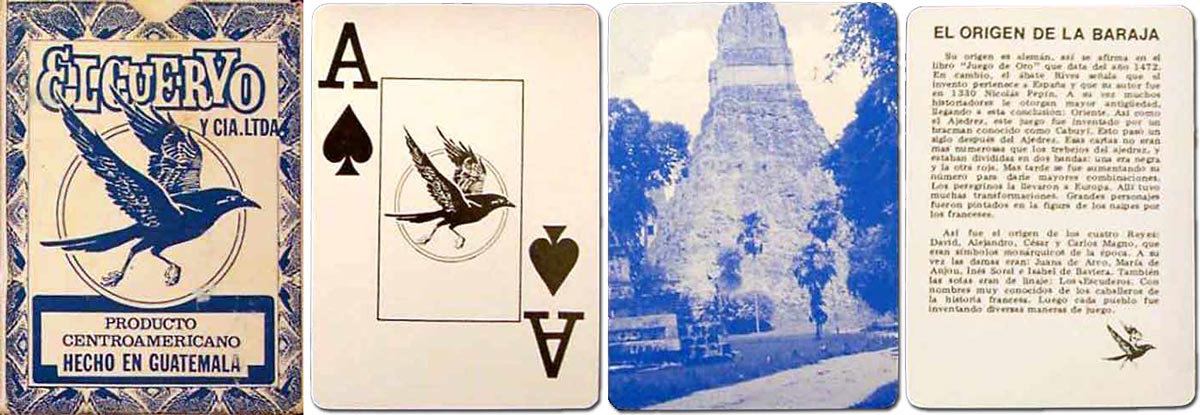
Above: box, Ace of Spades, back and extra card from French-suited pack manufactured by El Cuervo y Cia., Ltda, Guatemala, c.1970s. The extra card has a short text speculating about “the origin of the deck of playing cards”, which is stated as being either of German or Spanish origin, or possibly even as old as the game of chess, and also the origins of the four Kings, Queens, etc.
The Mayans lived in Guatemala, Honduras, Belize, the southern part of Mexico and northern parts of El Salvador until European settlers arrived.
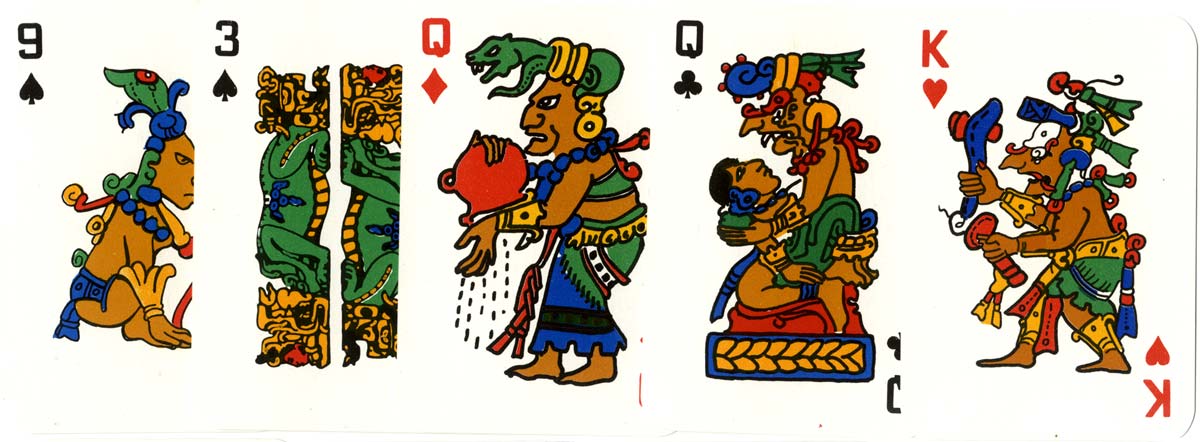
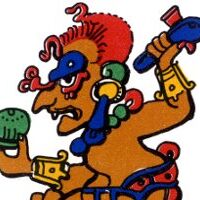
Above: Mayan Playing Cards - Baraja Maya - from Guatemala. 52 cards + 2 Jokers in box with explanatory leaflet in Spanish and English. See more →

By Simon Wintle
Spain • Member since February 01, 1996
I am the founder of The World of Playing Cards (est. 1996), a website dedicated to the history, artistry and cultural significance of playing cards and tarot. Over the years I have researched various areas of the subject, acquired and traded collections and contributed as a committee member of the IPCS and graphics editor of The Playing-Card journal. Having lived in Chile, England, Wales, and now Spain, these experiences have shaped my work and passion for playing cards. Amongst my achievements is producing a limited-edition replica of a 17th-century English pack using woodblocks and stencils—a labour of love. Today, the World of Playing Cards is a global collaborative project, with my son Adam serving as the technical driving force behind its development. His innovative efforts have helped shape the site into the thriving hub it is today. You are warmly invited to become a contributor and share your enthusiasm.

Activity for Guatemala
Sign in to comment or save this article.

Related Articles
Aónikenk playing cards
Ethnographic playing cards made by members of the Aónikenk culture from Patagonia.
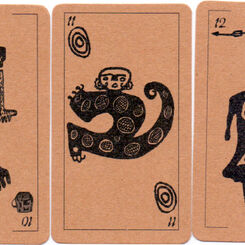
Cartas Precolombinas
Spanish playing cards with Pre-Columbian designs from Argentina, 2001.
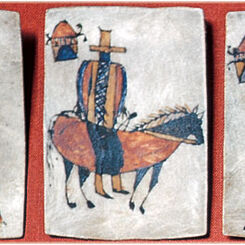
Apache cards by Tonto Naipero
Apache rawhide playing cards by ‘Tonto Naipero’, c.1871.
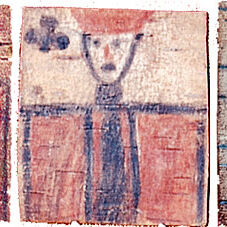
Ojibwa Native Indian Cards
Ojibwa Native Indian playing cards hand manufactured on birch bark in imitation of standard French /...
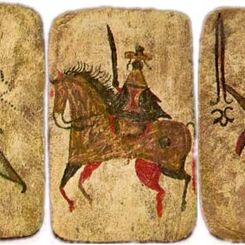
Apache Playing Cards
Apache Indian Playing Cards made on rawhide, first recorded 1875.
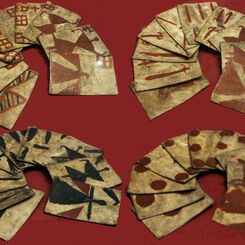
Mapuche Indian Playing Cards
Spanish-suited playing cards made on rawhide and said to have been used by Chilean Mapuche Indians, ...
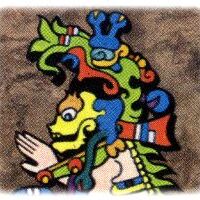
Maya Playing Cards
The designs of Mayan artists shown here give a general idea of their enormous artistic and cultural ...
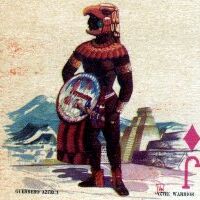
Aeronaves de Mexico
Special pack for Aeronaves de Mexico S.A., designed by Ramón Valdiosera Berman, mid-1960s.
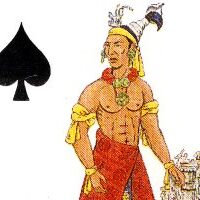
Mexican Poker
Mexican Poker cards made by Juegos y Fichas, S.A. de C.V., Mexico, 1991
Naipes Nacionales
Naipes Nacionales designed by Manuel Bayardi and published by Clemente Jacques y Cia, Mexico c.1940....
Mayan Cards
Mayan Playing Cards from Guatemala / Baraja Maya / containing illustrations of archaeology, art, fol...

Inka Culture
Inka Culture playing cards, Peru, c.2000, promoting alpaca and cotton.

Calendario Inka
“Calendario Inka” playing cards published by Power Casinos, Lima, Peru, c.2004.
Francisco Flores
Playing cards in this style have been discovered in various parts of the world, suggesting that they...
16th century cards discovered in Peru
Fragments of playing cards and 2 dice were unearthed in a 16th century rubbish tip adjacent to a Spa...

Inka-Dynasty
'Inka-Dynasty' playing cards are based on historic 16th century designs by the Peruvian chronicler F...
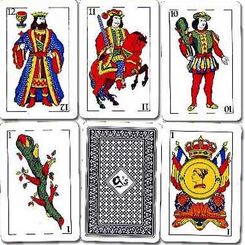
Playing Cards in Honduras
Honduras shares a long tradition with Spain in the field of playing cards.
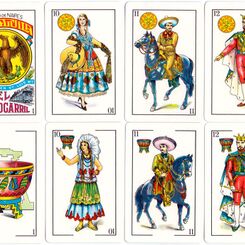
Playing Cards in Mexico
MEXICO shares a long tradition with Spain in the field of playing cards and also merges two complete...
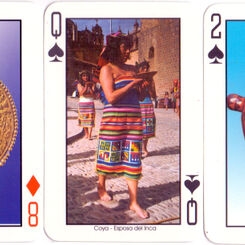
Cusco Inca Souvenir
Pre-Incas & Incas Souvenir Playing Cards, Cusco, Peru, 2000.
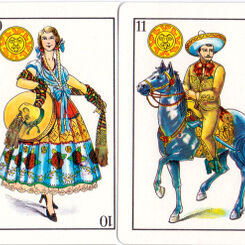
El Ferrocarril
Naipe El Ferrocarril made by La Cubana, S.A. (Fabrica de Naipes El Aguila), Mexico, c.1960
Most Popular
Our top articles from the past 60 days


