




Piacentine Pattern
Piacentine Pattern, several double-ended versions.
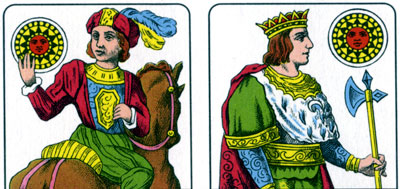
The Italian ‘Piacentine’ pattern has Italo-Spanish suit symbols and slightly narrow, elongated cards. It was made in single-ended format until around the mid-20th century after which time double-ended versions are more usual. When this happens some features of the old cards are lost. The Ace of Coins used to bear the tax stamp, and shows a single-headed, crowned eagle (as opposed to the Neapolitan double-headed eagle). Cards of Spanish design occur in those parts of Italy formerly under Spanish influence (Neapolitan, Piacentine, Romagnole, Sardinian and Sicilian patterns) although the ‘pintas’ or line-breaks in the outer frames have been lost. Early examples of the Piacentine pattern also have features related to French Aluette cards.
Modiano, Trieste
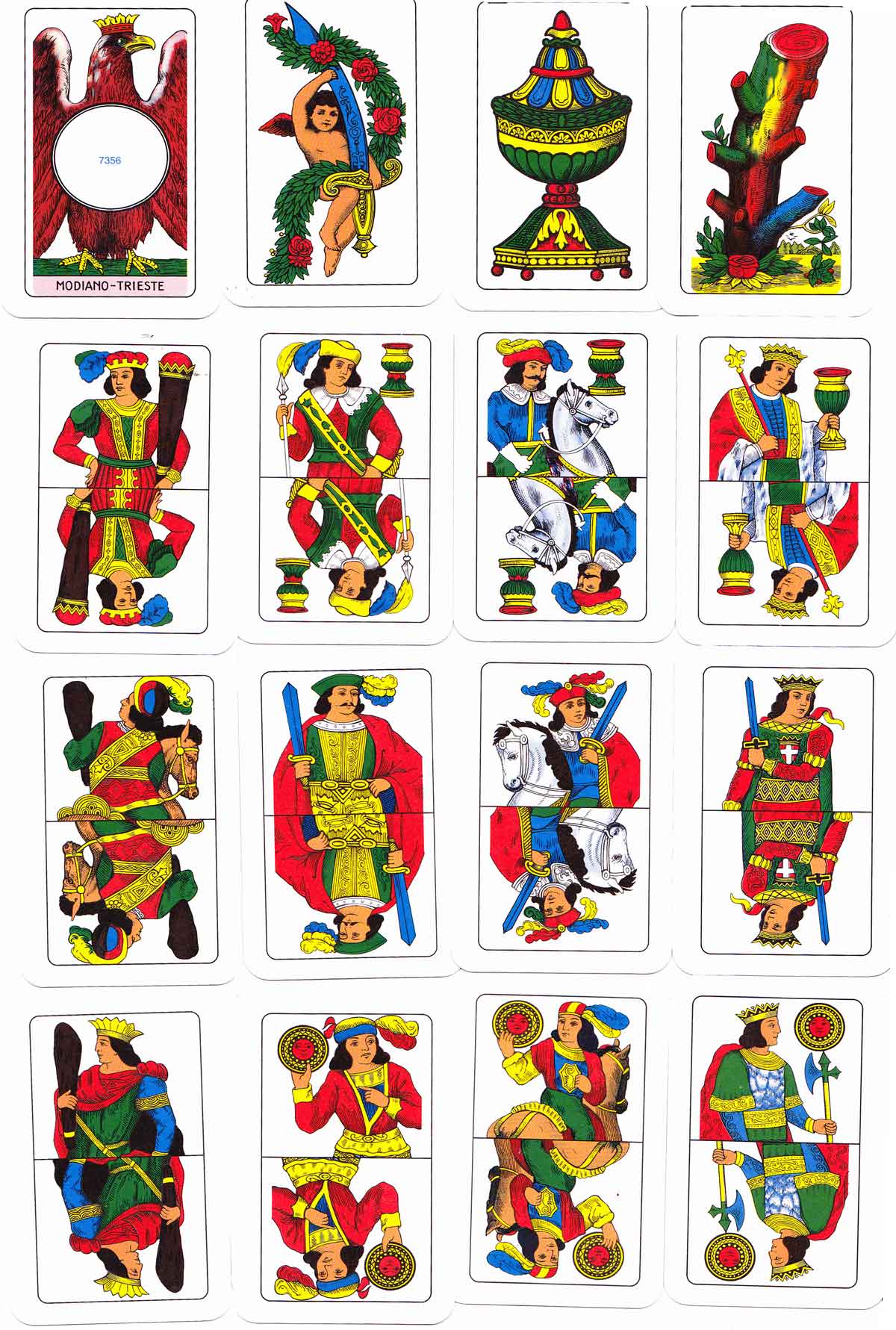
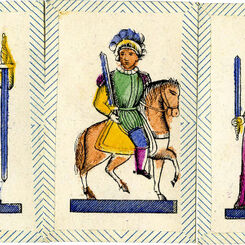
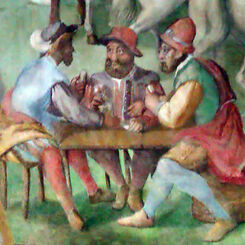
Above: double-ended example of Piacentine pattern made by Modiano, Trieste. The King of Coins holds an axe and the Cavalier of Coins rides a horse with its back facing the viewer, features which were seen in some archaic, late-medieval Spanish-suited patterns see example →. Images kindly supplied by Anthony Lee.
Armanino (Piatnik) c.1977
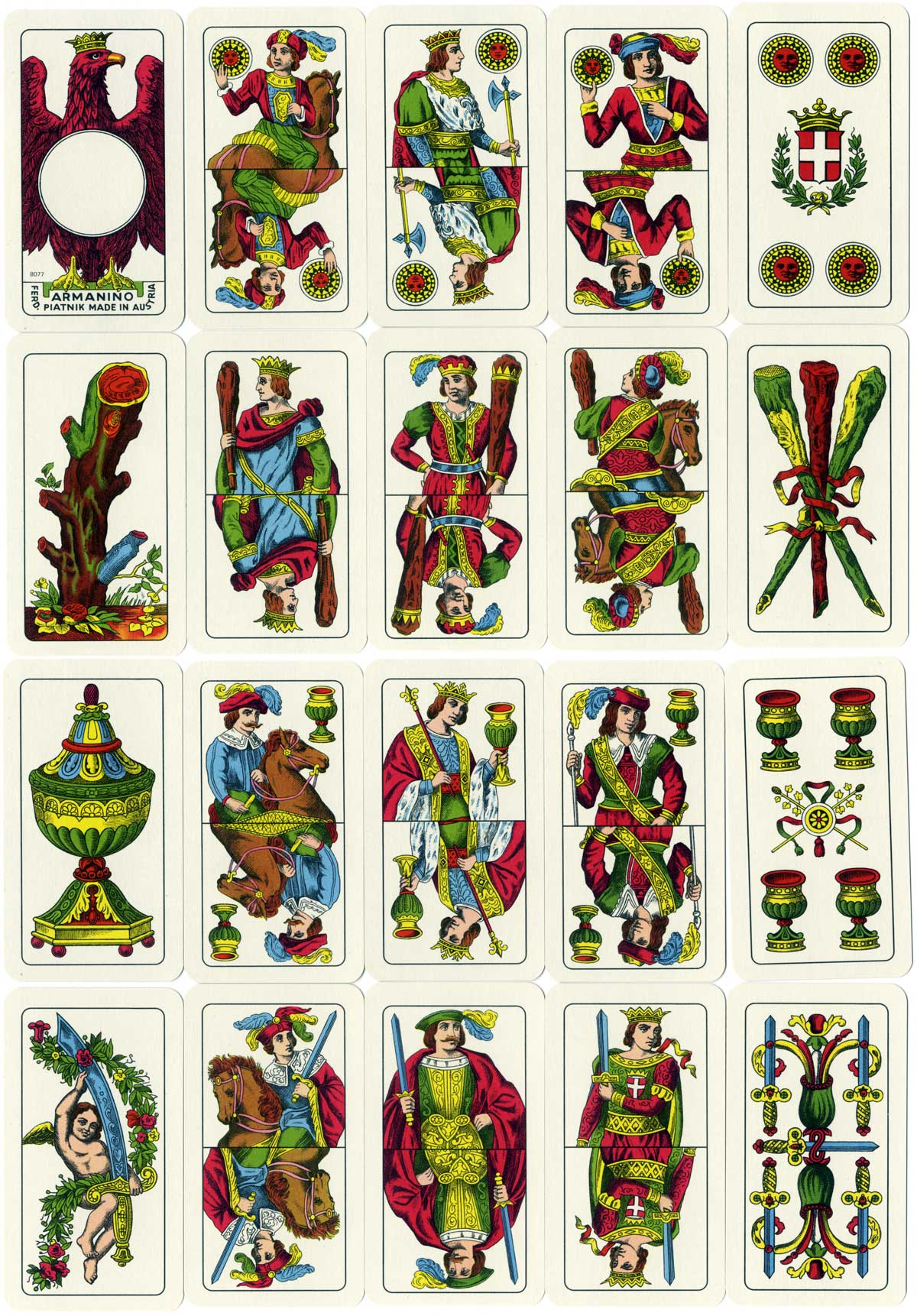
Above: double-ended Piacentine pattern made by Armanino (Piatnik) c.1977
Standard designs printed by Piatnik for Tobako, Milan, Italy, 1980.
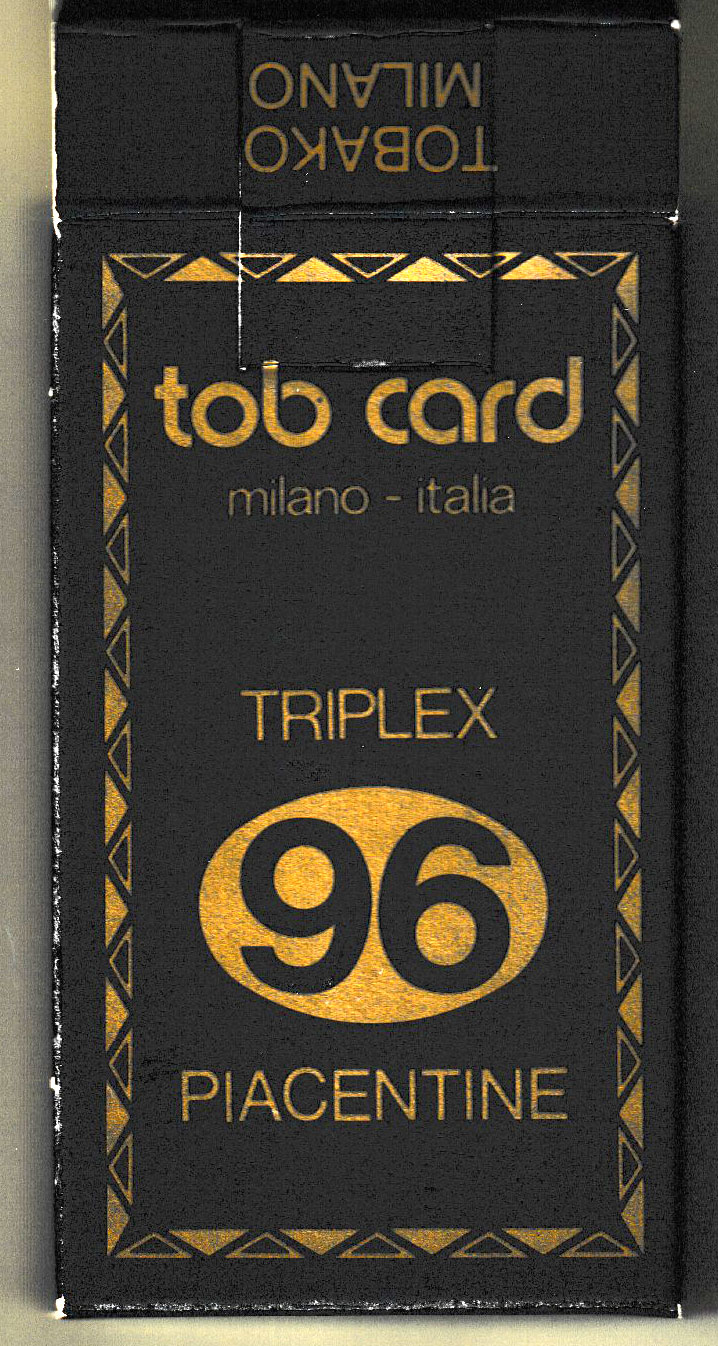
Looking at the tuck box for this pack one has no idea who made the cards inside. However, the 4 of Coins leaves us in no doubt – Piatnik of Austria. Their characteristic date mark helpfully appears at the base of the Ace of Coins. This version of the Piacentine pattern by Piatnik is quite different from the one they made for Armanino (above). The courts are double-ended. See the box►
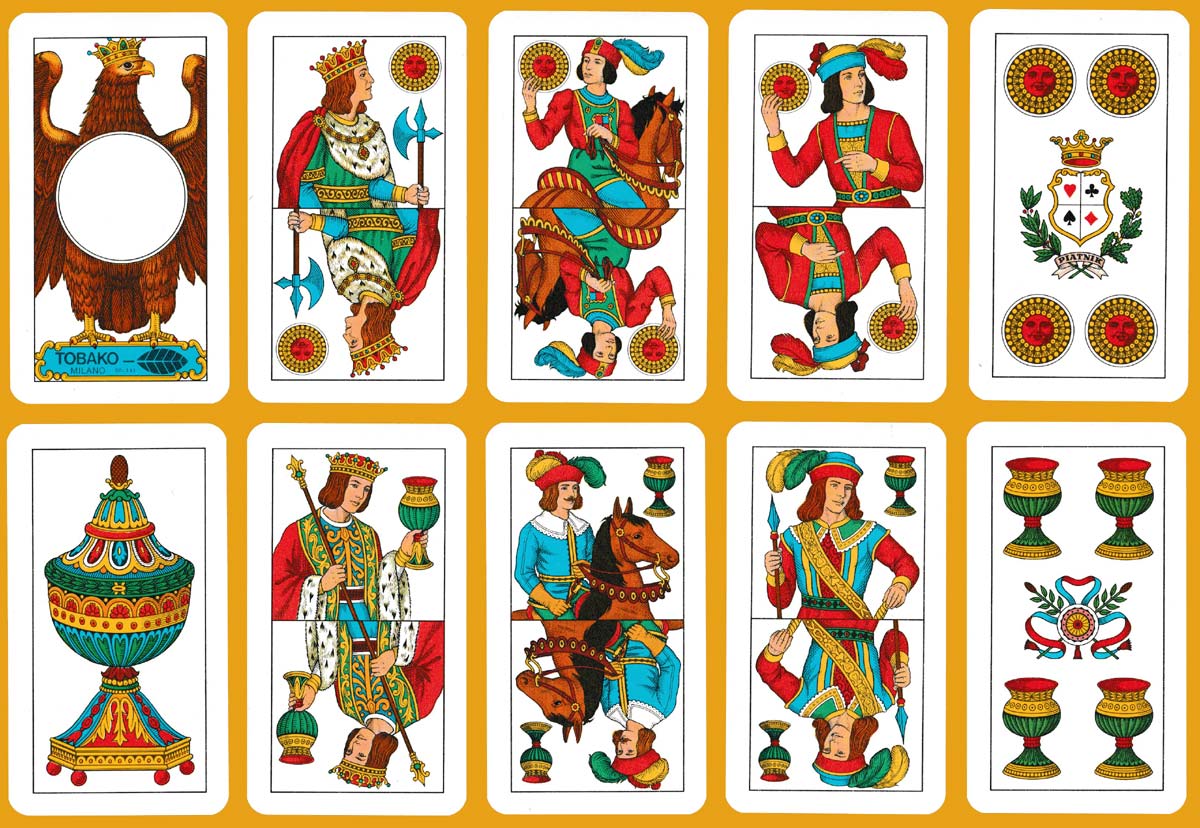
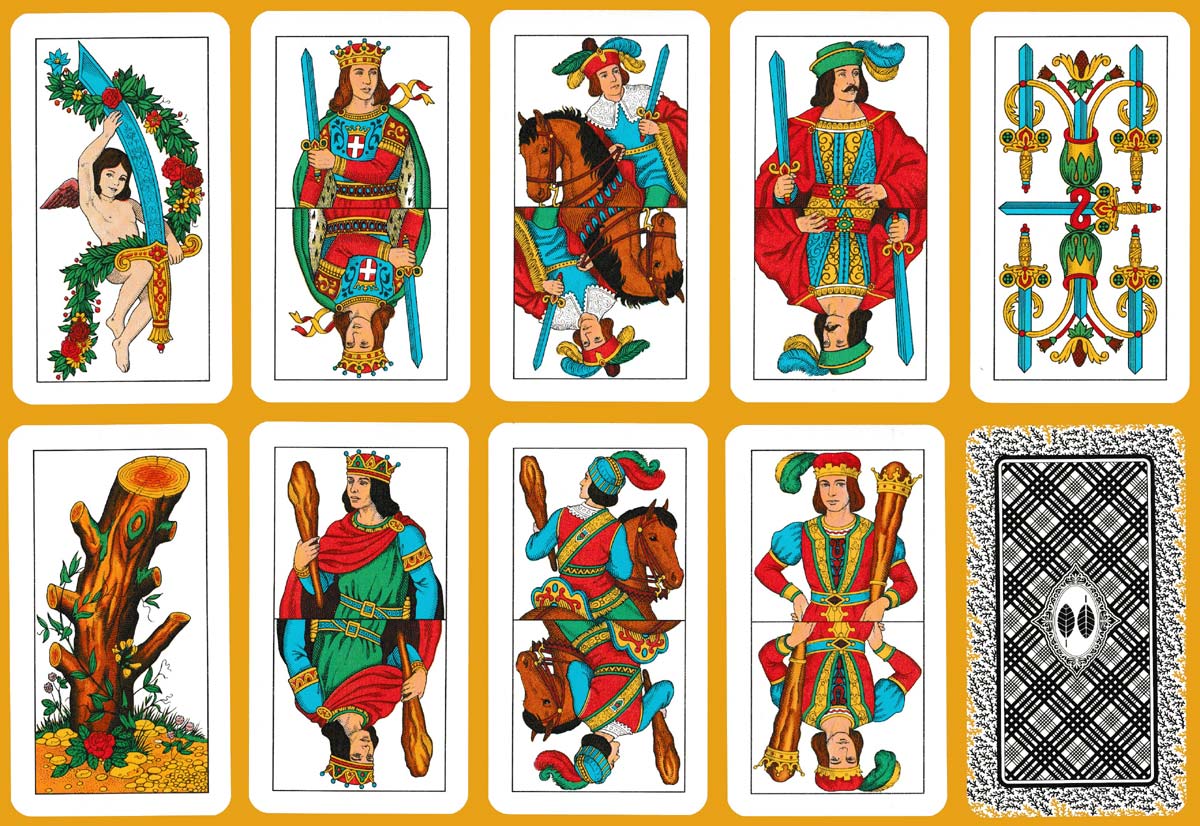
Above: double-ended Piacentine pattern made by Piatnik for Tobako, Milan, c.1980. 40 cards in tuck box. Size: 51 x 91 mm. Images and notes courtesy Roddy Somerville.
NOTE: presumably TOBAKO was a chain of tobacconists in Milan but I can find no information about them.

By Simon Wintle
Spain • Member since February 01, 1996
I am the founder of The World of Playing Cards (est. 1996), a website dedicated to the history, artistry and cultural significance of playing cards and tarot. Over the years I have researched various areas of the subject, acquired and traded collections and contributed as a committee member of the IPCS and graphics editor of The Playing-Card journal. Having lived in Chile, England, Wales, and now Spain, these experiences have shaped my work and passion for playing cards. Amongst my achievements is producing a limited-edition replica of a 17th-century English pack using woodblocks and stencils—a labour of love. Today, the World of Playing Cards is a global collaborative project, with my son Adam serving as the technical driving force behind its development. His innovative efforts have helped shape the site into the thriving hub it is today. You are warmly invited to become a contributor and share your enthusiasm.

Activity for Piacentine Pattern
Sign in to comment or save this article.
Related Articles

Lyon pattern made in Italy by Pietro de Santi
The Lyon pattern was initially developed in France during the 16th century. As Lyon was a trading hu...
Neapolitan pattern by Luigi Pignalosa, Naples
Two versions of the Neapolitan pattern from the British Museum by Luigi Pignalosa, Naples, 1875 & 18...

P. Buscaglia: Spanish-suited cards
Spanish-suited cards published by P. Buscaglia, Mele & Genova.
Art Nouveau playing cards from Italy
from the Armanino factory in Genoa

Gó Succo
Gó Succo fruit juice promotion deck featuring Walt Disney cartoons.
Bergamasche Pattern
Bergamasche Pattern by Modiano, 1970s.
Piatnik No.97
Non-standard French-suited cards published by Ferd Piatnik & Sõhne, Vienna, c.1940s.
Tarocchi di Mantegna, c.1465
The so-called Tarocchi di Mantegna (c.1465) reflect an ideological structure bringing to mind the so...
Tarocco Siciliano
The highly individual Sicilian Tarot has the Italo-Portuguese suit system with straight, interlockin...
Fantasy Italian style
Fantasy latin-suited pack with court figures in pseudo-medieval style, Fratelli Armanino, Genova, c....
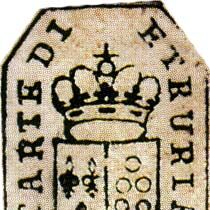
Etruria Minchiate
The Cavaliers are man/beast creatures. The Valets (or Pages) are male for clubs and swords, and fema...
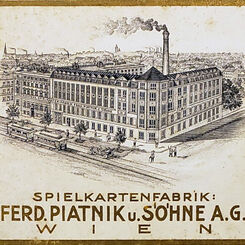
Ferd. Piatnik & Söhne
Ferdinand Piatnik was born in Ofen on October 14, 1819.
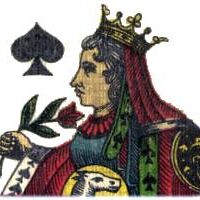
Piedmont Pattern
The Piedmont pattern is a very close relative to the French 'Paris' pattern. The courts are not name...
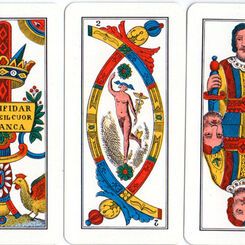
Trevisane pattern
The double-ended version of the ‘Trevisane’ pattern originated in the early 19th century.
Tarocco Piemontese | Piedmontese tarot
The double ended version of the Piedmontese Tarot evolved during the second half of the nineteenth c...
XV Century Italian Playing Cards
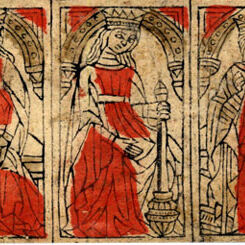
Cards from a pack of an early form of north Italian playing cards, with the swords back-to-back and ...
Small Tuscan Pattern
Small Tuscan Pattern

Romagnole pattern by Guglielmo Murari
Romagnole pattern by Guglielmo Murari c.1920
Minchiate Fiorentine
The Florentine game of Minchiate is played with a pack of 97 cards. The subjects and arrangements of...
Italian Playing Cards
The first reliable evidence that playing cards were being used in Italy is from 1376, when a game ca...
Most Popular
Our top articles from the past 60 days


Stephen Scharber
07 March 2026, 04:17SavedSaved this article to Stephen Scharber's Collection