Japanese Playing Cards
Japanese playing cards include: 'Awase' or 'matching pairs' cards and Portuguese or Spanish-derived 'Dragon' type cards.
Some records indicate that Chinese and Korean cultural influences reached Japan as early as the 7th century AD and the origins of certain Japanese games can be traced to these influences. One such game was a matching game and the Japanese adaptation made use of hand painted pictures of natural objects on seashells.
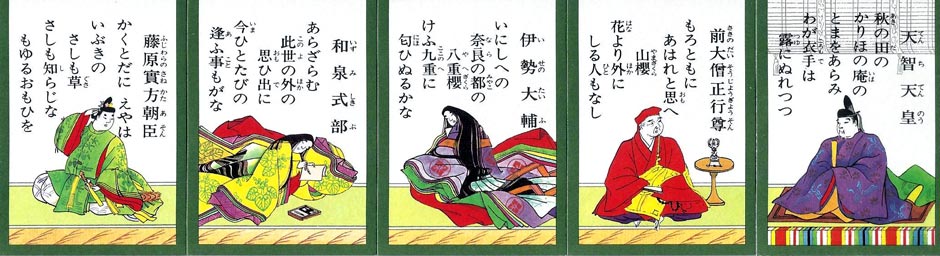
Above: Yomifuda cards with two lines of the text from a poem and an image of the poet who composed it. These form part of a particular kind of matching game called “Uta Garuta” which is basically a poetry anthology (the Hyakunin Isshu, or 百人一首), transposed onto cards. The game actually consists of a pair of decks, the Yomifuda, and Torifuda, giving a total of a hundred short poems of five lines, called Waka (和歌). Images courtesy Anthony Lee.
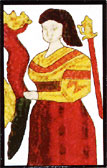
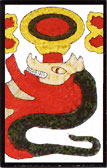
The use of suit signs first came to Japan from Europe when Portuguese explorers reached Japan in 1542 or 1543 bringing their playing cards with them. These were soon followed by Spanish traders. Their cards were banned in a prohibition of 1648; however, they re-appeared in disguised forms and evolved into several variant types. Local versions of Portuguese cards with dragons on the Aces either depicted court figures in contemporary western costume or were the product of interpretations in local idiom. The small size of many Japanese cards is sometimes reckoned as due to European sailors trimming their cards to keep the edges sharp for play.
 |
 |
|||
 |
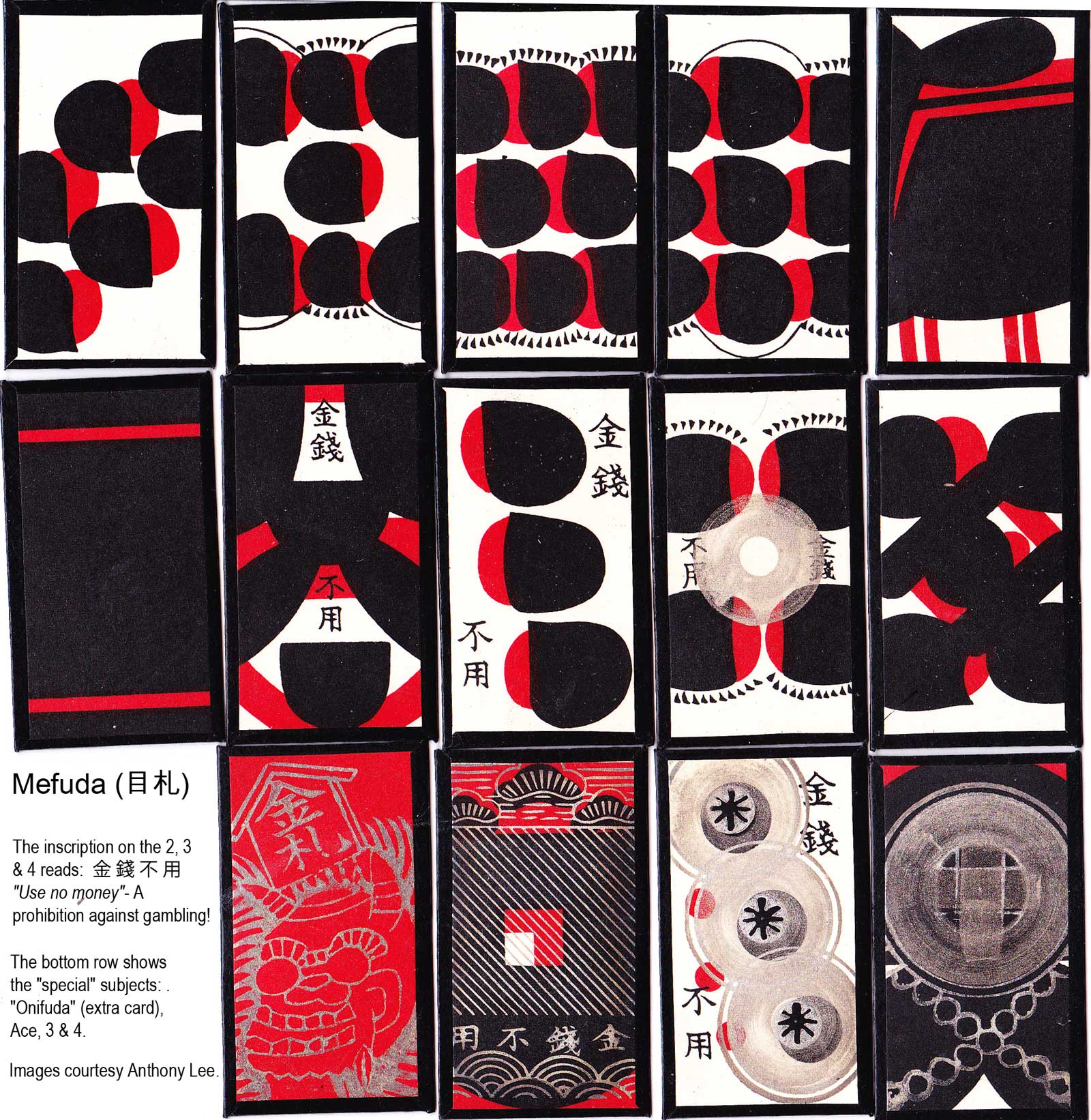
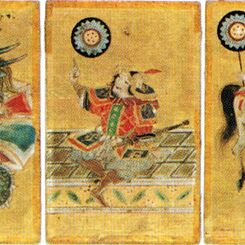
In general terms, Japanese playing cards are of two types: ‘Awase’ or ‘matching pairs’ cards and Portuguese or Spanish-derived ‘Dragon’ type cards. These have dragons on the aces and are believed to have originated in Spain, Italy or Portugal. There are several varieties of the latter type, including Mekuri or Tensho cards, Unsun Karuta, Akahachi, Kabufuda, Komaru and Mefuda. more here►
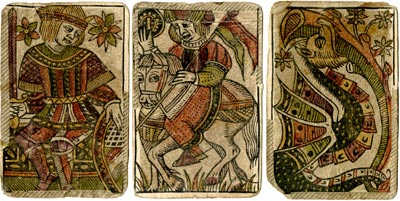
Above: cards by Gilis van den Bogarde, Antwerp 1567. These had a major influence on several styles of Japanese playing cards, after cards were introduced by European merchants more →
The very first playing cards that came to Japan in the latter half of the 16th century were known as Namban Carta: Resurrected after 450 Years►
“Belgium in the 16th century was a territory of the Spanish royal family, with a booming handicraft industry exporting products to Spain and Portugal. At that time, it was also a global centre of advanced woodblock printing, producing sophisticated products not found in Spain or Portugal. It is thus not surprising that the design of Belgian cards reflected the preferences of clients in Portugal, and that products marketed in Portugal travelled with traders all the way to Asia, specifically to the commercial hub of Batavia on the island of Java. [...] Nevertheless, it was highly likely that dragon cards made in Belgium had been brought into Japan and subsequently called Namban Carta” - Takashi Ebashi, Director of the Japan Karuta Cultural Center.
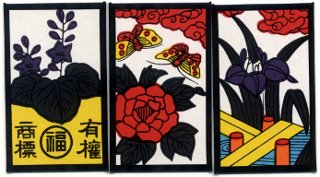
Above: December (the imperial Japanese plant kiri), June (with blood-red peonies over one of which two yellow butterflies are hovering) and May (blue Iris) cards from a set of ‘Flower Cards’ manufactured by Nintendo, Japan, 2008
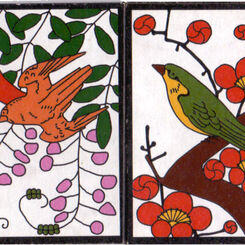
Japanese Flower Cards or Hana Fuda are a third type, or intermediary between the first two types:
“The playing-cards of Japan, the well-known hana-gamta or ‘flower cards,’ have a similar ancestry to those of China. One card in each of the twelve suits, which are named after flowers corresponding with the twelve months, retains a device called a ‘tanzaku’, with its appropriate number in the series of months...” Stewart Culin: The Origin of Playing Cards, 1895
Hanafunda cards are somewhat more rigid than western cards in that they are made of a stiff cardboard that has been lacquered.
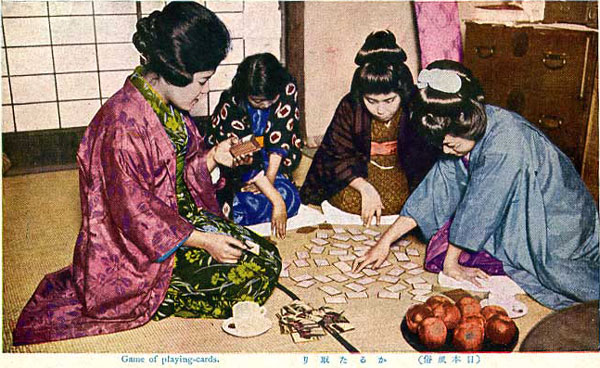
Above: Japanese post card titled "Game of Playing-cards"
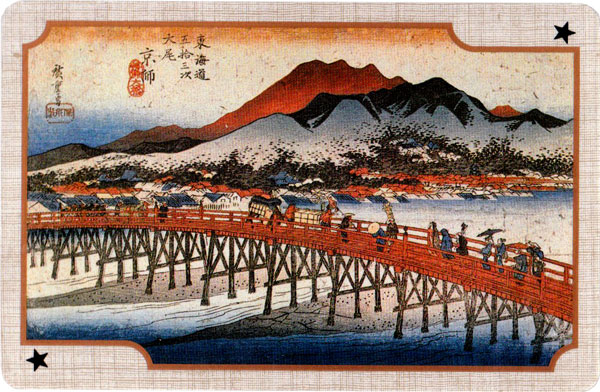
Above: Hiroshige Ukiyo-e playing cards
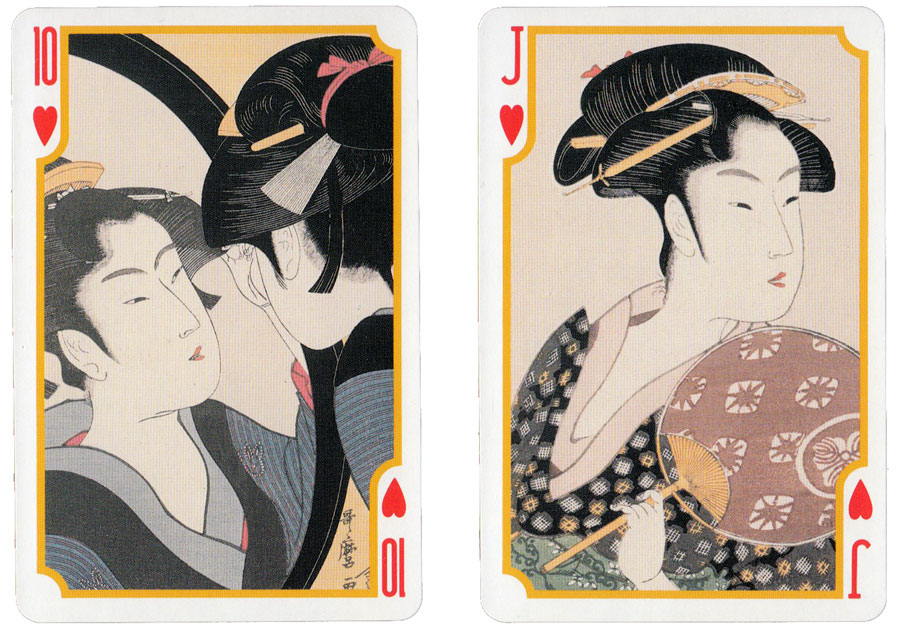
Above: “Utamaro Ukiyo-e” playing cards manufactured by Angel Playing Cards Co. Ltd
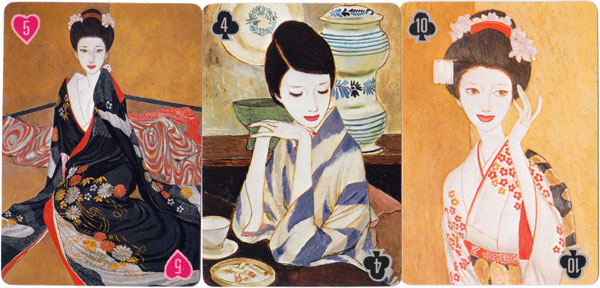
Above: “Japanese Women” playing cards manufactured by Angel Playing Cards Co. Ltd
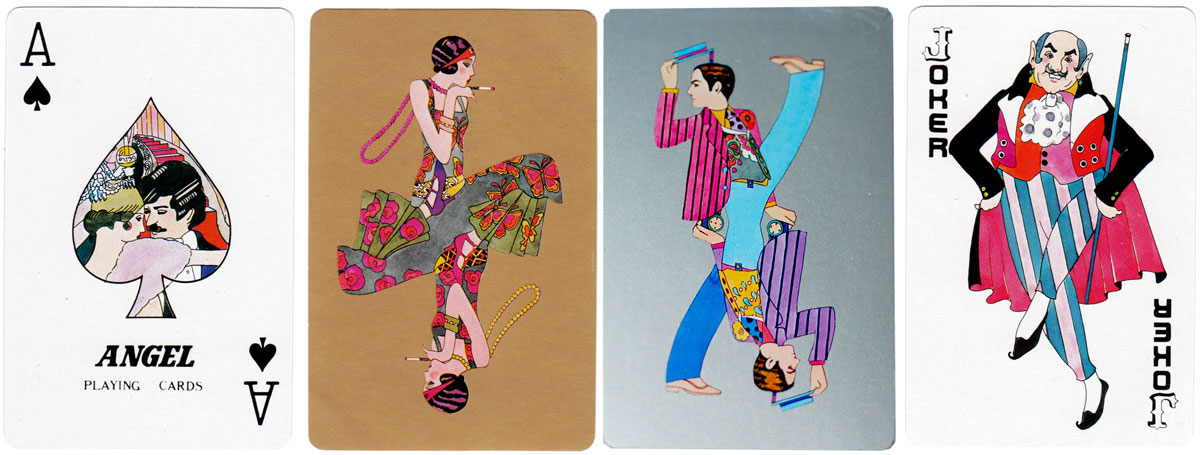
Above: “Roaring Twenties” playing cards manufactured by Angel Playing Cards Co. Ltd
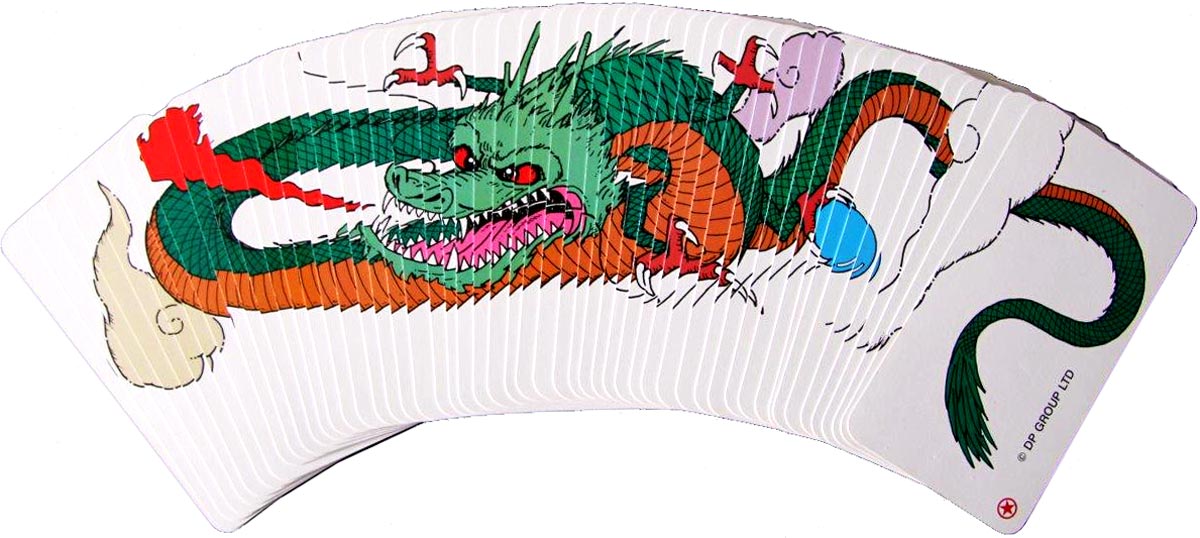
Above: Dragon fanning cards
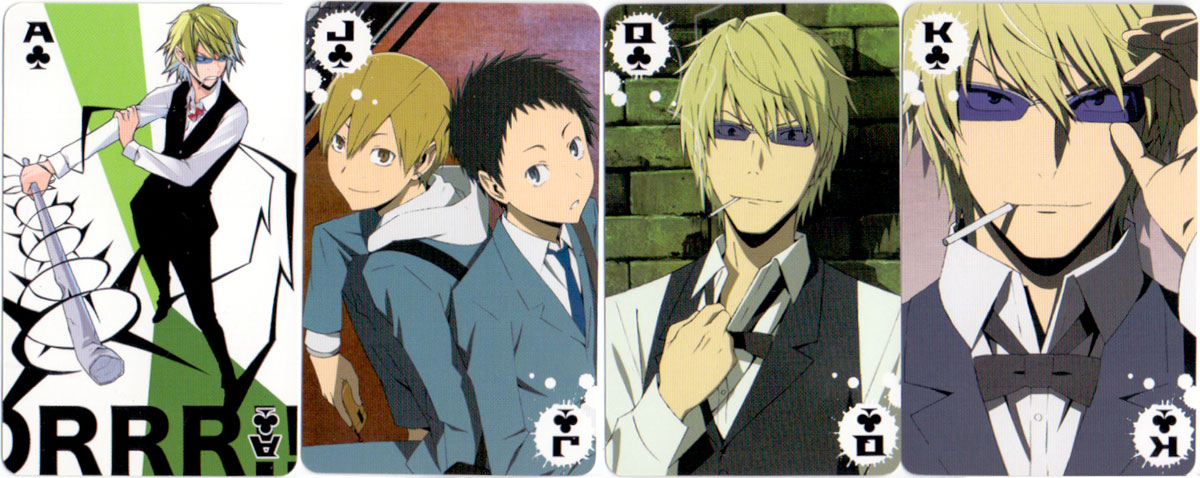
Above: Durara!! anime playing cards, 2010.
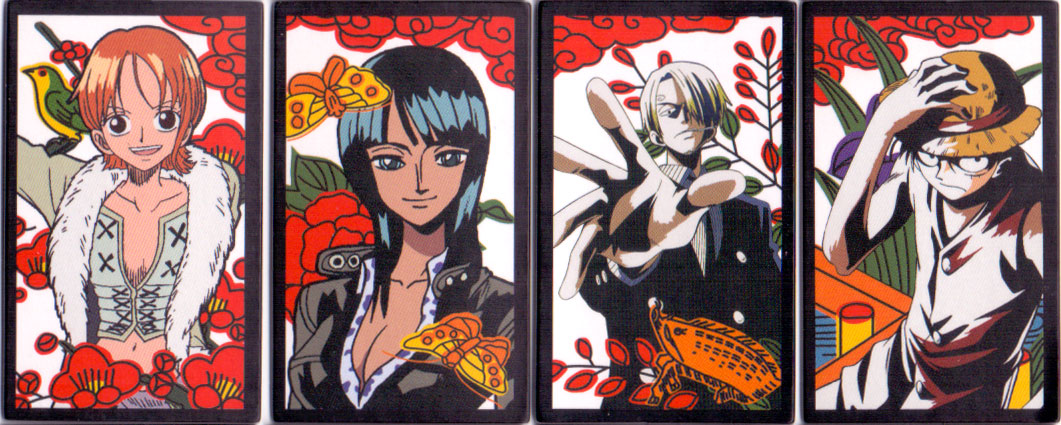
Above: One Piece Hanafuda King card set published by Beverly Enterprises Inc, Tokyo, 2010.
The Rise of Nintendo
In 1889, Fusajirô Yamauchi began manufacturing “Hanafuda” or “flower cards” under the brand name Nintendo Koppai. Cards were hand crafted using the bark from mulberry and mitsu-mata trees. Around 1902 the firm began producing Western style playing cards. Throughout the decades that followed, the Nintendo firm branched out into production of different kinds of toys, gaming, and entertainment products, culminating in increasingly complex electronic video games.
In 1951 the playing card distribution company became known as Nintendo Playing Cards Co. Ltd. (or Nintendo Karuta Co. Ltd in Japan). Nintendo still manufactures a small number of Hanafuda and Western style playing cards as well as the Pokemon trading card and collectible card game.
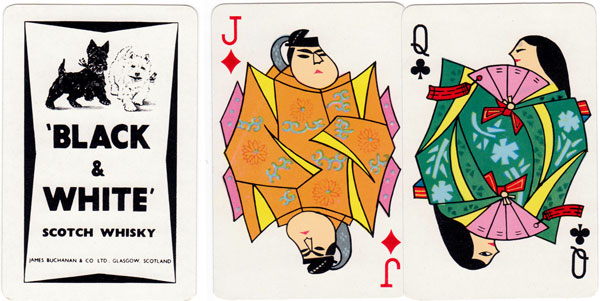
Above: Black & White Whisky playing cards by Nintendo, 1960s
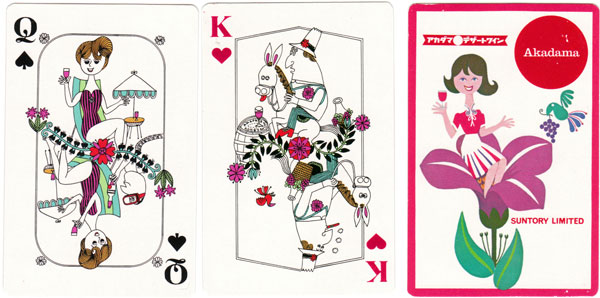
Above: Suntory Akadama Honey Wine playing cards manufactured by Nintendo, c.1970
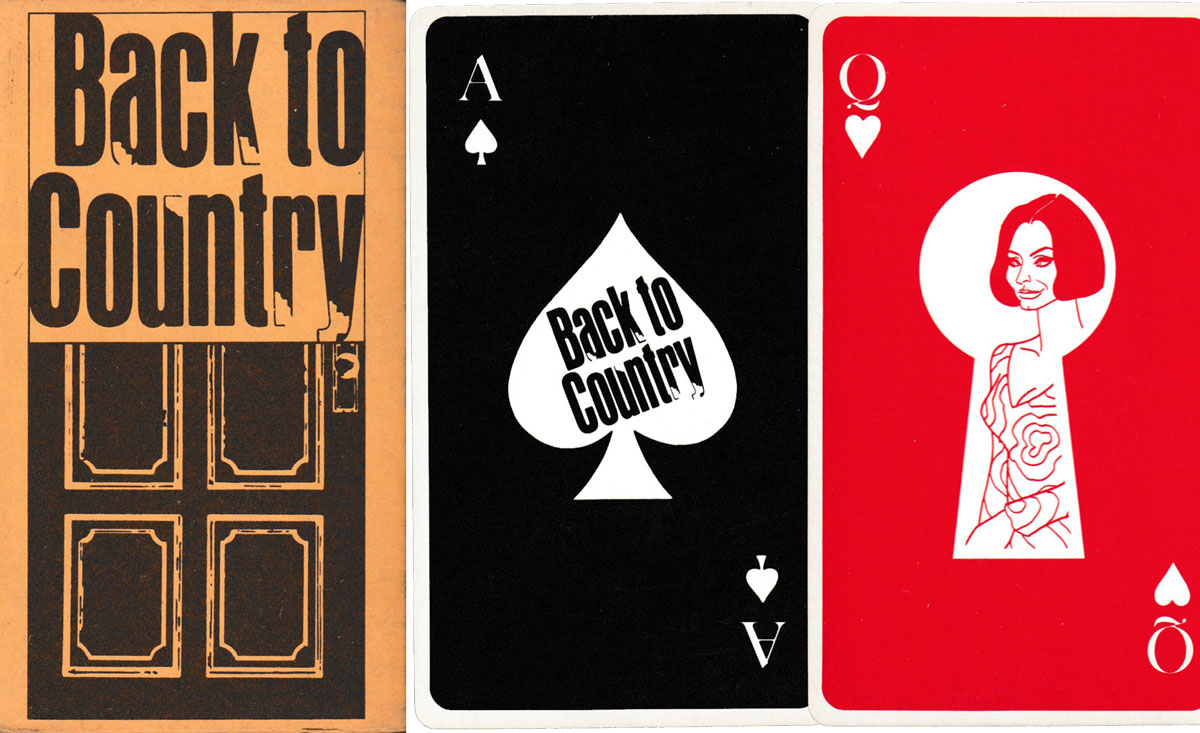
Above: Back to Country playing cards manufactured by Nintendo, 1979
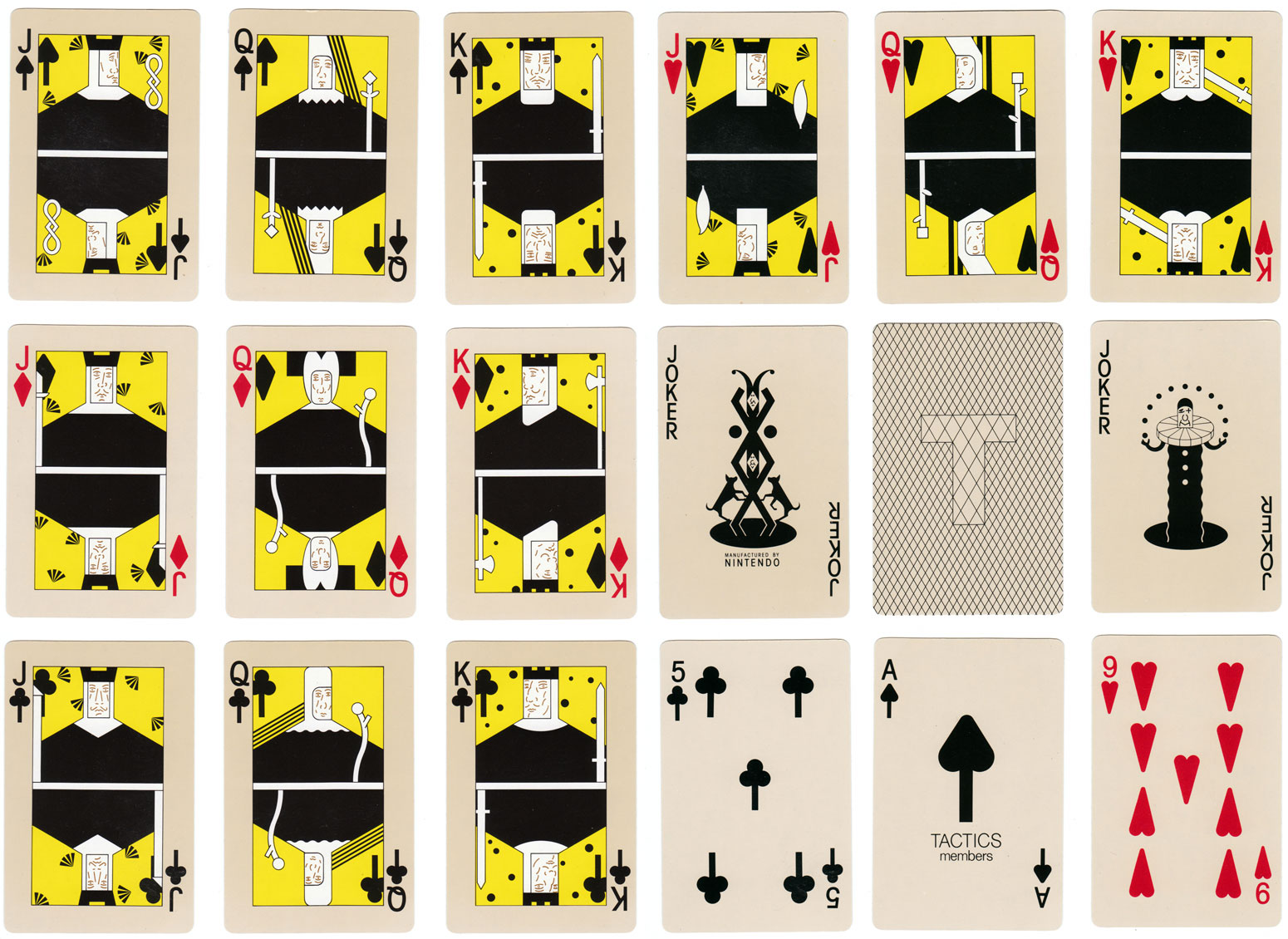
Above: “Tactics Supranational” men's grooming playing cards manufactured by Nintendo, c.1980
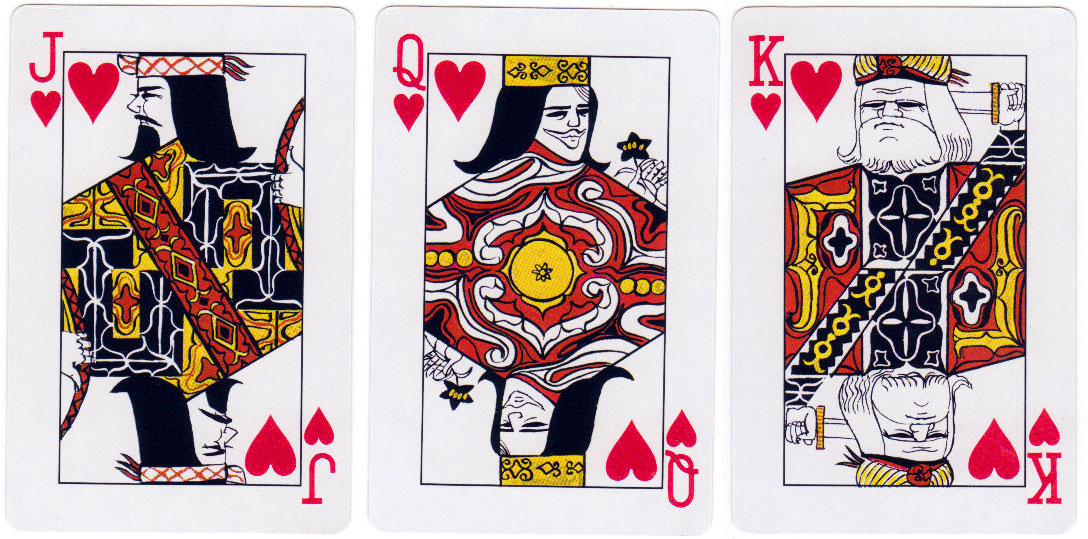
Above: Ainu playing cards by Nintendo, 1979
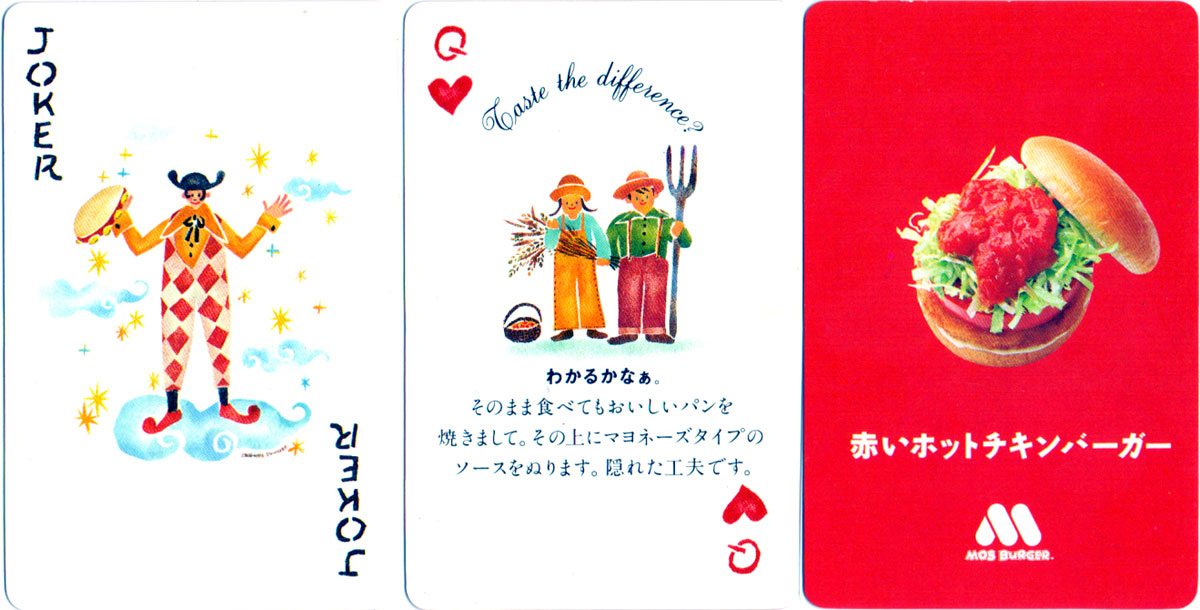
Above: advertising deck for Mos Burger, Japan, 2015.
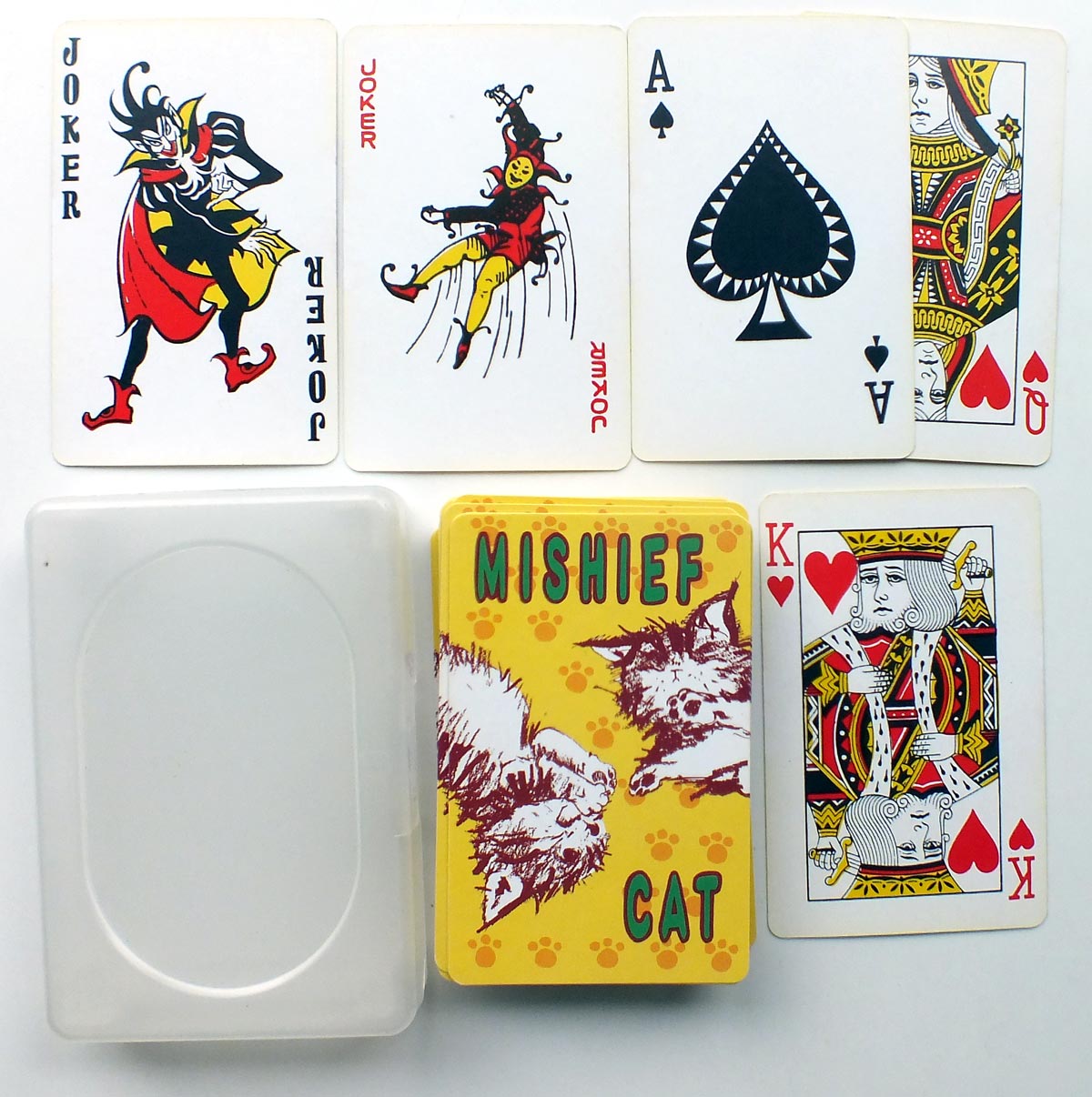
See also: Nintendo Mishief Cat • Angel Shapely►
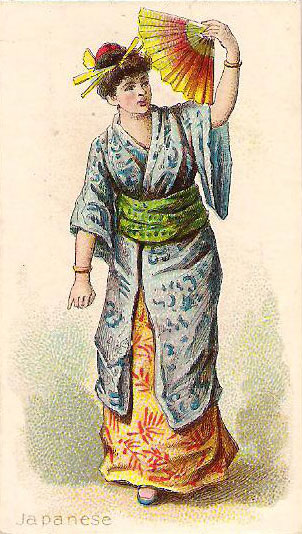
Above: Japanese Dancing Woman cigarette card published by W.S. Kimball & Co, USA, 1889
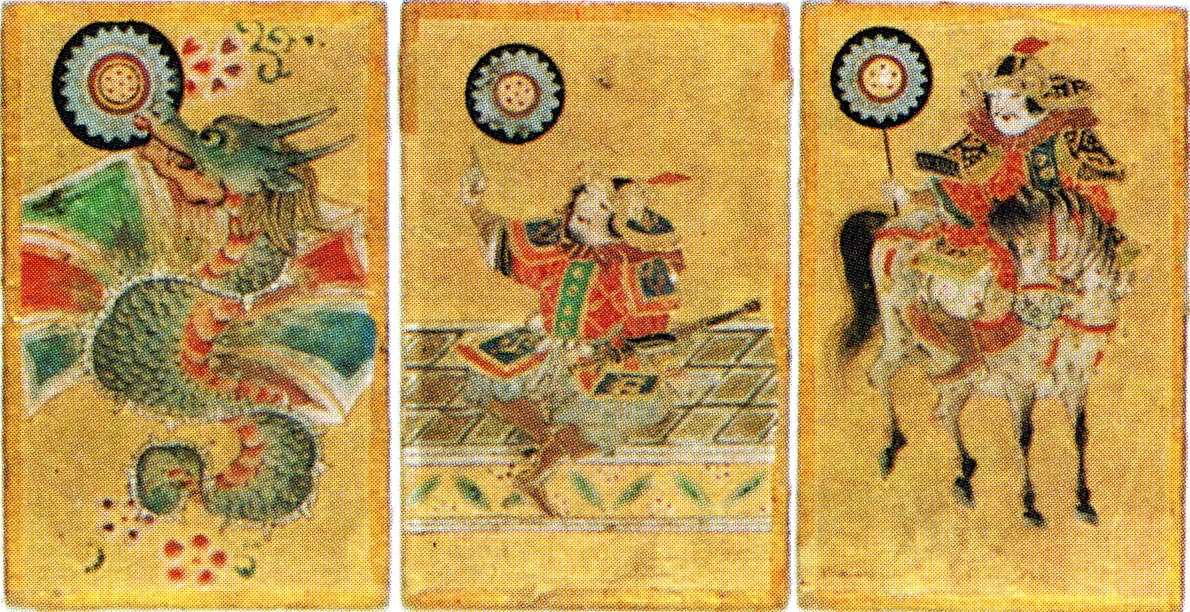
Above: Unsun Karuta
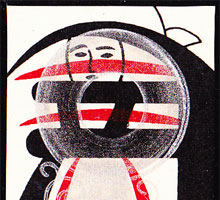
Above: ‘Akahachi’ or ‘Red Eight’ 赤八 Manufactured by Nintendo, Japan
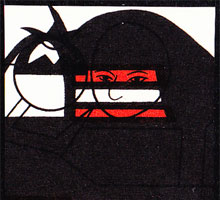
Above: Japanese Kurofuda 黑札
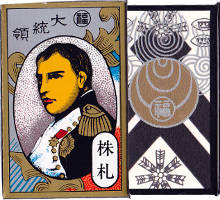
Above: Kabufuda playing cards manufactured by Nintendo, Japan
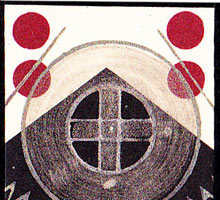
Above: Komaru 小丸
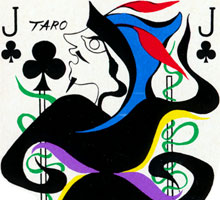
Above: Taro Okamoto Playing Cards, 1977
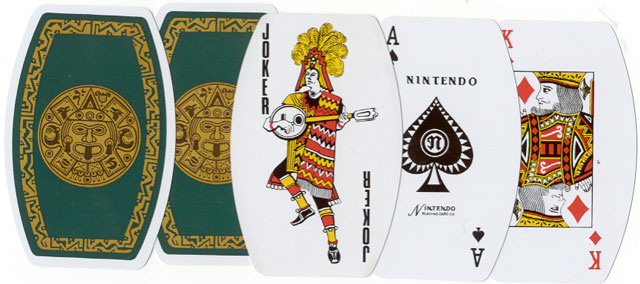
Above: Mexican-Aztec themed playing cards made in Japan by Nintendo
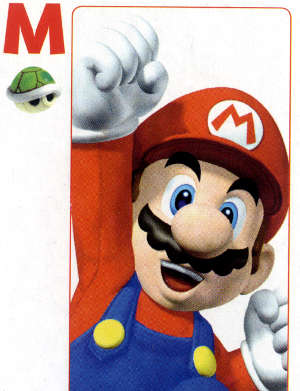
Above: Nintendo Mario playing cards
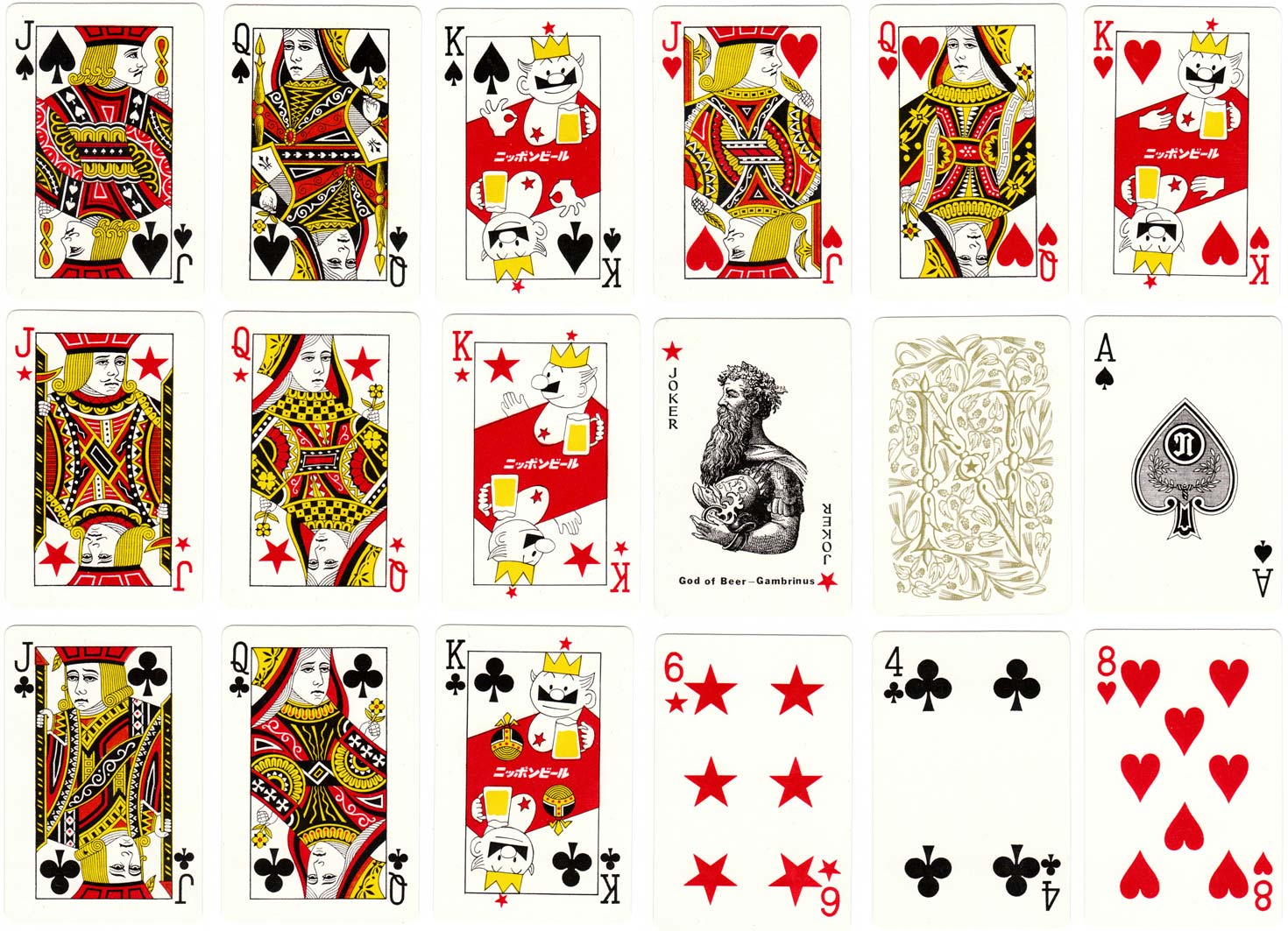
Above: Nippon Beer playing cards by Nintendo
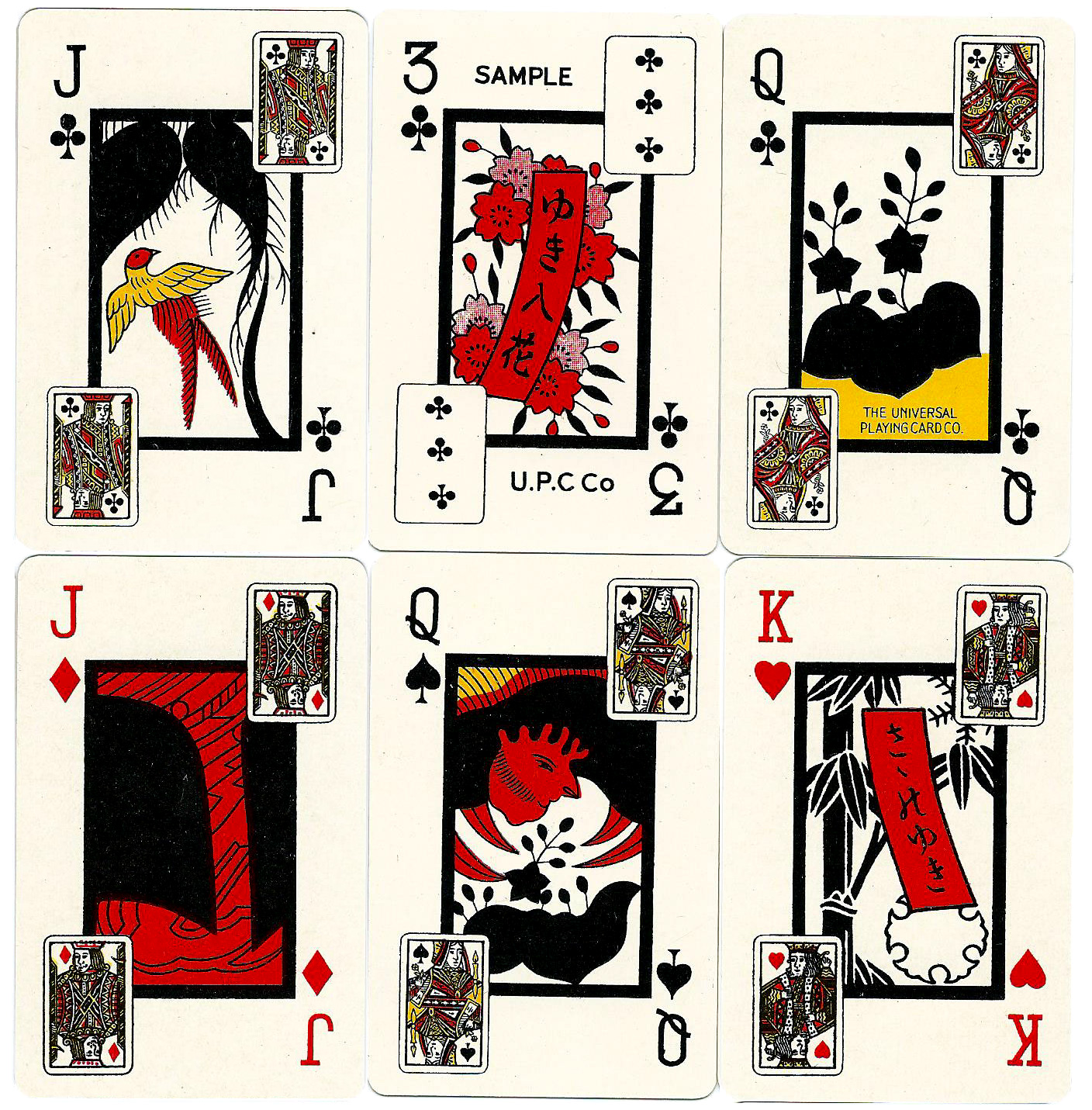
Above: Hanafuda cards by Universal Playing Card Co., Japan
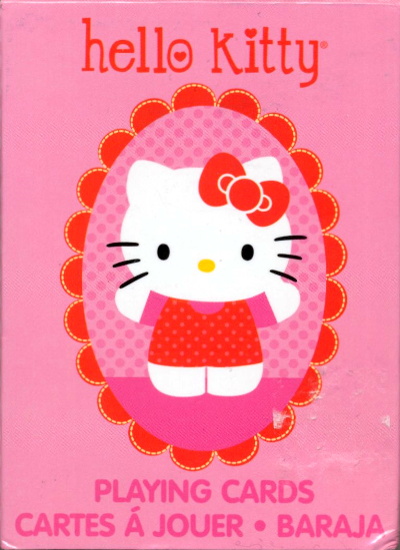
Above: Hello Kitty playing cards by Sanrio, 2013
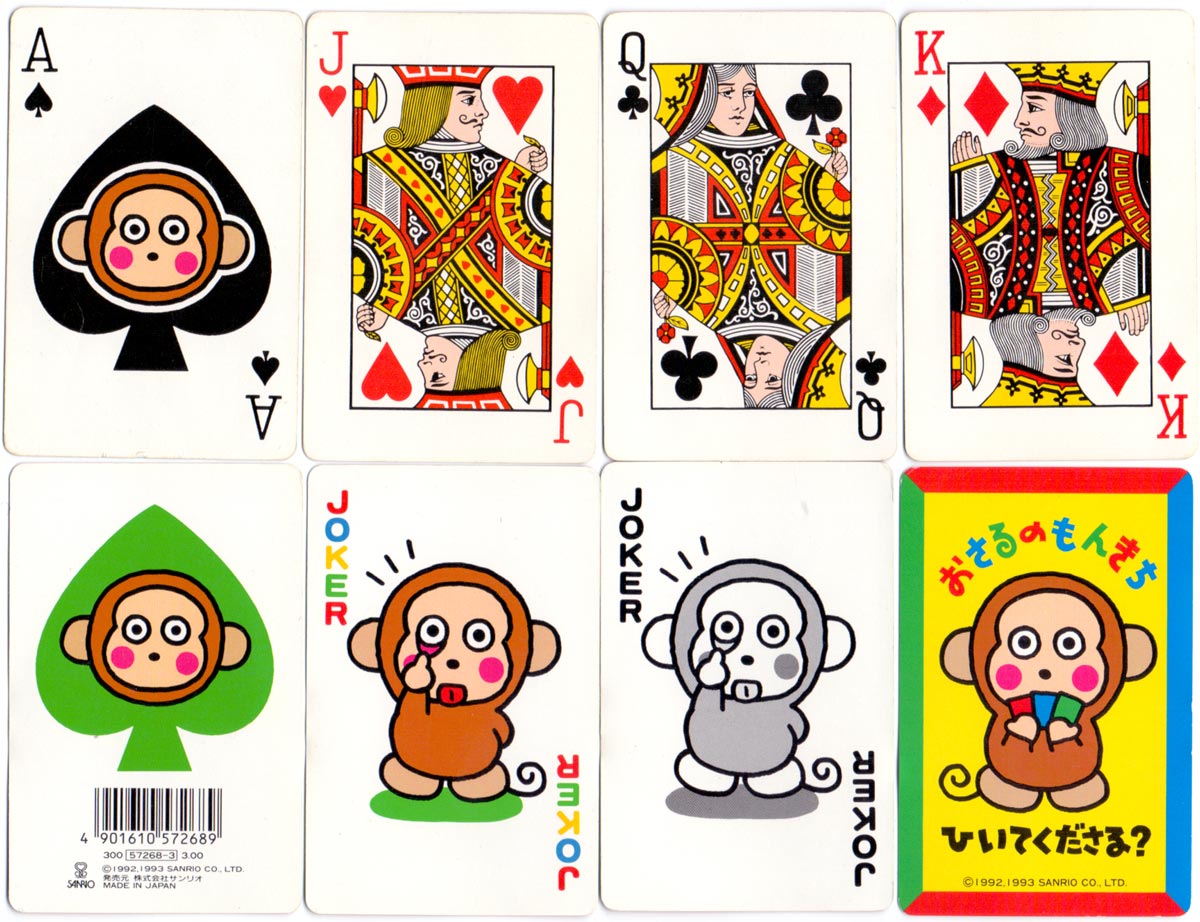
Above: Monkichi playing cards by Sanrio, 2013
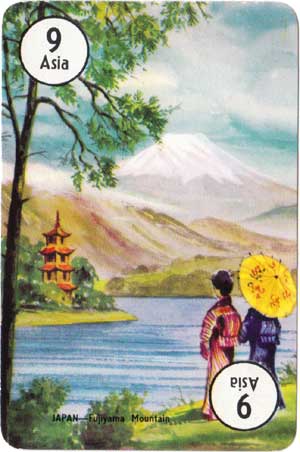
Above: Japanese themed card from Round the World card game.

By Simon Wintle
Spain • Member since February 01, 1996
I am the founder of The World of Playing Cards (est. 1996), a website dedicated to the history, artistry and cultural significance of playing cards and tarot. Over the years I have researched various areas of the subject, acquired and traded collections and contributed as a committee member of the IPCS and graphics editor of The Playing-Card journal. Having lived in Chile, England, Wales, and now Spain, these experiences have shaped my work and passion for playing cards. Amongst my achievements is producing a limited-edition replica of a 17th-century English pack using woodblocks and stencils—a labour of love. Today, the World of Playing Cards is a global collaborative project, with my son Adam serving as the technical driving force behind its development. His innovative efforts have helped shape the site into the thriving hub it is today. You are warmly invited to become a contributor and share your enthusiasm.

Activity for Japanese Playing Cards
Sign in to comment or save this article.

Related Articles
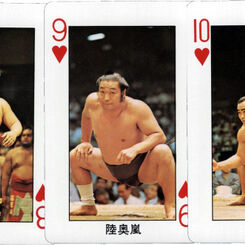
Sumo Wrestling
Traditional Japanese Sumo Wrestling playing cards with photograph of different wrestler on each card...
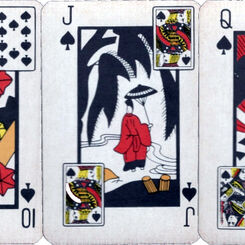
Hana-Trump トランプ
Hana-Trump cards from Japan are Hana-Fuda flower cards with miniature international playing cards in...
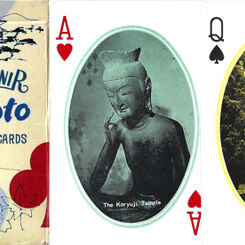
Kyoto Souvenir Deck
Kyoto Souvenir playing cards by Nintendo aimed at the up and coming tourist industry, 1950s.
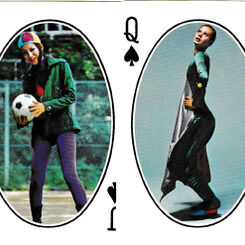
Seiko fashion cards
Men's and ladies fashion playing cards published for the Seiko Corporation by Nintendo, Japan, 1971....
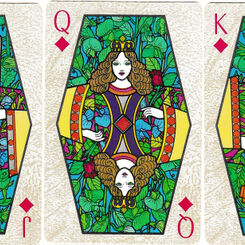
Flora playing cards
Flora playing cards made by the Angel Playing Card Co., Kyoto, 1982.
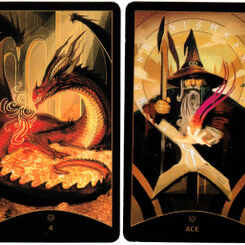
Dungeons and Dragons Tarot
This 78-card officially licensed Dungeons & Dragons (D&D) tarot deck offers a visually appealing var...
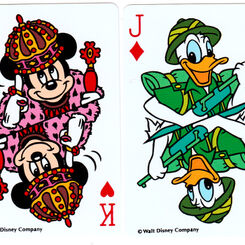
Tokyo Disneyland Playing Cards
Disney themed playing cards featuring Mickey Mouse and his friends; available at Tokyo Disneyland in...
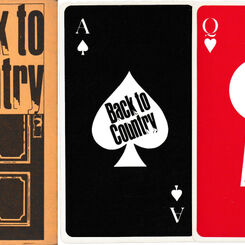
Back to Country
Advertising playing cards for a Japanese fashion house, with reversed colours.

One Piece Hanafuda
One Piece Hanafuda King card set published by Beverly Enterprises Inc, Tokyo, 2010

DRRR!!
DRRR!!, short for Durarara!!, is an anime adaptation of a Japanese light novel written by Ryohgo Nar...
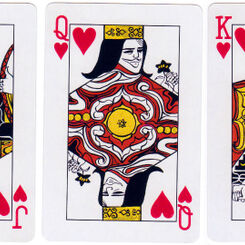
Ainu culture
A terrific deck of cards made by Nintendo c.1979 with original designs on every card showing the Ain...
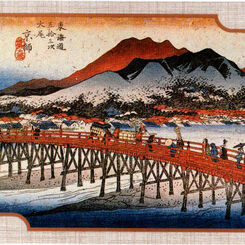
Hiroshige Ukiyo-e playing cards
“Hiroshige” playing cards drawn by Hiroshige Ando (1797-1858) at 53 stopoffs on the journey from Edo...

Nintendo Mario Playing Cards
Special cartoon playing cards designed to accompany Nintendo's Mario series of computer games.

Leopardo 777 made in Japan for Peru
Leopardo 777 playing cards manufactured in Japan for the Estanco de Naipes del Peru, 1960s.
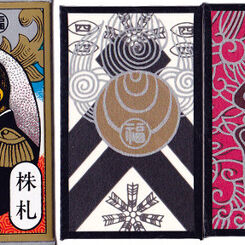
Kabufuda
Kabufuda playing cards manufactured by Nintendo, Japan
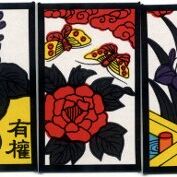
Hanafuda Flower Cards
Japanese Flower Cards (Hanafuda) made by Nintendo, Japan, 2008.

Tensho Mekuri - Japan
Tensho Mekuri cards hand-made by Patricia Kirk, 2003.
Hana Fuda - Japan
Hana Fuda playing cards hand-made by Patricia Kirk, 2003
Unsun Karuta
Unsun Karuta うんすんかるた Japan c.1780.

Pachimon Playing Cards
Quirky Pachimon playing cards from 1970s Japan, featuring unique monsters and aliens, given away wit...
Most Popular
Our top articles from the past 60 days