




Baraja “Neoclásica”, Madrid, 1810
Baraja “Neoclásica” engraved by José Martínez de Castro, first published by Clemente Roxas, Madrid, 1810.
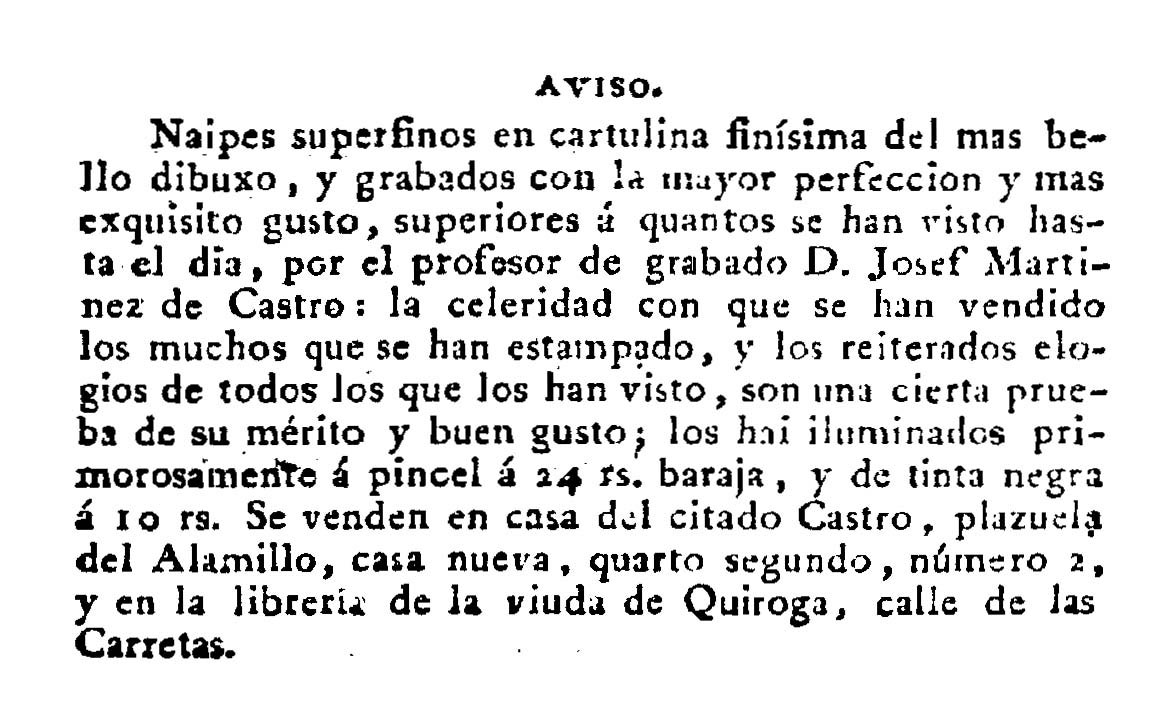
José Martínez de Castro (active 1795-1819) made his debut into the world of playing cards with this magnificent piece of work, which was deservedly a huge success and saw many editions. The early editions were self-published by Martínez de Castro himself (see press release), but later editions (after c.1815) were published by Josef Monjardín, Clemente de Roxas and Andrés Castellanos. The detail of design in the vignettes on the fours and the aces is very fine. This example is from the second (censored) edition of 1812, in which extra drapery has been added to the miniature nude figures. The model was copied by manufacturers in Spain, Italy and France, and is still used today in Sardinia. Read more →
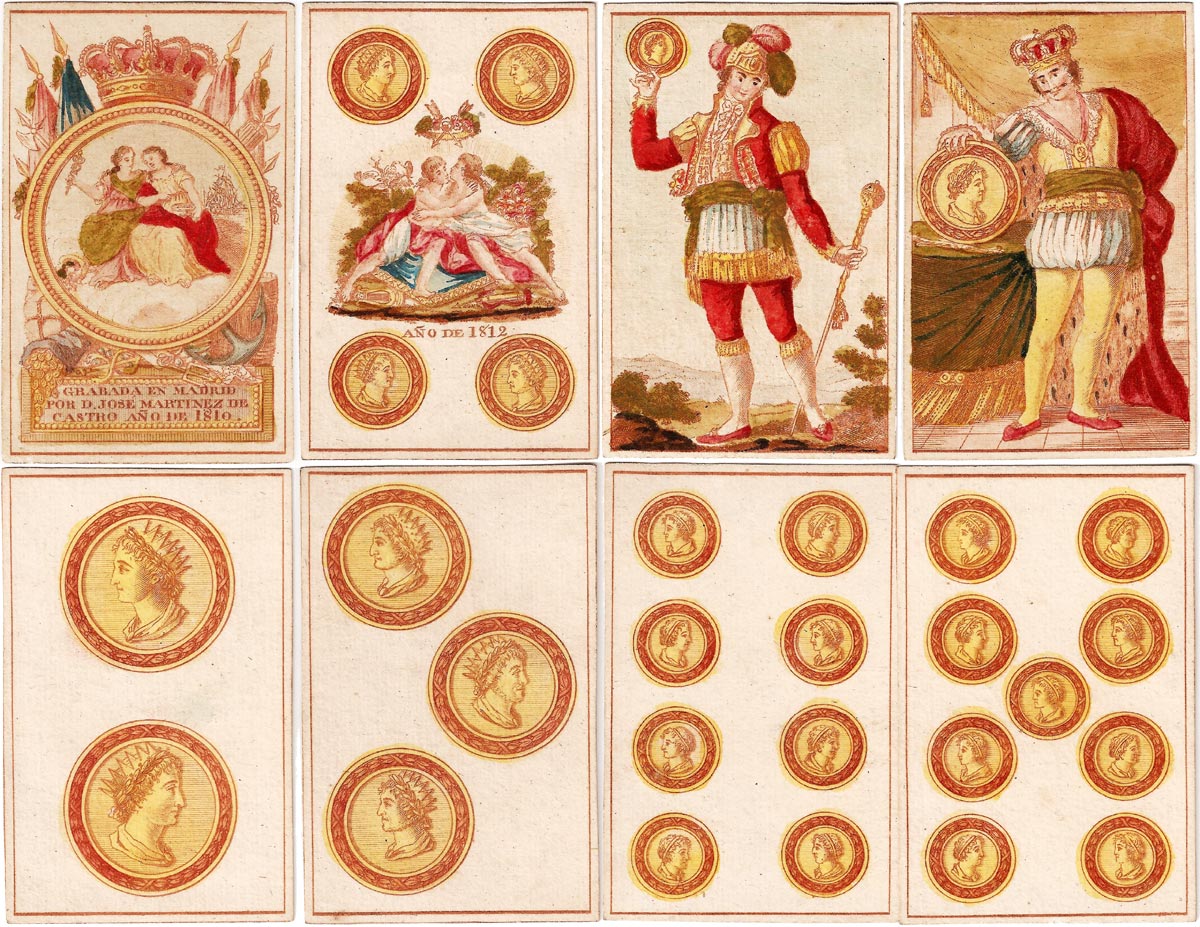
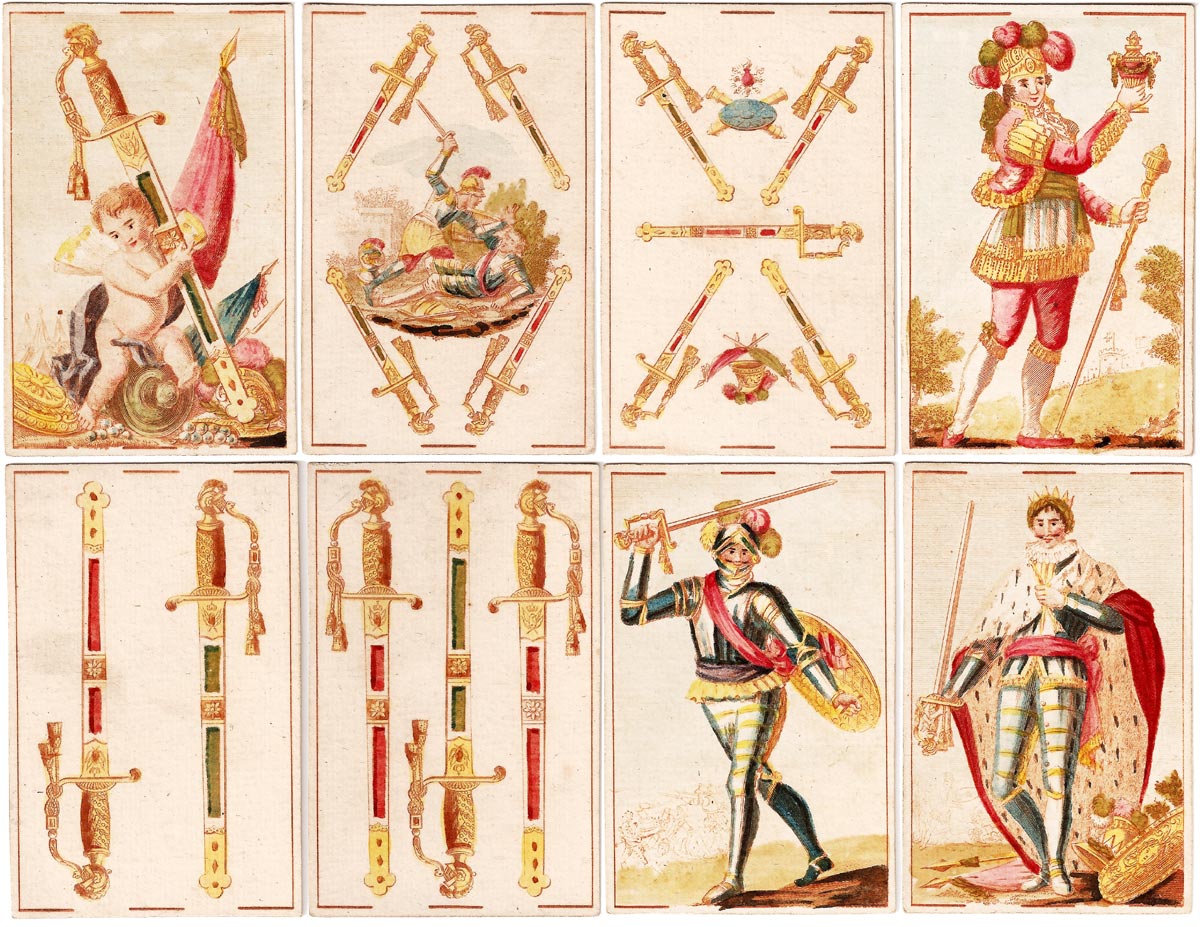
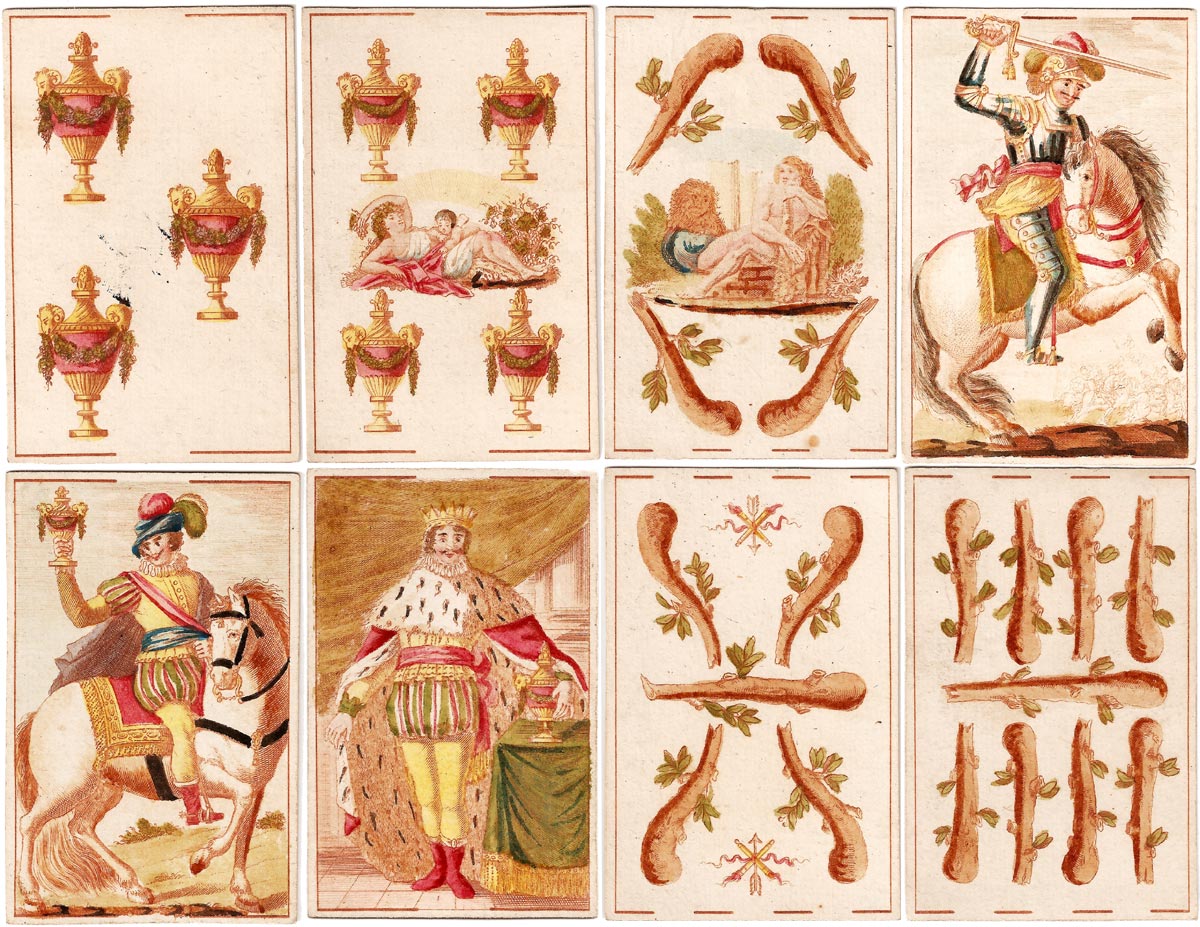
Above: cards from a deck etched by José Martínez de Castro first published by Clemente Roxas in Madrid in 1810. Size of cards: 83 x 52 mms. This example, from the Complejo Museográfico de Luján (Argentina), was acquired by Don Enrique Udaondo, the museum's first director, from the antiquarian dealer Romón J. Pardo in around 1930. It is not known who owned the cards prior to Pardo, or how they arrived in South America.
All members of the swords suit are in full armour and the sotas wear plumed helmets. The plates are usually printed in brown and carefully hand-painted with water-colours, and this example has been professionally painted in an accomplished and colourful manner.
Thanks to Juan Carlos Recarey and Alberto Pérez González for assistance with this page.
Note from Peter Burnett
A modern “version” (not a reprint) was produced by Merrimack Publishing Corp., New York, in 1980 under the title “1810 classical art playing cards”. The cards were printed in Hong Kong. Modern suits have been added: coins are spades; swords are hearts; clubs are clubs; and cups are diamonds. Two jokers have been added. The courts have been modernised though are still recognisable. The cards are larger than the originals - 100 by 65 mms. - P.B
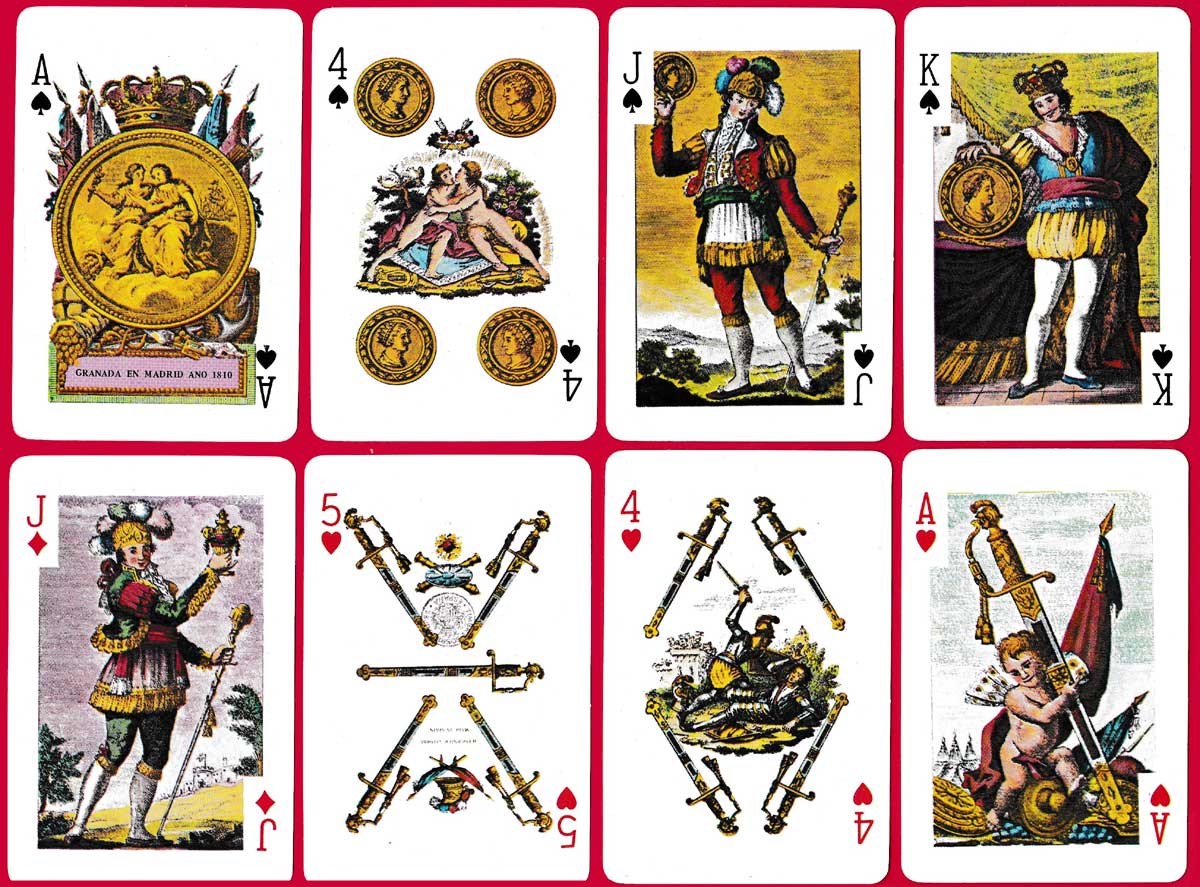
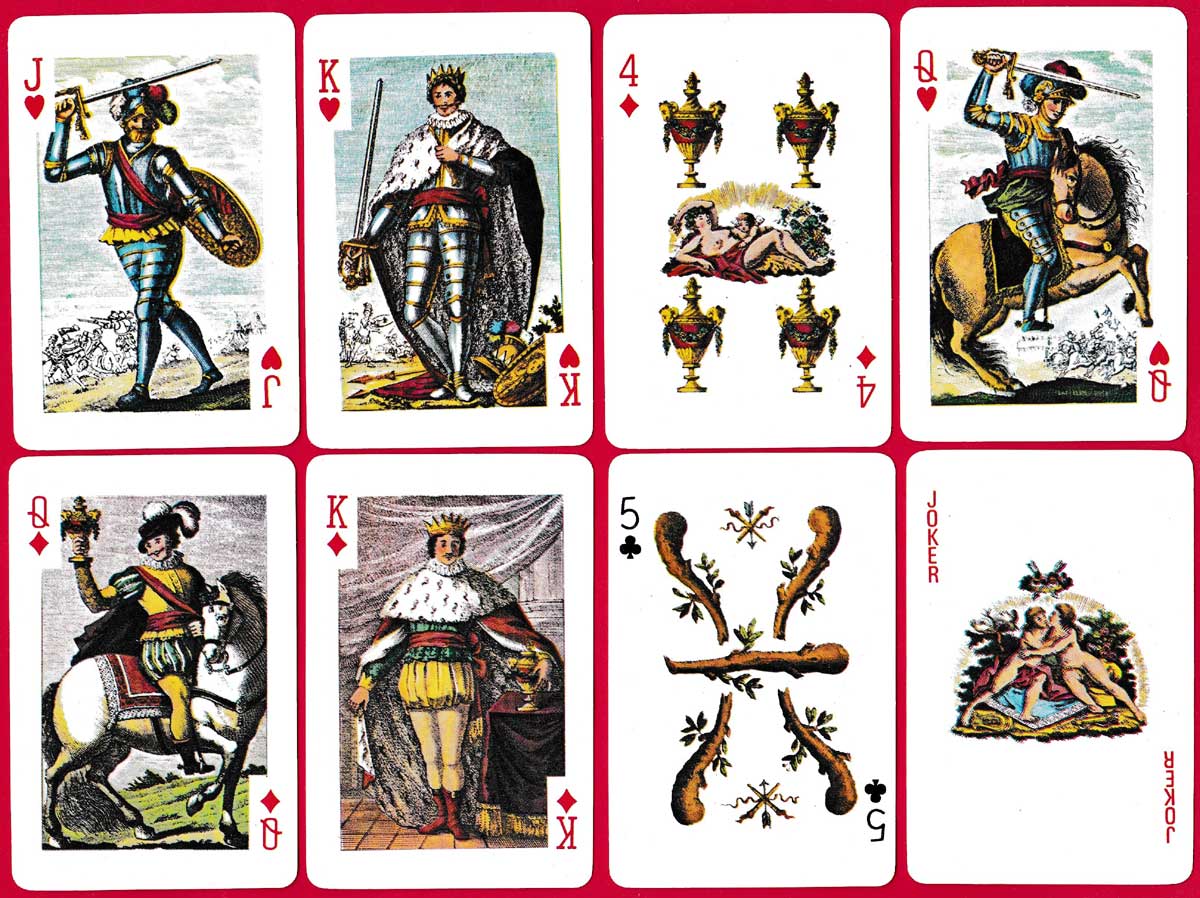
Above: “1810 classical art playing cards” produced by Merrimack Publishing Corp., New York, 1980. Image courtesy Peter Burnett.

By Simon Wintle
Spain • Member since February 01, 1996
I am the founder of The World of Playing Cards (est. 1996), a website dedicated to the history, artistry and cultural significance of playing cards and tarot. Over the years I have researched various areas of the subject, acquired and traded collections and contributed as a committee member of the IPCS and graphics editor of The Playing-Card journal. Having lived in Chile, England, Wales, and now Spain, these experiences have shaped my work and passion for playing cards. Amongst my achievements is producing a limited-edition replica of a 17th-century English pack using woodblocks and stencils—a labour of love. Today, the World of Playing Cards is a global collaborative project, with my son Adam serving as the technical driving force behind its development. His innovative efforts have helped shape the site into the thriving hub it is today. You are warmly invited to become a contributor and share your enthusiasm.

Activity for Baraja “Neoclásica”, Madrid, 1810
Sign in to comment or save this article.
Related Articles
Amorcillos
‘Amorcillos’ (Cupids), a masterpiece from the golden age of Spanish playing cards by Clemente Roxas,...
Four Empires - Clemente Roxas
‘Four Empires’ playing cards produced by Clemente Roxas, c.1805.
Clemente Roxas double-ended Spanish pack
Double-ended Spanish-suited playing cards published by Clemente de Roxas in Madrid, 1814.
Baraja Mitológica
“Baraja Mitológica” was first published in Madrid in c.1815 by Josef Monjardín from engravings by Jo...
Baraja Asescoin 1998
Asescoin 1998 member’s pack designed by Josep Soriano.
Ancient Civilisations
Ancient Civilisations playing cards designed by Celedonio Perellón, produced by Heraclio Fournier, ...
Baraja PEPLVM
Baraja PEPLVM features cartoons by Ortuño of famous actors and actresses in roles from epic Roman mo...
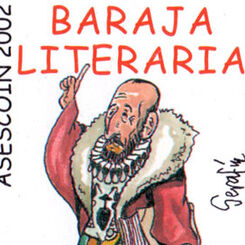
Baraja Literaria
“Baraja Literaria” Spanish pack with cartoons by Serafín, published by Asescoin and manufactured by ...
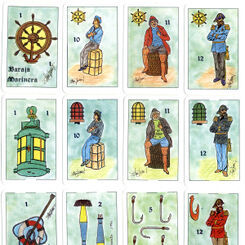
Baraja Marinera
‘Baraja Marinera’ designed by Francisco Javier San Juan, published by Asescoin (Madrid), 1995
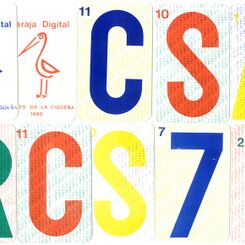
Baraja Digital
Baraja Digital by Naipes De La Cigüeña, 1990.
Heraclio Fournier S.A.
Founded in 1868, today it is part of Cartamundi.
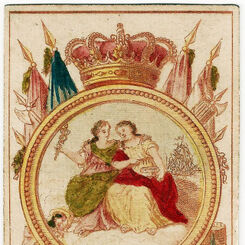
José Martínez de Castro, page 2
The most noteworthy feature of its history is that this design has since been adopted for use in Sar...
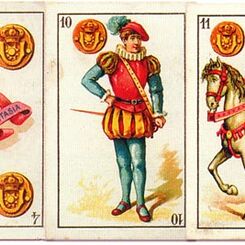
‘El Cid’ designed by E. Pastor, Valencia, Spain, c.1875
‘El Cid’ fantasy playing cards designed by E. Pastor, Valencia, Spain, c.1875.

Fagoaga y Compañía (Casa Bertrand Domec), Buenos Aires, c.1970
Playing Cards Imported into Argentina by Fagoaga y Compañía (Casa Bertrand Domec), Buenos Aires, c.1...

Spanish Playing Cards ~ La Baraja Española
Spain has played a pivotal role in the history of playing cards in Europe and Latin America.

Production Methods for Small Scale Editions
Some alternative approaches to producing small, hand-made editions of playing cards
South German Engraver
A pack of 52 cards with banner 10s, female 'Sotas', horsemen and kings, the pack was engraved in the...
The History of Playing Cards
Playing cards appear in European records in the late 14th century, but their earlier history lies fu...
Baraja "Te Amo" cartoons by Serafín
Baraja 'Te Amo' con dibujos de Serafín en tirada de 500 ejemplares numerados, 48 naipes. Fabricado p...
Art in Playing Cards
Playing cards have long served as miniature canvases—hand-painted, gilded, engraved and printed with...
Most Popular
Our top articles from the past 60 days


Peter Burnett
19 November 2025, 09:47SavedSaved this article to Peter's Collection