



Fournier “El Fundador”
The cards shown here were originally printed in 12-colour lithography and published by Heraclio Fournier in 1888.
Inspired by the work of Bernhard Dondorf of Germany, Don Heraclio Fournier diligently developed his playing card printing technology and earned exhibition gold medals. Several early packs feature his portrait accompanied by a display of gold medals on the Ace of Coins. The cards shown here were originally printed in 12-colour lithography and published by Heraclio Fournier in 1888.
The firm was renamed Viuda e Hijos de Heraclio Fournier (1912-1931) and production continued under that name. The Five of Swords has the exportation tax stamp from that period. The Four of Coins shows a picture of the playing card factory. The deck was also re-printed in 1998 to celebrate the firm's 130th anniversary.


Image Credit:
Richard Giorgio

By Simon Wintle
Spain • Member since February 01, 1996
I am the founder of The World of Playing Cards (est. 1996), a website dedicated to the history, artistry and cultural significance of playing cards and tarot. Over the years I have researched various areas of the subject, acquired and traded collections and contributed as a committee member of the IPCS and graphics editor of The Playing-Card journal. Having lived in Chile, England, Wales, and now Spain, these experiences have shaped my work and passion for playing cards. Amongst my achievements is producing a limited-edition replica of a 17th-century English pack using woodblocks and stencils—a labour of love. Today, the World of Playing Cards is a global collaborative project, with my son Adam serving as the technical driving force behind its development. His innovative efforts have helped shape the site into the thriving hub it is today. You are warmly invited to become a contributor and share your enthusiasm.

Activity for Fournier “El Fundador”
Sign in to comment or save this article.

Related Articles
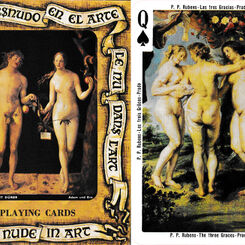
El Desnudo en el Arte
The Nude in Art / El Desnudo en el Arte, Spain, 1977 (reprint 1990)
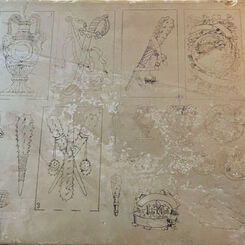
Lithographic Stone
Historic lithographic stone from the Fournier playing card factory, c.1888.
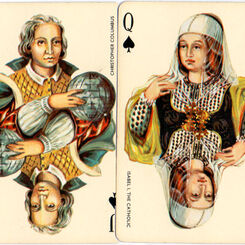
European Naval Powers
“XVI Century European Naval Powers” deck illustrated by Isabel Ibáñez de Sendadiano and produced by ...
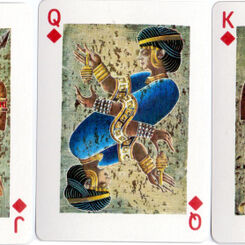
Ancient Civilisations
Ancient Civilisations playing cards designed by Celedonio Perellón, produced by Heraclio Fournier, ...

Poker Nº 505
Heraclio Fournier ‘Poker Nº 505’ for export to Argentina with elaborate peacock joker, c.1960.

Poker N°40
Hijos de Heraclio Fournier’s “Poker N°40” c.1940.
Philishave
Spanish-suited advertising deck for Philishave electric razors.

El Cid 9th centenary
Playing cards commemorating the IX centenary of the death of ‘El Cid’ designed by Vicente S. Algora....
Monumentos de España
"Monumentos de España" souvenir playing cards manufactured by Heraclio Fournier, S.A., Vitoria (Spai...
Baraja Andaluza
Non-standard Spanish-suited playing cards created by Rafael Rodriguez Hernandez and published by Edi...

Ibero-American Deck, 1929
Ibero-American Deck, designed by L. Palao, 1929.

Hija de B Fournier
Having started out as Fournier Hermanos, Burgos in 1860, the company remained in the Fournier family...
Fournier Hnos Burgos
In 1860 the Fournier Brothers of Burgos (Spain) commenced producing playing cards. They produced hig...
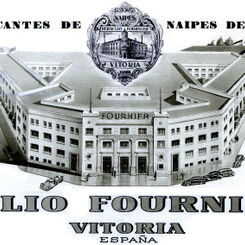
Heraclio Fournier S.A.
Founded in 1868, today it is part of Cartamundi.
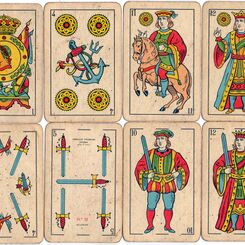
Fournier No.35 Spanish-suited playing cards
Fournier No.35 Spanish-suited playing cards imported into Argentina by Fagoaga y Compañía ...
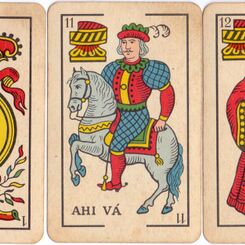
Cards for export to Peru by Heraclio Fournier
'El Caballo' brand (No.5P) playing-cards manufactured in Spain by Heraclio Fournier S.A. especially ...

Fagoaga y Compañía (Casa Bertrand Domec), Buenos Aires, c.1970
Playing Cards Imported into Argentina by Fagoaga y Compañía (Casa Bertrand Domec), Buenos Aires, c.1...

Spanish Playing Cards ~ La Baraja Española
Spain has played a pivotal role in the history of playing cards in Europe and Latin America.

Naipes El Heraldo, Cádiz
“El Heraldo” brand by Segundo de Olea Aguilera, Cadiz.

Fournier’s Castilian pattern
Designed by Emilio Soubrier, Ignacio Díaz and Augusto Rius during the 1880s as a new definitive nati...
Most Popular
Our top articles from the past 60 days


