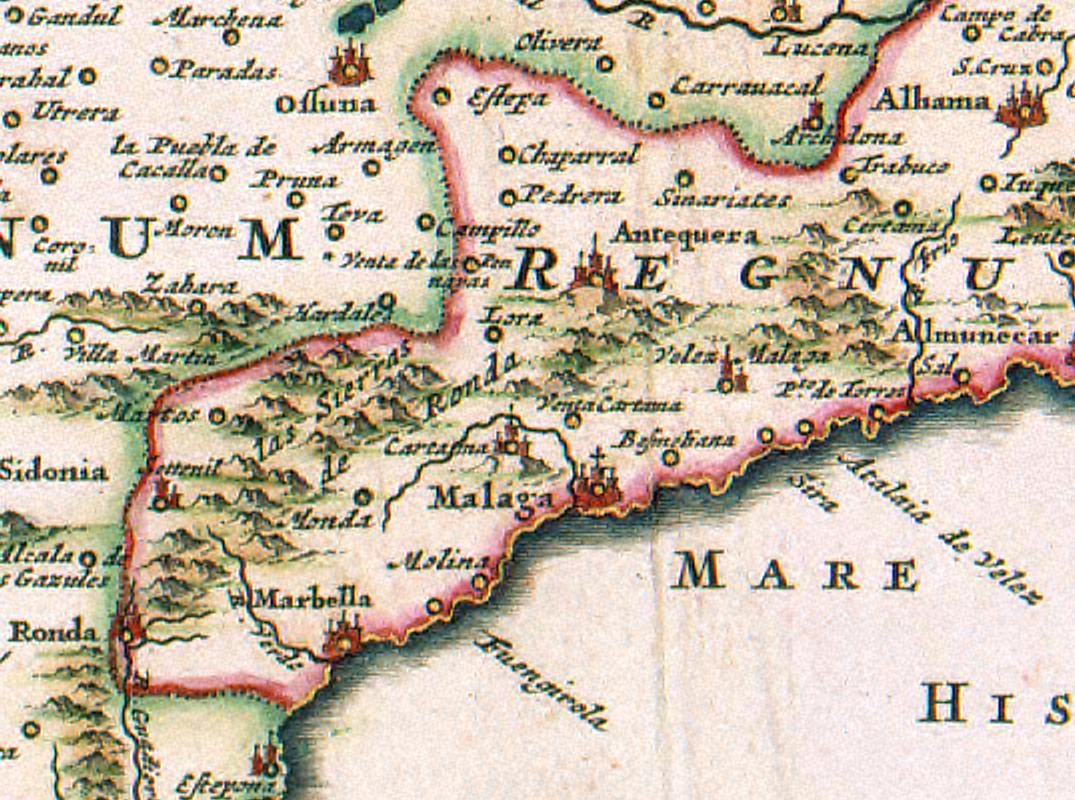
Real Fábrica de Macharaviaya
Production was controlled from Madrid as a source of national or regional revenue and, as a rule, the Spanish National Pattern was preferred. The factory was located in the town of Macharaviaya, in the province of Málaga.
Real Fábrica de Macharaviaya (Málaga)
Félix Solesio

Revenues from the sales of playing cards in Central and South America had been a state monopoly since 1552, in the reign of Felipe II, who had issued a decree setting out the terms by which it was to be regulated. Packs were to be sold in paper wrappers tied with string and officially stamped. Officers were appointed to be in charge of ensuring the business was run correctly. To begin with cards destined for the Americas were manufactured solely in Mexico but due to irregular production as well as illegal imports (probably Italian) new orders were given that they should be produced in Spain.
The Real Fábrica de Madrid had been in existence since at least 1755, but in 1776 a Royal Letters Patent was issued authorising Don Félix Solesio to establish the Real Fábrica de Macharaviaya to supply playing cards to the Americas and particularly to Mexico - “Para las Indias”. The new factory was quickly built and was of benefit to the local community in terms of employment opportunities, urban development and cultural enrichment. It is recorded that in September 1777 15,000 decks produced in Macharaviaya were shipped to Mexico. Solesio was a distinguished name in the playing card industry, and as it happens, Félix Solesio's brother Lorenzo had been appointed master craftsman in the Portuguese Real Fábrica de Cartas de Jogar in 1769. The Macharaviaya factory ultimately closed in 1815 due to lack of local raw materials, competiton from smuggled cards and the loss of its main market (Spain’s American colonies were fighting for and winning their independence).

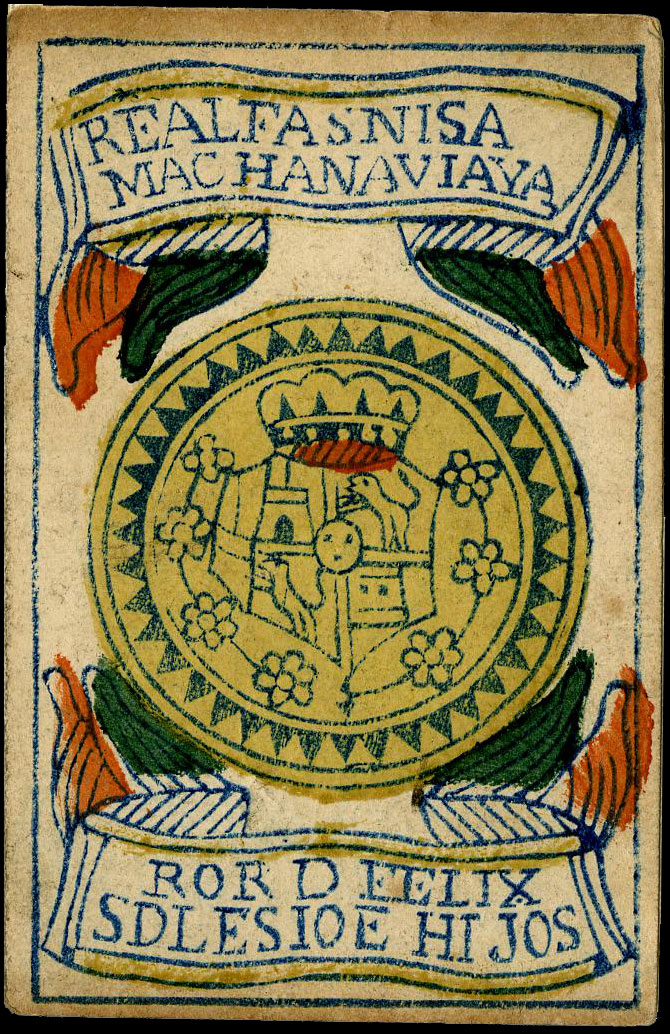
Above: an odd ace of coins having the arms of Spain on the suit-mark, above and below which are scrolls bearing poorly spelled inscriptions: 'Real Fabrica Macharaviaya por D. Felix Solesio e hijos.' © The Trustees of the British Museum
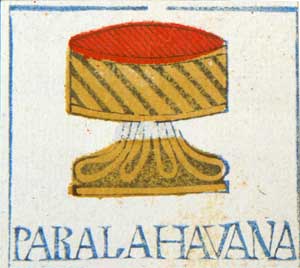
Above: cards from a pack by Don Félix Solesio destined for Mexico or South America, dated 1786 on the Ace of Cups. This was the factory's golden age (1776-1791) before problems began to arise with production costs and terrible roads. The two of Coins has the legend “Para las Indias”; in other examples this might be “Para Caracas” or “Para La Havana” showing that the packs were destined for Spanish colonies in Central (‘West Indies’) or South America. This is the official Spanish National pattern of the 18th century. Design and production was controlled from Madrid as a source of national or regional revenue. The factory was located in the town of Macharaviaya, in the province of Málaga►
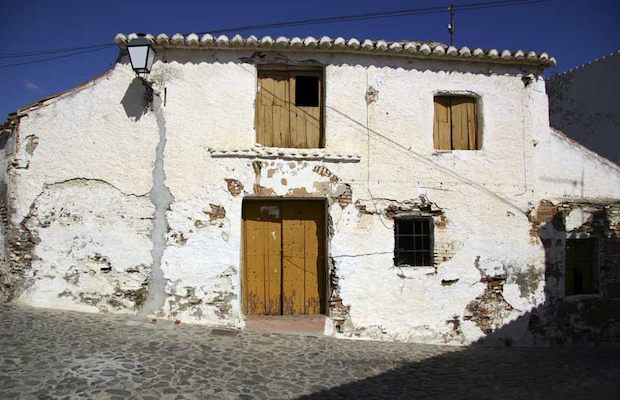
Above: the former playing card factory at Macharaviaya. Photo credit: Marilo Marb.
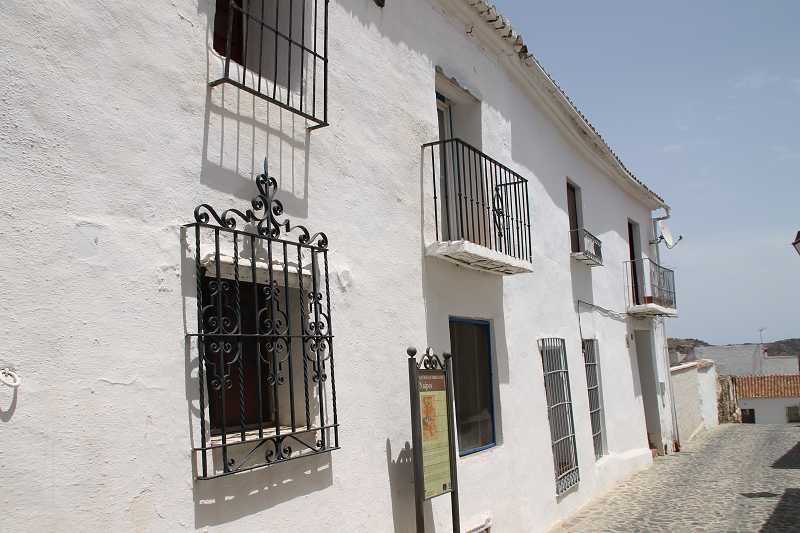
Above: the former playing card factory at Macharaviaya. Photo credit: © 2017 Diputación de Málaga.
More Examples
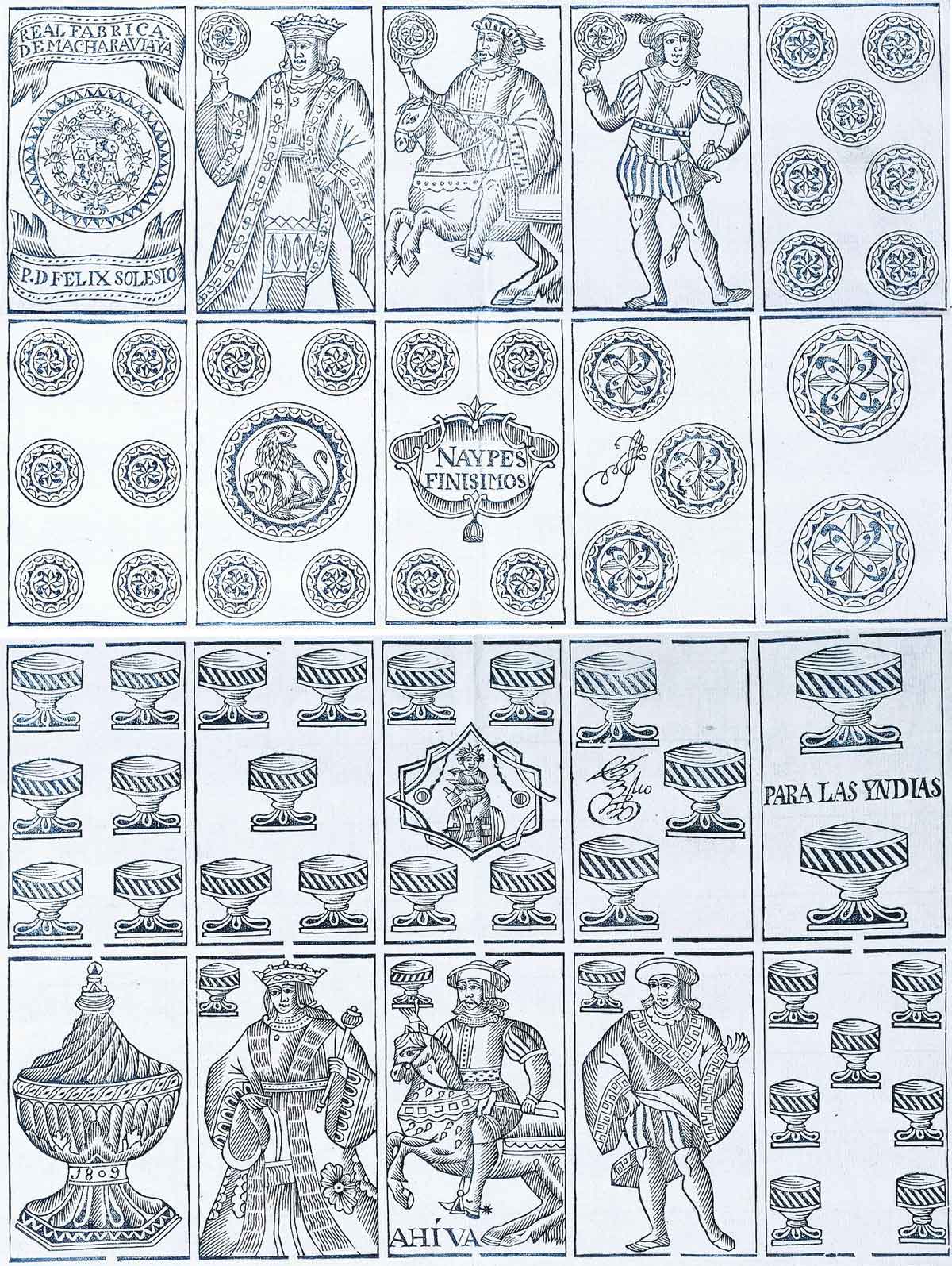
Above: Spanish National pattern, Félix Solesio, Real Fábrica de Macharaviaya, 1809.
Several derivatives of this design have survived in various parts of the world, such as French ‘Aluette’ cards, ‘Parisian’ Spanish pattern (used in Uruguay) and cards used in North Africa.
REFERENCES
Ferro Torrelles, Víctor: “Real Cédula aprobando el establecimiento de la Fábrica de Naipes de Macharaviaya” in La Sota Nº 16, Asescoin, Madrid, March 1997, pp.67-75
Pérez González, Alberto: “A Todos Alumbra”, facsimile of Baraja Carlos IV, Punto Verde, Benalmádena, 2006 here →
Wikipedia : Real Fábrica de Naipes ►

By Simon Wintle
Spain • Member since February 01, 1996
I am the founder of The World of Playing Cards (est. 1996), a website dedicated to the history, artistry and cultural significance of playing cards and tarot. Over the years I have researched various areas of the subject, acquired and traded collections and contributed as a committee member of the IPCS and graphics editor of The Playing-Card journal. Having lived in Chile, England, Wales, and now Spain, these experiences have shaped my work and passion for playing cards. Amongst my achievements is producing a limited-edition replica of a 17th-century English pack using woodblocks and stencils—a labour of love. Today, the World of Playing Cards is a global collaborative project, with my son Adam serving as the technical driving force behind its development. His innovative efforts have helped shape the site into the thriving hub it is today. You are warmly invited to become a contributor and share your enthusiasm.

Activity for Real Fábrica de Macharaviaya
Sign in to comment or save this article.

Related Articles
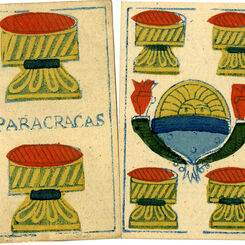
Félix Solesio e Hijos
Félix Solesio e Hijos - Real Fábrica de Madrid - Spanish National pattern for Venezuela
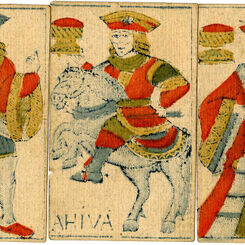
Félix Solesio e Hijos
Félix Solesio e Hijos, Fábrica de Macharaviaya, Spanish National pattern for West Indies, 1801.
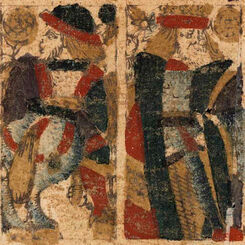
Toledo, 1584
Archaic Spanish-suited deck with 48 cards made in Toledo in 1584.
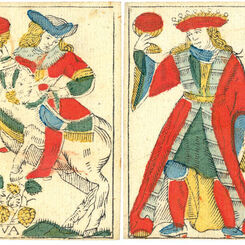
Baraja Carlos IV by Félix Solesio, 1800
Baraja Carlos IV, Félix Solesio en la Real Fábrica de Macharaviaya, 1800.
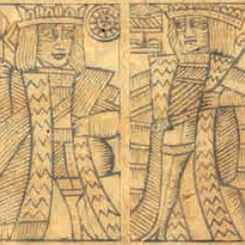
Navarra Pattern, 1682
Navarra pattern produced for the Pamplona General Hospital Monopoly in 1682.
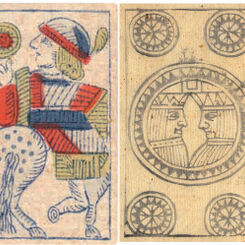
Navarra Pattern
Navarra Pattern produced for the Pamplona General Hospital Monopoly.
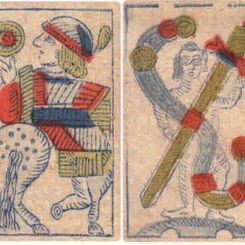
Navarra Pattern, 1793
Navarra pattern by an unknown cardmaker with initials I. I., 1793.
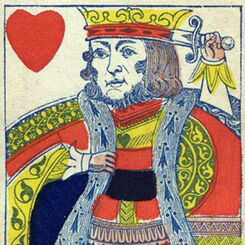
Suicide King
The King of Hearts, holding a sword behind his head, is sometimes nicknamed the “Suicide King”. He c...

Navarra, XVII Century
Facsimile of 17th century Spanish-suited playing cards produced by Erregeak, Sormen S.A., Vitoria-Ga...
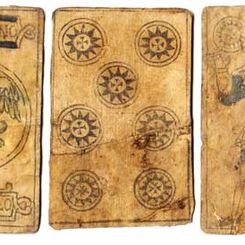
Agostino Bergallo
Agostino Bergallo Spanish pattern made for South American countries
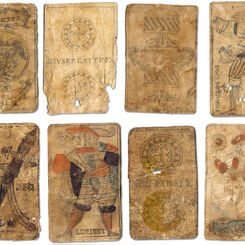
Giuseppe Cattino
Playing cards manufactured in Italy by Giuseppe Cattino and Paolo Montanar for Spanish markets.
Pedro Bosio
Cards of the Spanish National Pattern manufactured by Pedro Bosio, probably during the 18th century ...
Moorish playing cards
These two uncoloured, uncut sheets of early Moorish playing cards were formerly preserved in the Ins...
Gothic Spanish-suited cards
These cards may be a typical example of early 'standard' Spanish playing cards, maybe from before Co...
Silver Cards from Peru
Spanish-suited silver cards, richly embellished and enamelled, from a former Spanish Viceroy in Peru...
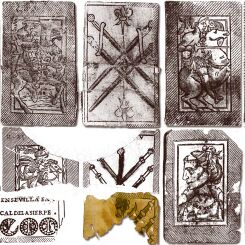
16th century cards discovered in Peru
Fragments of playing cards and 2 dice were unearthed in a 16th century rubbish tip adjacent to a Spa...
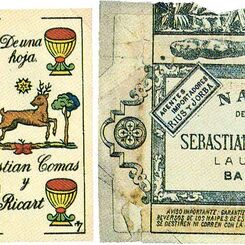
Paraguayan Playing Cards
Playing Cards in Paraguay
The History of Playing Cards
Playing cards appear in European records in the late 14th century, but their earlier history lies fu...
Spanish National Pattern
Probably originating in Spain in the seventeenth century or even earlier, this pattern became strong...
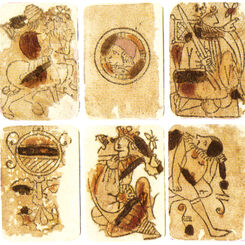
Baraja Morisca — Early XV century playing cards
Primitive Latin suited pack, dated by paper analysis as early XV century, which makes this one of th...
Most Popular
Our top articles from the past 60 days