


Baraja de Amor
Hijos de José Garcia Taboadela was a book-seller who also published this charming pack of lovers' fortune telling cards in 1871.
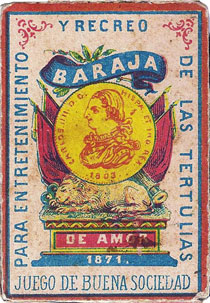
Baraja de Amor, Hijos de Taboadela, 1871
A deck for lovers, titled “Baraja de Amor para Entretenimiento y Recreo de las Tertulias” published by Hijos de José Garcia Taboadela, Calle de Granada No.38, Málaga (Spain), 1871
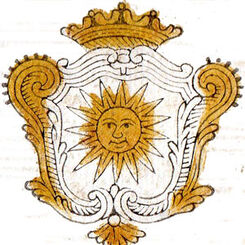
Hijos de José Garcia Taboadela were book-sellers who also published this charming pack of lovers' fortune telling cards in 1871. The subtitle of the deck, "para entretenimiento y recreo de las tertulias" means "for entertainment and recreation at social gatherings". The ace of coins, also shown on the box (left), is based on that of Fournier Hermanos (Burgos) who had recently commenced manufacturing playing cards. Each card features a Question and Answer relating to matters of the heart in the form of four-line poems, with a Spanish-suited playing card in the centre. 48 cards, size of each card = 68 x 47 mms.
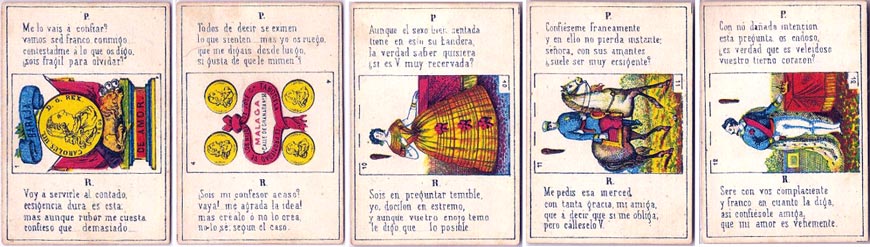
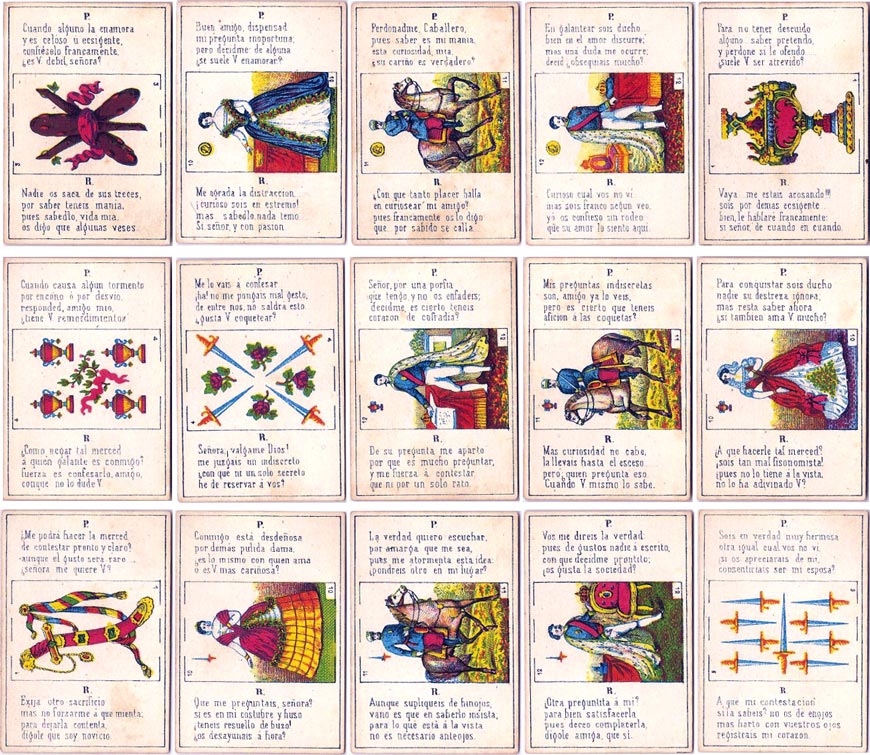
Above: cards from "Baraja de Amor para Entretenimiento y Recreo de las Tertulias" published by Hijos de Taboadela, Calle de Granada No.38, Malaga (Spain), 1871

By Simon Wintle
Spain • Member since February 01, 1996
I am the founder of The World of Playing Cards (est. 1996), a website dedicated to the history, artistry and cultural significance of playing cards and tarot. Over the years I have researched various areas of the subject, acquired and traded collections and contributed as a committee member of the IPCS and graphics editor of The Playing-Card journal. Having lived in Chile, England, Wales, and now Spain, these experiences have shaped my work and passion for playing cards. Amongst my achievements is producing a limited-edition replica of a 17th-century English pack using woodblocks and stencils—a labour of love. Today, the World of Playing Cards is a global collaborative project, with my son Adam serving as the technical driving force behind its development. His innovative efforts have helped shape the site into the thriving hub it is today. You are warmly invited to become a contributor and share your enthusiasm.

Activity for Baraja de Amor
Sign in to comment or save this article.

Related Articles
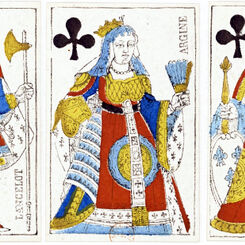
Bertschinger y Codina - Cartes Françaises
French ‘Paris’ pattern made by Bertschinger y Codina, Barcelona, c.1850.
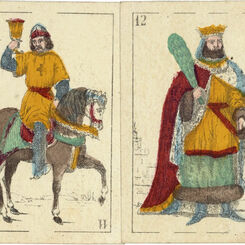
Vicente Gombau y Labad
Elegant fantasy designs by Vicente Gombau y Labad (Madrid), 1861.
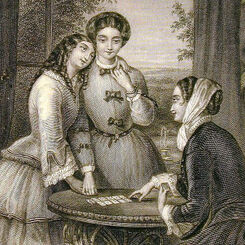
Cartomancy, Oracle and Divination Cards
Playing cards are used for fortune-telling - turning another card illumines the moment and a new per...
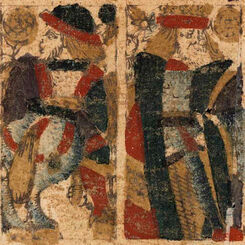
Toledo, 1584
Archaic Spanish-suited deck with 48 cards made in Toledo in 1584.
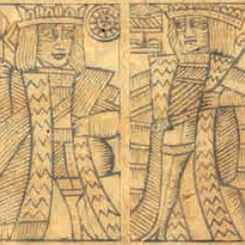
Navarra Pattern, 1682
Navarra pattern produced for the Pamplona General Hospital Monopoly in 1682.
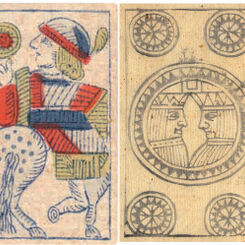
Navarra Pattern
Navarra Pattern produced for the Pamplona General Hospital Monopoly.

Cádiz Pattern playing cards
A popular Spanish playing card pattern widely exported to Spanish-influenced markets.
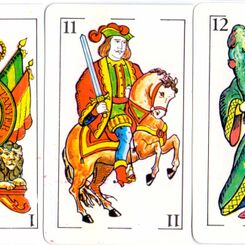
Heráldica Castanyer
Spanish Catalan pattern No.6 by Heráldica Castanyer, Sabadell (Barcelona), c.1980.
Pedro Rotxotxo
Standard Spanish National pattern by Pedro Rotxotxo, Barcelona, late 18th century.
Xilografías de Mallorca
Spanish National pattern re-printed from original woodblocks which are preserved in the monastery at...

Maciá Pattern
The Maciá Pattern which was originally produced by a Barcelona cardmaker in the 1830s and subsequent...

S. Giráldez, Barcelona
Standard Spanish Catalan pattern playing cards by S. Giráldez, Barcelona, c.1905.

Sanmartí, 1840
Sanmartí, 1840.
Heraclio Fournier S.A.
Founded in 1868, today it is part of Cartamundi.
Conjuring and Magic
The art of mystifying people is very old indeed. The first conjurers were priests who obtained power...

Fagoaga y Compañía (Casa Bertrand Domec), Buenos Aires, c.1970
Playing Cards Imported into Argentina by Fagoaga y Compañía (Casa Bertrand Domec), Buenos Aires, c.1...

Spanish Playing Cards ~ La Baraja Española
Spain has played a pivotal role in the history of playing cards in Europe and Latin America.
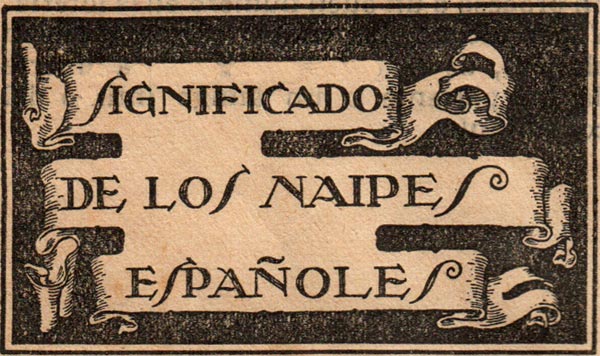
Significado de los Naipes Españoles
Cartomantic meanings of Spanish playing cards by Benita the Witch (XVI century), published by Chocol...

Baraja Boxeo
Baraja de Boxeo, c.1930.

Baraja Artistas del Cine Mudo
Baraja Artistas del Cine Mudo, c.1926.
Most Popular
Our top articles from the past 60 days


