



Pope Joan Trays
Some traditional Pope Joan boards comprise a circular tray, others are square, divided into sections labelled Ace, King, Queen, Jack, Intrigue and Matrimony. In the game, the Nine of Diamonds is “Pope Joan”.
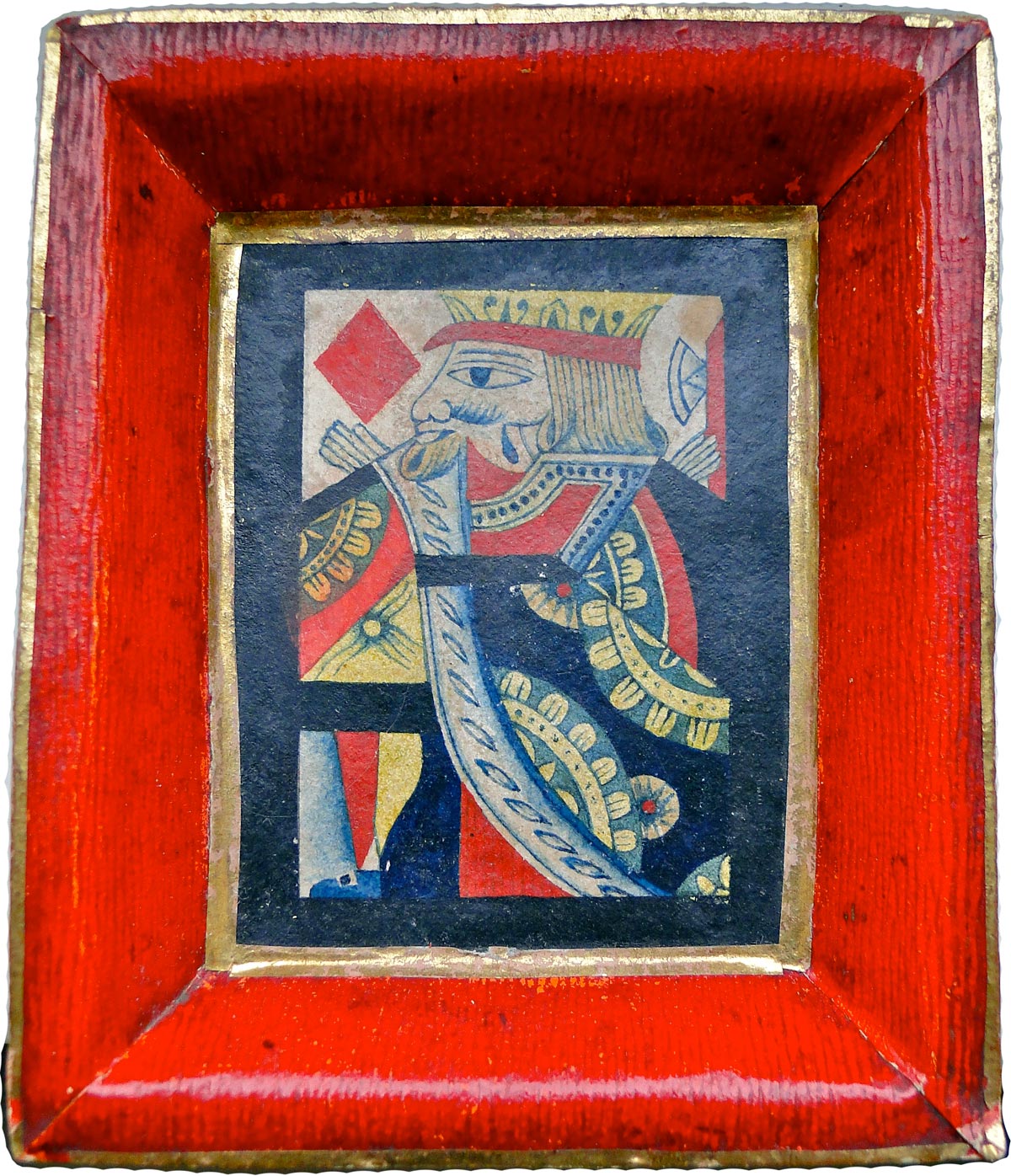
“Pope Joan” Game Trays
with gilt and painted panels
Pope Joan is a card game for three or more players in which the object is to win as many counters as possible by playing certain cards. The game was first recorded in Britain in 1732. It was popular in the 19th century and is mentioned in 'Pickwick Papers'. Some traditional Pope Joan boards comprise a circular tray, others are square, divided into sections labelled Ace, King, Queen, Jack, Intrigue and Matrimony. In the game, the Nine of Diamonds is “Pope Joan”.
Right: click the images to zoom →
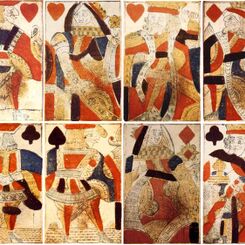
The full-length playing card images in the trays are consistent with woodblock and stencil playing cards produced in England around c.1790-1820. The red and gold in the frames really brightens up the playing card images in this set.
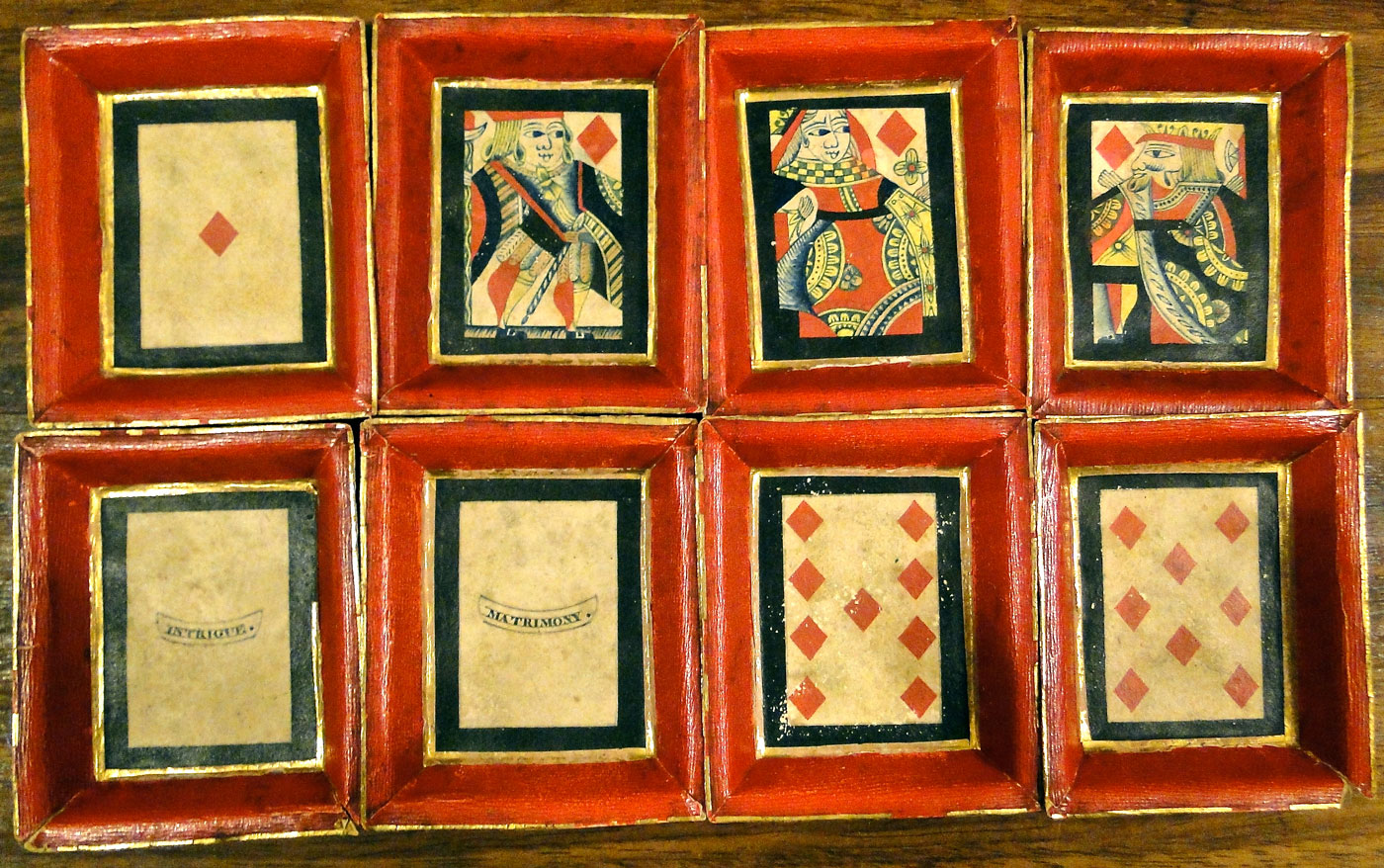
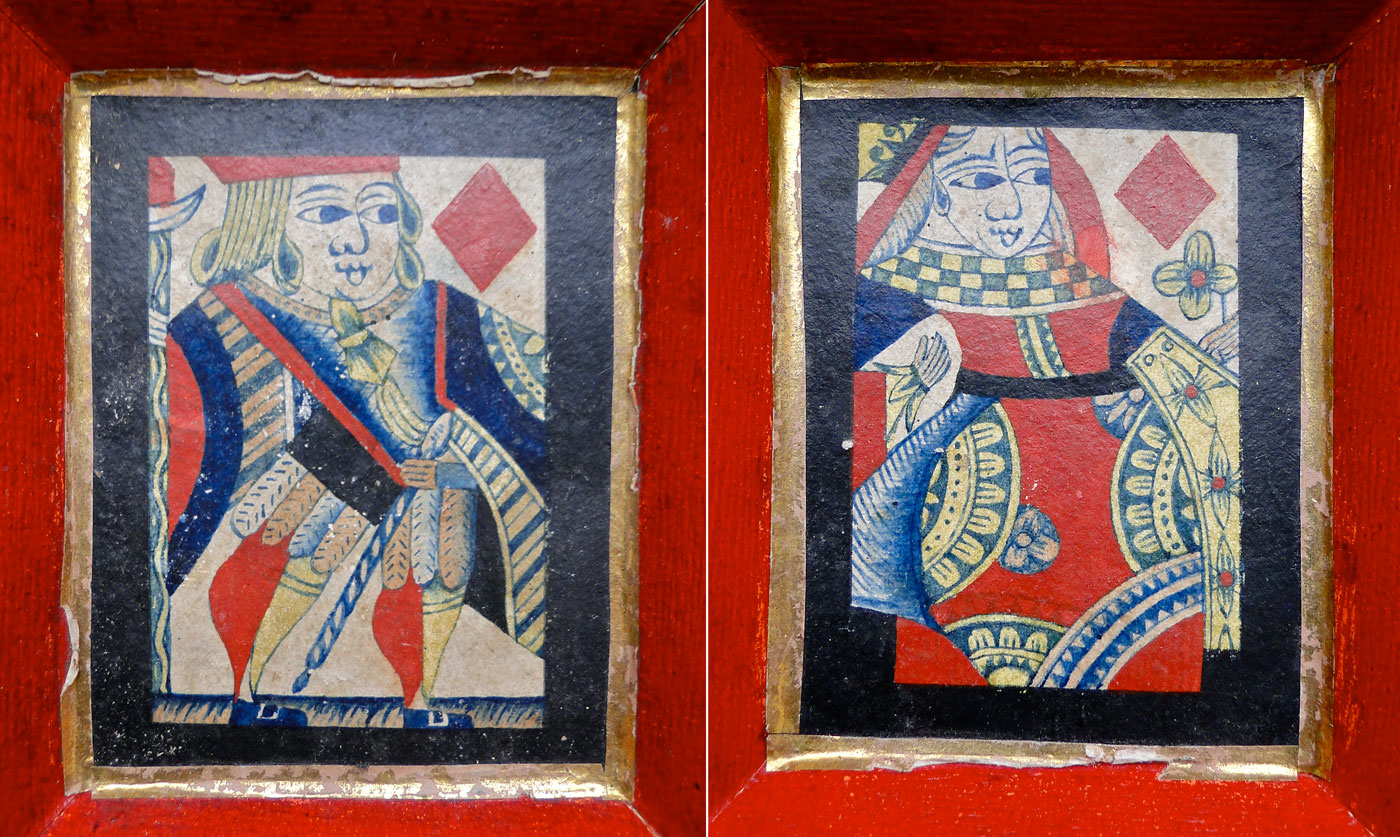
Above: Pope Joan trays with old playing cards forming their base, early 19th century. Images courtesy Tim Paine.

By Simon Wintle
Spain • Member since February 01, 1996
I am the founder of The World of Playing Cards (est. 1996), a website dedicated to the history, artistry and cultural significance of playing cards and tarot. Over the years I have researched various areas of the subject, acquired and traded collections and contributed as a committee member of the IPCS and graphics editor of The Playing-Card journal. Having lived in Chile, England, Wales, and now Spain, these experiences have shaped my work and passion for playing cards. Amongst my achievements is producing a limited-edition replica of a 17th-century English pack using woodblocks and stencils—a labour of love. Today, the World of Playing Cards is a global collaborative project, with my son Adam serving as the technical driving force behind its development. His innovative efforts have helped shape the site into the thriving hub it is today. You are warmly invited to become a contributor and share your enthusiasm.

Activity for Pope Joan Trays
Sign in to comment or save this article.

Related Articles
Victorian grocer’s scale plate
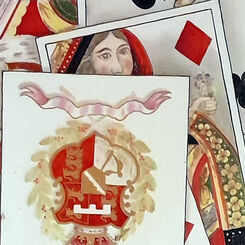
Large flat plate decorated with highly coloured English cards and royal arms.
Fortune Telling playing cards
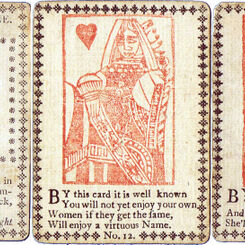
English Fortune Telling cards probably published c.1770.
Arms of English Peers
The Arms of English Peers playing cards were first published in 1686. Heraldry, or a knowledge of th...

De la Rue’s 125th anniversary
In around 1955 De la Rue introduced a new coloured joker and a series of aces of spades with a silho...
Suicide King
The King of Hearts, holding a sword behind his head, is sometimes nicknamed the “Suicide King”. He c...
Draughts League Medals
Arthur Charles Prince worked for De la Rue as a playing card cutter and later was promoted to superv...
Mathematical Instruments
Mathematical Instruments playing cards forming an instrument maker's trade catalogue, Thomas Tuttell...
Secondary Uses of Playing Cards
The unprinted backs of playing cards have led people to use them for secondary purposes such as memo...
Games Leaflets
Thos De la Rue & Co. & Gibson's Games Leaflets.
John Llewellyn, playing card manufacturer, London, 1778-1785
John Llewellyn, playing card manufacturer, London, 1778-1785
History of Blackjack
Over the years the origin of Blackjack, like many other games, has eluded researchers for a long tim...

Early Anglo-French Cards
Cards produced in Rouen during the sixteenth century. It was cards like these which were imported to...
Lottery Scratch Playing Card
Move your mouse over the scratch area...
The Beggars’ Opera
The Beggars’ Opera Playing Cards were first published in 1728. The cards carry the words and music o...
Cries of London
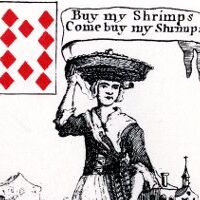
The cards were printed from copper plates, with the red suit symbols being applied later by stencil....
Italian Playing Cards
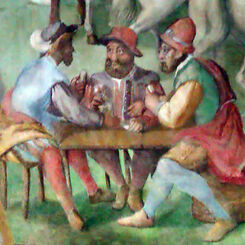
The first reliable evidence that playing cards were being used in Italy is from 1376, when a game ca...
The History of Playing Cards
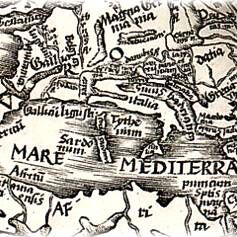
Playing cards appear in European records in the late 14th century, but their earlier history lies fu...
History of Court Cards
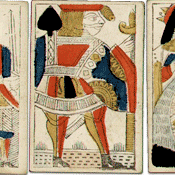
The court cards in English packs of playing cards derive from models produced by Pierre Marechal in ...
History of English Playing Cards & Games
The History of English Playing Cards dates probably from the mid 15th century
Hunt, c.1800
Standard English pattern playing cards manufactured by Hunt, c.1800.
Most Popular
Our top articles from the past 60 days


