



Naipes ‘La Criolla’ by Anabella Corsi
Inspired by an archaic Spanish pattern formerly used in Spain during the 16th and 17th centuries.
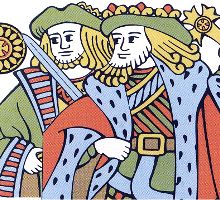
Naipes ‘La Criolla’ designed by Uruguayan graphic designer Anabella Corsi, 2008.
Naipes 'La Criolla' are inspired by an archaic Spanish pattern formerly used in Spain during the 16th and 17th centuries (example here). The first retail edition was printed in Uruguay in 2009 by Gráfica Mosca. An earlier verson with advertising on the reverse, and with several small differences of detail, was published in 2008.
"La palabra 'criolla' o 'criollo' significa 'hijo de europeo nacido en hispanomérica'. Cuando a partir de 1492, los europeos comenzaron a llegar a la América Hispana (de España), mayormente españoles e italianos por estas zonas, sus hijos fueron los 'criollos' de América. Tanto si eran hijos de padres europeos, como si fueran hijos de padre europeo y madre india, todos eran criollos. Mis naipes son así, criollos, porque nacieron aquí, ya que yo los diseñé, pero son 'hijos' de los naipes españoles" - Anabella Corsi.
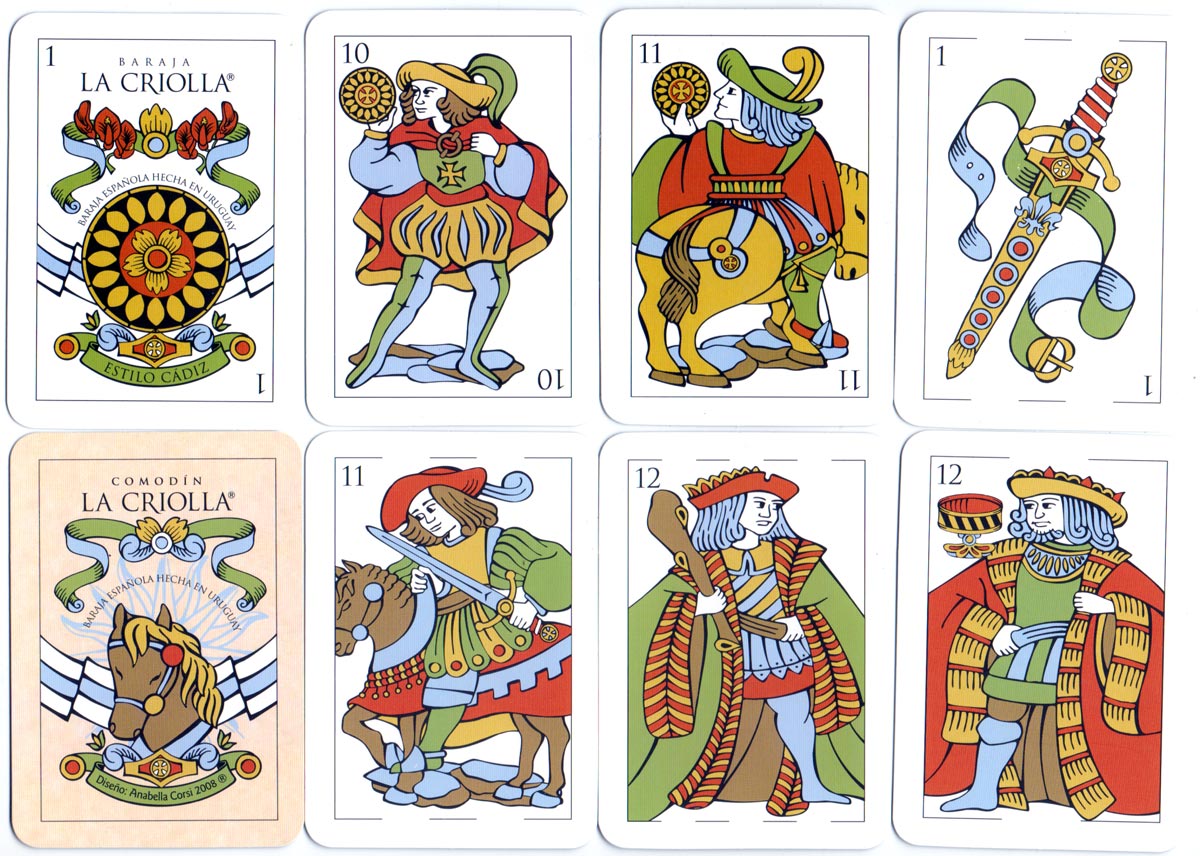
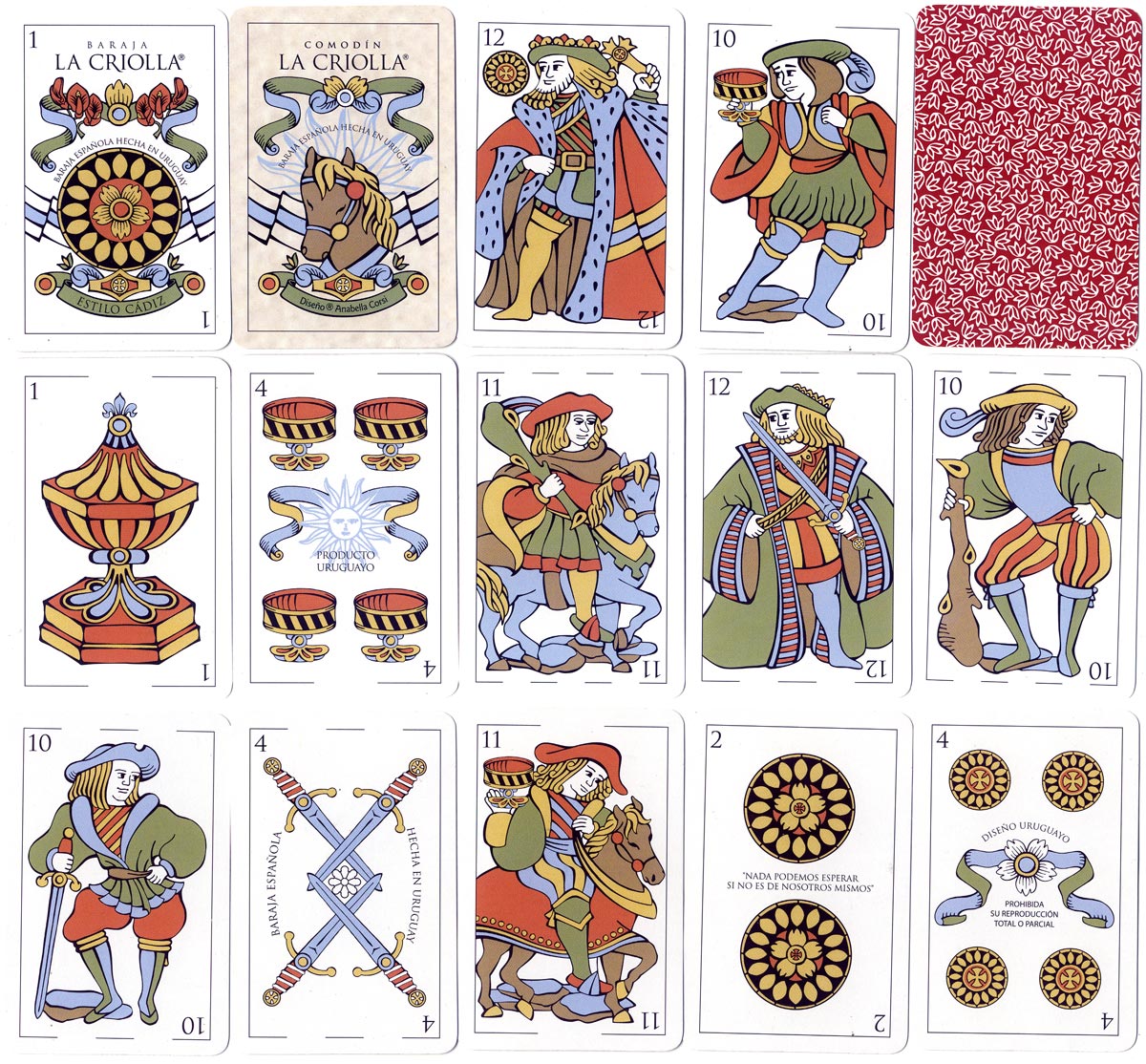
Above: Naipes 'La Criolla' designed by Anabella Corsi, 2008-09.

By Simon Wintle
Spain • Member since February 01, 1996
I am the founder of The World of Playing Cards (est. 1996), a website dedicated to the history, artistry and cultural significance of playing cards and tarot. Over the years I have researched various areas of the subject, acquired and traded collections and contributed as a committee member of the IPCS and graphics editor of The Playing-Card journal. Having lived in Chile, England, Wales, and now Spain, these experiences have shaped my work and passion for playing cards. Amongst my achievements is producing a limited-edition replica of a 17th-century English pack using woodblocks and stencils—a labour of love. Today, the World of Playing Cards is a global collaborative project, with my son Adam serving as the technical driving force behind its development. His innovative efforts have helped shape the site into the thriving hub it is today. You are warmly invited to become a contributor and share your enthusiasm.

Activity for Naipes ‘La Criolla’ by Anabella Corsi
Sign in to comment or save this article.

Related Articles
Playing Cards designed by Alvaros
Playing Cards designed by Alvaros, published by Eduardo Carrión, Montevideo, 2000
Transformation of Playing Cards
The best-known fantasy playing cards are Transformation cards, in which figurative scenes are drawn ...
Jean Picart le Doux
Jean Picart le Doux playing cards, issued in 1957 to celebrate the company's 125th anniversary, feat...
Naipes ‘Baccarat’
An example of the typical version of the Spanish Catalan pattern which is widely used in South Ameri...
Uruguayan Playing Cards
Until the 19th century playing cards were imported into Uruguay from Spain.
Pippoglyph
Pippoglyph Playing Cards by Ben Crenshaw © 2004

Naipes ‘Bambú’
Naipes ‘Bambú’ manufactured by M.C. de Casabó Ltda, Montevideo, c.1950

Naipes ‘American’
Naipes ‘American’ by M.C. de CASABÓ Ltda, Montevideo, c.1950.
Karlis Padegs
Karlis Padegs (1911-1940) was a Latvian artist who designed 17 playing cards in 1936 - joker, aces, ...

Conrad Punta del Este Resort & Casino
Naipes Conrad Punta del Este Casino playing cards produced specially for Conrad Punta del Este Resor...
Radisson Hotels
Playing cards for Radisson Hotels - Casinos del Estado - Victoria Plaza, Montevideo, Uruguay, c.2009...

Production Methods for Small Scale Editions
Some alternative approaches to producing small, hand-made editions of playing cards
Regarding the designs of playing cards
The quality of playing card designs often deteriorates with time…
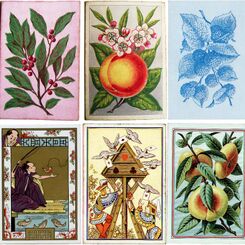
Playing Card Design
The playing card calls for artistic treatment and although the constrained size imposes some limitat...
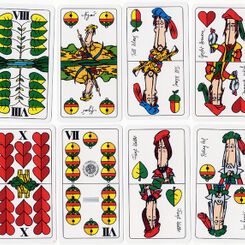
Balázs Pál Nagy's Tell No. 3306 Playing Cards
Balázs Pál Nagy Tell 3306
Balázs Pál Nagy's Playing Cards
Balázs Pál Nagy's Playing Cards
The History of Playing Cards
Playing cards appear in European records in the late 14th century, but their earlier history lies fu...
Queen of Hearts
“Queen of Hearts” by Josie Callipari, winner of the Brian Tucker Accounting Desert Fantasia Award 20...
Uruguay playing card tax
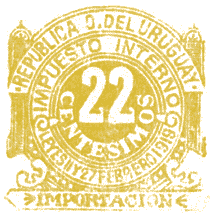
In 1806 the Council of Concepción del Uruguay imposed an 8 Peso tax on card and billiard tables on a...

Cía General de Fósforos Montevideana
The design of these Spanish-suited cards is the same Spanish Catalan style as used by their sister c...
Most Popular
Our top articles from the past 60 days


