


Modern Austrian Traditional Fortune Telling Cards
Formerly known as Gypsy Cards (Zigeunerkarten).
Formerly known as Gypsy Cards (Zigeunerkarten), this is the new edition of the traditional Austrian fortune telling cards, Nr. 1901. It is designed exclusively for fortune telling with motifs originating in 19th-century Austria-Hungary, that were adapted for a contemporary Austrian audience in 1960, and in 2021 modernized and renamed.
The 32 cards display large, watercolour and ink illustrations depicting Biedermeier-era situations, figures, and personifications. Unlike Tarot or other cards, these cards lack indices or traditional suit symbols that would allow them to be used for regular card games. The only exceptions are the "Sweetheart" (Geliebte) and "Lover" (Geliebter) cards, which feature a small red heart in the upper left corner. The concept of each illustration is defined along the bottom margin in six languages: German, English, French, Italian, Croatian, and Hungarian. The languages French and Hungarian were added when modernizing this deck and are lacking in older editions. The motifs represent abstract concepts such as Loss, Constancy, and Yearning; tangible objects and events like Marriage, Letter, or Journey; as well as specific personages such as Lover, Widow, or Judge. The "Love" card, depicting the god Cupid, is featured on the deck's outer packaging. The "Soldier" card particularly points to the deck's Austro-Hungarian origins, as the figure is dressed in an Austro-Hungarian uniform.
Renaming
Until 2021, the deck was known as "Zigeunerkarten" ("Gypsy cards"). However, Piatnik renamed the product to phase out the word „Zigeuner“ (gypsy), like many companies and restaurants at the time (Zigeunerschnitzel, Zigeunerräder, etc.). This was to address the term’s negative historical connotations, including its usage during the National Socialist era, and aligning the brand with modern standards.

Modern Austrian Traditional Fortune Telling Cards (former Gypsy Cards) published by Piatnik, Nr. 1901, 2021.
The card back design features a black starry night sky with a black-and-white checkered pattern containing the symbols of the twelve zodiac signs. Aligning with the modern approach, the deck's tuck box includes a scannable QR code that provides instructions on how to lay out and read the cards.

By Konrad Hämmerle
Austria • Member since December 04, 2024
Konrad Hämmerle is a student and card artist from Vorarlberg, the westernmost region of Austria. He founded his own company with his deck Vorarlberger Büschel: a unique reinterpretation of traditional Jass cards. His deck showcases Vorarlberg’s rich cultural heritage, featuring detailed illustrations of traditional clothing, mythical creatures, and real historical figures from the region. Through this project, Konrad has become a true card enthusiast, particularly fascinated by playing cards that represent countries, regions, or historical themes. His passion lies in blending storytelling with design to keep cultural heritage and identity alive in the world of playing cards.

Activity for Modern Austrian Traditional Fortune Telling Cards
Sign in to comment or save this article.

Related Articles
Luxury No. 2167
A Piatnik classic that lives up to its title.
Art pack I
Art pack featuring Old Masters, including Bruegel, Vermeer, Titian, Raphael, Caravaggio, Canaletto, ...
Lenormand Wahrsage-Karten No. 55
Conventional Lenormand designs on a pack from Piatnik but with unconventional numbering.
Rika playing cards
Playing cards depicting famous Austrian skiers of the 1970s.
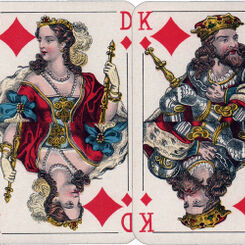
Piatnik No.97
Non-standard French-suited cards published by Ferd Piatnik & Sõhne, Vienna, c.1940s.
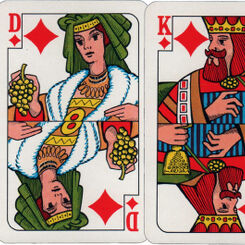
Austrian Wine
Skat deck for Austria’s excellent wines, Österreichischer Weinwirtschaftsfonds, c.1965
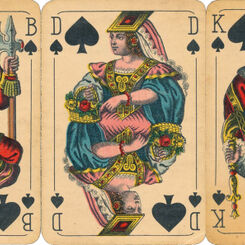
Vienna (ex-Lyon) pattern
‘Vienna pattern’ derived from archaic Lyon pattern by Ferd Piatnik & Söhne A.G., c.1926-1934.
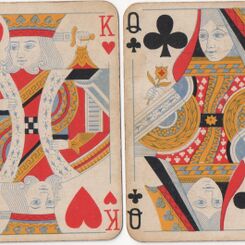
48: Ferdinand Piatnik & Sons
Ferd. Piatnik produced a very large range of cards with many different standard and non-standard pat...
Popular No.257
Piatnik’s “Popular Playing Cards” No.257
Salzburger Pattern
Salzburger pattern by Ferd. Piatnik & Söhne, Vienna
Die Neue ÖVP
Promotional deck for the Austrian People’s Party (ÖVP) printed by Piatnik, 1996.
Blue Playing Cards
“Blue Playing Cards” by Piatnik, 1960s, inspired by the Cubism art movement in which objects are ana...
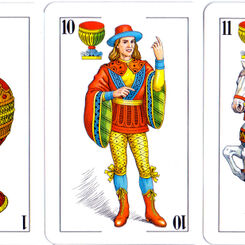
El Jokey by Piatnik, 1990s
‘El Jokey’ Spanish-suited pack by Piatnik & Sons, Vienna, 1990s
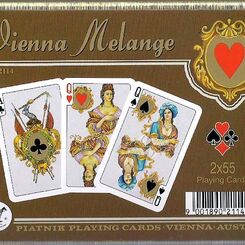
Vienna Melange
“Vienna Melange” Playing Cards by Piatnik with a historical feel representing the four races that ma...
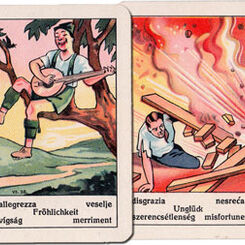
Art Deco Gypsy Oracle
Art Deco fortune telling deck published by Piatnik, 1936.
Ferd. Piatnik & Söhne
Ferdinand Piatnik was born in Ofen on October 14, 1819.
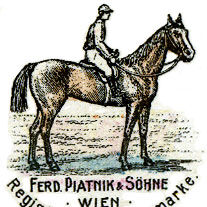
Piatnik Tarock
Deck of "Industrie und Glück" or "Rural Scenes" tarock cards manufactured by Ferd Piatnik & Söhne, V...
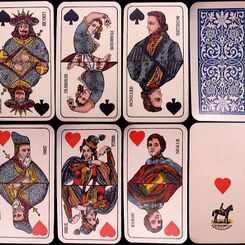
Literary Figures
Non-Standard Literary Figures playing cards manufactured by Ferd. Piatnik & Söhne A.G., Vienna, 1924...
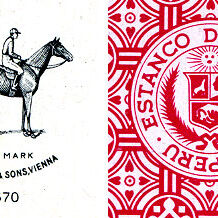
Piatnik & Sons for the“Estanco de Naipes del Perú”
Playing Cards made by Piatnik & Sons for the“Estanco de Naipes del Perú”, c.1960.
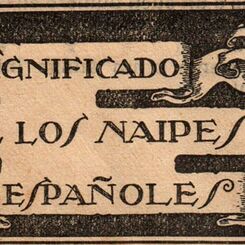
Significado de los Naipes Españoles
Cartomantic meanings of Spanish playing cards by Benita the Witch (XVI century), published by Chocol...
Current Trends
Articles and Explore tags gaining attention


Németh Péter
14 October 2026, 22:21Zigauner-Wahrsagekarten - Ferd. Piatnik & Söhne - 1964 - nach Zeichnungen von Adolf Stursa.