




Arpak
The Arpak No-Revoke playing cards, 24 Mount Pleasant, Liverpool, c.1927-35.
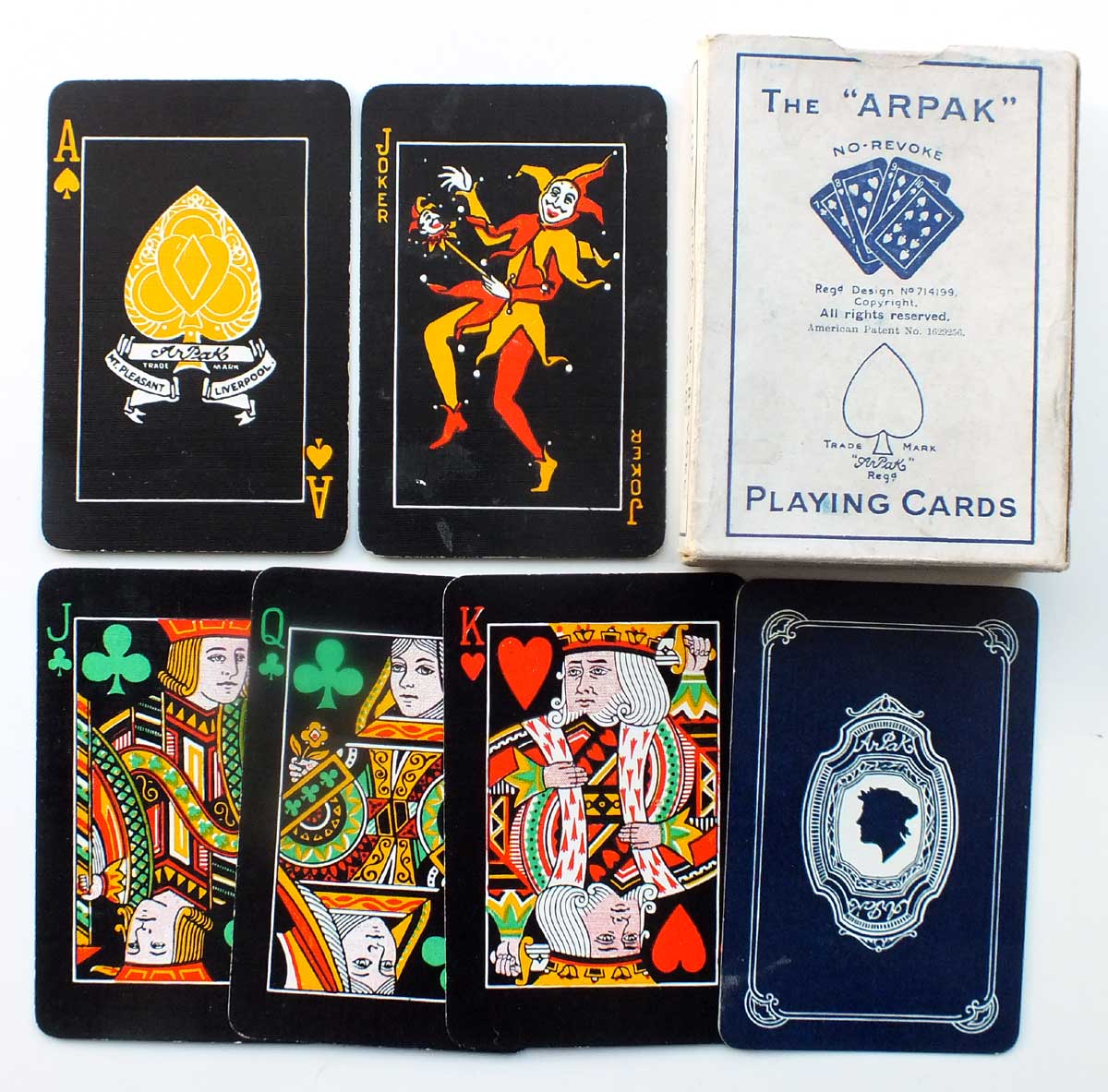
Arpak No-Revoke playing cards
The “Arpak” Playing Card Co, 24 Mount Pleasant, Liverpool, England, c.1927-35
All cards are on a black background which makes them look rather striking. The suit symbols and pips are coloured, intended to help reduce eye strain for people who find it difficult to distinguish the suit signs: spades-yellow, diamonds-white, clubs-green and hearts-red. Packs have 52 cards + 1 joker. Several different formal back designs are known, in red or blue and white, and some decks have gold edges. There are two different sizes of indices and widths of outer borders. Arpak ‘No-revoke’ decks are also known with advertisements on the reverse.
Small Indices
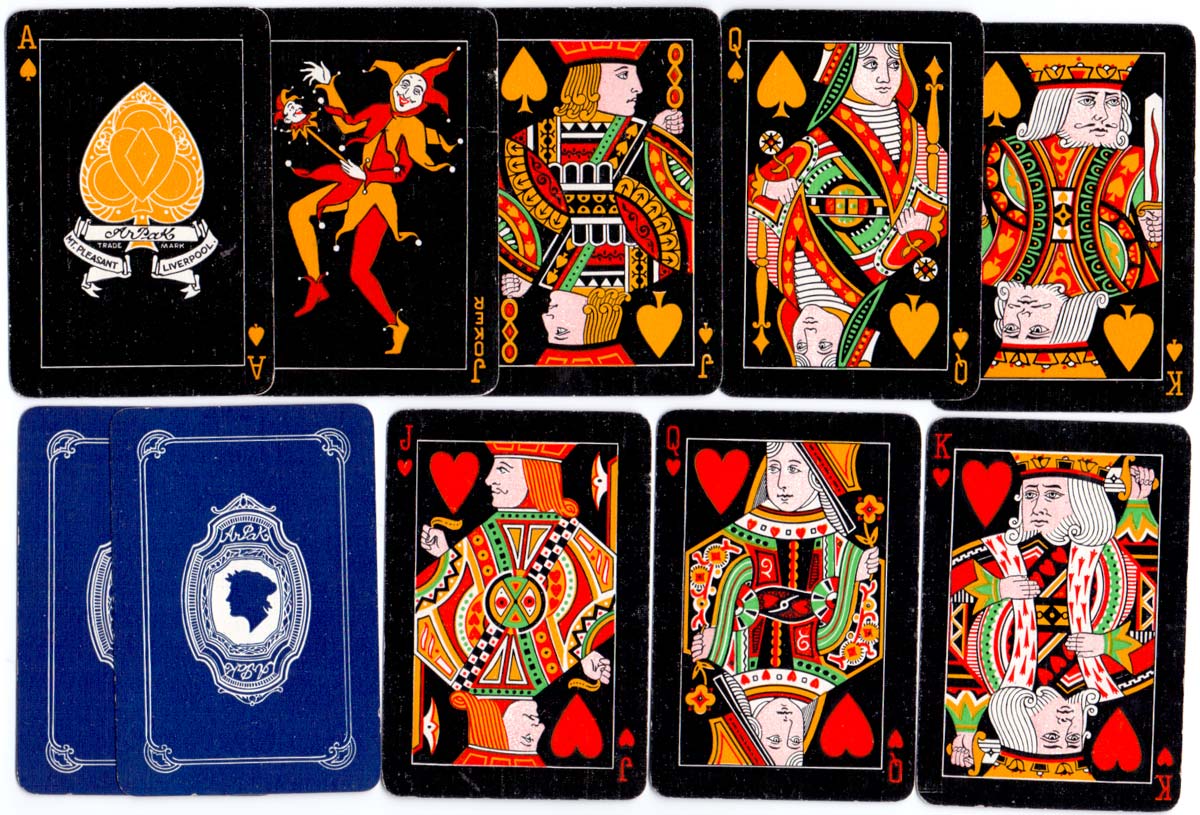
Large Indices
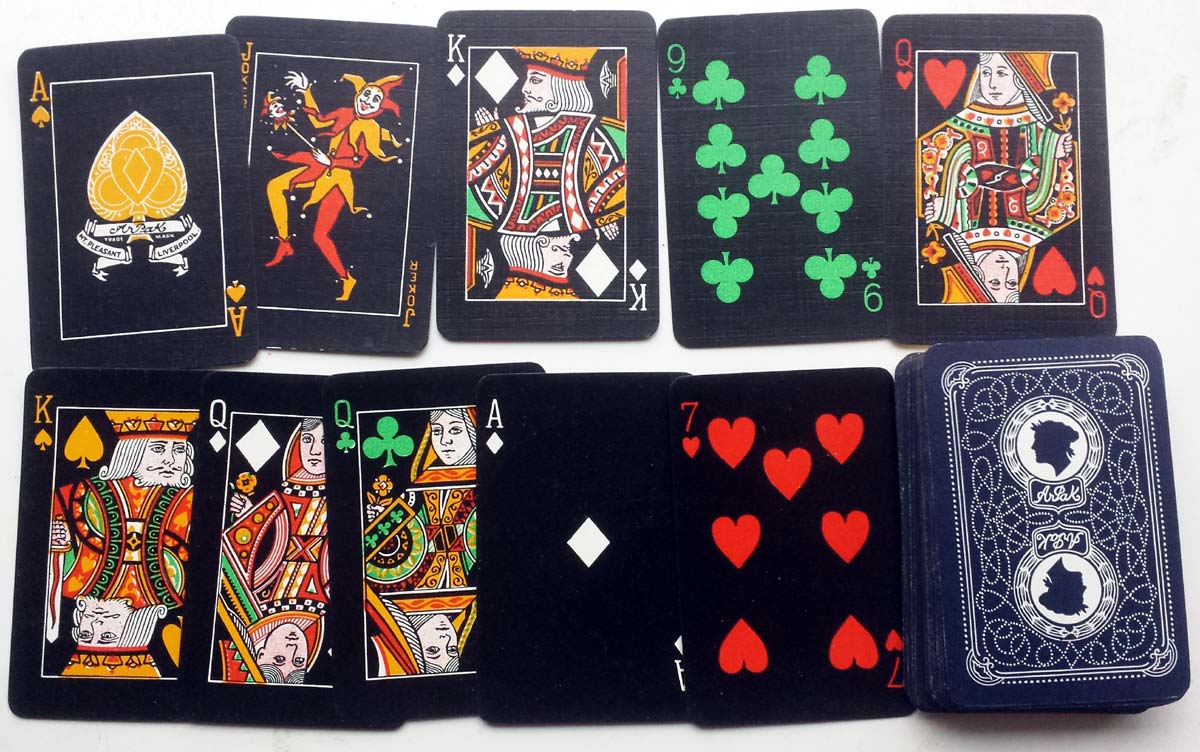
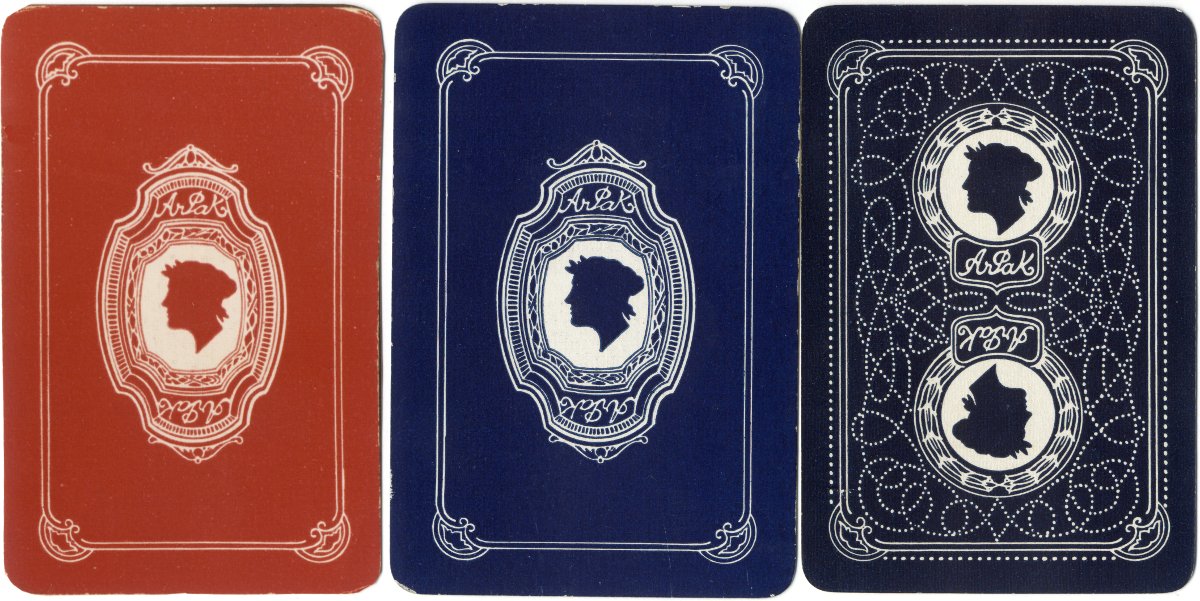
Above & Left: Arpak No-Revoke playing cards, c.1930, showing both sizes of indices, the Joker and some common back designs.
There was no uniformity or standardisation regarding the colour scheme in different No-revoke packs. De la Rue introduced an ‘Optic’ pack in 1900 with spades-blue, diamonds-yellow, clubs-black and hearts-red. De la Rue & Co issued another pack in 1915 with spades-black, diamonds-orange, clubs-blue and hearts-carmine. Universal Playing Card Co Ltd introduced their No-revoke pack in 1930 with spades-black, diamonds-red, clubs in black hatching and hearts in red hatching. Waddington's introduced their No-revoke pack in 1930 with spades-black, diamonds in red diagonal stripes, clubs in black & white and hearts-red.
Different coloured suit symbols had been patented in USA on Nov 23, 1926, by Antoine Lefebure of San Francisco, with the assertion that “even experienced players confuse clubs and spades; hearts and diamonds” see more →
The Arpak Playing Card Company was also involved in a patent for improvements in fountain pens (1928)►
See also: John Newman's Colour Cards►

By Simon Wintle
Spain • Member since February 01, 1996
I am the founder of The World of Playing Cards (est. 1996), a website dedicated to the history, artistry and cultural significance of playing cards and tarot. Over the years I have researched various areas of the subject, acquired and traded collections and contributed as a committee member of the IPCS and graphics editor of The Playing-Card journal. Having lived in Chile, England, Wales, and now Spain, these experiences have shaped my work and passion for playing cards. Amongst my achievements is producing a limited-edition replica of a 17th-century English pack using woodblocks and stencils—a labour of love. Today, the World of Playing Cards is a global collaborative project, with my son Adam serving as the technical driving force behind its development. His innovative efforts have helped shape the site into the thriving hub it is today. You are warmly invited to become a contributor and share your enthusiasm.

Activity for Arpak
Sign in to comment or save this article.
Related Articles
Hewson
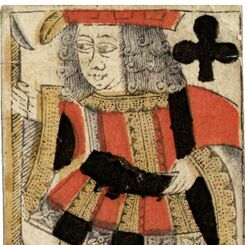
Antique English woodblock playing cards by a card maker named C. Hewson, mid-17th century.
Suicide King
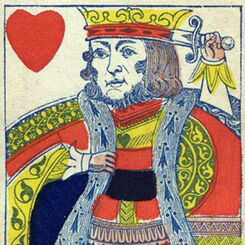
The King of Hearts, holding a sword behind his head, is sometimes nicknamed the “Suicide King”. He c...
Thomas Wheeler
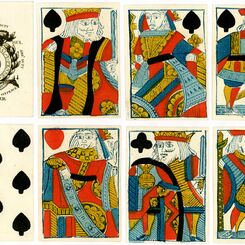
Thomas Wheeler appears in directories at 2 Richbell St (1799), 8 Middle Row, Holborn (1801), 118 Hol...

Gibraltar
Playing Cards in Gibraltar.
Dartex
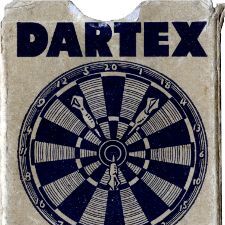
Dartex, the Thrilling New Card Game of Skill (1938) based on the traditional pub game where darts ar...

John Waddington Ltd, early type
John Waddington Ltd, early type Ace of Spades and court cards, 1922-30.

Brotherton, 1789-1840
Brotherton is recorded as operating at 13 Little Britain (London) from 1789-1840. In 1851 his factor...
Hardy
The Hardy family of playing card manufacturers began with Henry Hardy (1784-89) and continued throug...
Berkshire Printing Co.
The company was founded in 1908 as the printing division of the Brooke Bond Tea Company in Reading. ...

Denbro (Denny Brothers)
Denbro (Denny Brothers) c.1975-79

Hunt, 1790-1801
Packs manufactured by Hunt, c.1800.
The Joker Card
The 'Joker' is believed to have been invented by American Euchre players who, when modifying the rul...
De La Rue
De La Rue introduced letter-press printing into playing card production and his patent was granted i...

Playing cards in Wales - Welsh playing cards
Whereas the distinctiveness of Wales is an important resource contributing to the rich texture of va...

James English & Co.
Victorian Playing Cards manufactured by James English & Co., London, c.1875

Games & Print Services
Games & Print Services Limited, of Canvey Island, now part of Cartamundi.
Waddington’s Playing Cards
John Waddington Limited was a leading producer of playing cards and card games in the UK during the ...
John Newman’s Colour Cards
John Newman’s Colour Cards
History of English Playing Cards & Games
The History of English Playing Cards dates probably from the mid 15th century
Hunt, c.1800
Standard English pattern playing cards manufactured by Hunt, c.1800.
Most Popular
Our top articles from the past 60 days


Mark Axworthy
13 February 2024, 18:43My grandfather had two very worn packs with which we used to play double patience in the 1960s. The family ran a stationery shop, so he probably got them new in the 1930s. The wonder of the internet means that I now have several sets, including one set issued by Asprey's, the royal jewellers. The pack is in a tasteful art deco box with Asprey's name on it.