



Silver Cards from Peru
Spanish-suited silver cards, richly embellished and enamelled, from a former Spanish Viceroy in Peru, dated 1745.
Playing cards engraved in silver from Peru, 1745
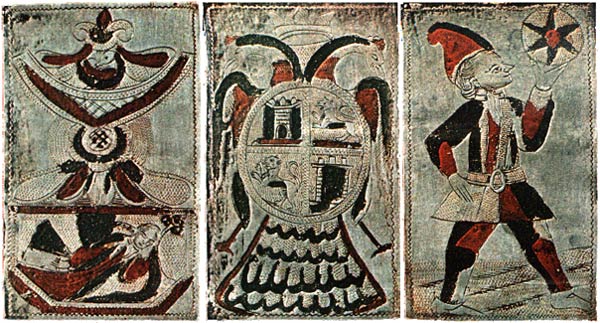
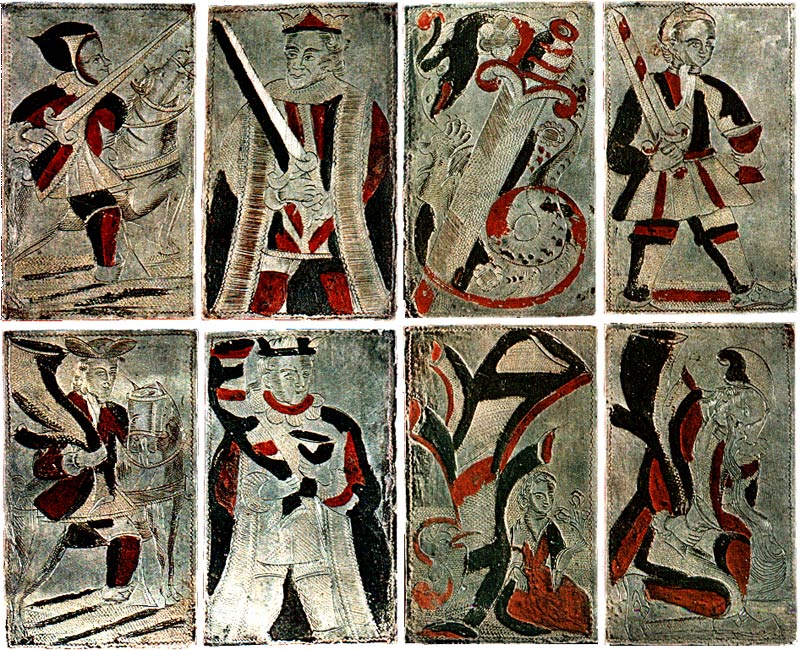
Wealthy card players have always enjoyed playing with - or perhaps just looking at - expensive luxury sets of illuminated, hand-painted and gilded cards, or cards printed from finely engraved plates.
The example of Spanish-suited silver cards shown here is embellished and enamelled. It came from a former Spanish Viceroy in Peru and is dated 1745. The ace of coins displays the arms of Castille and León and the two-headed imperial eagle. A similar set is said to be in the Museo de America in Madrid and yet another in Italy.
The first Viceroy in Peru was Blasco Núñez Vela from Ávila [wikipedia], who since 1530 had been bringing shiploads of silver and gold from Peru to king Carlos I in Spain. He was nominated as Viceroy in 1543 and charged with implementing new laws (Leyes Nuevas), but he soon entered into conflicts with local barons and was beheaded in 1546. His successor, Antonio de Mendoza, was appointed in 1549 and successive viceroy appointments were made until 1824, 40 viceroys in total.
The Viceroy of Peru resided in the city of Lima, in the sumptuous Palace of the Viceroys, surrounded by a brilliant court, in the midst of great luxury and riches, and a guard of honour.
Silver playing cards are recorded as having been used at the French court in the reign of Louis XV, probably not because silver was cheaper than paper or vellum! Engraved silver cards are said to have become fashionable as early as the end of the sixteenth century for inclusion in princely display cabinets and examples are known with French, German and Italian suits.

By Simon Wintle
Spain • Member since February 01, 1996
I am the founder of The World of Playing Cards (est. 1996), a website dedicated to the history, artistry and cultural significance of playing cards and tarot. Over the years I have researched various areas of the subject, acquired and traded collections and contributed as a committee member of the IPCS and graphics editor of The Playing-Card journal. Having lived in Chile, England, Wales, and now Spain, these experiences have shaped my work and passion for playing cards. Amongst my achievements is producing a limited-edition replica of a 17th-century English pack using woodblocks and stencils—a labour of love. Today, the World of Playing Cards is a global collaborative project, with my son Adam serving as the technical driving force behind its development. His innovative efforts have helped shape the site into the thriving hub it is today. You are warmly invited to become a contributor and share your enthusiasm.

Activity for Silver Cards from Peru
Sign in to comment or save this article.

Related Articles
Toledo, 1584
Archaic Spanish-suited deck with 48 cards made in Toledo in 1584.
Navarra Pattern, 1682
Navarra pattern produced for the Pamplona General Hospital Monopoly in 1682.
Navarra Pattern
Navarra Pattern produced for the Pamplona General Hospital Monopoly.
Navarra Pattern, 1793
Navarra pattern by an unknown cardmaker with initials I. I., 1793.
XV Century Catalan playing cards
XV Century Catalan Playing Cards, featuring four female Sotas, four Aces and four cards from the sui...
Suicide King
The King of Hearts, holding a sword behind his head, is sometimes nicknamed the “Suicide King”. He c...
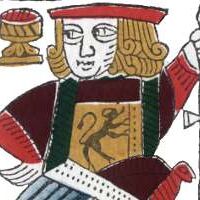
Navarra, XVII Century
Facsimile of 17th century Spanish-suited playing cards produced by Erregeak, Sormen S.A., Vitoria-Ga...
Fournier No. 55
Naipes Intransparentes de Una Hoja No.55 made by Hijos de Heraclio Fournier (Vitoria) for exportatio...
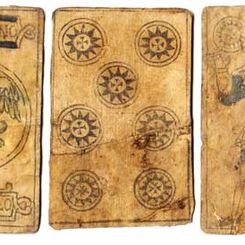
Agostino Bergallo
Agostino Bergallo Spanish pattern made for South American countries
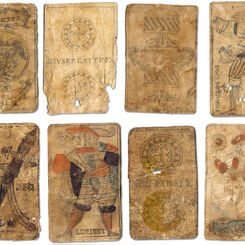
Giuseppe Cattino
Playing cards manufactured in Italy by Giuseppe Cattino and Paolo Montanar for Spanish markets.
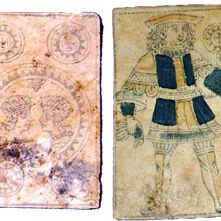
Pedro Bosio
Cards of the Spanish National Pattern manufactured by Pedro Bosio, probably during the 18th century ...

Vistas del Perú, c.1920s
Vistas del Perú souvenir deck, made in USA and imported by Edw. E. Muecke, Lima, Peru, c.1920s.
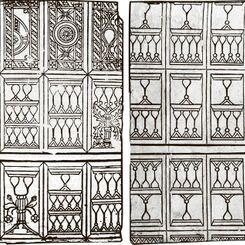
Moorish playing cards
These two uncoloured, uncut sheets of early Moorish playing cards were formerly preserved in the Ins...
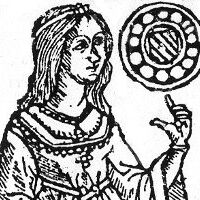
Gothic Spanish-suited cards
These cards may be a typical example of early 'standard' Spanish playing cards, maybe from before Co...
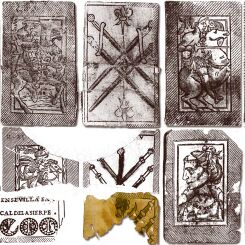
16th century cards discovered in Peru
Fragments of playing cards and 2 dice were unearthed in a 16th century rubbish tip adjacent to a Spa...
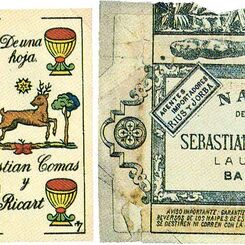
Paraguayan Playing Cards
Playing Cards in Paraguay
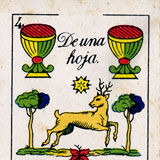
El Ciervo, c.1930
Sebastian Comas y Ricart - Hija de A. Comas “El Ciervo” Spanish Catalan pattern, c.1930.
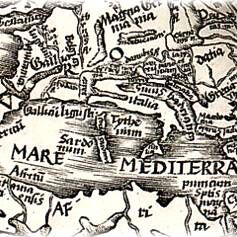
The History of Playing Cards
Playing cards appear in European records in the late 14th century, but their earlier history lies fu...

Real Fábrica de Macharaviaya
Production was controlled from Madrid as a source of national or regional revenue and, as a rule, th...
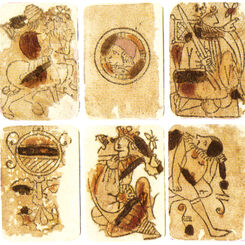
Baraja Morisca — Early XV century playing cards
Primitive Latin suited pack, dated by paper analysis as early XV century, which makes this one of th...
Most Popular
Our top articles from the past 60 days


