


Clemente Roxas double-ended Spanish pack
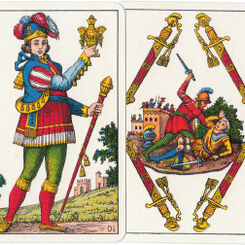
Double-ended Spanish-suited playing cards published by Clemente de Roxas in Madrid, 1814.
Double-ended Spanish-suited playing cards published by Clemente de Roxas in Madrid, 1814. The double-ended court cards are not typical of Spanish cards and are another example of Roxas’ originality. The four aces are also double-ended but the numeral cards are single-ended.
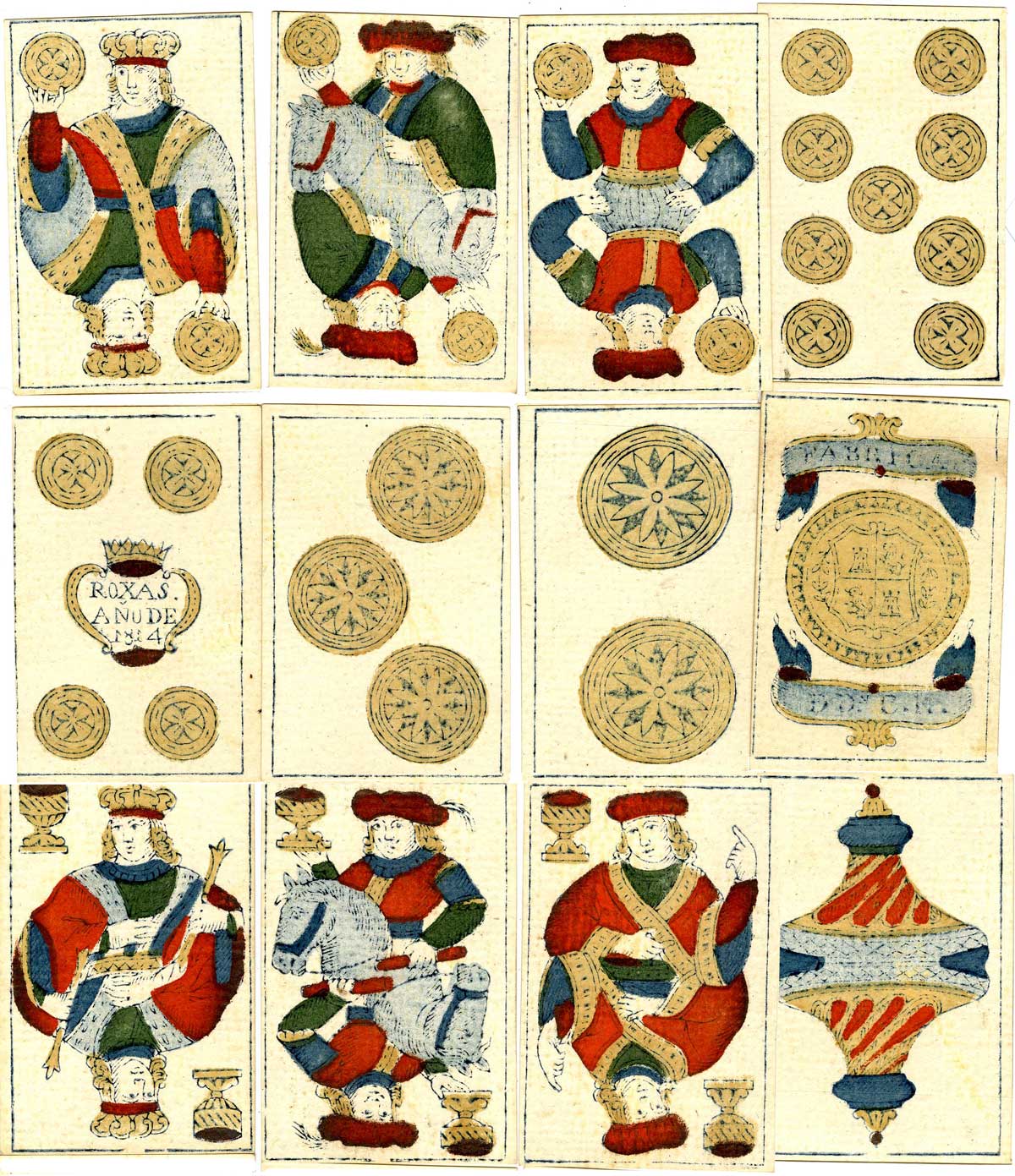
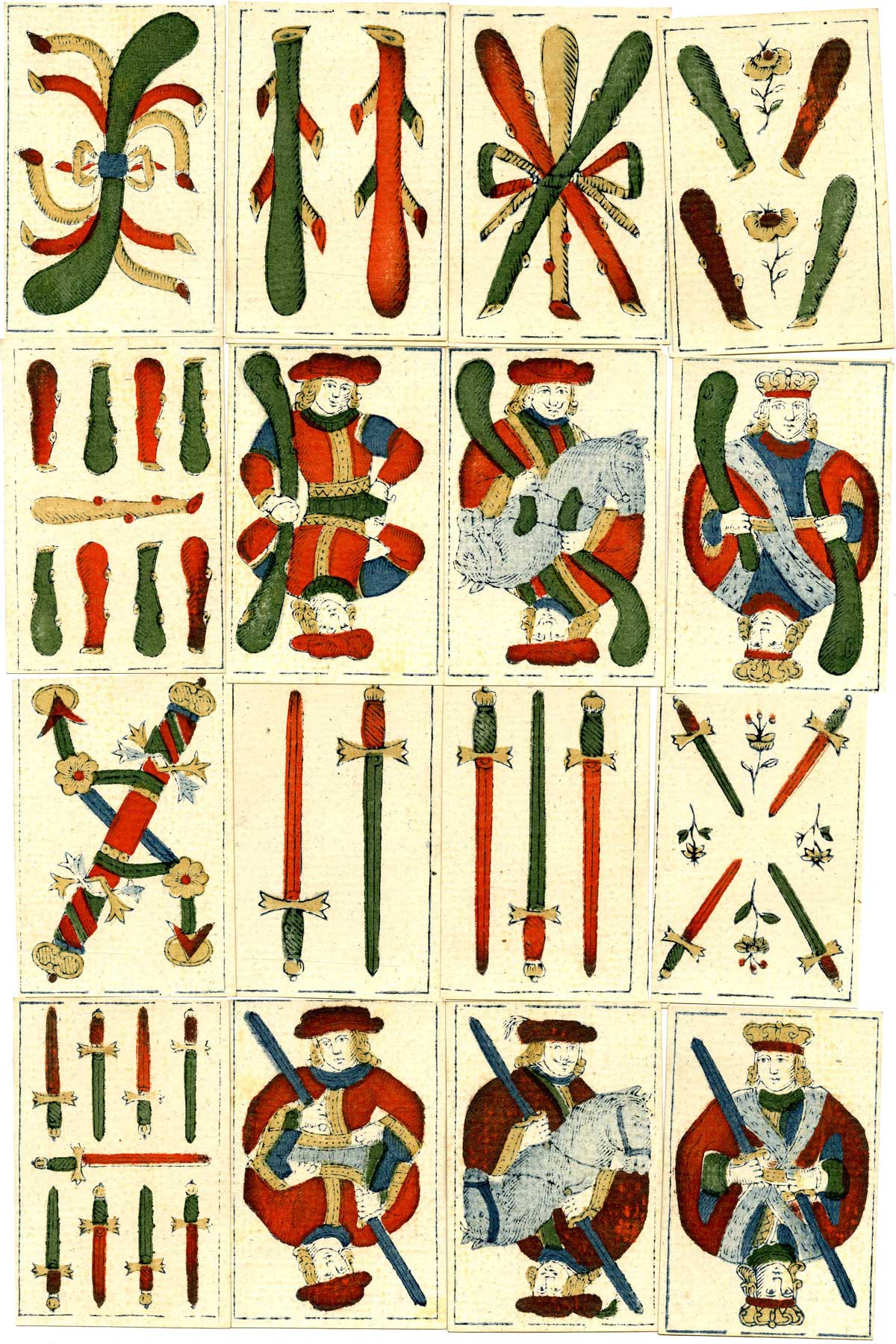
Above: double-ended Spanish-suited playing cards published by Clemente Roxas in Madrid, 1814. Hand-coloured woodcut, total 48 cards, backs printed with a series of blue stars. The inscription on the ace of coins is unclear but looks like "Fabrica" with below the letters "D D C N . " On the suit-mark is a central shield with the arms of Castile and Léon. On the 4 of coins is a central shield surmounted by a crown lettered "Roxas AÑo De 1814". © The Trustees of the British Museum • Museum number 1876,1014.523-570►

By Simon Wintle
Spain • Member since February 01, 1996
I am the founder of The World of Playing Cards (est. 1996), a website dedicated to the history, artistry and cultural significance of playing cards and tarot. Over the years I have researched various areas of the subject, acquired and traded collections and contributed as a committee member of the IPCS and graphics editor of The Playing-Card journal. Having lived in Chile, England, Wales, and now Spain, these experiences have shaped my work and passion for playing cards. Amongst my achievements is producing a limited-edition replica of a 17th-century English pack using woodblocks and stencils—a labour of love. Today, the World of Playing Cards is a global collaborative project, with my son Adam serving as the technical driving force behind its development. His innovative efforts have helped shape the site into the thriving hub it is today. You are warmly invited to become a contributor and share your enthusiasm.

Activity for Clemente Roxas double-ended Spanish pack
Sign in to comment or save this article.

Related Articles
Amorcillos
‘Amorcillos’ (Cupids), a masterpiece from the golden age of Spanish playing cards by Clemente Roxas,...
Four Empires - Clemente Roxas
‘Four Empires’ playing cards produced by Clemente Roxas, c.1805.
Sarde Pattern
Sarde pattern published by Modiano, c.1975, based on early XIX century Spanish model.
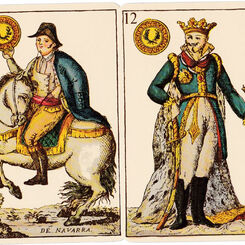
Goyesca
Baraja ‘Goyesca’ facsimile of original deck published in Madrid by Clemente de Roxas, 1814.
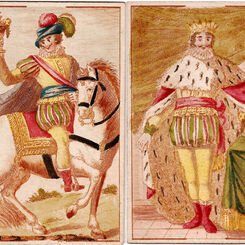
Baraja “Neoclásica”, Madrid, 1810
Baraja “Neoclásica” engraved by José Martínez de Castro, first published by Clemente Roxas, Madrid, ...
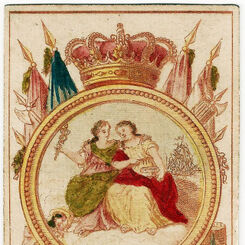
José Martínez de Castro, page 2
The most noteworthy feature of its history is that this design has since been adopted for use in Sar...
Most Popular
Our top articles from the past 60 days


