


Antique Swiss Playing Cards, c.1530
The Swiss national suit system of shields, acorns, hawkbells and flowers originated sometime during the fifteenth century.
The Swiss national suit system of shields, acorns, hawkbells and flowers originated sometime during the fifteenth century. The playing cards shown here were originally made in Basel, c.1530. They were discovered inside a book cover and reproduced in 1998 to celebrate the 20th anniversary of Cartophilia Helvetica. A distinguishing feature is the "banner 10" cards, which are now more or less counted as an ace. The kings are seated. The same designs can be seen three hundred years later in the cards of David Hurter, c.1830.
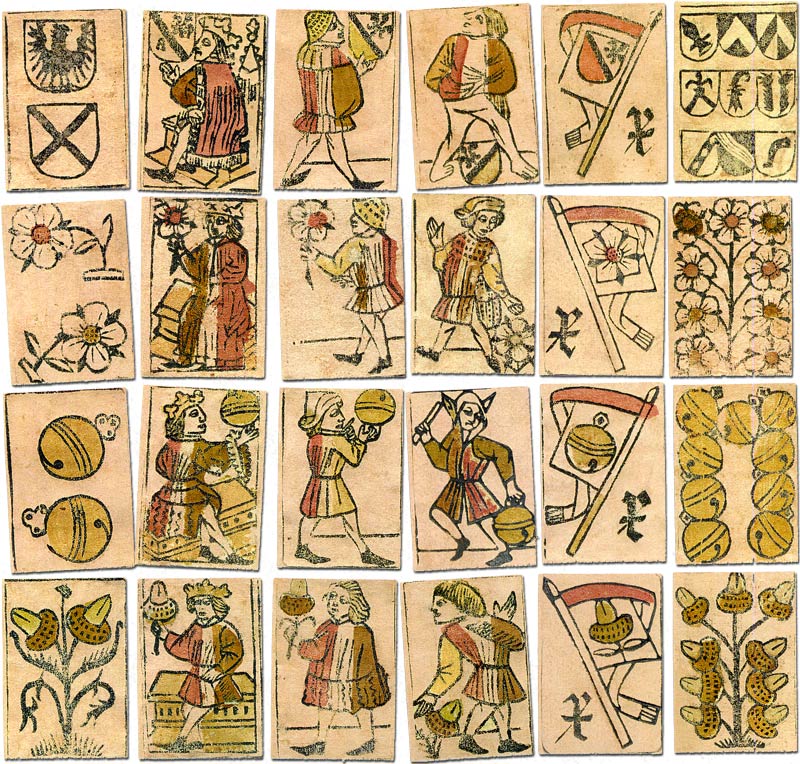
Above: cards from reprint by AGM Müller in 1998.
A second set of antique Swiss playing cards was discovered in May 2011 at Nidwaldner State Archives inside the covers of an old book during restoration. The cards were ‘reconstructed’ into a reproduction pack of 48 cards.
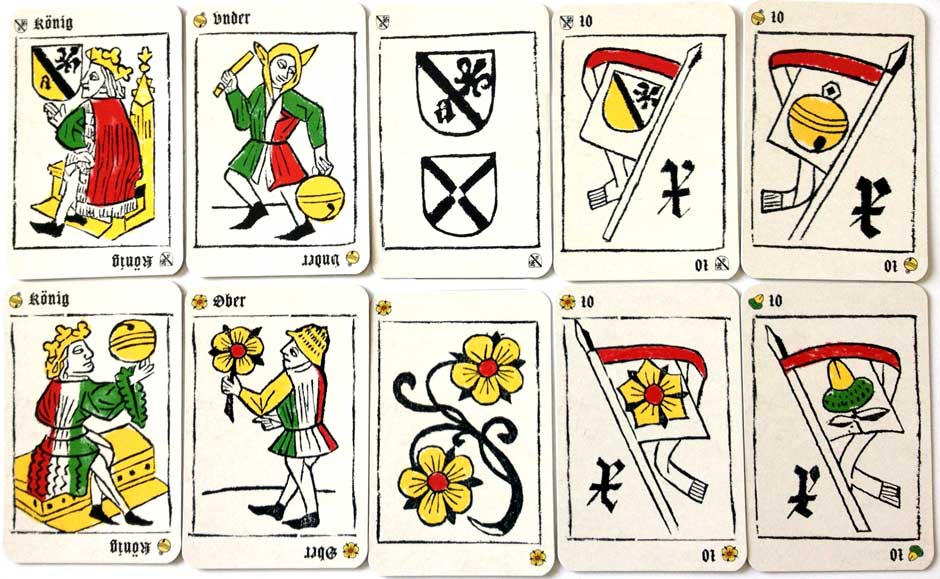
Above: cards from a reproduction by Druckerei Odermatt (www.dod.ch). Image courtesy Bert Kaspersma.

By Simon Wintle
Spain • Member since February 01, 1996
I am the founder of The World of Playing Cards (est. 1996), a website dedicated to the history, artistry and cultural significance of playing cards and tarot. Over the years I have researched various areas of the subject, acquired and traded collections and contributed as a committee member of the IPCS and graphics editor of The Playing-Card journal. Having lived in Chile, England, Wales, and now Spain, these experiences have shaped my work and passion for playing cards. Amongst my achievements is producing a limited-edition replica of a 17th-century English pack using woodblocks and stencils—a labour of love. Today, the World of Playing Cards is a global collaborative project, with my son Adam serving as the technical driving force behind its development. His innovative efforts have helped shape the site into the thriving hub it is today. You are warmly invited to become a contributor and share your enthusiasm.

Activity for Antique Swiss Playing Cards, c.1530
Sign in to comment or save this article.

Related Articles
Mini Jass
Pocket-size cards with modern designs for playing the Swiss national card game, Jass.
Johannes Müller c.1840
Facsimile edition of Swiss suited deck first published by Johannes Müller in c.1840.
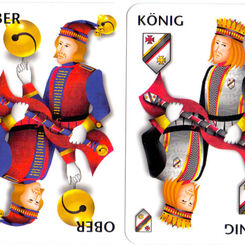
Modern Swiss-German Pattern
Modern Swiss-German Pattern by AGMüller, c.2000.
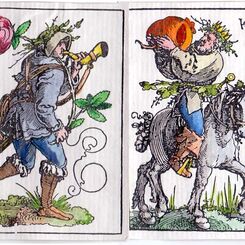
Hans Sebald Beham
Playing cards designed by Hans Sebald Beham (1500–1550).
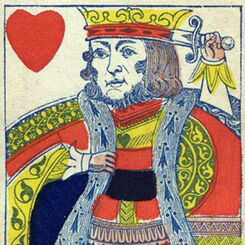
Suicide King
The King of Hearts, holding a sword behind his head, is sometimes nicknamed the “Suicide King”. He c...
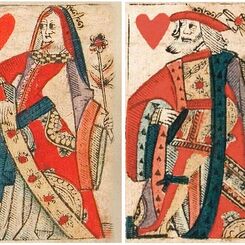
Pierre Marechal
Rouen became an important centre for card-making whose influence extended far afield. Cards from Rou...
Schweizer Luxus-Jasskarte No.41
The lower and upper knaves are depicted in a vibrant and lively manner, while the enthroned kings ar...
Jass Allemand
Egbert Moehsnang produced this contemporary Swiss-suited, double-ended pack, based on original XV ce...
History of Blackjack
Over the years the origin of Blackjack, like many other games, has eluded researchers for a long tim...
Swiss Playing Cards
The Swiss national suit system of shields, acorns, hawk bells and flowers emerged sometime during th...
Mamluk Playing Cards
Nã'ib, the game of lieutenants... these cards are amongst the earliest Arabic playing cards ext...

The Beggars’ Opera
The Beggars’ Opera Playing Cards were first published in 1728. The cards carry the words and music o...

Cries of London
The cards were printed from copper plates, with the red suit symbols being applied later by stencil....
Swiss Playing Cards by David Hurter, c.1830
David Hurter had begun to build up a playing card business in Schaffhausen during the late 18th cent...

David Hurter, Schaffhausen
David Hurter built up a playing card business in Schaffhausen during the 18th century.

The Princely Hunting pack, c.1440
The Princely Hunting Pack, c.1440/45, is attributed to Konrad Witz and his workshop in Basle.
Playing cards in the Upper Rhine region
Documentary evidence suggests that card playing established itself in Italy in 1376, and then spread...
The History of Playing Cards
Playing cards appear in European records in the late 14th century, but their earlier history lies fu...
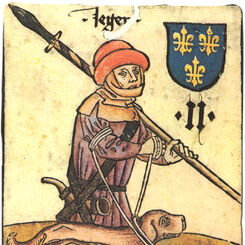
Hofamterspiel, c.1460
Hofamterspiel, c.1460
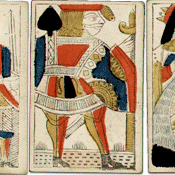
History of Court Cards
The court cards in English packs of playing cards derive from models produced by Pierre Marechal in ...
Most Popular
Our top articles from the past 60 days


Ваня Козлов (Vanya Kozlov)
19 November 2025, 09:47SavedSaved this article to Ваня Козлов's Collection