


Cries of London
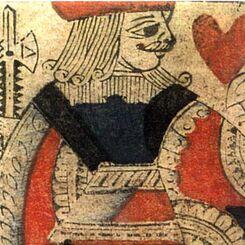
The cards were printed from copper plates, with the red suit symbols being applied later by stencil. The court cards contain interesting miniature versions of the standard full-length figures used on playing cards at the time
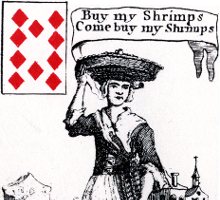
Cries of London Playing Cards, c.1754
John Kirk’s Cries of London Playing Cards were first published in around 1754. Criers earned their living by walking the streets, selling their wares or providing services to the community, and drawing attention to their presence by bawling characteristic songs or playing on musical instruments. The practice was universal but has declined in recent times. The cards were printed from copper plates, with the red suit symbols being applied later by stencil. The court cards contain miniature versions of the full-length figures used on playing cards at the time.
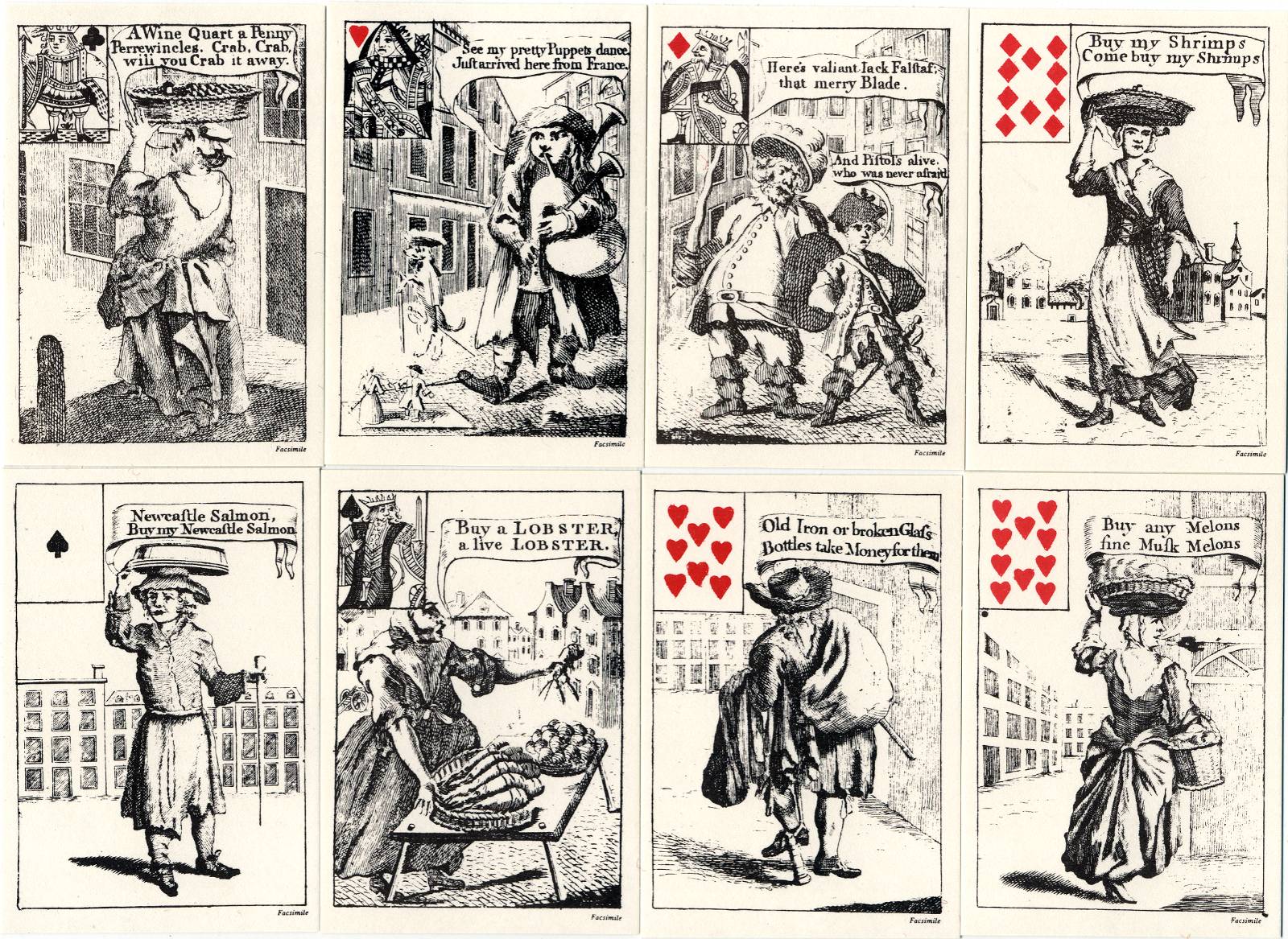
Above: cards from a facsimile edition courtesy Giles de Margary. Packs can be ordered directly from www.harrymargary.com

By Simon Wintle
Spain • Member since February 01, 1996
I am the founder of The World of Playing Cards (est. 1996), a website dedicated to the history, artistry and cultural significance of playing cards and tarot. Over the years I have researched various areas of the subject, acquired and traded collections and contributed as a committee member of the IPCS and graphics editor of The Playing-Card journal. Having lived in Chile, England, Wales, and now Spain, these experiences have shaped my work and passion for playing cards. Amongst my achievements is producing a limited-edition replica of a 17th-century English pack using woodblocks and stencils—a labour of love. Today, the World of Playing Cards is a global collaborative project, with my son Adam serving as the technical driving force behind its development. His innovative efforts have helped shape the site into the thriving hub it is today. You are warmly invited to become a contributor and share your enthusiasm.

Activity for Cries of London
Sign in to comment or save this article.

Related Articles
Sevilla 1647 reproduction
Facsimile of Spanish-suited pack produced in Sevilla, Spain, 1647.
Playing Cards: A Secret History
Playing Cards: A Secret History
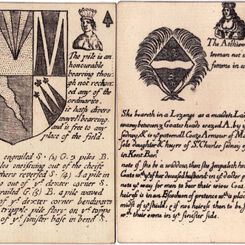
Heraldic playing cards
Reproduction of Richard Blome’s Heraldic playing cards, 1684, presented to lady guests at WCMPC Summ...
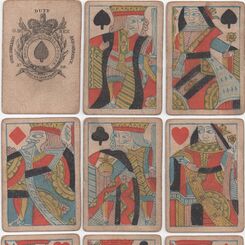
71: Woodblock and stencil: the hearts
A presentation of the main characteristics of the wood-block courts of the heart suit.
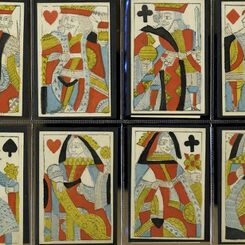
70: Woodblock and stencil : the spade courts
This is a presentation in a more straight forward fashion of the work done by Paul Bostock and me in...
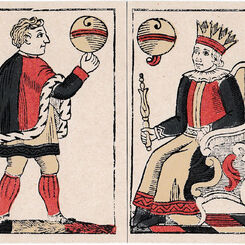
Johannes Müller c.1840
Facsimile edition of Swiss suited deck first published by Johannes Müller in c.1840.
Illustrated Playing Cards, c.1740
Illustrated playing cards featuring comical engravings and rhymes about saints, c.1740.
Fortune Telling playing cards
English Fortune Telling cards probably published c.1770.
Delightful Cards, c.1723
Delightful Cards, containing variety of entertainment for young Ladies and Gentlemen c.1723.
Cribbage Board Collection part 2
A collection of antique and vintage Cribbage Boards by Tony Hall, part 2
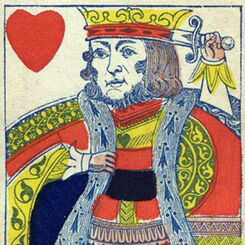
Suicide King
The King of Hearts, holding a sword behind his head, is sometimes nicknamed the “Suicide King”. He c...
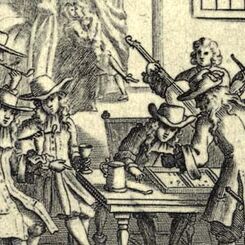
William Warter
William Warter's Proverbial Cards, which carry illustrations of old English proverbs, were first pub...
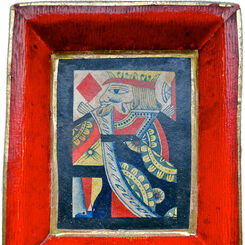
Pope Joan Trays
Some traditional Pope Joan boards comprise a circular tray, others are square, divided into sections...
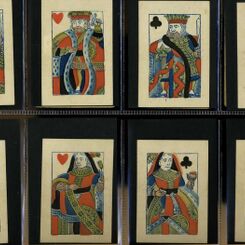
19: 19th Century Breaks with Tradition - Unusual versions of the Standard English Pattern
The centuries-long tradition of English court cards was subject to misinterpretation and in some cas...
The Beggars’ Opera
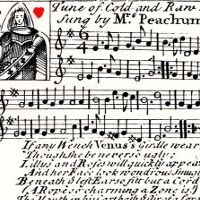
The Beggars’ Opera Playing Cards were first published in 1728. The cards carry the words and music o...
Hewson Replica Pack
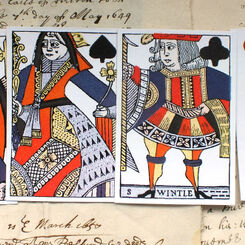
Hand-made replica 17th century English playing cards, based on museum originals.
16th Century French Playing Cards based on Illustrations by Gurney Benham
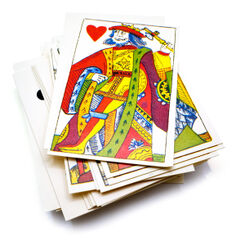
This pack of cards by Rose & Pentagram is said to be based off Pierre Marechal, Rouen pack from the ...

Hand-made Spanish Suited Playing Cards
Decks are made on two-ply pasteboard which reproduces the tactile quality of antique cards.
History of English Playing Cards & Games
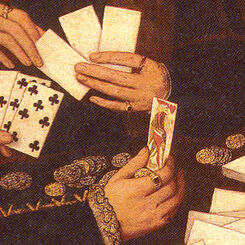
The History of English Playing Cards dates probably from the mid 15th century
Early English Playing Cards
Early examples of traditional, standard English playing cards of which the best known are those of H...
Most Popular
Our top articles from the past 60 days


