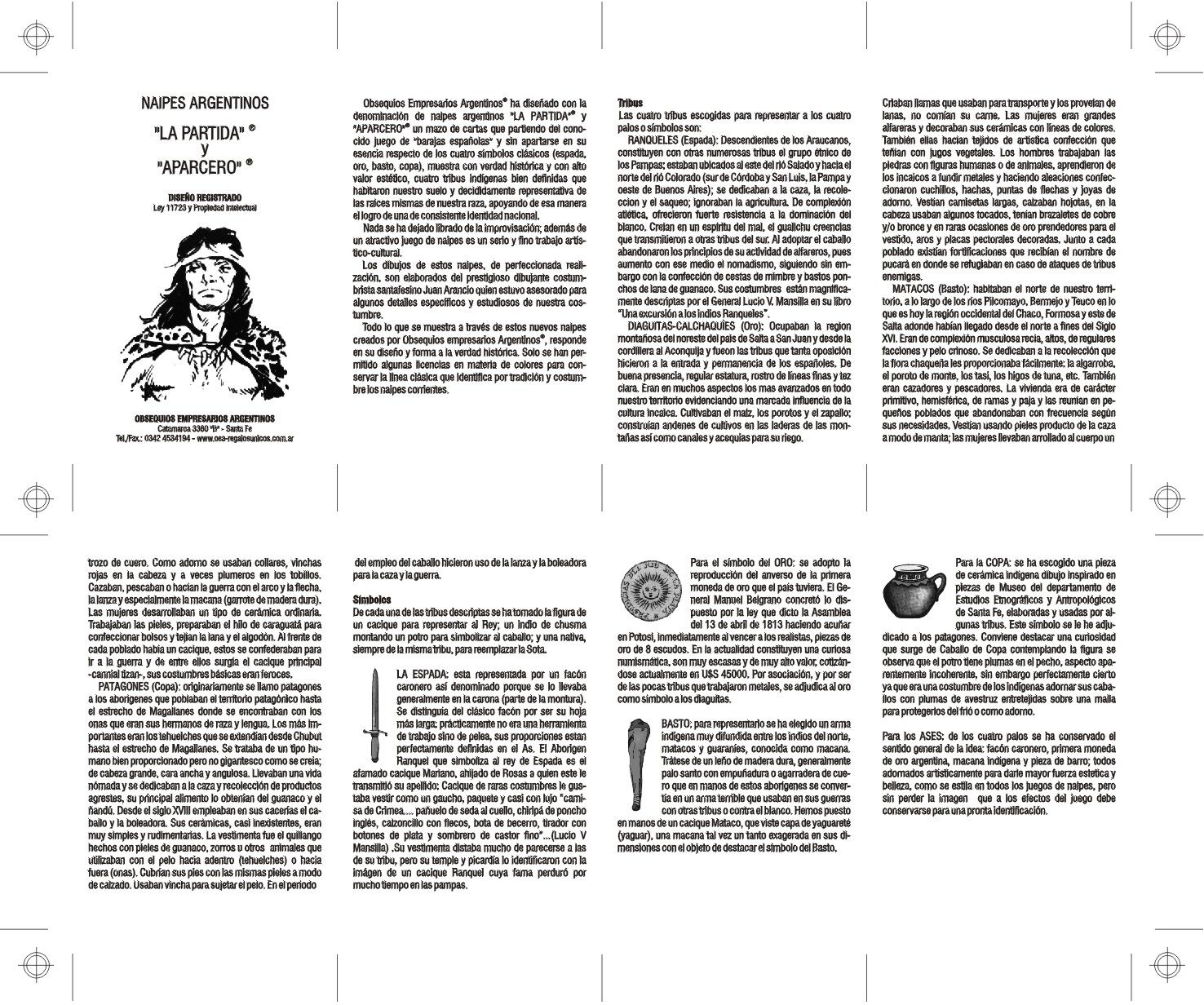
Aparcero
Naipes Argentinos 'La Partida' y 'Aparcero' published by Obsequios Empresarios Argentinos, Santa Fe.
Naipes Aparcero

Obsequios Empresarios Argentinos
Formerly: Catamarca 3360 “B”, Santa Fe
and: Avda Belgrano 124 - 3er piso, Buenos Aires. www.oea-regalosunicos.com.ar
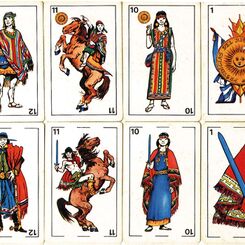
Naipes Argentinos ‘La Partida’ y ‘Aparcero’ are exclusive, registered designs published by Obsequios Empresarios Argentinos as an attractive promotional gift for companies. Packs are therefore mostly found with advertising on the reverse, and are accompanied by a leaflet explaining the source of the designs by Juan Arancio. The court cards depict indigenous South American tribes which are integral to Argentinian national identity. Currently packs are printed by Gráfica 2001 but in the past other printers have been involved.
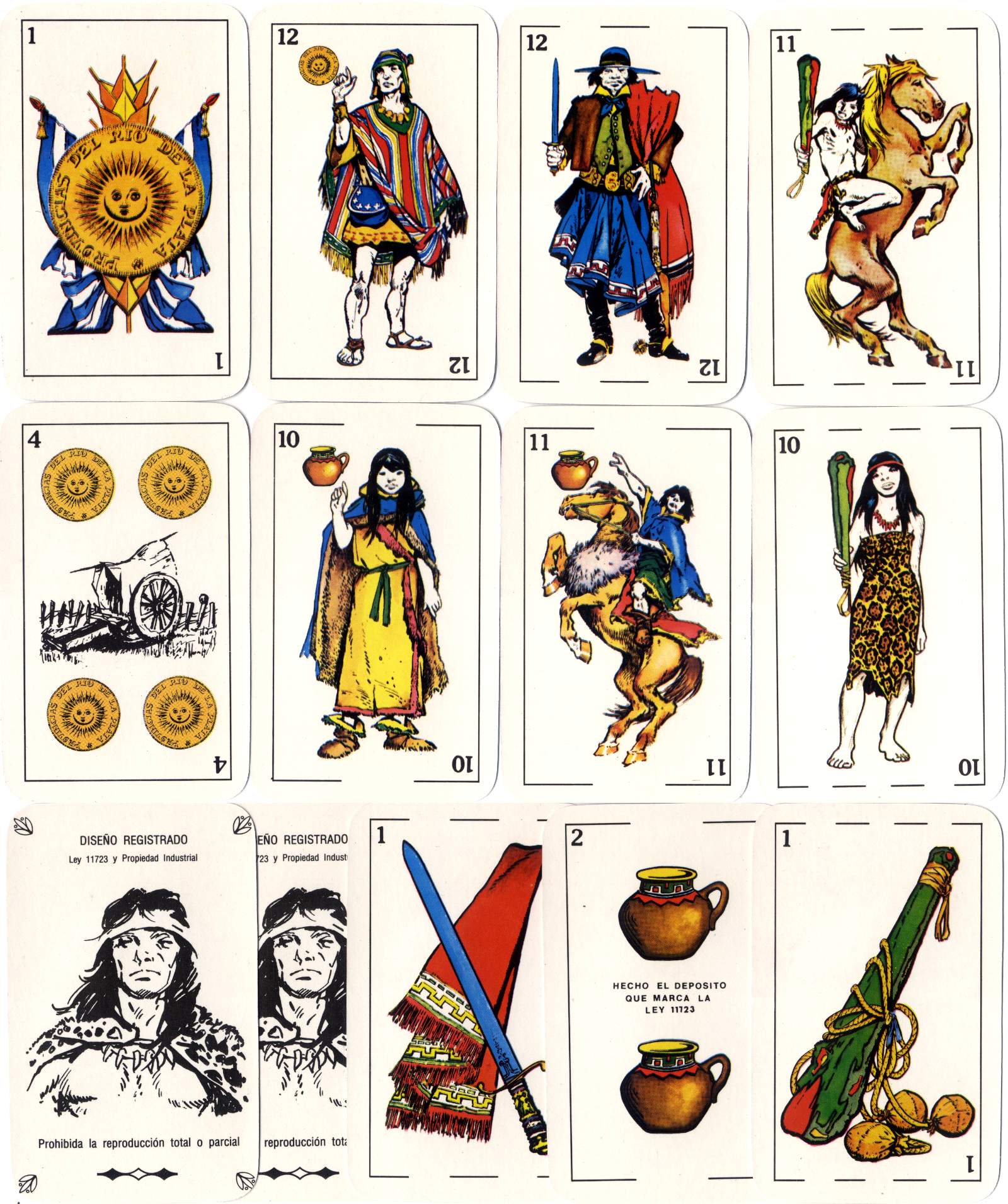
Above: cards from a modern edition of Naipes Argentinos 'La Partida' y 'Aparcero' published by Obsequios Empresarios Argentinos, Santa Fe. , printed by Gráfica 2001. In earlier editions the typeface used for the indexes was a sans serif, whereas in this example it is a seriffed typeface.
Corporate Promotions

Above: Naipes Argentinos 'La Partida' y 'Aparcero' published by Obsequios Empresarios Argentinos, Santa Fe. for Mastercard, 1990.

Above: Naipes Argentinos 'La Partida' y 'Aparcero' published by Obsequios Empresarios Argentinos, Santa Fe. for Rati Salil analgesic and anti-inflammatory cream, 2007.

Above: Naipes Argentinos 'La Partida' y 'Aparcero' published by Obsequios Empresarios Argentinos, Santa Fe. for Sancor Seguros, 2007.

By Simon Wintle
Spain • Member since February 01, 1996
I am the founder of The World of Playing Cards (est. 1996), a website dedicated to the history, artistry and cultural significance of playing cards and tarot. Over the years I have researched various areas of the subject, acquired and traded collections and contributed as a committee member of the IPCS and graphics editor of The Playing-Card journal. Having lived in Chile, England, Wales, and now Spain, these experiences have shaped my work and passion for playing cards. Amongst my achievements is producing a limited-edition replica of a 17th-century English pack using woodblocks and stencils—a labour of love. Today, the World of Playing Cards is a global collaborative project, with my son Adam serving as the technical driving force behind its development. His innovative efforts have helped shape the site into the thriving hub it is today. You are warmly invited to become a contributor and share your enthusiasm.

Activity for Aparcero
Sign in to comment or save this article.

Related Articles
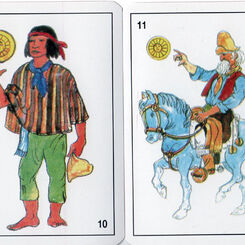
Naipes Criollos
“Naipes Criollos” Gaucho playing cards, 1995.
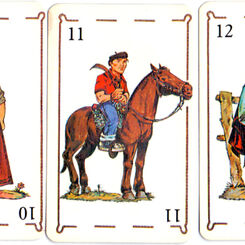
Gaucho Naipes
‘Gaucho’ Spanish-suited deck, anonymous manufacturer, made in Argentina, 2001.

Naipes Españoles “El Mexicano”
Standard Catalan-type deck, titled "El Mexicano", by an anonymous Argentinean manufacturer, c.1980s....
Naipes Argentinos Patagonia
“Naipes Argentinos Patagonia” with court cards depicting gauchos and native Indians, c.2000.

Parke-Davis Pharmaceuticals
Parke-Davis Pharmaceuticals, c.1998 & Bodegas Trapiche, 2003.

Bingo
Spanish-suited, Bingo-themed playing cards published in 2007 by Grupo AGG (Argentine Gaming Group) w...

Gráfica 2001
Gráfica 2001 (Naipes ‘La Española’), successors to Naipes Vigor founded in 1945.

La Española Classic
‘La Española Classic’ is a traditional ‘La Española’ Spanish-suited pack and is produced in several ...

La Española 2000 pattern
‘La Española 2000’ is a digitally re-drawn version of the original classic ‘La Española’ Spanish-sui...

Naipes Vigor S.R.L.
VIGOR S.R.L (1955 - c1975) manufactured a range of playing cards and card games, including Chinita, ...

Minifusor Clásico
Minifusor Clásico, a modern re-drawing of the Catalan pattern published by Difusora, c.1980.

Naipes Joketa
“Naipes Joketa” by anonymous manufacturer, c.1975. A slightly elaborated version of conosur pattern....

Joker S.A.
Playing cards manufactured by Joker S.A.

Argentinian Playing Cards - Naipes Argentinos
Playing cards were introduced to the Americas by Spanish explorers in the 16th century.

J. F. Sanchez - Buenos Aires c.1895
J. F. Sanchez - Buenos Aires c.1895.
Justo Rodero e Hijos
Justo Rodero e Hijos, playing card manufacturer in Buenos Aires, Argentina.

C. Della Penna & Cía, Bs Aires, c.1930-1978
C. Della Penna S.A. playing card manufacturer and publisher, Buenos Aires, c.1930-1978.

Francisco Girbau & Cia, Buenos Aires
Francisco Girbau & Cia, Buenos Aires, c.1890-1935

J. M. Gandarillas, Buenos Aires, c.1815
Playing cards believed to have been designed in 1815 by the Chilean immigrant Manuel José Gandarilla...
Baraja Aparcero
Designed to illustrate the history of four indigenous tribes who represent the roots of the Argentin...
Most Popular
Our top articles from the past 60 days