


African Renaissance Deck
African Renaissance Deck published for Nkosi's Haven, South Africa, 2000.
This pack was published by AWC in 2000 to support Nkosi’s Haven, an NGO based in Melville, Johannesburg, that offers residential, holistic care and support for mothers and their children whose lives have been impacted by HIV/AIDS. For every pack sold the sum of 50c was donated to the charity. Nkosi's Haven was named after Nkosi Johnson, a young AIDS activist who died on International Children's Day in 2001. Born Xolani Nkosi, Nkosi had been infected with HIV through mother-to-child transmission. See the box►
The suits are non-standard: spades are represented by native huts; diamonds by native shields; clubs by globes or balls; and hearts by a safety pin to which is attached a flag depicting Africa. Each suit represents one of the major African peoples: the hut suit represents the Khosa people; the Ndebele people are depicted on the ball/globe suit; shields portray the Swazi people; and the safety pin/flag suit portrays the Zulu people.
There are two extra explanatory cards detailing the history of each of the four African peoples, plus a third extra card which gives information about Nkosi’s Haven. See the extra cards►
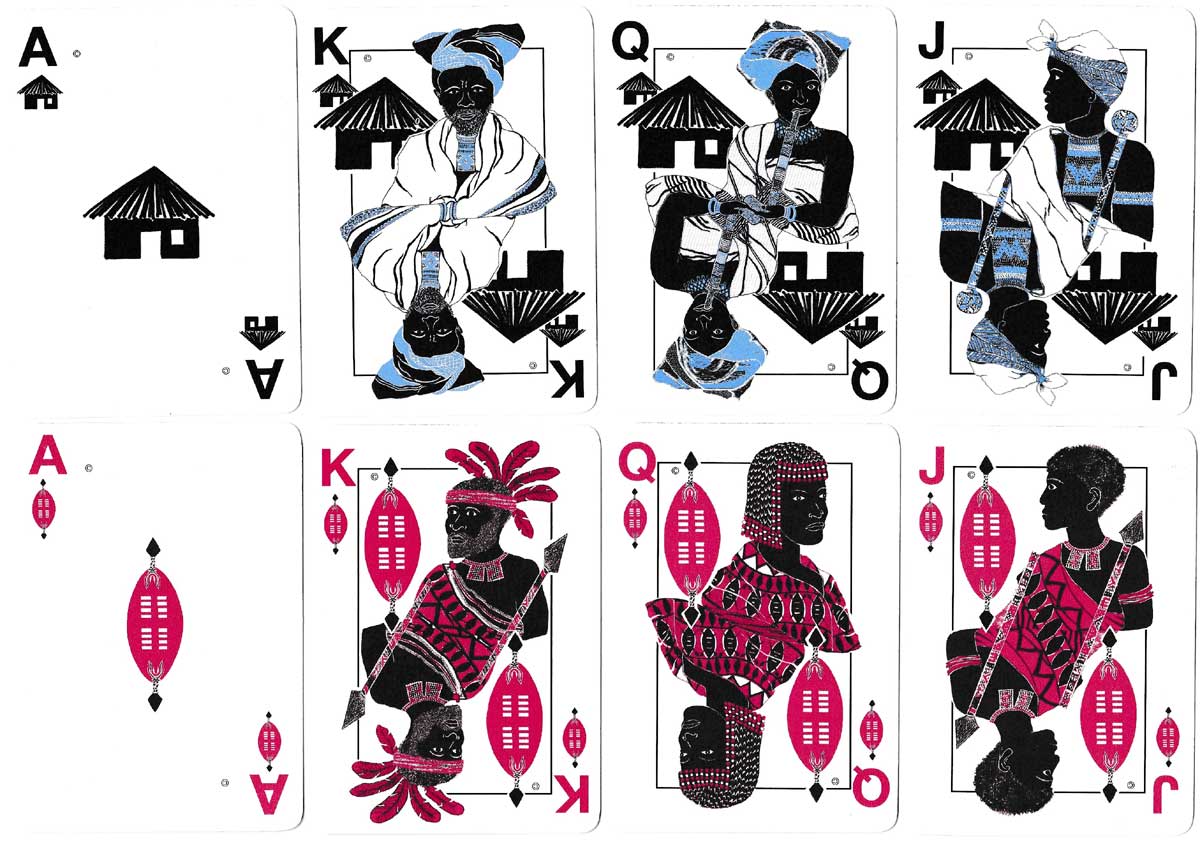
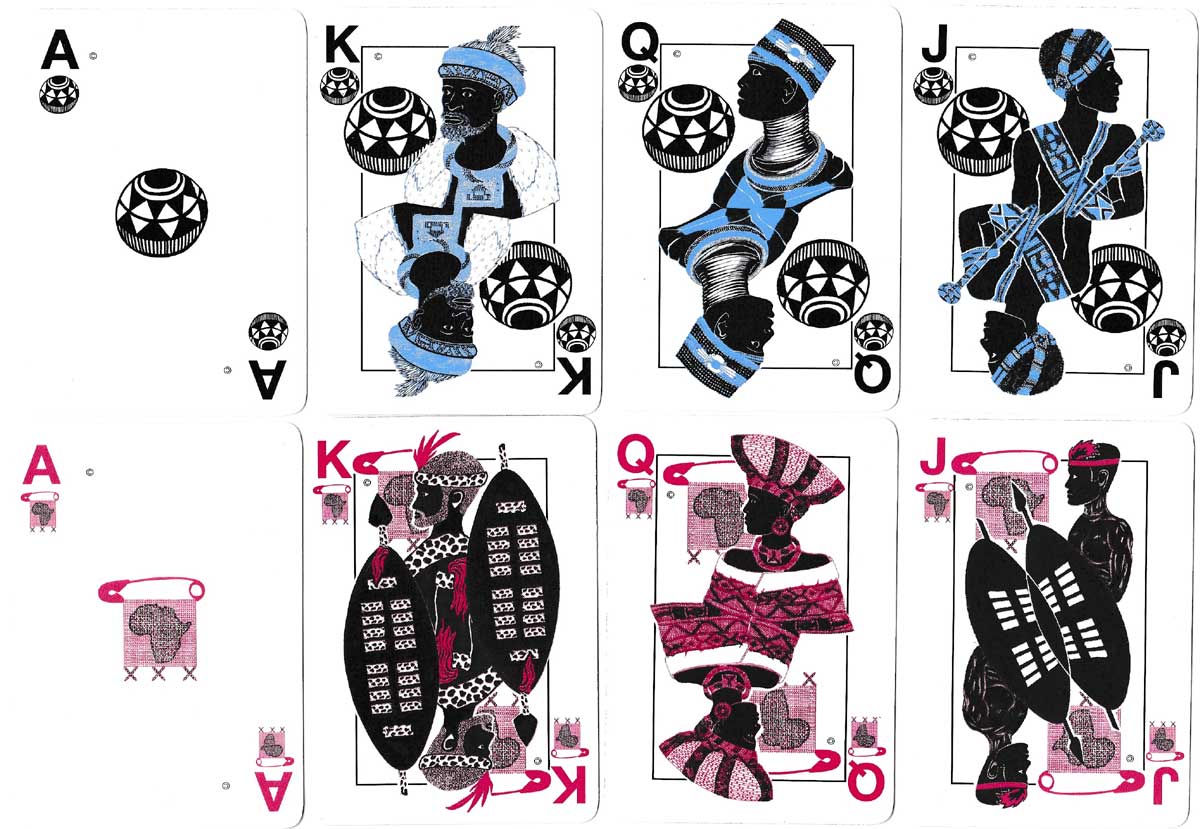
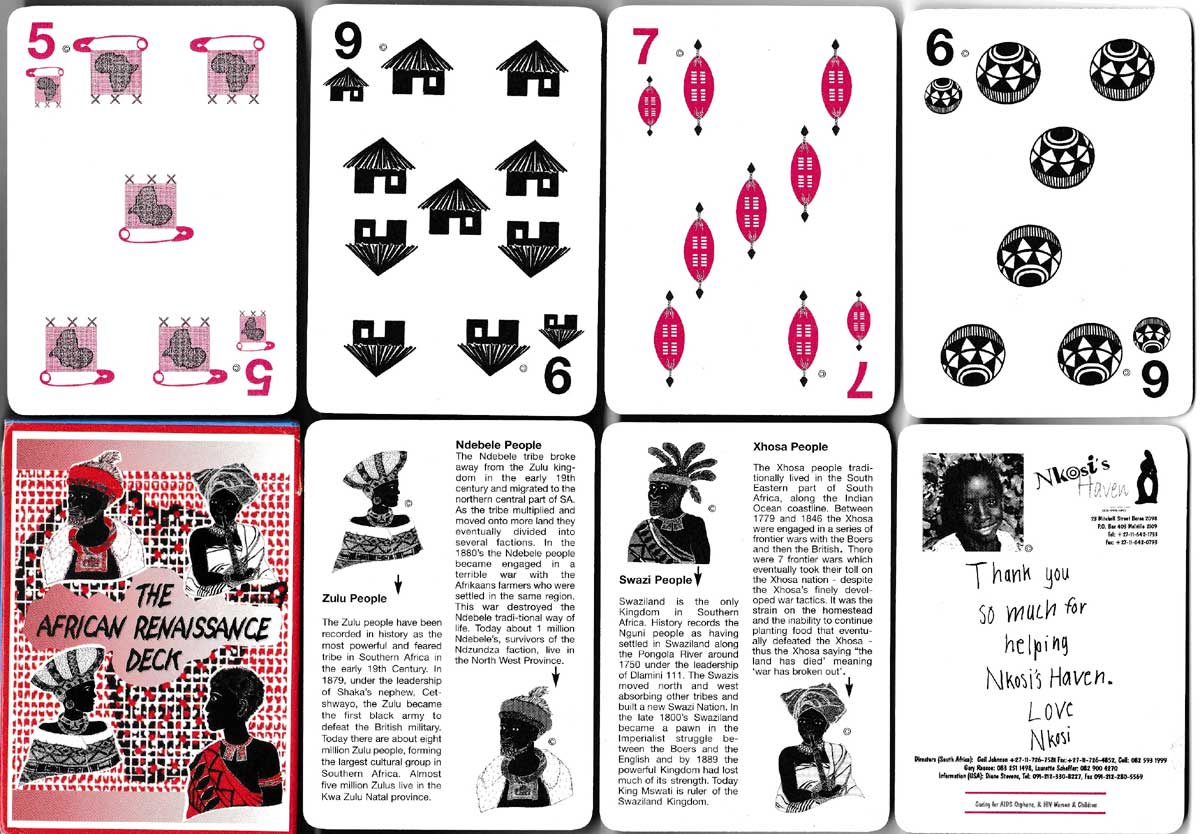
Above: African Renaissance Deck published by AWC, South Africa, 2000.

By Peter Burnett
United Kingdom • Member since July 27, 2022
I graduated in Russian and East European Studies from Birmingham University in 1969. It was as an undergraduate in Moscow in 1968 that I stumbled upon my first 3 packs of “unusual” playing cards which fired my curiosity and thence my life-long interest. I began researching and collecting cards in the early 1970s, since when I’ve acquired over 3,330 packs of non-standard cards, mainly from North America, UK and Western Europe, and of course from Russia and the former communist countries.
Following my retirement from the Bodleian Library in Dec. 2007 I took up a new role as Head of Library Development at the International Network for the Availability of Scientific Publications (INASP) to support library development in low-income countries. This work necessitated regular training visits to many sub-Saharan African countries and also further afield, to Vietnam, Nepal and Bangladesh – all of which provided rich opportunities to further expand my playing card collection.
Since 2019 I’ve been working part-time in the Bodleian Library where I’ve been cataloguing the bequest of the late Donald Welsh, founder of the English Playing Card Society.

Activity for African Renaissance Deck
Sign in to comment or save this article.

Related Articles
Ubo cards
Traditional Ubo cards from the Philippines made from tree bark.
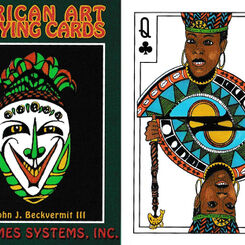
African art playing cards
African art and symbolism on playing cards designed by John J. Beckvermit III, USA, 1994.
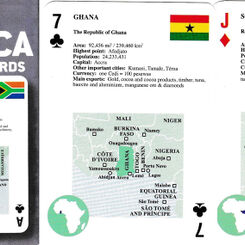
Africa playing cards
According to the United Nations there are 54 countries on the continent of Africa
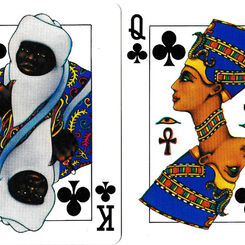
Drum playing cards
Drum playing cards depicting demographically diverse Africans of different ethnicities.
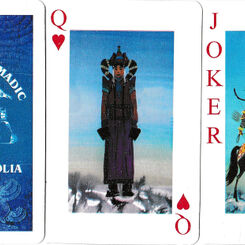
Traditional Nomadic Life of Mongolia
Playing cards depicting paintings of Traditional Nomadic Life of Mongolia.
Juego de Naipes Andalusí
Andalusian playing cards designed by Marifé Montoya Carrillo with booklet by Jorge Lirola Delgado, 2...
San Playing Cards
Rock paintings and engravings of the San people, better known as the “Bushmen”.
Ethiopian
Ethiopian playing cards designed for the Ethiopian Tourist Organization by Afewerk Teklé.
Ethiopian Air Lines
Ethiopian Air Lines playing cards designed by Melles Habtezghi with courts wearing regional costumes...
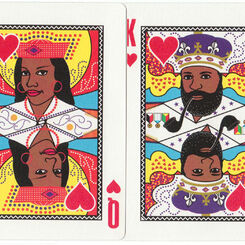
Trinidad Carnival Playing Cards
“Allfours Carnival Playing Cards” designed by Gabby Woodham, Trinidad, 1995
Sandton City
African tribal mask playing cards for Sandton City, Johannesburg.
African Art
“African Art” playing cards by John J. Beckvermit III, 1994.
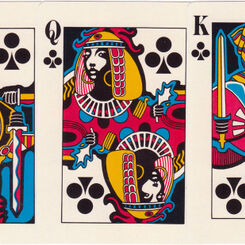
Sheba by Omega Concepts Ltd
Sheba playing cards illustrated by Brent Bailer and published by Omega Concepts Ltd.
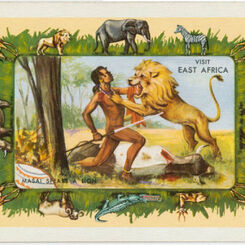
East African Playing Cards
East African Playing Cards by Heraclio Fournier S.A., 1957.
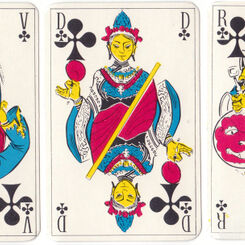
Jeu de Bataille
“Jeu de Bataille” card game published by Éditions Willeb, Paris. The court cards represent character...
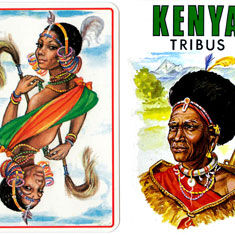
Kenya Tribes Playing Cards
“Kenya Tribus” playing cards published by Sapra, Mount Kenya Sundries Ltd, Nairobi, 1991
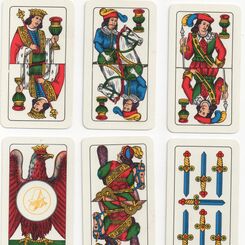
16: European Standard Playing Cards
A brief survey of the different types of standard cards to be found in Continental Europe.
Mongolian Playing Cards
Mongolian Playing Cards.
The History of Playing Cards
Playing cards appear in European records in the late 14th century, but their earlier history lies fu...
Frozen Court - The Aethiopic Rendering
A deck made specifically for Alpha Phi Alpha Fraternity, Inc., the first African-american college fr...
Most Popular
Our top articles from the past 60 days


