


Parisian Spanish pattern by Fossorier, Amar et Cie
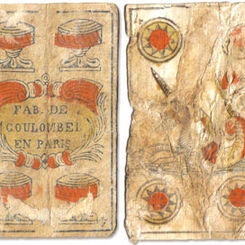
‘Parisian’ Spanish pattern published by Fossorier, Amar et Cie (Paris), c.1902.
The 'Parisian' Spanish pattern derives from the old Spanish National pattern. It was adopted by Parisian card makers in the 19th century for export to South America and contains some idiosyncrasies which make it distinctive. The pattern was widely used in South America (especially Uruguay) where it became popular, with some versions explicitly labelled as “Estilo Paris” or simply “Paris”. If it dies out there, it may become extinct.
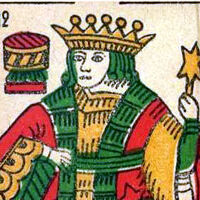
The ace of coins has the publisher’s monogram “F.A. Cie” inside a wreath within the central coin, with “Paris” appearing in the ribbon below. The designer’s name E. Helle can be seen in the bottom left-hand corner of the 10 of coins whilst a unicorn/sea monster appears on the four of coins. The tax stamp can be seen on the two of swords. Other notable elements include a hand grasping the ace of batons, small ascending arrows on the ace, two and three of batons, kings wearing stockings beneath their parted robes, and a tethered hound on the 10 of coins. It sometimes features female cavaliers. All the court cards are standing on a small piece of scenery.
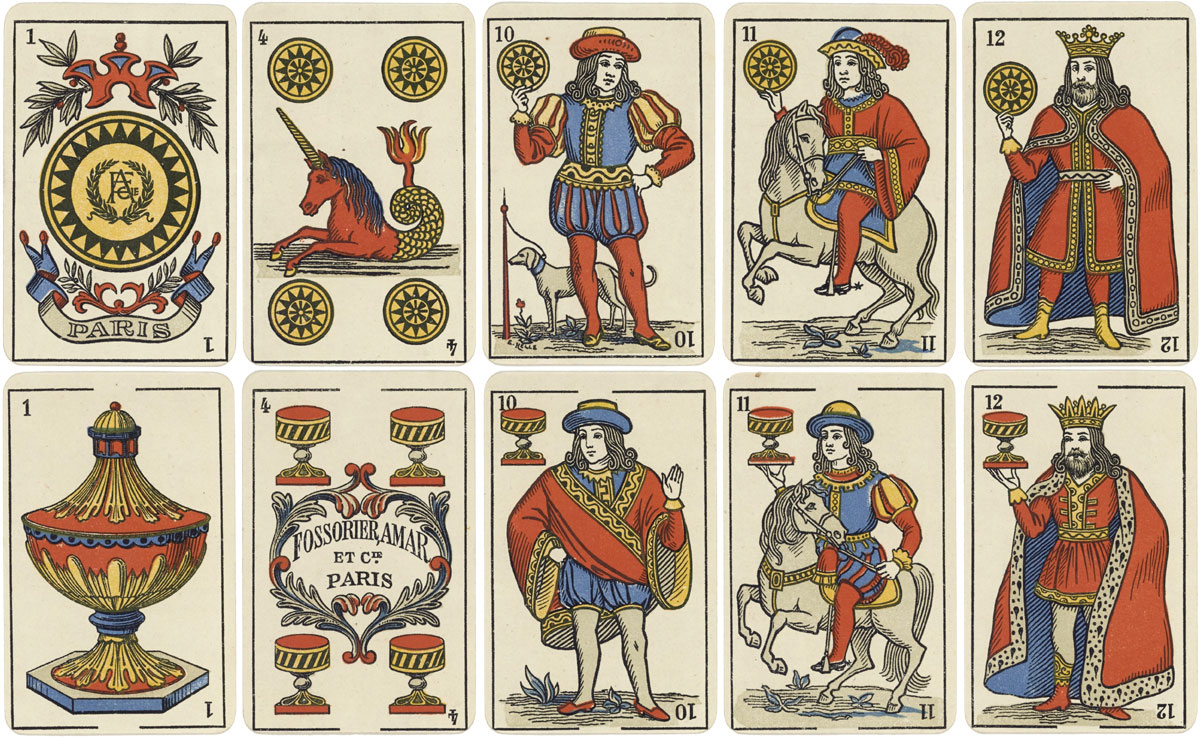
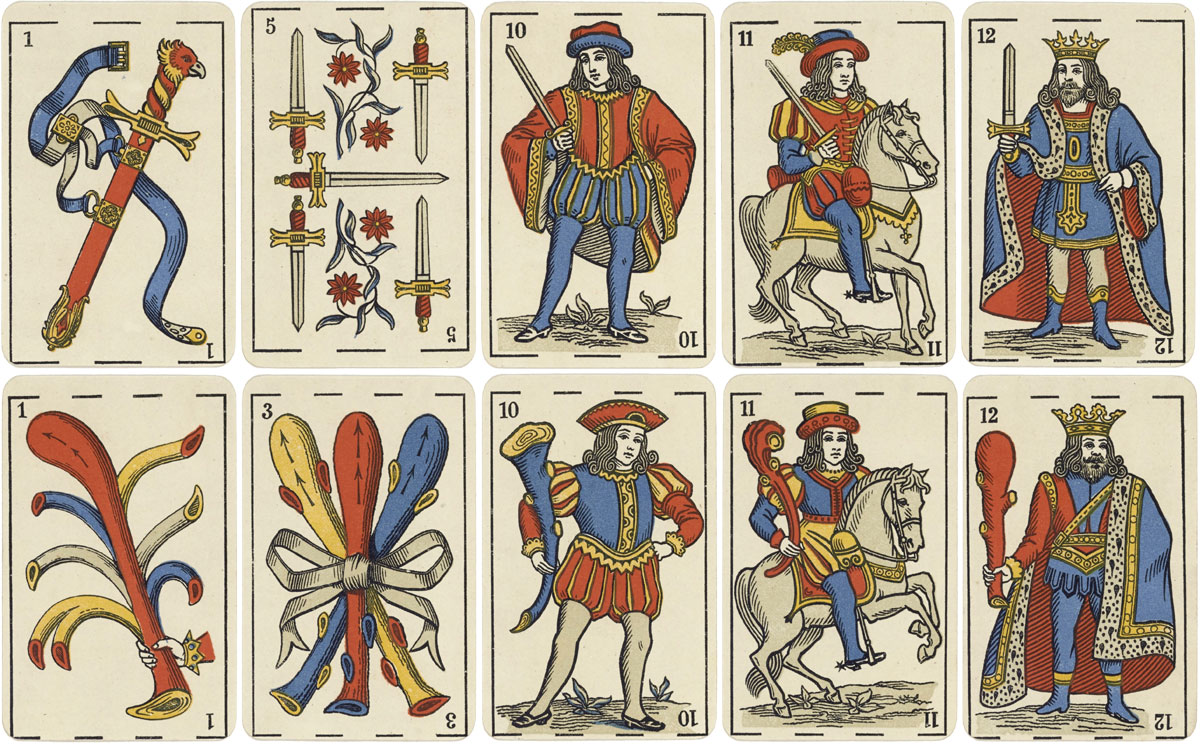
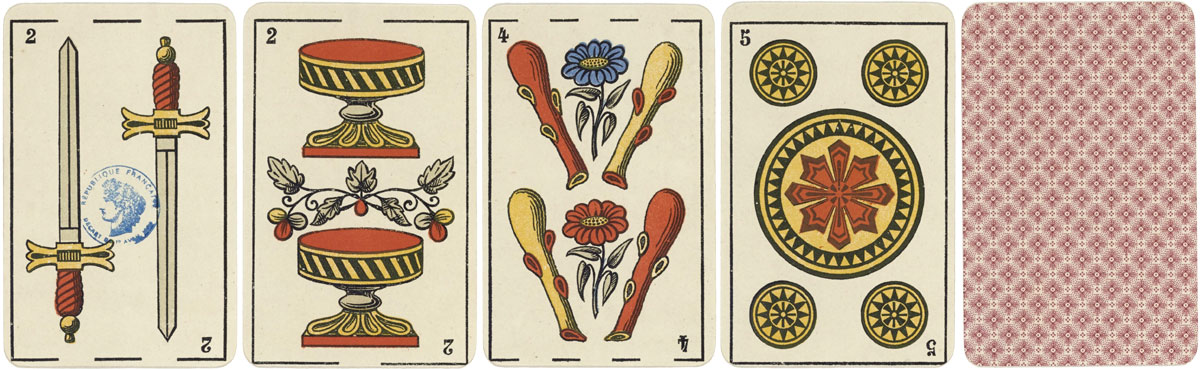
Above: ‘Parisian’ Spanish pattern published by Fossorier, Amar et Cie (Paris), c.1902. 48 cards, colour lithography, 8.7 x 5.6 cm. Source gallica.bnf.fr / Bibliothèque nationale de France • Jeu de cartes au portrait espagnol►

By Simon Wintle
Spain • Member since February 01, 1996
I am the founder of The World of Playing Cards (est. 1996), a website dedicated to the history, artistry and cultural significance of playing cards and tarot. Over the years I have researched various areas of the subject, acquired and traded collections and contributed as a committee member of the IPCS and graphics editor of The Playing-Card journal. Having lived in Chile, England, Wales, and now Spain, these experiences have shaped my work and passion for playing cards. Amongst my achievements is producing a limited-edition replica of a 17th-century English pack using woodblocks and stencils—a labour of love. Today, the World of Playing Cards is a global collaborative project, with my son Adam serving as the technical driving force behind its development. His innovative efforts have helped shape the site into the thriving hub it is today. You are warmly invited to become a contributor and share your enthusiasm.

Activity for Parisian Spanish pattern by Fossorier, Amar et Cie
Sign in to comment or save this article.

Related Articles
French Spanish-suited cards for South America
Early example of the Parisian Spanish style before it became standardized by later Parisian publishe...
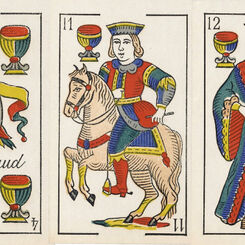
Catalan pattern by B.P Grimaud
Standard Spanish Catalan pattern deck made in Paris by B.P Grimaud.
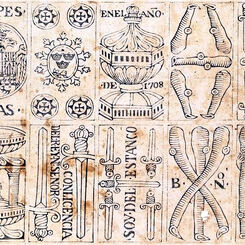
Archaic Spanish proof sheets
2 x uncoloured proof sheets of archaic Spanish-suited playing cards produced for “New Spain”, possib...
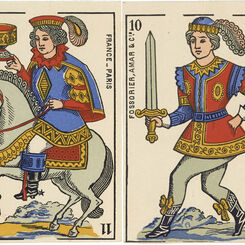
Cartes Catalanes by Fossorier, Amar et Cie
‘Cartes Catalanes’ published by Fossorier, Amar et Cie (Paris)
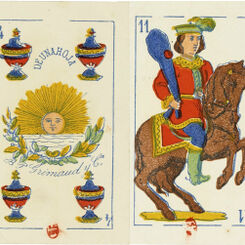
B.P. Grimaud pack for Bolivia
Spanish-suited pack made in France for sale in Bolivia, c.1880.
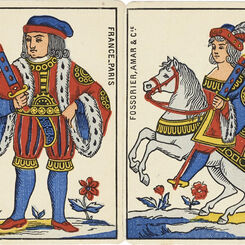
Jeu d'aluette by Fossorier, Amar et Cie
A very distinctive 48-card Spanish-suited pack is used to play Aluette.
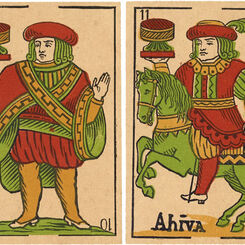
“Abd-el-Kader” by Fossorier, Amar et Cie for Algeria
Spanish National pattern produced by Fossorier, Amar et Cie (Paris) for Algeria, around 1902.
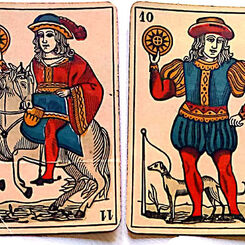
Parisian style Spanish deck by Grimaud
Parisian style Spanish deck by Grimaud for export to Uruguay.
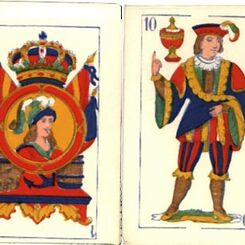
Grimaud Spanish pattern
Grimaud Spanish pattern, c.1880
The ‘Parisian’ Spanish pattern
A version of the old Spanish National pattern which was manufactured by Parisian card makers in the ...
Algeria
Spanish suited playing cards produced by B. P. Grimaud (Paris) for Algeria.
Most Popular
Our top articles from the past 60 days


