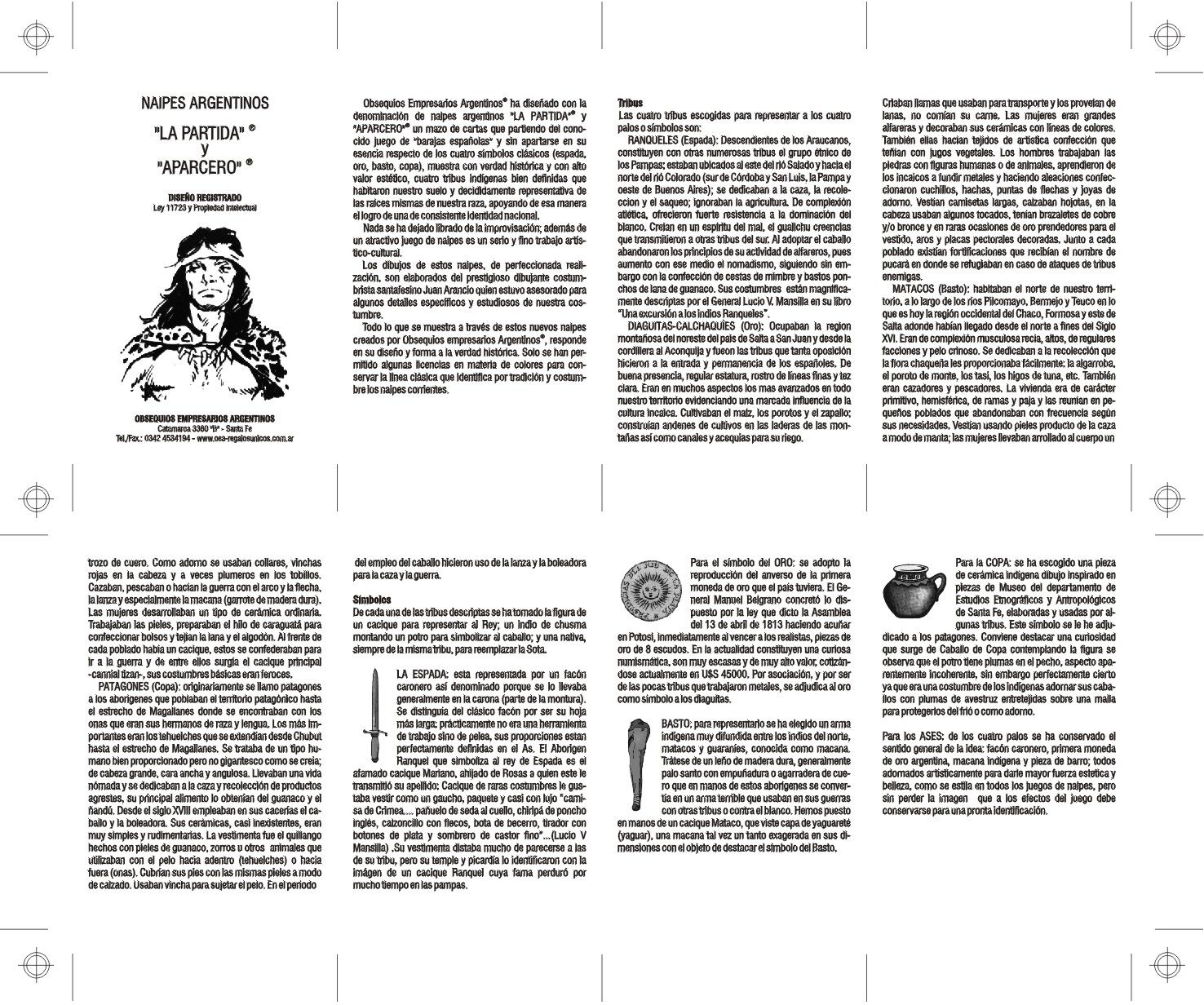
Baraja Aparcero
Designed to illustrate the history of four indigenous tribes who represent the roots of the Argentinean race.
Naipes Argentinos “APARCERO©”
by Obsequios Empresarios Argentinos, Santa Fe, c.1983.
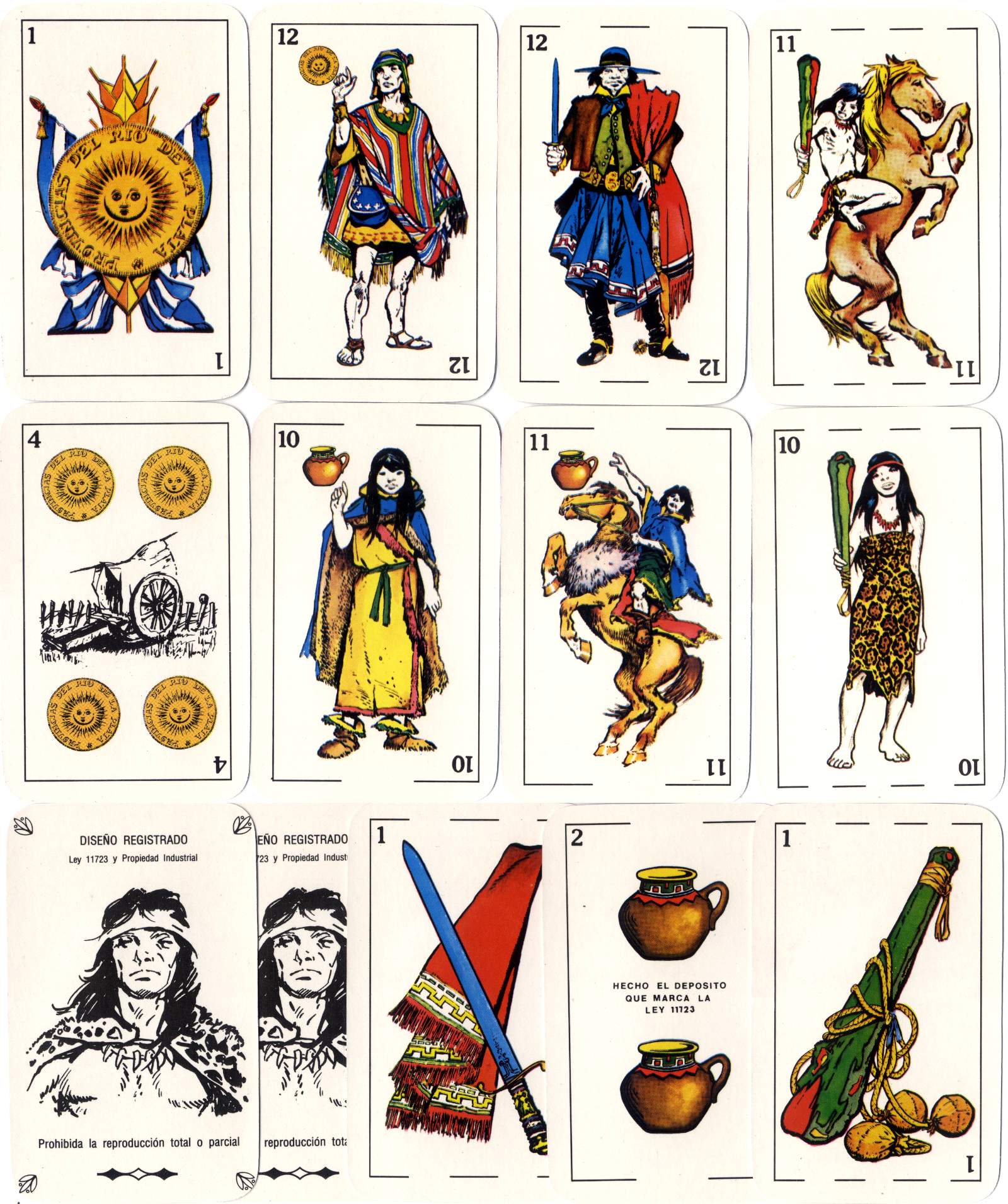
Above top: The Daiguita-Calchaquies tribe lived in the mountainous north-western area of Argentina, and were largely responsible for the fierce opposition offered to the Spaniards on their attempts to invade the territory. The ace of coins is represented by an image of the first gold coin made in Argentina, in 1813. The Ranqueles tribe (swords), descendants of the Araucanos, were the ethnic inhabitants of the pampas. They lived a hunter-gatherer lifestyle and resisted the white Europeans. They believed in a spirit of evil 'el galichu' and their beliefs were sometimes adopted by neighbouring tribes. Basket ware and weaving were their main crafts. The sword suit symbol is represented by a "facón caronero" a fighting weapon rather than a tool. The king depicts the legendary chief Mariano who liked to dress like a gaucho.
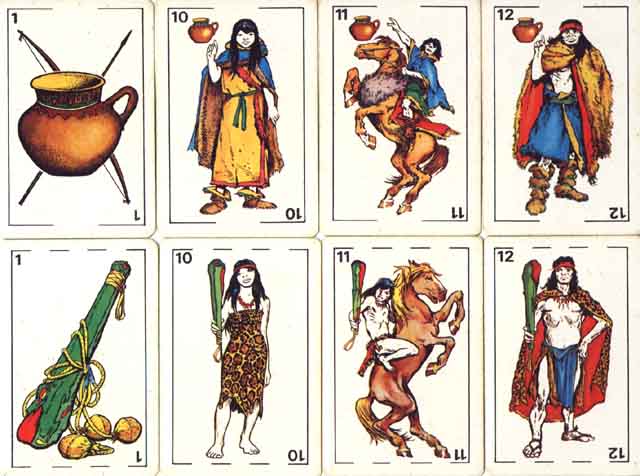

Above: Ace and courts from the suit of cups, represented by a typical piece of ethnic tribal pottery and Patagonian Indians.
Ace and courts from the suit of batons, or clubs, represented by the macana - a commonly used weapon in inter-tribal war.
The Mataco tribe depicted on the court cards were indigenous to the north of Argentina.
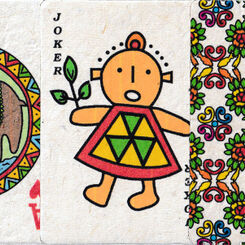
The leader of the tribe - number 12 - has also been featured on the Joker, giving a vague resemblance to Ché Guevara.
The example of Naipes ‘Aparcero’ was published by Obsequios Empresarios Argentinos, Buenos Aires in around 1983 for Rotativos Venus whose logo appears on the reverse. The cards are designed to illustrate the history of four indigenous tribes who represent the roots of the Argentinean race. The deck comes complete in a box, with two Jokers and an explanatory leaflet.
In early editions of this deck the typeface used for the indexes is a sans serif, as in the example shown on this page. Naipes Aparcero are currently printed by Gráfica 2001 where a seriffed typeface is used.


By Simon Wintle
Spain • Member since February 01, 1996
I am the founder of The World of Playing Cards (est. 1996), a website dedicated to the history, artistry and cultural significance of playing cards and tarot. Over the years I have researched various areas of the subject, acquired and traded collections and contributed as a committee member of the IPCS and graphics editor of The Playing-Card journal. Having lived in Chile, England, Wales, and now Spain, these experiences have shaped my work and passion for playing cards. Amongst my achievements is producing a limited-edition replica of a 17th-century English pack using woodblocks and stencils—a labour of love. Today, the World of Playing Cards is a global collaborative project, with my son Adam serving as the technical driving force behind its development. His innovative efforts have helped shape the site into the thriving hub it is today. You are warmly invited to become a contributor and share your enthusiasm.

Activity for Baraja Aparcero
Sign in to comment or save this article.

Related Articles
Ubo cards
Traditional Ubo cards from the Philippines made from tree bark.
Race Card
‘Race Card’ playing cards published by the Concept Card Co., New Orleans, Louisiana, USA.
Traditional Nomadic Life of Mongolia
Playing cards depicting paintings of Traditional Nomadic Life of Mongolia.
Habesha playing cards
Habesha playing cards published by “Ethiopian Reflection”
Happy Playing Cards
Cheerful, colourful designs on handmade paper from Nepal.
Tonalamatl
Baraja Tonalamatl Mexican Aztec playing cards based on the prehispanic Codex Borgia manuscript.
Naipes Criollos
“Naipes Criollos” Gaucho playing cards, 1995.
Naipes Cardón
Naipes Cardón designed by Mario Luis Rivero depicting traditional Argentine culture and identity, 20...
Banana Leaf Cards
English Standard pack hand drawn & coloured on banana leaf, c.1820.
Gaucho Naipes
‘Gaucho’ Spanish-suited deck, anonymous manufacturer, made in Argentina, 2001.
El Rodeo Talabartería
Promotional playing cards produced for ‘El Rodeo Talabartería’ specialising in leather goods and clo...
Ainu culture
A terrific deck of cards made by Nintendo c.1979 with original designs on every card showing the Ain...
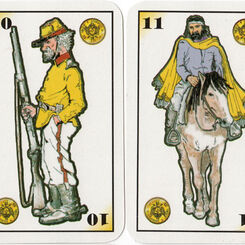
Naipes Argentinos Patagonia
“Naipes Argentinos Patagonia” with court cards depicting gauchos and native Indians, c.2000.
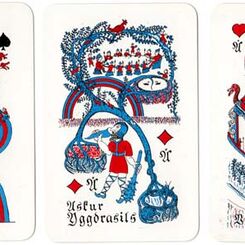
Iceland Mythological Playing Cards
Iceland Mythological Playing Cards designed by Sigurlinna Pétursson, 1958
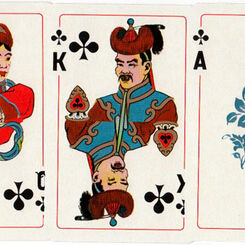
Mongol Playing Cards
Mongol Playing Cards with courts in traditional costume.
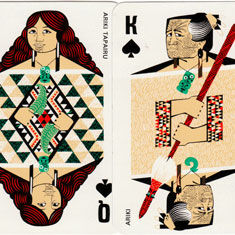
Maori
Maori themed playing cards from New Zealand depicting Maori Kings, Queens and Chiefs

Lithuanian
Lithuanian Playing Cards, reprinted by Piatnik, 1995, 2004.

Aparcero
Naipes Argentinos 'La Partida' y 'Aparcero' published by Obsequios Empresarios Argentinos, Santa Fe....

Naipes Casino Estilo Argentino
Naipes Casino Estilo Argentino by Justo Rodero with Gaucho suit symbols: the mate gourd, the sun, "f...
Gaucho Playing Cards
Florencio de los Ángeles Molina Campos (1891-1959) produced the artwork for his series of Gaucho pla...
Most Popular
Our top articles from the past 60 days