


Félix Solesio e Hijos
Félix Solesio e Hijos - Real Fábrica de Madrid - Spanish National pattern for Venezuela
Félix Solesio e Hijos - Real Fábrica de Madrid - Spanish National pattern for Venezuela, 1802. These cards bear various inscriptions and symbols that reflect their origin and purpose. The ace of coins has the inscriptions "Real Fabrica de Madrid" and "Por D. Felix Solesio e Hijos". This indicates that the cards were manufactured by the Royal Factory of Madrid under the supervision of Felix Solesio and his sons. The 4 of coins reads "Naypes Finisinos fabricados fn Madrid H. 1802", which translates to "Finest playing cards manufactured in Madrid, 1802." The 2 of cups bears the words "Para Cracas", showing that the pack was made for Caracas in Venezuela. The medal on the five of coins shows the same coat-of-arms as the ace. The four of cups carries Solesio’s trademark sun, derived from his family name. This sun symbol serves as another distinctive element associated with the Solesio brand.
Since the late 18th century production of the Spanish National pattern was carried on under control of the Real Fábrica de Madrid monopoly, thereby prolonging its life as the orthodox design of the time. Another branch of the Royal Manufactory was set up in Macharaviaya (Malaga) to supply South and Central America, and the Madrid cardmaker Felix Solesio was put in charge. He also appears to have been operating in Madrid in this instance of a pack destined for Venezuela.
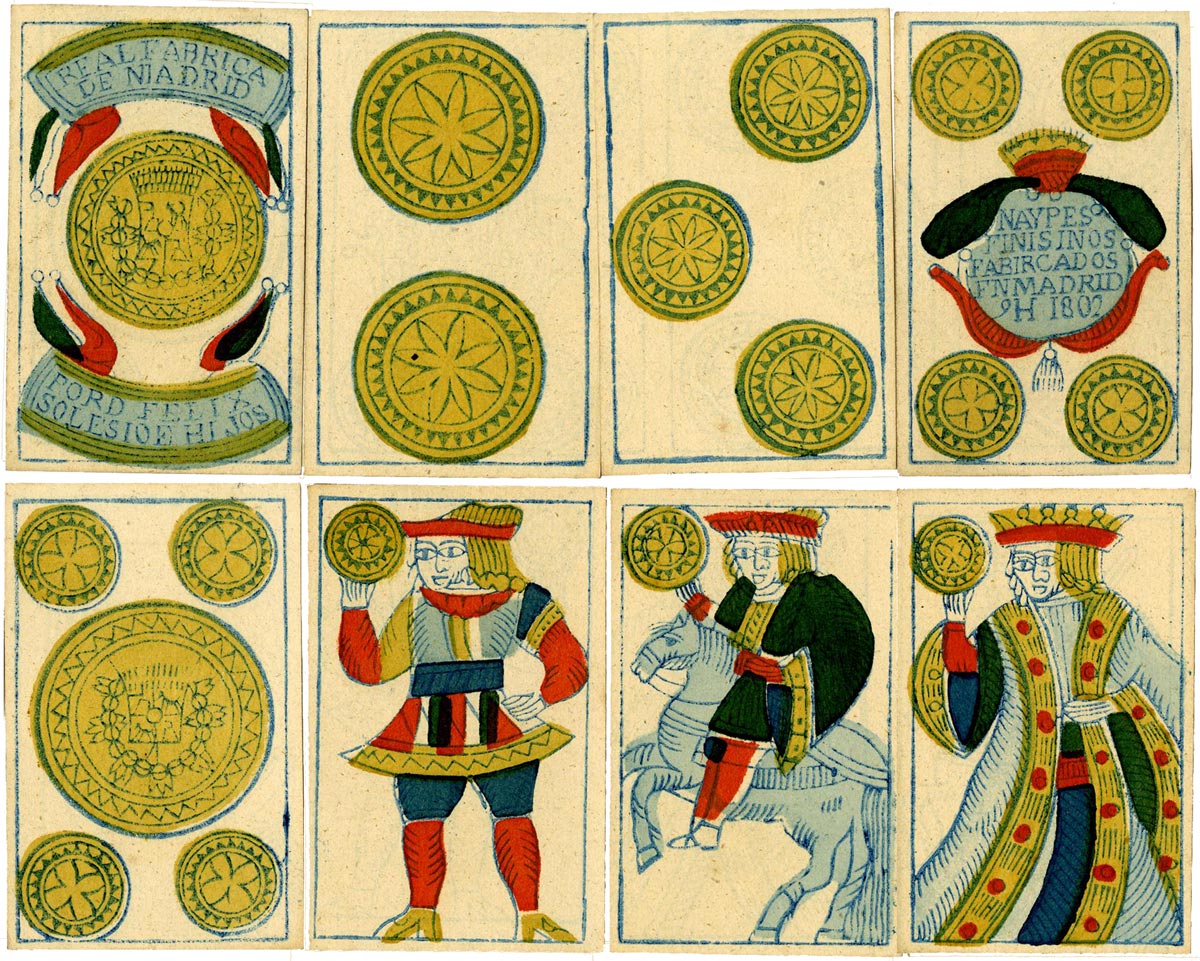
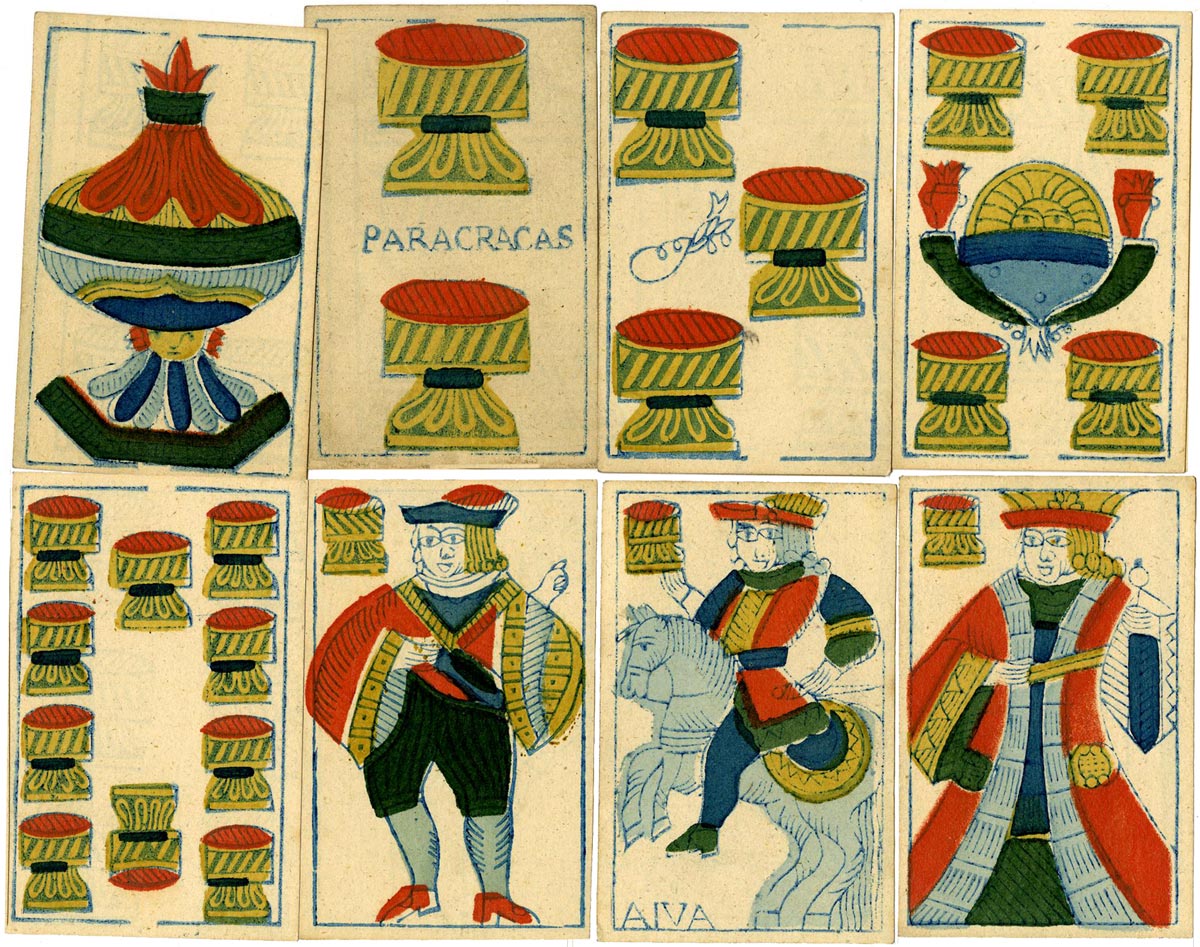
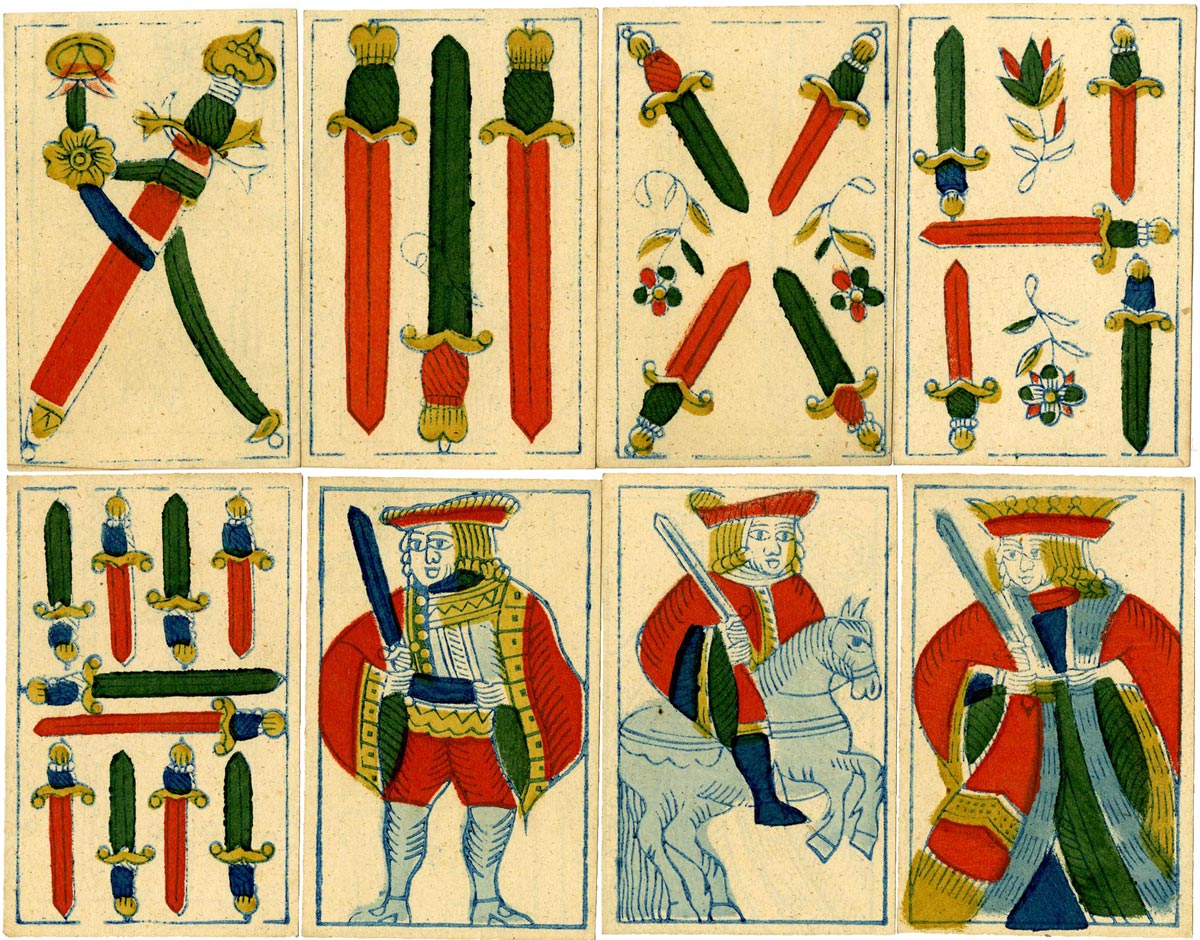
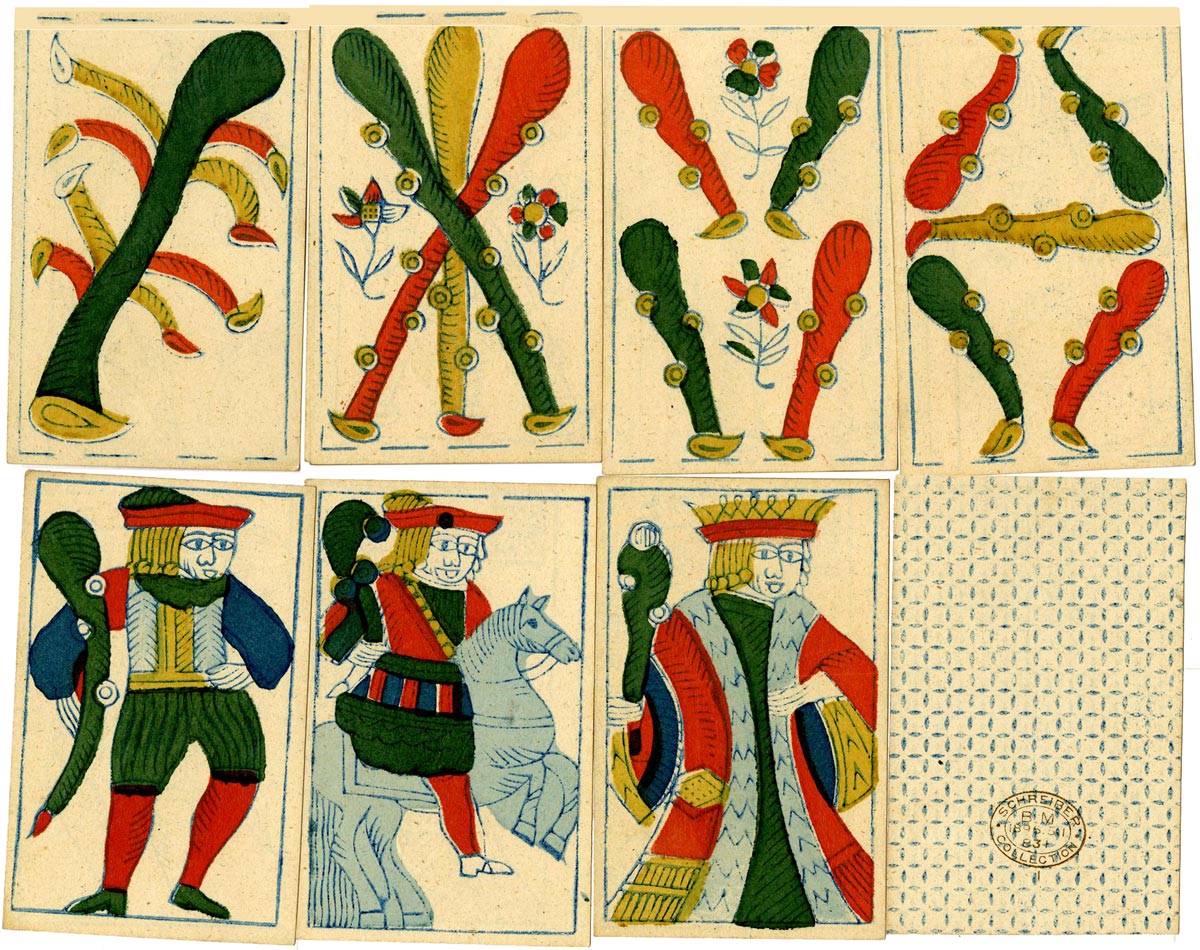
Above: Félix Solesio e Hijos - Real Fábrica de Madrid - Spanish National pattern for Venezuela, 1802. Hand-coloured woodcut, no index numbers, 52 cards. Backs printed in blue with a small formal pattern. © The Trustees of the British Museum • Museum number 1896,0501.831►
Another example
Real Fábrica de Madrid - Spanish National pattern for Venezuela, 1801. The inscription on the 2 of cups is "Para Caracas". The ace of coins is lettered "Real Fabrica De Madrid" and "Por D Felix Solesio e Hijos". On the 4 of coins is a shield lettered "Naypes finisinos fabricados en Madrid H. 1801".
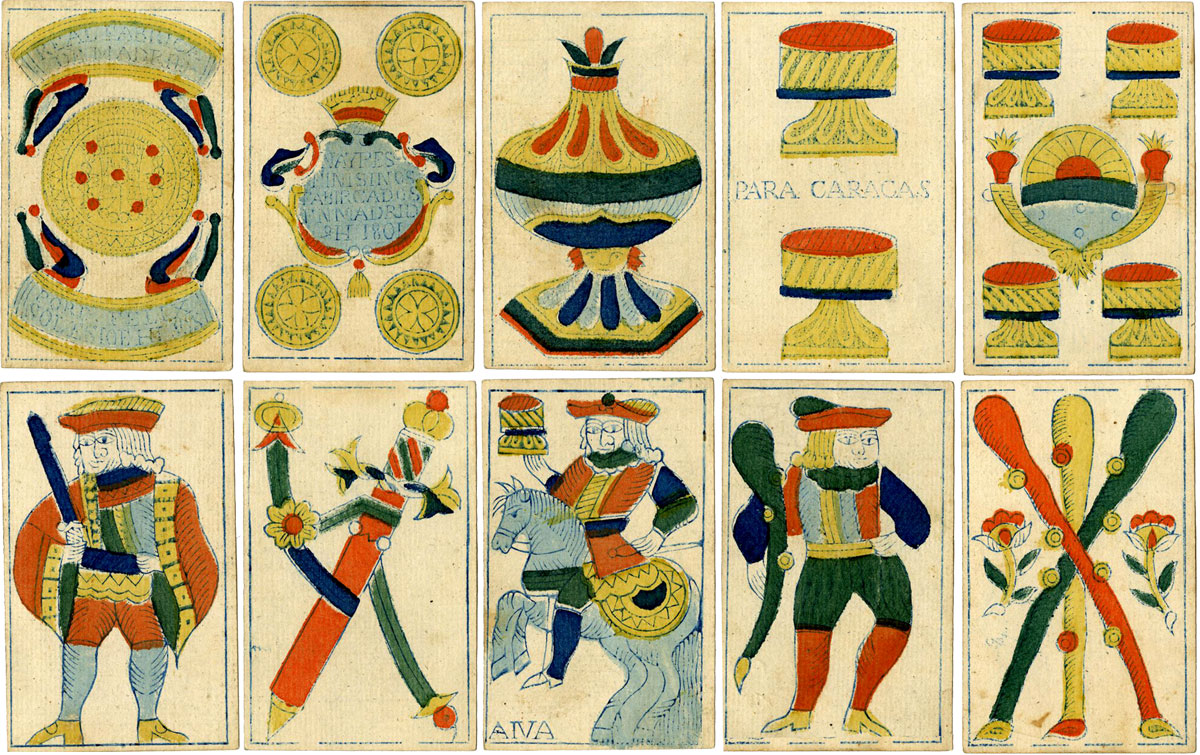
Above: 52 card pack, hand-coloured woodcut, backs printed with a series of blue diamonds and blue dots. © The Trustees of the British Museum • Museum number 1876,1014.472-522►
Even after independence, the former motherland’s influence remained in the South American countries.
References
Denning, Trevor: The Playing-Cards of Spain, Cygnus Arts, London, 1996.
O’Donoghue, Freeman M: Catalogue of the collection of playing cards bequeathed by Lady Charlotte Schreiber, Trustees of the British Museum, London, 1901 (Spanish 55) [digital version here]
Willshire, W. H.: A Descriptive Catalogue of Playing and Other Cards in the British Museum, Trustees of the British Museum, 1876, reprint 1975 (Spanish 259).

By Simon Wintle
Spain • Member since February 01, 1996
I am the founder of The World of Playing Cards (est. 1996), a website dedicated to the history, artistry and cultural significance of playing cards and tarot. Over the years I have researched various areas of the subject, acquired and traded collections and contributed as a committee member of the IPCS and graphics editor of The Playing-Card journal. Having lived in Chile, England, Wales, and now Spain, these experiences have shaped my work and passion for playing cards. Amongst my achievements is producing a limited-edition replica of a 17th-century English pack using woodblocks and stencils—a labour of love. Today, the World of Playing Cards is a global collaborative project, with my son Adam serving as the technical driving force behind its development. His innovative efforts have helped shape the site into the thriving hub it is today. You are warmly invited to become a contributor and share your enthusiasm.

Activity for Félix Solesio e Hijos
Sign in to comment or save this article.

Related Articles
Antonio Brugada (Madrid, c.1808)
Una temprana aproximación al modelo gaditano.
Spanish-Suited Playing Cards in Latin America
The journey of Spanish-Suited decks from Conquistadores to local makers.
Archaic Spanish proof sheets
2 x uncoloured proof sheets of archaic Spanish-suited playing cards produced for “New Spain”, possib...
Peintres Latino Americains
Original artwork by 18 different Latin American artists.
Juan de Brugada
Spanish National pattern by Juan de Brugada e hijo, Real Fábrica de Madrid, 1821.
Félix Solesio e Hijos
Félix Solesio e Hijos, Fábrica de Macharaviaya, Spanish National pattern for West Indies, 1801.
Christopher Columbus 5th Centenary playing cards
Fifth Centenary of the Discovery of America playing cards by published by Heraclio Fournier.
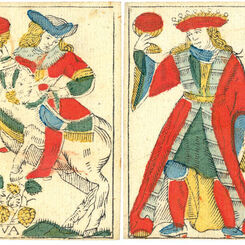
Baraja Carlos IV by Félix Solesio, 1800
Baraja Carlos IV, Félix Solesio en la Real Fábrica de Macharaviaya, 1800.
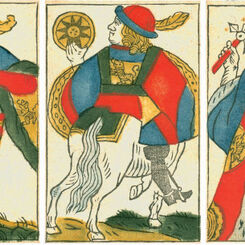
Anonymous Spanish Suited pack, c.1760
Anonymous archaic Spanish suited pack, c.1760.
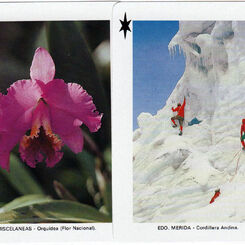
Venezuela Baraja Turística
Venezuela Souvenir deck by Heraclio Fournier, c.1980s.
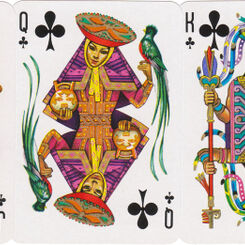
America
“America” playing cards designed by Teodoro N Miciano, 1960.
Baraja Hispanoamericana
“Baraja Hispanoamericana” published by Asescoin, with artwork by Ortuño, illustrates memorable peopl...
Fournier No. 55
Naipes Intransparentes de Una Hoja No.55 made by Hijos de Heraclio Fournier (Vitoria) for exportatio...
Silver Cards from Peru
Spanish-suited silver cards, richly embellished and enamelled, from a former Spanish Viceroy in Peru...
Paraguayan Playing Cards
Playing Cards in Paraguay
El Ciervo, c.1930
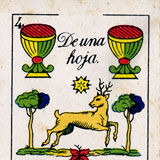
Sebastian Comas y Ricart - Hija de A. Comas “El Ciervo” Spanish Catalan pattern, c.1930.
Spanish National Pattern
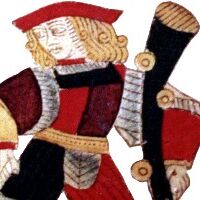
Probably originating in Spain in the seventeenth century or even earlier, this pattern became strong...
Real Fábrica de Macharaviaya
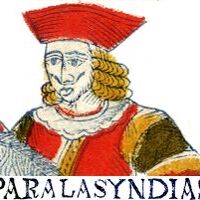
Production was controlled from Madrid as a source of national or regional revenue and, as a rule, th...
Most Popular
Our top articles from the past 60 days


