Africa playing cards
According to the United Nations there are 54 countries on the continent of Africa
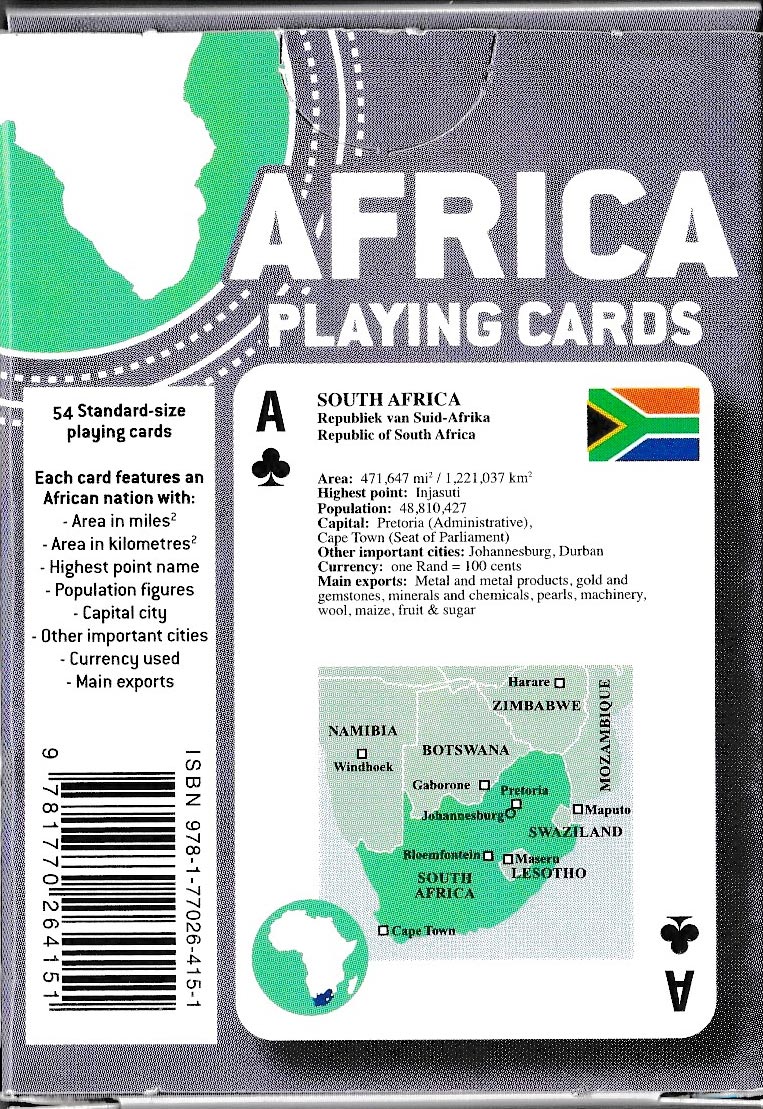
According to the United Nations there are 54 countries on the continent of Africa – which is just as well, as this 54 card pack, produced in Cape Town, South Africa by MapStudio, provides information about each of them. It certainly makes one appreciate the vast size of the continent. Each playing card features an African country with interesting facts:
- national flag
- area in kilometres /area in miles
- highest point
- population
- capital city
- other important cities
- currency
- main exports
MapStudio, founded in 1958, is the leading publisher and distributor of Street Guides and a large range of travel, adventure, sports and lifestyle books. The company also produces road maps, atlases, tourist maps, educational products and wall maps. See the box►
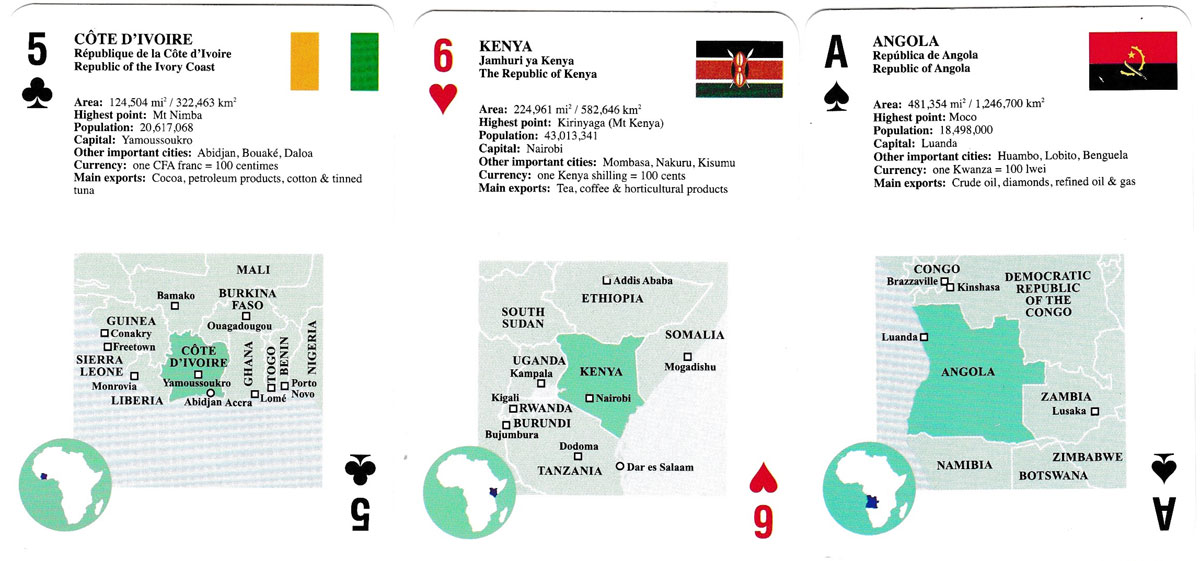
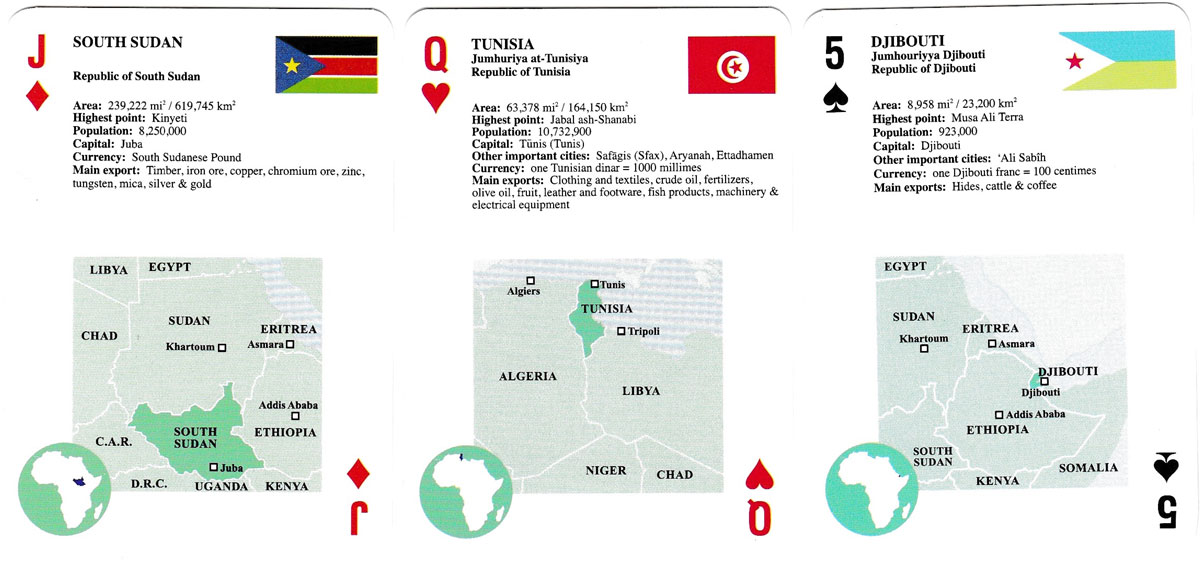
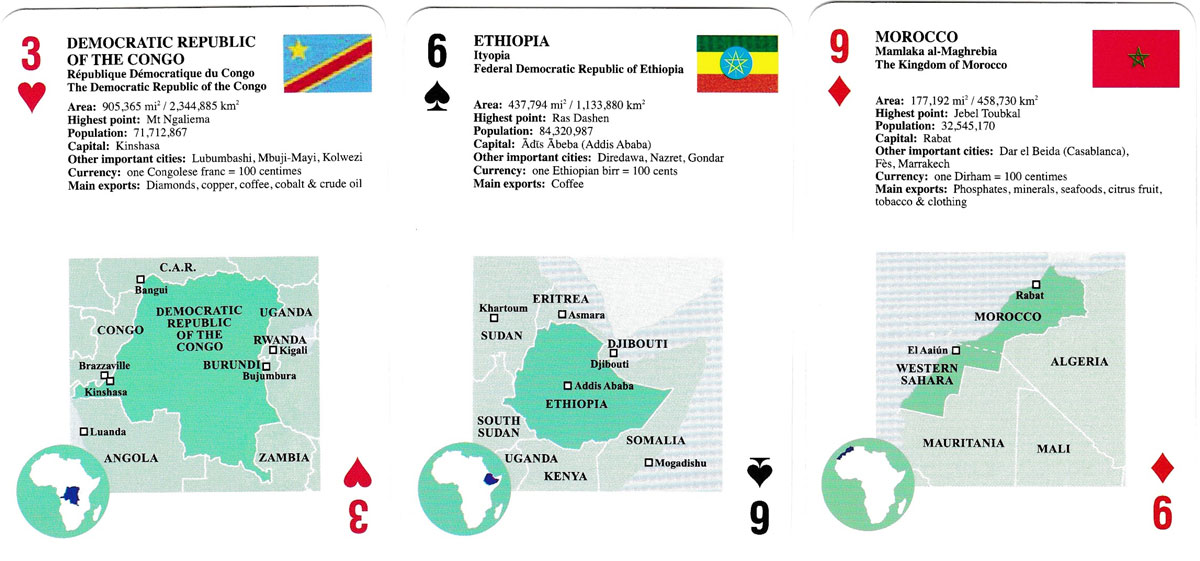
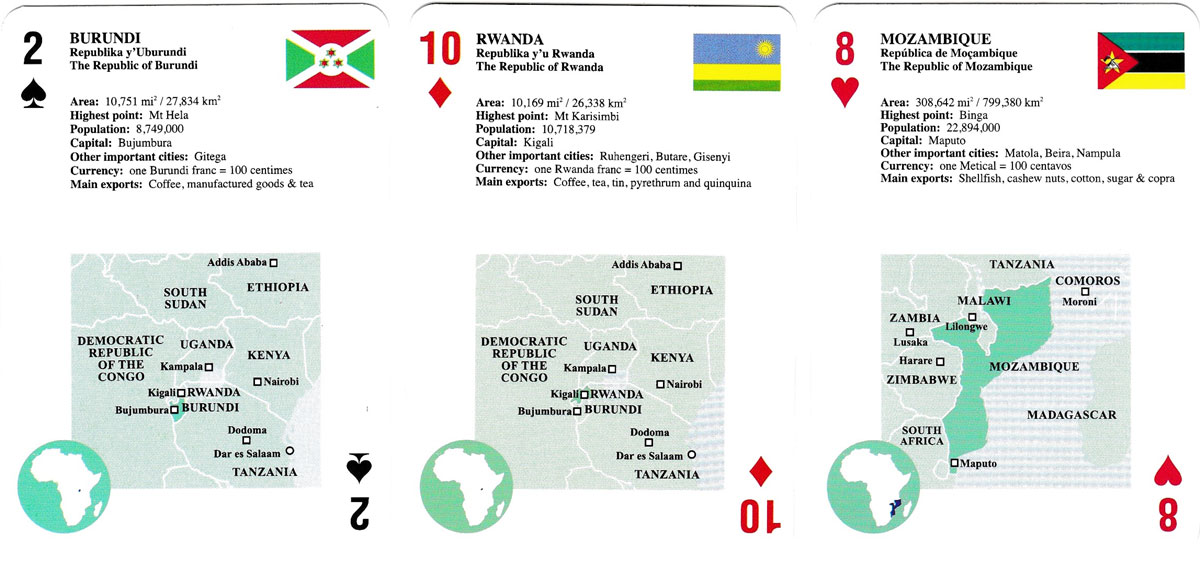
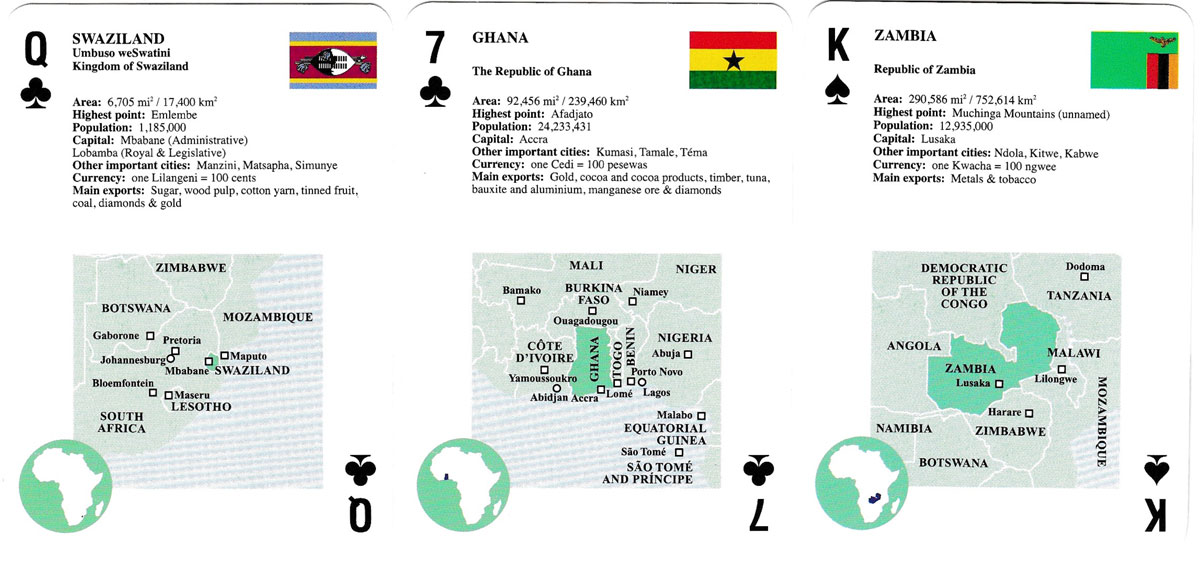
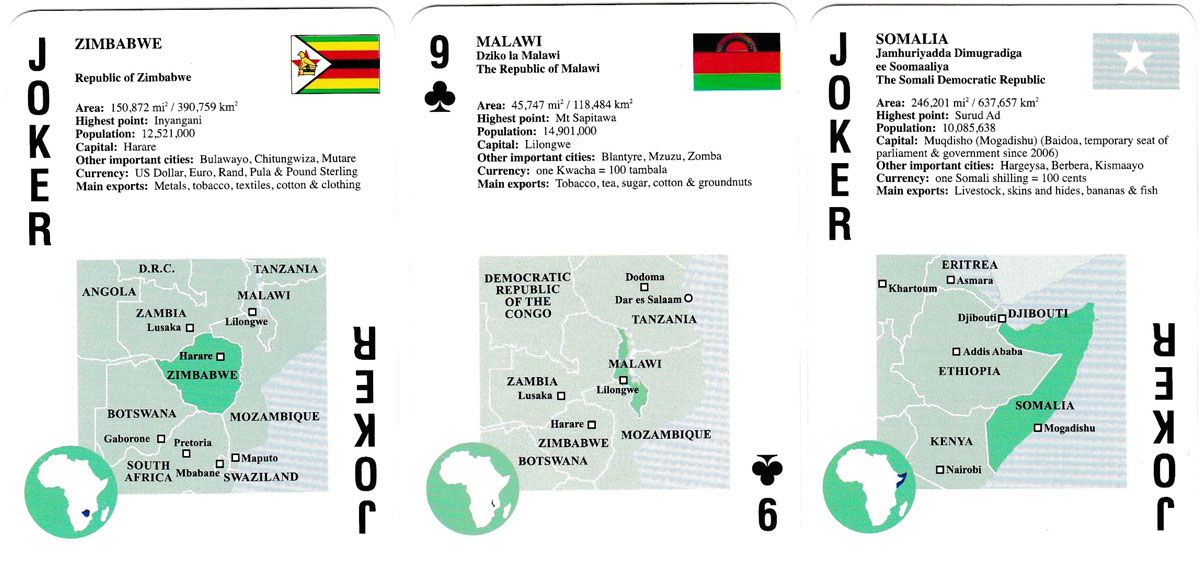
Above: Africa playing cards produced in Cape Town, South Africa by MapStudio, 2012. 54 cards in box.
More African themed playing cards
"Africa, and its tantalizing thrusts of mystery, majesty and malevolence, remains an enigma"
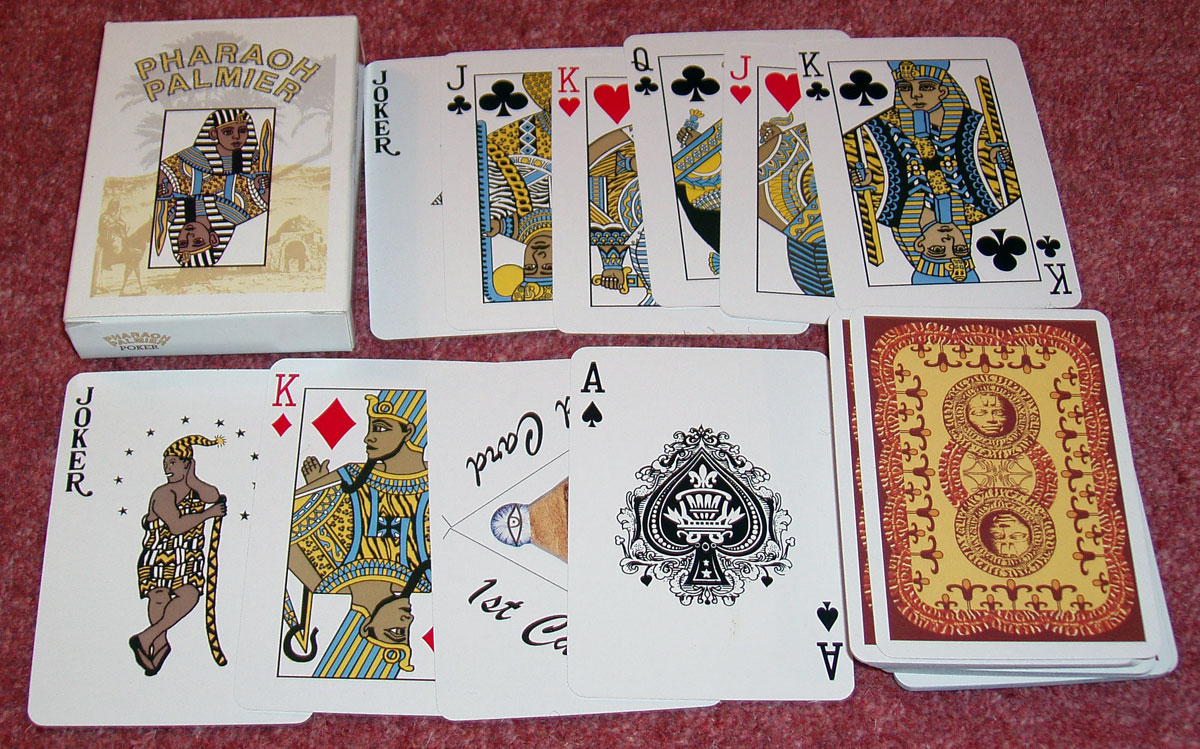
Above: nine cards and back design from "Pharaoh Palmier Poker Cards". 52 cards + 2 Jokers plus pyramid card in tuck box.
Other African themed decks reviewed on this website include: "The Frozen Court"
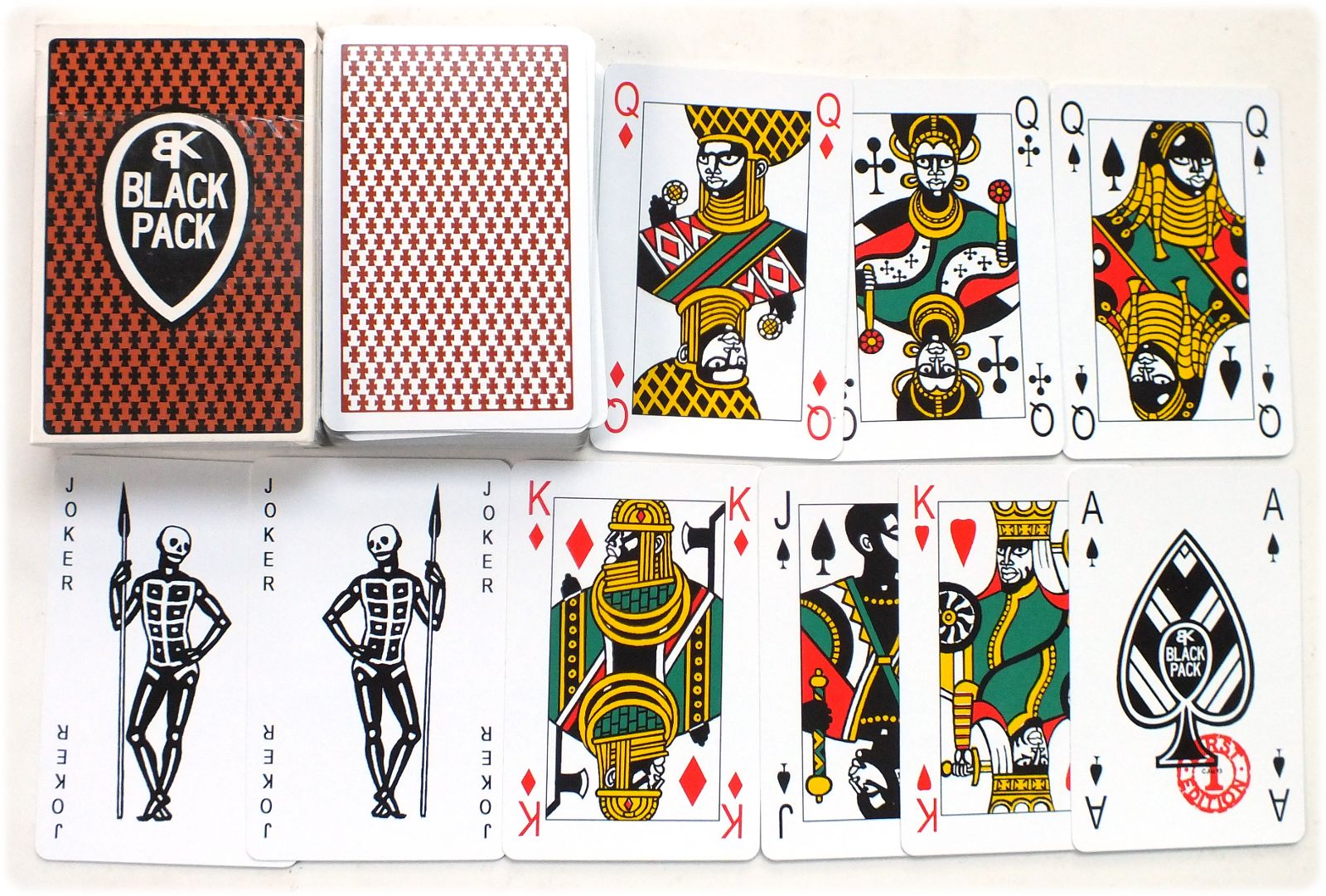
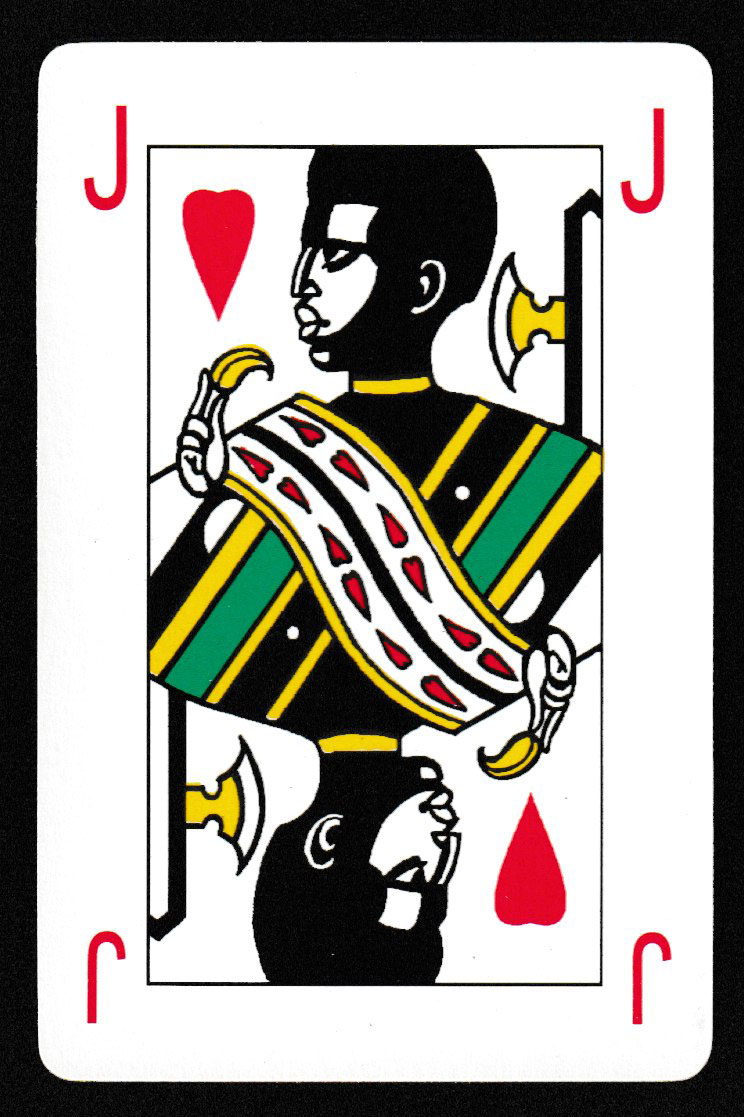
Above: 52 + 2 jokers + extra joker in Special Box: BLACK PACK, featuring thick-set black characters in traditional African dress. First edition, limited to 5000 copies. Manufactured by Heraclio Fournier S.A., Spain for Sasakti, London, 1993. 33% proceeds to aid African children "for personal freedom & social justice". Illustrated by production designer Christopher Hobbs. An error can be seen on the queen of diamonds, the inner pip symbol is missing. A second error is that all four heart suit-signs are missing from the borders of the Jack of Hearts
In the traditional African worldview, life and death are inextricably linked. All members of a family, both living and dead, continue to depend on one another. Ancestral cults confirm common provenance and thus the unity of the clan.
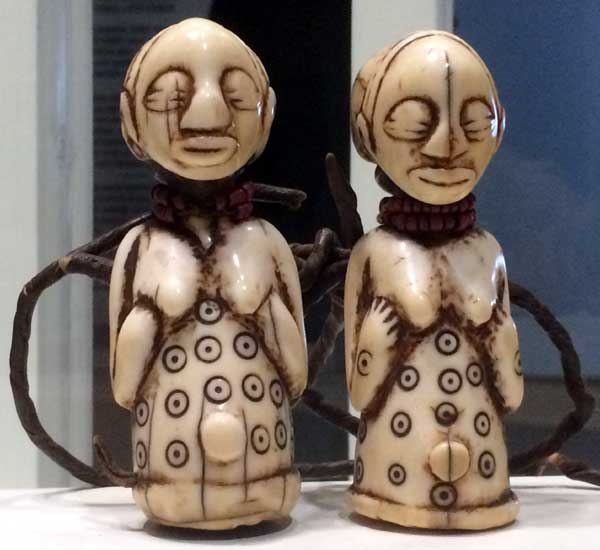
Above: pair of amulets in ivory, Republic of Congo, 19th century. The dot-circle motif on the body symbolises life and continuity.
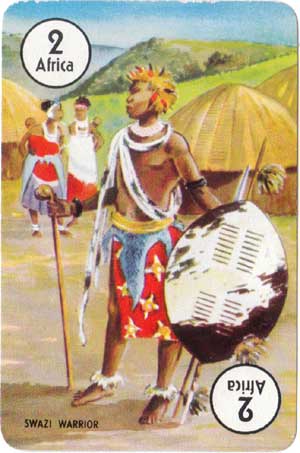
Above: African themed card from Round the World card game published in 1961.

By Peter Burnett
United Kingdom • Member since July 27, 2022
I graduated in Russian and East European Studies from Birmingham University in 1969. It was as an undergraduate in Moscow in 1968 that I stumbled upon my first 3 packs of “unusual” playing cards which fired my curiosity and thence my life-long interest. I began researching and collecting cards in the early 1970s, since when I’ve acquired over 3,330 packs of non-standard cards, mainly from North America, UK and Western Europe, and of course from Russia and the former communist countries.
Following my retirement from the Bodleian Library in Dec. 2007 I took up a new role as Head of Library Development at the International Network for the Availability of Scientific Publications (INASP) to support library development in low-income countries. This work necessitated regular training visits to many sub-Saharan African countries and also further afield, to Vietnam, Nepal and Bangladesh – all of which provided rich opportunities to further expand my playing card collection.
Since 2019 I’ve been working part-time in the Bodleian Library where I’ve been cataloguing the bequest of the late Donald Welsh, founder of the English Playing Card Society.

Activity for Africa playing cards
Sign in to comment or save this article.

Related Articles
Baraja Turística del País Vasco
Basque poker deck of 55 cards published by Fournier with scenic views of the Basque Country.
Bankunión playing cards
Ingredients and recipes for 24 dishes from different regions of Spain.
African art playing cards
African art and symbolism on playing cards designed by John J. Beckvermit III, USA, 1994.
Liban Historique et Touristique
“Liban historique et touristique” souvenir of Lebanon playing cards manufactured by Heraclio Fournie...
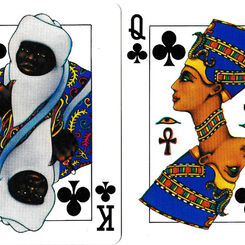
Drum playing cards
Drum playing cards depicting demographically diverse Africans of different ethnicities.
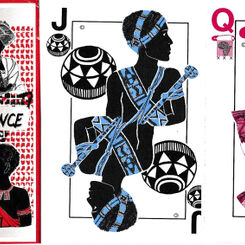
African Renaissance Deck
African Renaissance Deck published for Nkosi's Haven, South Africa, 2000.
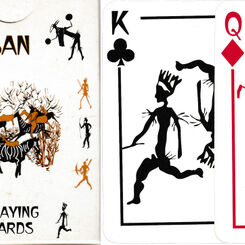
San Playing Cards
Rock paintings and engravings of the San people, better known as the “Bushmen”.
Chinese Costumes
Chinese Costumes from the Winterthur Collection, published by Fournier, 1984.
Ethiopian
Ethiopian playing cards designed for the Ethiopian Tourist Organization by Afewerk Teklé.
Ethiopian Air Lines
Ethiopian Air Lines playing cards designed by Melles Habtezghi with courts wearing regional costumes...
Baraja Turística de España
Baraja Turística de España by Heraclio Fournier, 1966.
Sandton City
African tribal mask playing cards for Sandton City, Johannesburg.
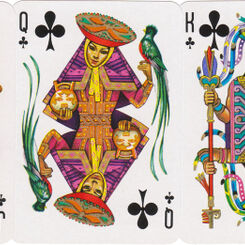
America
“America” playing cards designed by Teodoro N Miciano, 1960.
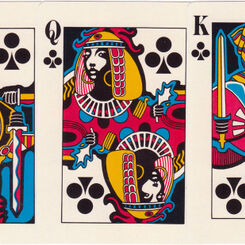
Sheba by Omega Concepts Ltd
Sheba playing cards illustrated by Brent Bailer and published by Omega Concepts Ltd.
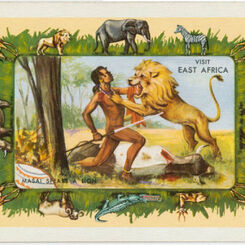
East African Playing Cards
East African Playing Cards by Heraclio Fournier S.A., 1957.
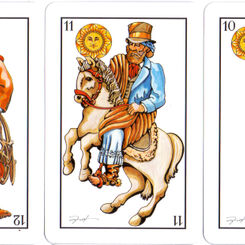
Baraja Gaucha
“Baraja Gaucha” fantasy deck designed by Mateo Tikas Plechas for Argentina, 1998.
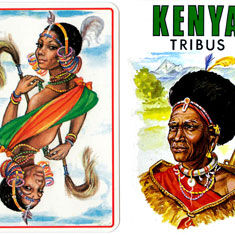
Kenya Tribes Playing Cards
“Kenya Tribus” playing cards published by Sapra, Mount Kenya Sundries Ltd, Nairobi, 1991
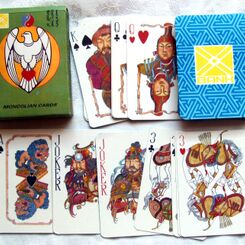
Mongolian Playing Cards
Mongolian Playing Cards.
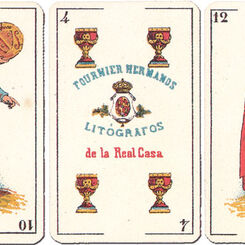
Fournier Hnos Burgos
In 1860 the Fournier Brothers of Burgos (Spain) commenced producing playing cards. They produced hig...
Frozen Court - The Aethiopic Rendering
A deck made specifically for Alpha Phi Alpha Fraternity, Inc., the first African-american college fr...
Most Popular
Our top articles from the past 60 days