

Tarot of the Everlasting Day - AI Generated Tarot
Artificial Intelligence (AI) generated tarot deck produced by Marcus Katz. Is this science fiction or the future of tarot?
Artificial Intelligence (AI) generated tarot decks are a recent phenomenon in the tarot industry, as advancements in AI technology have made it possible for commercial applications. It has been suggested that AI technology has progressed to the point of being able to pass the Turing test, which is a test designed to determine whether a machine's intelligence is distinguishable from that of a human. Is this science fiction or the future of tarot?

Above: selection of AI-genrated tarot cards created by Marcus Katz using the Midjourny application.
The process of using AI to generate artwork is known as "prompt-craft", where the creator provides prompts in a chat-like fashion to the AI to generate the desired result. This method of creating artwork has led some to speculate that it could replace certain roles within a traditional workplace, such as graphic designers or copywriters, with those who are skilled in "prompt-craft" and can find the optimal prompts to give to the AI.

Above: the Chariot, which Katz said was particularly hard to create.
Marcus Katz used the AI application Midjourney to create the Tarot of the Everlasting Day deck. By using the “prompt-craft” technique to give the AI concepts for the design of each card, the AI would then generate a result.
Katz explains "the process of using Midjourney to generate tarot card artwork is not a one-way street, it has been a surprisingly two-way conversation. [...] Sometimes, despite re-inputting modified prompts for a card over a hundred times, I have had the feeling 'we' are after something else, and then, re-input a totally new prompt based on that intuition, and the A.I. has delivered something very different, almost with a sigh of 'yes, that’s what we were trying to do'."
"Some cards took much longer than others to generate," Katz noted. "The Chariot out of the Majors was one which took several days, with constant pruning of prompts and returning to basics before finalising the image.”
The process of generating tarot cards using AI can be time-consuming and require constant adjustments to the prompts. Katz likely spent a considerable amount of time experimenting with different prompts to find the optimal ones for each card, resulting in over 130 pieces of artwork with consistent styles and themes.
A Demonstration
I signed up for Midjourney to try it for myself. Initially I prompted the AI with this: “colourful Rider-Waite tarot deck. The fool tarot card.”

Above: the Midjourney chat-like interface used to prompt the AI.
A few moments later Midjourney returned these results:

Above: four example AI-genrated Fool designs. I've noticed that the AI is unable to properly create words and hands.
From here the AI gives me options of which version I like the most to develop further.
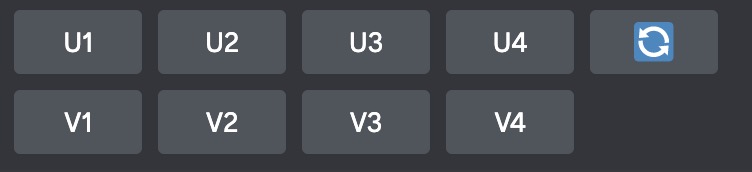
Above: here you have four choices to upscale your image to a large size (U1-U4) and options to generate further versions of a particular design concept (V1-V4).
I chose the first option and Midjourney produced four further variants:

Above: the AI refined the concept of the Rider-Waite Fool, with minor variations such as various colour trousers, staff and plants.
The prompts can be as long, elaborate and descriptive as you like. Here’s another example of a more complex prompt: “Colourful tarot card. The High Priestess Tarot Card. Exotic woman. Exotic headdress. Mediaeval. Illuminated. On both sides of the High Priestess are two big pillars. They mark the entry to this mystical place. One pillar is black and has the alphabet B the other is white and engraved with the letter J.”

Above: in these further examples, you can see that the AI didn't fully understand my instructions, there are letters, but they aren't the correct ones or in the correct place.
The Tarot of the Everlasting Day is based on the Rider-Waite cards, which is considered the "tarot template" for most modern decks. According to Katz, this structure is said to give readers "readily recognised scenes" that are suitable for beginners. The deck includes a total of 80 Minor Arcana cards (two sets of 40 cards), which includes a “scenic set” of pictorial illustrations as well as a "pip set" similar to traditional suit pips. Additionally, the deck includes the 22 Major Arcana cards, an alternative Empress card, and nine unique cards that fit into Katz's own tarot system called "Tarosophy". The deck also contains a Kabbalah Tree of Life card (See the card ) and a Kickstarter certificate of authenticity.
The Tarot of the Everlasting Day was funded through a Kickstarter campaign, where Katz raised £110,942 from over 1,200 people to bring the deck to life. The use of AI technology in this deck is a unique and innovative approach to tarot card creation, and it will be interesting to see how it is received by the tarot community.

Above: selection of the AI-generated 'pips set'.
The new unique cards are:
| Card | Keywords & Notes |
|---|---|
| The Artificial Intelligence | Interference, algorithm, pattern, prediction |
| The Great Work | By Our Work We Are Changed |
| Initiation | The Worker is Hidden in the Workshop |
| The Gate | Enter The Order of Everlasting Day |
| The Rose Key | In Arkartia, We Are |
| The Angel of Earth | Pentacles, North, Body |
| The Angel of Air | Swords, East, Mind |
| The Angel of Fire | Wands, South, Spirit |
| The Angel of Water | Cups, West, Emotions |

Above: a variety of new cards were added to the deck. The Artificial Intelligence card includes the terms interference, algorithm, pattern and prediction. The phrase "The Worker is hiding in the Workshop" is on an Initiation card. The subtitle "By Our Work We Are Changed" is seen on the Great Work card. The cards The Gate and The Rose Key, with the subheads "Enter the Order of Everlasting Day" and "In Arkartia, We are." These keywords only provide a start, the booklet does not fully interpret these new cards. The Kickstarter Certificate of Authenticity, which is also displayed above, features an AI-created self-portrait; my deck was number 1,383.
The nine new cards fit into Katz’s own tarot system, "Tarosophy", which he has developed over the course of his career as a tarot reader and author. In the booklet, it’s explained that "Tarosophy" is “the living wisdom of the tarot” of which we “use tarot to engage life, not escape it”.
I couldn’t find any interpretation of the nine new cards in the booklet or the PDF supplement, which I found to be a disappointment, leaving a tarot reader to create their own interpretations for these new cards, or dive into Katz’s own tarot mythology and Kabbalism.
The Kickstarter Certificate of Authenticity features an image prompted by asking the AI “how it imagined itself as an artist” which Katz says is a “rare and unusual self-image in which we perhaps see how the machine intelligence sees itself”.
The use of Midjourney enabled Katz to create the tarot deck without the need for collaboration with an artist or illustrator, and the resulting deck is a novel combination of AI-generated artwork and Katz's own tarot system. This innovative approach resulted in a tarot deck that is both unique and visually striking.
Where is Tarot heading in the future?
Of course, it's difficult to predict exactly where tarot will head in the future, as it's now become a dynamic and ever-evolving tool. However, based on current trends and the growing interest in self-help and personal development, it's likely that the use of tarot as a tool for self-discovery and developing your own mystic lifestyle will continue grow.
As we can see here with Tarot of the Everlasting Day the integration of AI technology to generate personalised tarot decks and readings is starting to emerge. AI can provide an individualised approach to tarot and can adapt to the needs and preferences of the individual. It could also provide a more convenient and efficient way of generating tarot readings and interpreting the results, making it more accessible to a wider audience.
The tarot of tomorrow may embrace a more personalised approach, utilising AI personal assistants from tech giants such as Microsoft and Facebook, that already possess a digital representation of the user's life, such as your searches, online shopping preferences and travel history. These AI assistants could generate a customised tarot experience, reflective of the individual's unique beliefs and lifestyle, and deliver on-demand interpretations.
The Major Arcana


The Courts


The Angels

References
By Adam Wintle
Thailand • Member since March 15, 1997
Adam has been involved in developing the site as well as reviewing new decks and conducting research. He is particularly interested in innovation, Kickstarter and East Asian cards. He is a member of the IPCS, 52 Plus Joker, and webmaster of the EPCS.

Activity for Tarot of the Everlasting Day - AI Generated Tarot
Sign in to comment or save this article.

Related Articles
Tattoo Tarot: Ink & Intuition
A 2018 tarot pack featuring Megamunden’s bold, vintage tattoo-inspired artwork.
The Somnia Tarot
Nicolas Bruno’s 2023 Illustrated Edition turns a photographic dream project into a Rider-Waite-Smith...
Women by Royo
‘Women by Royo’ erotic playing cards published by Heraclio Fournier, Spain, 2001.
The Tarot Strikes Back
Roy Huteson Stewart's The Tarot Strikes Back combines Star Wars with Rider-Waite tarot imagery.
Morgan-Greer Tarot
Based on the knowledge, wisdom and interpretation of Paul Foster Case and Arthur Edward Waite.
Disney Villains Tarot Deck
The Disney Villains tarot deck by Insight Editions emphasises iconic villains, merging traditional t...
Pixel Tarot
This tarot deck pays tribute to the golden age of pixelated video games, drawing inspiration from th...
U.S. Presidents playing cards
U.S. Presidents Bicycle playing cards designed by Johnny Whaam, USA, 2015
Dungeons and Dragons Tarot
This 78-card officially licensed Dungeons & Dragons (D&D) tarot deck offers a visually appealing var...
Alien Arcana Tarot
A series of three tarot decks inspired by the Alien film franchise, created by Roy Huteson St...
Rolla Nordic Tarot
Rolla Nordic Tarot was drawn by Paul Mathison.
Delta Playing Cards
Delta playing cards are a modern art concept deck invented by Professor M. R. Ali, an artist operati...
War of Omens
War of Omens is a card game combining deck-builder and collectable-card-game mechanics, featuring fa...
OCCO Game of Tarot
Scott Hill has been working on a tarot pack which can also be used to play card games, the pack has ...
Rider Waite Tarot - details compared
After the first edition of the Rider-Waite tarot in 1909 four further editions were published till a...
Rider Waite Tarot early editions
Rider Waite Tarot early editions
Rider-Waite Tarot
The Rider Waite Tarot was created at the beginning of the 20th century by Arthur Edward Waite and Pa...
Pneumatic Playing Cards
The surface of the cards was slightly grooved by being rolled on prepared plates, so that there were...
De La Rue
De La Rue introduced letter-press printing into playing card production and his patent was granted i...
English Tarot Cards
The game of tarot was not widely accepted in England until the 1870s when a number of English occult...
Most Popular
Our top articles from the past 60 days


