


Playing-Card Themes & Subjects

Playing cards can be broadly categorised into standard and non-standard designs, with collectors appreciating their variety. Read Paul Bostock's Introduction to Collecting Themes to learn more.
 Abstract
Aces 39
Advertising 478
Affirmations
African-American
Alice in Wonderland
Americana
Amerindian 45
Animation 30
Anime
Anonymous
Arabic
Architecture
Army
Art & Design 334
Art Deco
Art Gallery 45
Art Nouveau & Jugendstil 34
Asescoin
Asterix
Astrology
Astronomy
Aviation 62
Backs
Banking & Finance
Bath
Bavaria
Benno
Biblical
Biedermeier
Bingo
Black Cards
Black-Peter
Blyton
Bolognese
Botany
Bourgeois
Breweries 56
Brexit
Brittany
Bubble
Bullfight
Canaries
Cannabis
Cardistry
Caricatures 76
Carnival
Cartomancy 115
Cartoon 133
Casino
Cats
Celtic
Cerveza
Chess
Chibi
Childhood 81
Children
Chocolate
Christmas
Chromolithography
Circular
Circus
Clown
Co-op
Cocktail
Collaborative 47
Collectible
Collecting 40
Collectors
Colouring
Columbus
Comic Books 38
Commemorative 133
Computers & Technology
Counties
Courts 31
Craft
Cubism
Currency
Cyberpunk
Designers
Detective
Devotional
Dickens
Digital
Distillery 30
Dogs
Donkey
Dragons
Dynasties
Education 162
Engineering
Engraved
Ephemera 101
Erotica 34
Estanco
Ethnic & Indigenous 137
Exposition
Facsimiles & Replicas 92
Fanning
Fantasy 105
Fashion & Costume 92
Fasnachtskarten
Firearms
Folklore 94
Food & Cooking 57
Football 37
Four Colour
Freebie-cards 40
Frizzle Ace
Galicia
Gardel
Garter Ace
Gaucho
Geography
Geometric
Golly
Gothic
Halloween
Hand-Painted
Health 45
Heraldry
Hindu
Hispanoamericana
Historic
Historical 53
History 182
Humour 138
Hunting
Illuminated
Imperial
Importer
Indices
Inka
Innovation 45
Joker
Jubilee
Kabbalah
Kickstarter 126
King Arthur
Kings Wild Shorts
Lady Charlotte Schreiber
Literature 112
Lithography
Luxury 44
Magic
Manga
Manufacturing Processes
Maori
Maps
Masonic
Matches
Mathematical
Medical & Pharmaceutical 36
Medieval 50
Michelin
Microscopique
Military 55
Millennium
Miniature 73
Minimalist
Mining
Modernist
Monopolies
Most Wanted
Movies & Film 114
Music 89
Myths & Legends 66
Napoleon
NASA
Nationalism
Nature & Environment 174
Navy 39
Neoclassical
Nestlé
No Revoke
Notgeld
Olympics
On the Cards
Oracle 30
Orientalism
Palekh
Paper
Patent
Patriotic
PDF 79
Peter Pan
Philately
Philips
Photography 102
Pin-up 34
Pirates
Poetry
Political 204
Pop Culture 120
Postmodern
Printing
Prison
Propaganda
Proverbs
Psychology
Questions
Railway 33
Rawhide
recycled
Relationships
Religion 30
Renaissance
Revolution
Robin Hood
Rococo
Rokoko
Royalty 105
Safety
Sample Books
Sardinia
Satire 41
Scenic
Sci-Fi 44
Secondary Uses
Shakespeare
Shipping 55
silk
Smuggling
Souvenir 262
Space
Spelling
Split deck
Sports 139
Stained-Glass
Stars
Steam-power
Steampunk
Stencilling
Superheroes
Superman
Surrealism
Swastika
Symbols
Tango
Tarot 190
Tartan
Tattoo
Taurino
Tax 32
Tea
Telecommunications
Television 48
Theatre 45
Timeline
Tobacco 64
Topographical
Toy Cards
Trade-cards
Trades & Professions
Transformation 110
Translucent
Transport 75
Truco
Turnhout
typography
Ukiyo-e
Valuation
Victorian 40
Video Games
Videos
Vsoe
Warburg
Wartime 131
Water Margin
Wellness
Whisky
Wills
Wine
Winnie-the-Pooh
Woodblock
Woodland
Wrapper
Zodiac
Zombies
Zoology
Abstract
Aces 39
Advertising 478
Affirmations
African-American
Alice in Wonderland
Americana
Amerindian 45
Animation 30
Anime
Anonymous
Arabic
Architecture
Army
Art & Design 334
Art Deco
Art Gallery 45
Art Nouveau & Jugendstil 34
Asescoin
Asterix
Astrology
Astronomy
Aviation 62
Backs
Banking & Finance
Bath
Bavaria
Benno
Biblical
Biedermeier
Bingo
Black Cards
Black-Peter
Blyton
Bolognese
Botany
Bourgeois
Breweries 56
Brexit
Brittany
Bubble
Bullfight
Canaries
Cannabis
Cardistry
Caricatures 76
Carnival
Cartomancy 115
Cartoon 133
Casino
Cats
Celtic
Cerveza
Chess
Chibi
Childhood 81
Children
Chocolate
Christmas
Chromolithography
Circular
Circus
Clown
Co-op
Cocktail
Collaborative 47
Collectible
Collecting 40
Collectors
Colouring
Columbus
Comic Books 38
Commemorative 133
Computers & Technology
Counties
Courts 31
Craft
Cubism
Currency
Cyberpunk
Designers
Detective
Devotional
Dickens
Digital
Distillery 30
Dogs
Donkey
Dragons
Dynasties
Education 162
Engineering
Engraved
Ephemera 101
Erotica 34
Estanco
Ethnic & Indigenous 137
Exposition
Facsimiles & Replicas 92
Fanning
Fantasy 105
Fashion & Costume 92
Fasnachtskarten
Firearms
Folklore 94
Food & Cooking 57
Football 37
Four Colour
Freebie-cards 40
Frizzle Ace
Galicia
Gardel
Garter Ace
Gaucho
Geography
Geometric
Golly
Gothic
Halloween
Hand-Painted
Health 45
Heraldry
Hindu
Hispanoamericana
Historic
Historical 53
History 182
Humour 138
Hunting
Illuminated
Imperial
Importer
Indices
Inka
Innovation 45
Joker
Jubilee
Kabbalah
Kickstarter 126
King Arthur
Kings Wild Shorts
Lady Charlotte Schreiber
Literature 112
Lithography
Luxury 44
Magic
Manga
Manufacturing Processes
Maori
Maps
Masonic
Matches
Mathematical
Medical & Pharmaceutical 36
Medieval 50
Michelin
Microscopique
Military 55
Millennium
Miniature 73
Minimalist
Mining
Modernist
Monopolies
Most Wanted
Movies & Film 114
Music 89
Myths & Legends 66
Napoleon
NASA
Nationalism
Nature & Environment 174
Navy 39
Neoclassical
Nestlé
No Revoke
Notgeld
Olympics
On the Cards
Oracle 30
Orientalism
Palekh
Paper
Patent
Patriotic
PDF 79
Peter Pan
Philately
Philips
Photography 102
Pin-up 34
Pirates
Poetry
Political 204
Pop Culture 120
Postmodern
Printing
Prison
Propaganda
Proverbs
Psychology
Questions
Railway 33
Rawhide
recycled
Relationships
Religion 30
Renaissance
Revolution
Robin Hood
Rococo
Rokoko
Royalty 105
Safety
Sample Books
Sardinia
Satire 41
Scenic
Sci-Fi 44
Secondary Uses
Shakespeare
Shipping 55
silk
Smuggling
Souvenir 262
Space
Spelling
Split deck
Sports 139
Stained-Glass
Stars
Steam-power
Steampunk
Stencilling
Superheroes
Superman
Surrealism
Swastika
Symbols
Tango
Tarot 190
Tartan
Tattoo
Taurino
Tax 32
Tea
Telecommunications
Television 48
Theatre 45
Timeline
Tobacco 64
Topographical
Toy Cards
Trade-cards
Trades & Professions
Transformation 110
Translucent
Transport 75
Truco
Turnhout
typography
Ukiyo-e
Valuation
Victorian 40
Video Games
Videos
Vsoe
Warburg
Wartime 131
Water Margin
Wellness
Whisky
Wills
Wine
Winnie-the-Pooh
Woodblock
Woodland
Wrapper
Zodiac
Zombies
Zoology
| Image | Details | Total Articles |
|---|---|---|
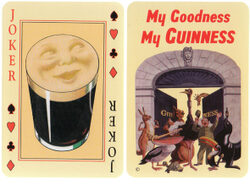 |
Playing Cards for Consumer Advertising, Marketing & Promotion Closely following the development of visual advertising in general, such as on labels, packaging, posters and TV commercials, advertising playing cards display promotional messages either on the reverse of the cards, or else on the pip cards, court cards, aces, jokers or even the box, seeking to find ways to associate products with our inner desires and longings, with our identity and who we want to be. A popular saying illustrating how difficult it is to quantify the response to advertising is attributed to John Wanamaker (1838-1922): "Half the money I spend on advertising is wasted; the trouble is I don't know which half." Collectors often cherish vintage decks with old-fashioned marketing promotion for shipping lines, luxury brands, distilleries or breweries. |
478 |
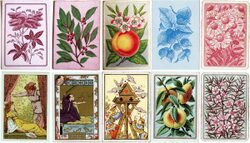 |
The Art & Design of Playing Cards The playing card calls for artistic treatment and although the constrained size imposes some limitations there is an almost bewildering wealth and variety of designs in playing cards and their tuck boxes. The serious player requires design to be unobtrusive so that aesthetic considerations remain in the background. However, with modern manufacturing technology more eye-catching designs are becoming popular as gifts, collectibles and for their attractive appearance. |
334 |
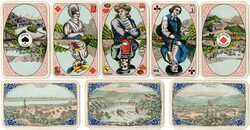 |
Souvenir Playing Cards Tourist souvenir playing cards depict the aesthetic, political, social and economic conceptions of the countries to which they belong. They feature beauty spots, local customs, gastronomy, historic ruins or other attractions. |
262 |
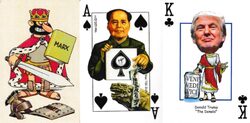 |
Political Playing Cards Political playing cards were introduced in the 17th century providing entertainment by satirising or deriding current events and leaders. Propaganda cards, Imperial decks, war cards and even educational card games all carry a message which relates to the politics of memory, the means by which events are remembered and recorded, the way history is written and passed on. Historical memory can be used to arouse emotional reactions... |
204 |
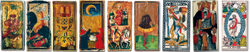 |
Tarot Tarot, originally a 15th century card game from Italy, has evolved into a form of personal mysticism and spiritual exploration, offering new visions of expanding awareness. |
190 |
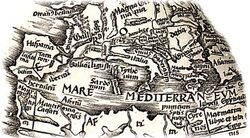 |
The History of Playing Cards Playing Cards have been around in Europe since the 1370s. Some early packs were hand painted works of art which were expensive and affordable only by the wealthy. But as demand increased cheaper methods of production were discovered so that playing cards became available for everyone... |
182 |
 |
Nature, Wildlife & Environment on playing cards Nature is filled with so much beauty that it’s only natural to feel uplifted in the presence of trees & birdsong. Sitting quietly in nature opens access the deeper states of peaceful consciousness that so many are seeking. Many artists have been inspired to design playing cards after spending quality time close to nature. • See also Botany► |
174 |
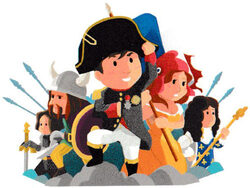 |
Instructive and Educational Playing Cards & Games Many packs are instructive or educational and designed to facilitate learning rather than just for play. Educational playing cards are a great way to learn new facts, or to review information that you already know. When the design of the illustrations is appropriate and amusing this helps to engage the imagination in the topic which can then be memorised more easily.
|
162 |
| Sports & Athletic Themes on Playing Cards and Games Sport has long been a favourite subject for playing cards and family games. Publishers capture teams, tournaments and outdoor pursuits: football and rugby, golf and tennis, skiing and skating, cycling and motor sport, fishing and hunting, as well as traditional events such as sumo and bullfighting. Some packs promote clubs, tours or sponsors; others commemorate Olympic campaigns, local championships or historic victories. This theme brings together photo packs, illustrated courts and advertising issues from many countries and decades, showing how sporting icons, colours and folklore move from stadium and field onto small cards used for play, collecting and publicity. |
139 | |
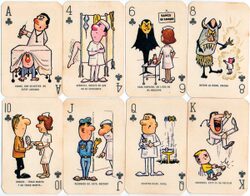 |
Humour on playing cards Humour on playing cards can come in many forms, and may take the shape of witty, satirical and amusing images, cartoons or text that are printed on the cards. Humour is often used to add an element of fun and light-heartedness to a game, or to make a product more appealing. |
138 |
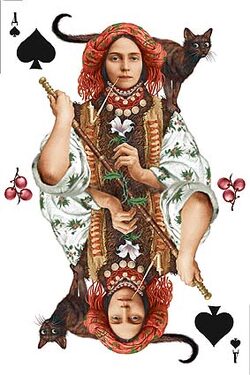 |
Ethnic, Indigenous & Tribal decks Playing cards have long pictured peoples and traditions from around the world. This theme gathers ethnographic rawhide or bark packs, educational and souvenir issues, casino and charity publications, and artist-led interpretations that show dress, masks, languages and daily life. Many reflect the values and vantage points of their time, from colonial-era curiosities to contemporary collaborations with communities; notes on provenance help readers evaluate intent, accuracy and respect. Together these articles trace how culture is represented on small paper objects used for play, collecting and publicity, and consider both celebration and misrepresentation in the record. |
137 |
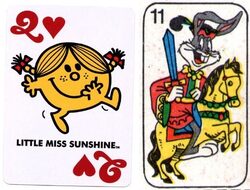 |
Cartoons, Caricature and Comic Art on Playing Cards & Games Cartoon art has long animated playing cards and family games. From licensed characters and manga to political satire and promotional packs, artists use caricature and comic drawing to retell stories, advertise brands and gently poke at public life. This theme brings together cartoon playing cards, caricatured courts and semi-transformation packs, showing how humour, storytelling and social commentary travel across countries and decades. |
133 |
| Commemorative & Anniversary Playing Cards Commemorative playing cards mark dates, people and milestones. Publishers and institutions issue them for centenaries and bicentenaries, world fairs and exhibitions, royal occasions, club anniversaries, new infrastructure, sporting events and museum shows. Designs often feature portraits, landmarks, coats of arms, event logos or timelines, sometimes with limited editions or presentation cases. Together these packs act as souvenirs, publicity and records of civic memory, showing how cards keep history visible in everyday life. |
133 | |
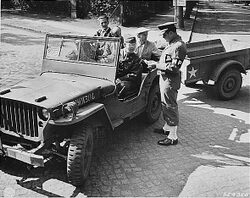 |
Wartime Playing Cards Wartime playing cards and card games are those that were produced during times of war and were often designed with patriotic themes or propaganda messages. They were distributed to soldiers and civilians alike and served as a form of entertainment and morale booster during times of conflict. Wartime playing cards often feature images of military leaders, soldiers and patriotic symbols, such as national flags or eagles. • See also "Most Wanted" • "Military" • "Army" |
131 |
| Kickstarter & Crowd Funded Playing Cards Crowd-funding has opened a direct path from artist or small studio to the table. Campaigns showcase prototypes, test demand and then fund short-run production, often with stretch goals, special finishes, numbered seals or companion items. Subjects range from historical tributes and social causes to pop-culture crossovers, cardistry and magic, with both successes and near-misses documented here. |
126 | |
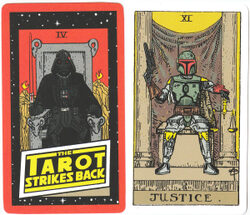 |
Pop Culture in Playing Cards As the ‘culture of the people’, contemporary popular culture is a product of economically more developed countries and arises from a combination of advances in technology and increased leisure time. Popular culture is also informed by the mass media. Iconic brands aim to be sold to large numbers of people as a commodity. Certain currents of pop culture may originate from or diverge into a subculture. Many new cardistry and Kickstarter decks fall into this category. |
120 |
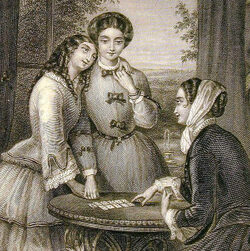 |
Cartomancy and Fortune-Telling Playing cards are used for fortune-telling, predicting the future or even as a psychological adjunct to folk medicine and therapy. Turning another card illumines the moment and new clarity emerges. |
115 |
| Cinema, Film & Movie-themed Playing Cards Cinema has long supplied imagery, icons and stories to playing cards and family games. Publishers issue licensed tie-ins, studio promotions and anniversary editions across classic Hollywood, film noir, sci-fi and anime, as well as local productions and festival souvenirs. Designs range from photo stills and poster art to stylised courts and modified pips; some packs add rules for branded play or appear as limited runs for specific markets. |
114 | |
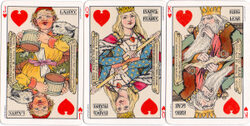 |
Literature and Playing Cards Wherever there is freedom of expression books, articles and other literary sources such as adventure stories, folk tales, historical or scientific literature have all been inspiration for artists, including designers of playing cards and educational games. |
112 |
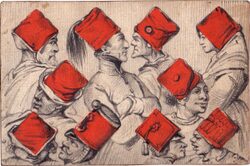 |
Transformation Playing Cards The best-known fantasies with playing cards are the ‘Transformation’ cards. Hand-drawing ‘transformations’ onto a pack of ordinary playing cards, with the suit symbols forming part of the overall composition, became a popular pastime over 200 years ago and a test of skill in drawing. The earliest printed sets were published at the start of the 19th century, often published in the form of an almanac or sometimes known as ‘metastasis’, and these became a fashionable and entertaining novelty. In the strict sense of the word ‘transformation’ the pips should be in their standard positions and form part of, or fit into, the overall design on the card. When the pips have been moved around from their traditional places these are known as semi-transformation cards. |
110 |
| Fantasy, Myth & Legend on Playing Cards & Games Fantasy on playing cards ranges from folklore and fairy tales to sword-and-sorcery, game tie-ins and artist projects. Subjects include dragons, wizards and mythical creatures, heroic quests, Gothic and occult motifs, and literary retellings. Illustration, photo-montage and hybrid approaches appear on courts, aces and jokers; some packs add map textures, heraldry, runic detail or special finishes. |
105 | |
| Monarchs and Royalty on playing cards Royal themes present portraits of kings, queens and dynasties, coats of arms and regalia, palaces, coronations and jubilees. Makers publish educational histories, costume and court-portrait sets, souvenir issues for royal visits, and commemoratives from weddings and accessions to national celebrations. Subjects range from Tudor and British monarchs to Portuguese, Brazilian, Hawaiian and Danish courts, alongside modern photographic or artist-led interpretations. |
105 | |
| Photography & Photographic Views on Playing Cards & Games Photography has supplied subjects for playing cards since early souvenir and bromide-print issues. Publishers draw on landscapes and architecture, wildlife and transport, portrait and pin-up, ethnographic themes, museum collections and brand promotions, alongside artist projects. Formats range from small image sets repeated across suits to all-different cards with captions, dates and credits. Many use borderless or full-bleed faces and varied print methods, with images licensed from photographers, archives and agencies across countries and decades. |
102 | |
| Playing Card-related Ephemera Ephemera covers the supporting print and objects made around play. Paper wrappers, tax bands and seals. Whist, bridge and bezique markers, counters and scorers. Patience boxes, travel cases and presentation sets. Poster stamps, display cards, price lists and catalogues. Patents, adverts and press cuttings. Phonecards, cigar bands, invitations and greetings in the style of playing cards. These materials help date and attribute packs, identify makers and retailers, and show how games were packaged, taught and promoted.
|
101 | |
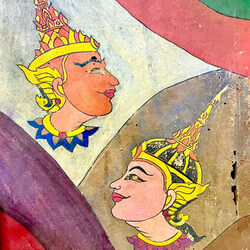 |
Folklore and Local Traditions on Playing Cards Folklore comes in many forms. Sometimes traditional story-telling preserves legends about local characters or events. Folklore may be rooted in the traditional cultures of the peoples who settled in the area, or of the local, indigenous people. It may involve music, dance, belief, objects, customs and so on. The study of such traditions in their living context – including how people actually use objects like playing cards in daily social life – falls within the scope of ethnography. |
94 |
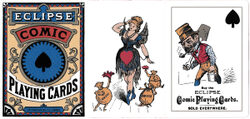 |
Facsimiles, Replicas & Recreations of Playing Cards Facsimiles, Replicas & Recreations of playing cards offer a unique glimpse into the evolution of card design. This list includes various reproductions, some based on historical designs from as far back as the 1600s. Each article provides detailed information about the origins and inspirations behind the recreations. |
92 |
| Fashion & Costume Fashion and costume appear on playing cards as museum series, regional and national dress sets, fashion house promotions and artist-led designs. Subjects range from court portraiture and folk attire to uniforms, masks and runway-inspired sketches, alongside photographic campaigns and catalogue issues. Layouts include full-length or double-ended courts, scenic aces and captioned photo packs, sometimes with gilt edges or custom indices. |
92 | |
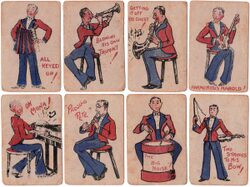 |
Music on Playing Cards Music has played an important cultural and social function since prehistoric times. It helps form tribal bonds and enhances religious and spiritual practices. All kinds of music are depicted on playing cards and card games, from opera to popular music, ancient and contemporary. |
89 |
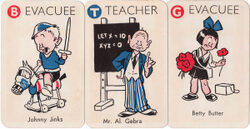 |
Playing Cards from Childhood Playing Cards from Childhood highlight card games that have entertained and educated young generations. With imaginative illustrations and engaging designs, these games promote strategic thinking, social interaction and friendly competition. Rediscover their timeless charm and the role they play in fostering creativity, skill development and treasured memories for children worldwide. |
81 |
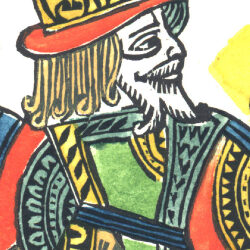 |
PDFs & Downloads A growing number of PDFs about playing cards available to read online or download. |
79 |
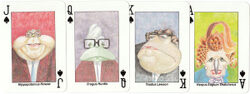 |
Caricatures on Playing Cards Caricatures on playing cards often feature comical or satirical depictions of people or events, and can provide insight into the cultural and political climate of their time. |
76 |
| Modes of Transport on Playing Cards & Games Transport imagery spans railways and underground systems, cars and motorcycles, buses and trucks, ships and sailing craft, aircraft and balloons. Publishers issue museum souvenirs and railway shop exclusives, promotional packs for airlines, car makers and tyre brands, and educational quartets on vehicle history and road safety. Artwork ranges from poster graphics and technical drawing to photographic views and route maps, with formats from picture packs and Top Trumps–style sets to branded games. |
75 | |
| Miniature & Small-Format Playing Cards Miniature and small-format packs were made for patience and travel, for children’s play and as promotional give-aways. Formats include double packs in pocket cases, press-out sheets with a make-up box, and small souvenir or advertising issues. Makers offered gilt edges, cambric finishes and varied box styles; subjects range from costume and theatre to brands and cartoons. See also: Patience. |
73 | |
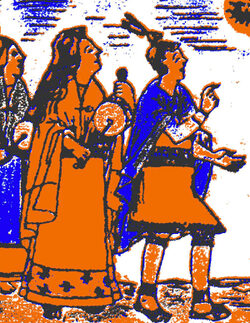 |
Legends & Mythology on Playing Cards The great struggle between Light and Darkness, between the Titans and the Gods, often reframed as The Evil Empire, dystopia/utopia or irreconcilable political opponents. These themes are frequently chosen by playing card designers to create imaginative and visually striking playing card or tarot card designs. |
66 |
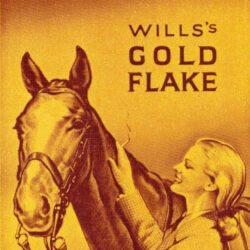 |
Tobacco: Advertising, Inserts & Anti-Smoking Playing Cards Tobacco sold itself through playing cards: advertising inserts, gift schemes, glamour and quartet games, all slipped into the pack to keep the brand in your hand after the smoke cleared. Campaigners fired back with decks giving health warnings, cartoons and sobering facts. This section rounds up both sides: the same cardboard, same games, just different messages. |
64 |
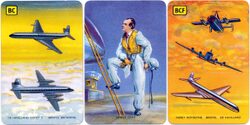 |
Aviation & Airline Playing Cards Aviation playing cards include decks produced for airlines, aircraft manufacturers, wartime services, airports and travel promotions, as well as packs depicting aircraft, pilots and the history of flight. This list brings together articles on aviation and airline-related playing cards, from early 20th-century and wartime designs to modern souvenir, advertising and commemorative packs. |
62 |
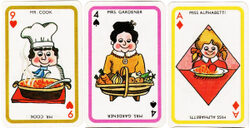 |
Food & Cooking on playing cards A selection of recipes, diets, food items and advertising appearing on playing cards and educational card games over the decades. |
57 |
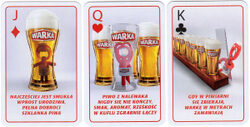 |
Breweries and Brewing Playing Cards Most of these packs are designed as advertising for beer brands and breweries, featuring their logos, slogans, beer labels and other marketing messages. These themed playing cards often incorporate designs and imagery inspired by the brewing process, such as beer bottles, pint glasses and brewing equipment, making them a visually engaging and fun collector's item for beer enthusiasts. |
56 |
 |
Military Playing Cards Military-themed playing cards are a type of playing card that features images and designs related to the military. These cards are typically sold as novelty items or souvenirs and feature various military-related imagery such as soldiers, military vehicles, aircraft, and equipment. Military-themed playing cards serve as a way to showcase pride and admiration for the military and its history. See also "Most Wanted" "Wartime" "Army" |
55 |
| Shipping Lines, Ferries and Maritime Services on Playing Cards Shipping companies, passenger liners and ferry operators have long commissioned souvenir and advertising packs. Formats include standard packs with house flags, funnels or ship portraits on the back, pictorial aces, photographic views of ports and routes, phrase packs for travellers, and special issues for maiden voyages or anniversaries. There are also quartet and teaching games on fleets, recognition and maritime history. Visual themes take in ensigns, route maps, lighthouses, hydrographic work and notable vessels, with makers such as De La Rue, Waddingtons, Grimaud, Modiano, Mesmaekers, Speelkaartenfabriek Nederland, A.S.S., Héron and Carta Mundi from the late 19th to late 20th century. |
55 | |
| Historical: Monarchs, Events & Places on Playing Cards Historical subjects appear on playing cards as named monarchs and reformers, battles and timelines, coins and heraldry, cities and landmarks. Publishers and museums issue educational and souvenir packs, commemoratives for anniversaries and festivals, and licensed series that draw on portraits, archival art and local history. Formats include scenic aces, captioned courts, and teaching sets such as quartet or family games; some adapt suit signs or indices to echo earlier patterns or regional play. |
53 | |
| Medieval: Costume, Heraldry and History on Playing Cards Medieval themes appear on playing cards and family games through manuscript-inspired illustration, Gothic revival costume, heraldic devices and scenes drawn from chronicles and battles. Publishers and museums issue souvenir and educational packs; artists reinterpret court figures and scenic aces; makers adapt formats for quartet, patience, tarock and standard play. Subjects include courtly life and hunting, crusades and saints, kings and cities, with sources ranging from illuminated books and early engravings to later historical pastiche. |
50 | |
| Television-related Playing Cards Television has supplied subjects for playing cards and family games since the mid-20th century. Publishers issue licensed tie-ins, magazine freebies and broadcaster or sponsor promotions, covering children’s puppetry and cartoons through to drama, comedy and cult series. Formats include standard packs with photo stills, quartet and Happy Families sets, picture packs and branded give-aways. Subjects range from early BBC favourites and Gerry Anderson shows to Doctor Who, Twin Peaks and later franchises such as South Park, Adventure Time and Family Guy, with makers including Pepys, ASS, Carta Mundi and Winning Moves. |
48 | |
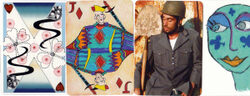 |
Creative Collaborations, Multiple Artists Creative collaborations and the inclusion of numerous artists have resulted in an increase of distinctive and aesthetically striking card decks.
|
47 |
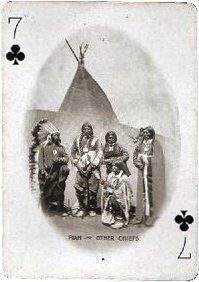 |
Amerindian Art on playing cards "Amerindian" refers to the indigenous peoples of the Americas, including North, Central, and South America, as well as the Caribbean islands. These peoples are also sometimes referred to as Native Americans or Indigenous Peoples, and they have unique cultures, languages, and histories that predate European colonization of the Americas. In certain instances these people have suffered injustice and/or exploitation, and experience ongoing struggles for recognition and reparation. |
45 |
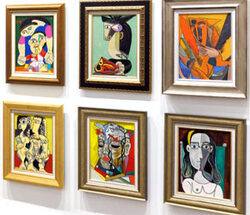 |
Art Gallery Art Gallery decks can seem at odds with the small size and functional constraints of playing cards because great artworks often rely on subtleties of brushwork, texture and composition that are lost or pixelated when shrunk to card size. However, they are popular in museum gift shops, are collectible and of educational value, providing a useful quick reference. Also popular as gifts and souvenirs► |
45 |
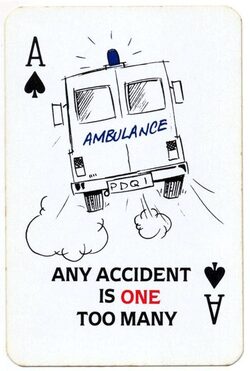 |
Health - mental & physical Playing cards can effectively convey messages about mental and physical health. These decks are used to raise awareness, promote wellness and provide information on various health issues. |
45 |
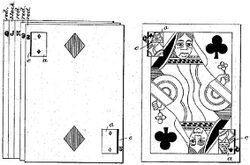 |
Playing Card Innovation This list features articles exploring the history and evolution of playing card design and manufacturing. Discover key innovations like corner indices, new suit systems, and special features, as well as the impact of leading manufacturers and designers. The articles cover a wide range of time periods and offer insights into both classic and modern playing card innovations. |
45 |
| Theatre, Opera & Stage on Playing Cards & Games Theatre appears on playing cards as portraits of actors and singers, opera scenes and masks, pantomime and vaudeville, puppet theatre and backstage life. Publishers issued souvenir and promotional packs, museum and anniversary editions, and teaching games; in some cases the theatre programme itself was printed as a pack. Formats range from standard packs with photo stills or caricature to miniature and quartet sets with captions, title or rule cards. |
45 | |
 |
Luxury Playing Cards Luxury packs of cards have been produced since the 15th century, a trend that is very popular among collectors today. |
44 |
| Science Fiction Playing Cards Science fiction appears on playing cards through spaceflight and starships, robots and AI, aliens and kaiju, superheroes and cyberpunk, with tie-ins to film, television and video games. Publishers issue licensed promotions, anniversary packs and crowd-funded editions; formats include standard packs with photo stills, quartet and Top Trumps style sets, picture packs and artist-led designs. Visual approaches range from modified pips and star-themed indices to poster art, concept sketches and in-universe props; some add rule cards, numbered seals or special finishes. |
44 | |
| Satire Satire turns playing cards into comment and critique. Publishers, artists and magazines lampoon leaders, parties and public life; others mock clergy, professions and social fashions. Formats include standard packs with cartoons, transformed faces, quartet sets, teaching games and occasional tarot trumps. Some were election souvenirs or banned issues; others served as wartime propaganda or venue and brand promotions. |
41 | |
| Collecting Playing Cards — Guides & Case Studies Spending one's leisure time gathering, forming and expanding a collection is one of the many activities that have long captured human interest. Moreover, this activity has historically been very significant because collecting forms the basis of today’s museums. Collecting here covers the practical side of building, caring for and understanding playing-card collections. Topics include standard vs non-standard designs; how to identify makers and dates from aces, tax stamps and court patterns; and what condition, completeness and storage mean for value. It brings together step-by-step dating and attribution case studies, digitised museum catalogues and club newsletters, plus notes on pricing. |
40 | |
| Freebie Cards: Magazine Inserts & Promotional Give-aways Freebie cards are playing cards given as extras with magazines, comics and consumer goods. Formats include uncut sheets to cut or press out, perforated mini cards with a press-out box, full or partial packs supplied one suit at a time, and cello-wrapped inserts; makers also tucked miniature cards into confectionery and other merchandise. Subjects span Disney and pop music, football, television and political caricature, as well as fortune-telling and souvenir issues. |
40 | |
| Victorian Victorian themes appear in playing cards and family games through parlour amusements, moral instruction and social satire. Makers such as Goodall, De La Rue, Jaques, Woolley and C. W. Faulkner issued Snap, Old Maid and Happy Families alongside commemoratives, teaching sets and one-penny picture packs printed in Bavaria. Subjects include street cries, proverbs, royal lineages, travel and industry, with transformation packs, chromolithographed backs and early use of corner indices. Boxes, rule cards and advertising show how makers packaged and promoted play for children and adults in the late 19th and early 20th century. |
40 | |
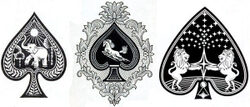 |
Aces Many modern aces of spades are anonymous so that, in the absence of any other information, the collector has difficulty deciding who made them. |
39 |
| Navy, Ships & Seafaring on Playing Cards Naval themes span ships under sail and steam, fleets and exploration, ranks and insignia, and life at sea and in harbour. Publishers issue souvenir and educational packs, wartime and charity editions, promotions for shipping lines, and licensed tributes to particular navies or vessels. Formats include standard packs with photographs or illustration, quartet and family games, and teaching sets that explain slang, uniforms, badges or notable ships. |
39 | |
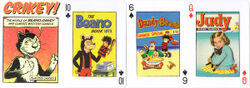 |
Comic Books & Playing Cards Discover the interesting blend of comic books and playing cards, featuring classic characters from The Beano and the Muppets to Superman and Marvel's X-Men. These packs are ideal for collectors and enthusiasts alike, they celebrate creativity and imagination through beloved comic icons. |
38 |
| Football: Clubs, Teams & Tournaments on Playing Cards Football appears on playing cards as club tie-ins, national-team souvenirs and World Cup commemoratives, as well as picture packs from magazines and sponsors. Formats include standard packs with player photos, caricature series and Spanish-suited issues arranged by team; some use non-standard suit signs such as footballs, boots and trophies. The theme also covers quartet and Happy Families sets, plus dedicated card games that simulate play on a paper pitch. |
37 | |
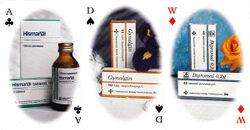 |
Medical & Pharmaceutical Playing Cards It is remarkable how often medical and pharmaceutical products are promoted using humorous or comic designs. Playing cards are no exception, with a wide variety of decks promoting pharmaceuticals, from over-the-counter drugs to children’s games. |
36 |
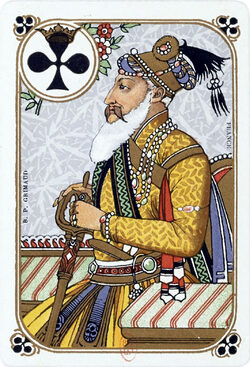 |
Art Nouveau & Jugendstil on Playing Cards Art Nouveau, also known as Jugendstil, was an artistic movement that emerged in Europe in the late 19th century, around the 1890s. It was inspired by a desire to break away from the academic and historicist styles that dominated art and design at the time and to create a new, modern aesthetic that reflected the changing world and the spirit of the age. Major influences on the Art Nouveau movement were the growing interest in Eastern art and design, including “exotica”, curvilinear forms and decorative motifs drawn from nature, and advances in technology. Playing cards provide many elegant and refined examples of this style, with intricate designs, bold patterns, and vibrant colours. |
34 |
| Erotica on Playing Cards Erotic playing cards include 19th-century translucent novelties, studio nudes, adult transformation sets and contemporary artist editions. Imagery spans classical myth to modern photo and comic art, with licensed portfolios and regional issues alongside commercial promotions. See also: Pin-up. |
34 | |
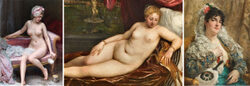 |
Pin-up & Glamour on Playing Cards Feminine beauty has been appreciated since prehistory. Pin-up on playing cards runs from WWII morale pieces and post-war glamour to brand promotions and artist portfolios. Subjects include film star photo sets, magazine or cosmetics tie-ins, freebie inserts, and illustrative series by artists such as Alberto Vargas, David Wright and others. Formats range from standard packs with studio stills to rummy or picture sets, often crediting photographers or designers. See also: Erotica► |
34 |
| Railways, Underground and Train Travel on Playing Cards Railway subjects appear on playing cards as company souvenirs and museum editions, poster and timetable art, route maps and station views, and portraits of steam, diesel and electric locomotives. Publishers include national rail operators, museums and commercial houses, with formats ranging from standard photo or poster-art packs to quartet sets and teaching games. Examples span London Underground games, national collections, luxury services and tourist lines, often with captions, house marks or indices in local languages. |
33 | |
 |
Taxation and Tax Stamps in relation to Playing Cards The combination of moral objections to gambling and the search for additional revenues prompted many governments to introduce taxes on playing cards. In many cases the collection and control of such taxes required administrative bureaucracy that led to financial expense, as well as corruption. Additionally, enforcement and avoidance (e.g., smuggling, forgery) often undermined the good intentions. The effectiveness of taxes on playing cards was therefore not always optimal and in most cases it was phased out. 
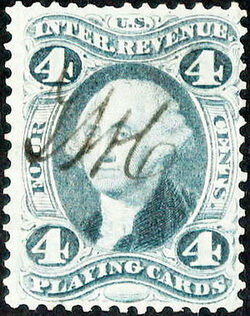
The collection and control was carried out in different ways. The most common system was stamping the cards with a well-readable tax stamp, often on an ace or another pip card. Stamps, embossing, watermarks, adhesive strips, extra labels or seals etc were sometimes used around the wrappers or on the box. The tax collector might then sign when satisfied. Stamps in different countries had their own national symbolism, depending on the period in which they were used See also Monopolies Estanco de Naipes del Perú► |
32 |
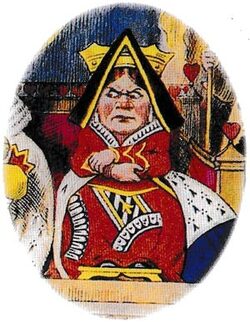 |
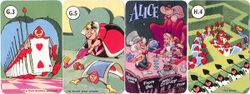
Playing Card Courts Most playing cards show sequences, such as an arithmetic series from 1 to 10, and a social, courtly hierarchy from King and Queen to the commander-in-chief, knight or even the foot soldier. These sequences are differentiated by different suit symbols. However, the traditional court hierarchies are sometimes customised or updated according to popular culture, niche markets, history, mythology or new social values such as unisex or feminism. While traditional designs remain dominant, artists and designers began creating custom decks with unique court card designs, often for collectors or special editions. |
31 |
 |
Animation Themed Playing Cards Animation-themed playing cards merge the artistry of beloved animated worlds with card games, attracting collectors, animation enthusiasts and those seeking a unique gaming experience.
|
30 |
| Distilleries & Spirits Brands on Playing Cards Distilleries and spirits appear through promotional packs, bar and retailer give-aways, cocktail-recipe sets, brand souvenirs and licensed club or venue tie-ins. Subjects include whisky, gin, vodka, liqueurs and bitters. Designs range from modified international courts and brand mascots to photo series of distilleries and drinks, with recipe or ingredient cards, special aces and branded jokers. |
30 | |
| Oracle Cards & Fortune-Telling Sets Oracle cards are non-standard packs for divination or self-reflection, distinct from tarot’s fixed structure. Formats range from early 19th-century oracles and Lenormand-type sets to Art Deco picture packs and contemporary themes; meanings are given by captions, verses or guidebooks, and imagery runs from allegory to pop culture. Examples include Le Petit Oracle des Dames (1807), Dondorf’s Wahrsage-Karten, Art Nouveau Oracle, OSHO Transformation Tarot in an oracle format, Oracle Rock, and modern celebrity issues. See also: Cartomancy & Divination, Tarot, Lenormand. |
30 | |
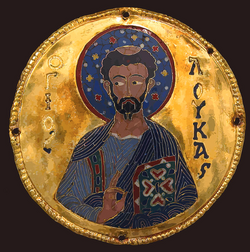 |
Religion Early engravers and print makers made devotional images for pilgrims and people who could not afford paintings or books. Many of these craftsmen turned their hand to manufacturing playing cards to earn extra income. |
30 |
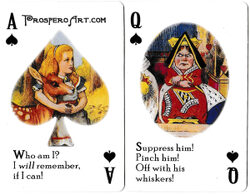 |
Alice in Wonderland The Alice in Wonderland playing cards have been a classic for generations. This collection of articles provides research, reviews, and new insights into these packs. They discuss the cards' history, artwork, and culture. |
29 |
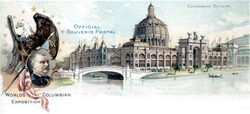 |
Americana on Playing Cards "Americana" is a term used to describe artefacts and cultural elements that are typically associated with American history, folklore, and heritage. It may be used to evoke a sense of nostalgia or a romanticized vision of American culture from a bygone era. This might include items such as vintage clothing, antique furniture, old photographs, folk music, regional cuisine, traditions and even architecture. |
29 |
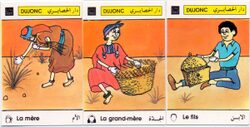 |
Arabic In addition to the Arabic language or the people who speak it, "Arabic" can also be used to refer to cultural, historical or geographical elements associated with the Arab world. This can include literature, music, art, cuisine and architecture, as well as history, politics, religion, traditions and social structures of different Arab societies. It is worth noting that the term "Arabic" may have different meanings depending on the context in which it is used. |
29 |
| Engraved Playing Cards - Copper-plate and Early Masters Engraved playing cards were printed from copper plates and often hand-coloured, allowing finer linework than woodcut. Early English examples include pictorial and political sets such as Dr Sacheverell (c.1711) and musical packs like Songs with Flute accompaniment (c.1730). In the 17th–18th centuries these coexisted with engraved tarock and Spanish-suited designs from Vienna and Madrid; see Johann Nejedly Tarok cards and Joseph Sürch, Engraver for Viennese work. Typical signs are copper-plate line, stencil colouring and duty or tax marks on aces; some editions were later reissued in facsimile. |
28 | |
| Geography: Maps, Continents & Places on Playing Cards Geographical packs teach and picture the world through maps, flags and place facts. Early instructive sets and facsimiles show continents assigned to suits and country notes on each card; later editions range from “Four Continents” series and county games to museum souvenirs, rail and national issues. |
27 | |
 |
Banking & Finance Themed Playing Cards Banking and finance-themed playing cards feature designs and imagery inspired by money, banking, finance and insurance, often incorporating logos, slogans and other branding elements from these institutions.
|
26 |
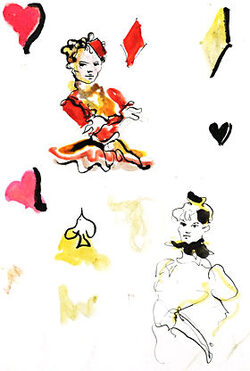 |
On the Cards A Gallery of Playing Card Artists and Designers |
26 |
| Hand-Painted & Handmade Playing Cards Hand-painted and handmade cards range from medieval luxury sets to amateur parlour creations and improvised wartime packs. Techniques include watercolour and gouache over pen-and-ink, hand-colouring of printed outlines, fabric inlays and work on alternative materials such as lacquered boards. Examples include the Stuttgart painted pack, the Flemish Hunting Deck and the Ambraser Hofjagdspiel; transformation work such as Around the World in 54 Cards; hand-made ganjifa; and small home-made picture games like Old Fashioned Snap. |
25 | |
| Patents & Registered Innovations in Playing Cards Patents and registered designs appear on aces, boxes, wrappers and rule sheets, covering corner indices and mini “triplicate” corners, numbered “indicator” indices, circular or waisted cards, textured “pneumatic” finishes, special cases and new game systems. Notable examples include Saladee’s indexed deck (1864), A. Dougherty’s Triplicates (1875–76) and Indicators (1883), I. N. Richardson’s circular “Globe” cards (1874), De La Rue’s “Pneumatic” finish (c.1891) and Robert Johnson’s Rainbow colour-mixing game (1919/20). |
25 | |
| Circular or Round Playing Cards Round and oval playing cards appear as early engravings and later novelties, souvenirs and teaching sets. Examples include Master PW’s circular cards, I. N. Richardson’s patented “Globe” deck and Waddington’s Cir-Q-Lar, with round cards also traditional in Indian ganjifa and seen in modern tarot (e.g., Motherpeace) and children’s games (e.g., Donald’s Circular Snap). |
24 | |
| Safety, Health & Public Information on Playing Safety-themed packs turn small cards into teaching aids. Topics include road safety for children, home and infant hazards, workplace health and safety, substance-use harm reduction, emergency services, disaster preparedness, survival guidance and ordnance recognition. Issuers range from police forces and councils to ministries, NGOs and commercial sponsors; cards often carry slogans, helplines, diagrams or step-by-step guidance. |
24 | |
| Scenic Views on Playing Cards Scenic packs picture places and landscapes—cityscapes and landmarks, coasts and mountains—either as scenic aces or as all-different views with captions. Examples include Tatra Mountains Souvenir, Alaska Scenic Playing Cards, Scenic Views of New Zealand, Niagara Falls Souvenir, Swiss Souvenir, La Suisse Historique, Rio de Janeiro Scenic Aces and Brazil Pictorial Aces; regional series such as CARD-AB Miltenberg; tarot and panoramic sets like Swiss Scenic Tarock and the Myriorama; and modern tourist issues including Maldives Scenery. |
24 | |
| Whisky and Whiskey on Playing Cards Whisky and whiskey brands have long used playing cards for advertising, souvenirs, on-pack gifts and bar promotions. Subjects include Scotch distilleries and bottlings, bourbon and Tennessee whiskey, cocktail-recipe sets, club tie-ins and sports sponsorships. Visual treatments range from bottle and label art to photo tours of distilleries, mascots and custom courts or jokers; some repeat images by suit, others show a different view on every card. Examples include Jack Daniel’s, Johnnie Walker, Southern Comfort, Buffalo Trace, 100 Pipers, Bell’s, Monkey Shoulder, and Nintendo-made promotions for Black & White and Suntory. |
24 | |
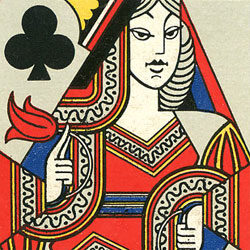 |
Art Deco Art Deco, the pioneering global art movement, emerged from Paris to captivate a broad public beyond the elite, swiftly influencing design in major cities worldwide, from New York to Shanghai. Its impact on playing cards was profound, introducing a new aesthetic defined by glamour, sophistication, and modernity. |
23 |
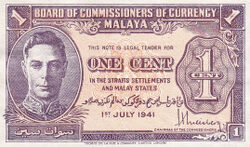
| Currency, Money and Banknotes on Playing Cards Currency-themed packs picture banknotes, coins and money values for teaching, souvenirs and topical sets. Examples include numismatic decks like Jeu Numismatique; Victorian money games such as Change for a Sovereign and Lend Me Five Shillings; emergency issues like Notgeld on playing cards; euro-era souvenirs including Euro Playing Cards and Eurotrotter; and regional banknote packs such as Malaya 1941–1942. |
23 | |
| Shakespeare Playing Cards | 23 | |
| Topographical: Views, Maps & Landmarks on Playing Cards Topographical subjects picture places and routes: cityscapes and landmarks, coastlines and countryside, railways and bridges, maps and regional emblems. Publishers issue souvenir and museum editions, teaching sets and local promotions—from county and city games to photographic views and map-based packs. Examples include QR-guided trail decks such as Trek Deck Malta Vol. 1, county and city games like The Game of Cities and Counties of England, photographic views in Scottish Picture Playing Cards and St Petersburg Souvenir, map and route series such as Historische Verkehrswege and Round Europe, and regional cards for towns and states including CARD-AB Miltenberg, Perthshire Playing Cards and State Historical Society of Wisconsin; see also London transport issues in London on Playing Cards. |
23 | |
| Engineering, Industry & Infrastructure on Playing Cards Engineering appears on playing cards through bridges, canals and power stations; tools, machine-making and factory work; measurement systems and instrument makers; telecommunications and industrial brands; and the printing technologies that shaped the cards themselves. |
22 | |
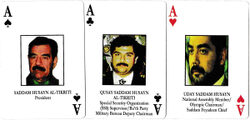 |
'Most Wanted' Playing Cards The 'Most Wanted' playing card series is based on the format of the 2003 Iraqi Most Wanted pack. |
22 |
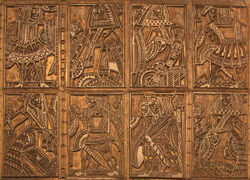 |
Woodblock (Xylography or Block Printed) Playing Cards This section focuses on "Woodblock (Xylography or Block Printed) Playing Cards". Originating in 9th-century China and later appearing in 14th-century Europe, these cards represent significant historical and cultural shifts. The prominence of woodblock printing increased in the 15th century. This list showcases examples of these card packs, along with several articles detailing the woodblock printing process. |
22 |
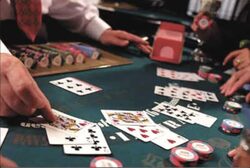 |
Casinos & Playing Cards Casinos have long been associated with the glamorous world of gambling and entertainment, and playing cards are an essential part of the casino experience. Not only used for traditional card games such as poker, blackjack and baccarat, playing cards are also a key component in casino branding, merchandising and advertising. Casinos often use custom-designed playing cards featuring their logos, slogans and security features to promote their brand and enhance the overall gaming experience for their customers. See also ‘Casino’ brand► |
21 |
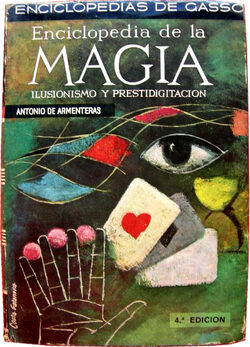 |
Conjuring and Magic The art of mystifying people is very old indeed. The first conjurers were priests who obtained power over simple minds by performing magical tricks which appeared to have a supernatural origin. |
21 |
| Videos | 21 | |
| Celtic | 20 | |
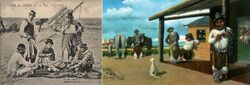 |
Gaucho Florencio de los Ángeles Molina Campos (1891-1959) produced the artwork for his series of Gaucho playing cards from 1944 to 1958. |
20 |
| Hunting Playing Cards | 20 | |
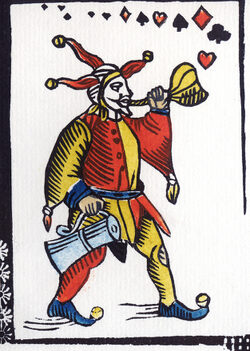 |
Joker The 'Joker' is believed to have been invented by American Euchre players who, when modifying the rules sometime during the 1860s, decided that an extra trump card was required. |
20 |
| Cats | 19 | |
| Botany | 19 | |
| Space Exploration | 19 | |
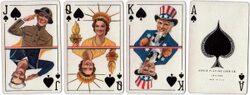 |
Army Playing Cards Army-themed playing cards are decks designed with images and information related to the armed forces and are mainly used for educational or entertainment purposes. They typically feature Army-related imagery such as soldiers, military vehicles and equipment, and may include rank insignia and other symbols associated with Army life. See also "Most Wanted" "Military" "Wartime" |
18 |
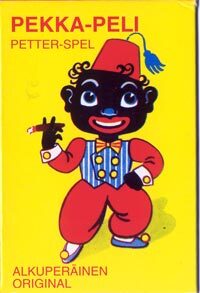 |
Black Peter ‘Pekka’, an additional card in the set, is an ethically-incorrect golly look-alike card, embodying the caricature of foreign heritage without a status or family structure. In other countries the game is often known as ‘Old Maid’, ‘Black Peter’, ‘Petter-spel’ or ‘Schwarzer Peter’. |
18 |
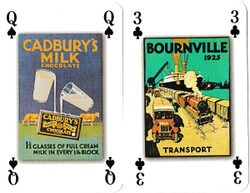 |
Chocolate These packs feature imagery inspired by chocolate that frequently serve as advertising for chocolate manufacturers and confectionery companies, often featuring their logos, slogans and other marketing messages. |
18 |
| Playing Card Indices | 18 | |
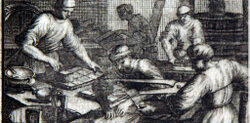 |
Playing Card Manufacturing Processes Traditionally cardmakers worked in guilds with long apprenticeships under master craftsmen. |
18 |
| Nationalism Playing Cards | 18 | |
| Stamps and postal history on playing cards | 18 | |
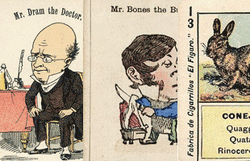 |
Trades & Professions Trades, crafts and professions are broad categories of occupations that require specialized knowledge, skills, and/or training. In some decks of playing cards the standard court card hierarchy of Jack, Queen, King is replaced with different craft or trades people or professionals and also their equipment and tools. Similarly many card games are based around different families of trades people, as in ‘Happy Families’ who may be families of bakers, cobblers or doctors, and so on. • See also Happy Families► |
18 |
| Video Games | 18 | |
| Astrology Playing Cards | 17 | |
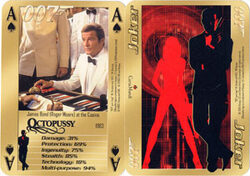 |
Detectives, Secret Agents and Spies The rise of detective, spy, and secret agent stories was driven by a blend of historical and social developments, new technologies and literary trends that made these genres both timely and compelling. They provided a means to explore contemporary issues and anxieties while offering the reassurance that, at least in fiction, order could be restored. |
17 |
| Patriotic | 17 | |
| Pirates, Outlaws & Privateers on Playing Cards Pirates, opportunistic sailors and “sea bandits” flourished where lucrative trade routes and weak controls coincided, especially in the Caribbean region, after Columbus’ voyages of discovery, when XVI century Spanish ships returned home carrying gold, silver and precious cargos. Some of Columbus' original seamen, such as Bernardino de Talavera (fl. 1490s–1500s), became disillusioned with dismal colonial conditions, fell out with the authorities and turned to piracy in an attempt to get rich quicker. He was eventually captured and hanged. Such events gave rise to the modern pirate myth: “Pirates of the Caribbean” movies are mostly fantasy loosely inspired by such events. |
17 | |
| Printing | 17 | |
| Children depicted in Card Games | 16 | |
| Designers | 16 | |
| Geometric | 16 | |
| Heraldry | 16 | |
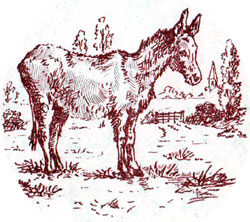 |
Zoology Animals and fauna are familiar and beloved by people of all ages. Their popularity in card games makes them accessible and appealing to a wide range of players and offers opportunities for creativity in game design. There is also animal symbolism which varies in different cultures or mythology: i.e. dragons can symbolise strength, eagles or lions might suggest power. A fox might be cunning, doves suggest peace, etc • See also: Education • Nature & Environment |
16 |
| Biblical Playing Cards | 15 | |
| Digital Digital covers playing-card material whose form is determined by computing—either decks conceived through digital design and pre-press workflows, or virtual cards presented and manipulated on screens in apps and web games. |
15 | |
| Minimalism | 15 | |
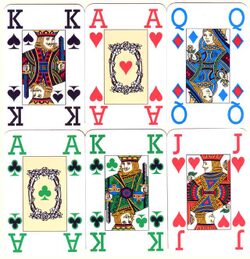 |
No Revoke "No revoke" playing cards are designed to help reduce eye strain and the risk of players accidentally committing a revoke in trick-taking games like Bridge and Whist. "No revoke" cards typically replace the traditional red/black suits (hearts, diamonds, spades, and clubs) with different colours, such as red, green, blue, and black so that the suits more easily recognizable during play. |
15 |
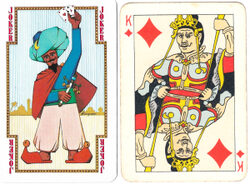 |
Orientalism Orientalism in playing cards refers to Western depictions of Asian and Middle Eastern subjects, typically shaped by imagination rather than direct observation. From the 18th century onwards, such imagery appears in decorative, educational, and later commercial packs, reflecting European interpretations of “Eastern” culture rather than indigenous traditions |
15 |
| Rococo | 15 | |
| Symbols | 15 | |
| Abstract | 14 | |
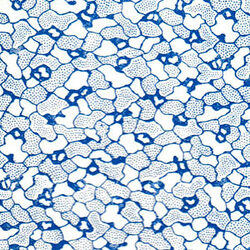 |
Playing Card Backs Playing card backs can be seen in connection with the history of coloured paper, marbled papers and prints from different rollers. In the old days backs were often coloured with a wide brush by hand but today we see intricate designs and photography on the backs. The technical problem has always been ensuring that the backs are uniform and perfectly aligned so that no card may be identified from an irregularity or blemish on the back. |
14 |
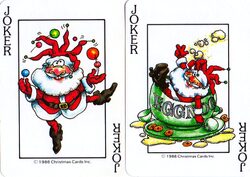 |
Christmas Themed Playing Cards Christmas playing cards are seasonal or commemorative packs produced in connection with the Christmas period, most often intended as gifts rather than for regular play. They usually adapt established playing-card patterns to reflect the visual language of the holiday, and their design tends to emphasise presentation and symbolism over gameplay. |
14 |
| Revolution Themed Playing Cards | 14 | |
| Social Equality on playing cards | 14 | |
| Spelling | 14 | |
| Superheroes | 14 | |
| Telecommunications | 14 | |
| Toy Cards | 14 | |
| Computers & Technology Themed Playing Cards | 13 | |
| Dogs on playing cards | 13 | |
| Estanco de Naipes del Perú | 13 | |
| Renaissance | 13 | |
| Asescoin | 12 | |
| Bullfighting on Playing Cards | 12 | |
| Playing Card Monopolies Several countries in and outside Europe had exclusive rights to the manufacture or sale of playing cards. Well-known examples were the royal playing card factories of Portugal, Spain, and their colonies in America. After the Second World War, several Eastern European countries set up playing card factories. Monopolies also existed Algeria, Denmark, Egypt, Finland, Greece, Tunisia, UK, USSR and several others. Thailand has a playing card manufacturing monopoly even today. These monopolies belong, or belonged to, the state itself or were leased to private individuals. This meant that only one company could legally sell playing cards. This usually benefitted the treasuries. See also Taxes and excise duties on playing cards► |
12 | |
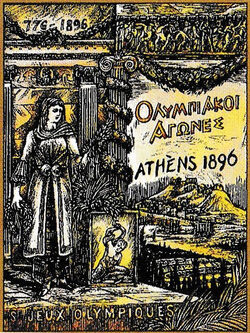 |
The Olympic Games The Olympic Games offer a variety of exciting sports, plenty of action photography with international participants from around the world. They also have a long history (the first games were held in Athens in April 1896), with milestone moments, impressive achievements and visual appeal, all of which offer great possibilities for design on playing cards. |
12 |
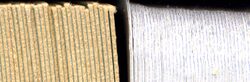 |
Paper The manufacture of the pasteboard used for playing cards contains a number of interesting processes including mingling, pasting and drying. |
12 |
| Propaganda Playing Cards | 12 | |
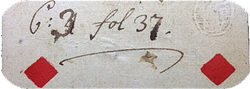 |
Secondary Uses of Playing Cards The unprinted backs of playing cards have led people to use them for secondary purposes such as memorandum slips, bibliographic index cards, for declarations of love, rendezvous notes, emergency money, visiting cards and so on. |
12 |
| Surrealism | 12 | |
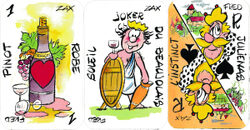 |
Wine Playing Cards Playing cards and wine have been two culturally significant pastimes that have been enjoyed by people for centuries. Since medieval times, playing cards have been a symbol of leisure, socialisation and competition, while wine has been similarly revered as a beverage of celebration, communion and refinement. The combination of these two has produced some great card designs, reflecting the tastes and styles of different eras and regions. |
12 |
| Architecture | 11 | |
| Playing Card Collectors | 11 | |
| Chromolithography | 10 | |
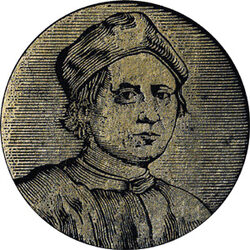 |
Christopher Columbus Christopher Columbus was an Italian explorer and navigator from the Republic of Genoa who between 1492 and 1504 completed four Spanish-based voyages across the Atlantic Ocean under the patronage of the Spanish king and queen, the Catholic Monarchs. He landed on various Caribbean islands, including Hispaniola (now Haiti and the Dominican Republic), and explored the coasts of Central and South America, opening the way for the widespread European exploration and colonization of the Americas Wikipedia► The lands he "discovered" were already inhabited by indigenous peoples. His arrival had unfortunate consequences for these populations, leading to disease, slavery, and the destruction of their cultures. |
10 |
| Dickens | 10 | |
| Dragon Playing Cards | 10 | |
| Historic | 10 | |
| Illuminated Playing Cards | 10 | |
| Imperial Playing Cards | 10 | |
| Importer | 10 | |
| Maps | 10 | |
| Mathematical | 10 | |
| Proverbs | 10 | |
| Question & Answer cards | 10 | |
| Stained-Glass | 10 | |
| Tattoo Playing Cards | 10 | |
| Astronomy Playing Cards | 9 | |
| Black Cards A modern (late 20th century) design choice, black card stock is used to give playing cards an aura of exclusivity and style. Many art decks such as Kickstarter projects, luxury brands or limited editions intentionally move away from the commonplace feel of white card. |
9 | |
| Chess on Playing Cards | 9 | |
| Circus | 9 | |
| Clown | 9 | |
| Craft | 9 | |
| Dynasties | 9 | |
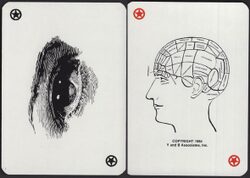 |
Psychology Psychology explores how cards meet the mind and behaviour. It includes visual perception and illusion, the ergonomics of reading and handling such as corner indices and fanning, and the ways images prompt memory, projection and storytelling in learning, therapy or self-reflection. These articles consider risk, superstition and decision-making at the table, showing how small design choices and social cues shape how people read, hold and think with cards. |
9 |
| Steam Powered Machinery | 9 | |
| Tea on Playing Cards | 9 | |
| Wills | 9 | |
| Zodiac | 9 | |
| Biedermeier Biedermeier refers to a 19th century art movement in Central Europe, particularly in the German Confederation, that lasted from 1815 to 1848. It is characterized by a focus on middle-class values, domestic life, and simplicity in art, furniture and design, emerging after the Napoleonic Wars. |
8 | |
| Gothic Playing Cards | 8 | |
| Hispanoamericana | 8 | |
| Napoleon | 8 | |
| Poetry | 8 | |
| Prison | 8 | |
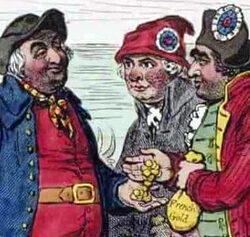 |
Smuggling Smuggling generally arises when high taxes, tariffs or prohibitions create a demand for goods that official channels over-regulate. This illicit trade involves the clandestine movement of goods such as playing cards to bypass or evade these controls. The potential for significant profit by undercutting official prices, or a defiance of state control, lead smugglers to exploit geographical routes and weak enforcement to evade detection. The existence of a thriving black market is often a direct consequence of restrictive policies and strong consumer demand. • See Taxation on playing cards► |
8 |
| Social Justice | 8 | |
| Anonymous | 7 | |
| Cardistry Cardistry is the art of manipulating playing cards in an impressive way, using choreographed flourishes and flipping cards in the air from one hand to the other, which requires skill and dexterity. Unlike magic, which focuses on tricks and illusions, cardistry emphasies the aesthetic, performative aspects of handling cards. |
7 | |
| Carnival | 7 | |
| Donkey | 7 | |
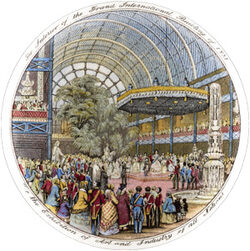 |
International Exhibitions & Expositions The trend for International Exhibitions and Expositions, also known as World's Fairs, began in the mid-19th century. The first widely recognized international event was the Great Exhibition of 1851, held in London's Crystal Palace. This exhibition was organized by Prince Albert, Queen Victoria's husband, and showcased the technological and industrial achievements of the time. Many playing card manufacturers obtained gold medals at these international exhibitions, where they were able to show their innovations in printing techniques, design and artwork, corner indices, smooth finish, etc. See also: Innovation► |
7 |
| Lady Charlotte Schreiber | 7 | |
| Modernist | 7 | |
| Tango | 7 | |
| tartan | 7 | |
| Trade-cards | 7 | |
| Translucent (erotic) playing cards | 7 | |
| Bavaria | 6 | |
| Benno Products | 6 | |
| Cubism | 6 | |
| Halloween | 6 | |
| Jubilee | 6 | |
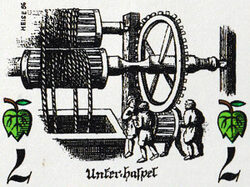 |
Mining Mining is an uncommon but occasionally used theme in playing cards, typically appearing in regional, historical, artistic, or promotional decks with a specific purpose. Watch out for illustrations of steam shovels, pit ponies, miners with lamps on their helmets, mine carts and pickaxes. |
6 |
| Palekh | 6 | |
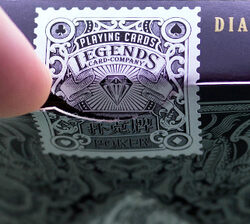 |
Valuation of Playing Cards Explore our articles on playing card valuation, covering investment perspectives, luxury collectibles, market trends on eBay and dating historical decks. |
6 |
| Zombie Playing Cards | 6 | |
| Asterix Playing Cards | 5 | |
| Blyton | 5 | |
| Bolognese | 5 | |
| ‘Bourgeois’ Tarot | 5 | |
| Cocktail | 5 | |
| Colouring | 5 | |
| Counties | 5 | |
| Cyberpunk Playing Cards | 5 | |
| Gardel | 5 | |
| Manga Playing Cards | 5 | |
| Millennium | 5 | |
| Postmodern | 5 | |
| Relationships | 5 | |
| Steampunk Playing Cards | 5 | |
| Swastika | 5 | |
| Ukiyo-e | 5 | |
| Vsoe | 5 | |
| Winnie-the-Pooh | 5 | |
| Wrapper | 5 | |
| African-American | 4 | |
| Anime Playing Cards | 4 | |
| Bath | 4 | |
| Brexit | 4 | |
| Canary Islands (Spain) | 4 | |
| Cannabis | 4 | |
| Cerveza | 4 | |
| Fanning | 4 | |
| Firearms | 4 | |
| Frizzle Ace | 4 | |
| Galicia | 4 | |
| Golly | 4 | |
| Hindu | 4 | |
| Inka | 4 | |
| King Arthur | 4 | |
| Lithography | 4 | |
| Maori | 4 | |
| Metal Playing Cards | 4 | |
| Microscopique | 4 | |
| Neoclassical | 4 | |
| Nestlé | 4 | |
| Peter Pan | 4 | |
| recycled | 4 | |
| Robin Hood Playing Cards | 4 | |
| Sample Books | 4 | |
| Sardinia | 4 | |
| Stars | 4 | |
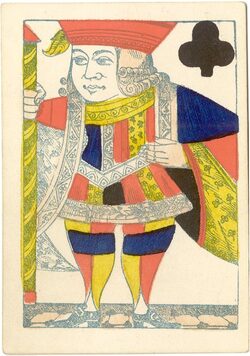 |
Playing Card Stencilling Printing of Playing Cards :: Stencilling can usually be detected by observing the outlines of the coloured areas which are often irregular with brush strokes discernible in the coloured areas. |
4 |
| Superman | 4 | |
| Timeline | 4 | |
| Turnhout | 4 | |
| Warburg | 4 | |
| Water Margin Water Margin refers to imagery and characters drawn from the classic Chinese novel Shuihu Zhuan (水滸傳), one of the Four Great Classical Novels of Chinese literature. Heroes from the story—also known in English as The Water Margin or Outlaws of the Marsh—appear frequently on Chinese money-suited playing cards, particularly on high-value or special cards. Their inclusion reflects the close relationship between early Chinese card games, popular literature, and visual storytelling, with Water Margin characters becoming a defining motif in many traditional card designs. |
4 | |
| Wellness | 4 | |
| Affirmations | 3 | |
| Baroque | 3 | |
| Bingo | 3 | |
| Brittany | 3 | |
| Bubble | 3 | |
| Chibi | 3 | |
| Co-op | 3 | |
| Collectible Playing Cards | 3 | |
| Devotional | 3 | |
| Fasnachtskarten | 3 | |
| Four Colour Cards (Si Sek Pai / 四色牌 ) | 3 | |
| Garter Ace | 3 | |
| Kabbalah | 3 | |
 |
Kings Wild Shorts Kings Wild Shorts was launched in 2018 as a monthly subscription series from Kings Wild Project. Instead of funding each deck through a separate Kickstarter campaign, subscribers received regular limited-edition releases directly from the publisher. The series became part of Kings Wild Project’s broader business model, sitting alongside crowdfunding projects, direct sales, special editions and collector-focused releases. |
3 |
| Freemasonry | 3 | |
| Matches | 3 | |
| Michelin | 3 | |
| NASA | 3 | |
| Notgeld - Emergency Money | 3 | |
| Philips | 3 | |
| Rawhide | 3 | |
| Rokoko | 3 | |
| Silk inlaid cards | 3 | |
| Split deck | 3 | |
| Taurino | 3 | |
| Truco | 3 | |
| typography | 3 | |
| Woodland | 3 | |
| Humanitarian Packs produced for the benefit of humanitarian and charitable works. |
2 | |
| 52 Plus Joker | 2 | |
| Artificial Intelligence (AI) | 2 | |
| Braille | 2 | |
| Card-Sharping | 2 | |
| Celluloid | 2 | |
| Cossack | 2 | |
| Disability | 2 | |
| Egg | 2 | |
| Elements | 2 | |
| Estrella | 2 | |
| Gaigel | 2 | |
| Galapagos | 2 | |
| Gypsy | 2 | |
| Hijitus | 2 | |
| Hoechst | 2 | |
| Ibero-Americana | 2 | |
| International | 2 | |
| Interview | 2 | |
| Java | 2 | |
| K-Pop | 2 | |
| Magnússon | 2 | |
| Market | 2 | |
| Mate | 2 | |
| Mermaid | 2 | |
| Osram | 2 | |
| Pollock | 2 | |
| Rami | 2 | |
| Republic | 2 | |
| Rouennais | 2 | |
| Sale List | 2 | |
| Slavic | 2 | |
| Slavonic | 2 | |
| Social Media | 2 | |
| Sony | 2 | |
| Turques | 2 | |
| Viking Playing Cards | 2 | |
| Willeb | 2 | |
| Bollywood | 1 | |
| Cambio | 1 | |
| Cheirology (Hand Reading) | 1 | |
| Cutting | 1 | |
| Epinal | 1 | |
| Graphology | 1 | |
| Humanist | 1 | |
| The International Playing Card Society | 1 | |
| Kinder-Karte | 1 | |
| Leo Kober | 1 | |
| Kriegs-Spiel | 1 | |
| Kyodo Karuta | 1 | |
| Lattmann | 1 | |
| Lequart | 1 | |
| Letterpress | 1 | |
| Liebig | 1 | |
| Llifestyle | 1 | |
| Llewellyn | 1 | |
| Luxusbild | 1 | |
| Lyle | 1 | |
| Mafia | 1 | |
| Mantegna | 1 | |
| Manx | 1 | |
| Medicaer | 1 | |
| Medici | 1 | |
| Michaux | 1 | |
| Mignon | 1 | |
| Monarch | 1 | |
| Monkey | 1 | |
| Oliver Cromwell | 1 | |
| Parenting | 1 | |
| Parksons | 1 | |
| Pavias | 1 | |
| Peerless | 1 | |
| Pelaco | 1 | |
| Perez | 1 | |
| Peron | 1 | |
| Persia | 1 | |
| Pilys | 1 | |
| Pirelli | 1 | |
| Privata | 1 | |
| Punk | 1 | |
| Rameses | 1 | |
| Redheads | 1 | |
| Richelieu | 1 | |
| Rountree | 1 | |
| Saks | 1 | |
| Salomon | 1 | |
| Samsó | 1 | |
| Schneider | 1 | |
| Seconds | 1 | |
| Sidecar | 1 | |
| Sopena | 1 | |
| Spelkort | 1 | |
| Submarine | 1 | |
| Suspender | 1 | |
| Swimwear | 1 | |
| Tactical | 1 | |
| Tacuabe | 1 | |
| Thorsteinsson | 1 | |
| Tiburón | 1 | |
| Toyo | 1 | |
| Troubador | 1 | |
| Turnhoutoise | 1 | |
| Vergnano | 1 | |
| Whitney | 1 | |
| Woolworth | 1 |