


Playing Cards from Around the World
The different countries of the world feature distinct histories, languages, styles of government, national suit systems, tarot and tarock traditions, and playing card patterns. Some of the older patterns are now archaic or extinct, whereas others remain widely used.

| Image | Details | Flag | Total Articles |
|---|---|---|---|
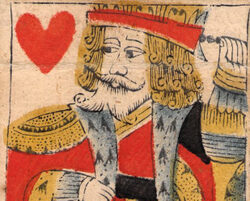 |
gb Playing cards first arrived in England during the 15th century, but none have survived from such an early date. |
1,328 | |
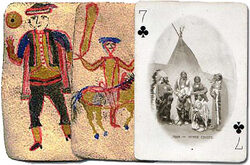 |
us The manufacture of playing cards in America only began during the second half of the 18th century, and not before 1776 by some estimates. |
717 | |
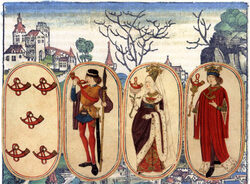 |
fr Some of the oldest cards still in existence come from France. During the 16th and 17th centuries France was the major supplier of playing cards in Europe. |
416 | |
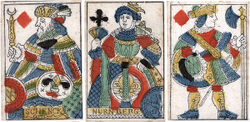 |
de Card-playing rapidly became popular in medieval Bavaria and German printers were quick to supply the goods. |
394 | |
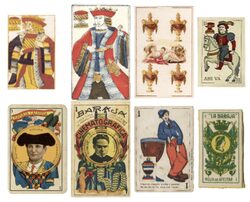 |
es Spain has played a pivotal role in the history of playing cards in Europe and Latin America. |
304 | |
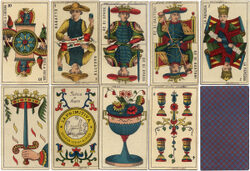 |
ar Playing cards were introduced to the Americas with Spanish explorers such as Columbus or Cortés. |
246 | |
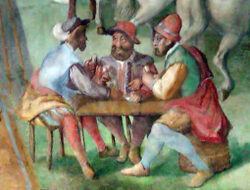 |
it The first reliable evidence that playing cards were being used in Italy is from 1376, when a game called 'naibbe' is forbidden in a decree, with the implication that the game had only recently been introduced there. |
190 | |
| at Austria’s history with playing cards centres on tarock and the national game Schnapsen, alongside a strong tradition of design and publishing in Vienna. Classic patterns include Industrie und Glück for tarock and the large-crown style used for Schnapsen. Production ranges from engraved and lithographed 19th-century issues by makers such as Josef Glanz to Secession-era designs by Ditha Moser, with later museum collaborations, commemoratives and souvenir or promotional packs. |
123 | ||
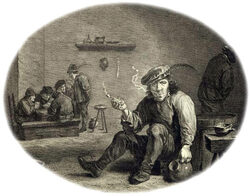 |
be Belgian cardmakers have been actively designing and exporting playing cards since the 14th century. |
121 | |
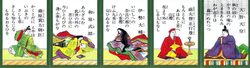 |
jp Japanese playing cards include: 'Awase' or 'matching pairs' cards and Portuguese or Spanish-derived 'Dragon' type cards. |
94 | |
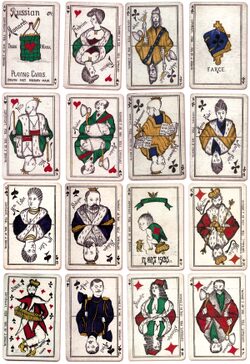 |
ru Playing cards were known in Muscovy as early as the last quarter of the sixteenth century. |
91 | |
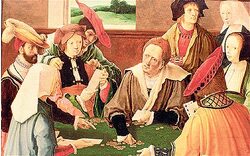 |
nl Playing cards have been known in the Low Countries since the 14th century |
84 | |
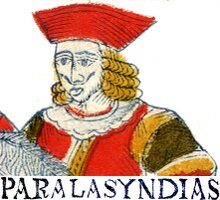 |
null Playing cards had been introduced to the Americas with explorers such as Columbus or Cortés, whose fellow countrymen were keen gamblers. Cards were imported from Spain since the 16th century. Local production usually imitated Spanish cards. |
78 | |
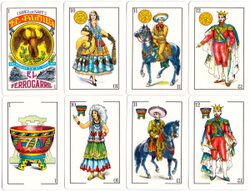 |
mx MEXICO shares a long tradition with Spain in the field of playing cards and also merges two completely distinct cultures, ancient indigenous cultures and modern Spanish colonialism. |
77 | |
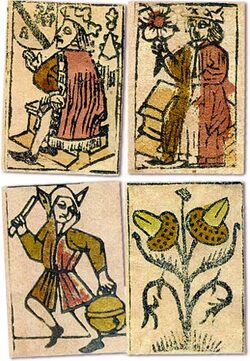 |
ch The Swiss national suit system of shields, acorns, hawk bells and flowers emerged sometime during the XV century. |
70 | |
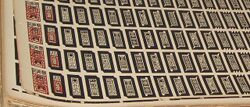 |
cn The Chinese took their cards with them wherever they travelled and traded in the East, and we find Chinese cards in use not only in the mainland but also in Hong Kong, Malaysia, Indonesia, Taiwan, Singapore, North Borneo and Vietnam. |
59 | |
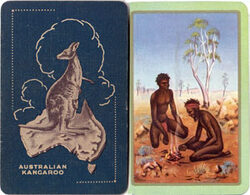 |
au Playing cards from Australia. |
55 | |
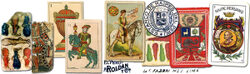 |
pe Playing cards have been travelling from Spain to South American colonies ever since Christopher Columbus. |
49 | |
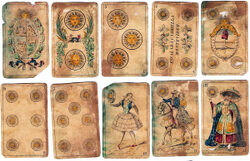 |
uy Until the 19th century playing cards were imported into Uruguay from Spain. |
49 | |
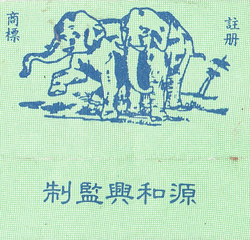 |
null Southeast Asia sits on the old monsoon routes between India and China. Traders carried spices, scripts and stories. The Ramayana travelled with them, and courts turned it into mask theatre like khon and wayang. That shared picture language, with Hanuman, Garuda, court dress and temple patterns, also appears on the region’s playing cards. Chinese money suited cards arrived early for gambling. Later, European style packs came through colonial and local printers in hubs such as Singapore, Batavia, now Jakarta, and Manila. In the twentieth century these strands mixed into decks for casinos, tourism and state events.
REFERENCES:
|
48 | |
| in | 44 | ||
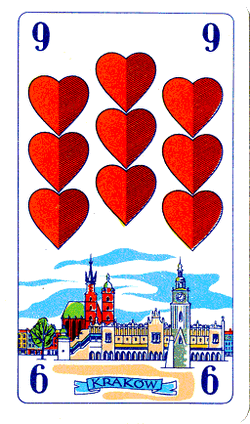 |
pl Poland has been involved in playing card production since the 15th century. |
44 | |
| dk | 40 | ||
| hu | 40 | ||
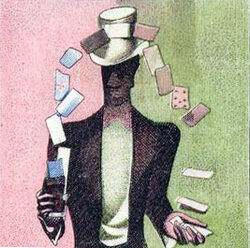 |
cz The Republic of Czechoslovakia was founded in 1918 from the former Austro-Hungarian empire. |
37 | |
| null | 34 | ||
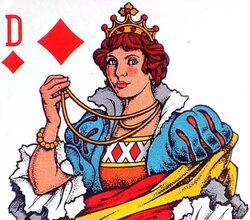 |
se Swedish cards have characteristics in common with their Scandinavian neighbours |
33 | |
| cz | 32 | ||
| ca | 31 | ||
| gb-sct | 31 | ||
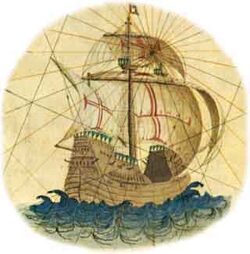 |
pt The Real Fábrica de Cartas de Jogar was founded in 1769, by Royal Charter of King José, under the master craftsman Lorenzo Solezio, brother of Félix Solesio who ran the Spanish Real Fábrica at Macharaviaya. |
29 | |
| eu | 27 | ||
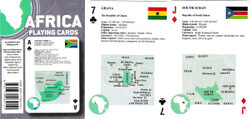 |
null According to the United Nations there are 54 countries on the continent of Africa |
26 | |
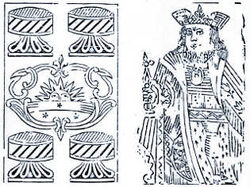 |
br Playing card production in Brazil was officially sanctioned by royal decree in 1770. |
24 | |
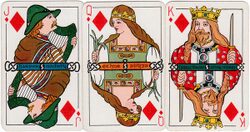 |
ie During the nineteenth century playing cards were being produced in Dublin, Cork and Limerick. |
23 | |
| ua | 22 | ||
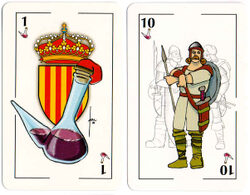 |
es-ct With a distinct history stretching back to the early middle ages, many Catalans think of themselves as a separate nation from the rest of Spain. |
20 | |
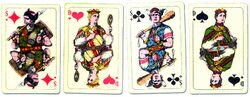 |
lv The best Latvian playing cards were produced just after independence, during the period 1921-1942. |
20 | |
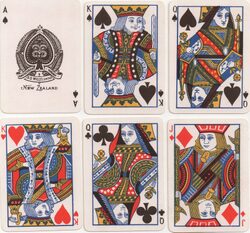 |
nz There are three main New Zealand makers that I'm aware of : A.D. Willis, John Dickinson, and Strong & Ready. |
19 | |
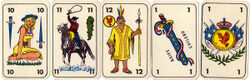 |
cl Chile had small, intermittent local production of playing cards. |
18 | |
| za | 18 | ||
| eg | 17 | ||
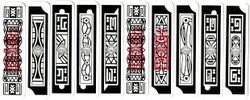 |
th The Portuguese were the first Westerners to trade with Ayutthaya in Thailand in the 16th century. Traders also arrived from India, Japan, the Arab world, England, Holland and France. |
17 | |
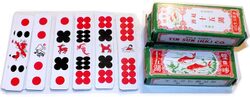 |
hk A large proportion of the world's souvenir and pin-up playing cards originate from Hong Kong. |
16 | |
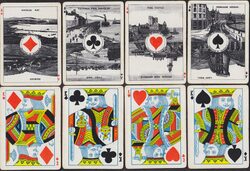 |
im The Isle of Man has always been a tax haven within the British Isles and it has also had some interesting packs of cards. |
16 | |
| es-eu | 14 | ||
| id | 14 | ||
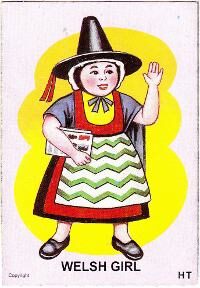 |
gb-wls Whereas the distinctiveness of Wales is an important resource contributing to the rich texture of variety which characterises the island of Britain, to date no Welsh playing cards cards have been found which were actually manufactured in Wales. |
14 | |
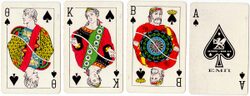 |
gr Greek Playing Cards. |
12 | |
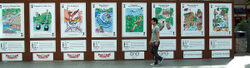 |
sg Playing Cards in Singapore, one of the Four Asian Tigers. |
12 | |
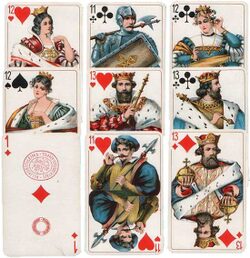 |
fi Playing cards from Finland. Finnish cards have a relatively short history, presumably because the country only finally broke loose from Russian influence in 1920. |
11 | |
| ir | 11 | ||
| il | 11 | ||
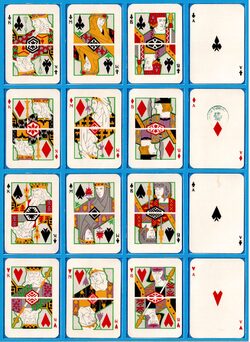 |
lt During the 20th century Lithuanian printers produced striking playing cards containing Lithuanian symbols and national heroes. |
11 | |
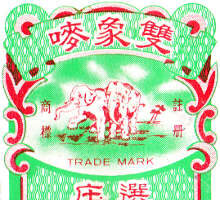 |
my Playing Cards from Malaysia. |
11 | |
| no | 11 | ||
| ro | 11 | ||
| tr | 11 | ||
| np | 9 | ||
| mt | 8 | ||
| ma | 8 | ||
| tw | 8 | ||
| et | 7 | ||
| is | 7 | ||
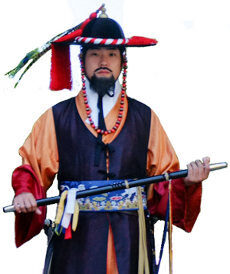 |
kr The game of Hanafunda was introduced into Korea by the Japanese and modified somewhat by the Koreans. |
7 | |
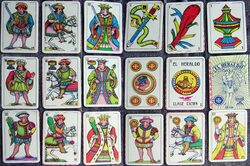 |
ec There has been very little playing card manufacture in Ecuador. Cards are mostly supplied from Colombia, Argentina & Spain. Known brand names include: Willy Wilson, La Raspa and El Heraldo. Some locally-made tourist souvenir packs are also known including Naipe Ciudad de Quito and Galapagos Islands souvenir cards. |
6 | |
| ke | 6 | ||
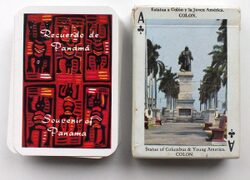 |
pa Not a lot of playing cards have been produced in Panama, only a couple of locally-produced tourist souvenir packs. |
6 | |
 |
sv Cards were first imported to Central America from Spain, although local production has always existed. Today El Salvador has some local production of playing cards, which are often of rudimentary quality. |
6 | |
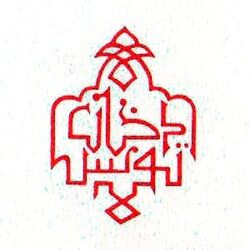 |
tn Playing Cards in Tunisia. Chkobba is one of the most popular card games in Tunisia, mainly played by men in coffee shops but also played at home by men and women alike. |
6 | |
| cu | 5 | ||
| lb | 5 | ||
| lu | 5 | ||
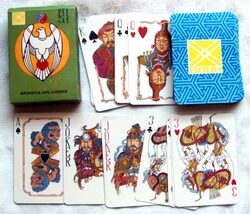 |
mn Mongolian Playing Cards. |
5 | |
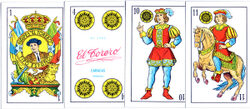 |
ve Naipes “El Torero” No. 1000 manufactured in Caracas by Productos Nacaral C.A., c.1975 |
5 | |
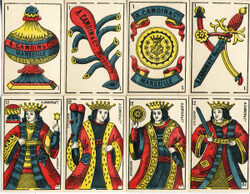 |
dz The earliest literary references to playing cards in Europe refer to the game having been introduced by a 'Saracen', and also to Moorish and Damascene varieties of playing card. |
4 | |
| bg | 4 | ||
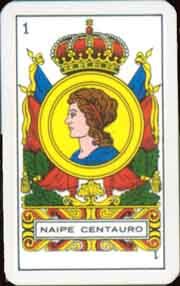 |
co Colombian playing cards. |
4 | |
| cy | 4 | ||
| mv | 4 | ||
| vn | 4 | ||
 |
ee Estonia's first period of independence lasted 22 years, beginning in 1918, and this period was one of great cultural advancement. |
3 | |
| es-ga | 3 | ||
| iq | 3 | ||
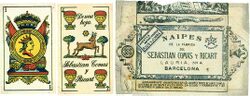 |
py Playing Cards in Paraguay |
3 | |
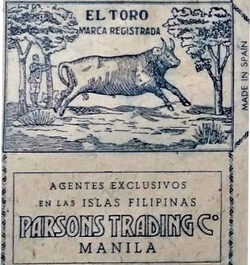 |
ph The Philippines, that belonged to Spain until 1898, were so-called in honour of Philip II. During his reign, throughout the 16th century, the phrase “Spain, the empire on which the sun never sets” became popular, as his kingdom included territories in Italy, the Netherlands, the French Roussillon, the North of Africa, the newly-discovered Americas and, to the east, the Philippines and other archipelagos. In December 1898, the islands were ceded by Spain to the United States with Puerto Rico and Guam after the Spanish–American War. The First Philippine Republic was promulgated on January 21, 1899. During the 20th century the Philippines moved from an American colony to an independent democratic nation with a complex legacy shaped by colonialism, war, dictatorship and efforts to establish stable governance and economic growth. |
3 | |
| bs | 2 | ||
| by | 2 | ||
| bo | 2 | ||
| ic | 2 | ||
| hr | 2 | ||
| gt | 2 | ||
| hn | 2 | ||
| mu | 2 | ||
| pr | 2 | ||
| pf | 2 | ||
| ae | 2 | ||
| af Islamic Emirate of Afghanistan |
1 | ||
| am Republic of Armenia |
1 | ||
| bt | 1 | ||
| lk | 1 | ||
| ck | 1 | ||
| cr | 1 | ||
| do | 1 | ||
| ge | 1 | ||
| gi | 1 | ||
| gl | 1 | ||
| gg | 1 | ||
| jm | 1 | ||
| jo | 1 | ||
| kz | 1 | ||
| li | 1 | ||
| mg | 1 | ||
| mc | 1 | ||
| mm | 1 | ||
| ng | 1 | ||
| pg | 1 | ||
| sm | 1 | ||
| sk | 1 | ||
| sr | 1 | ||
| tt | 1 | ||
| yu | 1 |