Polish Playing Cards
Poland has been involved in playing card production since the 15th century.
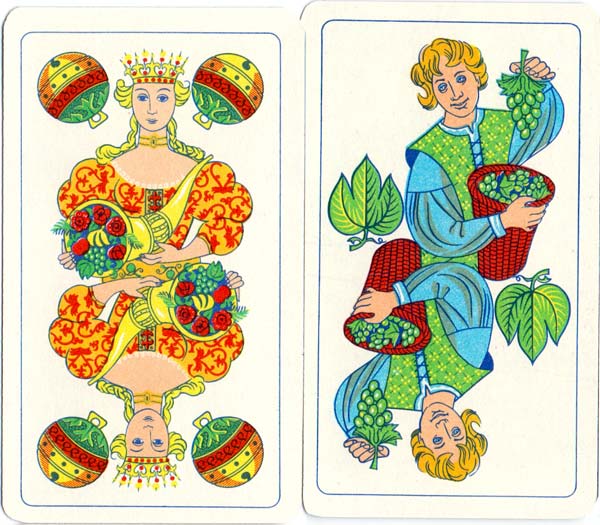
Above: Skat pack designed by Franciszek Bunsch in 1963
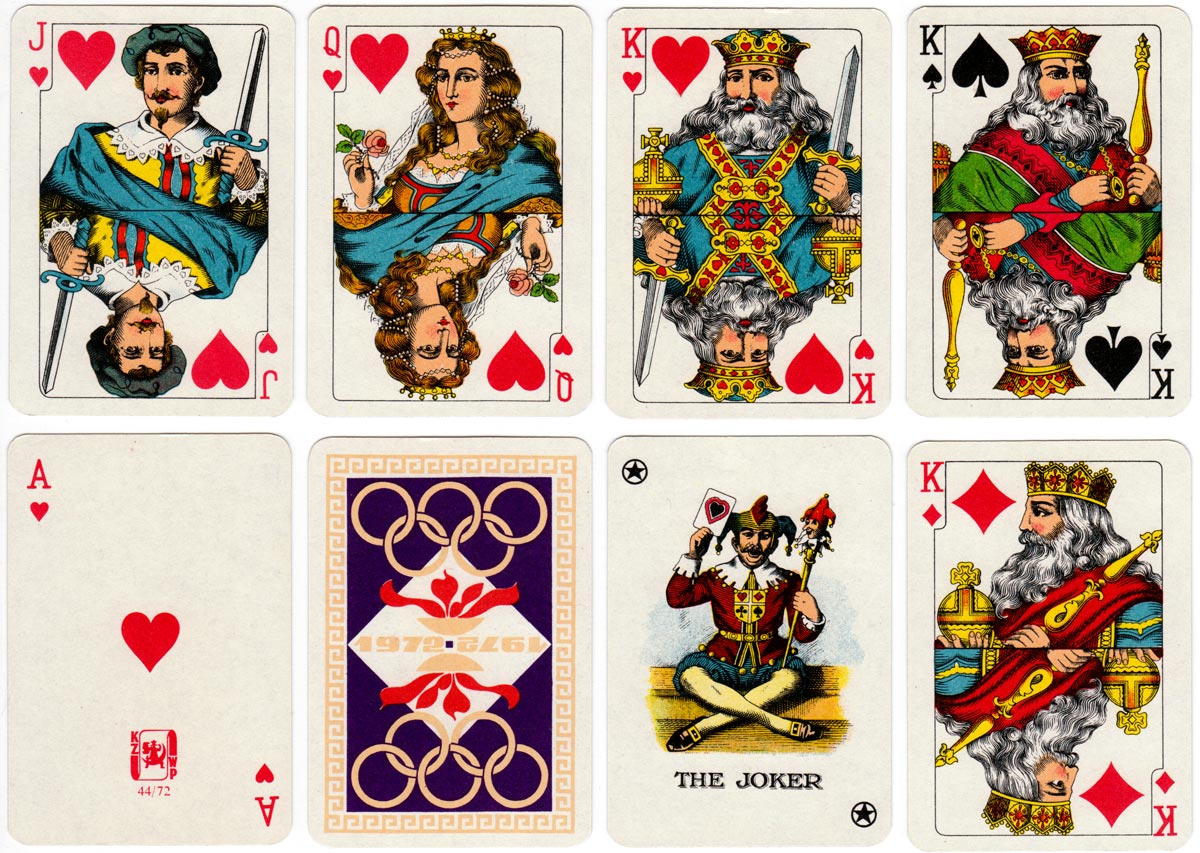
Above: 1972 special Olympics pack
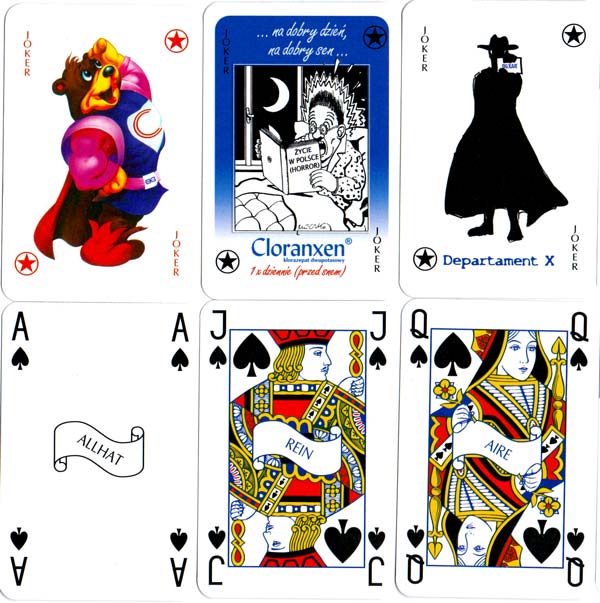
Above: Limited edition 'Cardiology Trials'
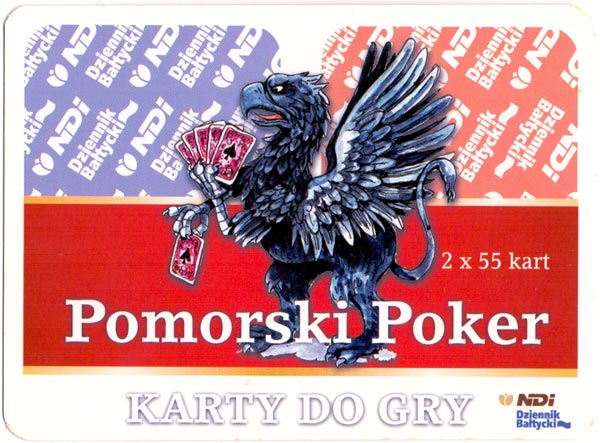
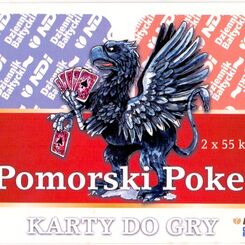
Above: Pomorski Poker, 2003
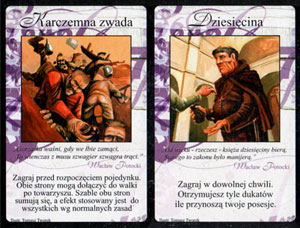
Above: ‘Veto’ Collectible Card Game, 2004
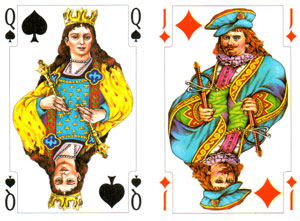
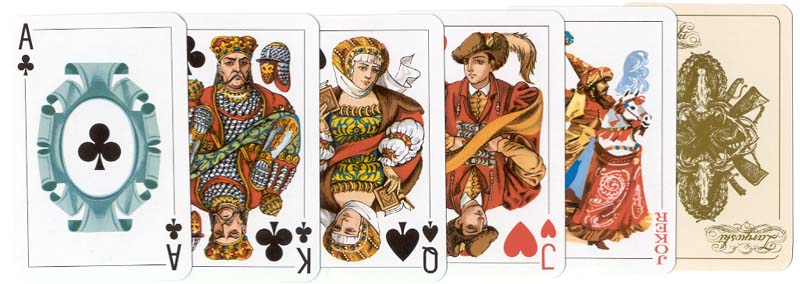
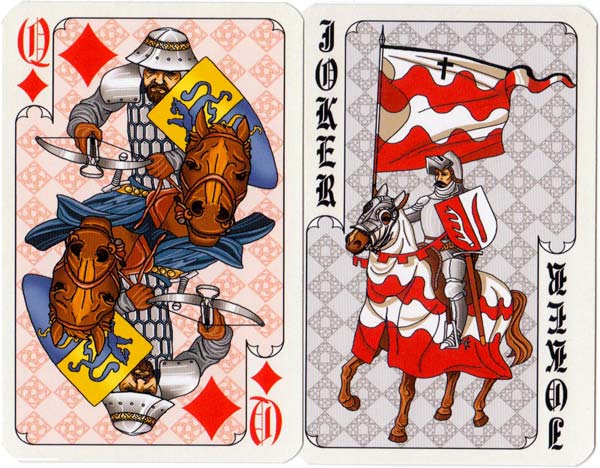
Above: ‘Królewskie’, 2002
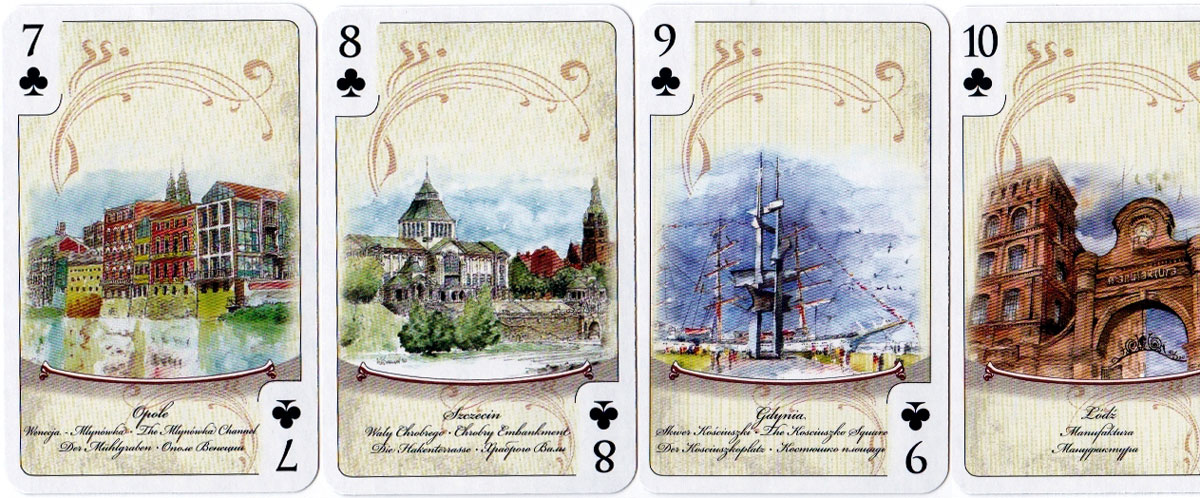
Above: ‘Polska’, 2011

Above: Polish tarot pack designed by Edyta Gdek
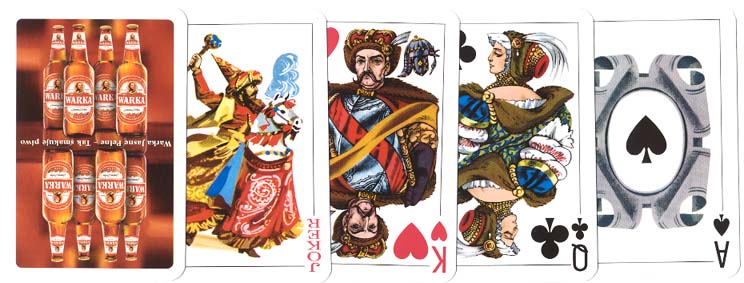
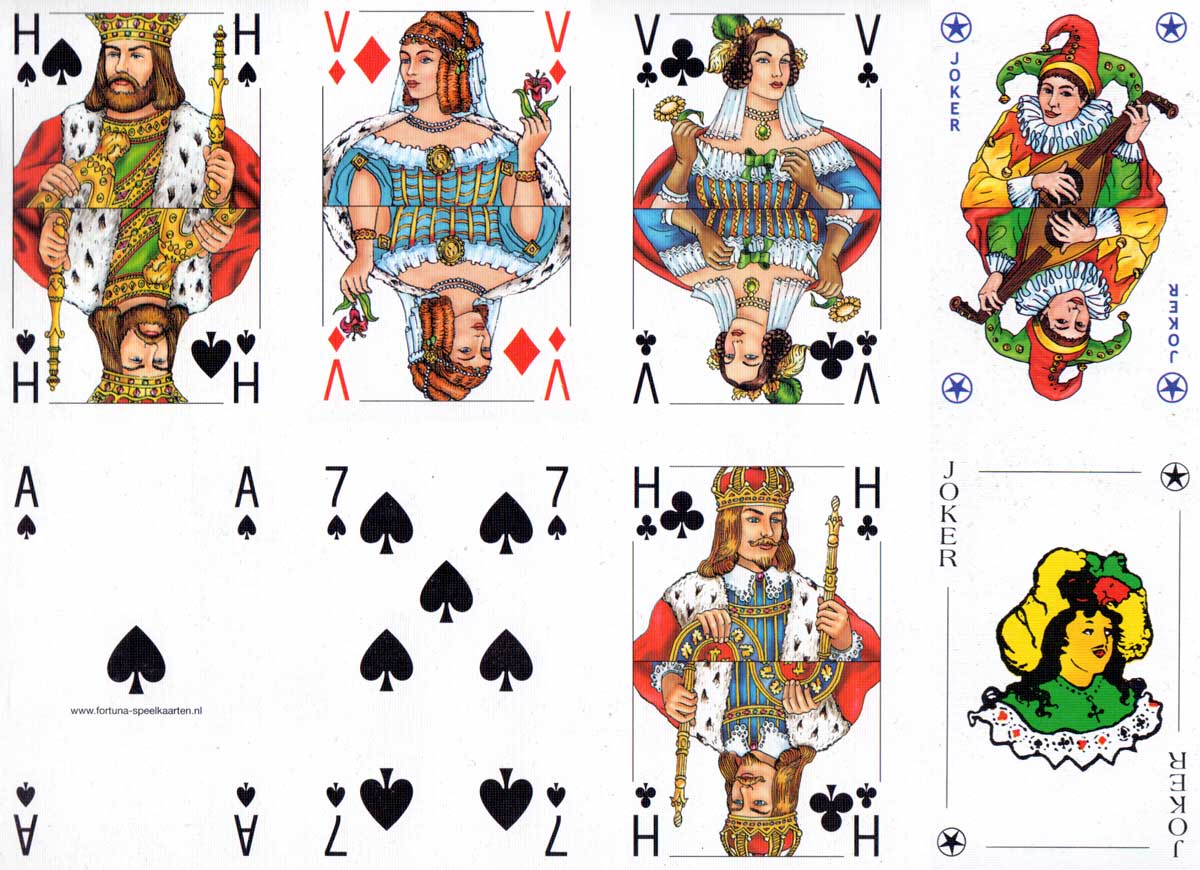
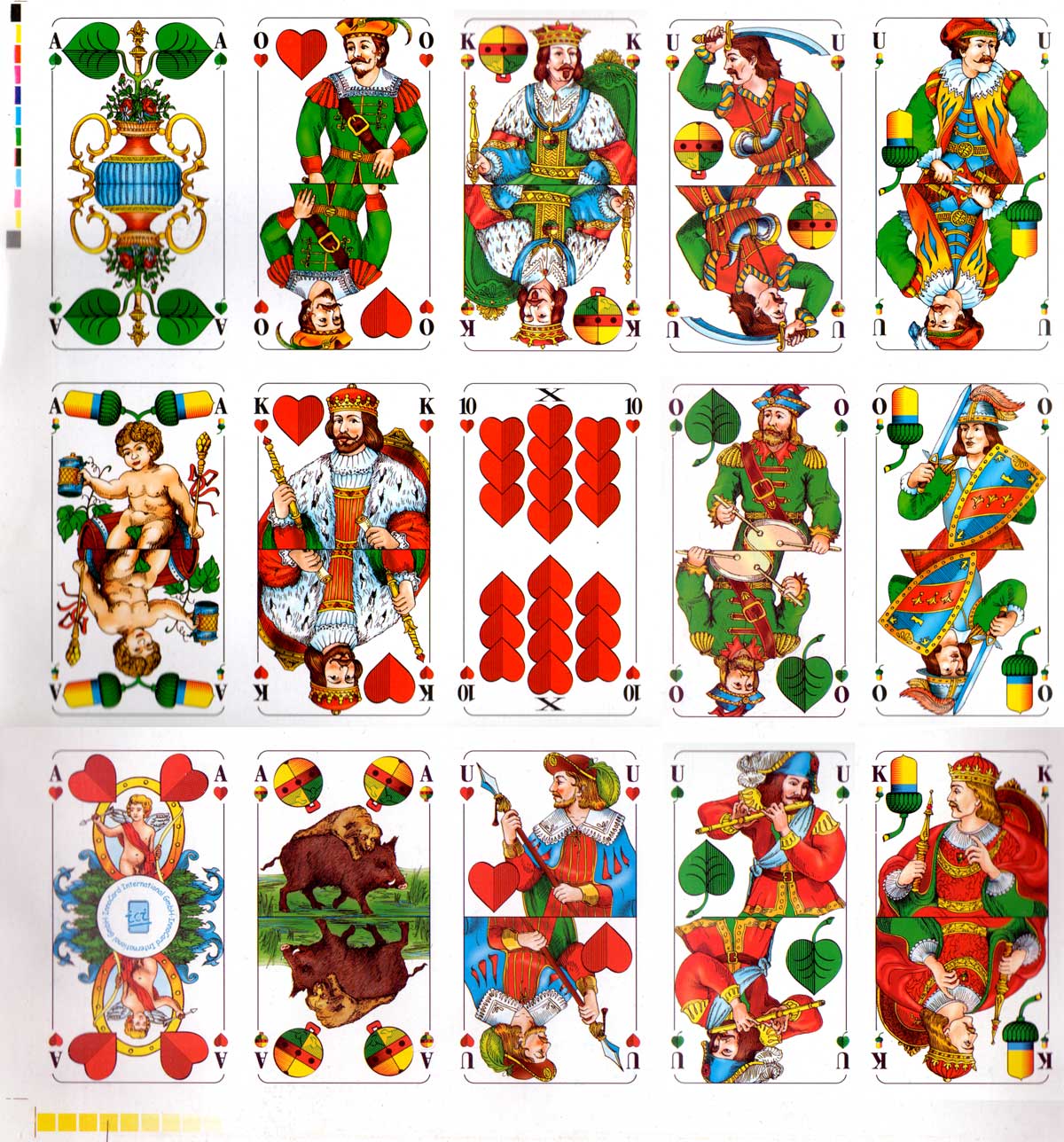
See also: Warka Beer Zarywski Automotive Cardiology Trials ‘Quickie’ Quartet Disney Collectible Cards ‘Veto’ Collectible Card Game Klipp Klapp Karten North German pattern by KZWP-Trefl for Fortuna Speelkaarten Bavarian pattern by KZWP-Trefl for InnoCard International.

oland has been involved in playing card production since the 15th century. During the 16th century cards were being made in L'vov (Lemberg), Breslau, Posen, Olkusz and Cracow. In 1507 the German philosopher Thomas Murner published 'Logica Memorativa' in Cracow, in the form of a book illustrated by a series of pictorial playing cards with 16 suits.
Polish cards followed Austro-Hungarian and German models such as Trappola packs, tarots, and more recently imitated the 'Rhineland', 'Baronese', 'Berlin', 'Viennese', 'Lemberg' and 'Prussian' patterns, as well as the Anglo-American. 19th and 20th century Polish manufacturers include J.A. Willink (Warsaw), Pierwsza Gal. Fabr. Kart do Gry and Karpalit S.A. of L'vov, the Cracow Playing Card Factory (1926-1939) and the state-run Krakowskie Zaklady Wyrobów Papierowych (Cracow Factory for Paper Articles, 1947-1997) who became the market leaders in Poland.

From the start, KZWP had strong associations with the Cracow Art College leading to collaboration with designers such as Franciszek Bunsch, Anna Gaber, Maria Orowska-Gabry and more recently Radoslaw Radziejewski and Edyta Gdek. Over the decades KZWP has produced many attractive advertising and decorative non-standard cards. (Click on images to see more). In 1997 KZWP was privatised and re-named Krakowskie Zaklady Wyrobów Papierowych Trefl - Kraków Sp. z.o.o. The company continues to produce the full traditional range of playing cards, games, tarot cards, advertising playing cards and other paper products.

Above: Polish matchbox cards
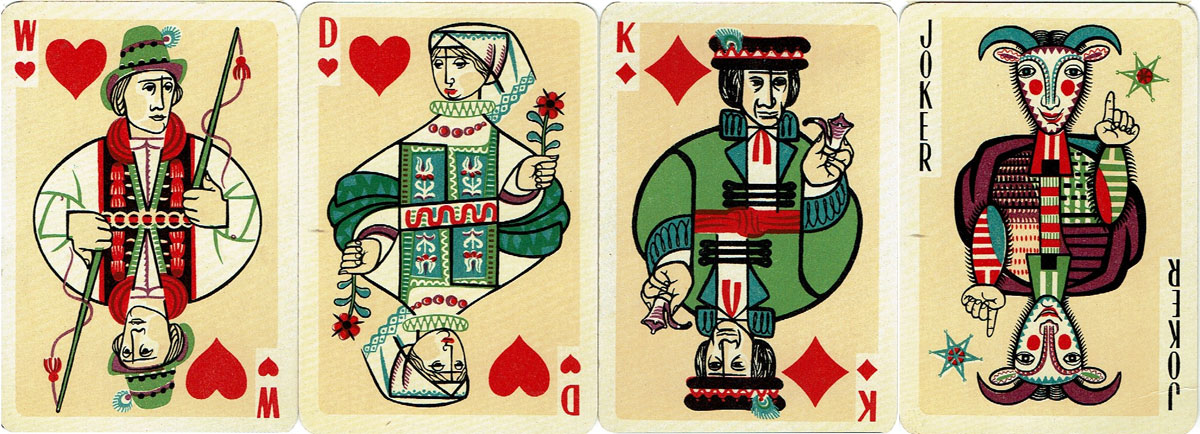
Above: Folk Cards for Lot Polish Airlines designed by Krystyna Gruchalska-Bunsch, 1962.
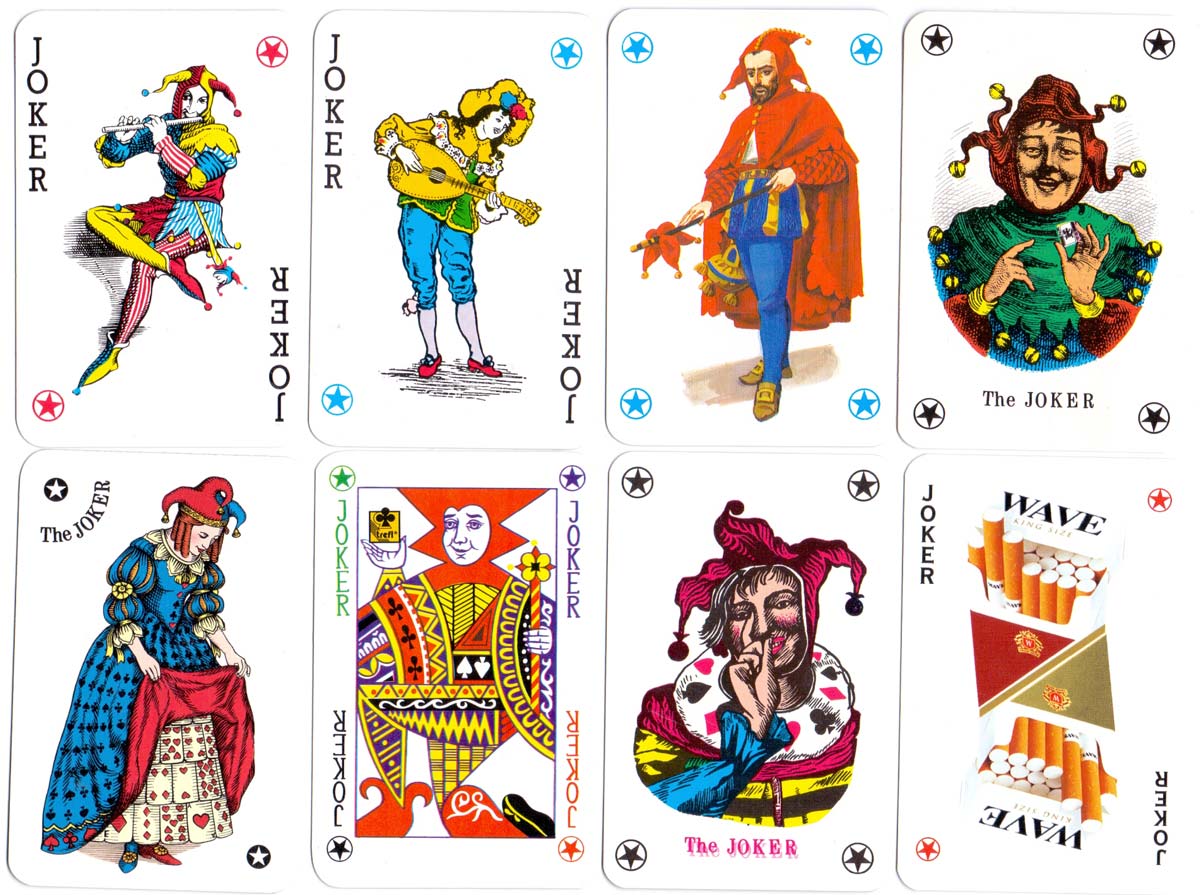
Above: Polish Joker cards by KZWP-Trefl, c.2002
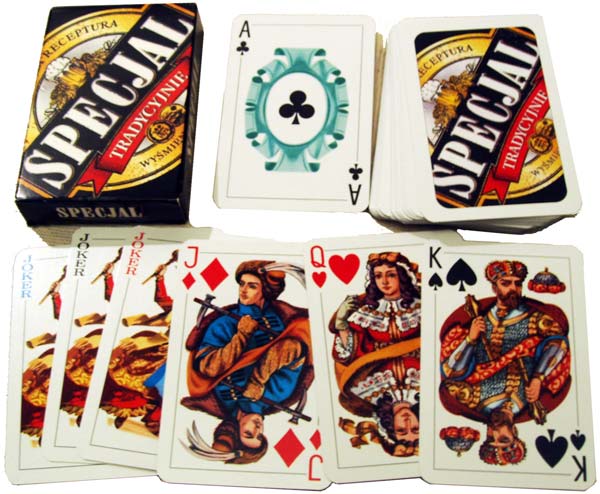
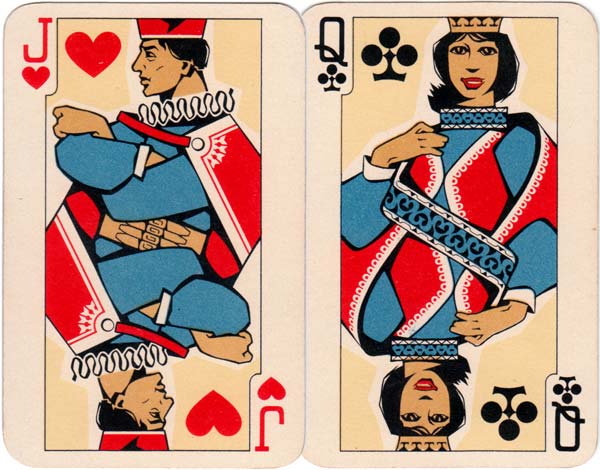
Above: Gdynia-America Line, c.1958
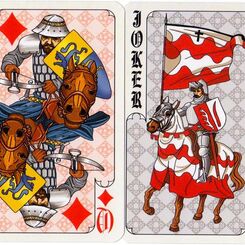
Above: Battle of Grunwald, 2011
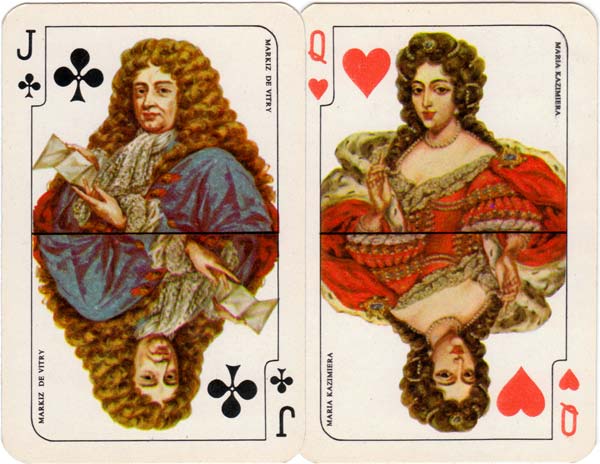
Above: Relief of Vienna, 1983
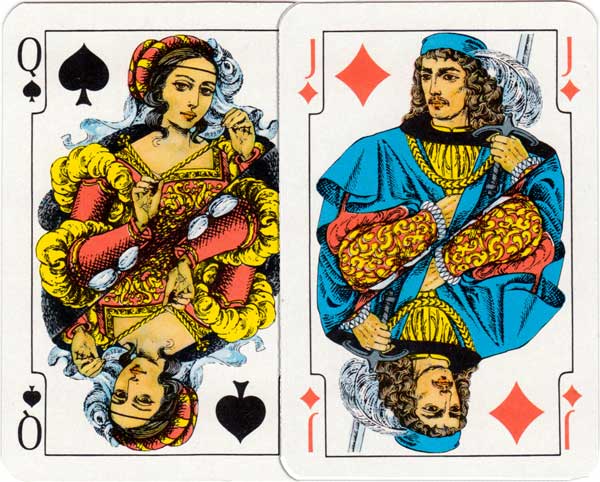
Above: “Kasztelańskie”
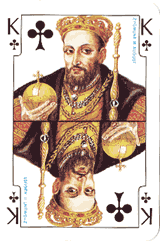
Above: Jagiellonskie playing cards.
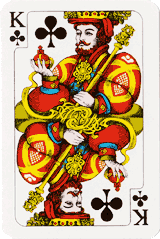
Above: Anna Gaber playing cards.
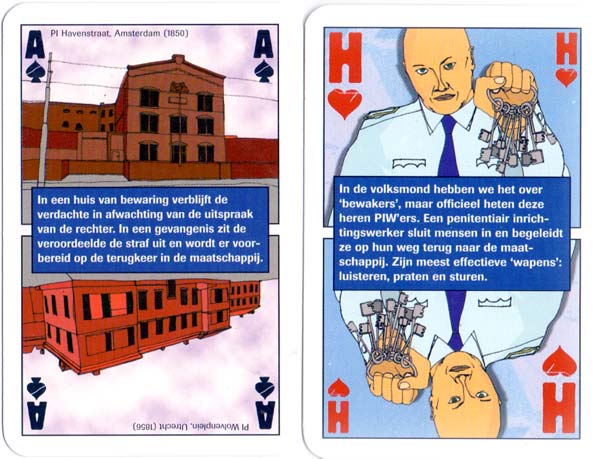
Above: Dutch Prison Service
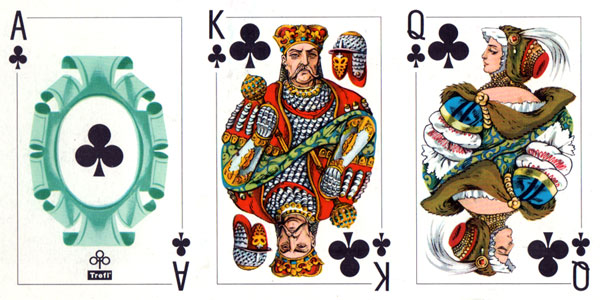
Above: Starościanka No.470

By Simon Wintle
Spain • Member since February 01, 1996
I am the founder of The World of Playing Cards (est. 1996), a website dedicated to the history, artistry and cultural significance of playing cards and tarot. Over the years I have researched various areas of the subject, acquired and traded collections and contributed as a committee member of the IPCS and graphics editor of The Playing-Card journal. Having lived in Chile, England, Wales, and now Spain, these experiences have shaped my work and passion for playing cards. Amongst my achievements is producing a limited-edition replica of a 17th-century English pack using woodblocks and stencils—a labour of love. Today, the World of Playing Cards is a global collaborative project, with my son Adam serving as the technical driving force behind its development. His innovative efforts have helped shape the site into the thriving hub it is today. You are warmly invited to become a contributor and share your enthusiasm.

Activity for Polish Playing Cards
Sign in to comment or save this article.

Related Articles

Trappola cards from Poland
Trappola cards published in Warsaw by J G Du Port during the 18th century.
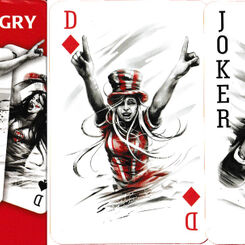
Warka playing cards
Advertising pack for the Polish brewery Warka, featuring footballers, coaches and supporters.
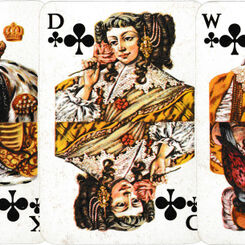
Barok playing cards nr 232
Courts dressed in Baroque costumes in a pack printed by KZWP, Kraków, Poland, 1981.
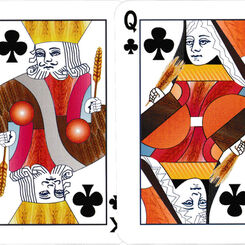
Amistar playing cards
Publicity pack for product which controls fungal diseases in a range of crops, printed by Trefl, Kra...
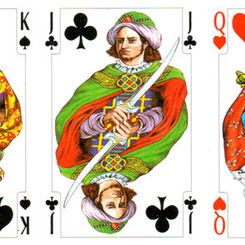
Królewskie
‘Królewskie’ playing cards with Slavic style courts, printed by KZWP-Trefl, 2002.
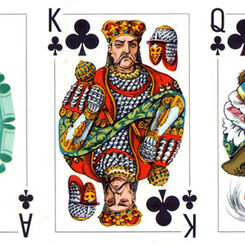
Starościanka
“Starościanka” playing cards manufactured by KZWP-Trefl (Poland).
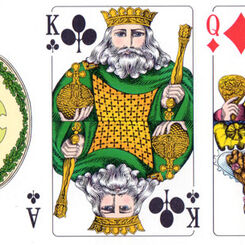
Rhineland Pattern by KZWP
Rhineland pattern by KZWP.
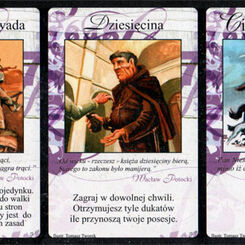
Veto
‘Veto’ is a Polish CCG game. Players compete for power and influence. The game is set in 17th centur...
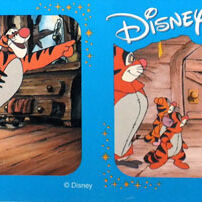
Disney Collectible Cards
Disney collectable cards showing scenes from Disney animated movies, printed in Poland by KZWP-Trefl...
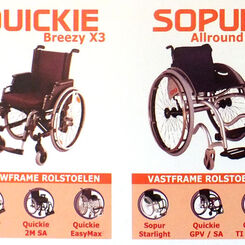
Quickie Wheelchairs
Uncut sheet of ‘Quickie’ Wheelchairs Quartet card game, made in Poland 2004
Later Bavarian Pattern
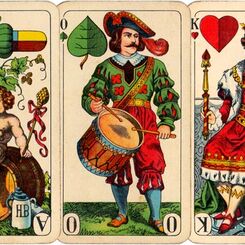
Later Bavarian single-ended pattern by Vereinigte Altenburg-Stralsunder Spielkarten-Fabriken
Pomorski Poker
Pomorski Poker (Pomeranian Poker) is a gallery of characters from the region: politicians, media, cu...
Battle of Grunwald
Medieval style playing cards commemorating the Battle of Grunwald (1410), designed and published by ...
Kasztelanskie
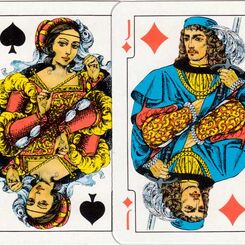
“Kasztelańskie No. 460” playing cards manufactured by Krakowskie Zaklady Wyrobów Papierowych, Crakow...
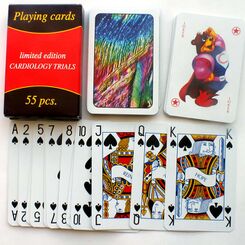
Cardiology Trials
Cardiology Trials - limited edition playing cards by Krakowskie Zaklady Wyrobów Papierowych Trefl (K...
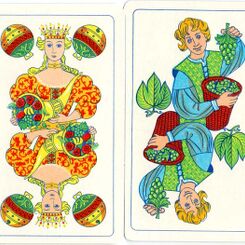
Skat by Franciszek Bunsch
Skat pack designed by Franciszek Bunsch

Relief of Vienna
“Relief of Vienna” tri-centenary pack, 1983
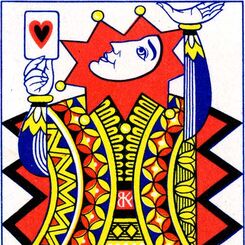
Prof. Franciszek Bunsch
Prof. Franciszek Bunsch, Polish playing-card designer.
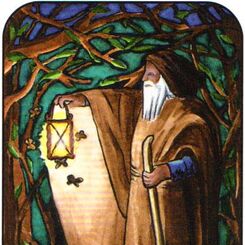
Kart do Tarota
78-card Polish tarot pack designed by Edyta Gdek.

Anna Gaber
Anna Gaber playing cards from Poland.
Most Popular
Our top articles from the past 60 days