


Relief of Vienna
“Relief of Vienna” tri-centenary pack, 1983
“Relief of Vienna” tri-centenary pack
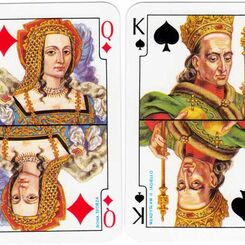
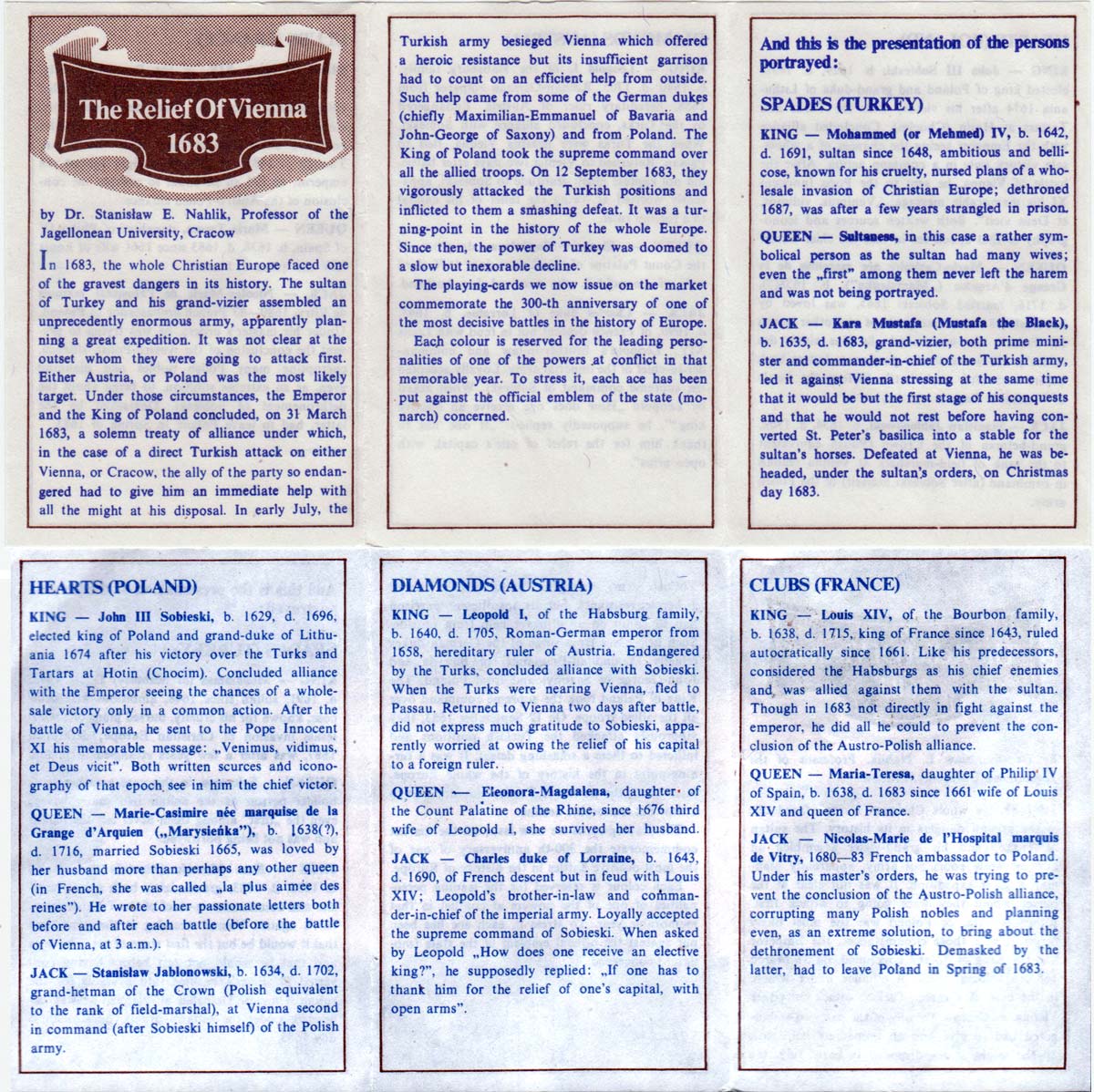
“Relief of Vienna” playing cards issued on the occasion of the three hundredth anniversary of the raising of the siege of that city, by Polish forces, from the invading Ottoman forces in 1683. The colour scheme for each suit reflects the leading personalities of the powers at conflict. Each Ace has the official emblem of the state concerned: spades = Turkey; diamonds = Austria; clubs = France; hearts = Poland. The design was by Maria Orowska-Gabry, with historical advice from Prof. Stanislaw Nahlik. Manufactured by KZWP, Cracow.
These two authors also designed the "Jagiellons" cards based on the historical paintings of Jan Matejko. See: explanatory leaflet by Prof. Stanislaw Nahlik→
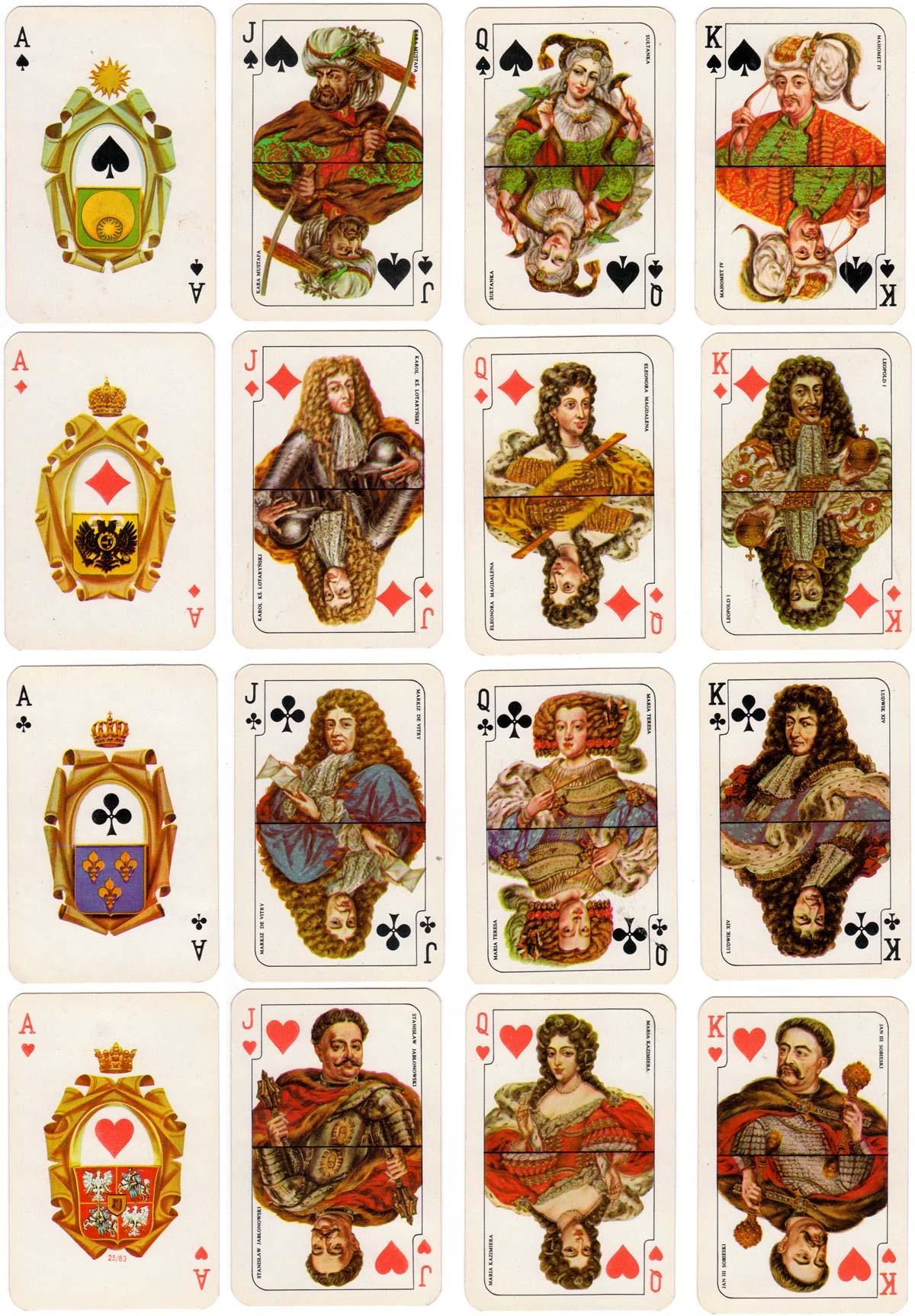
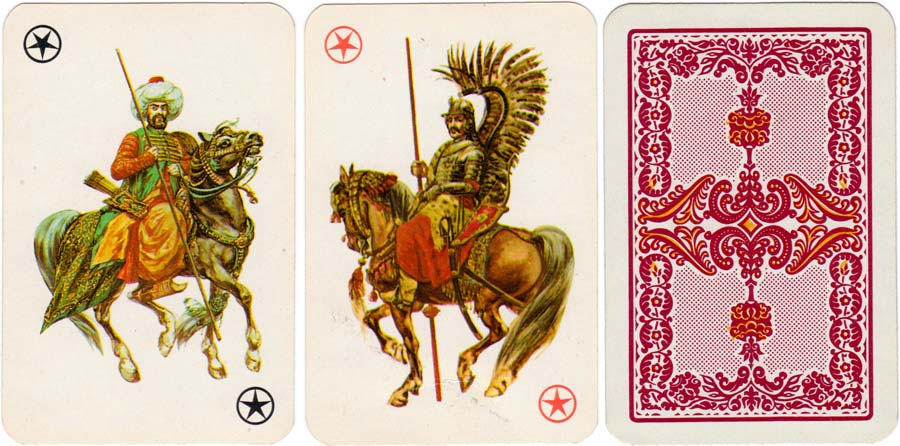
Above: Relief of Vienna tri-centenary pack published by KZWP, Crakow, 1983.

By Rex Pitts (1940-2021)
United Kingdom • Member since January 30, 2009
Rex's main interest was in card games, because, he said, they were cheap and easy to get hold of in his early days of collecting. He is well known for his extensive knowledge of Pepys games and his book is on the bookshelves of many. His other interest was non-standard playing cards. He also had collections of sheet music, music CDs, models of London buses, London Transport timetables and maps and other objects that intrigued him.
Rex had a chequered career at school. He was expelled twice, on one occasion for smoking! Despite this he trained as a radio engineer and worked for the BBC in the World Service. Later he moved into sales and worked for a firm that made all kinds of packaging, a job he enjoyed until his retirement. He became an expert on boxes and would always investigate those that held his cards. He could always recognize a box made for Pepys, which were the same as those of Alf Cooke’s Universal Playing Card Company, who printed the card games. This interest changed into an ability to make and mend boxes, which he did with great dexterity. He loved this kind of handicraft work.
His dexterity of hand and eye soon led to his making card games of his own design. He spent hours and hours carefully cutting them out and colouring them by hand.

Activity for Relief of Vienna
Sign in to comment or save this article.

Related Articles
Tatra Mountains souvenir
Photographic views of the Tatra Mountains with added touches.
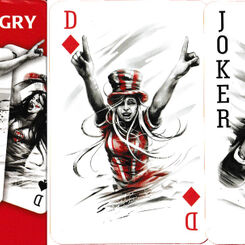
Warka playing cards
Advertising pack for the Polish brewery Warka, featuring footballers, coaches and supporters.
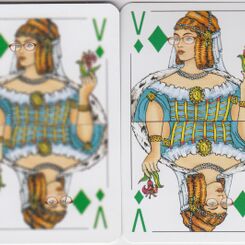
Specsavers playing cards
to help you see better when playing cards
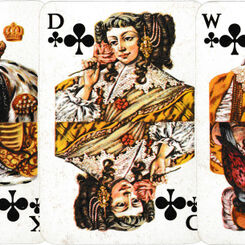
Barok playing cards nr 232
Courts dressed in Baroque costumes in a pack printed by KZWP, Kraków, Poland, 1981.
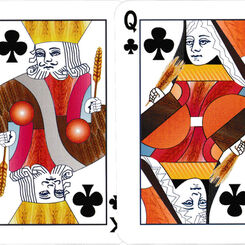
Amistar playing cards
Publicity pack for product which controls fungal diseases in a range of crops, printed by Trefl, Kra...
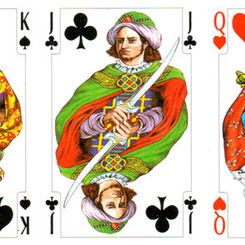
Królewskie
‘Królewskie’ playing cards with Slavic style courts, printed by KZWP-Trefl, 2002.
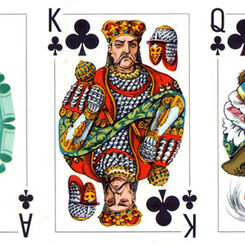
Starościanka
“Starościanka” playing cards manufactured by KZWP-Trefl (Poland).
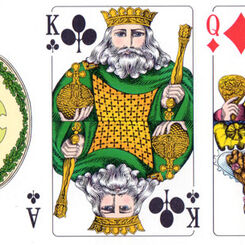
Rhineland Pattern by KZWP
Rhineland pattern by KZWP.
Disney Collectible Cards
Disney collectable cards showing scenes from Disney animated movies, printed in Poland by KZWP-Trefl...
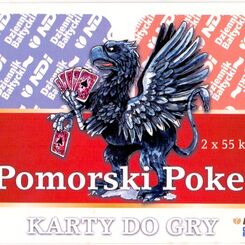
Pomorski Poker
Pomorski Poker (Pomeranian Poker) is a gallery of characters from the region: politicians, media, cu...
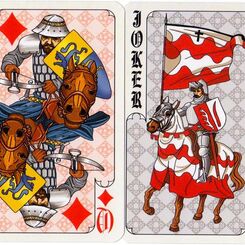
Battle of Grunwald
Medieval style playing cards commemorating the Battle of Grunwald (1410), designed and published by ...
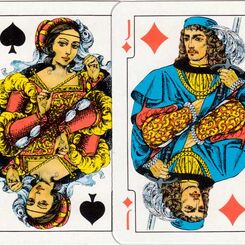
Kasztelanskie
“Kasztelańskie No. 460” playing cards manufactured by Krakowskie Zaklady Wyrobów Papierowych, Crakow...
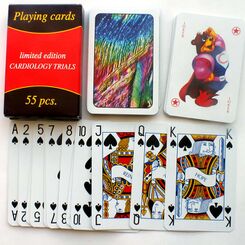
Cardiology Trials
Cardiology Trials - limited edition playing cards by Krakowskie Zaklady Wyrobów Papierowych Trefl (K...
Skat by Franciszek Bunsch
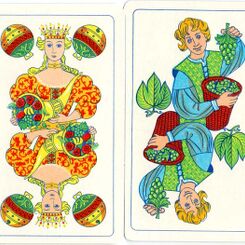
Skat pack designed by Franciszek Bunsch
Prof. Franciszek Bunsch
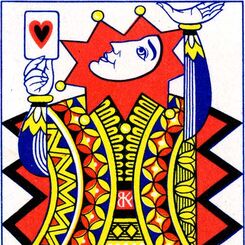
Prof. Franciszek Bunsch, Polish playing-card designer.
Polish Playing Cards
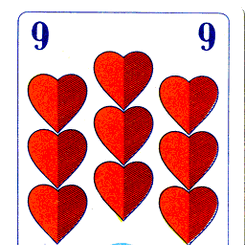
Poland has been involved in playing card production since the 15th century.
Kart do Tarota
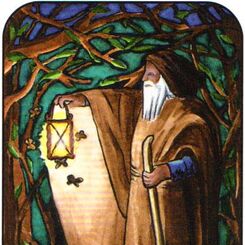
78-card Polish tarot pack designed by Edyta Gdek.
Jagiellonskie
Jagiellonskie Playing Cards with Polish Kings and Queens, made in Poland

Anna Gaber
Anna Gaber playing cards from Poland.
The History of Playing Cards
Playing cards appear in European records in the late 14th century, but their earlier history lies fu...
Most Popular
Our top articles from the past 60 days


Peter Burnett
19 November 2025, 09:47SavedSaved this article to Peter's Collection