


Later Bavarian Pattern
Later Bavarian single-ended pattern by Vereinigte Altenburg-Stralsunder Spielkarten-Fabriken
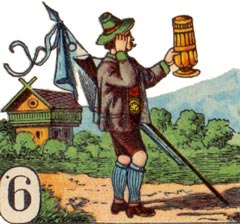
Bavarian single-ended pattern
This pattern is known with single-ended and double-ended court cards. Although the costumes have been given a florid makeover, several of the court cards brandish military weapons and have poses which can be traced back to cards of the 16th century, and are also related to the Bohemian, Salzburg and Franconian patterns. The coat-of-arms of Bavaria can be seen on several cards. The Ace of Hearts has a blindfold cupid and also displays the duty tax stamp. Small vignettes appear beneath the pip cards showing a series of country scenes or other local imagery. These old German-suited cards are gradually being taken over by standard English cards and may eventually become obsolete.
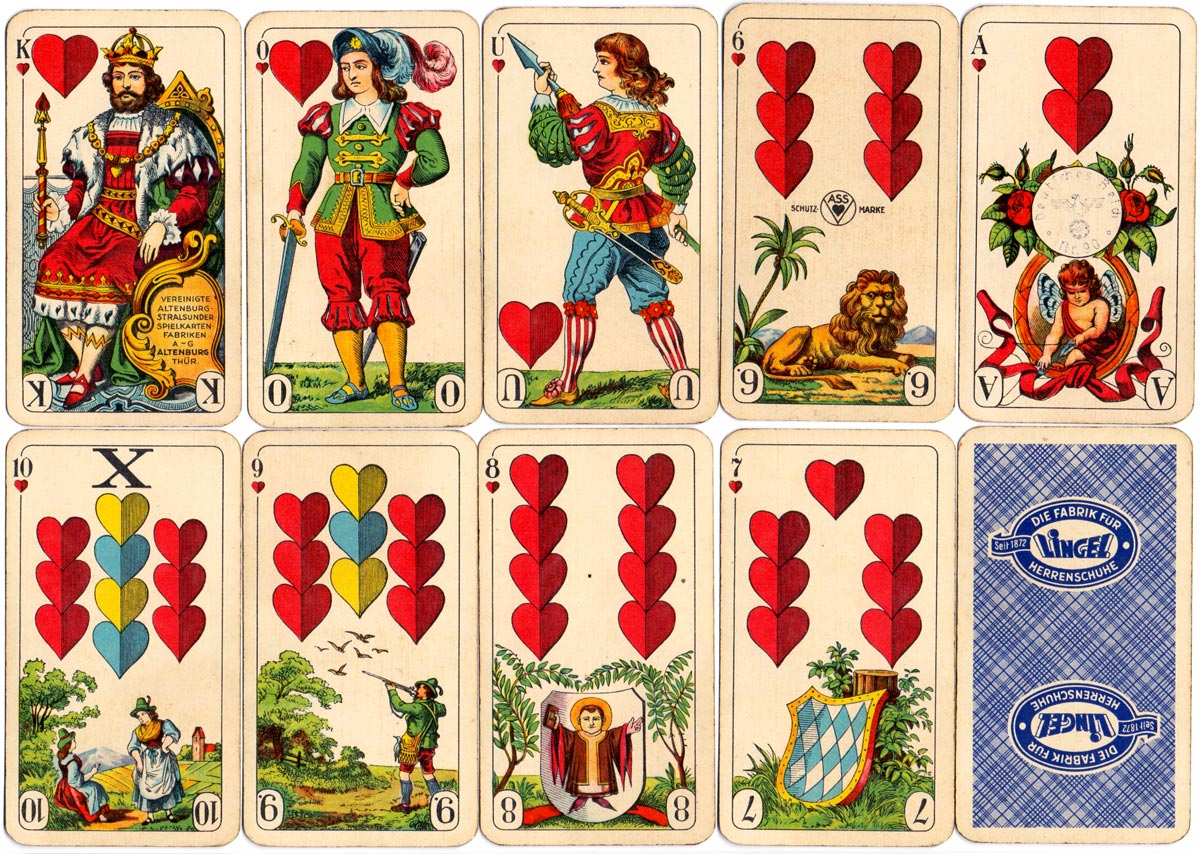
Above: Bavarian single-ended pattern manufactured by Vereinigte Altenburg-Stralsunder Spielkarten-Fabriken A-G., c.1937. German suit symbols, 36 cards, the coat-of-arms of Bavaria can bee seen on several cards. This is a promotional edition and the reverse has advertising for a men's shoe factory: “Lingel - Die Fabrik fur Herrenschuhe”. It was normally sold as “Bayerisches Einfachbild Nr.15a” with standard tarotée backs. The tax stamp on the Ace of Hearts was used from 1936 to 1939.
The rest of the pack can be seen here: 2, 3, 4
Bavarian double-ended pattern
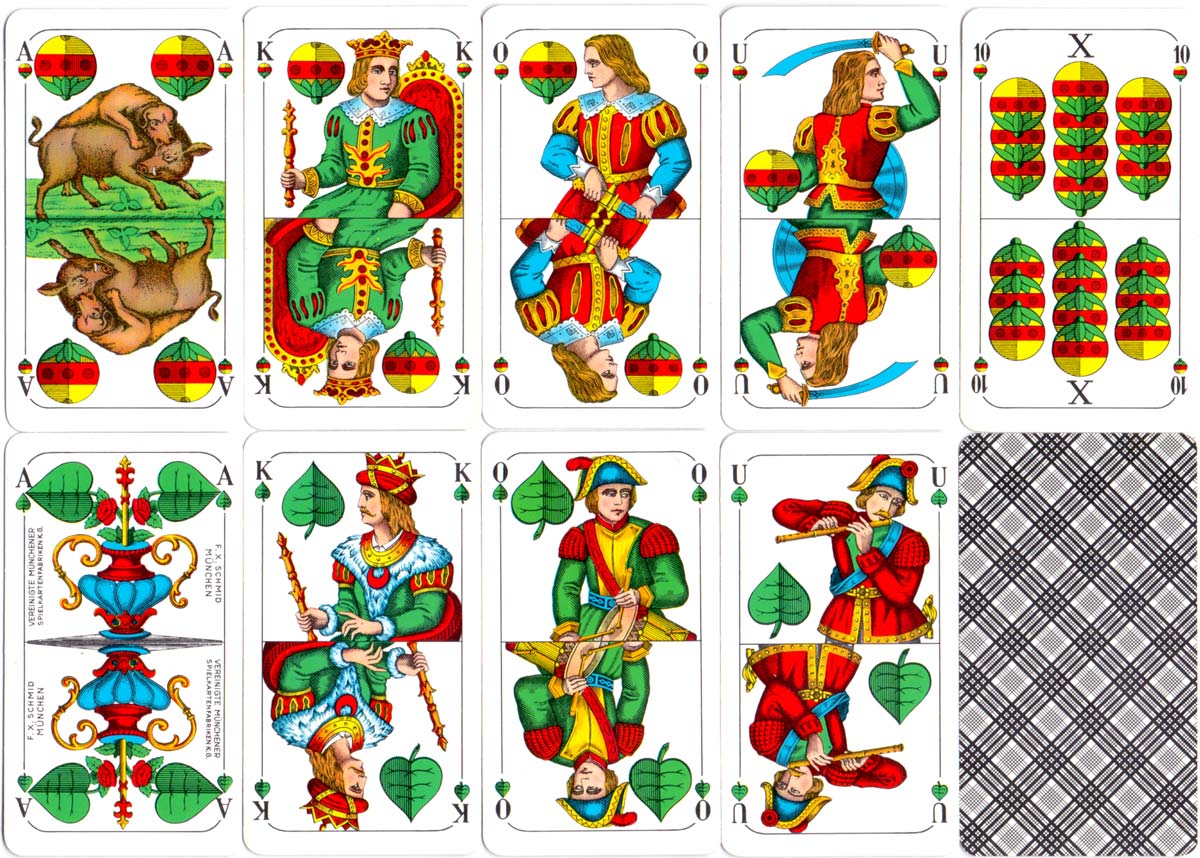
In the double-ended version, notwithstanding the added convenience, some charming features of the old designs are lost.
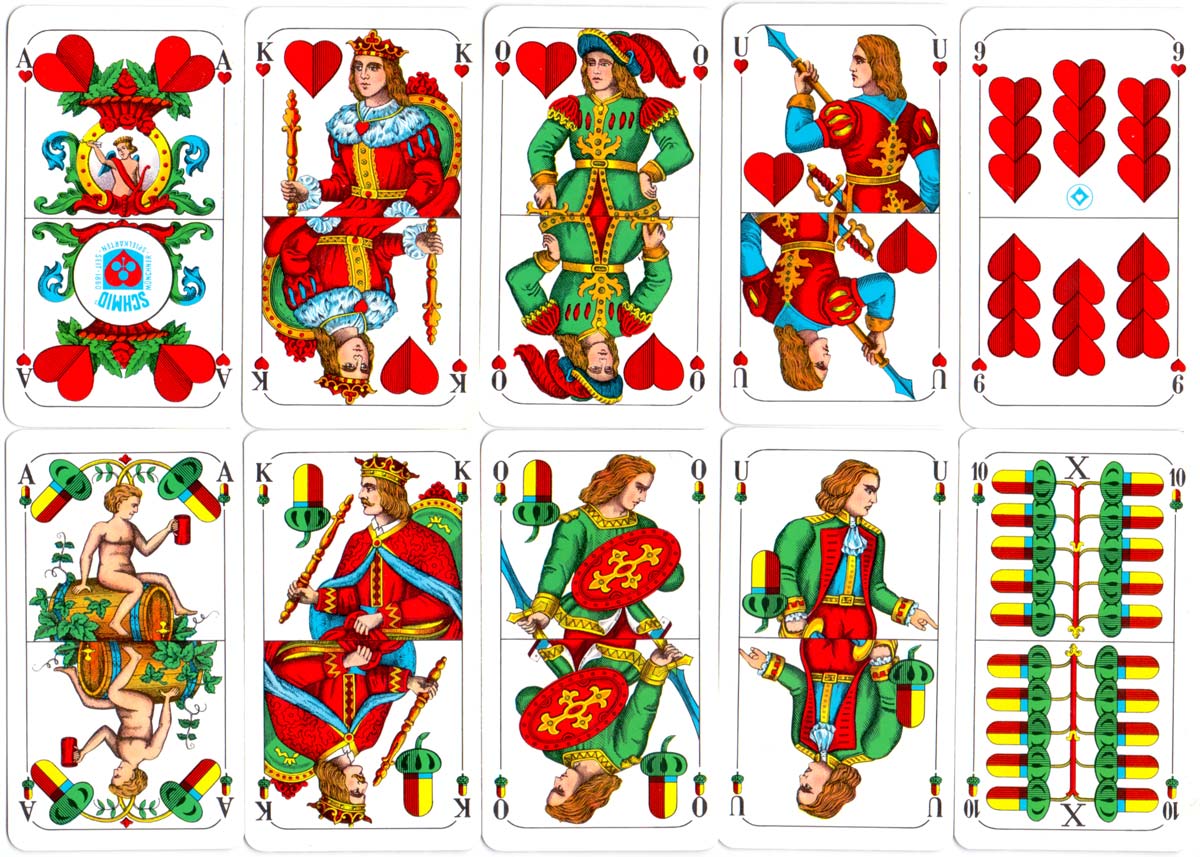
Above: Double-ended Bavarian Schafkopf Tarock No.0671 by F. X. Schmid, c.1970. The vignettes on the numeral cards have been dropped.
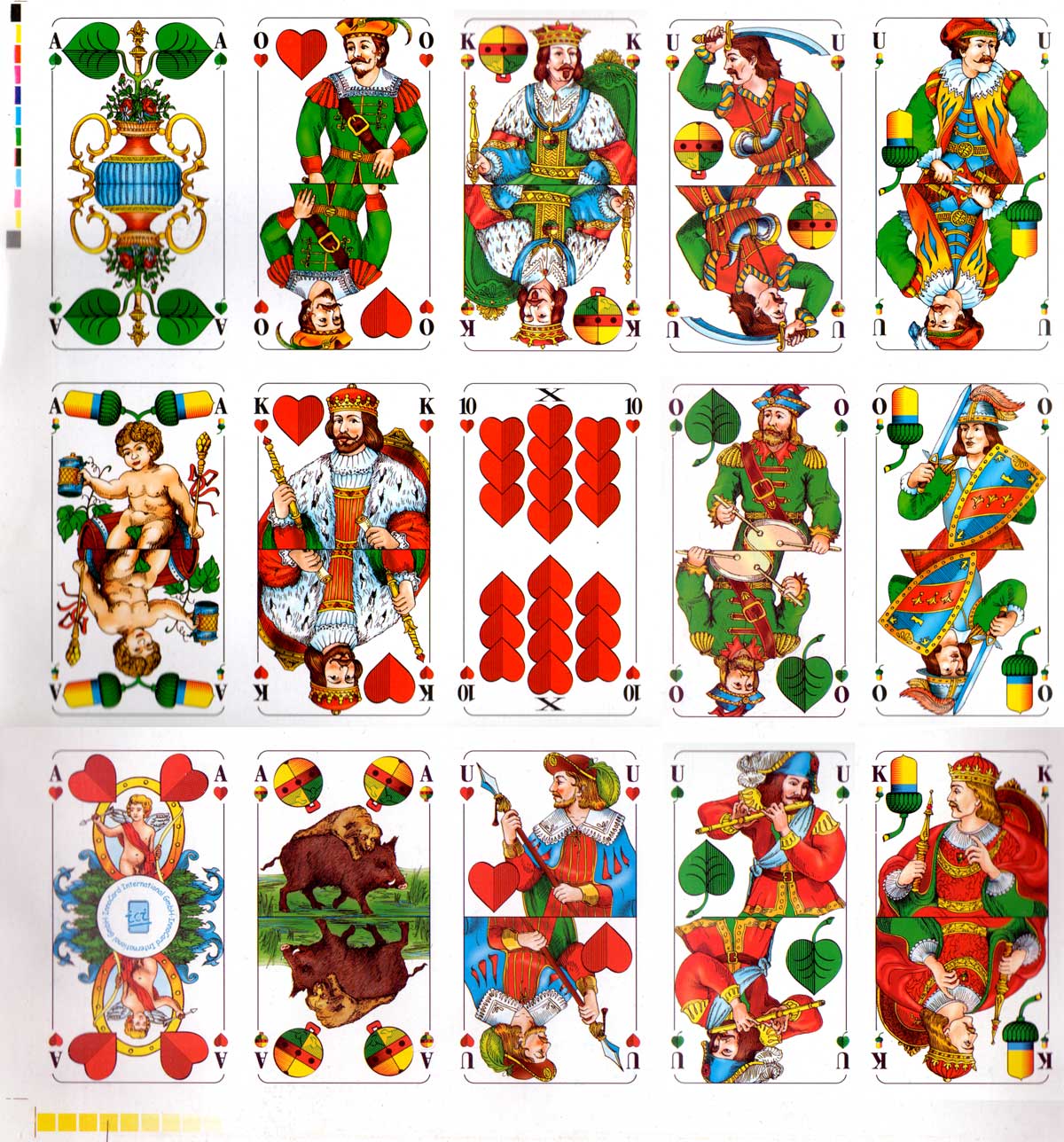
Above: detail from uncut sheet of Bavarian double-ended pattern manufactured by KZWP-Trefl for InnoCard International GmBH, 2003.

By Simon Wintle
Spain • Member since February 01, 1996
I am the founder of The World of Playing Cards (est. 1996), a website dedicated to the history, artistry and cultural significance of playing cards and tarot. Over the years I have researched various areas of the subject, acquired and traded collections and contributed as a committee member of the IPCS and graphics editor of The Playing-Card journal. Having lived in Chile, England, Wales, and now Spain, these experiences have shaped my work and passion for playing cards. Amongst my achievements is producing a limited-edition replica of a 17th-century English pack using woodblocks and stencils—a labour of love. Today, the World of Playing Cards is a global collaborative project, with my son Adam serving as the technical driving force behind its development. His innovative efforts have helped shape the site into the thriving hub it is today. You are warmly invited to become a contributor and share your enthusiasm.

Activity for Later Bavarian Pattern
Sign in to comment or save this article.

Related Articles
Modern F.X. Schmid Bavarian Cards
From Plastic to Premium: The legendary F.X. Schmid Tarock & Schafkopf deck, reboxed, refreshed and r...
Munich is Trumps
Famous men and women associated with Munich on a pack with dual suits.
New Altenburg Skat cards – German DDR Pattern
Authentic Altenburger Skat cards with German suits (Acorns, Hearts, Leaves, Bells).
Das Nassauische Kartenspiel
Pack conceived by Berthold Conradi, commemorating the 700th anniversary of the granting of town righ...
Dallas playing cards
Seven of the top stars from the famous TV series Dallas.
Wicküler Skat
Publicity pack for the German brewery Wicküler with courts merrily drinking beer.
Bahlsen Skat
Publicity pack for a German food company, featuring some of their products.
Iduna Skat
Advertising pack for a Hamburg building society featuring pigs in disguise.
Kaffeehaus-Pikett
Kaffeehaus-Pikett featuring the old Viennese Large Crown pattern, made by ASS.
Märchen-Quartett
Fairy Tales quartet game by F.X. Schmid, Munich, 1960.
Mordillo Skat
Mordillo Skat designed by Guillermo Mordillo, c.1979
Skat Express
One end Berlin pattern the other standard English pattern
C.L. Wüst, 1811 - 1927
SPIELKARTENFABRIEK VON C.L. WÜST, 1811 - 1927. A short history of the Wüst factory by Martin Shaw & ...
Rhineland Pattern by KZWP
Rhineland pattern by KZWP.
Osram Advertising Playing Cards
The court cards feature double-ended light-bulb people (the Kings are repeated in each suit) and the...
Rhineland Pattern
This pack was probably the culmination of a mixture of designs from 19th century Germany which emerg...
10: Playing Cards in Germany
The playing card manufacturers of Germany from 1900 until 1939 provide a complicated set of relation...
Lenormand Cartomancy
Mlle Lenormand Cartomancy deck made by Vereinigte Stralsunder Spielkartenfabriken, Stralsund, c.1890...
Jany Group
Deck issued to celebrate the Jany Group of Private Investors acquiring a controlling majority of Ver...
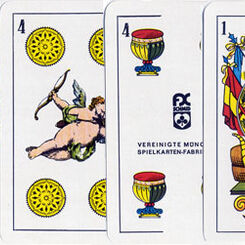
No.407 Naipe Español by F. X. Schmid
Naipe Español No.407 by F. X. Schmid, c.1980.
Most Popular
Our top articles from the past 60 days


Manuel Osorio Zuleta
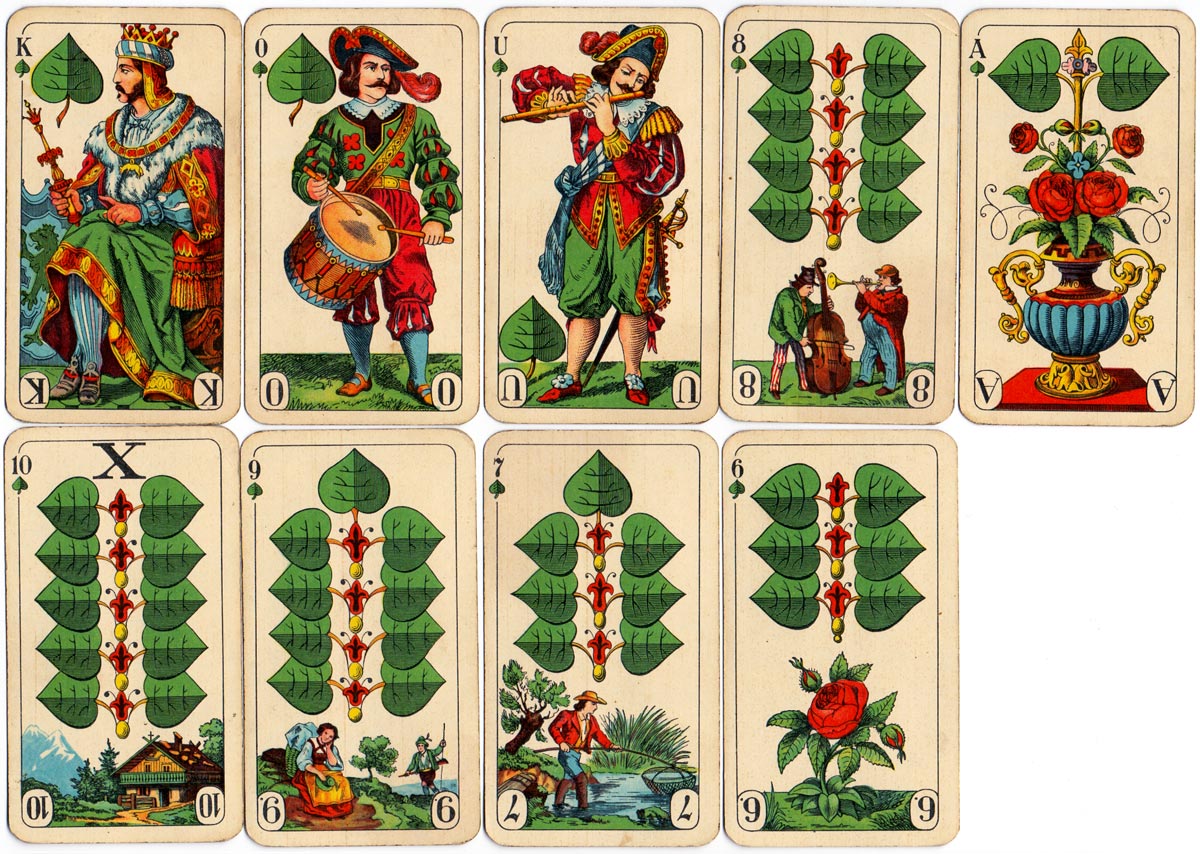
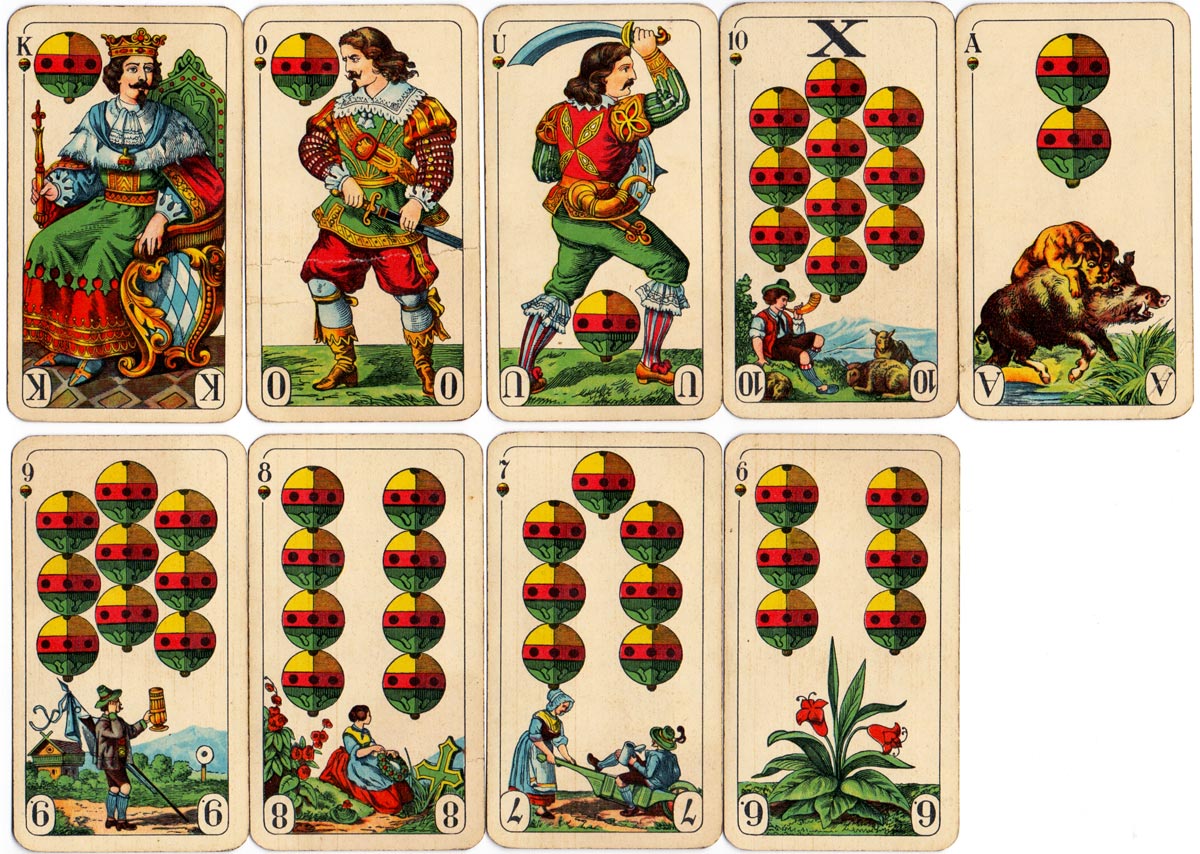
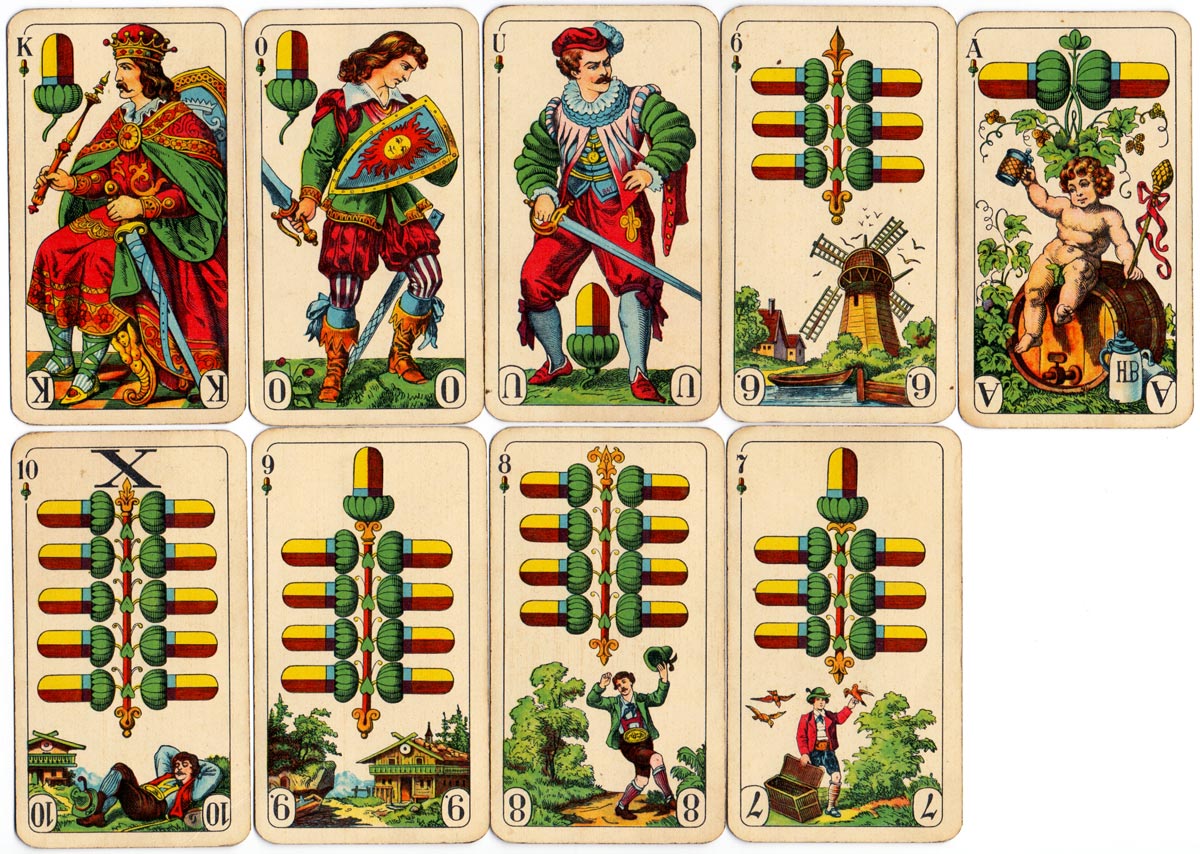
05 July 2024, 15:54Greetings, I am posing with a pack of German cards by F. X. Schmid, manufactured in January 1917 (according to the label on the back of the box).
It is a Bavarian-style Pinochle (Binokel in German) suit with 2x24 cards, manufactured by F. X. Schmid in Munchen.
I didn't find anything like that on WoPC or on the Internet.
The cards are in good condition, but the box is not.
I would like to confirm my questions.
Regards,
Manuel Osorio Zuleta - Brazil
Glo Lexa
28 April 2026, 00:41SavedSaved this article to Suit systems