


The Big Deal
In ‘Patia Te Pere - The Big Deal’, Joan Gragg presents a first edition series of 1000 decks in which the characters, themes and patterns from traditional playing cards are replaced by Cook Islands cultural, environmental and societal icons.
Patia Te Pere - The Big Deal
Depicting daily life within a contemporary pacific society...
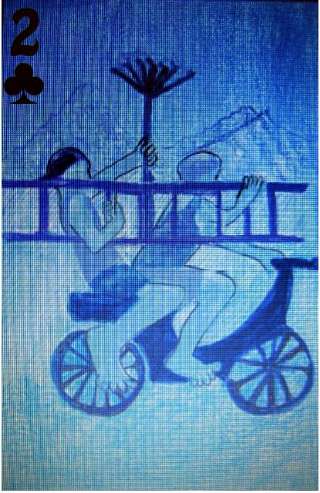
Above: original artwork for Two of Clubs, Caran D'ache water-soluble wax pastels.
For 32 years, Cook Island artist Joan Gragg has painted daily life in the Cook Islands.
In ‘Patia Te Pere - The Big Deal’, Joan re-presents her narrative within a first edition series of 1000 decks of playing cards in which the characters, themes and patterns from traditional playing cards are replaced by Cook Islands cultural, environmental and societal images.
The cards depict the unique social attributes on daily display within a contemporary3pacific society.
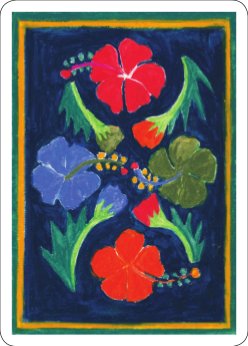
Right: back design, depicting an appliqué and embroidered bed cover.
While it is obvious to reference the popular local card game of Uka, a flamboyant, effusive performance more often supplemented by raucous laughter, drinks, ei katu and cigarettes, Joan's choice of artistic delivery (the cards) offers a poignant comment on the transposable and economic nature of culture itself.
With the Cook Islands Tourism increasingly recognising the commodity value of culture within its international marketing, Joan has created an affordable tourist souvenir for re-export and constant destination advertising wherever the cards may travel.
A discourse on the Sino-Pacific relationship and how it can fuel pacific tourism awareness and preserve local identity ensues. Also brought into question is the debate on culturally specific products, their manufacture, supplication and inherent market perception. (Notes by Ben Bergman. BCA gallery Rarotonga.)
Packs are available directly from Joan Gragg at $NZ 45.00/deck plus postage.
“The inspiration for the cards came from a deck of cards given to me ten years ago called “The Deck of Cards” by Andrew Jones Art. Cards drawn by 56 British artists. Our family enjoyed them because they were challenging and really made you think as to what each card was but also made them difficult to use as playing cards.”
“Card playing in the Islands is very popular. In 2010 I decided to paint a deck of cards about the Cook Islands. I used elements from my previous work which focuses on recording impressions and every day humorous events that are taken for granted in the Islands.”
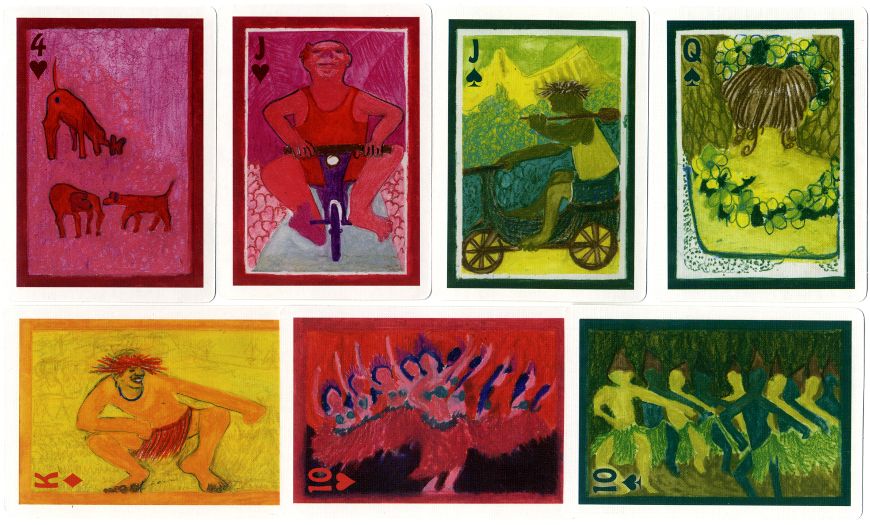
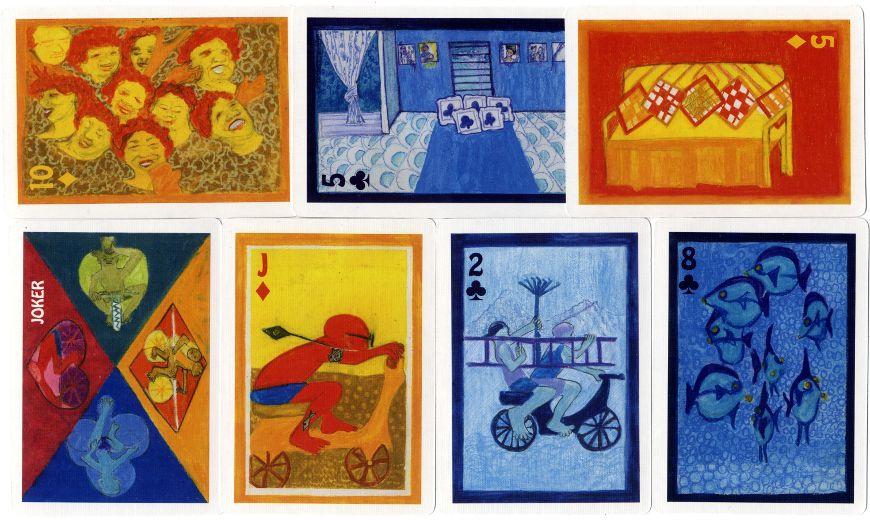
Above: cards from Joan Gragg's "Playing Cards of the Pacific" Cook Islands Souvenir playing cards, 52 cards + Joker + extra card in hard box. Effusing vibrant energy in the colours and images, and an attractive way of presenting cards, giving a feel of the culture of the Islands.
“My deck of fifty four original paintings addresses some of the issues that made “The Deck of Cards” difficult to use when playing card games and especially Cook Islands euchre which is fast and rowdy. I have tried to incorporate into my deck elements like surprise, the twist on a subject, amusement, originality, intrigue, and fun. The four suits gave me a chance to paint four pictures of the same subject while the thirteen cards in each suit gave me the opportunity to also paint thirteen different subjects. Plus the joker.”
“The medium of water soluble crayons that I had bought in Auckland and loved because of their bright colour fitted my purposes perfectly. I worked in small format; 6 x 8.5 inches and restricted the colour for each suit using red for hearts, yellow orange for diamonds, blue for clubs and green for spades, further challenging my imagination and making it easy to identify the suits. I did at one time think it would be fun to not put any notation on the cards but card players insist on large lettering. I must admit we need the notation for euchre.” The cards are printed in China.

By Simon Wintle
Spain • Member since February 01, 1996
I am the founder of The World of Playing Cards (est. 1996), a website dedicated to the history, artistry and cultural significance of playing cards and tarot. Over the years I have researched various areas of the subject, acquired and traded collections and contributed as a committee member of the IPCS and graphics editor of The Playing-Card journal. Having lived in Chile, England, Wales, and now Spain, these experiences have shaped my work and passion for playing cards. Amongst my achievements is producing a limited-edition replica of a 17th-century English pack using woodblocks and stencils—a labour of love. Today, the World of Playing Cards is a global collaborative project, with my son Adam serving as the technical driving force behind its development. His innovative efforts have helped shape the site into the thriving hub it is today. You are warmly invited to become a contributor and share your enthusiasm.

Activity for The Big Deal
Sign in to comment or save this article.

Related Articles
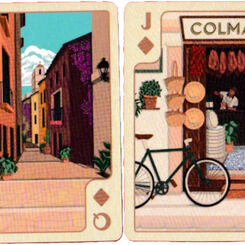
Balearic Souvenir Cards
Mediterranean Souvenir deck by Rioba Studio, Pollença, Mallorca.
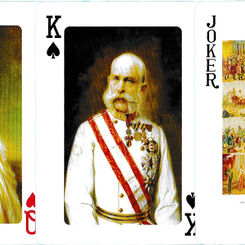
Sissi playing cards
produced for the Austrian tourist market.
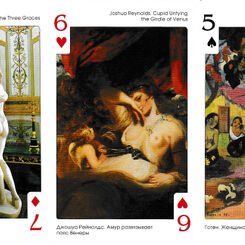
Treasures of the Hermitage / Shedevry Ermitazha
‘Treasures of the Hermitage Museum’ souvenir playing cards (‘Shedevry Ermitazha’), Russia.
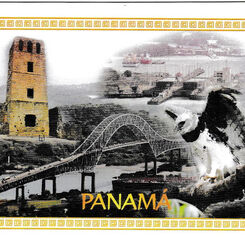
Souvenir of Panama
A photographic souvenir of Panama consisting of 52 cards and 2 jokers.
Saint Petersburg vintage playing cards
Saint Petersburg vintage photography playing cards.
AT THE TOP Playing Cards
Exclusively designed for the Burj Khalifa in Dubai
Treasures of the Russian Museum
Treasures of the Russian Museum / Russkii Muzei : suvenirnye igral’nye karty.
The Summer Palace
The Summer Palace, Beijing, China, c.1998.
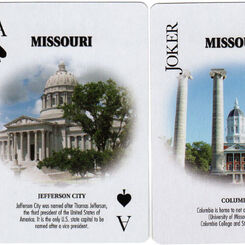
Missouri State Souvenir
Missouri Souvenir playing cards designed by OnPoint Speciality products in the USA, 2017.
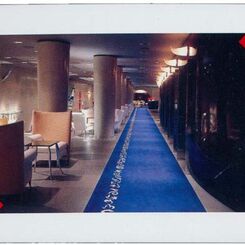
Ian Schrager Hotels
Advertising/souvenir deck of cards associated with the Ian Schrager chain of luxury hotels.
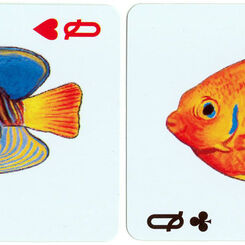
Marine Lives of Maldives
Souvenir deck from The Maldives depicting marine life in the Indian Ocean.
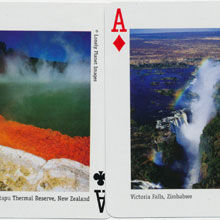
Lonely Planet
Lonely Planet Playing Cards feature amazing images from all over the globe.
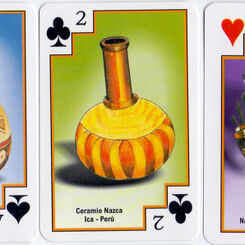
Líneas de Nazca
“Líneas de Nazca” souvenir playing cards, Peru, c.2008.
Li River Souvenir
Li River Souvenir Playing Cards from China.
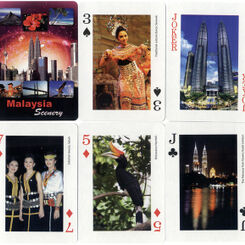
Malaysia Scenery
Souvenir playing cards from Malaysia featuring 56 colour photographs of scenery, wildlife, local peo...
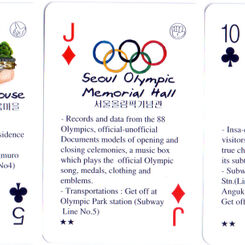
Adventures in Korea
Each card has a colour drawing of a Korean building, museum or tourist attraction with a brief descr...
Irish Souvenir
Irish souvenir playing cards. The Joker has the inscription W.O., Dublin.
Souvenir Playing Cards
Tourist souvenir playing cards depict the aesthetic, political, social and economic conceptions of t...
Cusco Inca Souvenir
Pre-Incas & Incas Souvenir Playing Cards, Cusco, Peru, 2000.
Souvenir Playing Cards
Argentina publishes many tourist souvenir packs, usually with colour pictures on each card, and with...
Most Popular
Our top articles from the past 60 days


