


Ubo cards
Traditional Ubo cards from the Philippines made from tree bark.
The Ubo are a Manobo sub-tribe who inhabit the more isolated mountains of Southwest Cotabato on the island of Mindanao (SE Philippines). Ubo cards are made from the bark of a tree which they call “kenklem”. They are painted with a black stain from the banana stalk. Once dried, they are engraved using a “kabuhu” or knife.
The game played with these cards is called “siyum-siyum” or lucky nine. It requires two or more players. Each player is dealt three cards. The player whose cards add up to 9, 19, 29 or the sum closest to these numbers wins the game. The Ubos usually bet their property or even their wives.
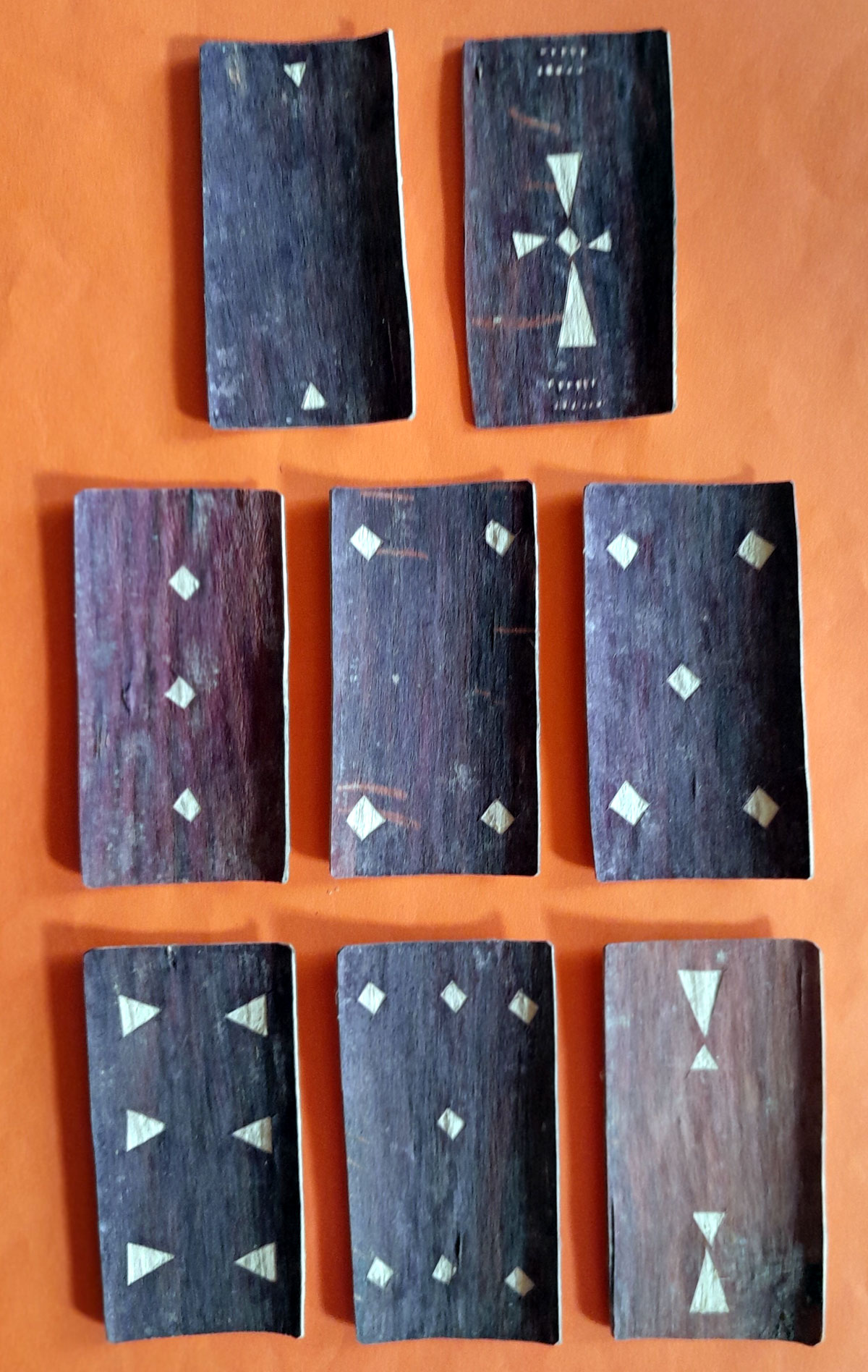
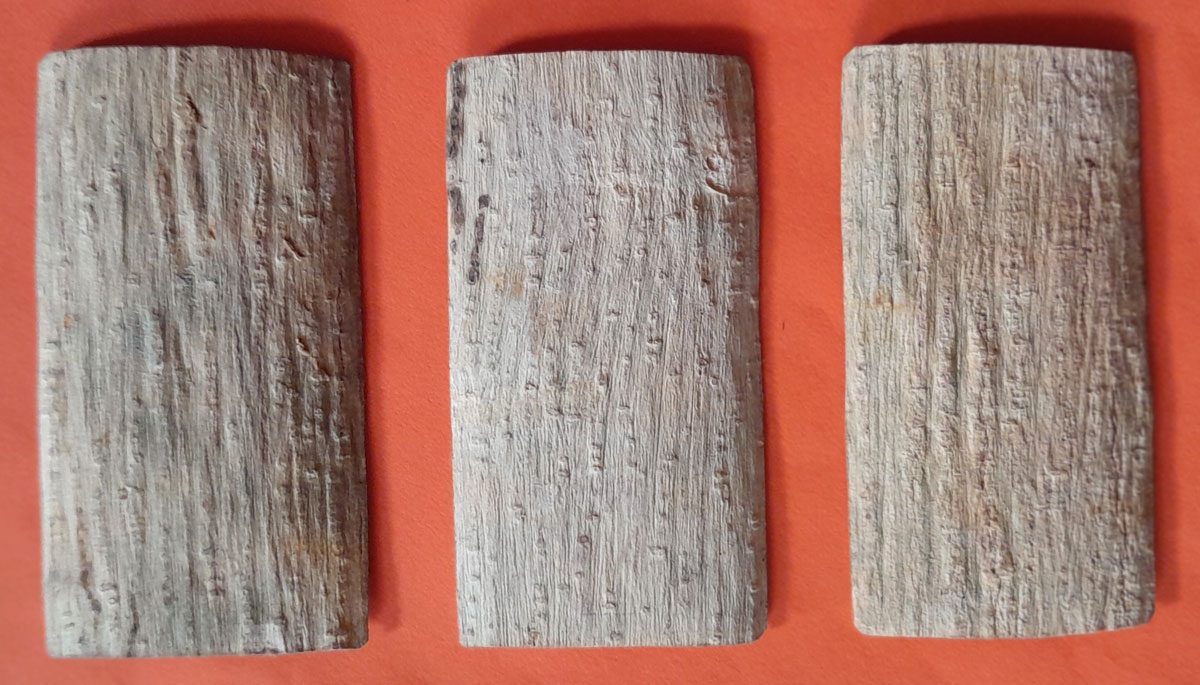
In a pack, there are 6 of each of the cards in the top row and 2 of each of the others, making 24 in all. Apart from the 2s to 7s, it is not clear to me which card is the 1 and which card is the 8 (assuming that that is what they represent). The backs are plain. There are two wooden end pieces, with the whole set being tied together with string.
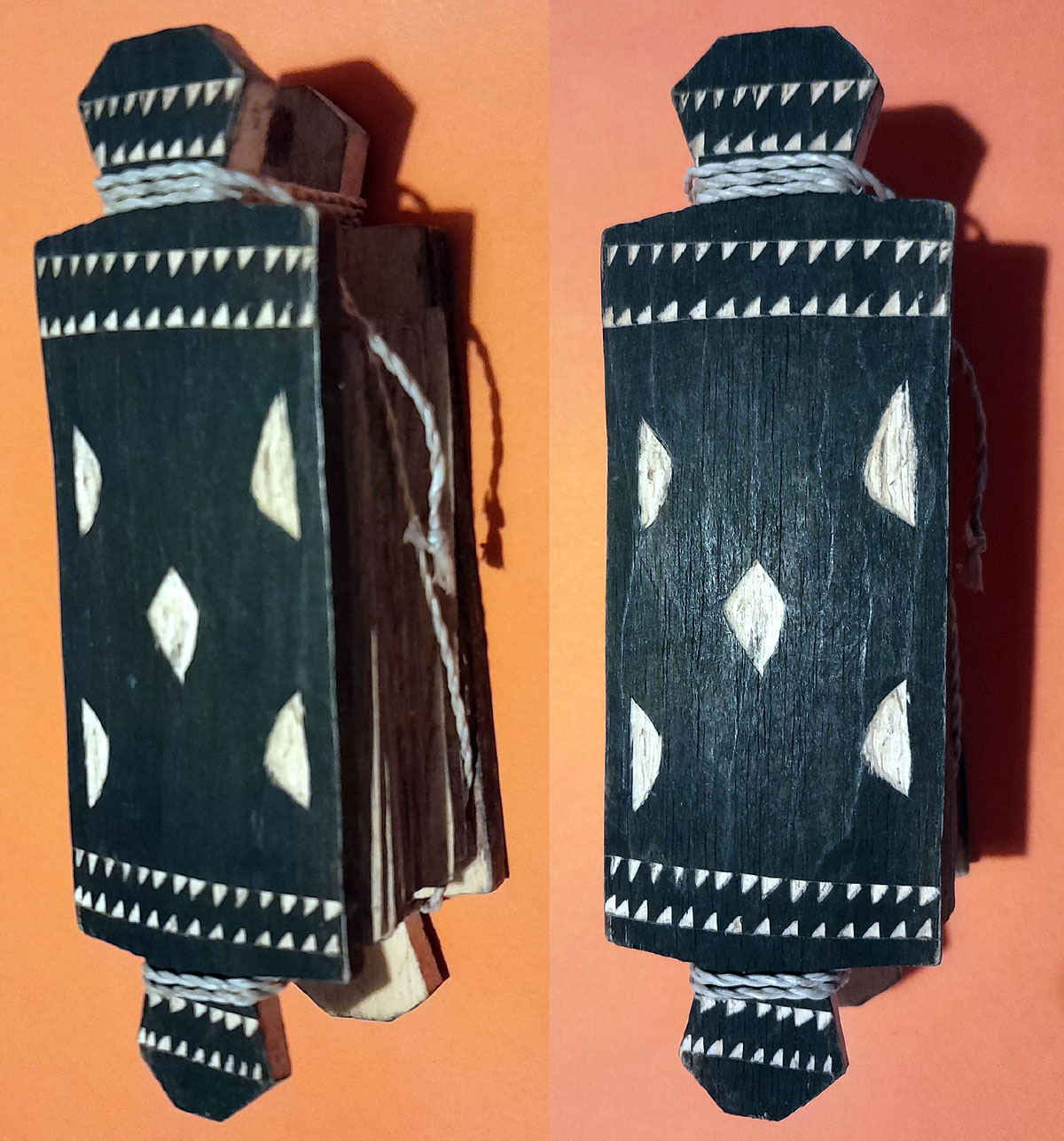
Above: Ubo cards, purchased in an Oxfam UK shop, 1990. 24 wooden cards tied together with two wooden end pieces. Size: 35 x 66 mm approx.
Information about these cards was taken from the leaflet accompanying the cards. Some further information can be found at: Manobo, Obo►
Further Reference
Denning, Trevor: Primitive Cards from the Philippines, in ‘The Playing-Card’, Volume XX, No. 1, August 1991, pp 9-12.

By Roddy Somerville
France • Member since May 31, 2022
Roddy started collecting stamps on his 8th birthday. In 1977 he joined the newly formed playing-card department at Stanley Gibbons in London before setting up his own business in Edinburgh four years later. His collecting interests include playing cards, postcards, stamps (especially playing cards on stamps) and sugar wrappers. He is a Past President of the Scottish Philatelic Society, a former Chairman of the IPCS, a Past Master of the Worshipful Company of Makers of Playing Cards and Curator of the WCMPC’s collection of playing cards. He lives near Toulouse in France.

Activity for Ubo cards
Sign in to comment or save this article.

Related Articles
Aónikenk playing cards
Ethnographic playing cards made by members of the Aónikenk culture from Patagonia.
Pendleton playing cards
Pendleton playing cards inspired by indigenous American artwork, USA, 2019.
Race Card
‘Race Card’ playing cards published by the Concept Card Co., New Orleans, Louisiana, USA.
The Times of Kamehameha The Great
Figures from Hawaiian history and scenes of everyday life designed by Joseph Feher.
Traditional Nomadic Life of Mongolia
Playing cards depicting paintings of Traditional Nomadic Life of Mongolia.
Habesha playing cards
Habesha playing cards published by “Ethiopian Reflection”
Happy Playing Cards
Cheerful, colourful designs on handmade paper from Nepal.
Tonalamatl
Baraja Tonalamatl Mexican Aztec playing cards based on the prehispanic Codex Borgia manuscript.
Naipes Cardón
Naipes Cardón designed by Mario Luis Rivero depicting traditional Argentine culture and identity, 20...
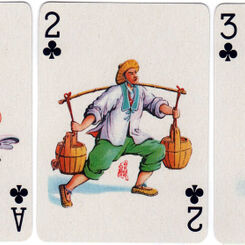
Characters of “The Water Margin”
Characters from the Chinese novel “The Water Margin” - 水滸撲克.
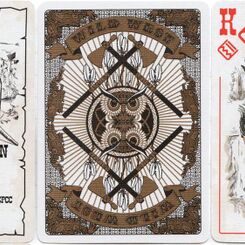
Native American Warriors
Native American Warriors from the Wild West Series published by SPCC, 2018.
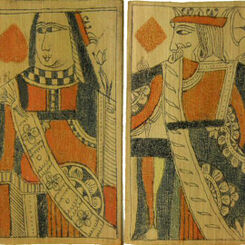
Banana Leaf Cards
English Standard pack hand drawn & coloured on banana leaf, c.1820.
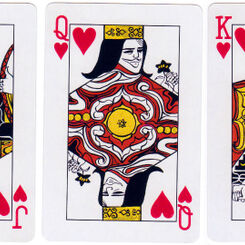
Ainu culture
A terrific deck of cards made by Nintendo c.1979 with original designs on every card showing the Ain...
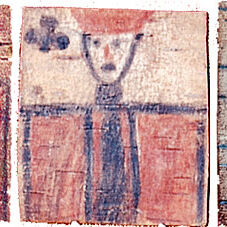
Ojibwa Native Indian Cards
Ojibwa Native Indian playing cards hand manufactured on birch bark in imitation of standard French /...
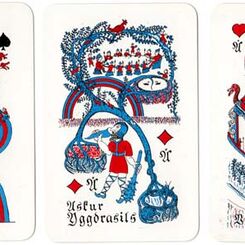
Iceland Mythological Playing Cards
Iceland Mythological Playing Cards designed by Sigurlinna Pétursson, 1958
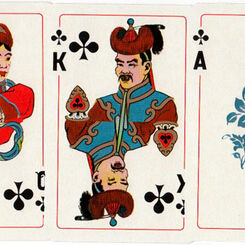
Mongol Playing Cards
Mongol Playing Cards with courts in traditional costume.
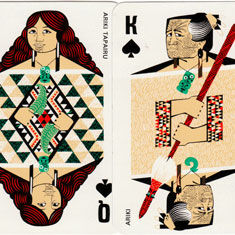
Maori
Maori themed playing cards from New Zealand depicting Maori Kings, Queens and Chiefs
Lithuanian
Lithuanian Playing Cards, reprinted by Piatnik, 1995, 2004.
Mongolian Playing Cards
Mongolian Playing Cards.
Naipes Condor
"Naipes Condor" Chilean playing cards, with Chilean symbolism on the suit signs.
Most Popular
Our top articles from the past 60 days


