


35: More Design Copies
Here I want to take another widely copied design and see how individual variation by the copier can take the original design through a lot of changes. I shall take the three USPCC designs: US3 (wide), US3.1 (bridge) and US4 (wide). To the best of my knowledge these are no longer used in the US, except perhaps or special productions, as in the retro market.
On page 34 I introduced the topic of design copies and exemplified it mostly with examples of copies of Goodall's design. On other pages there are further examples of copying in one way or another, though this is not the focus of the page necessarily. Here I want to take another widely copied design and see how individual variation by the copier can take the original design through a lot of changes. I shall take the three USPCC designs: US3 (wide), US3.1 (bridge) and US4 (wide). To the best of my knowledge these are no longer used in the US, except perhaps for special productions, as in the retro market.
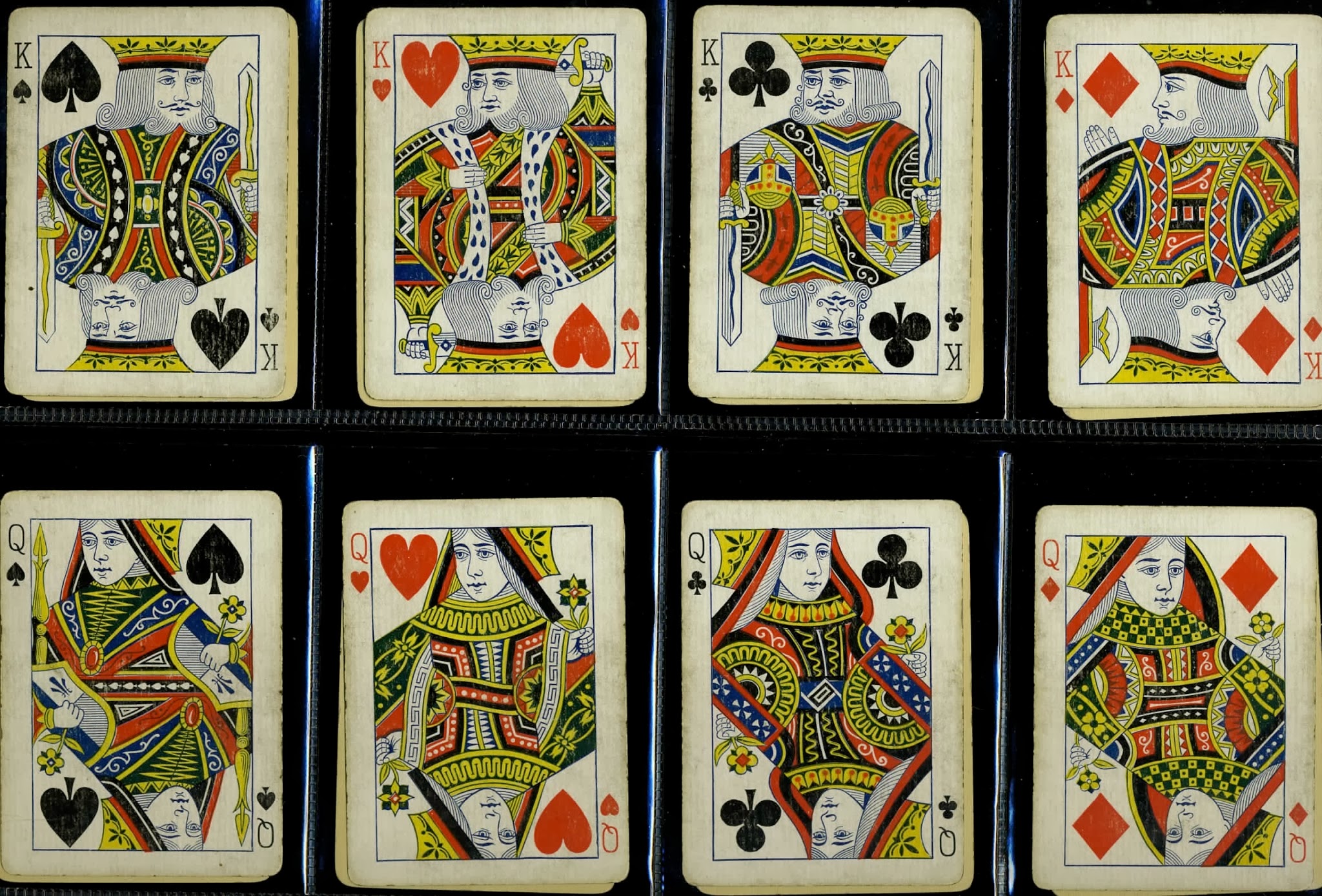
Above: An early version of US3 by USPrinting, 1891-84, from a Treasury pack
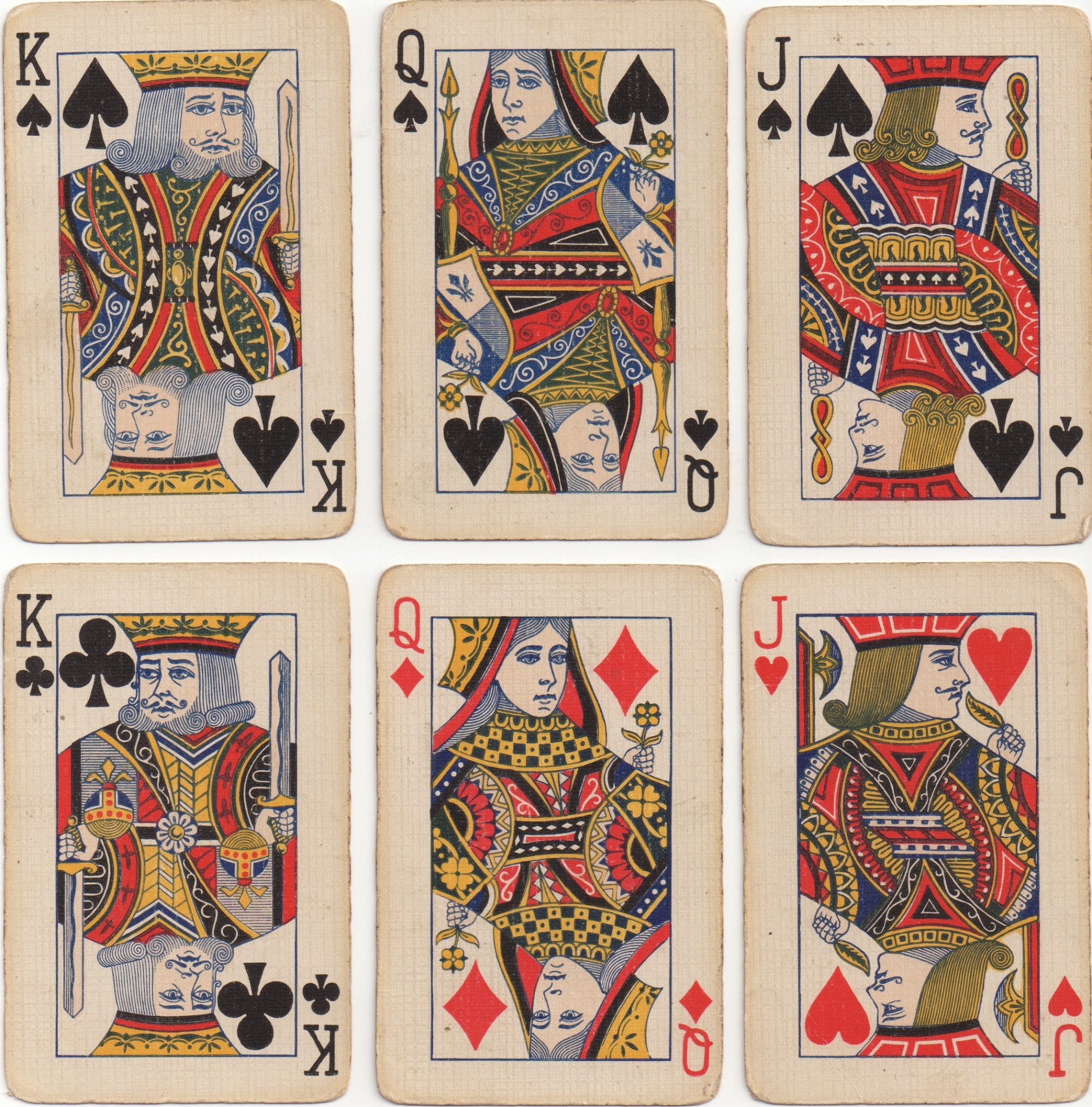
Above: US3.1, the bridge-size version, redrawn, used with many minor redrawings c.1900-1950
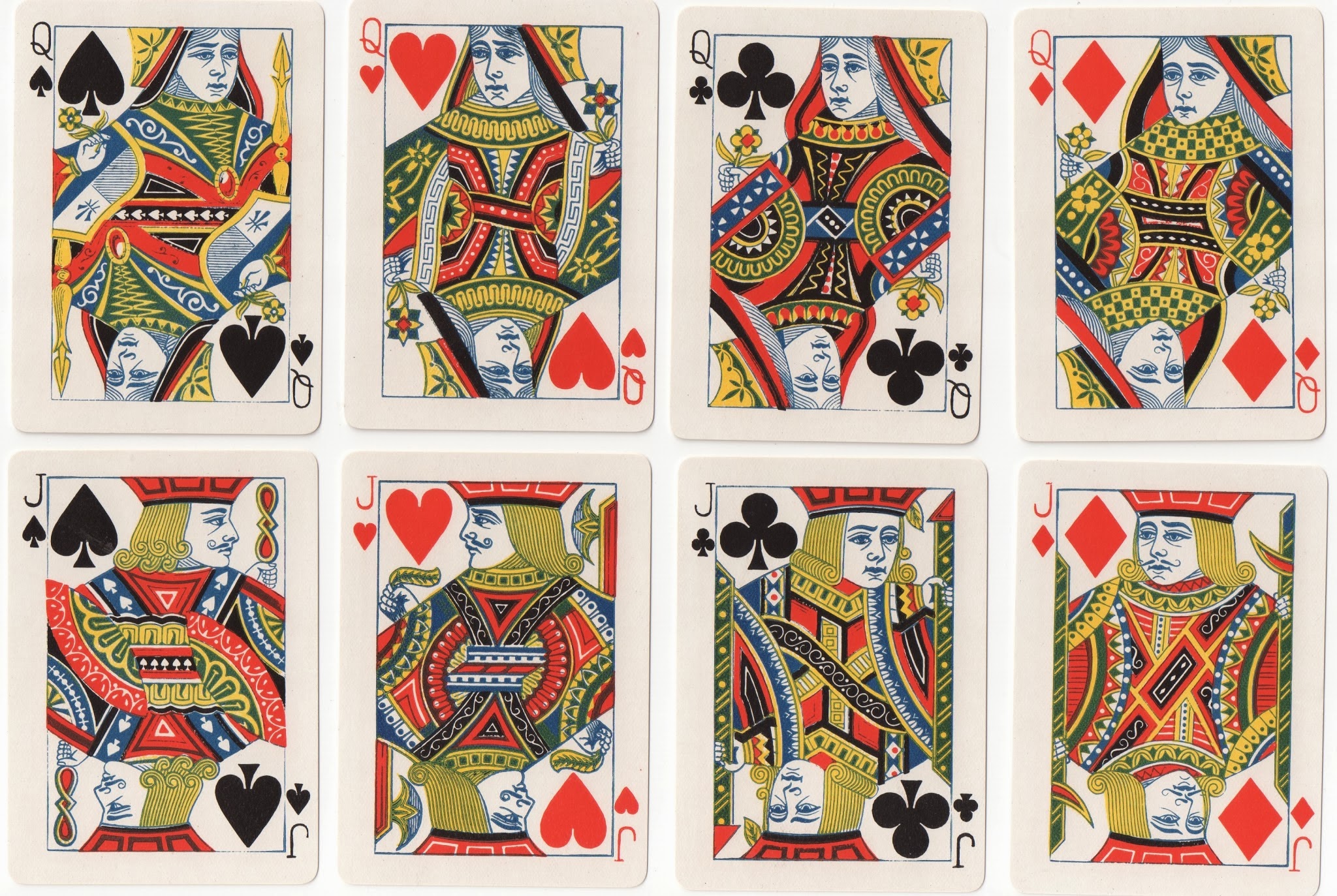
Above: US4, a redrawing with six turned courts, used with many minor redrawings from c.1900-1950
Note that in the two previous designs the QS has her hand sloping upwards in parallel to the edge of her sleeve: this is a particular defiining characteristic of these designs and their copies. These two designs were copied widely within the United States and a turned version of US3.1 was used in bridge cards. As far as I know, this turned version (US3.2) was not used by USPCC itself. Below are a selection of QSs by other American makers from the 1930s, unturned copies on the top row and turned ones, both US3.2 and US4, at the bottom. Notice how the clothing can be redrawn considerably in some cases.
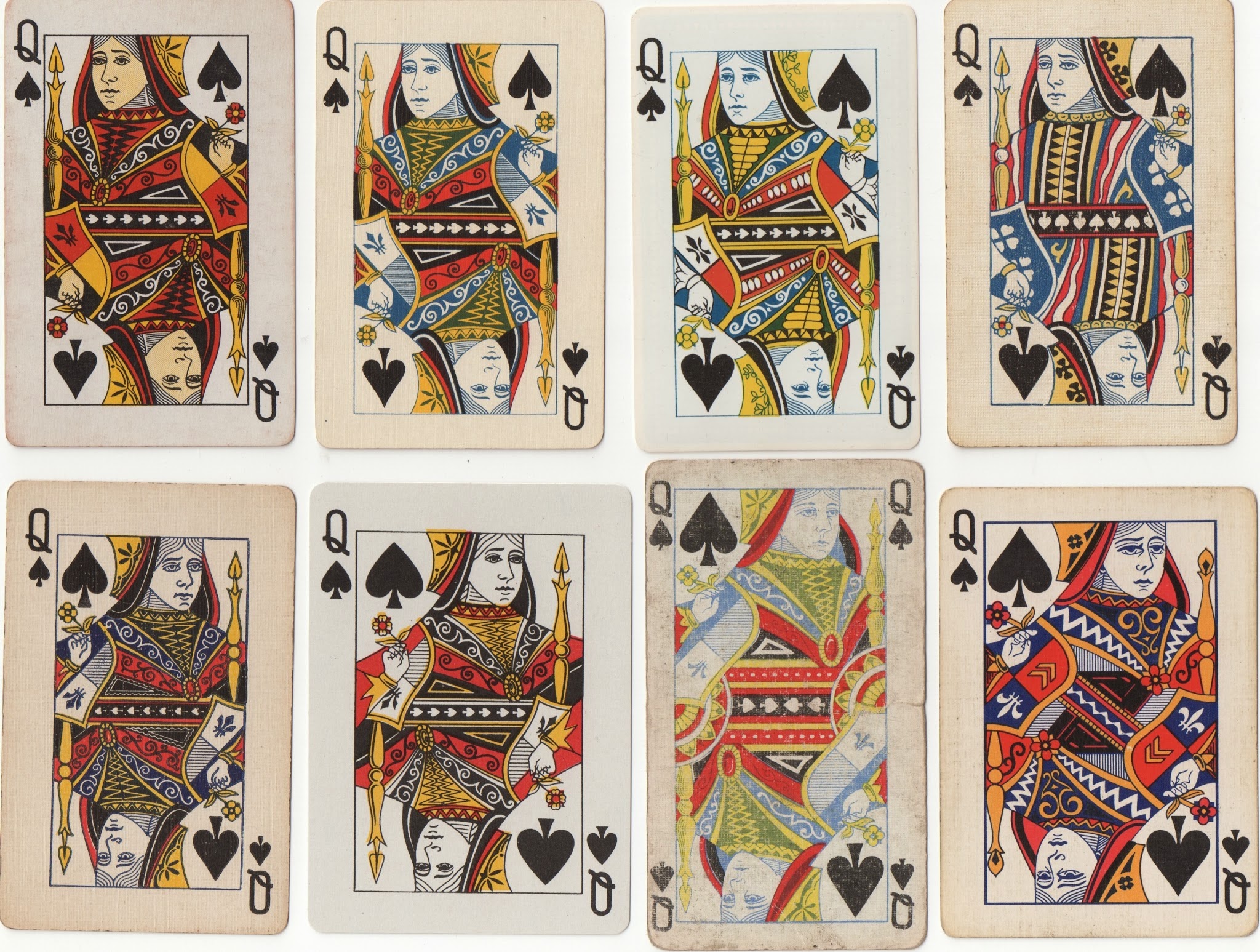
Above: Fairchild, 3 colours; Fairchild, 4 colours; Celluloid PCCo; Criterion
Gibson; Fairchild; Newlong; Brown & Bigelow
US3 was copied in the early 20th century by a number of European card-makers.
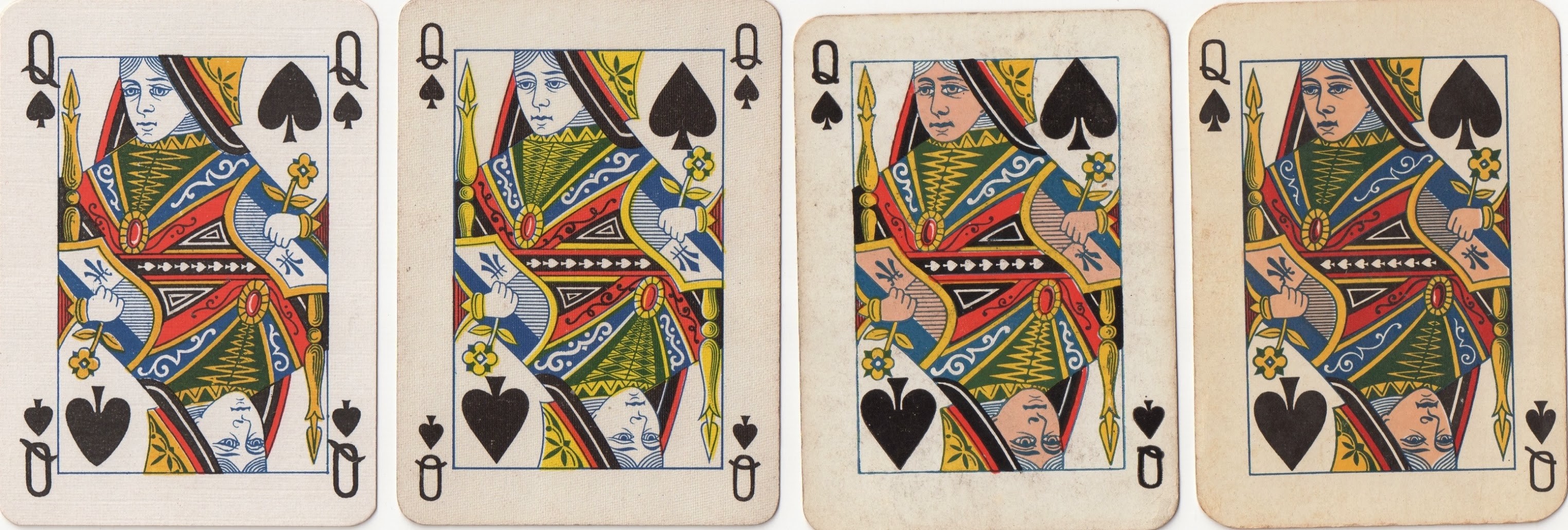
Above: Pignalosa; Piatnik; Lattmann; Altenburger
There was also a version, very similar to Piatnik's, by Grimaud. In more recent years, in the late 1950s, Piatnik produced a redrawn version with six turned courts. This was really a transformation of their XUS3, rather than a copy of USPCC's turned version, US4 (note the QS's horizontal arm).
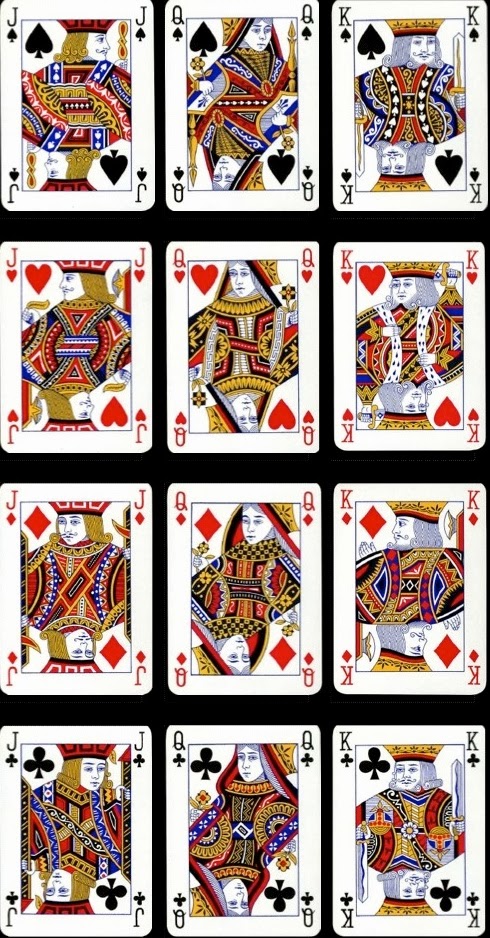
Above: Piatnik, c.1960-present
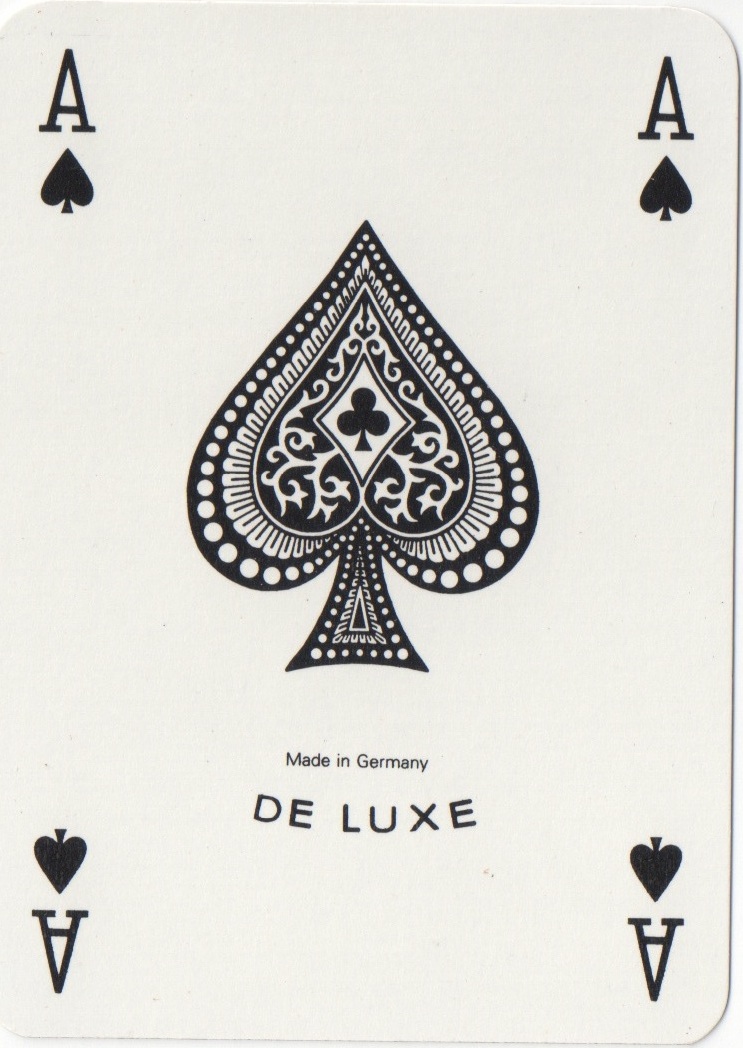
This design is also found with an F X Schmid AS (but a Piatnik joker) and an anonymous AS, which looks like a Chinese one used in hundreds of their packs, but bearing the legend Made in Germany.
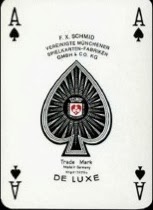
Now this example brings me to cases where identification of a maker becomes very tricky, if not impossible, even with modern packs. Below is yet another example of the Piatnik turned courts in a large-index pack, a souvenir of Seville.
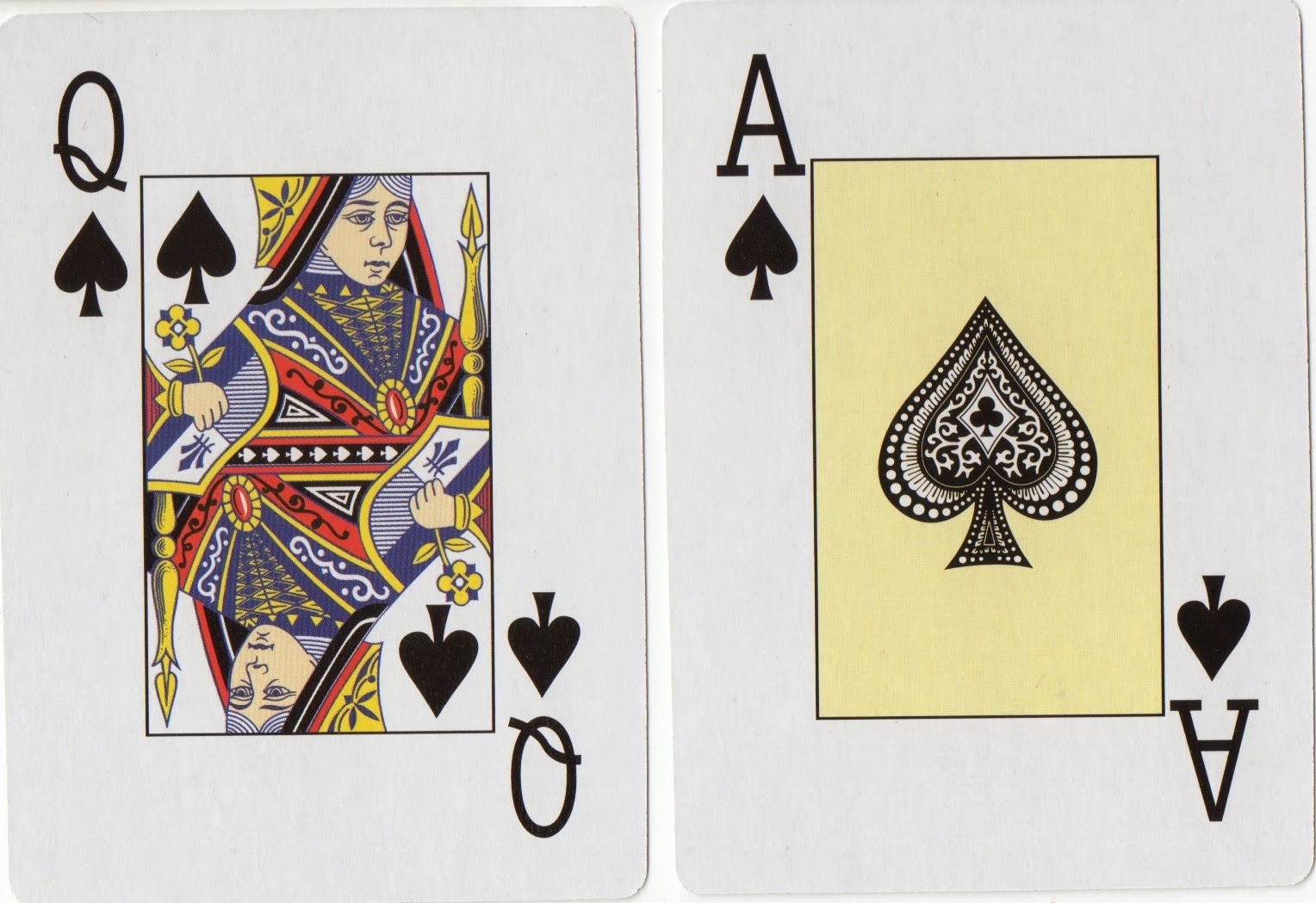
The AS is anonymous, but is the same as the one above, purporting to be German, though on the box of the Spanish pack it gives the origin as 'RPC' (= People's Republic of China). To make matters worse, another Spanish souvenir pack by Varitemas of Barcelona has the same large-index number cards but the courts are a copy of US3.2, as produced in China. Note it says "Made in Spain" on the AS!
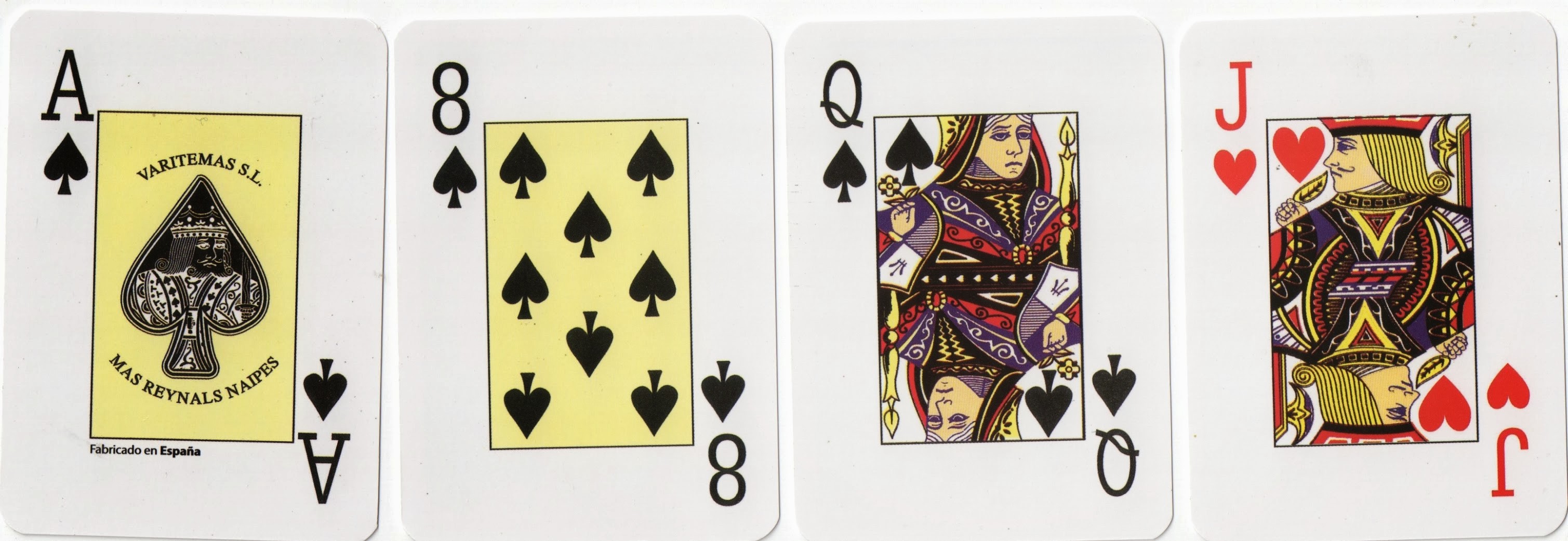
When it gets as complicated as this, it's best just to enjoy the cards!
I have another quizzical example involving copies of US3.1. The German firm, Nürnberger, used a copy with no white overlays (which occur in the original) and blue in unusual places. They also produced a three-colour version. But I've recently come across another pack with courts from the same plates (I mean the same, not similar), but with white overlay added. These, however, have a different joker, have an AS for the Astor PCCo and claim to have been made in Japan. This makes life even more complicated, as the joker also appears in packs by an unknown (to me) US maker with different courts, of the design used by Cruver in their all-plastic packs of the late 1930s. I haven't begun to unravel all this yet! Interestingly, though, the firm's name is: Nürnberger-Spielkarten-Verlag (NSV), of which the last element means publisher, so anyone could be printing the cards for them.
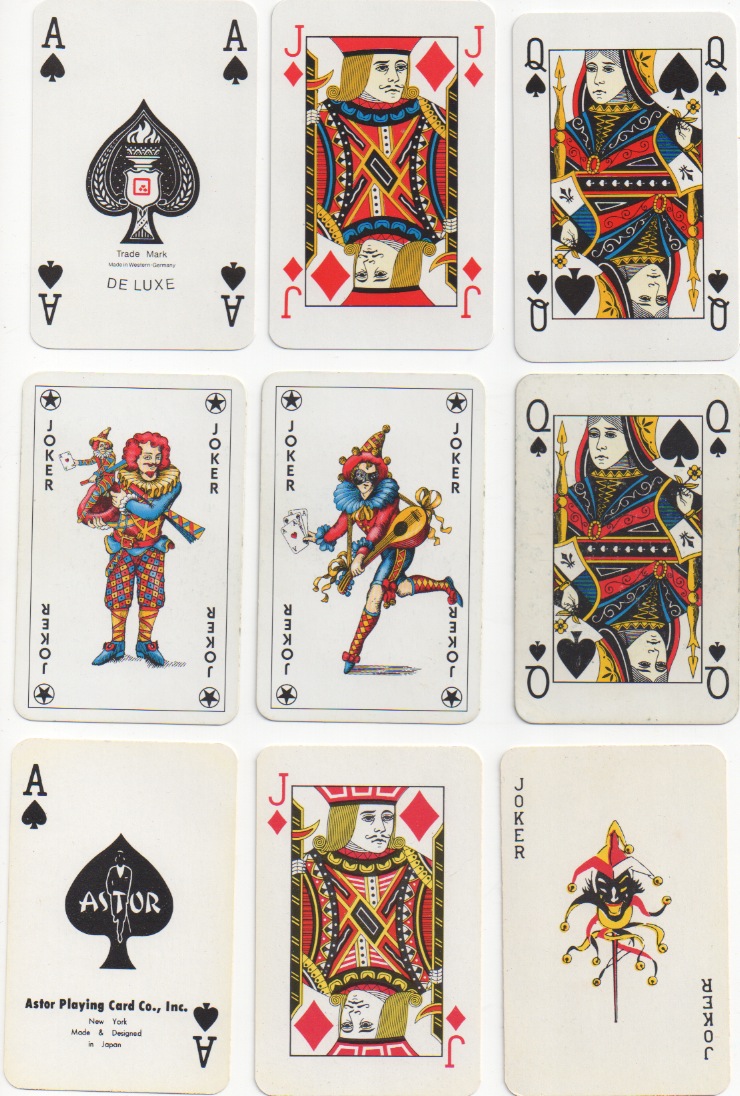
Above: top: standard Nürnberger pack; middle: similar pack with different indices and three different jokers; bottom: the Astor pack
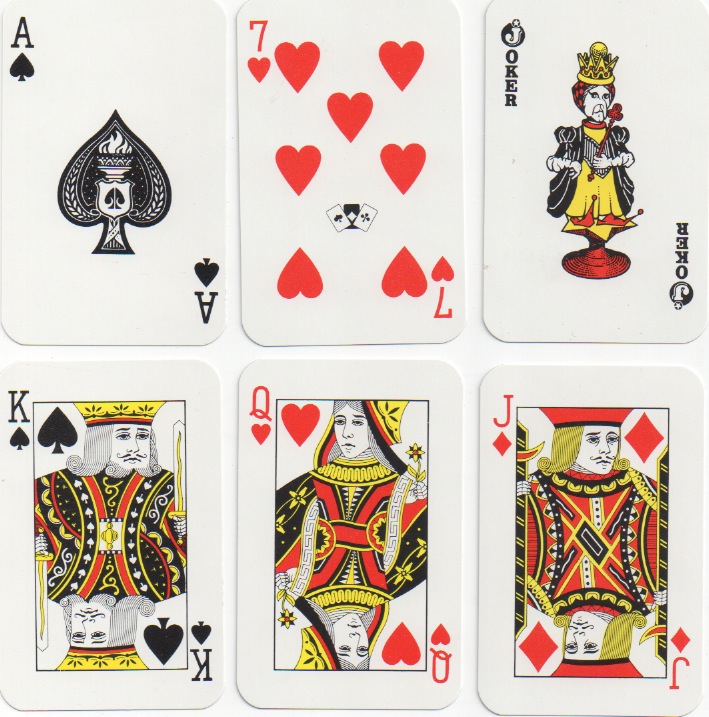
Above: three-colour version by Nürnberger?, but the logo is different and I've seen this anonymous AS and joker in packs from Hong Kong
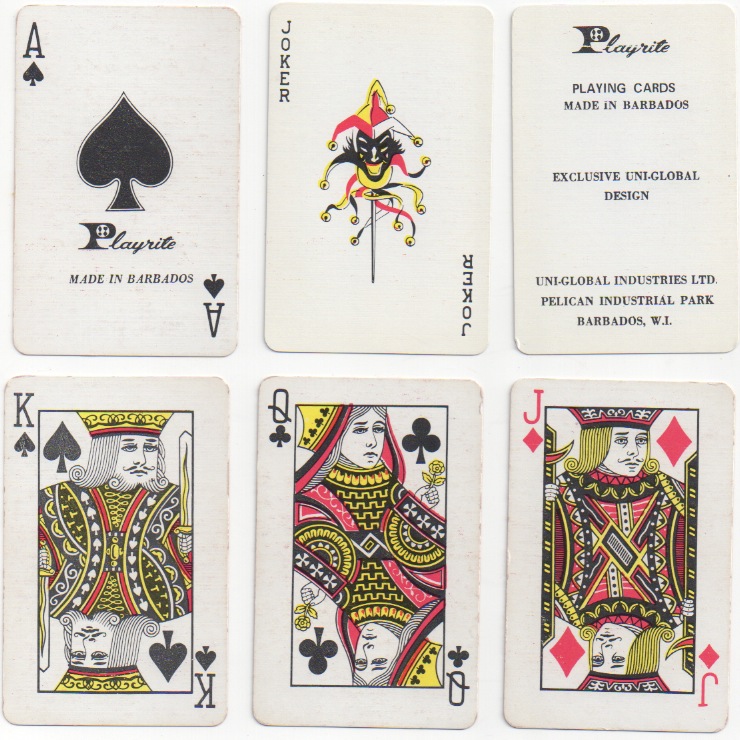
Above: The pack with Cruver courts, purporting to be made in Barbados; these courts appear in US packs, too.
US4 has also been copied widely outside the United States, especially in China. Here is a small selection of the copies. Note the angle of the QS's arm in each case (except for the Swisscards example, in which most of the courts have no hands!).
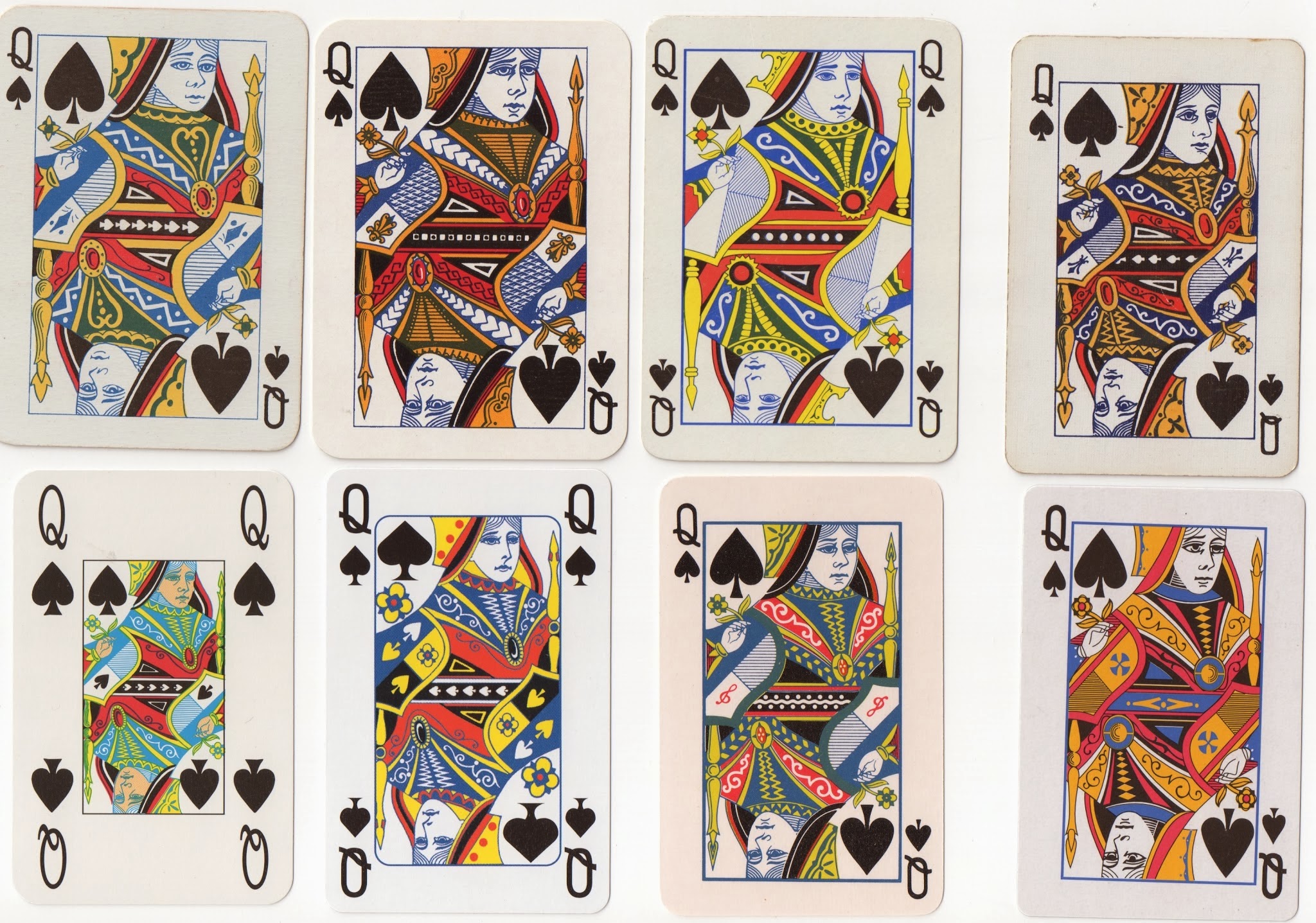
Above: Héron, c.1960; ASS, c.1985; Tunisia, possibly Carta Mundi; Biermans, c.1960
Carta Mundi; Swisscards; Hong Kong; Chinese redrawing
As a nice example of an extreme redrawing, there is a Japanese version in three colours only with six of the courts turned, putting all the pips on the right.
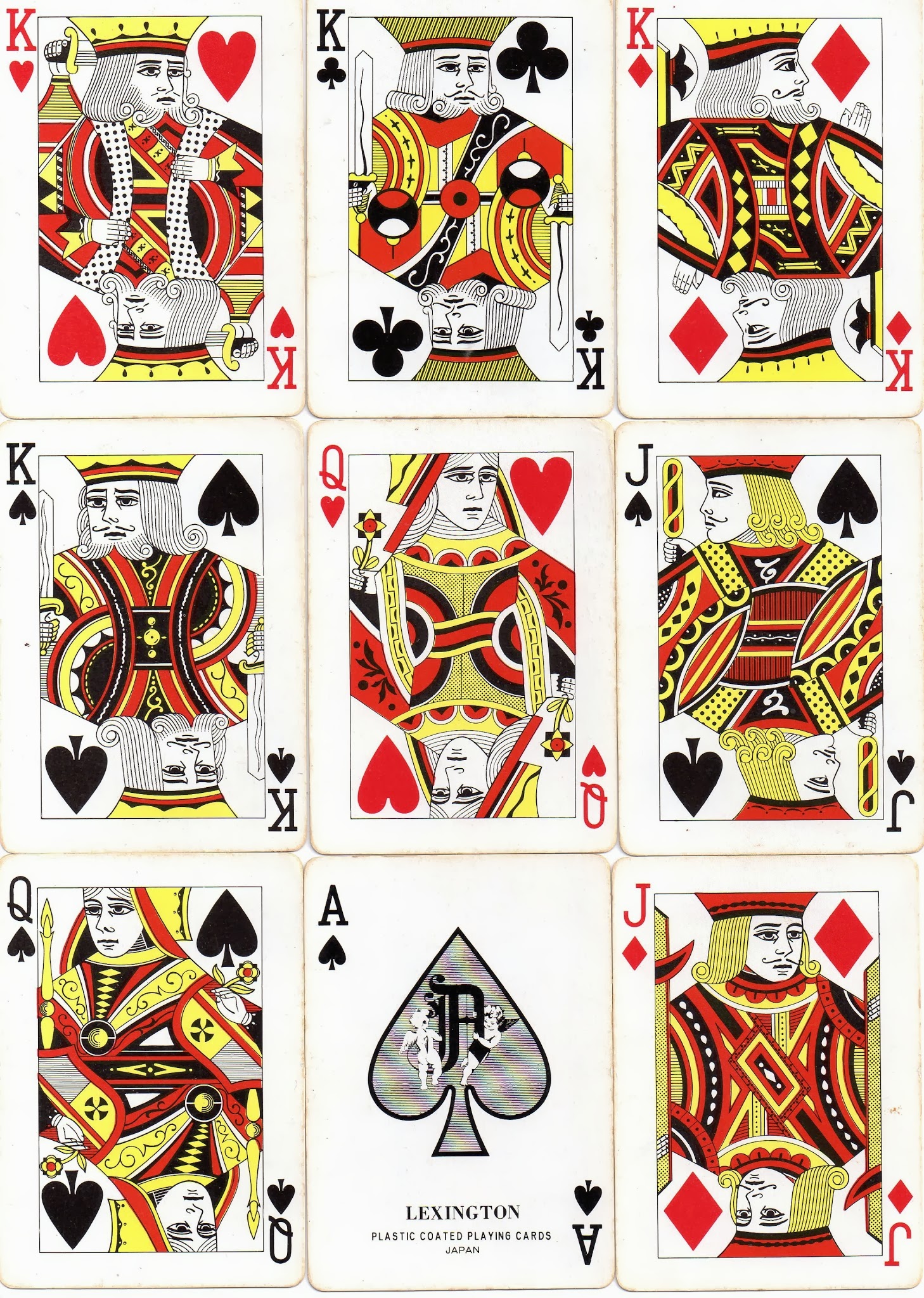
Above: Lexington, Japan, c.1960
One major copy of US3 is the design chosen by Waddington in 1923 and continued through many redrawings, which took the design further and further away from the original, up until c.1975 (W2-W6). The style of drawing is completely different, but all the details of the clothing are retained. I've chosen the QS to exemplify most of the changes the design went through, including the bridge-width versions. Note that the bridge-sized courts are not a copy of US3.1 (USPCC's bridge courts): the QS's arm, for instance, is not held at an angle. I have repeated the early US3 QS at the top for ease of comparison. Try going through all the other courts.
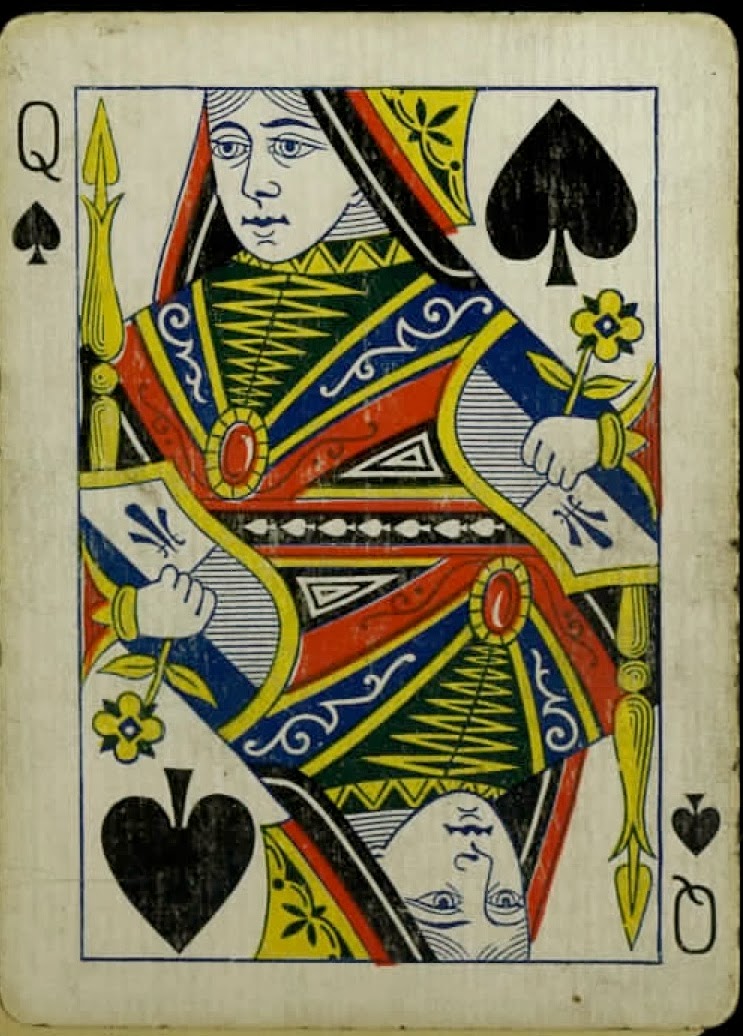
Above: US3
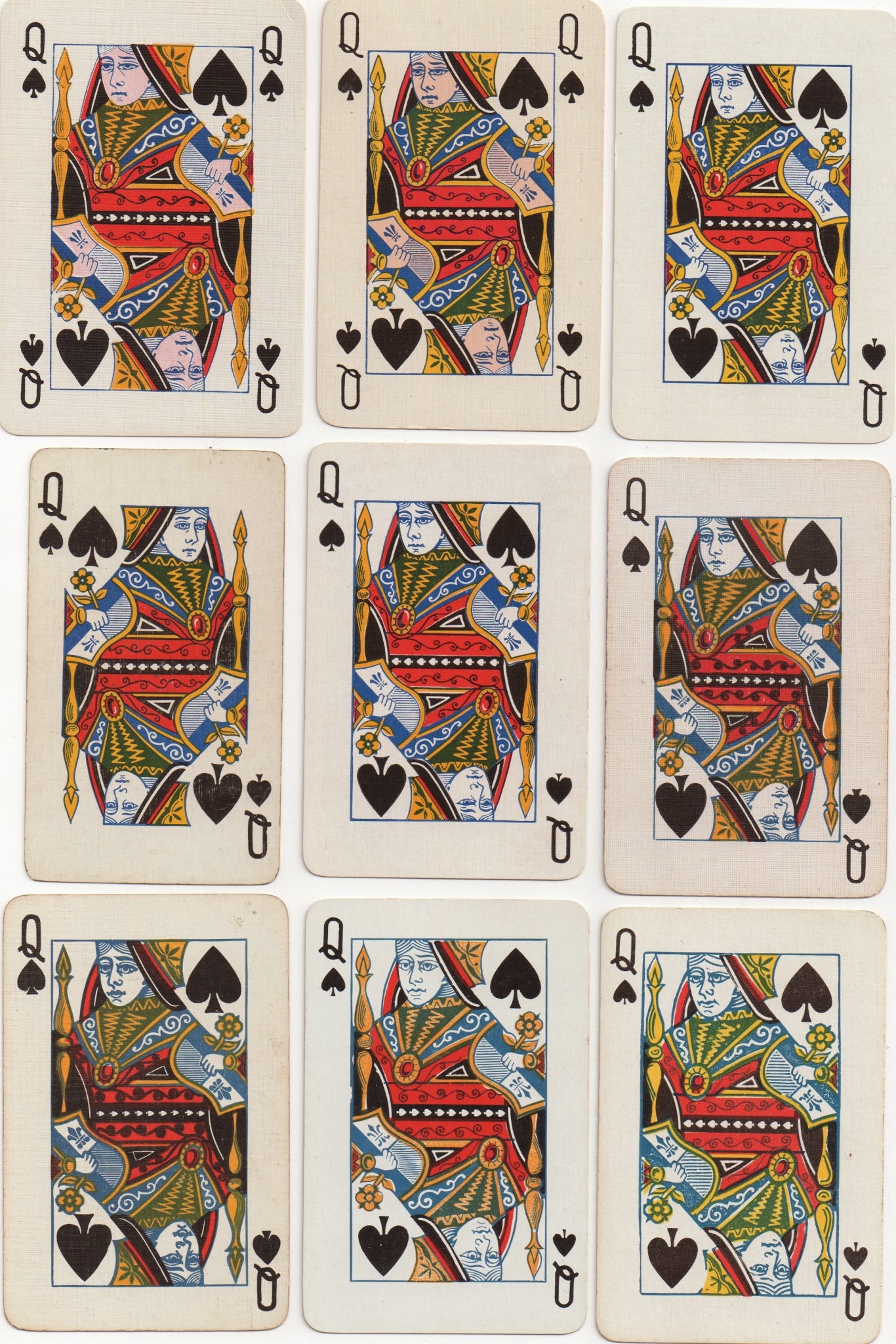
Above: Top row: 1923-30 (wide); 1925-35 (bridge, reduced); 1935-50
Middle row: 1950-55 (only turned version, in narrow and Konvex); 1935-39; 1927-38 (cheap grade)
Bottom row: 1938-42; 1948-52; 1955-70 (all cheap grade)
Although US3 was much more commonly copied, there are some copies of Waddington's version. Artex of Budapest made a photographic copy, including the AS (though anonymous) and joker, in the late 1950s and 1960s, and Piatnik also made a copy redrawn in their own style with six turned courts.
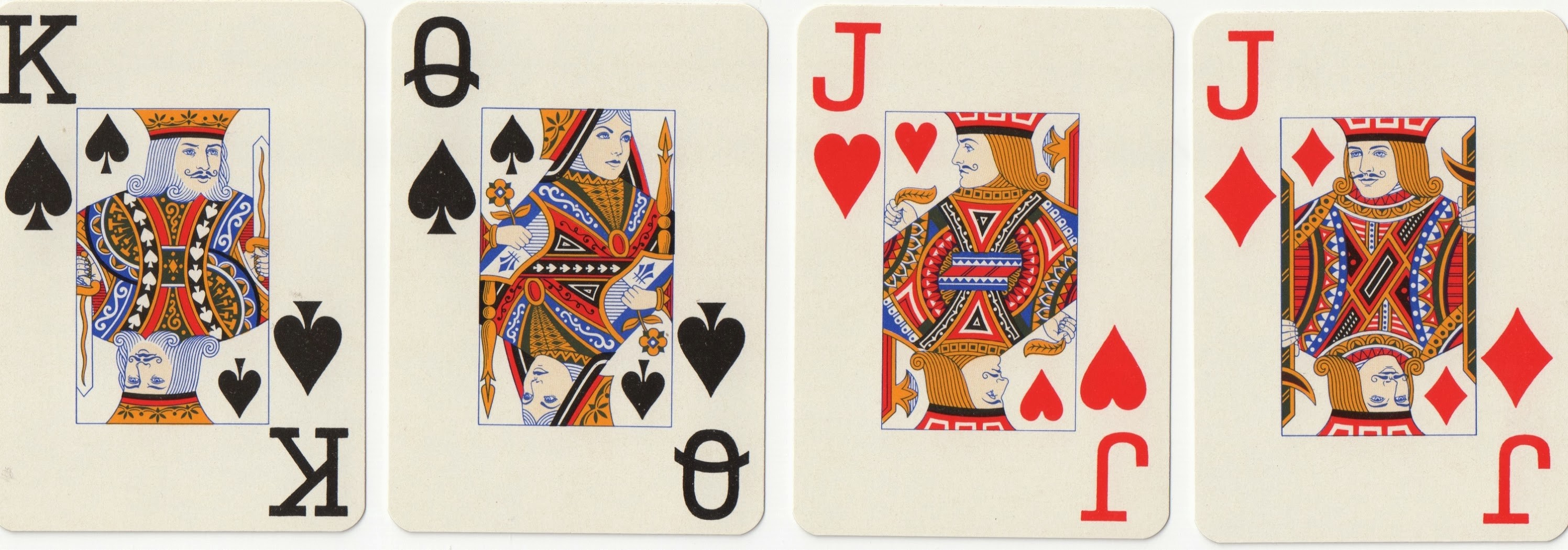
Above: Piatnik, 1960s
Here the JD has retained his moustache, which he loses in the later Waddington versions.
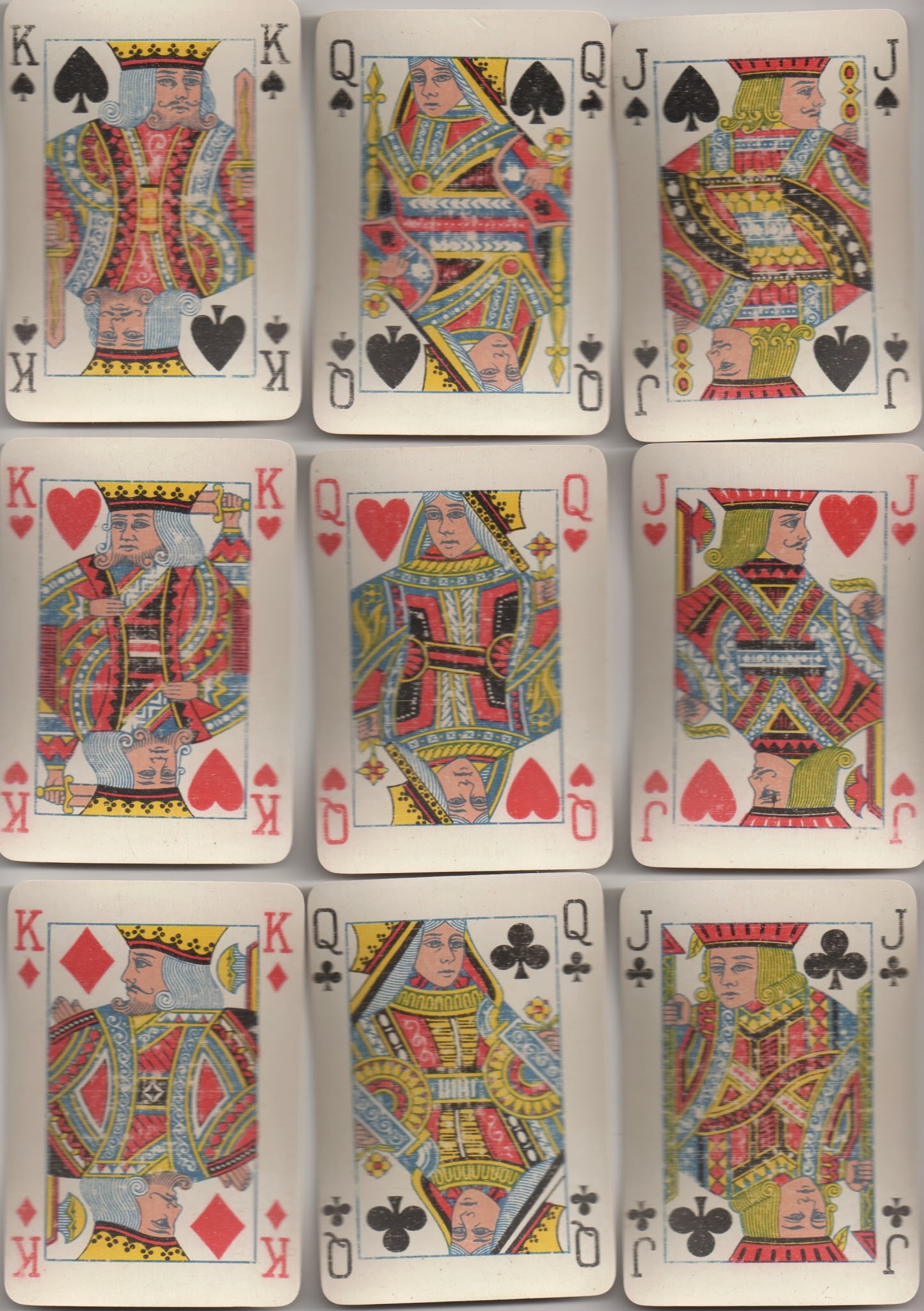
And a recent acquisition is a very interesting copy of W2 with redesigned clothing from Germany in an anonymous celluloid pack from c.1935. (Note that the cards have all curled with age.)

By Ken Lodge
United Kingdom • Member since May 14, 2012
I'm Ken Lodge and have been collecting playing cards since I was about eighteen months old (1945). I am also a trained academic, so I can observe and analyze reasonably well. I've applied these analytical techniques over a long period of time to the study of playing cards and have managed to assemble a large amount of information about them, especially those of the standard English pattern. About Ken Lodge →

Activity for 35: More Design Copies
Sign in to comment or save this article.

Related Articles
Junior Playing Cards
Child-friendly versions of standard English pattern cards designed by Louie Mantia, Jr.
New York City souvenir
New York City souvenir playing cards with 53 different views of interest, USA, 1915.
Nation’s capital souvenir playing cards
Nation’s capital souvenir playing cards published by the United States Playing Card Company, USA, 19...
Nile Fortune cards
Nile Fortune cards no.68x published by the United States Playing Card Company, USA, 1904.
Knot playing cards
Knot playing cards intended to teach a variety of useful and interesting knots, USA, 2000.
Playboy playing cards
52 different magazine covers from the first 50 years of Playboy.
Virginia Slims
Tasteful advertising pack promoting Virginia Slims cigarettes.
Hawaiian Souvenir playing cards
Hawaiian Souvenir playing cards, 1901.
Anne Stokes Collection
Anne Stokes Collection playing cards, 2010.
Bicycle Heritage
Bicycle Heritage playing cards by the United States Playing Card Company, 2012
Panama Canal Souvenir
Souvenir of Panama playing cards by USPCC 6th Edition produced in 1923.
Elvis Presley
Elvis Presley playing cards published by The United States Playing Card Company, c.2002.
No.500 Playing Cards
No.500 Playing Cards published by U.S.P.C.C., c.1910
Monarch Bicycle
The company advertised themselves as “The Monarch King of all Cycles” with the lion's head motif ins...
Stage Playing Cards, 1908
This beautiful deck features an oval half-tone photo of a theatre star on each card, many of them le...
The Stage No.65
The court cards and Aces each feature four portraits of famous theatre stars from the 1890s inside r...
Norwood #85, c.1909
The deck features a colourful Ace of Spades and Joker, decorated Aces, unique courts and two beautif...
Congress No.606
Congress Playing Cards were first produced by the Russell & Morgan Company in 1881 as the finest and...
The United States Playing Card Company
Over the years the pressures of competition and other market forces have led to many smaller manufac...
Naipes No. 71 Los Leones
Naipes No. 71 Los Leones by The United States Playing Card Co., c.1900.
Most Popular
Our top articles from the past 60 days


