


Stuttgart pack, c.1430
The luxury, hand-painted Stuttgart Cards (Stuttgarter Kartenspiel) dated c.1430, with suits of ducks, falcons, stags and hounds.
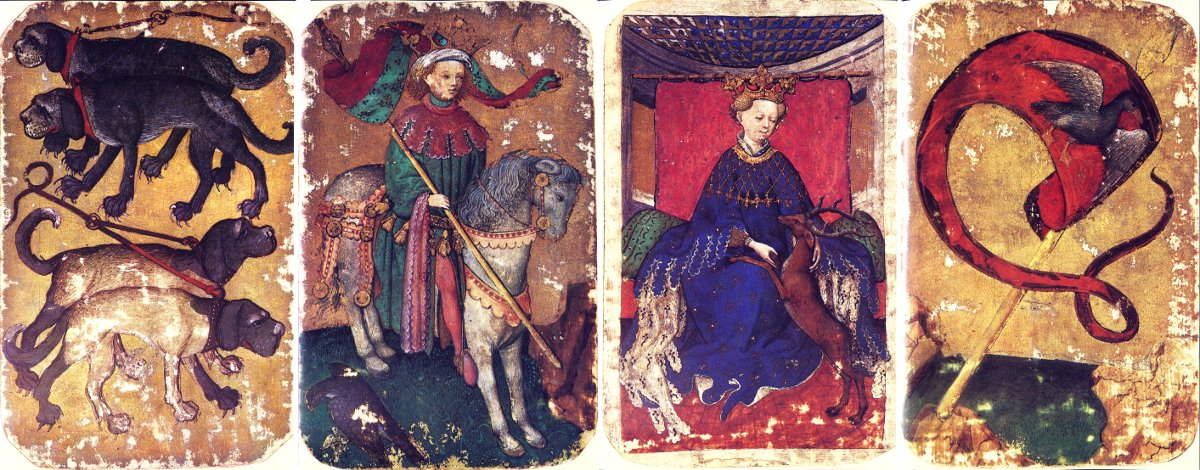
The Painted Stuttgart cards, c.1430
Ducks, falcons, stags and hounds... luxury playing cards from southwest Germany, probably for fashionable esteem. Around 1400 the sport of hunting was part of life at court, as depicted in books and playing cards of the day.
Originally in the collections of the dukes of Bavaria, these are considered amongst the earliest surviving sets of playing cards. The cards are made from pasteboard consisting of up to six sheets of paper glued together, over which a layer of gesso was applied on the front side. Outlines of the designs were scratched into the surface, while some details were drawn with pen and ink. The entire surface was gilded and the designs were then painted over the gold using a variety of colours and metal applications. The backs are painted dark red. A study of the watermarks in the paper revealed that it came from the Ravensburg paper mill and was made between 1427 and 1431.


Above & Below: the pack originally contained 52 cards with suits of ducks, falcons, stags and hounds: the numeral cards (1 - 9 + banner card) with King, Knight and Knave for ducks and hawks, and female counterparts for stags and dogs. In the court cards the suit symbols are depicted in a harmonious relationship with the human figures: the artist has portrayed a somewhat idyllic lifestyle with close relationships between the figures and the animals.

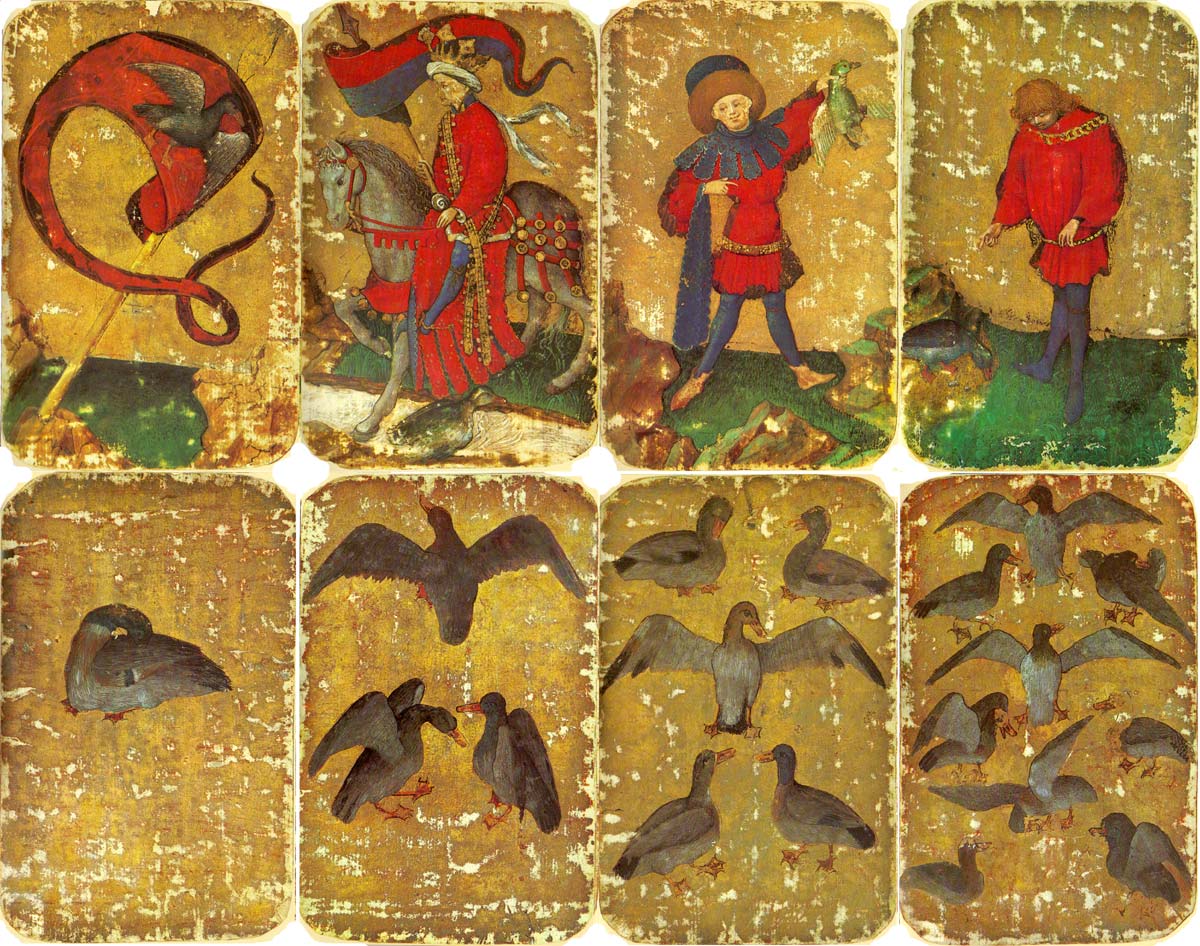
Above: the background landscape representations include details such as grass, water and cliff formations, with the court figures depicted in a natural habitat rather than in abstract space. The colour scheme is simple in that all the cards have a uniform gold background and the court cards are colour coded with their respective banner cards. The original cards are preserved in the Landesmuseum Württemberg.►
In the paint layers of the Stuttgarter Kartenspiel an impressive range of pigments has been detected: white lead, chalk, lead-tin yellow, yellow lake, green basic copper sulphate hydrate, copper green, azurite, vermilion, red lake, minium, charcoal black, and lamp black. A considerable variety of different metal applications results in the splendid appearance of the playing cards: poliment twist-gold, unpolished silver and gold leaf on a white ground, mordant gilding, gilding with mosaic gold, and glazing of twist-gold and mosaic gold with red lake have been observed.
These cards were made by an unknown workshop in southern Germany, possibly Swabia. The artist has chosen suit symbols and the court hierarchy in relation to the theme of the courtly hunt. Parallels with Italian hand-painted cards can be seen in the attitudes of the court cards and the narrow landscapes with grass, whilst similarities in the arrangement of the numeral cards can be noted in other early playing cards from Germany (e.g. Master of the Playing Cards).

REFERENCES
The 'Stuttgarter Kartenspiel': Scientific Examination of the Pigments and Paint Layers of Medieval Playing Cards, Ernst-Ludwig Richter and Heide Härlin, Studies in Conservation, Vol. 21, No. 1 (Feb., 1976), pp. 18-24.
Das Stuttgarter Kartenspiel: Introduction by Heribert Meurer, translated by George Brown, Württembergisches Landesmuseum, Stuttgart, 1979
Landesmuseum Württemberg: Stuttgarter Kartenspiel►

By Simon Wintle
Spain • Member since February 01, 1996
I am the founder of The World of Playing Cards (est. 1996), a website dedicated to the history, artistry and cultural significance of playing cards and tarot. Over the years I have researched various areas of the subject, acquired and traded collections and contributed as a committee member of the IPCS and graphics editor of The Playing-Card journal. Having lived in Chile, England, Wales, and now Spain, these experiences have shaped my work and passion for playing cards. Amongst my achievements is producing a limited-edition replica of a 17th-century English pack using woodblocks and stencils—a labour of love. Today, the World of Playing Cards is a global collaborative project, with my son Adam serving as the technical driving force behind its development. His innovative efforts have helped shape the site into the thriving hub it is today. You are warmly invited to become a contributor and share your enthusiasm.

Activity for Stuttgart pack, c.1430
Sign in to comment or save this article.

Related Articles
Advice and General Knowledge for Newer Collectors
A little general knowledge goes a long way for newer collectors, helping you choose a focus and unde...

Jägerkarte Nr.465
Dondorf Jägerkarte Nr. 465 playing cards dedicated to the theme of hunting, c.1930.
Hand-painted and Silk-inlaid playing cards
Complete pack of 36 hand-painted and silk-inlaid playing cards with French suits made in Germany.
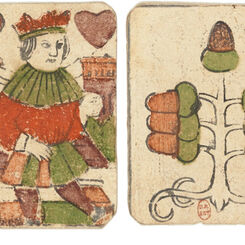
Early German playing cards
Some early examples of popular German playing cards from the XV and XVI centuries.
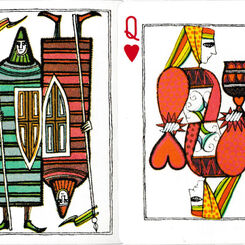
Nintendo deck with Medieval theme
Courts in medieval costume holding both French and Italian/Spanish suit-signs.
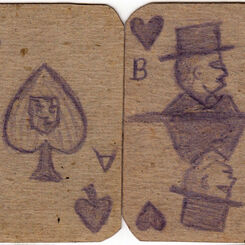
Hand made WW2 Prisoner of War Playing Cards
made by German soldiers held captive by US troops
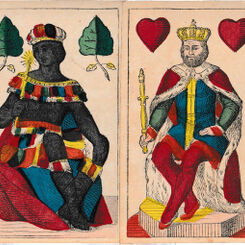
German hunting pack by Theodor Wegener
Hunters, animals and birds feature on all but the Kings in this pack by Theodor Wegener, c.1863-70.

History of Playing Cards explained in 5 Minutes
Video by Art of Impossible. In this video you will get a short overview of the most important histor...
“Deck with French suits”
A facsimile of an early 19th century French-suited deck from the collection of F.X. Schmid.
Master of the Playing Cards
Animal suited playing cards engraved by the Master of the Playing Cards, Germany, c.1455

Wild und Hund Skat
Hunting deck designed by Walter Niedl for “Wild und Hund” magazine, c.1977

Jagd Skat
German-suited hunting themed deck designed by Günter Schmitz and made by VEB Altenburg, 1980.
Joseph Losch
French-suited pack with full-length courts by Joseph Losch, c.1800.
Flemish Hunting Deck
Set of medieval playing cards with King, Queen, Knave and numeral cards from one to ten in each of f...
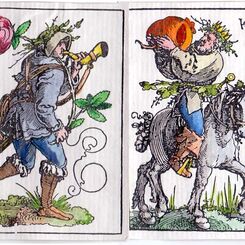
Hans Sebald Beham
Playing cards designed by Hans Sebald Beham (1500–1550).
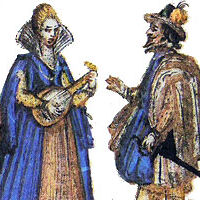
Das Kupferstichspiel des I.M.F. von 1617
Playing cards had been made as precious objects for wealthy clients since the late 14th century. The...
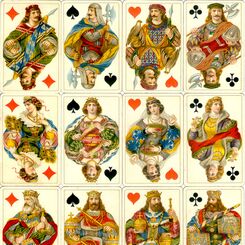
Mittelalter No.150
These designs imitating late medieval costumes were published by B. Dondorf in Germany in various ed...
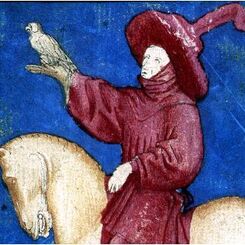
The Princely Hunting pack, c.1440
The Princely Hunting Pack, c.1440/45, is attributed to Konrad Witz and his workshop in Basle.
The History of Playing Cards
Playing cards appear in European records in the late 14th century, but their earlier history lies fu...
Hunting Depicted on Playing Cards
In the Middle Ages hunting was an integral part of life.
Most Popular
Our top articles from the past 60 days


María Barral
19 November 2025, 09:47SavedSaved this article to Favorites
Alannyë Daeris
19 November 2025, 09:47SavedSaved this article to Decks Históricos
Stephen Scharber
07 April 2026, 17:17SavedSaved this article to Stephen Scharber's Collection
Paola Benzoni
12 July 2026, 13:28SavedSaved this article to Mazzi