


Early Spanish/Portuguese type
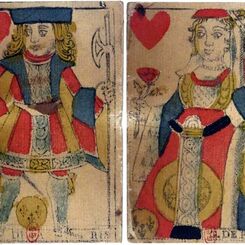
Fragment of a sheet of archaic Spanish-suited 'Dragon' playing cards found during restoration of a house in Antwerp built between 1559 and 1574
Fragment of a sheet of archaic Spanish-suited ‘Dragon’ playing cards found during restoration of a house in Antwerp built between 1559 and 1574, a period during which the histories of Spain and the Netherlands were connected.
The history of the Spanish Netherlands covers the period from 1556 when, after the abdication of Emperor Charles V, they became the inheritance of his son, King Philip II of Spain, becoming known as the Spanish Netherlands. This period ran until 1715, when the remaining Southern Netherlands came under the authority of the Austrian emperor.
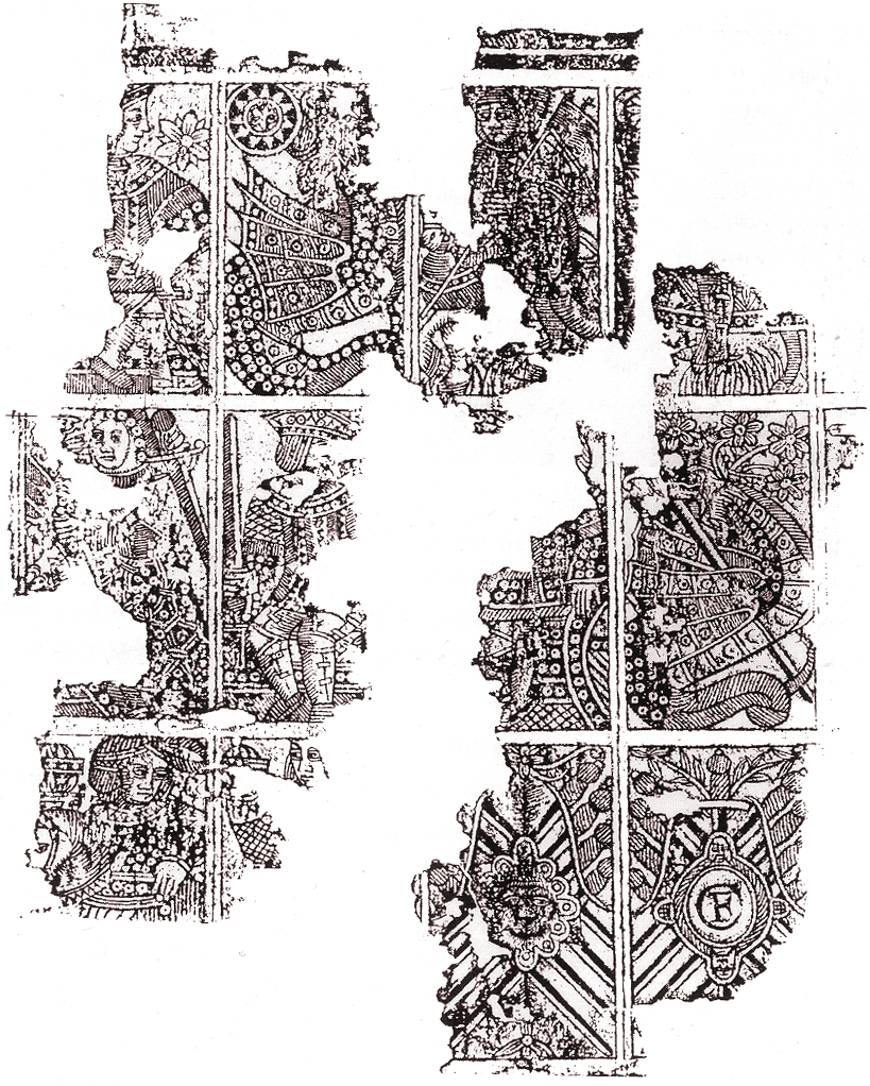
Above: fragment of a sheet of archaic Spanish-suited ‘Dragon’ playing cards found during restoration of a house in Antwerp built between 1559 and 1574, in a period in which the histories of Spain and the Netherlands were intricately connected. The initials ‘FC’ can be seen on the 9 of swords. The aces feature sea dragons holding the suit symbol; the courts are a seated king, a horse-man and a female page. Cards of this type spread to many parts of the world: examples have been made in, or associated with Italy, Sicily, Portugal, Malta, Spain, Belgium, Brazil, Japan, India and Indonesia.
See also: Francisco Flores, Rimac Valley Excavations in Peru, The South German Engraver.

By Simon Wintle
Spain • Member since February 01, 1996
I am the founder of The World of Playing Cards (est. 1996), a website dedicated to the history, artistry and cultural significance of playing cards and tarot. Over the years I have researched various areas of the subject, acquired and traded collections and contributed as a committee member of the IPCS and graphics editor of The Playing-Card journal. Having lived in Chile, England, Wales, and now Spain, these experiences have shaped my work and passion for playing cards. Amongst my achievements is producing a limited-edition replica of a 17th-century English pack using woodblocks and stencils—a labour of love. Today, the World of Playing Cards is a global collaborative project, with my son Adam serving as the technical driving force behind its development. His innovative efforts have helped shape the site into the thriving hub it is today. You are warmly invited to become a contributor and share your enthusiasm.

Activity for Early Spanish/Portuguese type
Sign in to comment or save this article.

Related Articles
La baraja de Almagro
De la chimenea al monumento nacional: la baraja de Almagro y el renacer del corral de comedias.
Mamluk Cards and the Making of the European Deck
Mamluk “naib” cards — four suits with named courts — offer a persuasive clue to how playing c...
Ganjifa - Playing Cards from India
Indian playing cards, known as Ganjifa, feature intricate designs with twelve suits and are traditio...
Dutch costume playing cards from an unknown maker
Another pack of Dutch costume playing cards c.1880.
Dutch costume playing cards
Dutch costume playing cards made for the Dutch market in the second half of the 19th century.
Playing Cards: A Secret History
Playing Cards: A Secret History
History of Playing Cards explained in 5 Minutes
Video by Art of Impossible. In this video you will get a short overview of the most important histor...
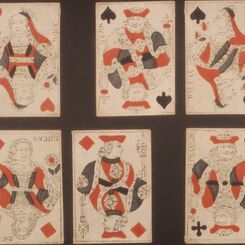
64: The descendants of the French regional patterns: 2
A continuation oF the development of the off-spring of the Paris patterns and a few examples of how ...
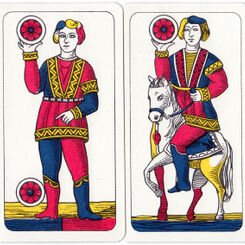
Trentine Pattern
Trentine Pattern
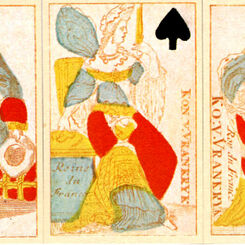
Carel de Wagenaer
Facsimile edition of cards first published by Carel de Wagenaer, Amsterdam in c.1698
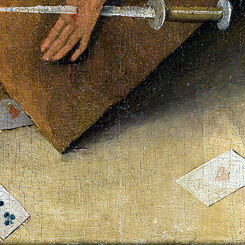
Hidden meanings in painting by Jheronimus Bosch
Medieval View of Gambling in the ‘Garden of Earthly Delights’ by Jheronimus Bosch
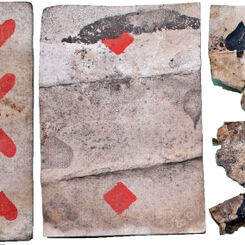
Archaeological find: old playing cards under the floorboards
The municipal archaeological service in Dordrecht (Netherlands) recently found some antique playing ...
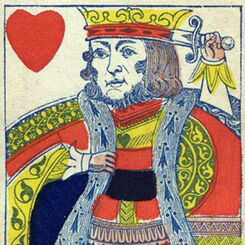
Suicide King
The King of Hearts, holding a sword behind his head, is sometimes nicknamed the “Suicide King”. He c...
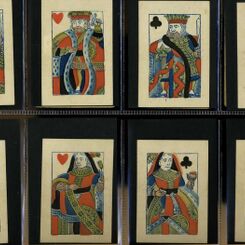
19: 19th Century Breaks with Tradition - Unusual versions of the Standard English Pattern
The centuries-long tradition of English court cards was subject to misinterpretation and in some cas...
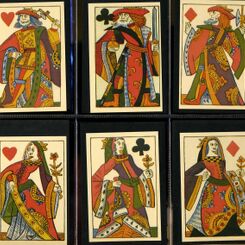
1: Playing Cards and their History: An Introduction and some links to other sites
What was considered the first mention of playing cards in England is in 1463 when Edward I banned th...
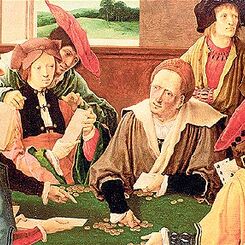
Netherlands
Playing cards have been known in the Low Countries since the 14th century
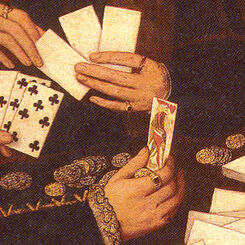
History of Blackjack
Over the years the origin of Blackjack, like many other games, has eluded researchers for a long tim...
Paris Pattern
The Paris pattern was established as such around the middle of the seventeenth century (based, perha...
Portuguese Type Cards made in Belgium
Portuguese Type Playing Cards made in Belgium, c.1878.
Early English Playing Cards
Early examples of traditional, standard English playing cards of which the best known are those of H...
Most Popular
Our top articles from the past 60 days


