


Carel de Wagenaer
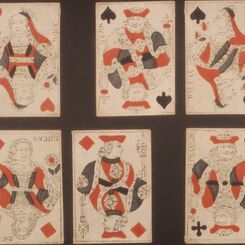
Facsimile edition of cards first published by Carel de Wagenaer, Amsterdam in c.1698
Carel de Wagenaer was one of the earliest playing card manufacturers in The Netherlands, based in Amsterdam towards the end of the 17th century. He was probably of French origin. In 1697 Carel De Wagenaer’s shop “In de Gekroonde Haan” (Crowned Cock) was situated in the Kalverstraat near the Osse sluice. He advertised 3 sorts of cards: large sized French, small sized Dutch and tea cards (patience). Following the earlier trend of depicting classical heroes on the court cards, and evolving the new trend for educational and political decks, in this example the rulers of Europe are matched to the hierarchy of the playing cards.
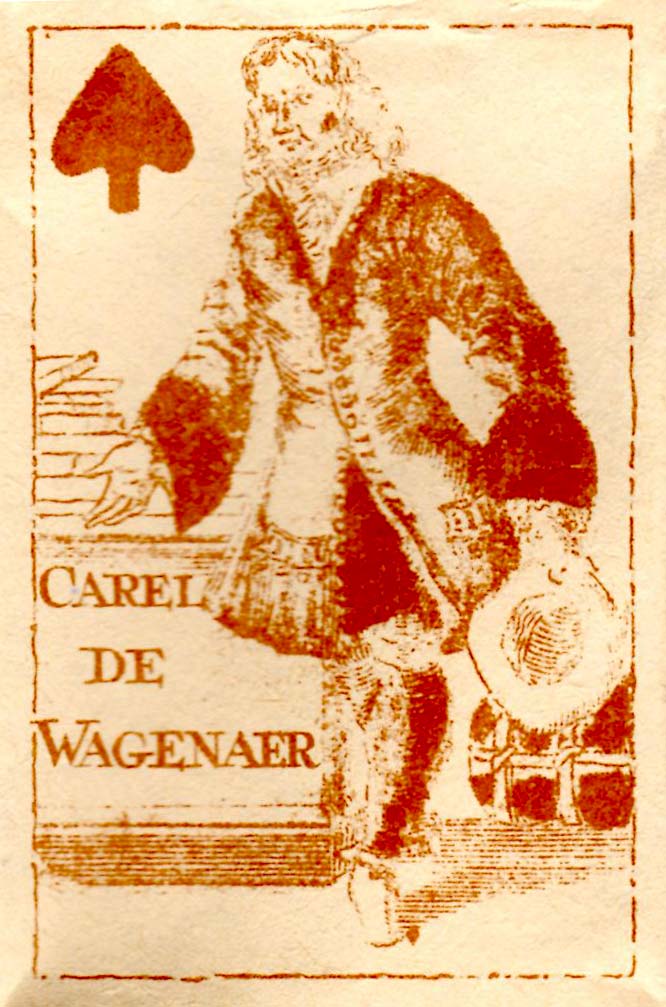
The ♥ King and Queen of hearts depict William III and Mary II of England. The ♦ King of diamonds depicts the Spanish monarch Charles II, with his second wife Maria Anna of Neuburg as the Queen. Don Rodrigo was a governor at that time. Holy Roman Emperor Leopold I appears as the ♣ King of clubs, accompanied by his third wife Eleonor Magdalene of Neuburg as the Queen. Heyduck appears to be an outlaw or freedom fighter. Carel de Wagenaer himself appears as the ♠ Jack of spades, making a gesture of deferential respect, accompanied by King Louis XIV of France and his wife with a rosary and what look like angel wings as they were both devout Catholics. The numeral cards are plain.
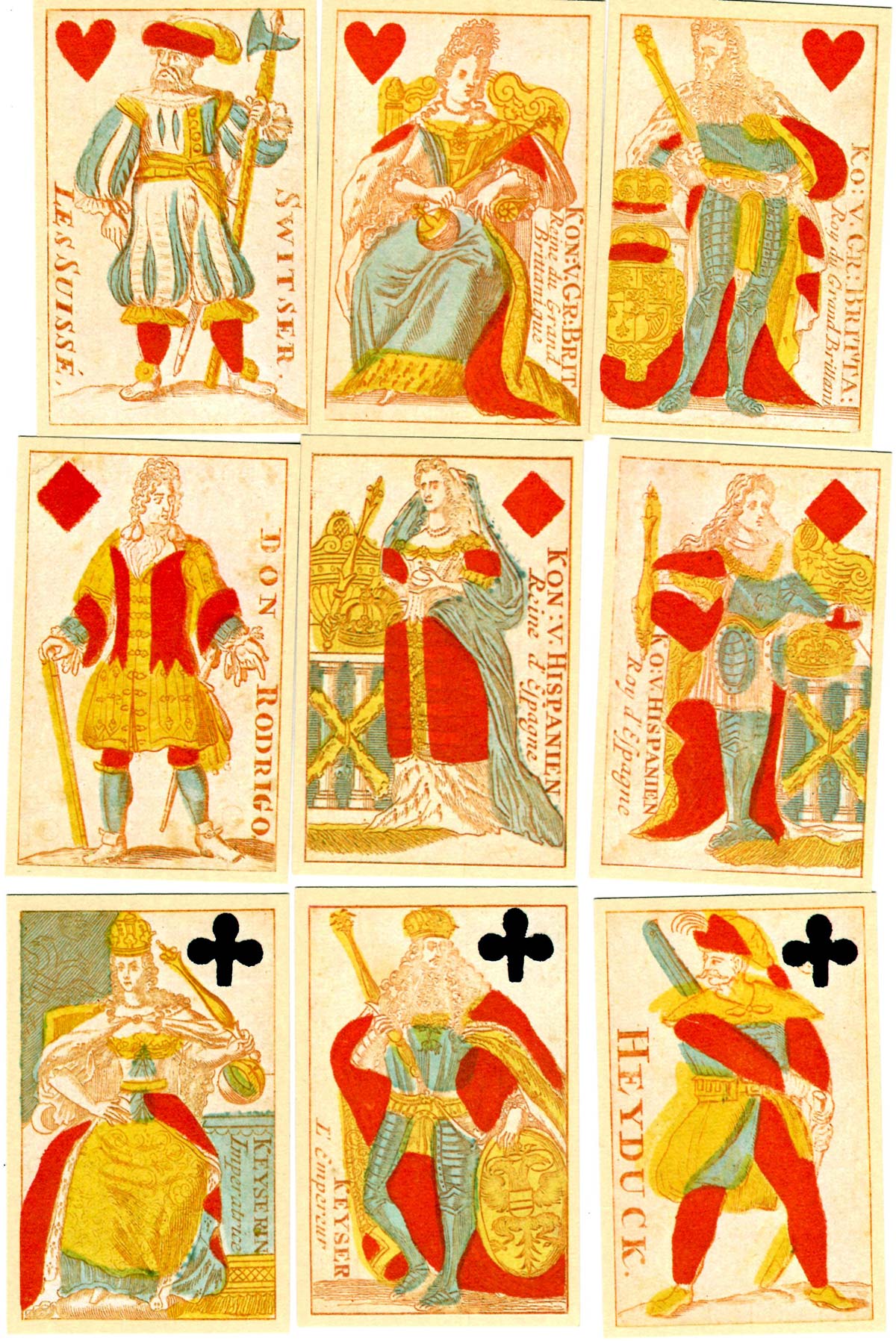
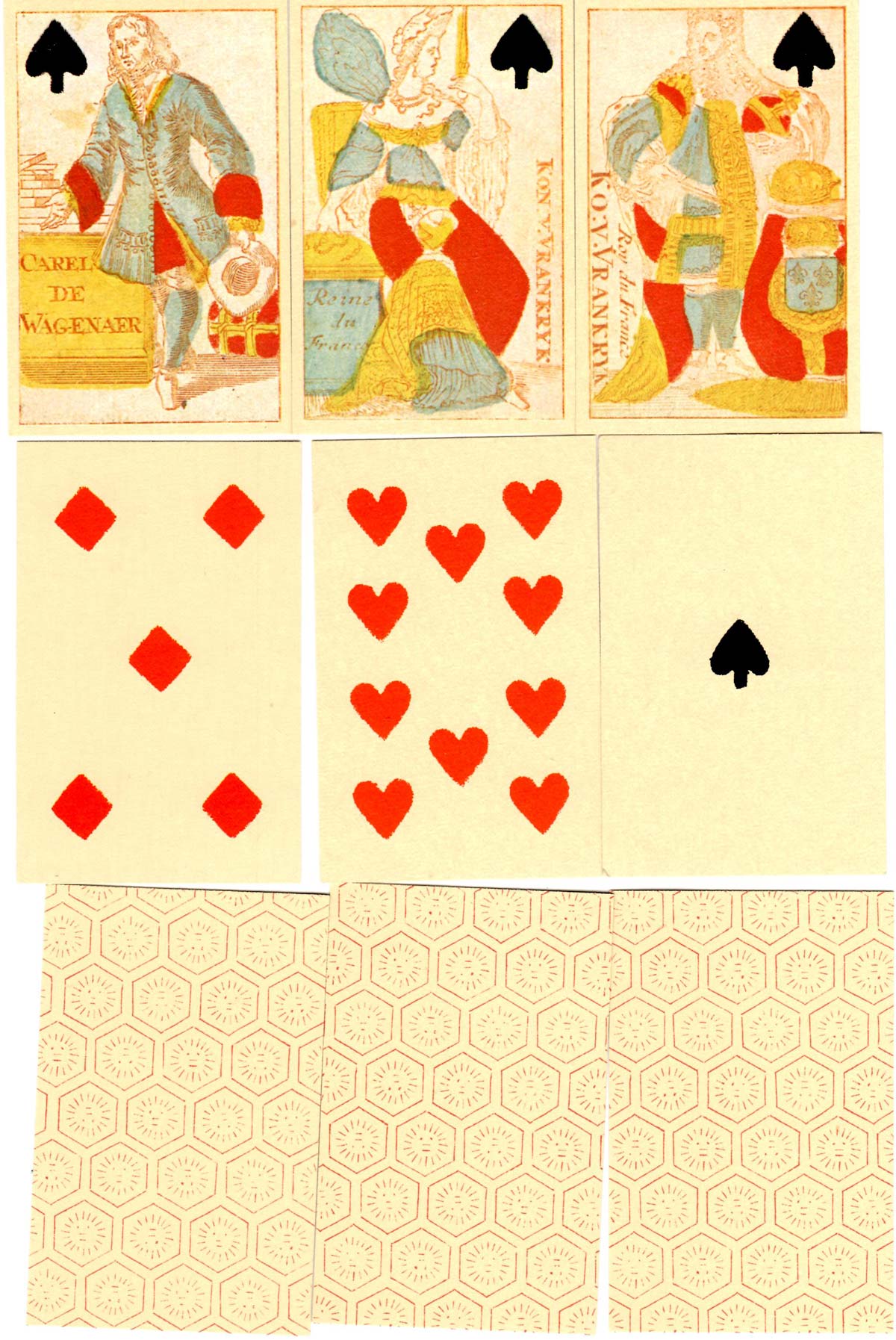
Above: modern facsimile edition of cards first published by Carel de Wagenaer, Amsterdam in c.1698. The publisher of the facsimile is not known, probably c.1975. Images courtesy Kathey Renault.
As an addendum to this article the following story was translated by Joop Muller:
In 1698 Antoni de Winter made an agreement with the manufacturer of playing cards Carel de Wagenaer regarding a partnership to publish certain kinds of playing cards. De Winter would engrave them and De Wagenaer would make-up the printed cards. On December 8 De Winter lodged a complaint at the notary Van Duynkerken who issued a warrant against De Wagenaer. The complaint was that De Winter had delivered 900 prints for ‘tea cards’ (patience cards) and later another 300. Together that would bring 8 grosses and 48 single decks, of which De Winter would receive half. Despite of all his efforts De Winter hadn’t received more than 20 dozen and two single decks. In the warrant De Wagenaer was held responsible for the financial loss (a lot of decks could have been sold already) and De Winter also announced that he would retreat from the partnership and keep half of the common copper plates. De Wagenaer answered that he would deliver all when De Winter had paid him.
REFERENCES and ACKNOWLEDGEMENTS
Hoffmann, Detlef: The Playing Card, an illustrated history, Edition Leipzig, 1973
Van Eeghen, Dr. I. H. (editor): AMSTELODAMUM, Amsterdam, 1976, pp 28-29 online here►
Thanks to Joop Muller for additional research. Some images of the original deck can be viewed on Joop Muller’s website►

By Simon Wintle
Spain • Member since February 01, 1996
I am the founder of The World of Playing Cards (est. 1996), a website dedicated to the history, artistry and cultural significance of playing cards and tarot. Over the years I have researched various areas of the subject, acquired and traded collections and contributed as a committee member of the IPCS and graphics editor of The Playing-Card journal. Having lived in Chile, England, Wales, and now Spain, these experiences have shaped my work and passion for playing cards. Amongst my achievements is producing a limited-edition replica of a 17th-century English pack using woodblocks and stencils—a labour of love. Today, the World of Playing Cards is a global collaborative project, with my son Adam serving as the technical driving force behind its development. His innovative efforts have helped shape the site into the thriving hub it is today. You are warmly invited to become a contributor and share your enthusiasm.

Activity for Carel de Wagenaer
Sign in to comment or save this article.

Related Articles
La baraja de Almagro
De la chimenea al monumento nacional: la baraja de Almagro y el renacer del corral de comedias.
Theatre of Pain / Teatr Boli
Theatre of Pain / Teatr boli playing cards depicting politicians and leaders in the Caucasus territo...
Dutch costume playing cards from an unknown maker
Another pack of Dutch costume playing cards c.1880.
Dutch costume playing cards
Dutch costume playing cards made for the Dutch market in the second half of the 19th century.
Royal Cards Reign of Queen Anne
“Royal Cards Reign of Queen Anne” cover historical events, both honourable and treacherous, during t...
64: The descendants of the French regional patterns: 2
A continuation oF the development of the off-spring of the Paris patterns and a few examples of how ...
Trentine Pattern
Trentine Pattern
Hidden meanings in painting by Jheronimus Bosch
Medieval View of Gambling in the ‘Garden of Earthly Delights’ by Jheronimus Bosch
Naipes Artiguistas, 1816
Naipes Artiguistas published in Concepción del Uruguay, Entre Rios province (Argentina) in 1816, by ...
Cartes Imperiales et Royales
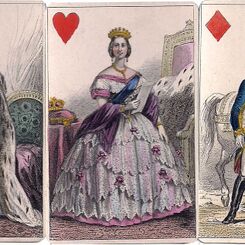
‘Cartes Imperiales et Royales’ published by B. P. Grimaud & Cie representing imperial rulers and con...
Archaeological find: old playing cards under the floorboards
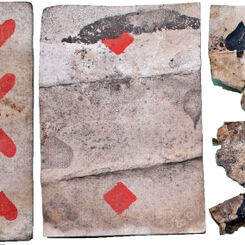
The municipal archaeological service in Dordrecht (Netherlands) recently found some antique playing ...
Suicide King
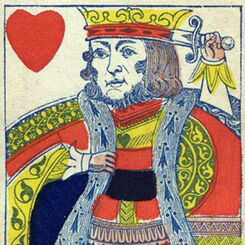
The King of Hearts, holding a sword behind his head, is sometimes nicknamed the “Suicide King”. He c...
Imperial Royal Pack
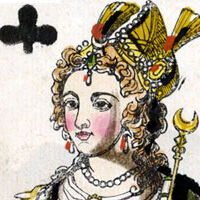
Imperial Royal Playing Cards published by S. & J. Fuller, London, 1828. The court cards show portrai...
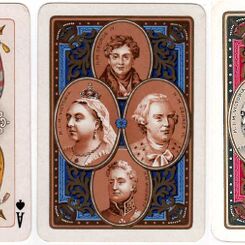
Nineteenth Century Pack
A magnificent example of Goodall & Son’s range of chromolithographed Commemorative playing cards fro...
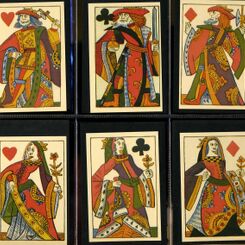
1: Playing Cards and their History: An Introduction and some links to other sites
What was considered the first mention of playing cards in England is in 1463 when Edward I banned th...
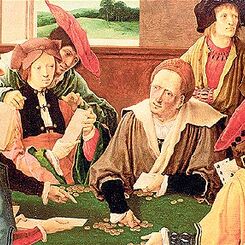
Netherlands
Playing cards have been known in the Low Countries since the 14th century
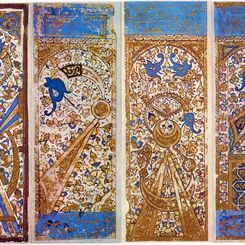
Mamluk Playing Cards
Nã'ib, the game of lieutenants... these cards are amongst the earliest Arabic playing cards ext...

Gironda
8 cards and two jokers from the 'Gironda' pack, showing eminent statesmen and politicians from Lithu...
The History of Playing Cards
Playing cards appear in European records in the late 14th century, but their earlier history lies fu...
Early Spanish/Portuguese type
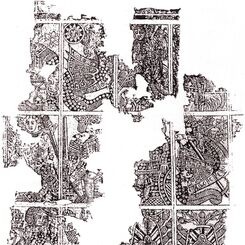
Fragment of a sheet of archaic Spanish-suited 'Dragon' playing cards found during restoration of a h...
Most Popular
Our top articles from the past 60 days


