


Trevisane pattern
The double-ended version of the ‘Trevisane’ pattern originated in the early 19th century.
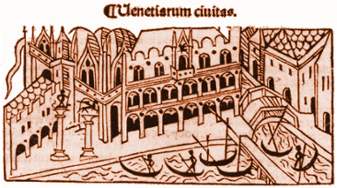
‘Trevisane’, ‘Trevigiane’ or ‘Venetian’ pattern
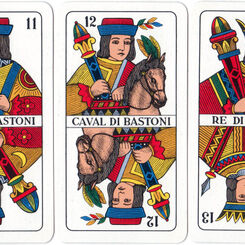
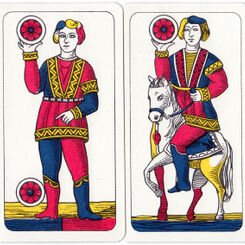
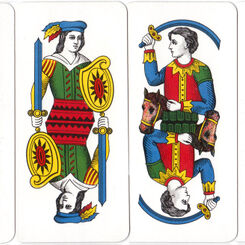
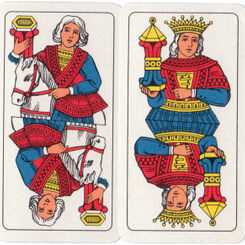
North Italy has been a card-making centre since at least the 16th century but packs from that time are scarce. At some point 'standard' patterns became established in certain areas which manufacturers adhered to. It appears that the double-ended version of the ‘Trevisane’ or ‘Trevigiane’ pattern originated in the early 19th century. The designs show archaic features which would have derived from earlier prototypes, including curved, interlaced swords and long batons. Most of the full-length features have been preserved, including the head held by the executioner Jack of Swords. The King of Batons holds a coat-of-arms of Treviso, with the inscription ‘Tarvisium’ in latin, since this pattern originally came from Treviso. There are interesting Italian mottoes on the aces. The ace of coins has a circle to receive the tax stamp.
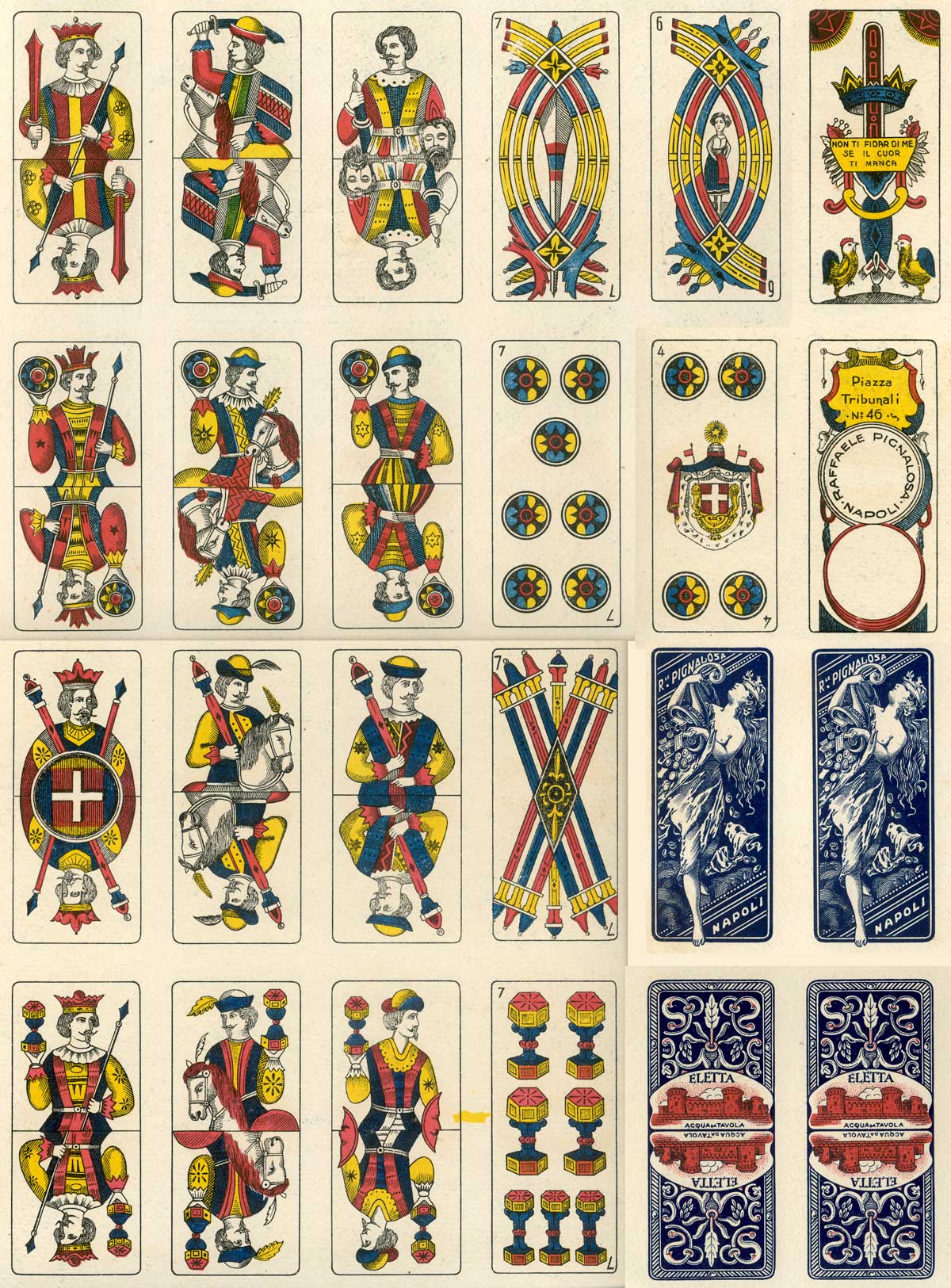
Above: cards from uncut sheets of ‘Trevigiane’ playing cards printed by Raffaele Pignalosa, Naples, c.1925-28. This edition is missing the coat-of-arms of Treviso on the King of Batons. Two different back designs are shown (right) and packs come in 40-card or 52-card versions.
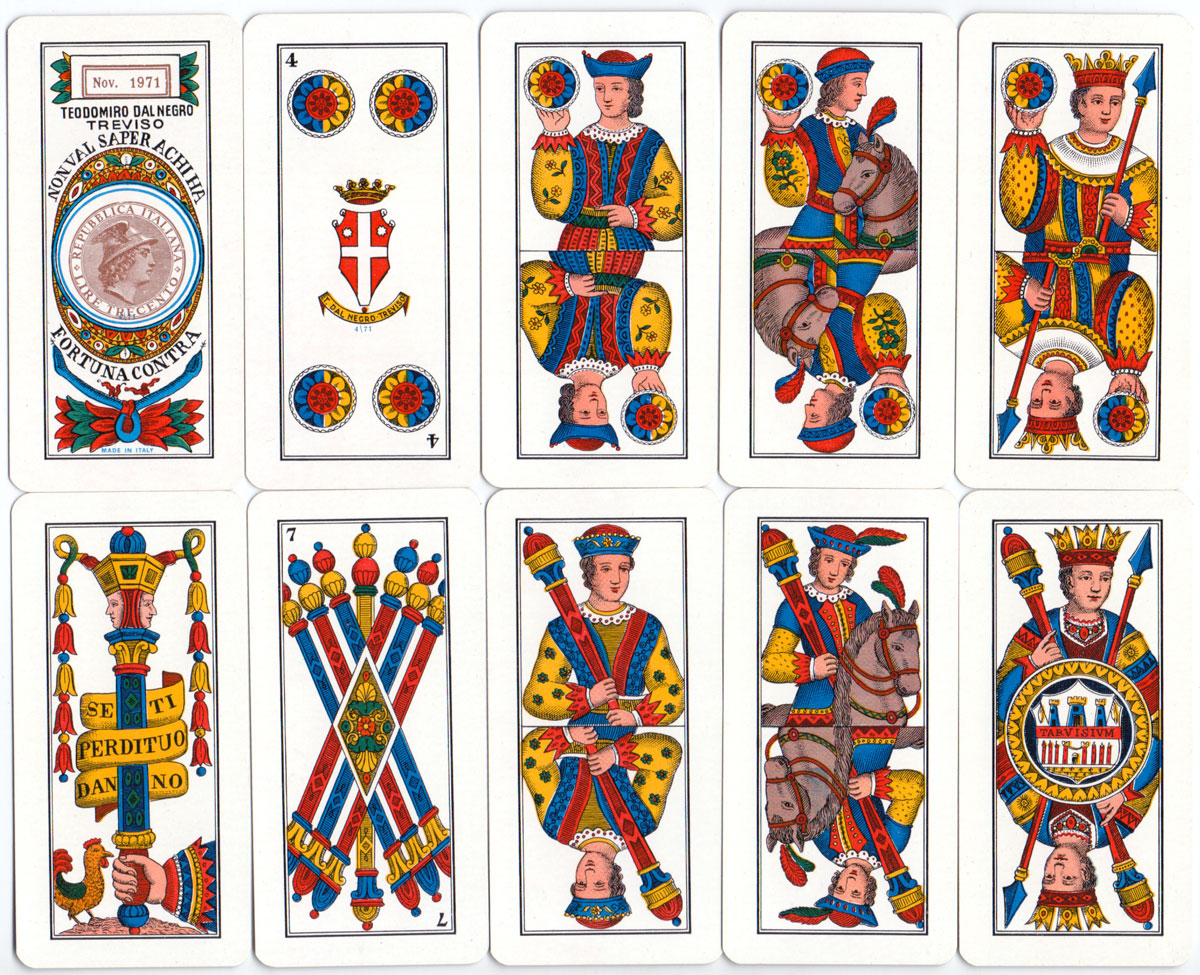
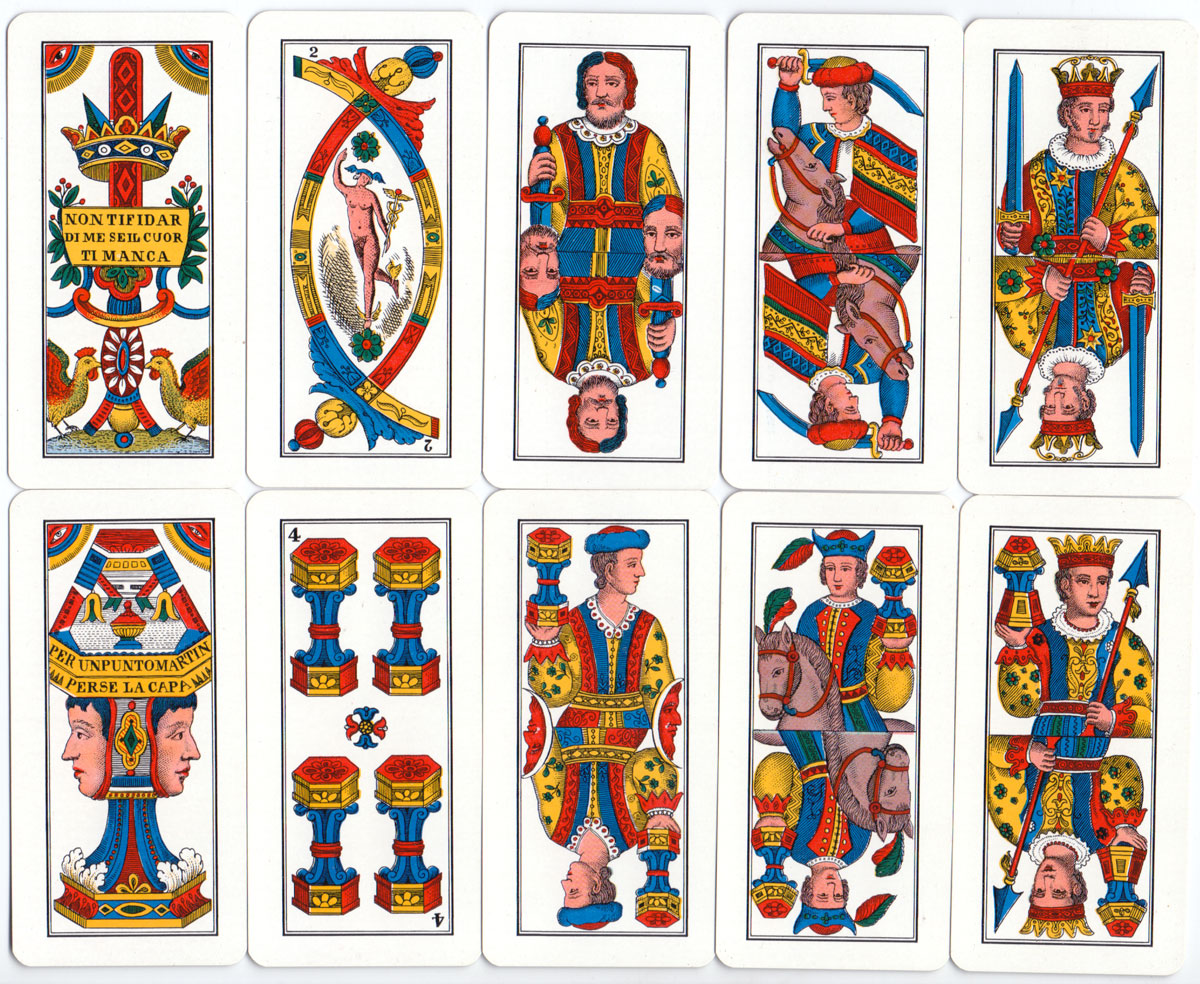
Above: ‘Trevisane’ pattern by Dal Negro, Treviso, 1971. The King of Batons holds a coat-of-arms of Treviso, with the inscription ‘Tarvisium’ in latin, since this pattern originally came from Treviso.
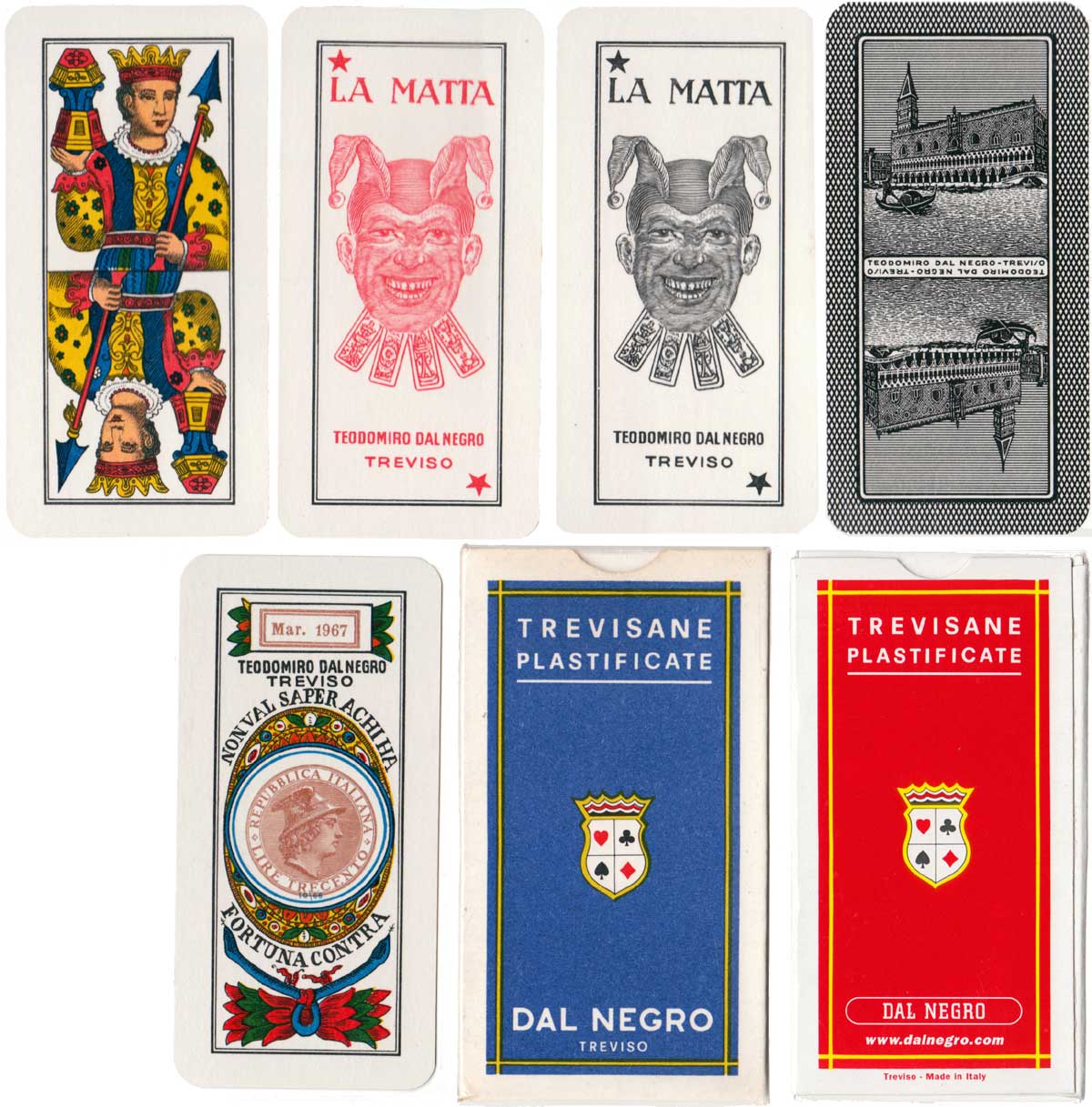
Above: ‘Trevisane’ pattern by Dal Negro, including the two jokers, Treviso, 1967. Image courtesy Rex Pitts.
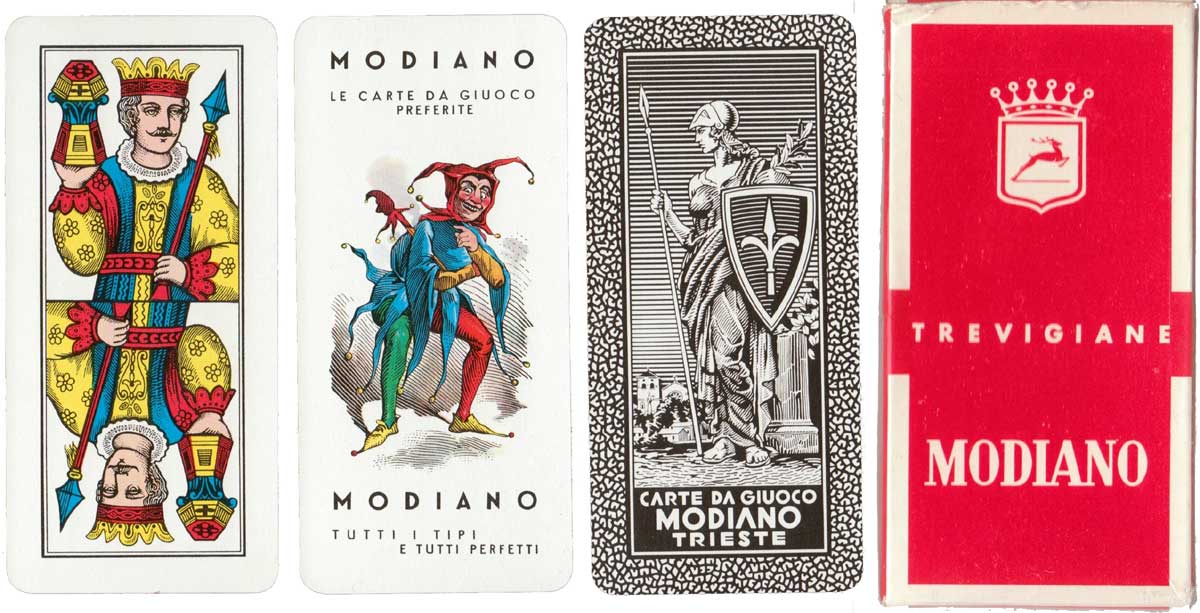
Above: ‘Trevigiane’ pattern by Modiano, 1970s, including the joker. Image courtesy Rex Pitts.

By Simon Wintle
Spain • Member since February 01, 1996
I am the founder of The World of Playing Cards (est. 1996), a website dedicated to the history, artistry and cultural significance of playing cards and tarot. Over the years I have researched various areas of the subject, acquired and traded collections and contributed as a committee member of the IPCS and graphics editor of The Playing-Card journal. Having lived in Chile, England, Wales, and now Spain, these experiences have shaped my work and passion for playing cards. Amongst my achievements is producing a limited-edition replica of a 17th-century English pack using woodblocks and stencils—a labour of love. Today, the World of Playing Cards is a global collaborative project, with my son Adam serving as the technical driving force behind its development. His innovative efforts have helped shape the site into the thriving hub it is today. You are warmly invited to become a contributor and share your enthusiasm.

Activity for Trevisane pattern
Sign in to comment or save this article.

Related Articles
79: Goodall in Italy
A survey of the influence Goodall's courts had on Italian cards.
Sicilian Playing Cards
Sicilian Playing Cards by Dal Negro (Carte da Gioco).
Czech National Patterns by S.D. Modiano
Modiano produced cards with the Prague and Trappola patterns in the early 20th century.
Le carte da gioco Arcimboldo
Courts and suit-signs inspired by the works of the Italian Renaissance painter, Giuseppe Arcimboldo....
Neapolitan pattern by Luigi Pignalosa, Naples
Two versions of the Neapolitan pattern from the British Museum by Luigi Pignalosa, Naples, 1875 & 18...
Dal Negro Bridge set
Dal Negro Bridge set featuring old Vienna pattern courts.
Triestine Pattern
The Triestine pattern is derived from the Venetian (Trevisane) pattern but with its own characterist...
Trentine Pattern
Trentine Pattern
Primiera Bolognese
Primiera Bolognese by Modiano, c.1975
Bergamasche Pattern
Bergamasche Pattern by Modiano, 1970s.
Piacentine Pattern
Piacentine Pattern, several double-ended versions.
Piedmont Pattern
The Piedmont pattern is a very close relative to the French 'Paris' pattern. The courts are not name...
Lombardy (or Milanesi) pattern
The origins of the Lombardy pattern probably lie in the early 19th century when it was a full-length...
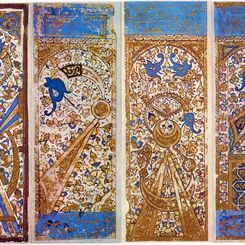
Mamluk Playing Cards
Nã'ib, the game of lieutenants... these cards are amongst the earliest Arabic playing cards ext...
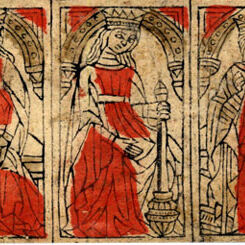
XV Century Italian Playing Cards
Cards from a pack of an early form of north Italian playing cards, with the swords back-to-back and ...
Small Tuscan Pattern
Small Tuscan Pattern
Italian Playing Cards
The first reliable evidence that playing cards were being used in Italy is from 1376, when a game ca...
Florentine Pattern
Originally one of several designs which emerged during the nineteenth century, the Florentine patter...
Brescia pattern
The Brescia pattern contains elements which come from a past age.
Most Popular
Our top articles from the past 60 days


Jason Somers
10 June 2026, 06:27SavedSaved this article to Jason Somers's Collection