


Art in Playing Cards
Playing cards have long served as miniature canvases—hand-painted, gilded, engraved and printed with ornament and illustration far beyond what the game requires. From early luxury packs to modern designer decks, the pack has remained a practical object shaped by artistic ambition.
…although their measurements are small, they are not thereby limited in their imaginative range, or the skill and care of their execution. At no time was smallness more prized that at the end of the Middle Ages, especially during the first half of the fifteenth century in northern Europe…
Art in Playing Cards
The Playing-Card as a Vehicle for Aesthetic Expression
The earliest playing cards were hand-painted, often gilded, and designed to be beautiful objects. Packs of cards were mentioned in wills and inventories, and given as wedding presents, so would have been considered valuable and precious. Not only were cards gilded and painted in many colours, and not merely decorated with ornamental patterns, but often the designs themselves showed great artistic skill, harmony of colour and grace of forms.
For over six centuries - apart from its functionality as a number game - the playing card has been chosen as a medium for artistry, aesthetic endeavour and ornamental design, ranging from hand-painted and engraved cards for medieval patrons, to the chromo-lithographic delights and transformation cards of the nineteenth century, and the designer and art packs of the twentieth and twenty-first centuries.
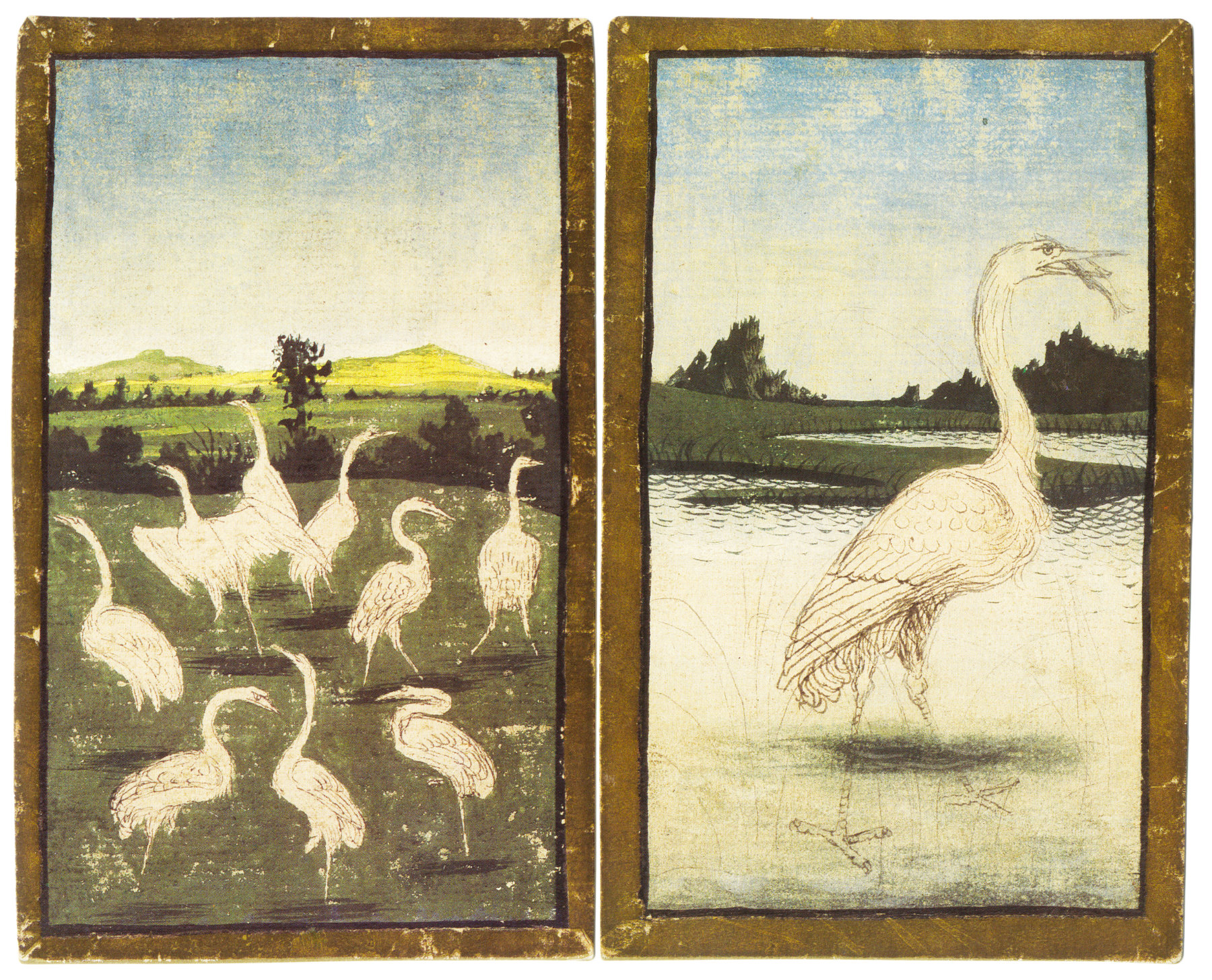
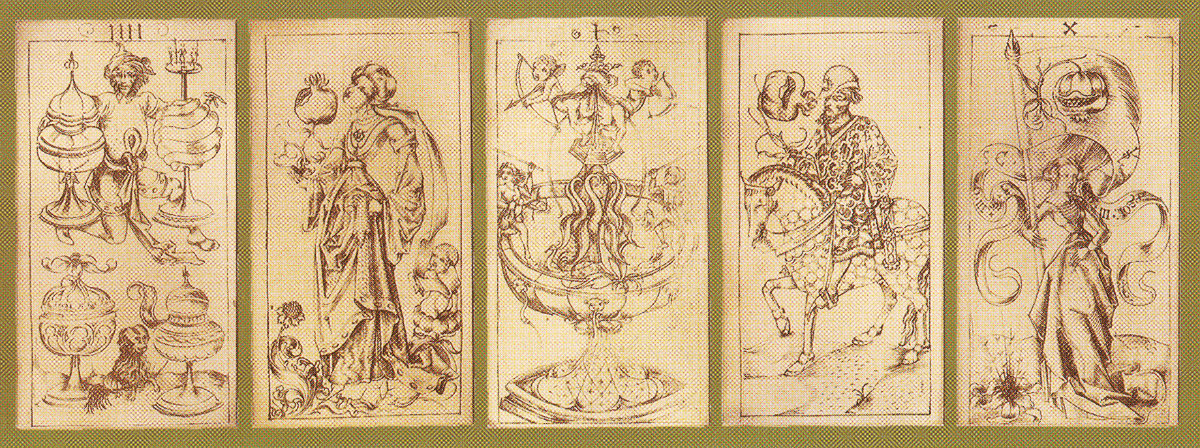
The Princely Hunting Pack of Ambras (c.1440–45), attributed to Konrad Witz and his workshop in Basel.
This image preserves the cards at an intermediate stage of execution: the underlying drawing is still visible, areas of colour remain unfilled, and the final modelling and finishing have yet to be applied. Such evidence is rarely accessible in surviving playing cards, which are usually discussed only as completed objects. Here, the cards read less as gaming tools and more as miniature panel paintings in progress, illustrating both the technical process and the level of artistic care invested in early luxury packs.
Left: detail from the Princely Hunting Pack of Ambras, c.1440–45. Hand-painted cards attributed to Konrad Witz and his workshop, shown here in an unfinished state, revealing the preparatory drawing and staged application of colour typical of luxury courtly packs.
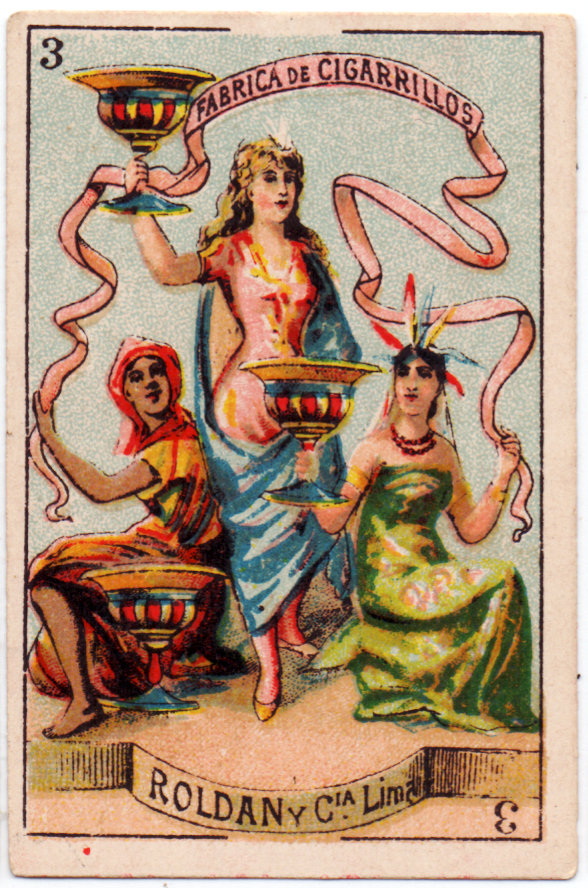
Fantasy playing cards produced for Cigarrillos El Perú by Roldan y Cía, Lima, c.1890.
Printed using chromolithography, the pack exemplifies late nineteenth-century advertising cards, where commercial branding is embedded within allegorical imagery and decorative composition. The transformation of suit symbols into figurative scenes reflects a period in which playing cards served as both promotional ephemera and vehicles for popular visual culture.Above: Fantasy playing cards made for Cigarrillos El Perú, Roldan y Cía, Lima (Peru), chromolithography, c.1890.
An advertising pack in which allegorical figures and rich colour are used to transform suit symbols into miniature narrative scenes.
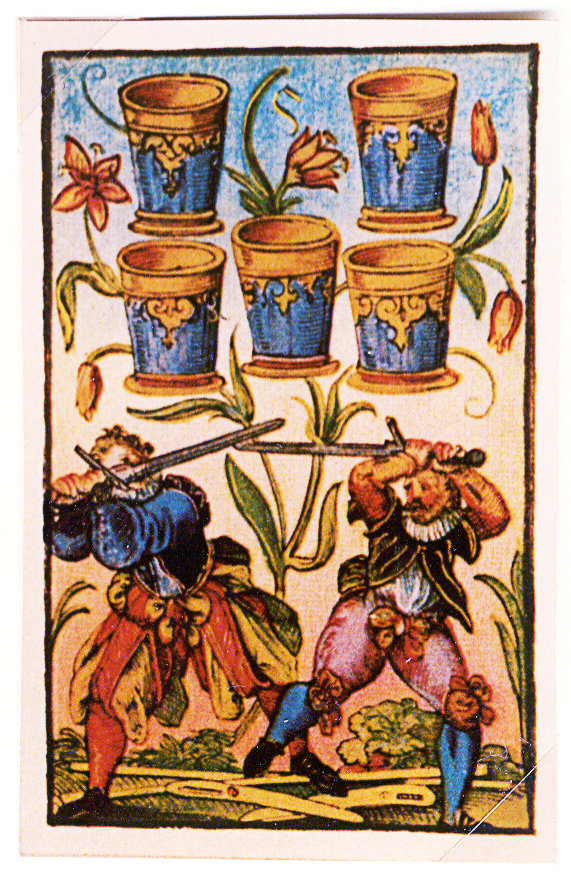
The Book of Trades (Ständebuch) by Jost Amman, mid-sixteenth century.
Originally created as book illustrations of trades and professions, Amman’s woodcuts were easily transferred to playing cards due to their clear line work and self-contained compositions. In this context, printed occupational imagery moves from the page to the hand, demonstrating how playing cards absorbed and circulated visual material from Renaissance print culture.Above: The Book of Trades by Jost Amman, woodcuts, mid-sixteenth century.
Produced for printed books, these occupational images show how Renaissance woodcut illustration was readily adapted for playing cards, introducing narrative scenes and social types into the card format.
The Mamluks
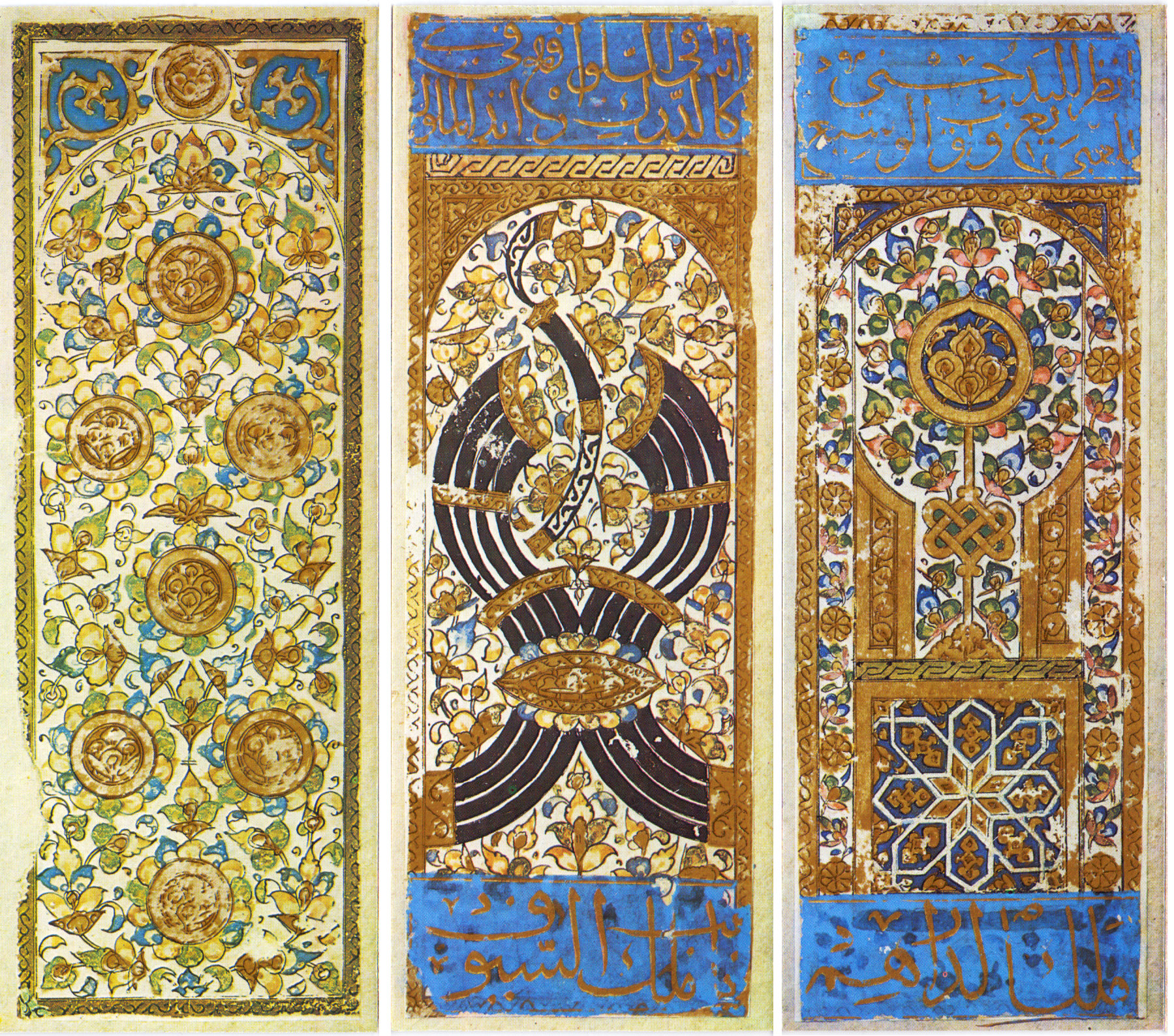
Cards from the Arabic Mamluk pack (c.1520) have closely decorated, embroidered or "enamelled" surfaces. Although the underlying design is very simple, a lot of artistic work has been applied to the card faces.
Pattern is not an essential thing, but an ornamentation of the surface. Occasionally, designs originating with one technique or medium were transposed into another. For example, point lace patterns might be transposed to embroidery, painting to engraving; sculpture might imitate metalwork or indeed architecture and then be transposed onto the flat surfaces of illuminated manuscripts or playing cards.
Mamluk playing cards (c. 15th–early 16th century, Topkapi Palace group): Seven of Coins, King of Scimitars, and King of Cups. Built on a simple structure—suit-signs and ranked courts—each card is treated as a decorative surface, packed with floral scrollwork, gilded patterning, and bold calligraphic bands, showing how early packs could function as luxury art objects as well as game pieces.
The Visconti Tarots
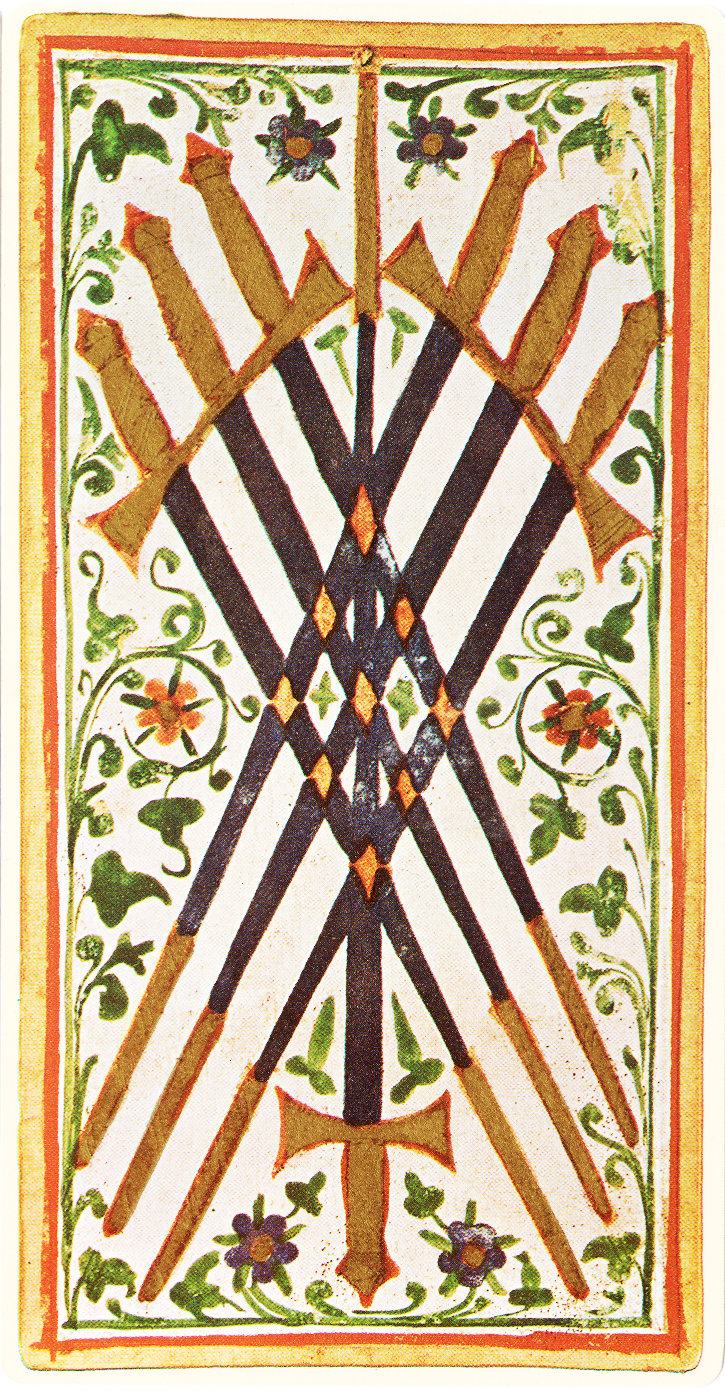
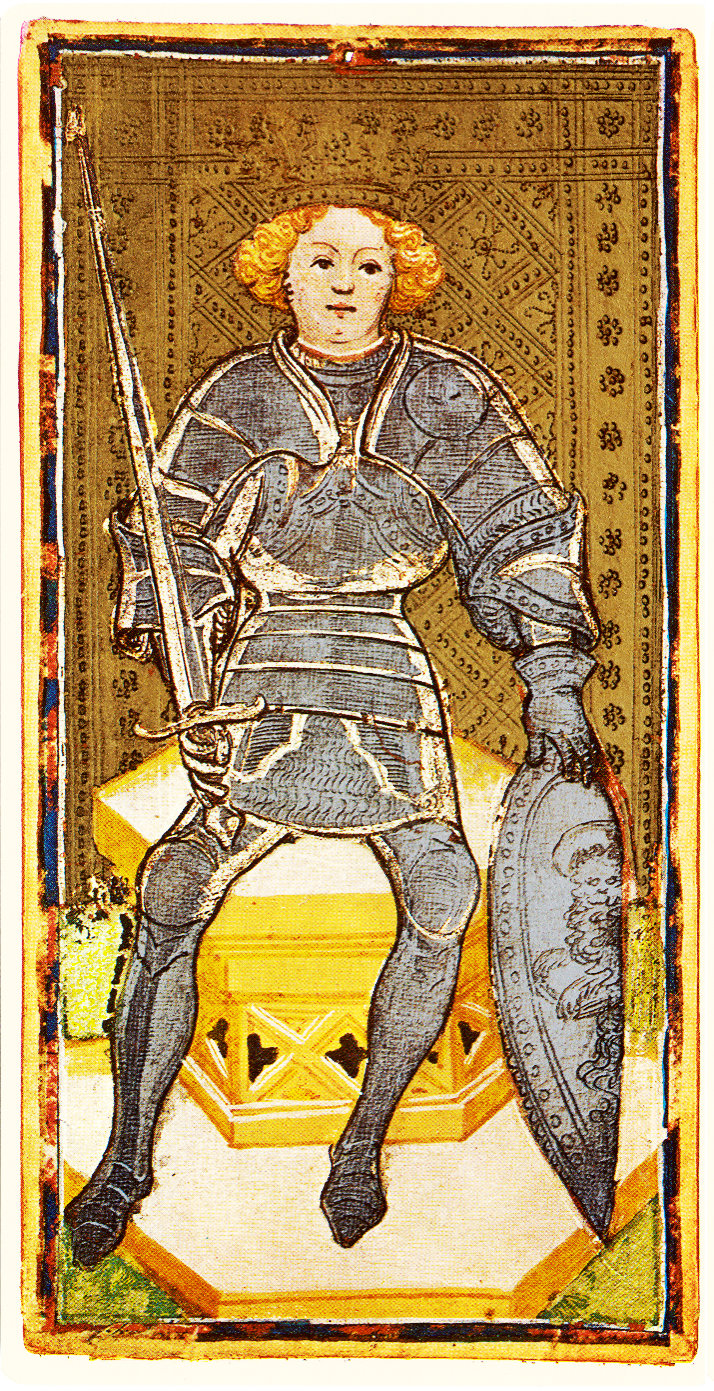
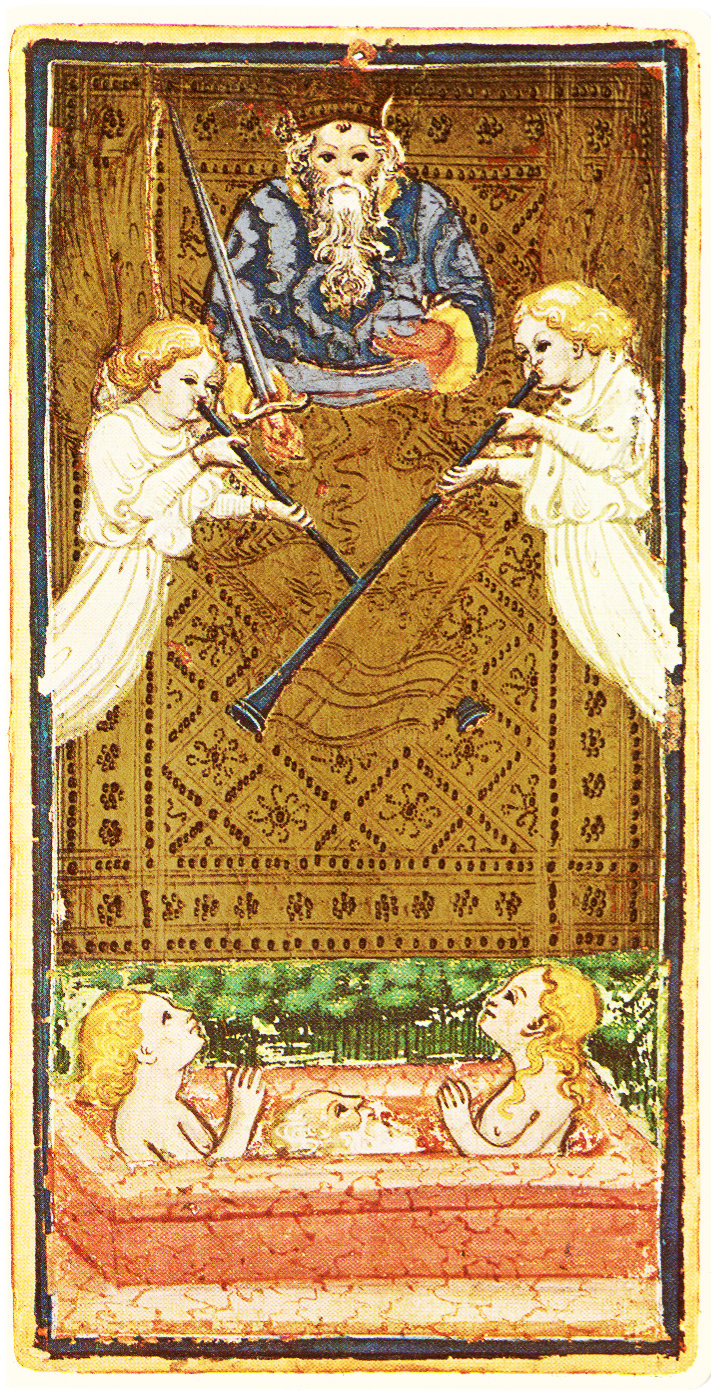
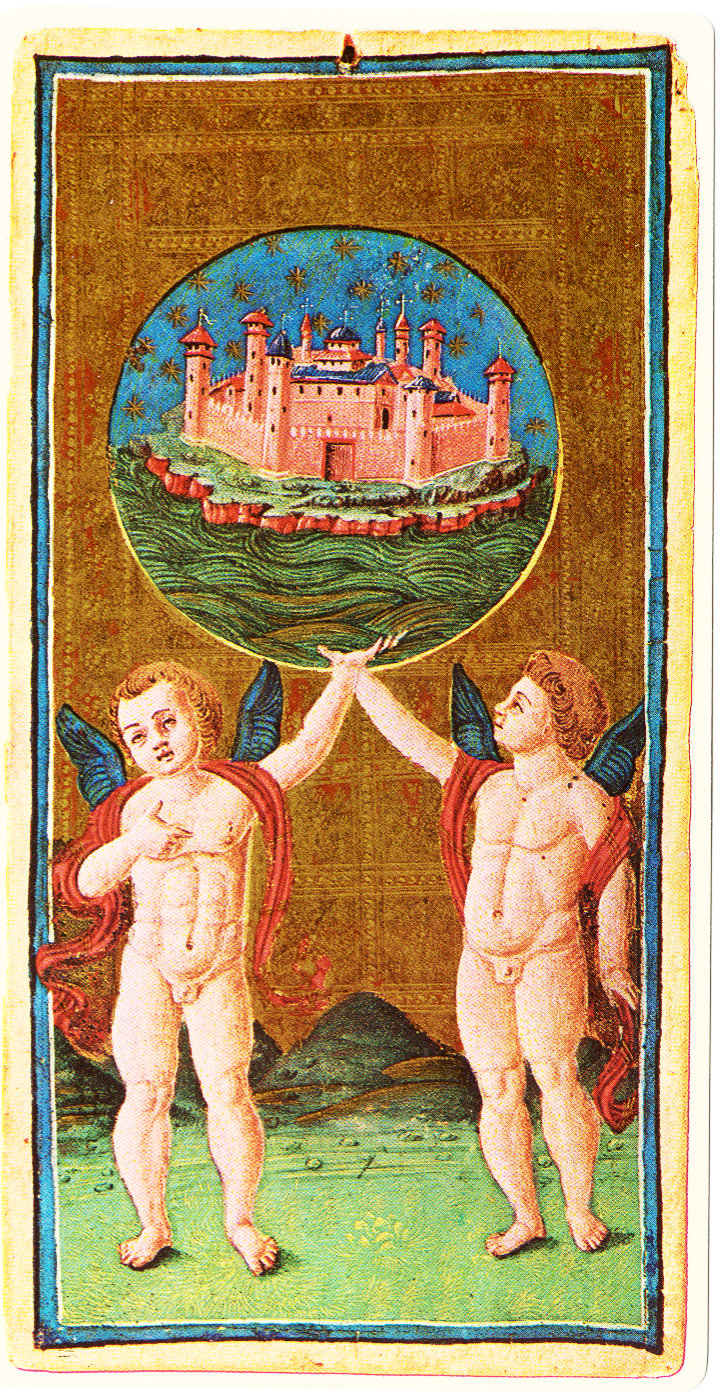
Painted sometime between 1441 and 1447 for Philippe Marie Visconti, several such XV century sets of tarot cards survive.
Moralised imagery was popular at this time. Artists were commissioned to paint anything from wall frescoes to miniature illuminated cards such as these, thereby exhibiting the taste and cultivation of the patron. In some cases the imagery has an esoteric or philosophical content, whilst in other cases it is merely conventional or adorned with the owner's heraldic devices.
The cards are painted in gouache on thick card (175 x 87 mm), with burnished gold leaf, silver and tooled ornamentation reminiscent of the miniature paintings in medieval illuminated manuscripts and Books of Hours. There is also a resemblance, in the numeral cards, to the Mamluk cards seen in the previous page. This expensive and laborious process was, therefore, only affordable by the wealthy. However, in this way, the design of playing cards was influenced by the new spirit of Humanism, particularly in Italy.
Engraved Playing Cards
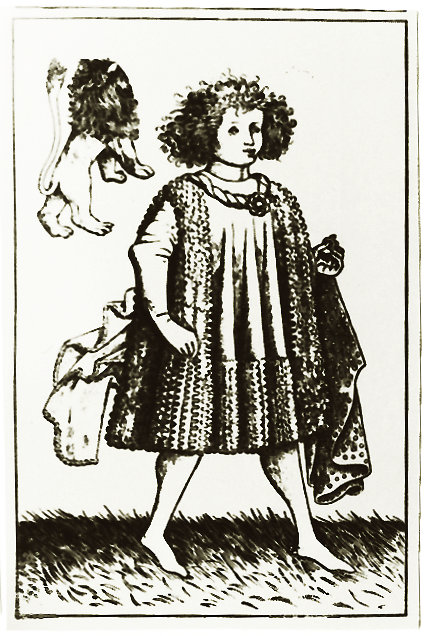
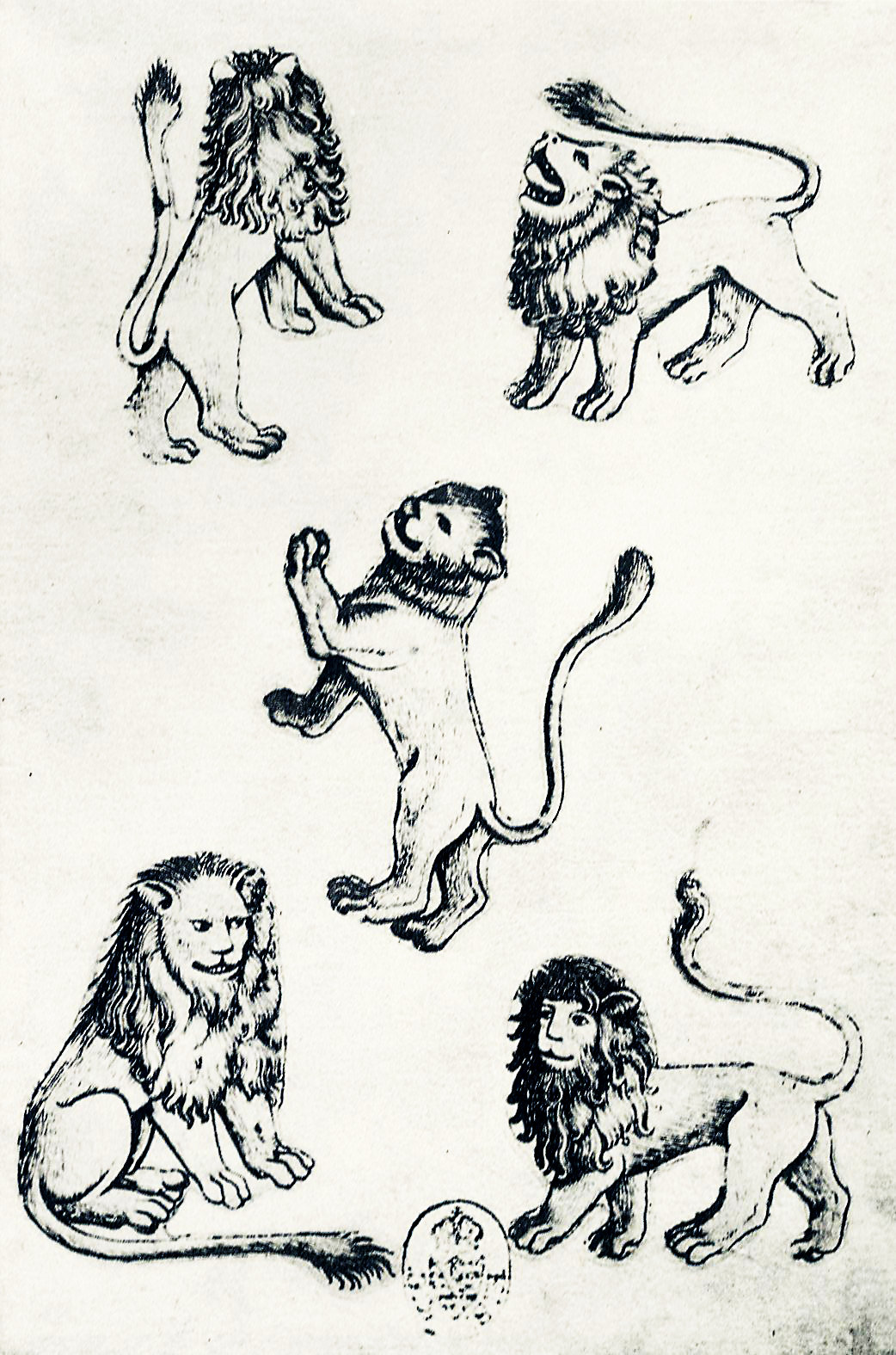
The earliest known engraved pictures all came from German-speaking regions, north of the Alps, starting around c.1400. Copper-engraved playing cards were also produced, employing the skills of the engraver and goldsmith, with great detail in the designs. At this time the German card makers were also indulging in a lot of experimentation with different suit systems. See also: Tarocchi di Mantegna • The Book of Trades.
Art in Playing Cards
Since playing cards reached Europe from the Islamic world over six centuries ago, the playing card has been used as a medium for decorative art, as well as for playing games of chance. Whilst some early packs were luxury, hand-made items, painted in many colours and enriched with gold and embossing, more rudimentary packs, made from cheaper materials and simpler methods of production, also existed.
The links below show a selection of playing card art.
Based on a talk given to the International Playing-Card Society, London, on 10th August 2002.

By Simon Wintle
Spain • Member since February 01, 1996
I am the founder of The World of Playing Cards (est. 1996), a website dedicated to the history, artistry and cultural significance of playing cards and tarot. Over the years I have researched various areas of the subject, acquired and traded collections and contributed as a committee member of the IPCS and graphics editor of The Playing-Card journal. Having lived in Chile, England, Wales, and now Spain, these experiences have shaped my work and passion for playing cards. Amongst my achievements is producing a limited-edition replica of a 17th-century English pack using woodblocks and stencils—a labour of love. Today, the World of Playing Cards is a global collaborative project, with my son Adam serving as the technical driving force behind its development. His innovative efforts have helped shape the site into the thriving hub it is today. You are warmly invited to become a contributor and share your enthusiasm.

Activity for Art in Playing Cards
Sign in to comment or save this article.

Related Articles
Balearic Souvenir Cards
Mediterranean Souvenir deck by Rioba Studio, Pollença, Mallorca.
Calligraphy Card Game
Military figures executed in calligraphic flourishes by Johann Christoph Albrecht.
Misc. Goods Co. Playing Cards
One of the early custom playing-card projects funded through Kickstarter, and the starting point for...
Federal 52
Federal 52 (2013) was Jackson Robinson’s first Kings Wild playing card release, based on th...
Fredericks & Mae playing cards
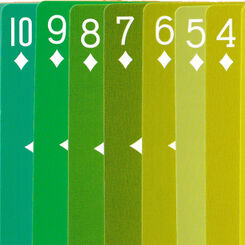
A rainbow pack from the design team of Fredericks & Mae and Benjamin English.
Heathen Divinities
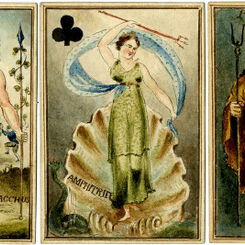
Handmade playing cards from the British Museum depicting classical Greek and Roman gods and goddesse...
Hand-painted and Silk-inlaid playing cards
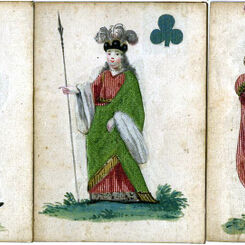
Complete pack of 36 hand-painted and silk-inlaid playing cards with French suits made in Germany.
Neptune No.105 Playing Cards
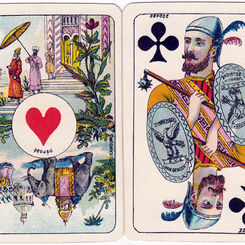
An exotic pack made by A.Van Genechten of Turnhout
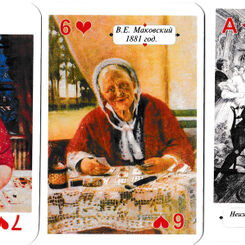
Playing cards in Russian life
Playing cards in Russian life - Karty v zhizni Rossii - published by Aleksandr Lutkovskii in 2004.
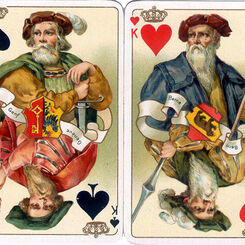
Schweizer Trachten
Schweizer Trachten No.174 (Costumes Suisses) by Dondorf.
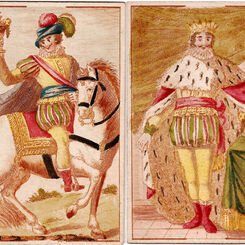
Baraja “Neoclásica”, Madrid, 1810
Baraja “Neoclásica” engraved by José Martínez de Castro, first published by Clemente Roxas, Madrid, ...
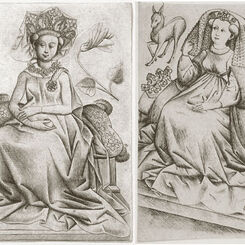
Master of the Playing Cards
Animal suited playing cards engraved by the Master of the Playing Cards, Germany, c.1455
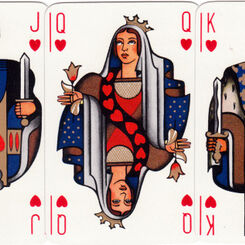
Jacques Branger designs for Miro Company
Luxury packs published by Miro Company (Paris) featuring designs by Jacques Branger, c.1940s.
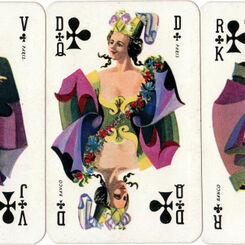
Banco for Air France, c.1952
Banco playing cards for Air France manufactured by Draeger Frères, c.1952.
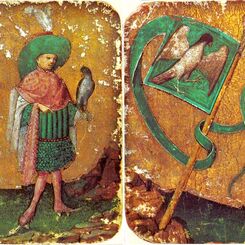
Stuttgart pack, c.1430
The luxury, hand-painted Stuttgart Cards (Stuttgarter Kartenspiel) dated c.1430, with suits of ducks...
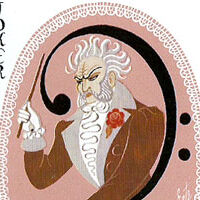
La Traviata
“La Traviata” playing cards designed by Erté, c.1985.
Brussels Euro Joker Club 1998
Brussels Euro Joker Club's 10th Anniversary deck, with artwork by Yvette Cleuter, was produced in a ...
The 52 Club
The London College of Printing '52 Club' Designers and Artists playing cards, 1984.
Manufacture of Playing Cards
Traditionally cardmakers worked in guilds with long apprenticeships under master craftsmen.
The History of Playing Cards
Playing cards appear in European records in the late 14th century, but their earlier history lies fu...
Most Popular
Our top articles from the past 60 days


