


Maciá Pattern
The Maciá Pattern which was originally produced by a Barcelona cardmaker in the 1830s and subsequently used as a model by other makers.
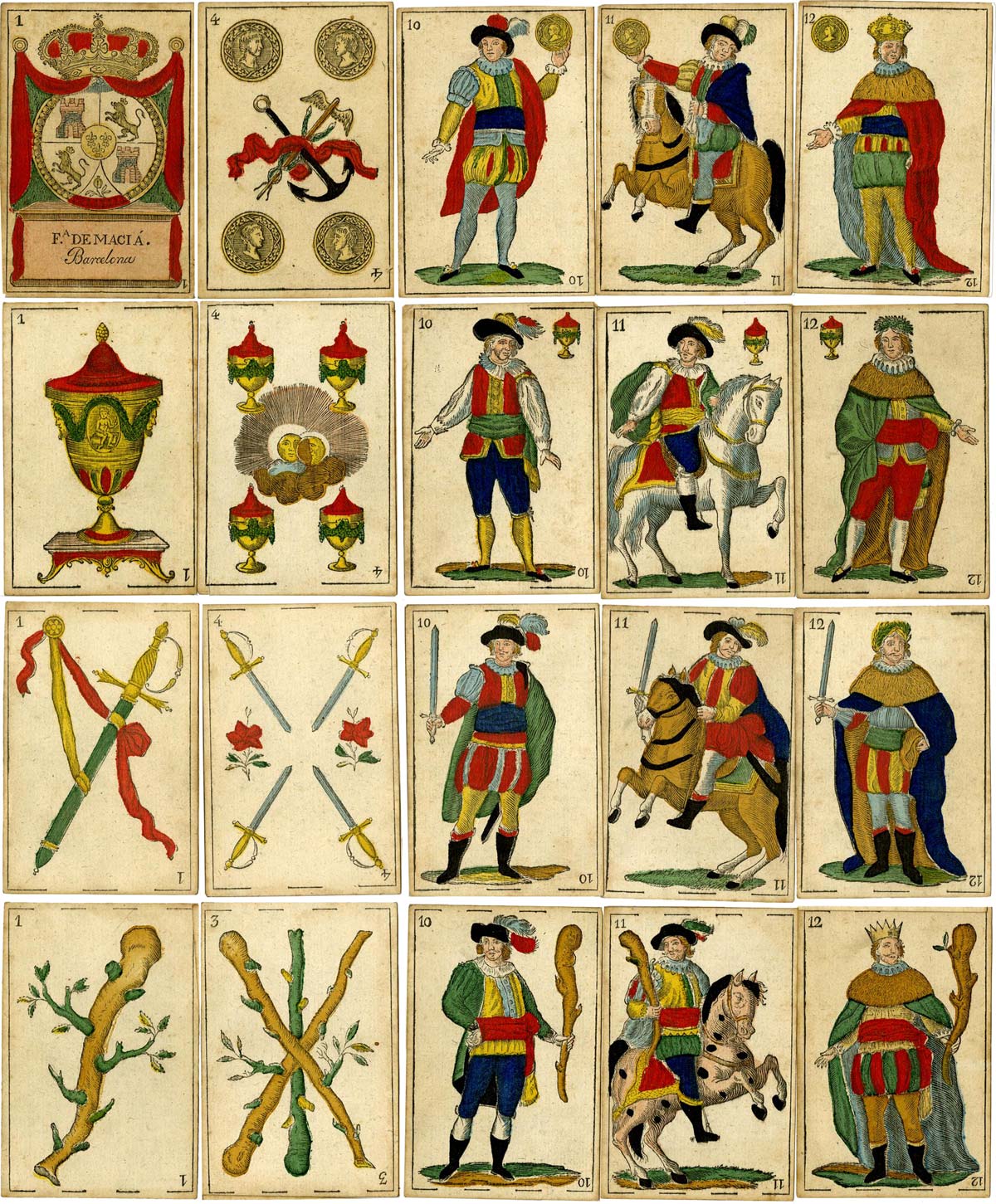
Above: cards from 48-card hand-coloured wood-engraving published by Fábrica de Maciá, Barcelona, c.1830. © The Trustees of the British Museum, number 1896,0501.826►

Anonymous manufacturer ~ “Fabrica de Madrid” ~ R.H.
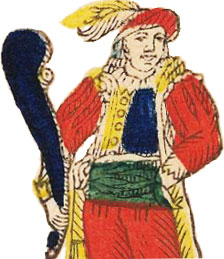
This fine Spanish-suited deck from the nineteenth century shows most of the features of the style known as the Maciá Pattern which was originally produced by a Barcelona cardmaker in the 1830s and subsequently used as a model by other makers. It is not clear whether this example was made in Spain or elsewhere. The standing figures adopt classical poses and the Kings have the whole length of their legs in view, although in this example the Kings of Swords and Cups are not wearing laurel wreathes as in other examples and only two of the Kings are wearing shoulder-capes. The Ace of Coins shows a central medallion bearing a lion and a cannon, with two scrolls bearing the legend "Fabrica de Madrid". During the 1860s the pattern was also produced in Italy and by Spanish manufacturers in Barcelona and Igualada.
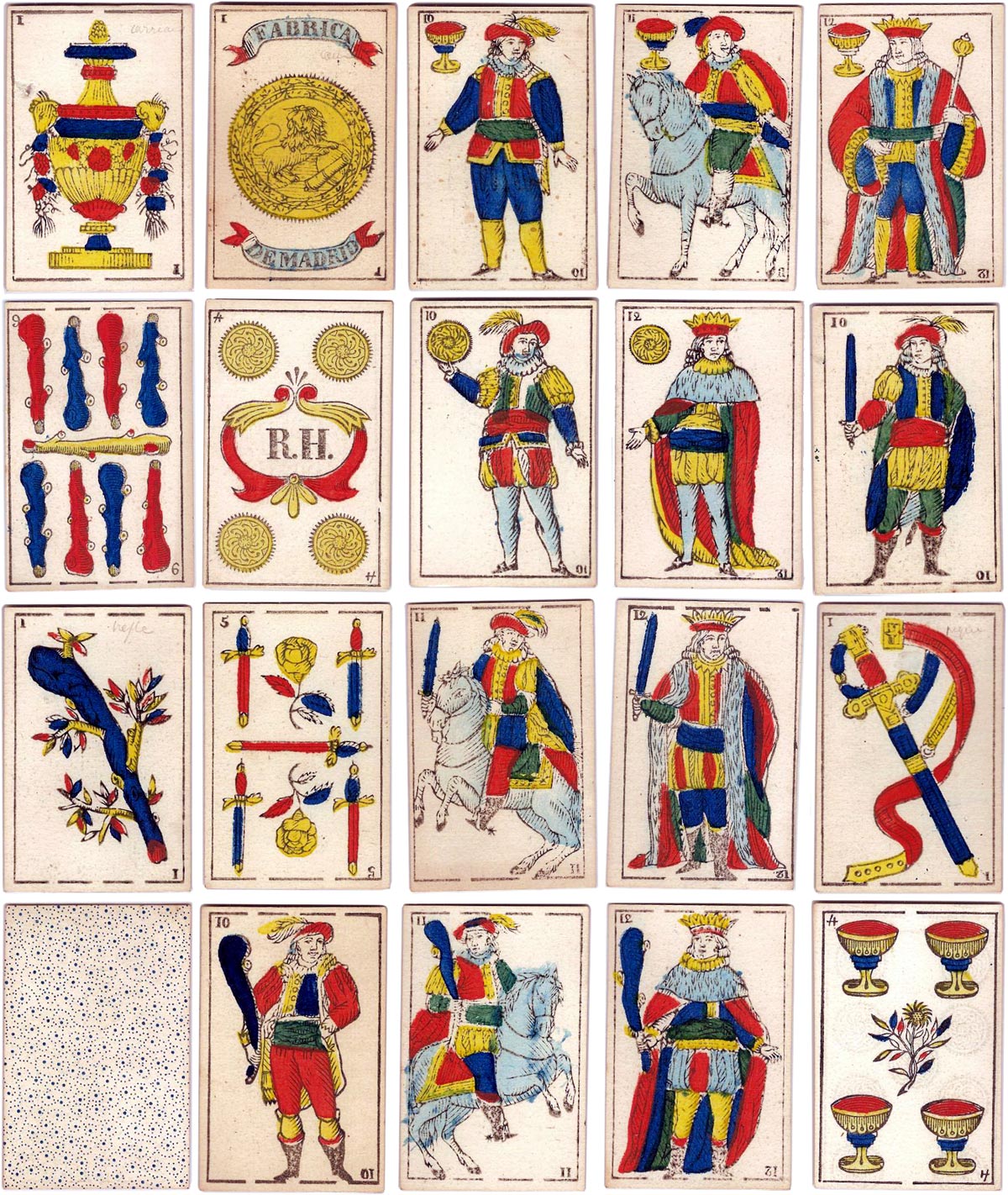
Above: Spanish-suited cards in the Maciá Pattern. Unknown manufacturer. The Ace of Coins carries the legend "Fabrica de Madrid" and the Four of Coins reads "R.H." The Ace of Coins is decorated with goats' heads and wreaths of flowers and the back is decorated with a pattern of swirling dots. Woodblock and stencil production.
See also: José Gombau, 1833►

By Simon Wintle
Spain • Member since February 01, 1996
I am the founder of The World of Playing Cards (est. 1996), a website dedicated to the history, artistry and cultural significance of playing cards and tarot. Over the years I have researched various areas of the subject, acquired and traded collections and contributed as a committee member of the IPCS and graphics editor of The Playing-Card journal. Having lived in Chile, England, Wales, and now Spain, these experiences have shaped my work and passion for playing cards. Amongst my achievements is producing a limited-edition replica of a 17th-century English pack using woodblocks and stencils—a labour of love. Today, the World of Playing Cards is a global collaborative project, with my son Adam serving as the technical driving force behind its development. His innovative efforts have helped shape the site into the thriving hub it is today. You are warmly invited to become a contributor and share your enthusiasm.

Activity for Maciá Pattern
Sign in to comment or save this article.

Related Articles
Most Popular
Our top articles from the past 60 days


