Le Monde Primitif Tarot
Facsimile edition produced by Morena Poltronieri & Ernesto Fazioli of Museo Internazionale dei Tarocchi, 2021.
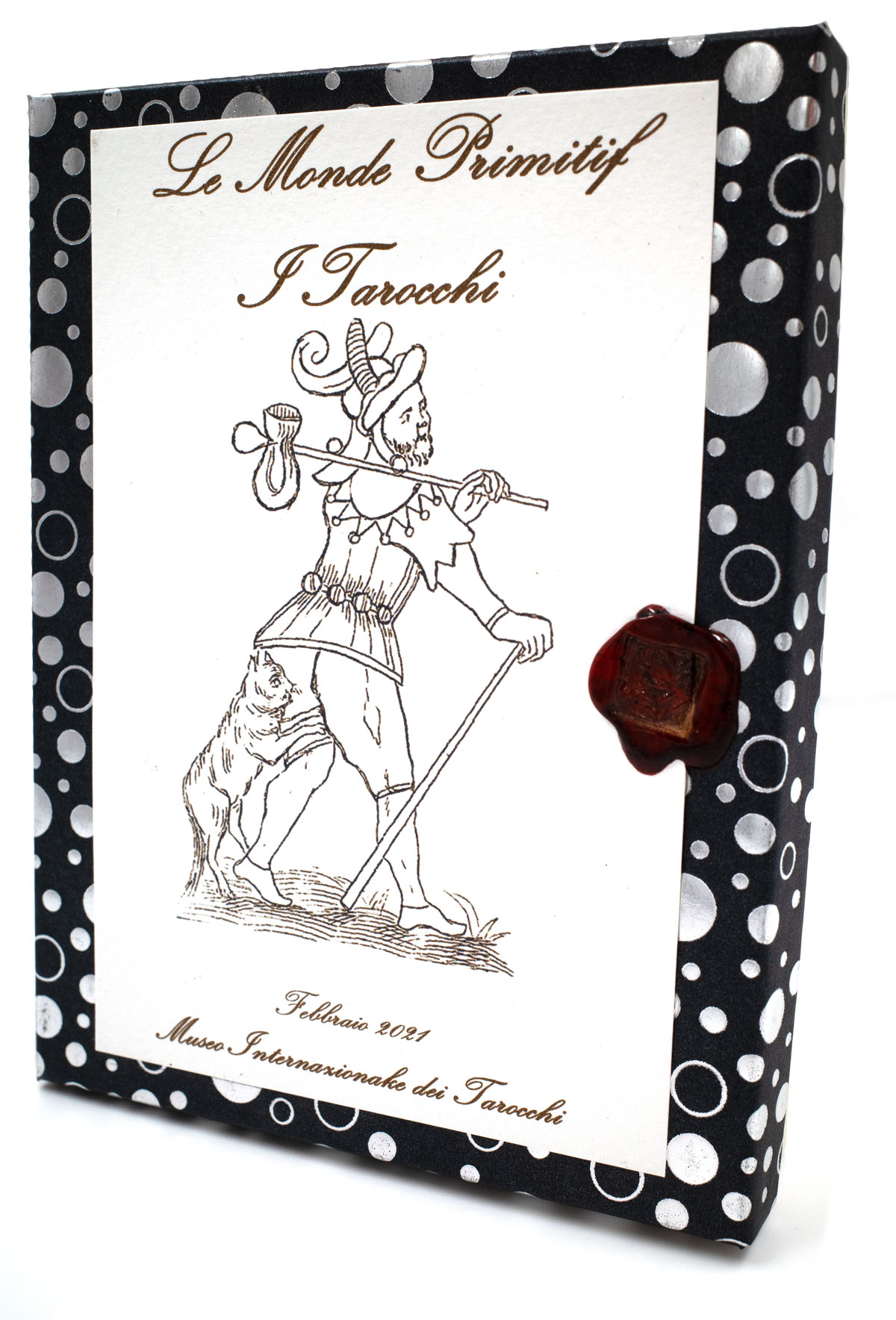
Above: this elegant box, titled "Le Monde Primitif I Tarocchi," features an illustration of the Fool. Adorned with a wax seal and bordered by a stylish pattern of silver circles on a black background, it was released in February 2021 by the Museo Internazionale dei Tarocchi.
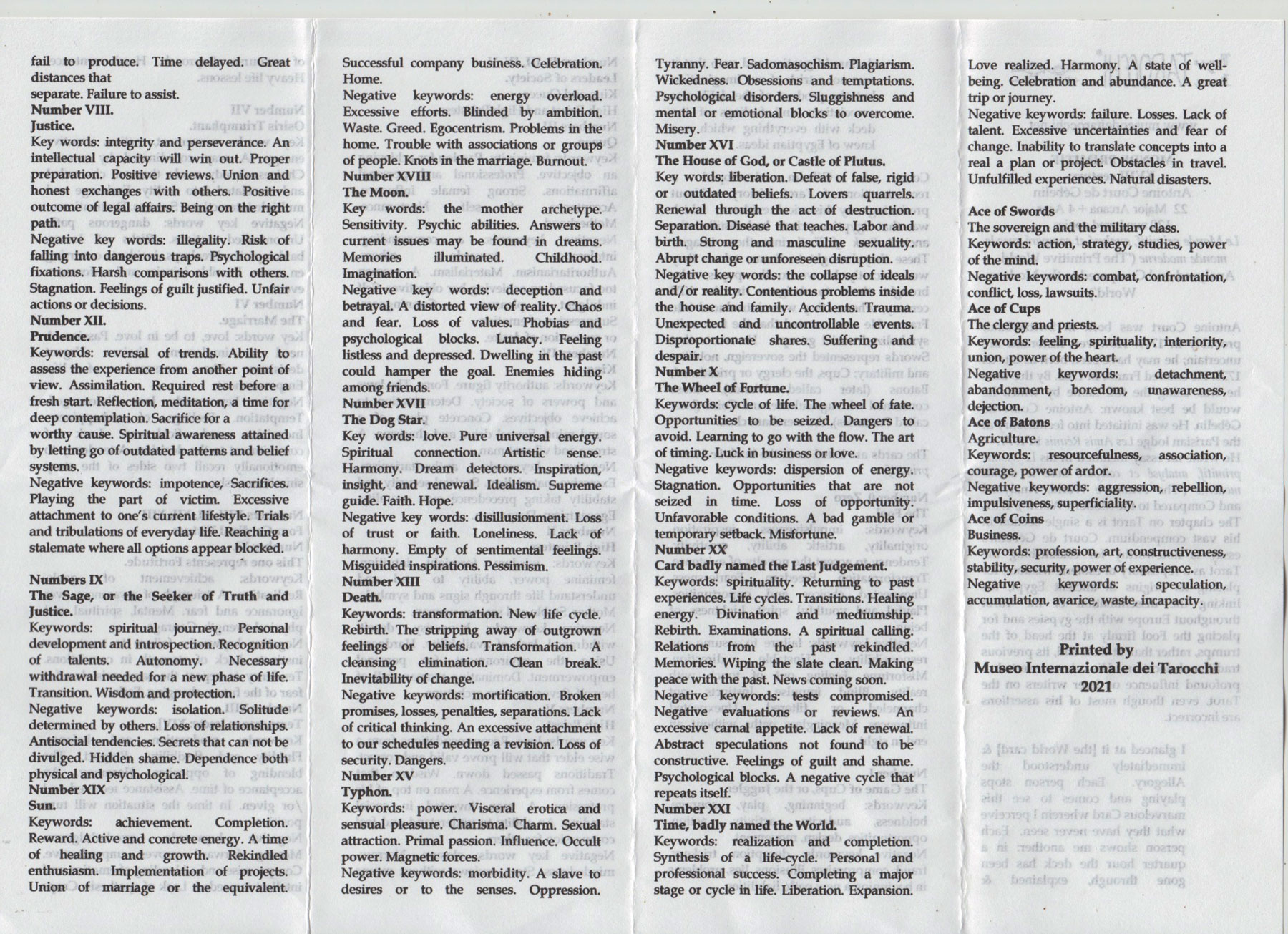
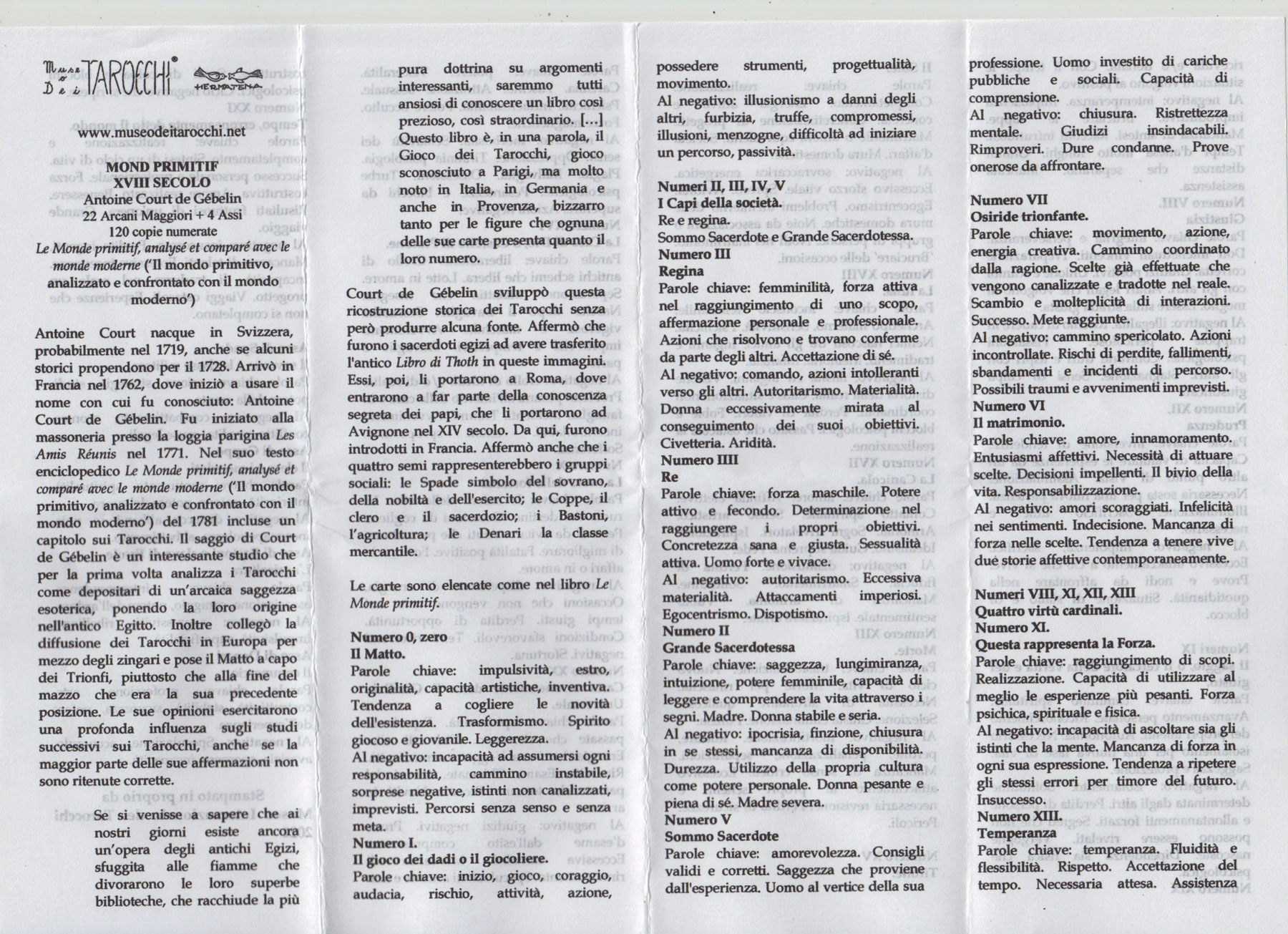
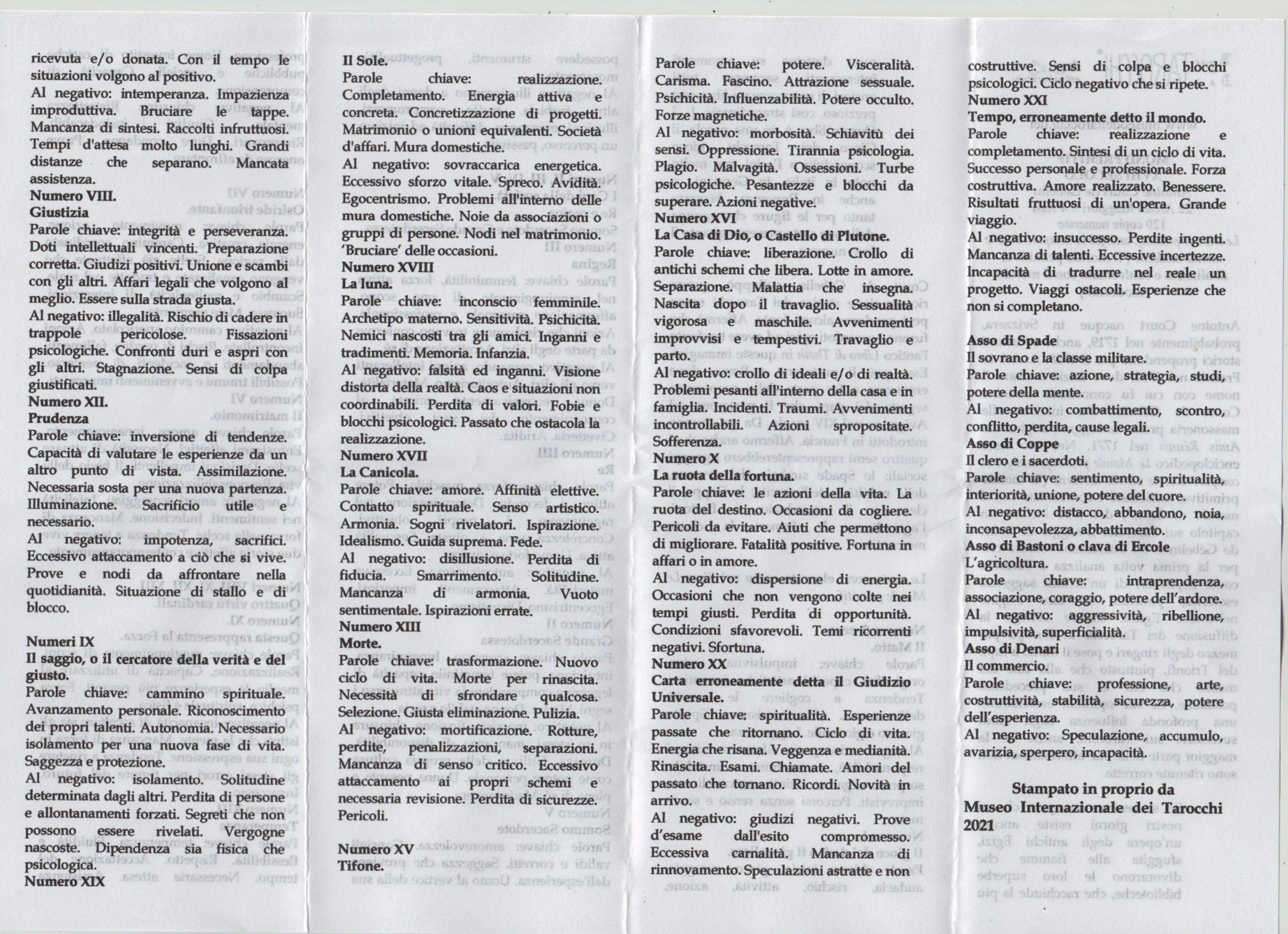
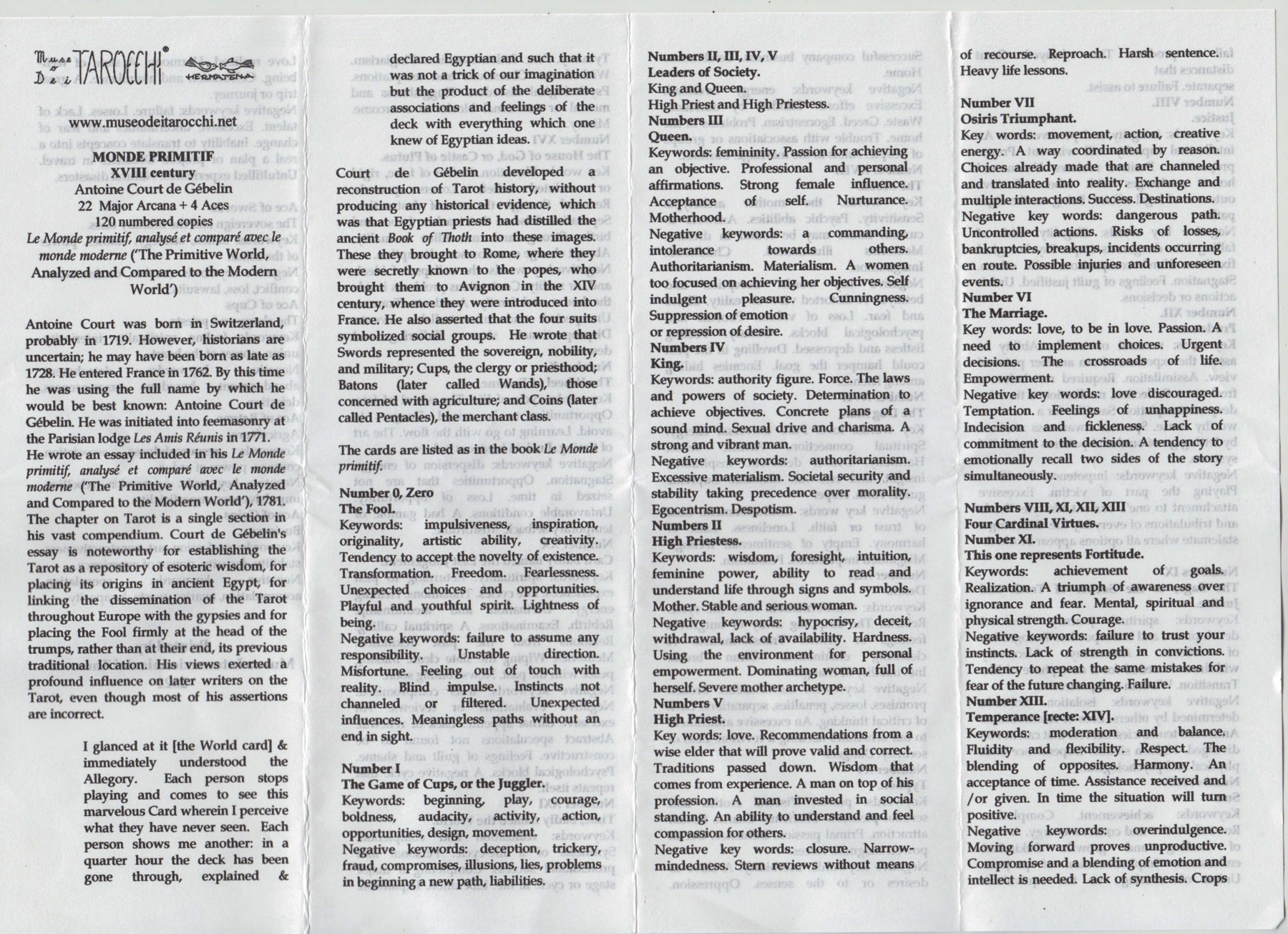
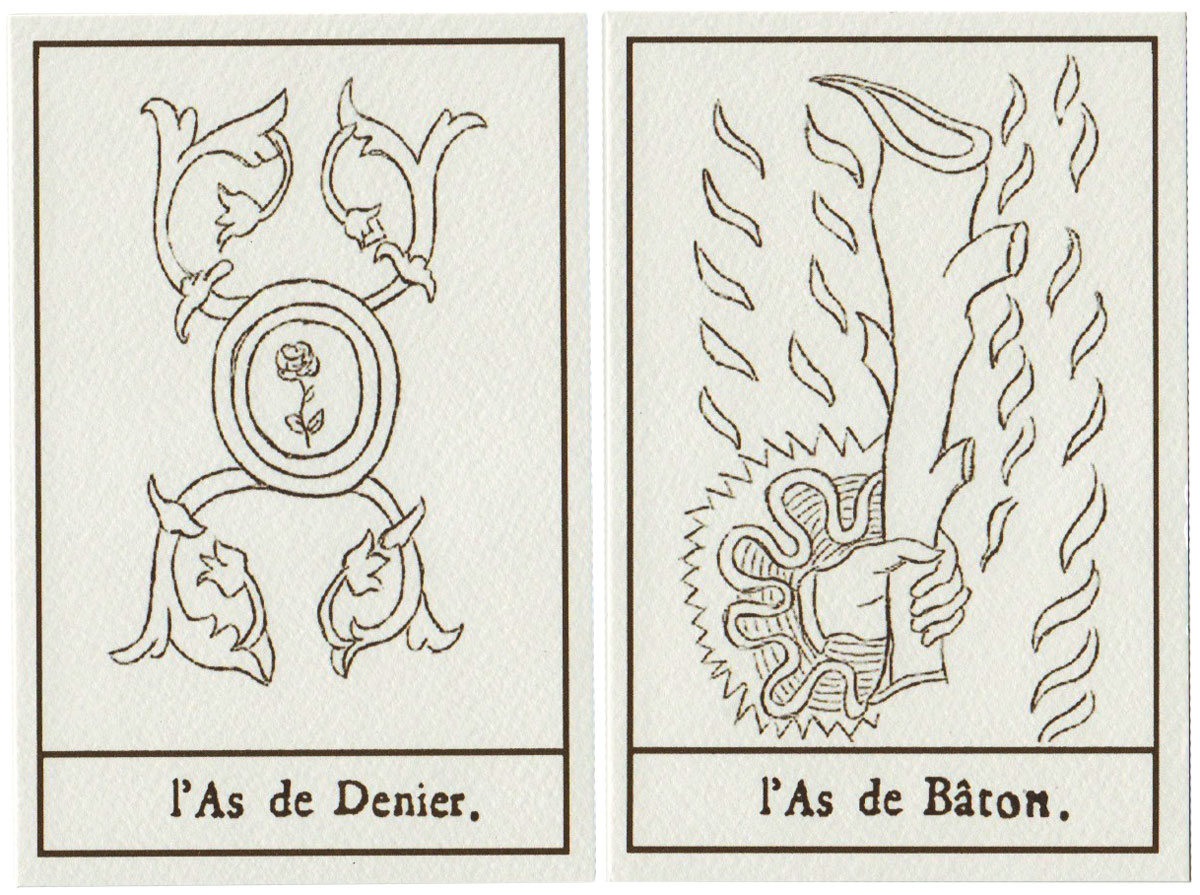
T-6he boxed set includes 22 major arcana cards plus four aces with an explanatory leaflet. The leaflet helpfully gives a summary of Court de Gébelin’s life and references his essay on the tarot, which appeared in vol.8 of his “Le Monde Primitif” published in 1781.
 Back EN
Above: this informative leaflet provides an overview of "Le Monde Primitif" tarot deck, detailing the historical background and significance of the 22 Major Arcana and four Aces. It includes insights into the XVIII-century tarot research by Antoine Court de Gébelin, along with descriptions of various tarot cards and their associated meanings. Also see the leaflet in Italian.
Back ITDe Gébelin proposed that the tarot was a repository of ancient Egyptian wisdom, distilled by priests from the Book of Thoth. His writing exerted a profound influence on later writers, even though most of his assertions were found to be incorrect. He often resorted to hyperbole and exaggeration [Hall, 2016, p.131]. However, his belief in the mystical origins of tarot has turned out to have played a significant role in the modern esoteric understanding of Tarot.
De Gébelin suggested in "Le Monde Primitif” that the four suits in the tarot relate to the four castes of Egyptian society (See excerpt). He also believed that the 22 trumps are allegorical representations of secular and spiritual heads of society, leaders of agriculture, cardinal virtues, marriage, death, ressurrection, the sage, the fool, time, etc (second excerpt). The plates of the cards in the “Le Monde Primitif” book follow the Tarot de Marseille pattern, which is late medieval European, and is where de Gébelin believed he could see an Egyptian origin: "J'y jette les yeux, & aussi-tôt j'en reconnois l'Allégorie / I cast my eyes, and immediately recognize the Allegory" [p.367]. The facsimile edition reproduces each card with a black border with a title and number at the bottom.
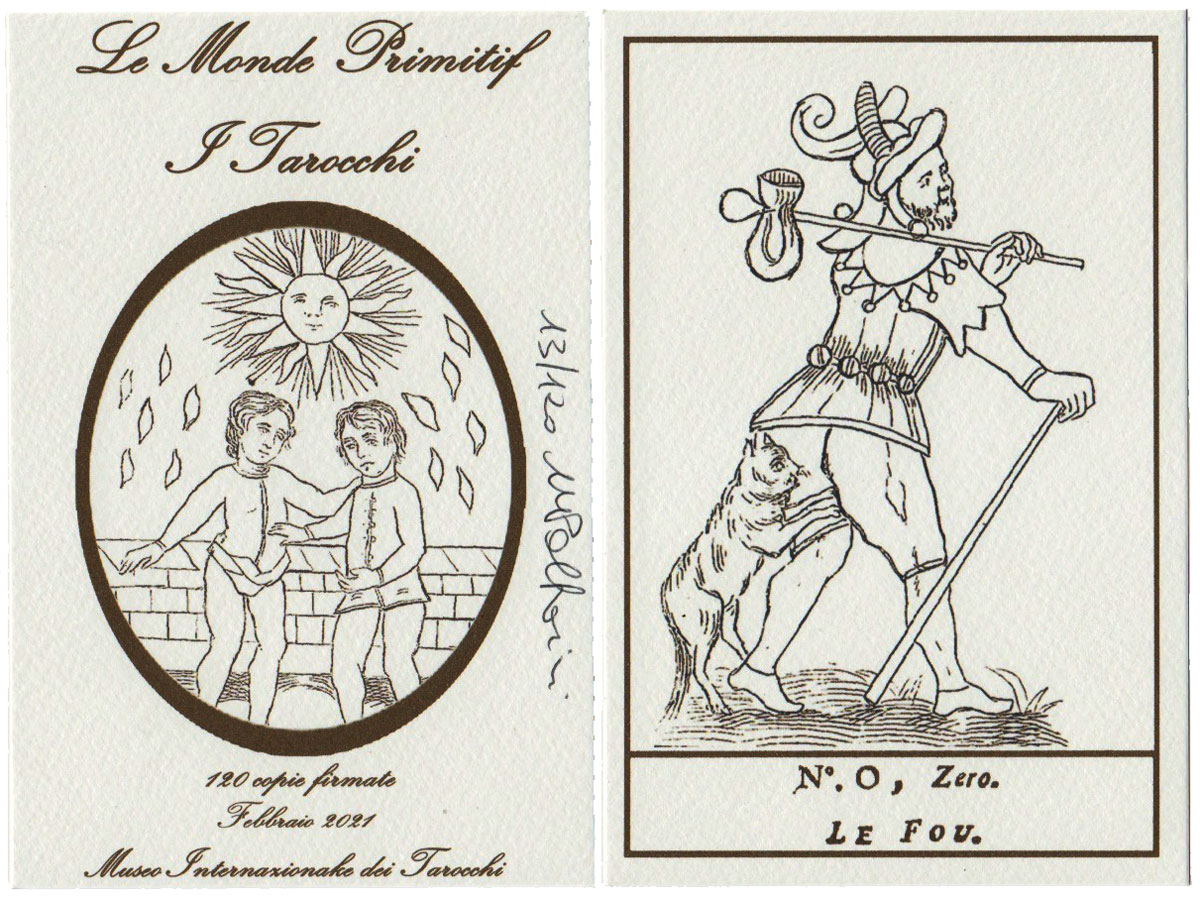
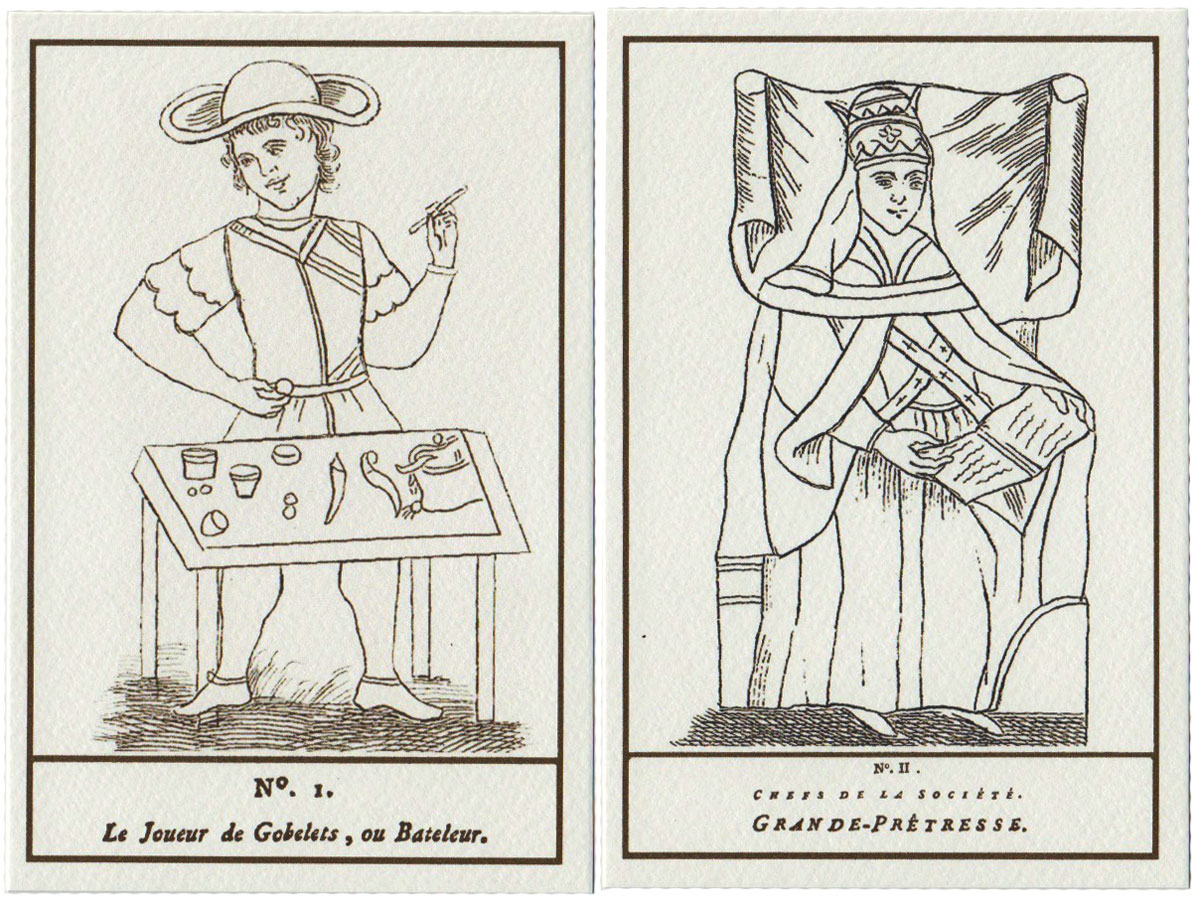
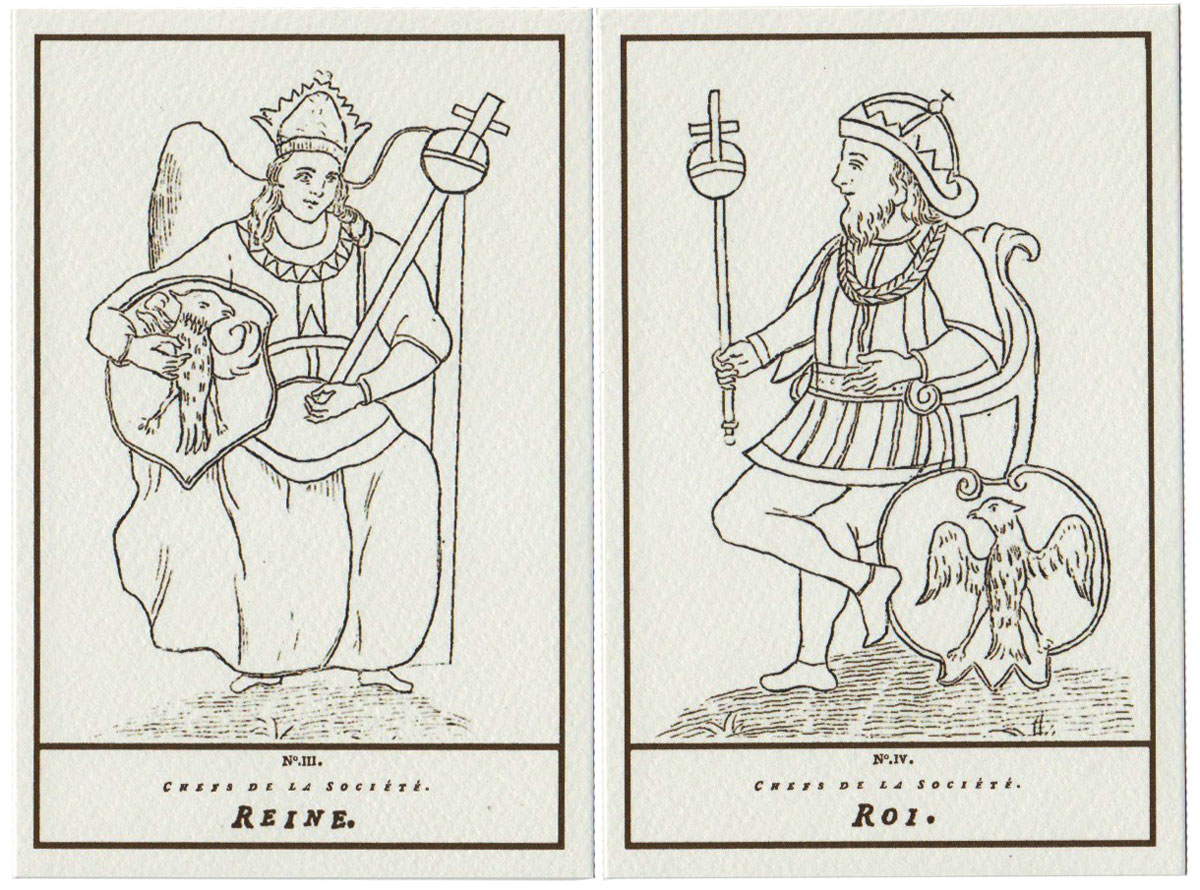
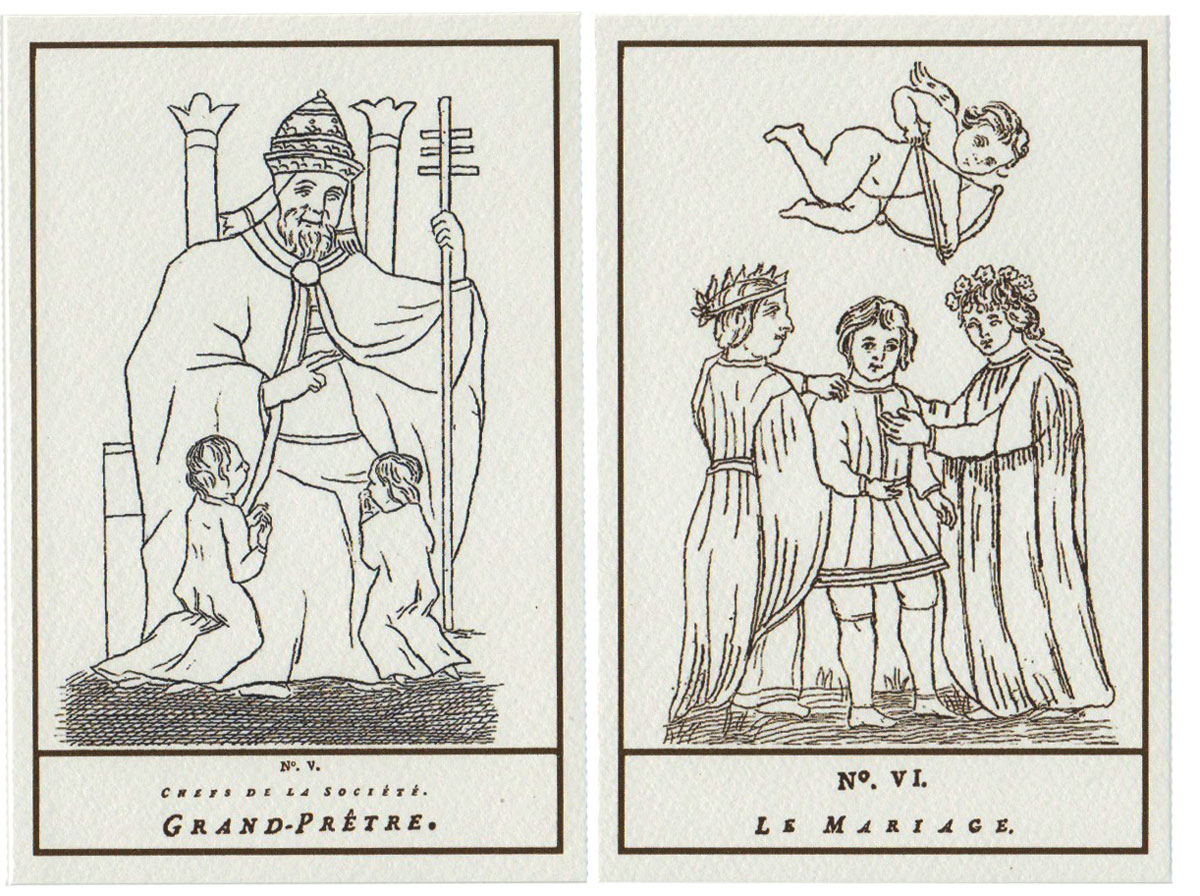
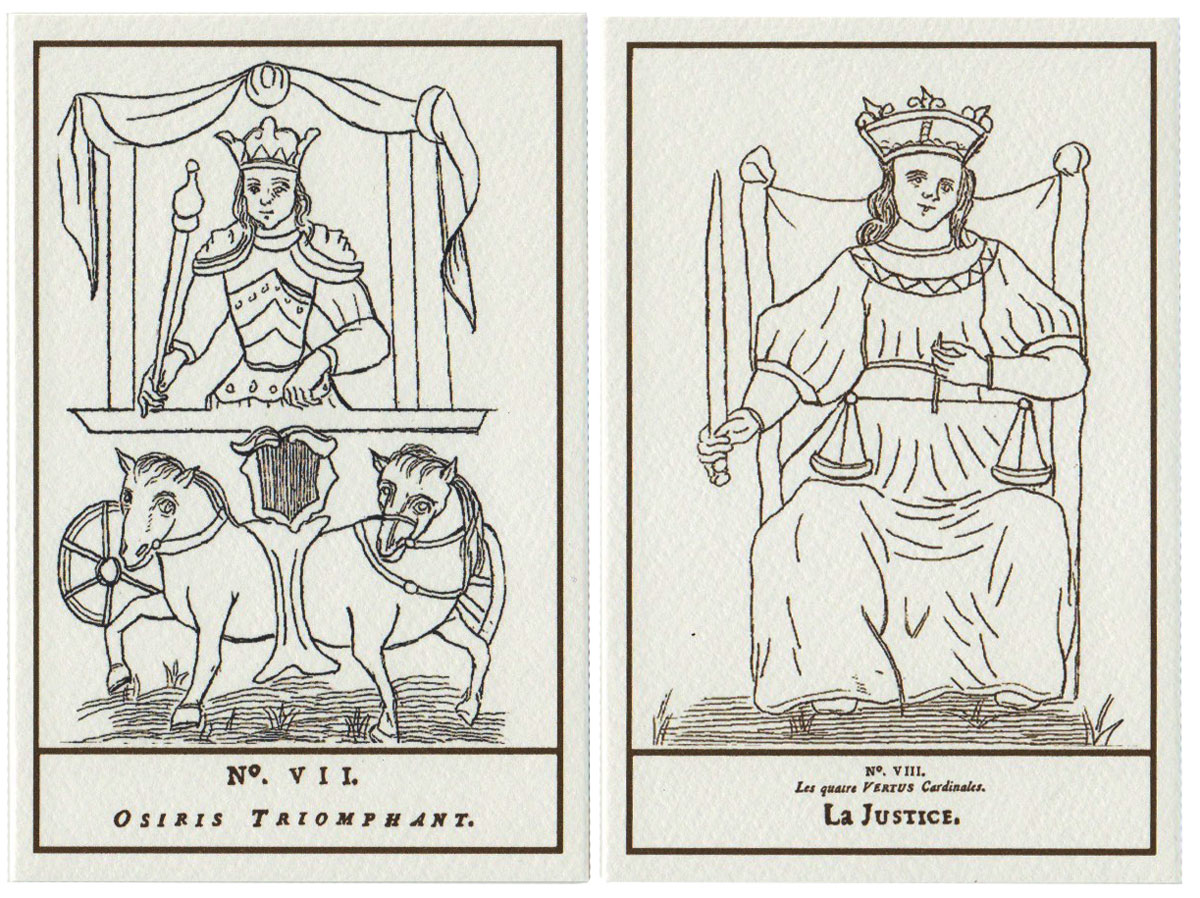
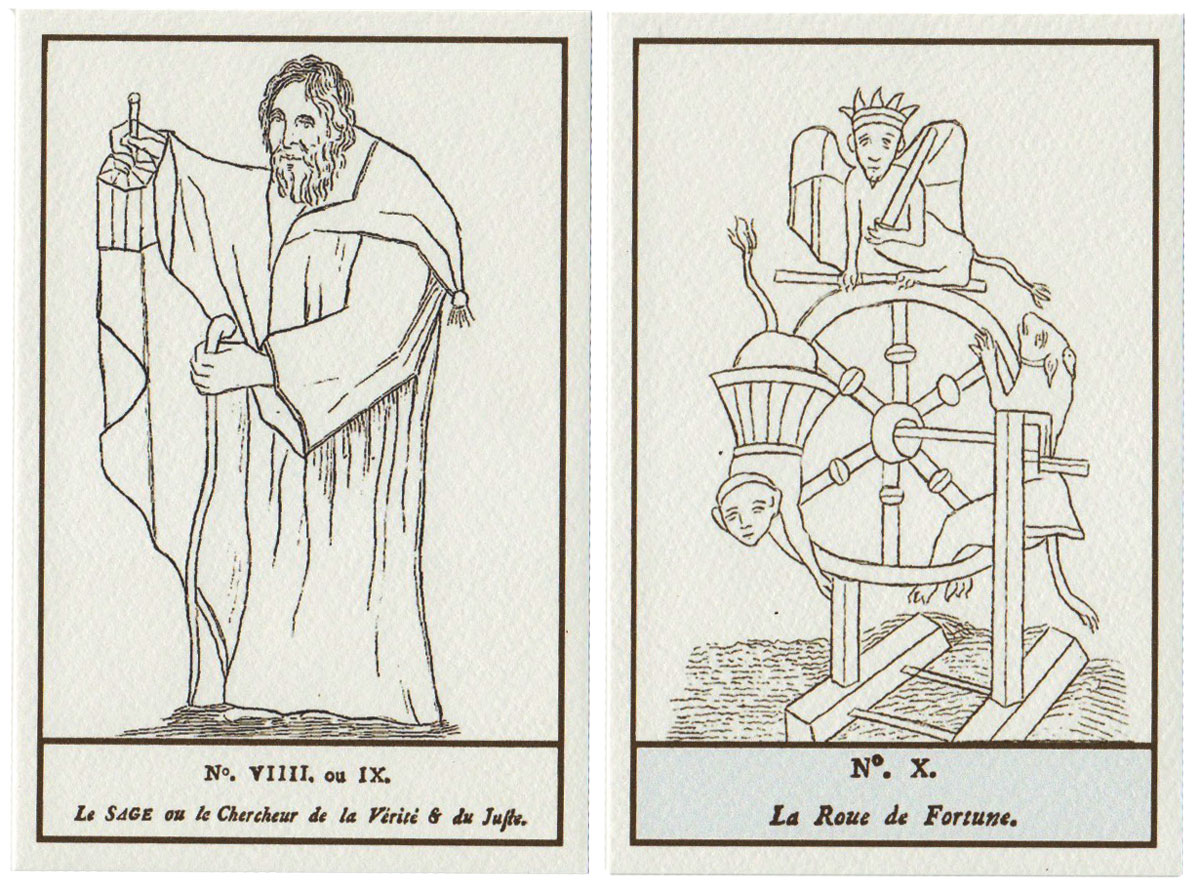
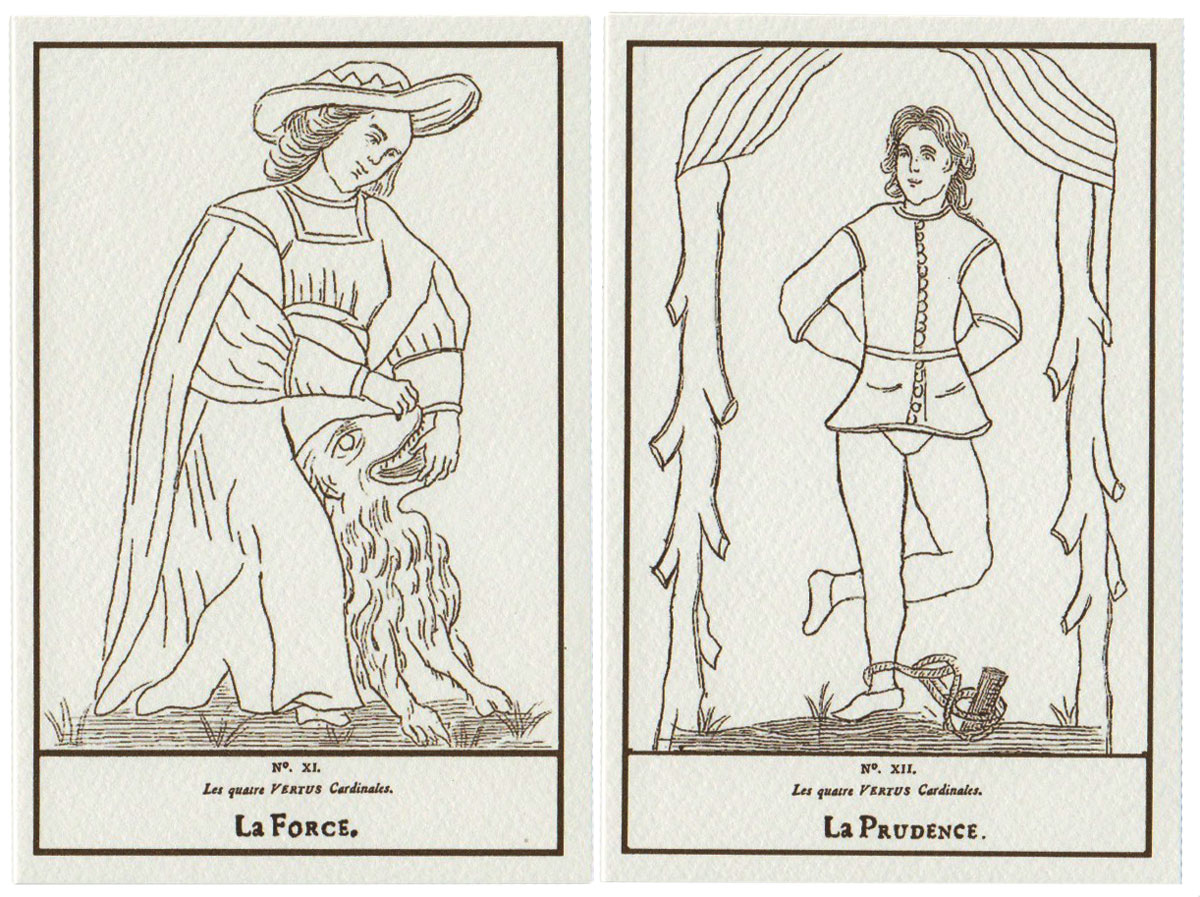
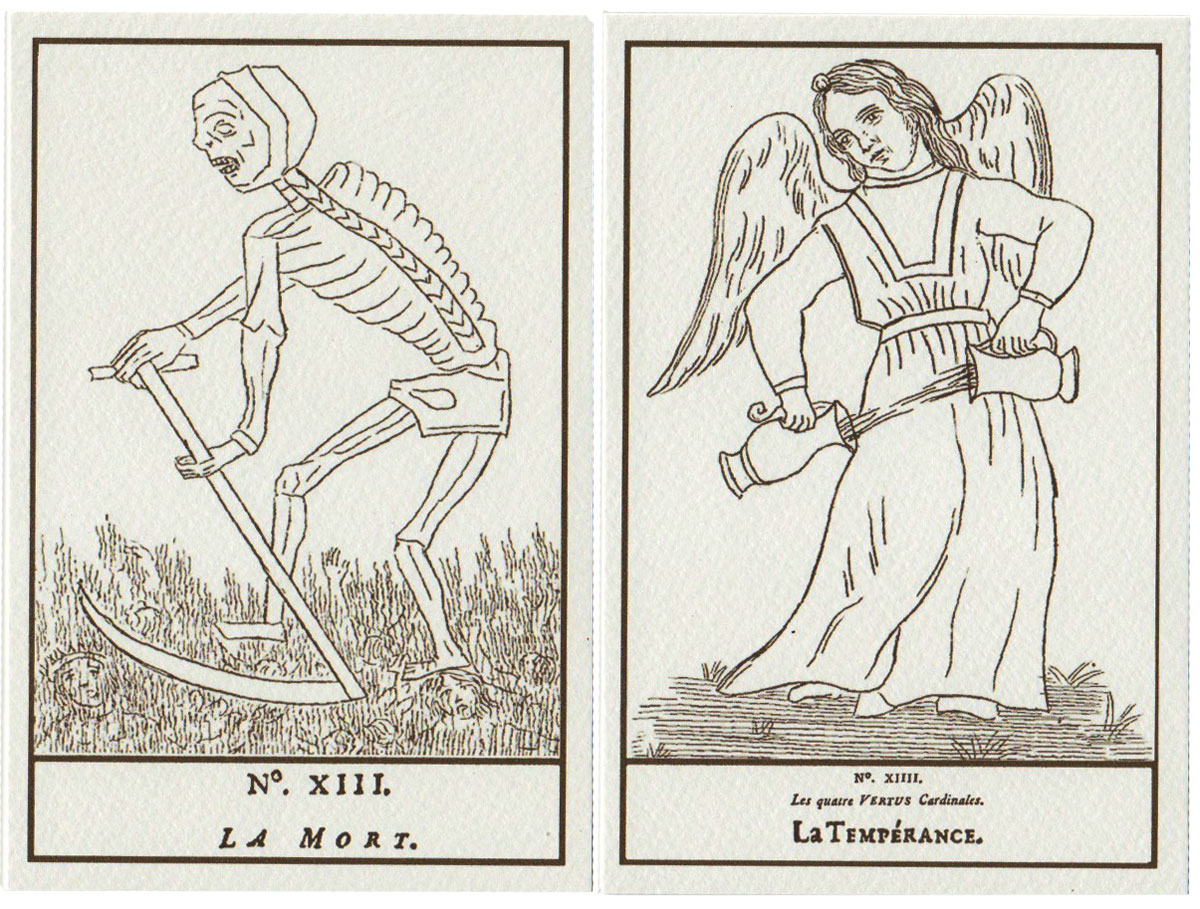
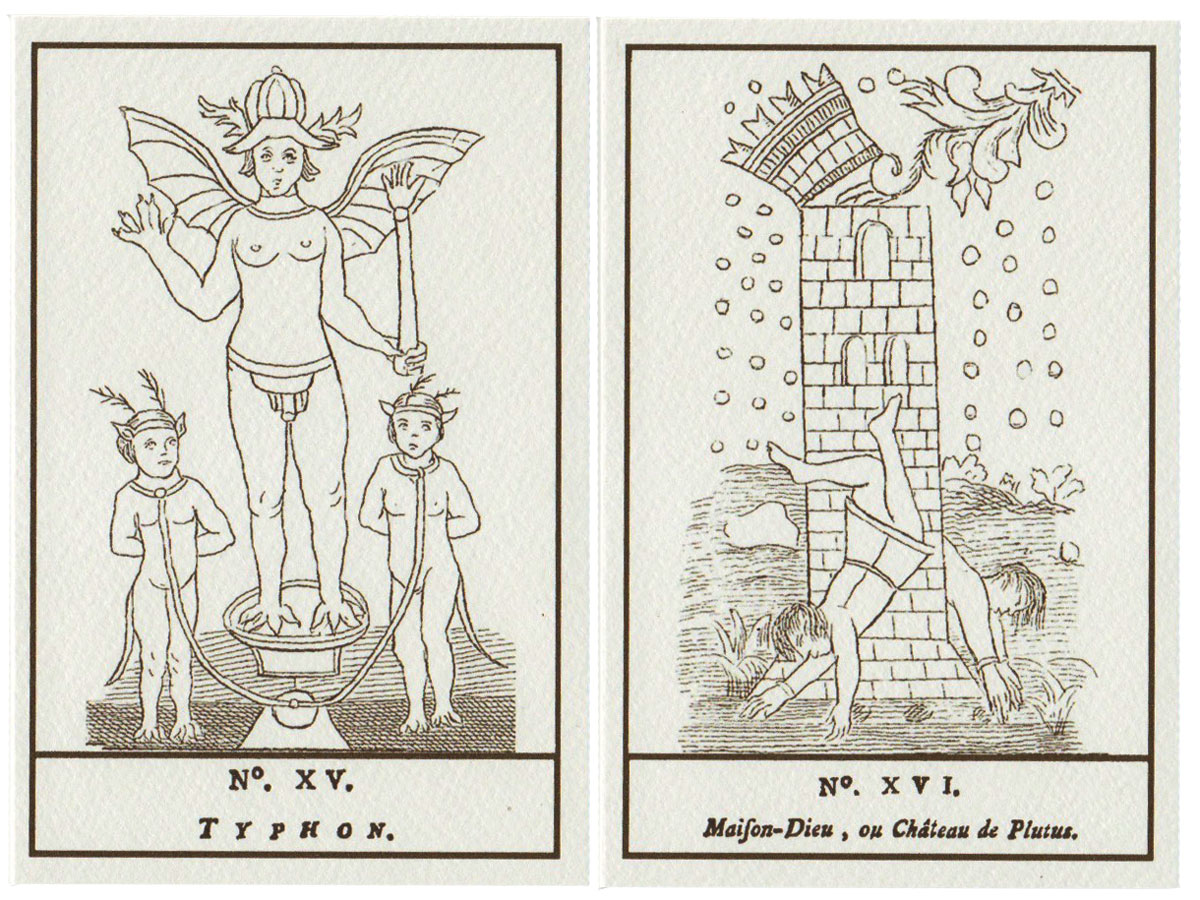
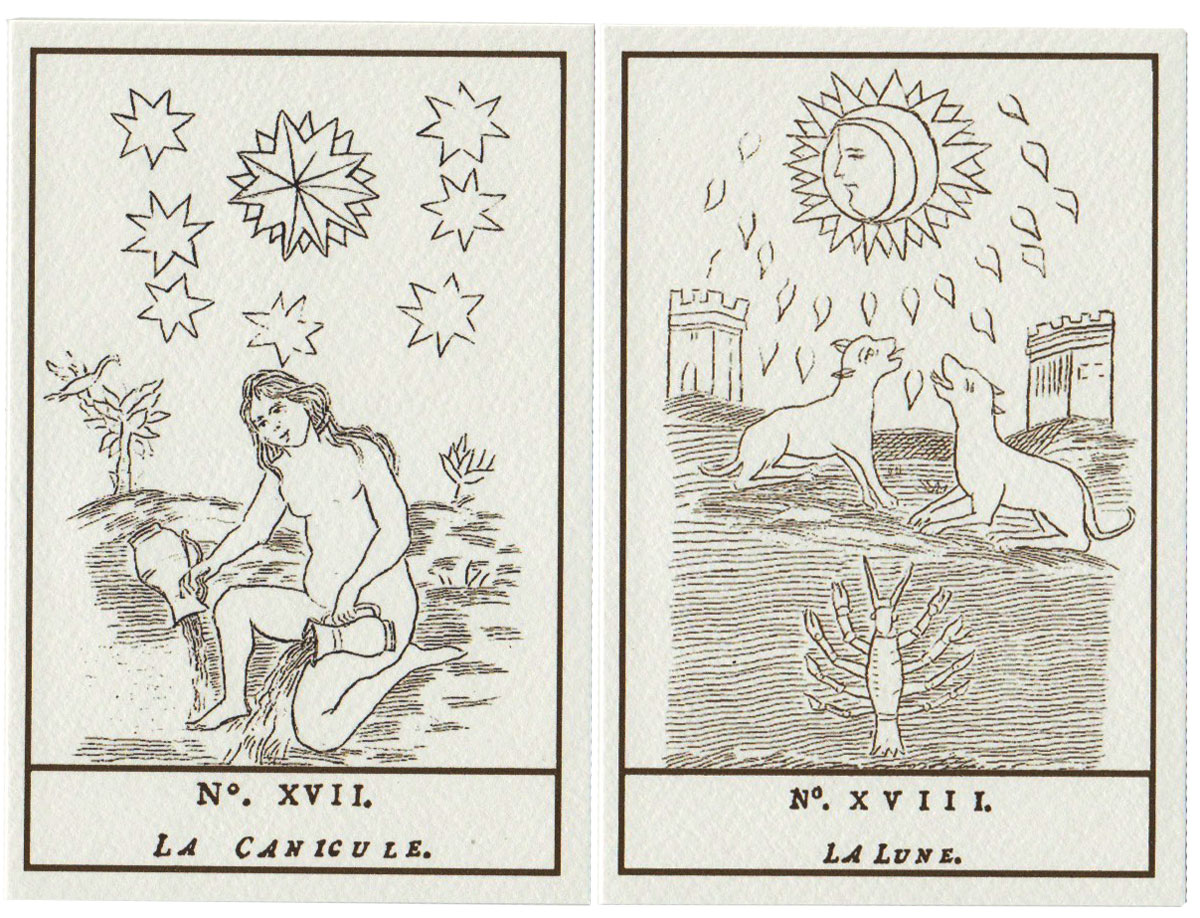
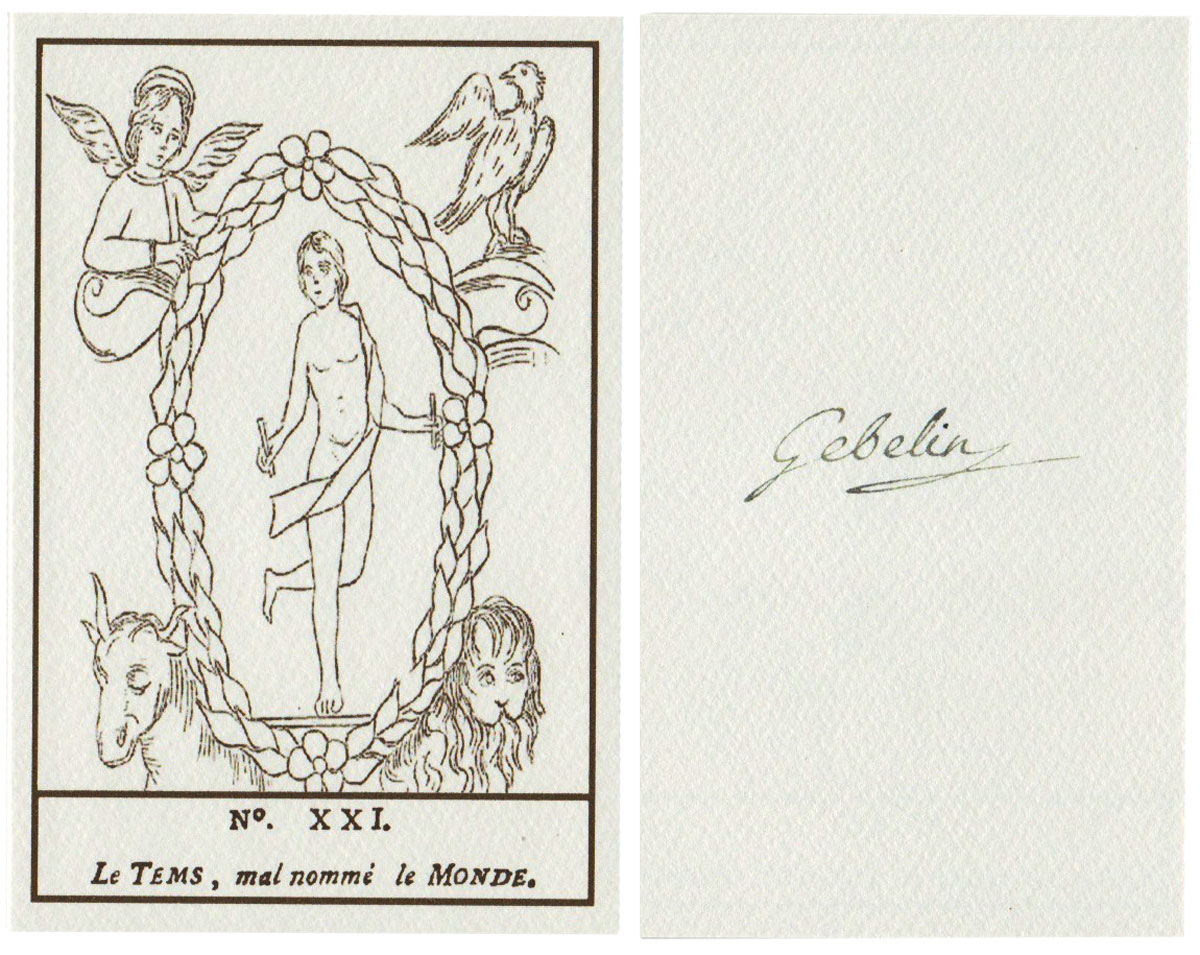
This deck was published by Morena Poltronieri & Ernesto Fazioli of Museo dei Tarocchi, February 2021, It comes in a sturdy cardboard box with the museum's hot wax seal. The cards are printed on textured, matte art stock and the titles are written in French and have traditional Roman numerals. Limited edition of 120 numbered copies.
Further References
Hall, Evalyne K.: Du Jeu des Tarots et Recherches sur les Tarots, Evalyne's Garden Gate, Bellefonte, Pennsylvania, 2016
Vine, David: Vintage Tarot Texts, Editions letarot.com, 2022

By Simon Wintle
Spain • Member since February 01, 1996
I am the founder of The World of Playing Cards (est. 1996), a website dedicated to the history, artistry and cultural significance of playing cards and tarot. Over the years I have researched various areas of the subject, acquired and traded collections and contributed as a committee member of the IPCS and graphics editor of The Playing-Card journal. Having lived in Chile, England, Wales, and now Spain, these experiences have shaped my work and passion for playing cards. Amongst my achievements is producing a limited-edition replica of a 17th-century English pack using woodblocks and stencils—a labour of love. Today, the World of Playing Cards is a global collaborative project, with my son Adam serving as the technical driving force behind its development. His innovative efforts have helped shape the site into the thriving hub it is today. You are warmly invited to become a contributor and share your enthusiasm.

Activity for Le Monde Primitif Tarot
Sign in to comment or save this article.

Related Articles
Murder of Crows Tarot
Corrado Roi’s 2020 tarot pack presents a dark, watchful world of crows and ritual figures.
History of Tarot and Playing Cards: Timeline & Origins
An alternative history of tarot and playing cards – from Mamluk Egypt to the invention of tarot in R...
The Sola-Busca Tarot
Humanist Iconography, Alchemical Metaphor, and the Origins of the Illustrated Minor Arcana.
Luigi Del Pieve Minchiate
Luigi Del Pieve and the “Alli Sorte” Minchiate of Florence.
Austrian Tarock by S.D. Modiano
Modiano’s Austrian Tarock with country scenes has been in production for over 100 years.
Sevilla 1647 reproduction
Facsimile of Spanish-suited pack produced in Sevilla, Spain, 1647.
The Parisian Tarot
The “Parisian Tarot”, early 1600s, with imagery and design synthesizing several influences.
Venetian Tarot
Scenes from the history of Venice on a set of the major arcana.
Le Jeu de la Guerre
Facsimile of “Le Jeu de la Guerre” designed by Gilles de la Boissière in 1698.
Trentine Pattern
Trentine Pattern
Primiera Bolognese
Primiera Bolognese by Modiano, c.1975
Johannes Müller c.1840
Facsimile edition of Swiss suited deck first published by Johannes Müller in c.1840.
Rois de France
Cartes des Rois de France (1644) facsimile edition by Edizioni del Solleone, 1986.
Perspectives on the History of Tarot
From a Renaissance Card Game to a Medium of Spiritual Meaning and Identity.
Sola-Busca Tarocchi
The Sola-Busca Tarocchi, c.1491
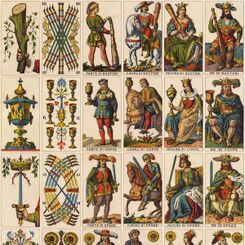
Serravalle-Sesia Tarot
Serravalle-Sesia Tarot published by Fratelli Avondo, c.1880.
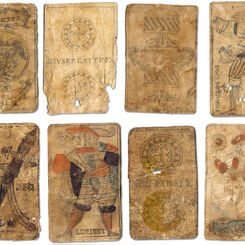
Giuseppe Cattino
Playing cards manufactured in Italy by Giuseppe Cattino and Paolo Montanar for Spanish markets.
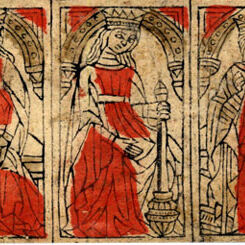
XV Century Italian Playing Cards
Cards from a pack of an early form of north Italian playing cards, with the swords back-to-back and ...
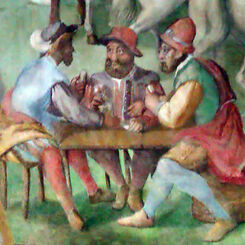
Italian Playing Cards
The first reliable evidence that playing cards were being used in Italy is from 1376, when a game ca...
Hand-Painted Tarocchi Cards
Hand-painted Tarocchi cards sometimes known as ‘Charles VI tarot’, North Italy, 1475-1500.
Most Popular
Our top articles from the past 60 days