


Apache cards by Tonto Naipero
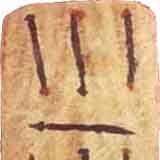
Apache rawhide playing cards by ‘Tonto Naipero’, c.1871.
Apaches and Chiricahuas began making their own playing cards from rawhide when paper cards made in Spain or Mexico were not available, such as during periods of hostilities or when trade was stifled. Spanish designs were imitated in traditional Apache style to create a unique folk-art genre that to Western eyes may appear somewhat bizarre. It is not known when the Apaches first started making their own cards, but the earliest surviving packs date from the 1860s after they were collected by U.S. military officers or obtained from Apache scouts or prisoners.
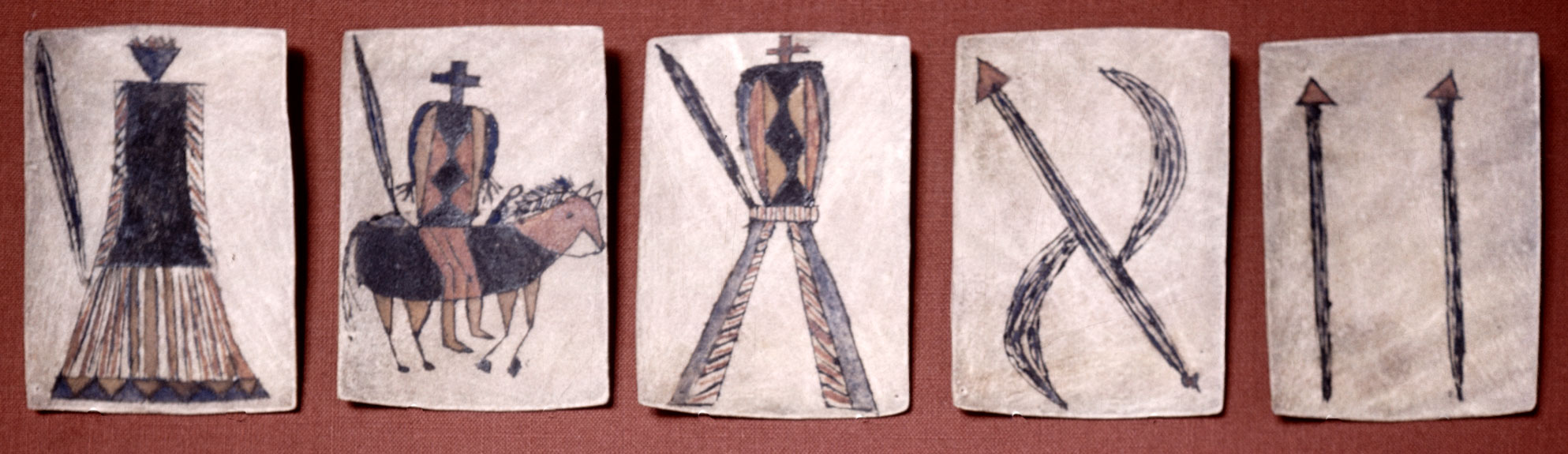
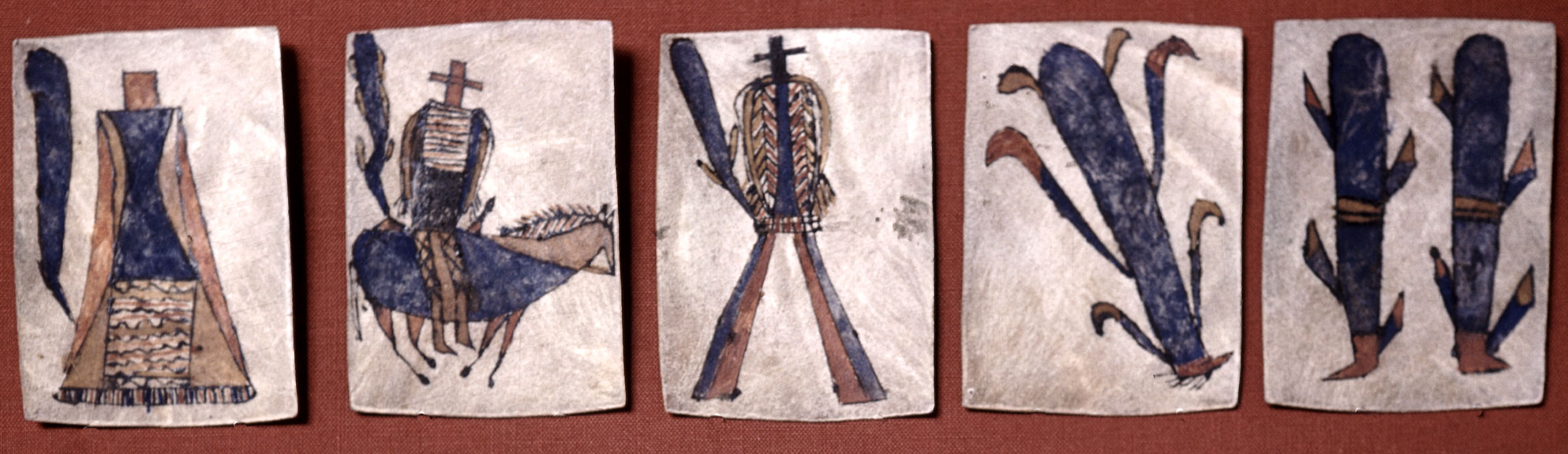
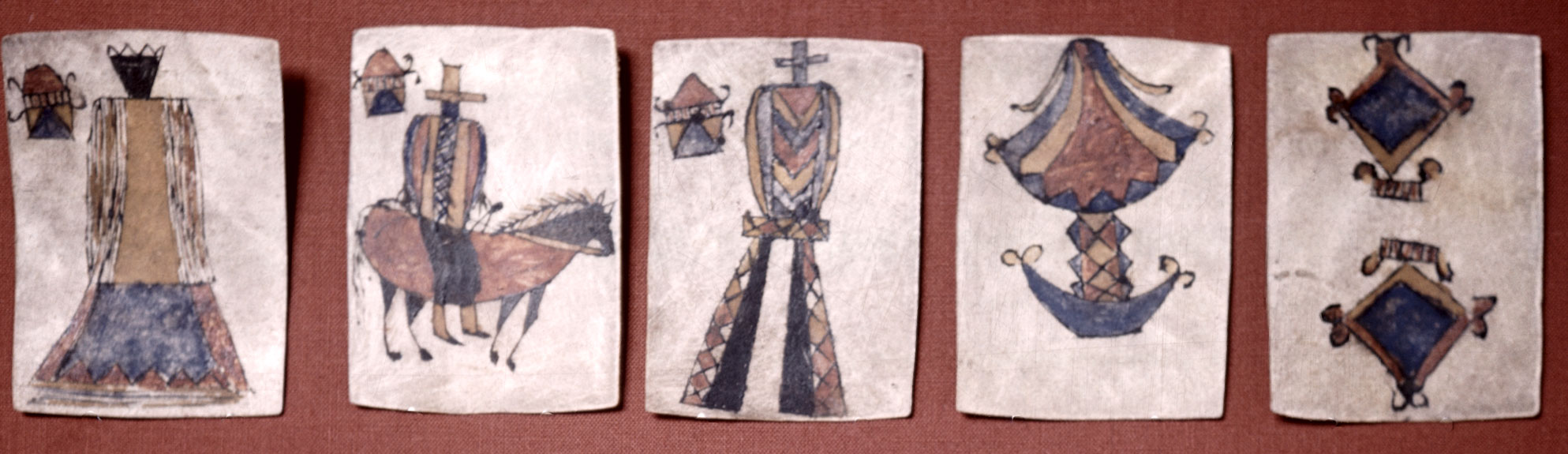
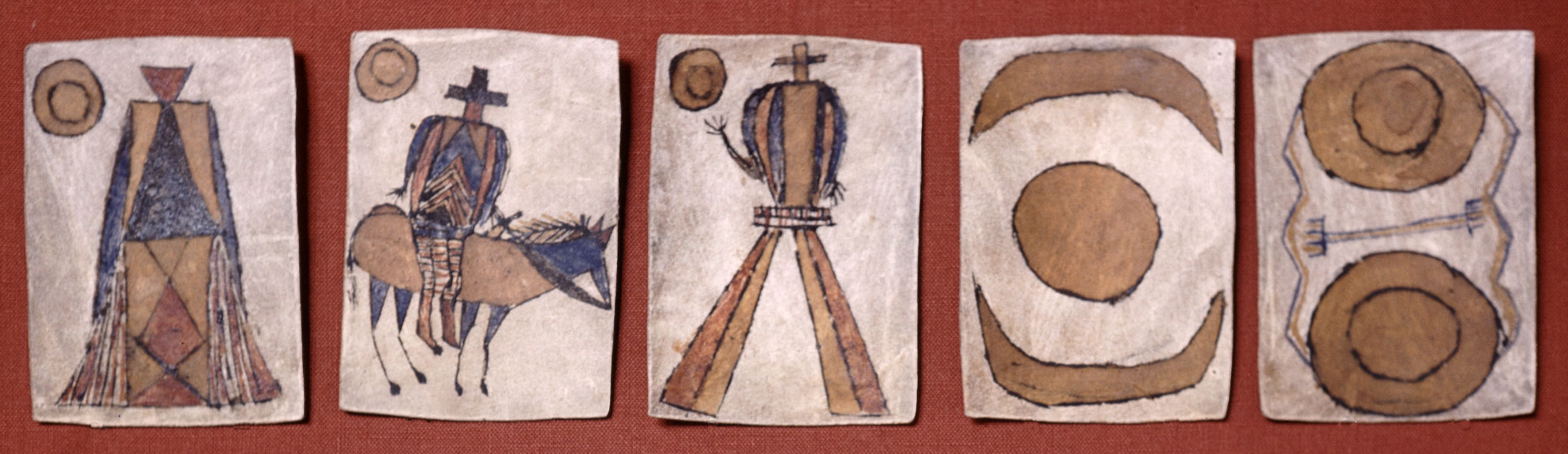
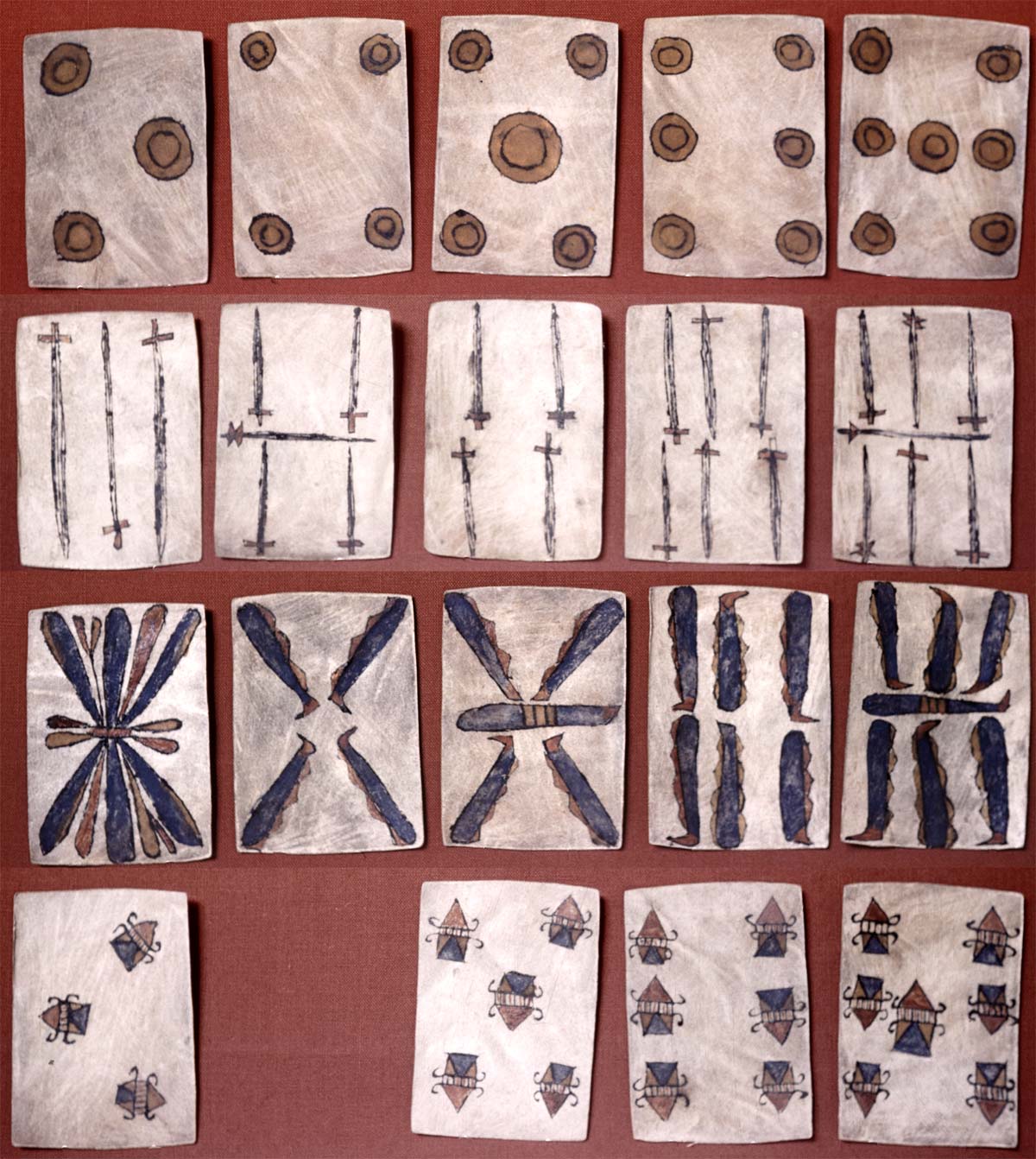
Above: Apache rawhide playing cards attributed to the ‘Tonto Naipero’, c.1871. 40 cards. ‘Tonto Naipero’ is the assumed author of several rawhide packs displaying stylistic similarities and attributes of which this is one example. Images courtesy of the Department of Anthropology, National Museum of Natural History, Smithsonian Institution, Washington, D.C. [Cat. no. 11079]. Photographs by Harold Wayland.
It is believed that some Apaches, perhaps prompted by sales of packs that had been made for their own use, began to make rawhide cards specifically to sell to travellers or anthropologists.
REFERENCES
Ferg, Alan, Wayland, Harold & Virginia: Recognizing a Nineteenth Century Apache Playing Card Artist: the Tonto Naipero, in ‘The Playing-card’, Journal of the IPCS, Vol.36 No.2, Oct-Dec 2007.
Wayland, Harold & Virginia, Ferg, Alan: Playing Cards of the Apaches, a study in cultural adaptation, Screenfold Press, 2006

By Simon Wintle
Spain • Member since February 01, 1996
I am the founder of The World of Playing Cards (est. 1996), a website dedicated to the history, artistry and cultural significance of playing cards and tarot. Over the years I have researched various areas of the subject, acquired and traded collections and contributed as a committee member of the IPCS and graphics editor of The Playing-Card journal. Having lived in Chile, England, Wales, and now Spain, these experiences have shaped my work and passion for playing cards. Amongst my achievements is producing a limited-edition replica of a 17th-century English pack using woodblocks and stencils—a labour of love. Today, the World of Playing Cards is a global collaborative project, with my son Adam serving as the technical driving force behind its development. His innovative efforts have helped shape the site into the thriving hub it is today. You are warmly invited to become a contributor and share your enthusiasm.

Activity for Apache cards by Tonto Naipero
Sign in to comment or save this article.

Related Articles
Baraja Mexicana Calendárica
Scholarly Mexican playing cards with Aztec and Maya calendar motifs.
Ute Mountain Casino Hotel & Resort
Casino playing cards featuring Native American courts.
Arrowhead Playing Cards from San Felipe’s Casino Hollywood
A gorgeous and well-researched celebration of Native American culture.
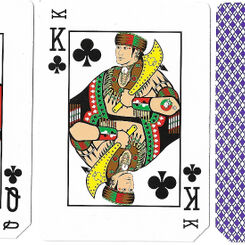
Meskwaki Casino
A deck reflecting Native American culture where every hand could be a jackpot.
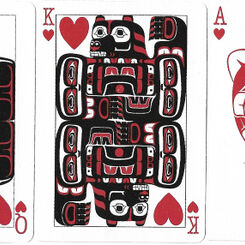
Pacific Northwest Native American Playing Cards
A bold presentation of animals in Native American artwork – with a political message.
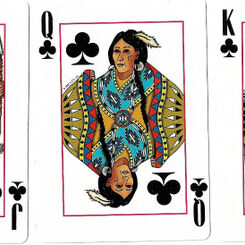
Authentic American Indian Playing Cards (Northern Plains Collection I)
Honouring the Great Plains: carefully chosen symbols on familiar playing cards.
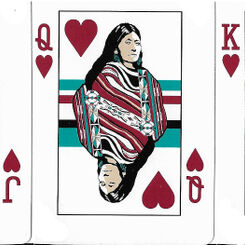
San Manuel Casino
Native American-themed playing cards used by tribal casinos.
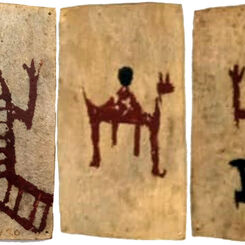
Aónikenk playing cards
Ethnographic playing cards made by members of the Aónikenk culture from Patagonia.
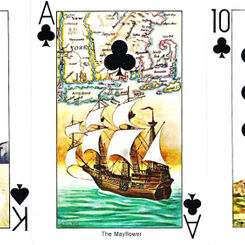
Colonial Art
A collection of 53 pieces of art showcasing detailed scenes from early American colonial life.
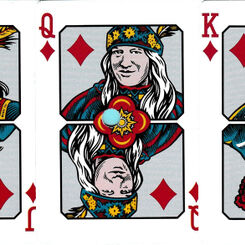
Mohegan Sun playing cards
Mohegan Sun playing cards published by Gemaco for Mohegan Sun casino.
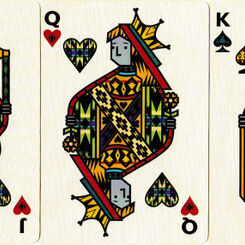
Pendleton playing cards
Pendleton playing cards inspired by indigenous American artwork, USA, 2019.
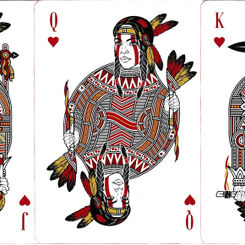
Malam playing cards
Malam playing cards created by Michael Muldoon, USA, 2015.
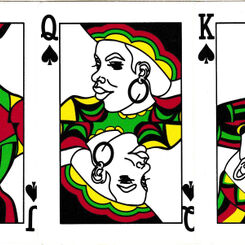
Race Card
‘Race Card’ playing cards published by the Concept Card Co., New Orleans, Louisiana, USA.
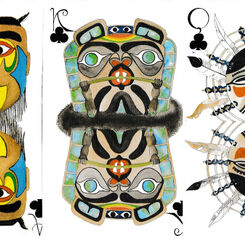
Pacific Northwest native Indian masks
Pacific Northwest native Indian masks with artwork by Margaret Parrott, USA, 1992.
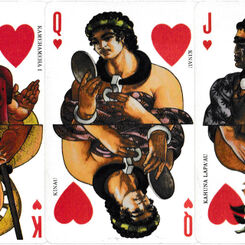
The Times of Kamehameha The Great
Figures from Hawaiian history and scenes of everyday life designed by Joseph Feher.
Tonalamatl
Baraja Tonalamatl Mexican Aztec playing cards based on the prehispanic Codex Borgia manuscript.
Ojibwa Native Indian Cards
Ojibwa Native Indian playing cards hand manufactured on birch bark in imitation of standard French /...
Apache Playing Cards
Apache Indian Playing Cards made on rawhide, first recorded 1875.
Mapuche Indian Playing Cards
Spanish-suited playing cards made on rawhide and said to have been used by Chilean Mapuche Indians, ...
Native Indian Hand-made Cards made on rawhide
Native Indian hand-made cards made on rawhide.
Most Popular
Our top articles from the past 60 days


Stephen Scharber
07 April 2026, 16:53SavedSaved this article to Stephen Scharber's Collection