



Hand-made Spanish Suited Playing Cards
Decks are made on two-ply pasteboard which reproduces the tactile quality of antique cards.
Archaic Spanish Suited Playing Cards
This Spanish suited pack of playing cards mimics sixteenth century French and Spanish production, and is based upon surviving specimens. This pattern is now completely extinct today.
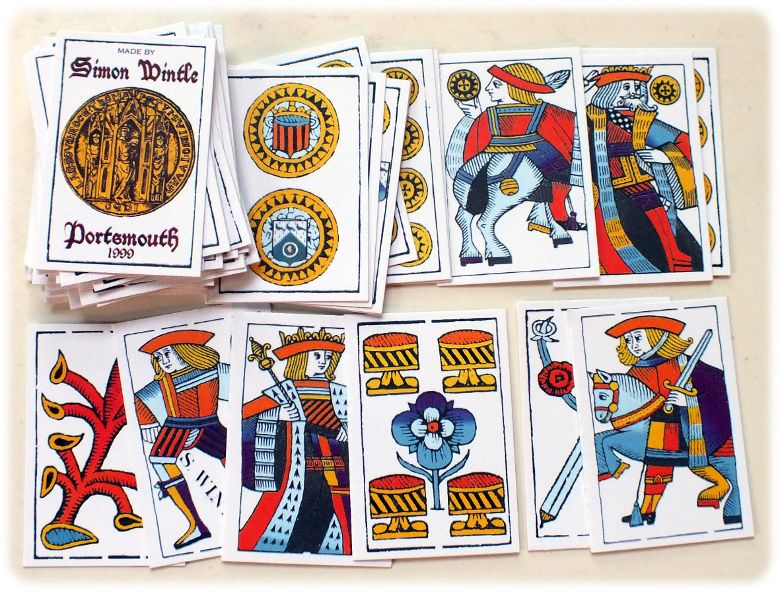
Suitable for play, re-enactment or where an authentic period feel is required.
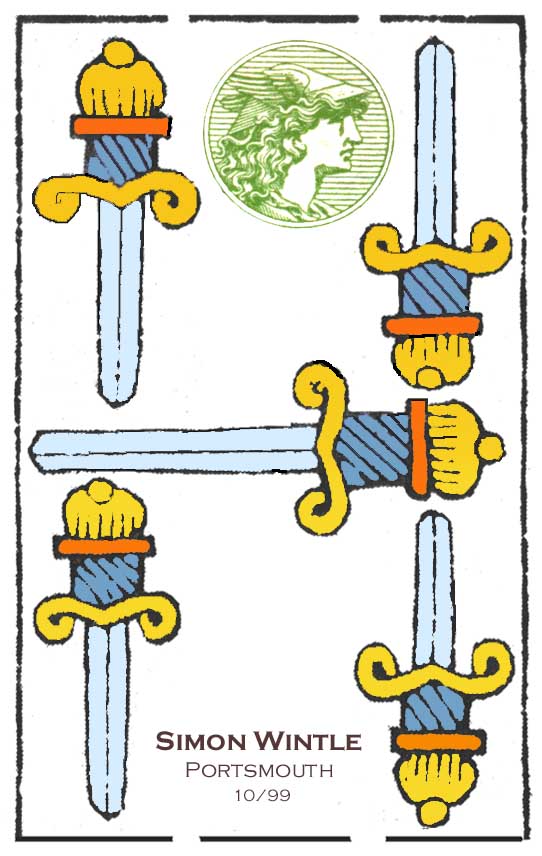
Decks are made up on two-ply pasteboard which reproduces the tactile quality of antique cards. Suits are Coins, Cups, Swords and Batons. 48 cards + 1 extra card. Reverse: plain. Size: 48mm x 75mm.
Click the five of swords to see an enlargement.





By Simon Wintle
Spain • Member since February 01, 1996
I am the founder of The World of Playing Cards (est. 1996), a website dedicated to the history, artistry and cultural significance of playing cards and tarot. Over the years I have researched various areas of the subject, acquired and traded collections and contributed as a committee member of the IPCS and graphics editor of The Playing-Card journal. Having lived in Chile, England, Wales, and now Spain, these experiences have shaped my work and passion for playing cards. Amongst my achievements is producing a limited-edition replica of a 17th-century English pack using woodblocks and stencils—a labour of love. Today, the World of Playing Cards is a global collaborative project, with my son Adam serving as the technical driving force behind its development. His innovative efforts have helped shape the site into the thriving hub it is today. You are warmly invited to become a contributor and share your enthusiasm.

Activity for Hand-made Spanish Suited Playing Cards
Sign in to comment or save this article.

Related Articles
Moorish Deck
Review of “Trzes’ Moorish Deck” facsimile published by Ulrich Kaltenborn, Berlin, 2023.
Heráldica Castanyer
Spanish Catalan pattern No.6 by Heráldica Castanyer, Sabadell (Barcelona), c.1980.
Suicide King
The King of Hearts, holding a sword behind his head, is sometimes nicknamed the “Suicide King”. He c...
William Warter
William Warter's Proverbial Cards, which carry illustrations of old English proverbs, were first pub...
David James Binns
Hand-made “Tudor Playing Cards” by David James Binns, age 12.
Joan Barbot
Joan Barbot, San Sebastian c.1765-1810.
Heraclio Fournier S.A.
Founded in 1868, today it is part of Cartamundi.

Lottery Scratch Playing Card
Move your mouse over the scratch area...

Transformation Playing Cards, 1811
Transformation playing cards, first published in 1811. Each card bears a picture in which the suit m...
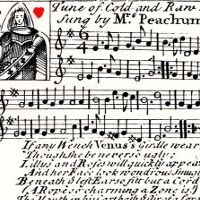
The Beggars’ Opera
The Beggars’ Opera Playing Cards were first published in 1728. The cards carry the words and music o...

Marlborough’s Victories
Marlborough’s Victories playing cards, first published in 1707, depict Marlborough's campaigns and t...
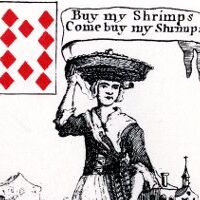
Cries of London
The cards were printed from copper plates, with the red suit symbols being applied later by stencil....

Fagoaga y Compañía (Casa Bertrand Domec), Buenos Aires, c.1970
Playing Cards Imported into Argentina by Fagoaga y Compañía (Casa Bertrand Domec), Buenos Aires, c.1...

Spanish Playing Cards ~ La Baraja Española
Spain has played a pivotal role in the history of playing cards in Europe and Latin America.
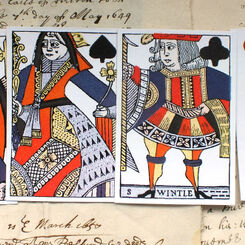
Hewson Replica Pack
Hand-made replica 17th century English playing cards, based on museum originals.

Playing cards in Wales - Welsh playing cards
Whereas the distinctiveness of Wales is an important resource contributing to the rich texture of va...
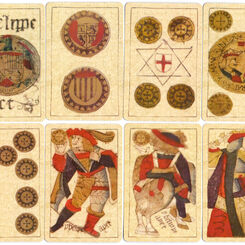
Phelippe Ayet, 1574
49 assorted cards were found hidden in the lintel of a doorway, in an old building in Toledo, during...
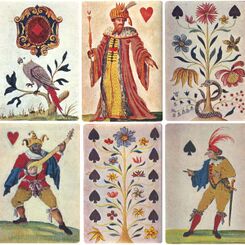
Silk Inlaid playing cards for Charles I.
Silk Inlaid playing cards said to have been made for Charles I
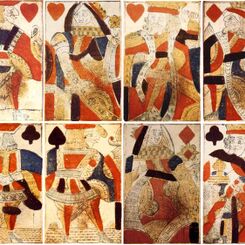
Hunt, c.1800
Standard English pattern playing cards manufactured by Hunt, c.1800.
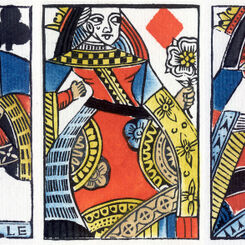
Woodblock and Stencil Playing Cards
Around 1987 I decided to make a pack of playing cards from woodblocks and coloured with stencils. I ...
Most Popular
Our top articles from the past 60 days


