William Warter
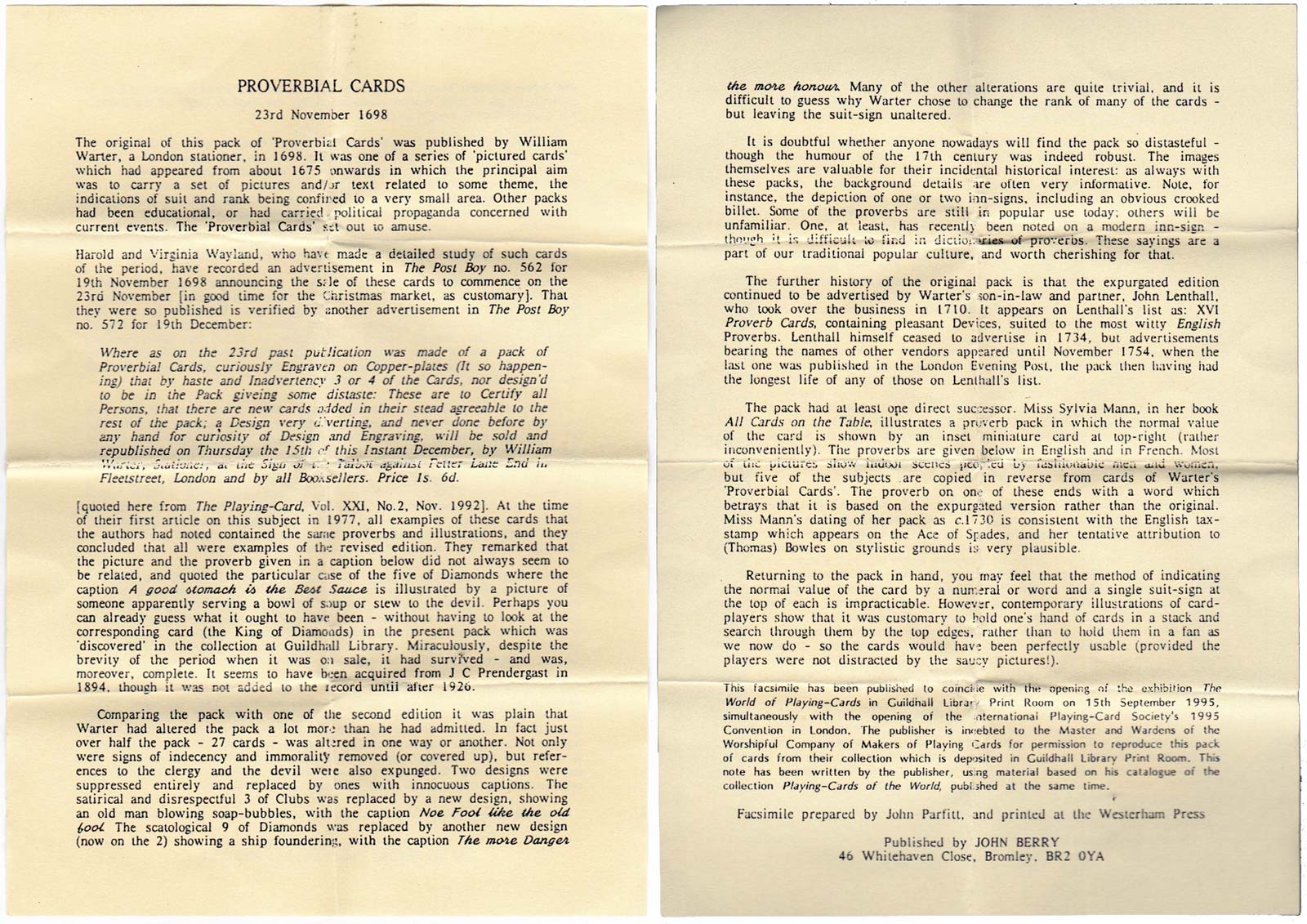
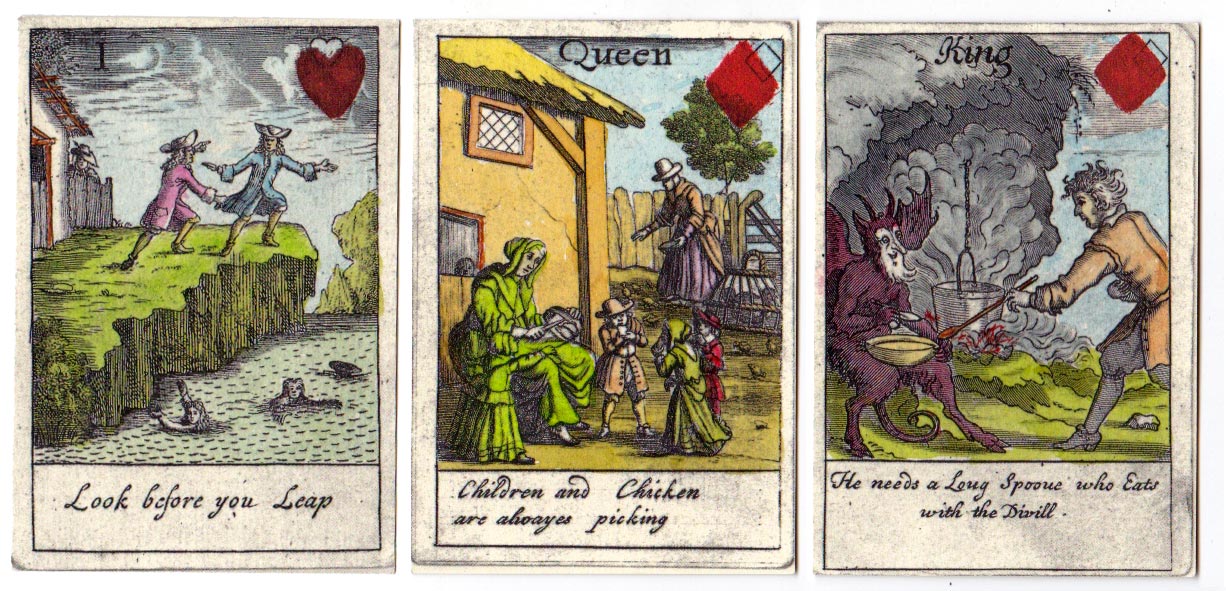
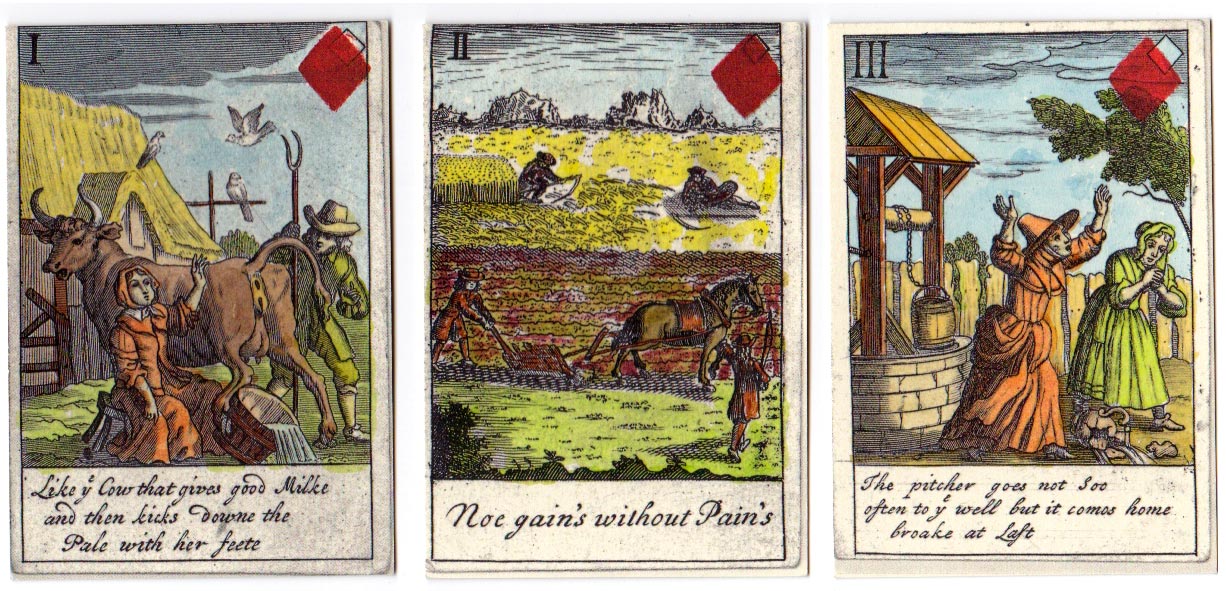
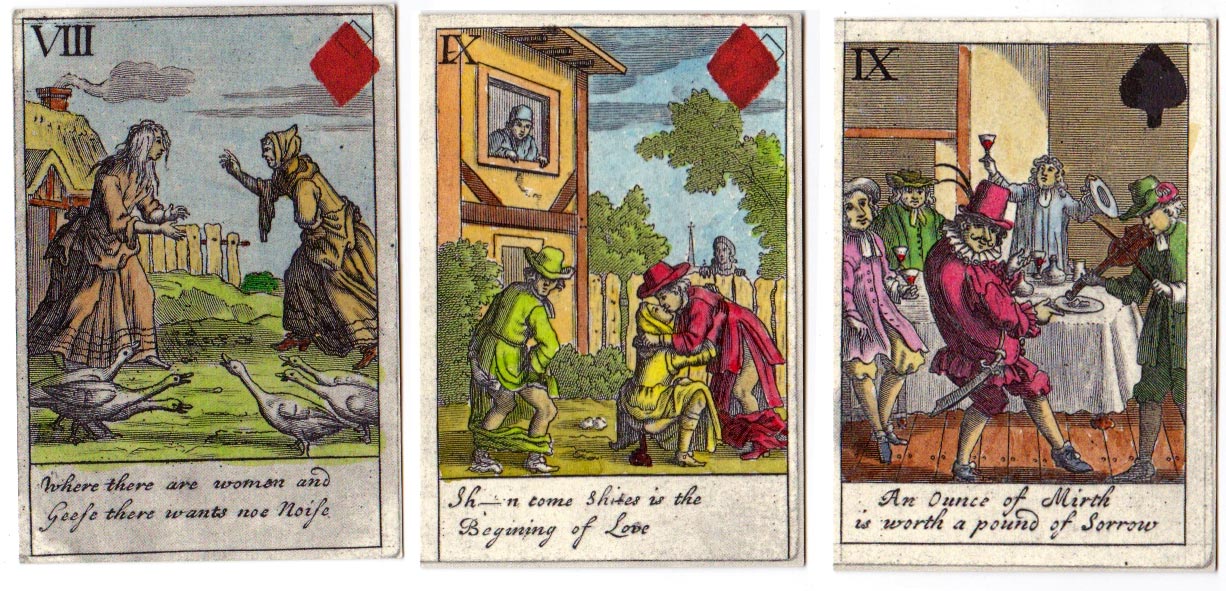
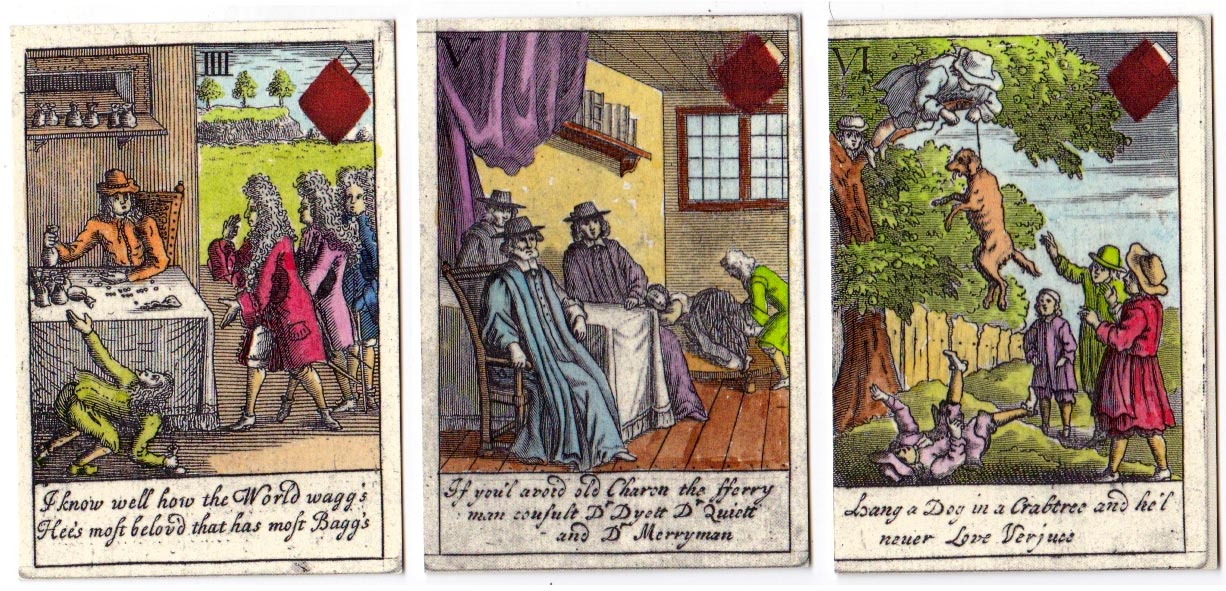
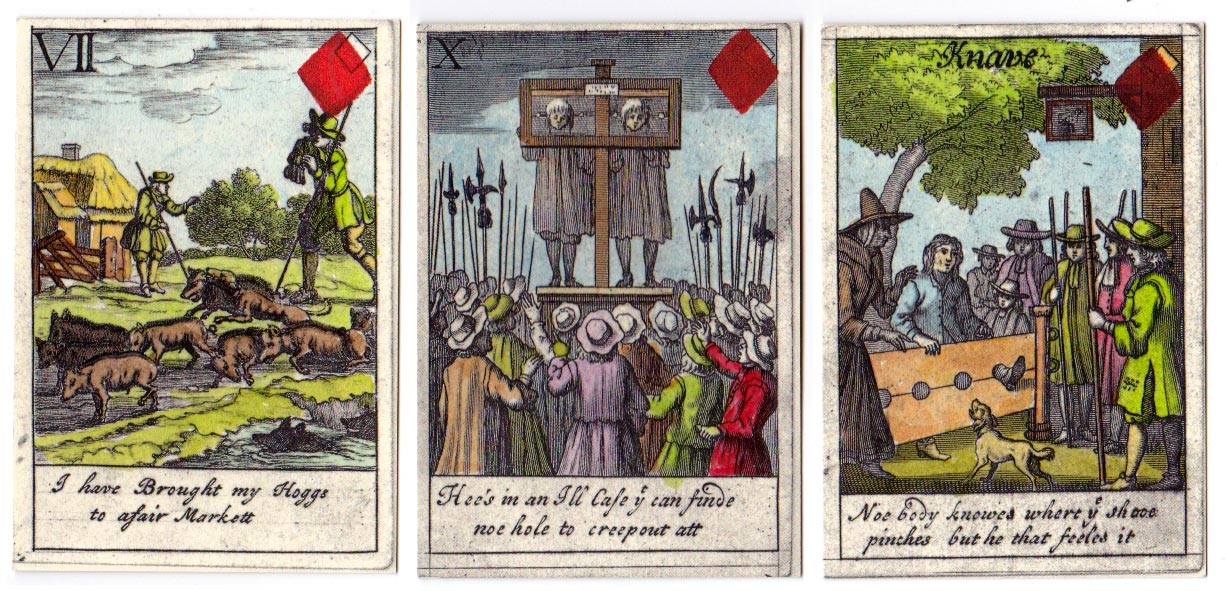
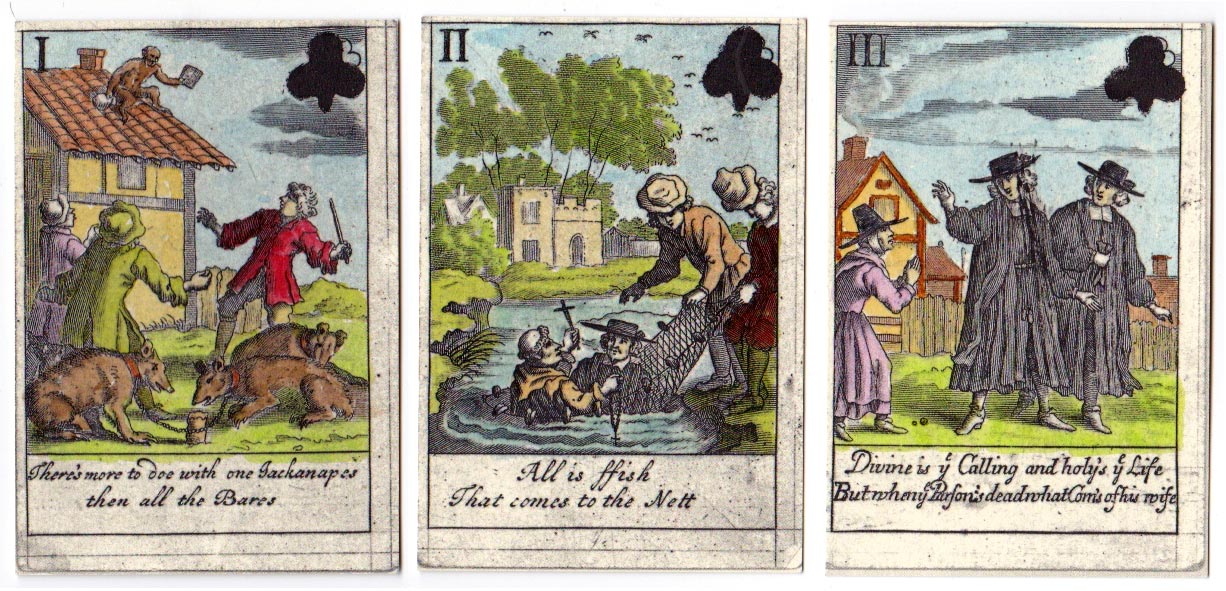
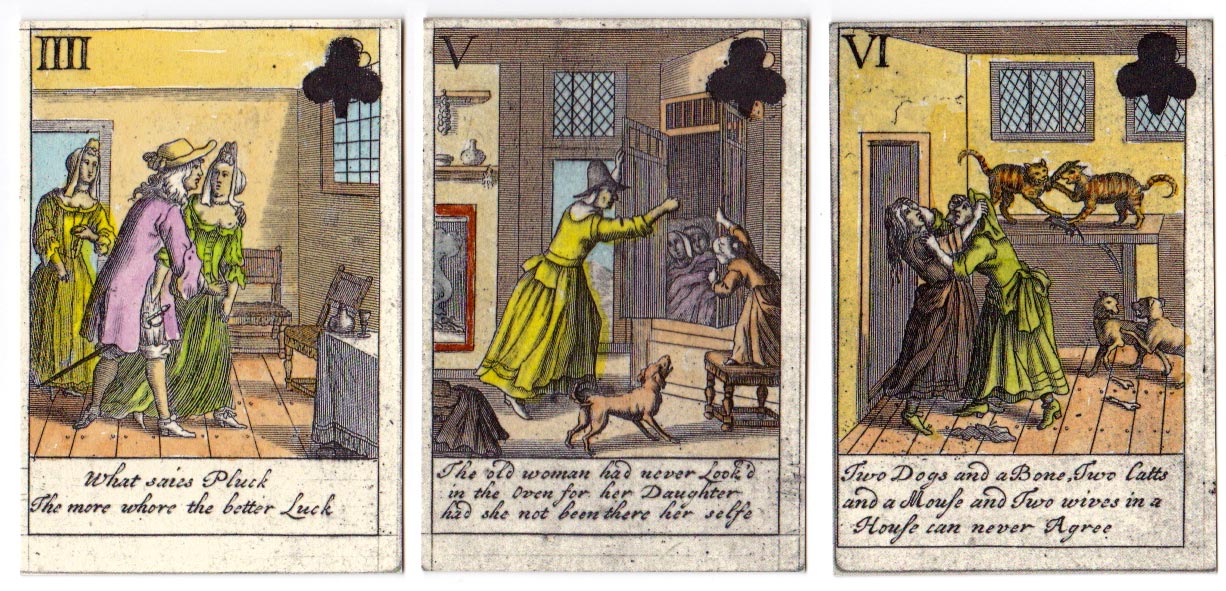
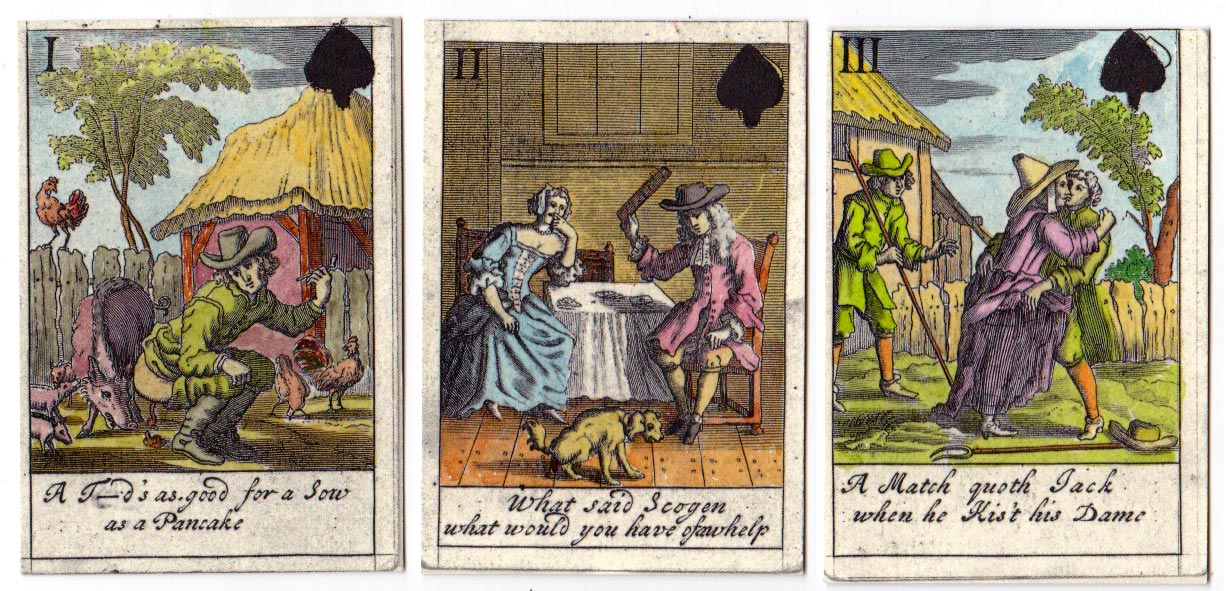
William Warter's Proverbial Cards, which carry illustrations of old English proverbs, were first published in 1698.
William Warter’s Proverbial Cards, 1698
William Warter's Proverbial Cards, which carry illustrations of old English proverbs, were first published in 1698. William Warter was a London stationer whose shop was at the “Signe of the Talbott, over against Fetter Lane End of Fleet Street, London” at least as early as 1682. The pack of playing cards was one of a series which appeared from about 1675 onwards which consisted of a set of pictures with captions relating to a theme of the day, with suitmarks and numerals in the corner, or in some cases, miniature playing cards as well. Some of these packs were educational, others political, geographical or arithmetical, but the “Proverbial Cards” were simply for amusement.
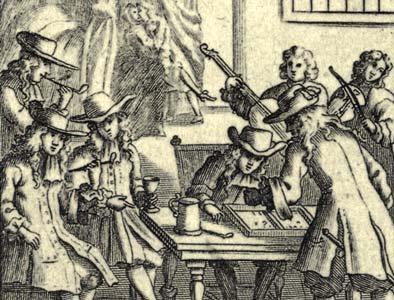
The images on the cards are of historical interest as illustrations of late 17th century life. The proverbs are part of our traditional popular culture, well suited to a pack of playing cards!
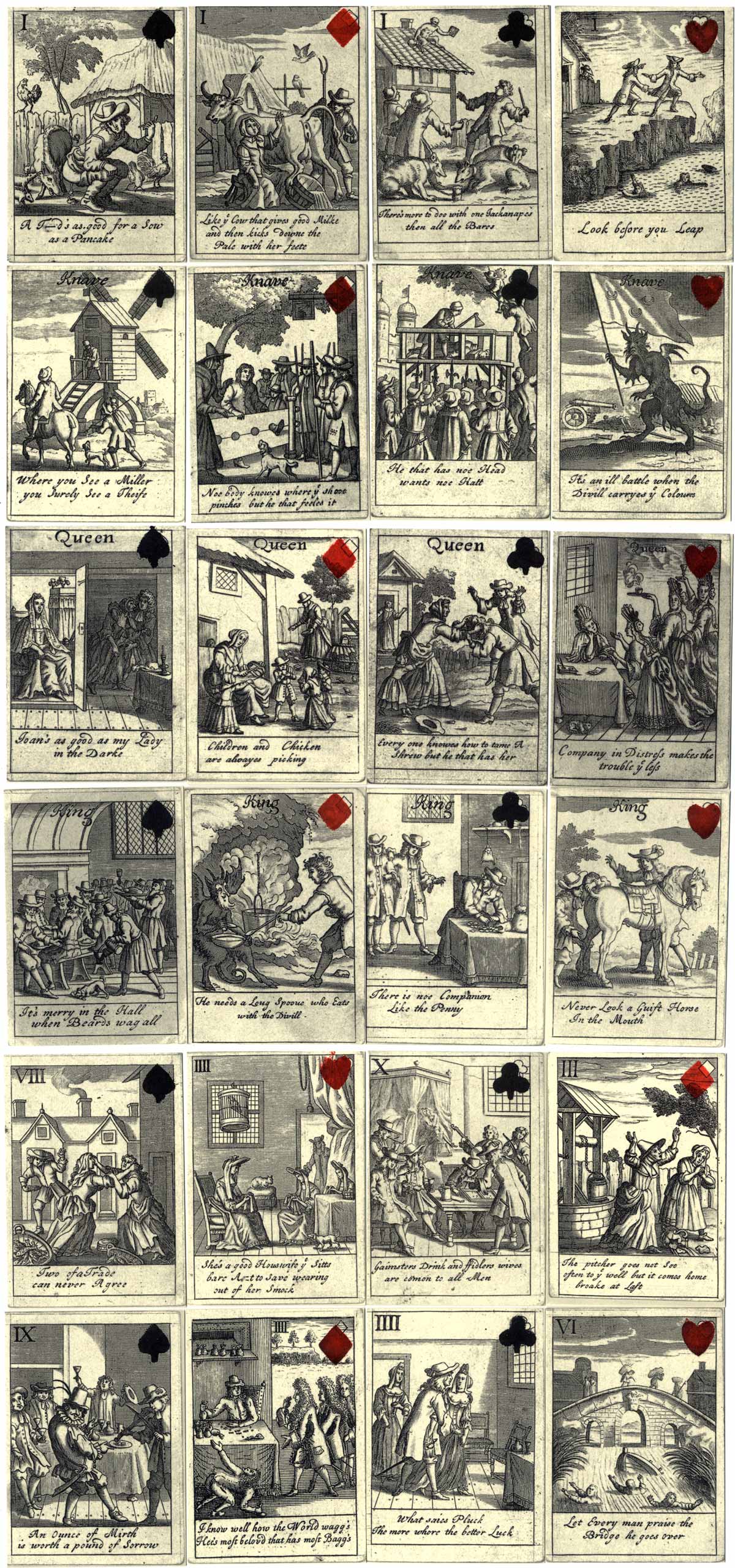
Above: cards from a facsimile edition of 'William Warter's Proverbial Cards' (1698) published by John Berry, Bromley, 1995. The original cards are printed from copper-plate engravings (uncoloured) with suit marks stencilled in the corners.
Read the Leaflet►
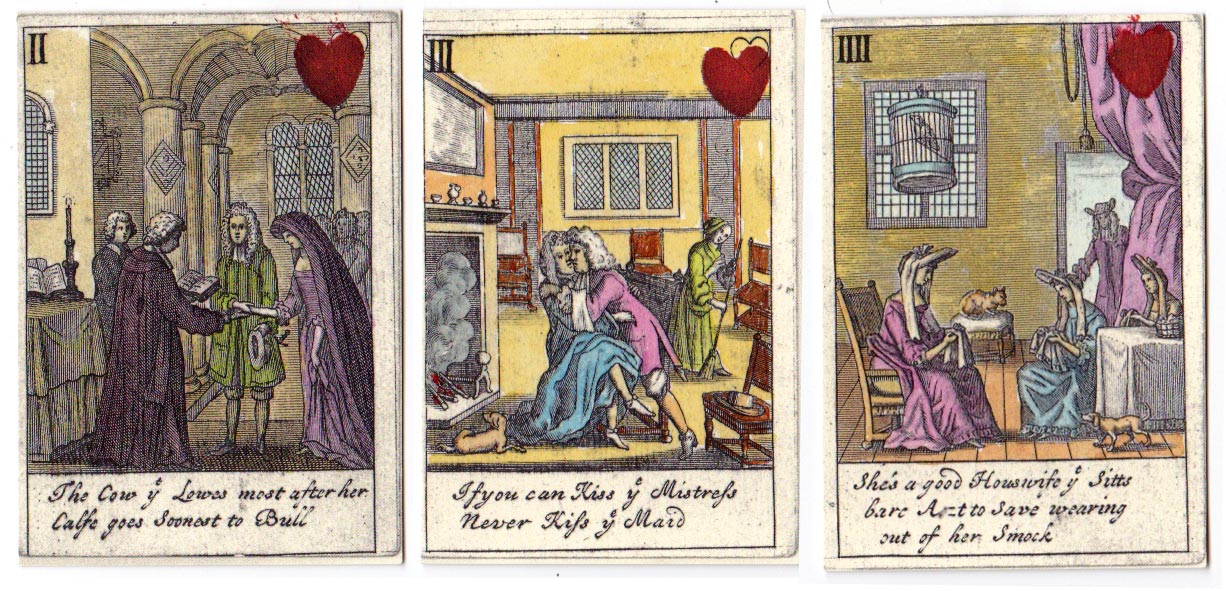
Coloured Cards
William Warter's Proverbial Cards were sold uncoloured, but often they were hand-coloured by their owners. Rex Pitts has filling a bit of time by colouring these repros of political style cards.
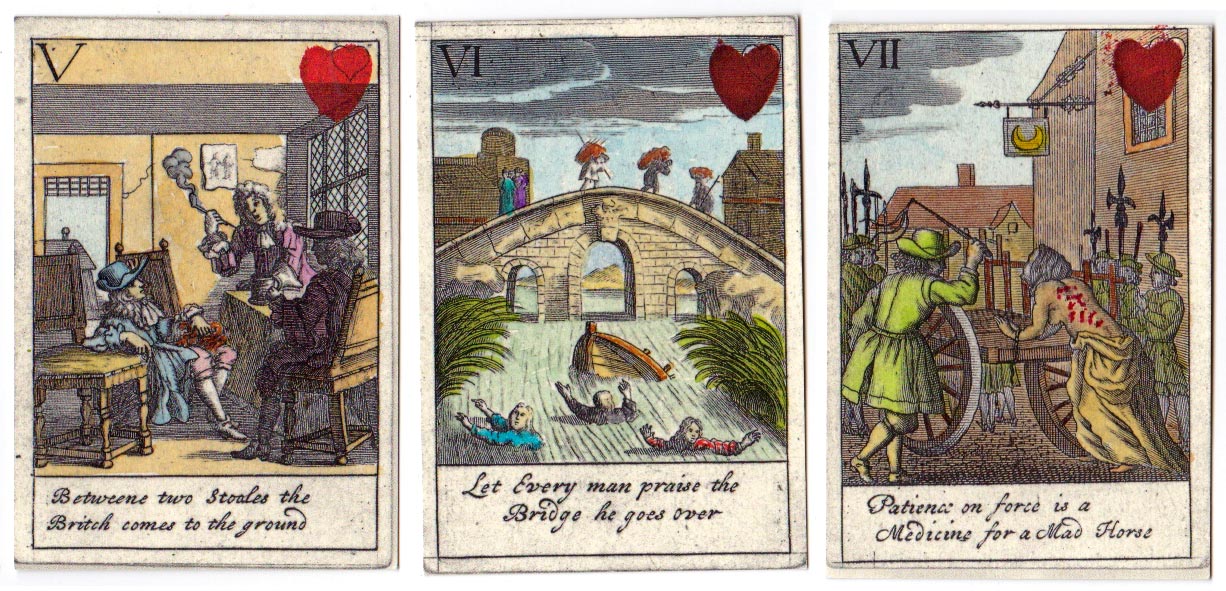
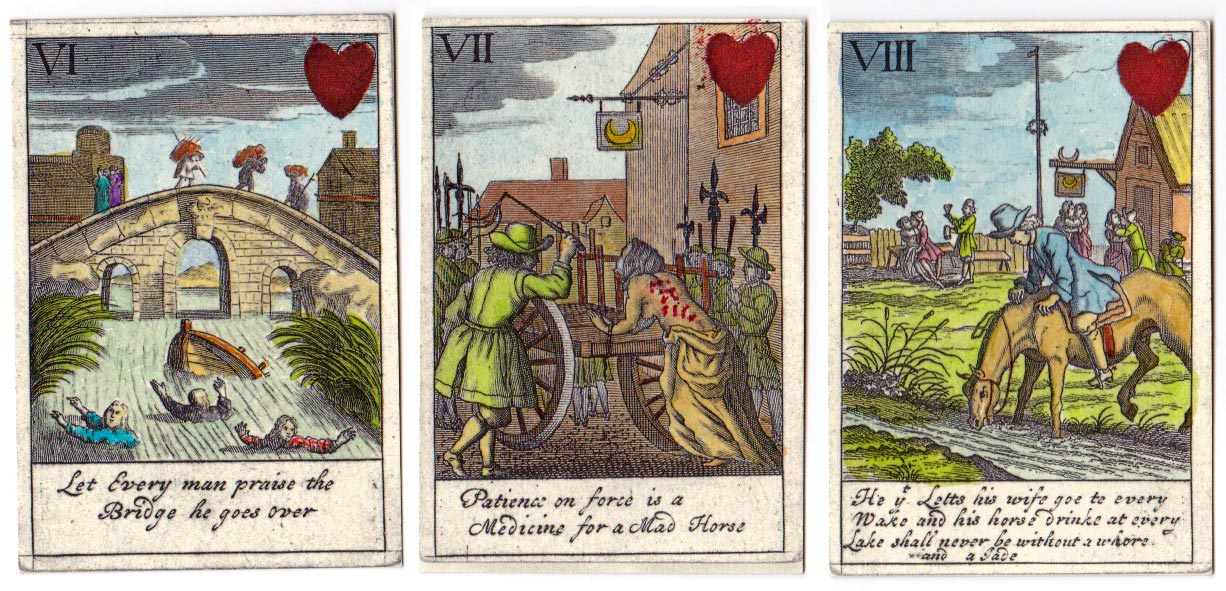
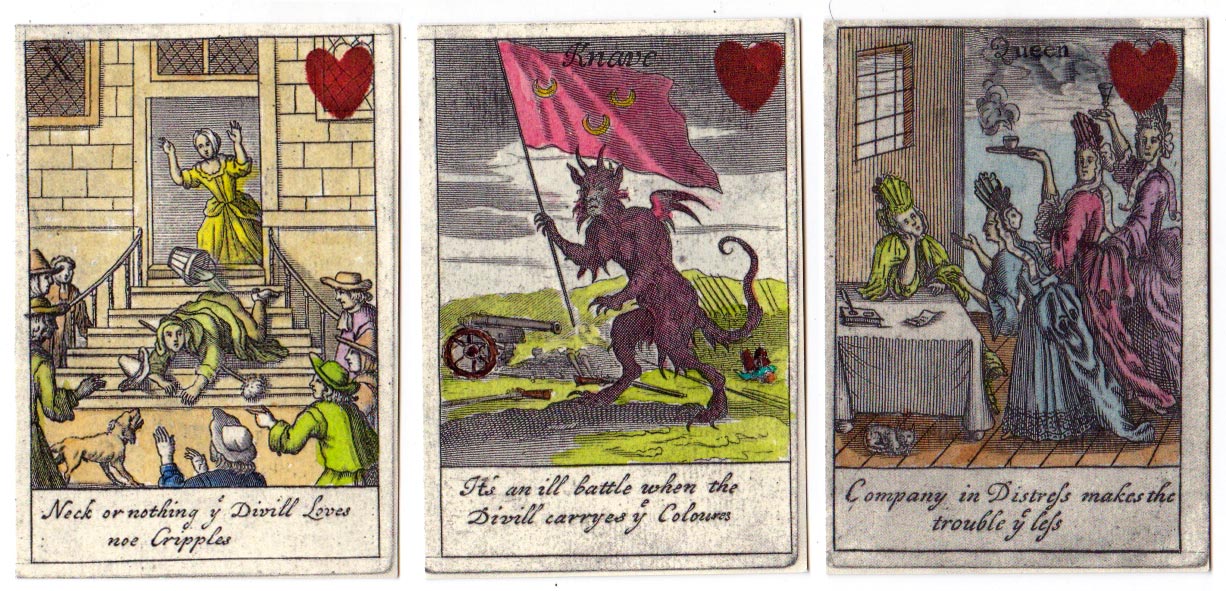
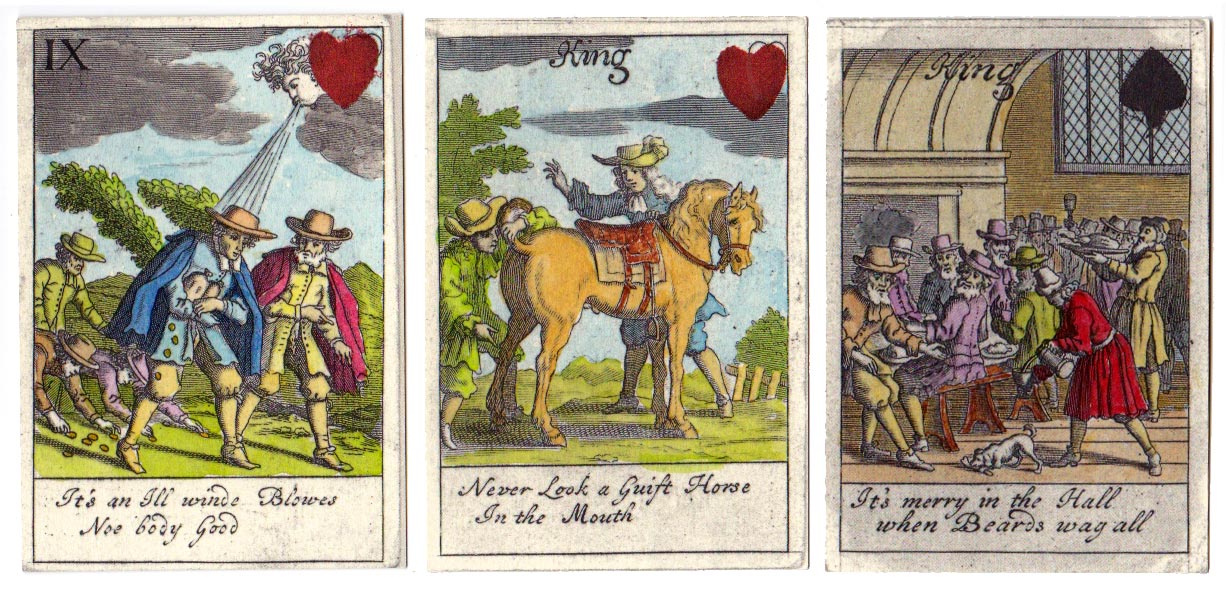
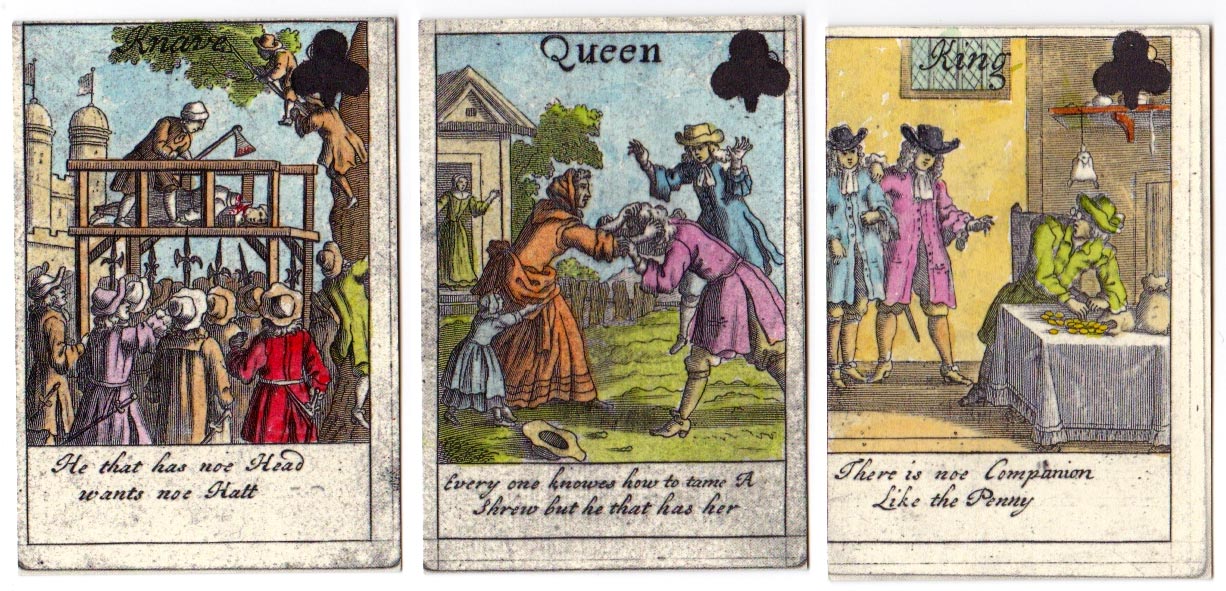
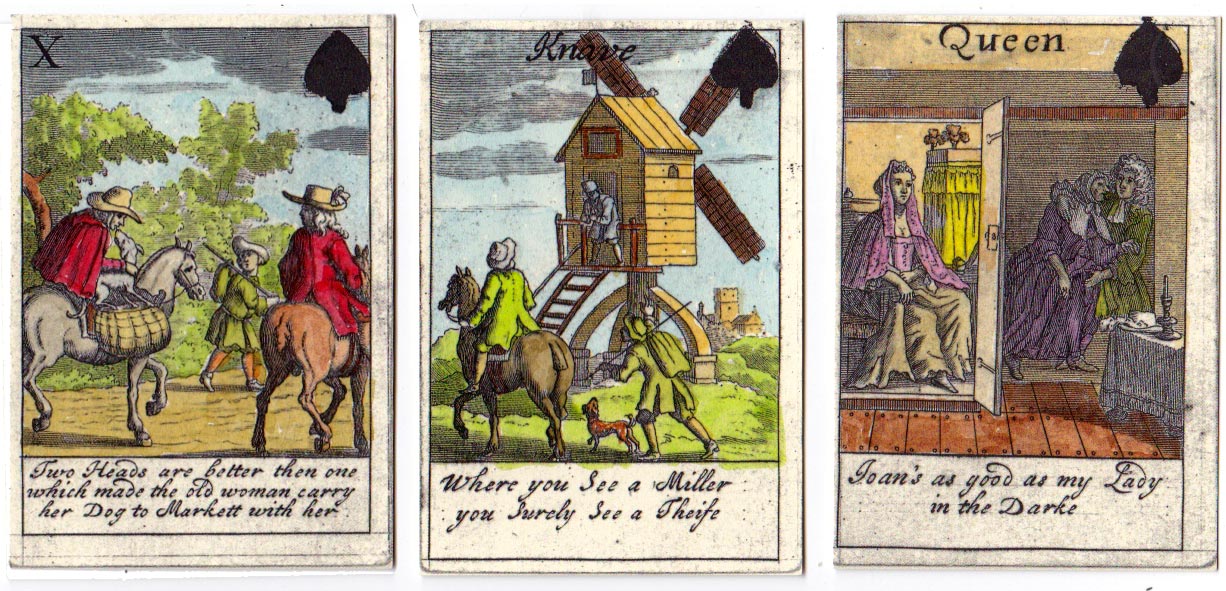
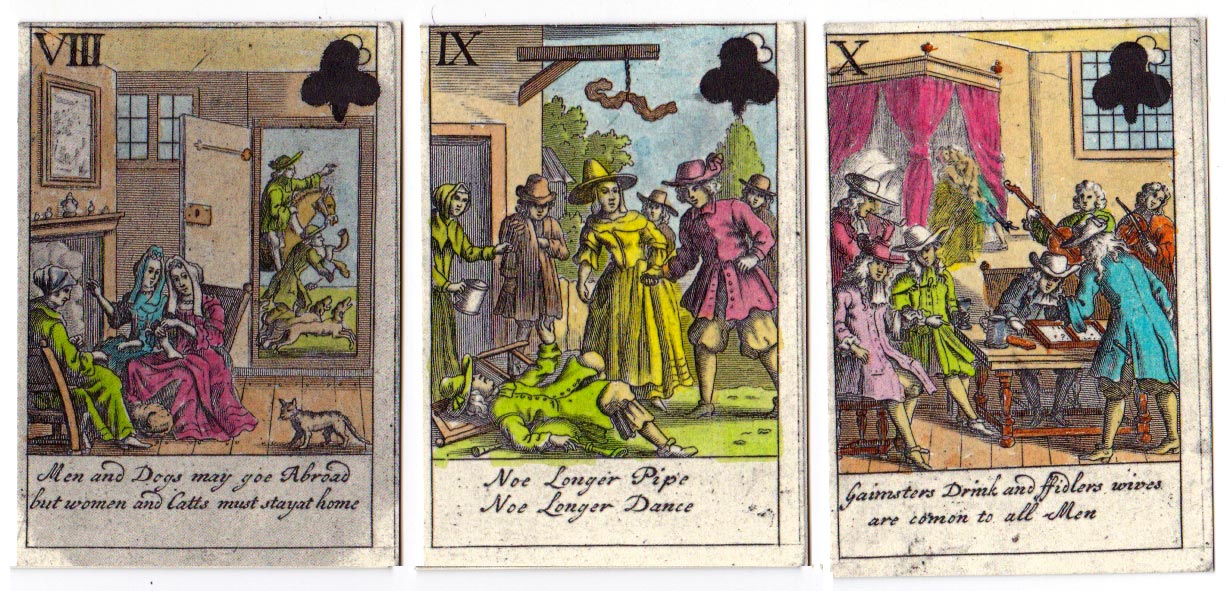
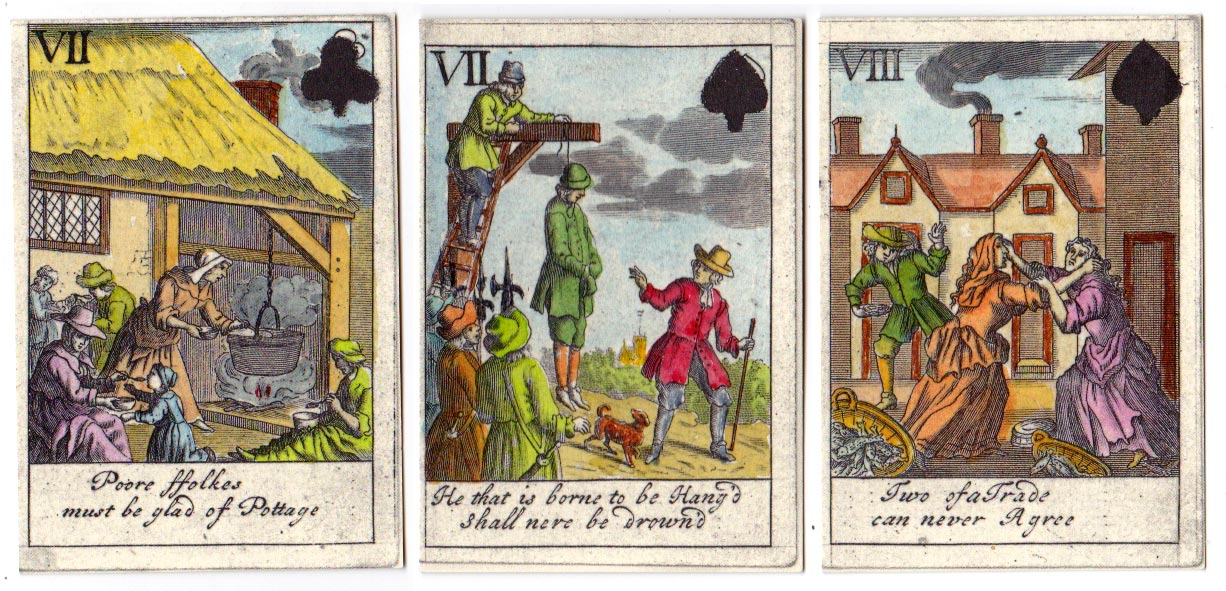
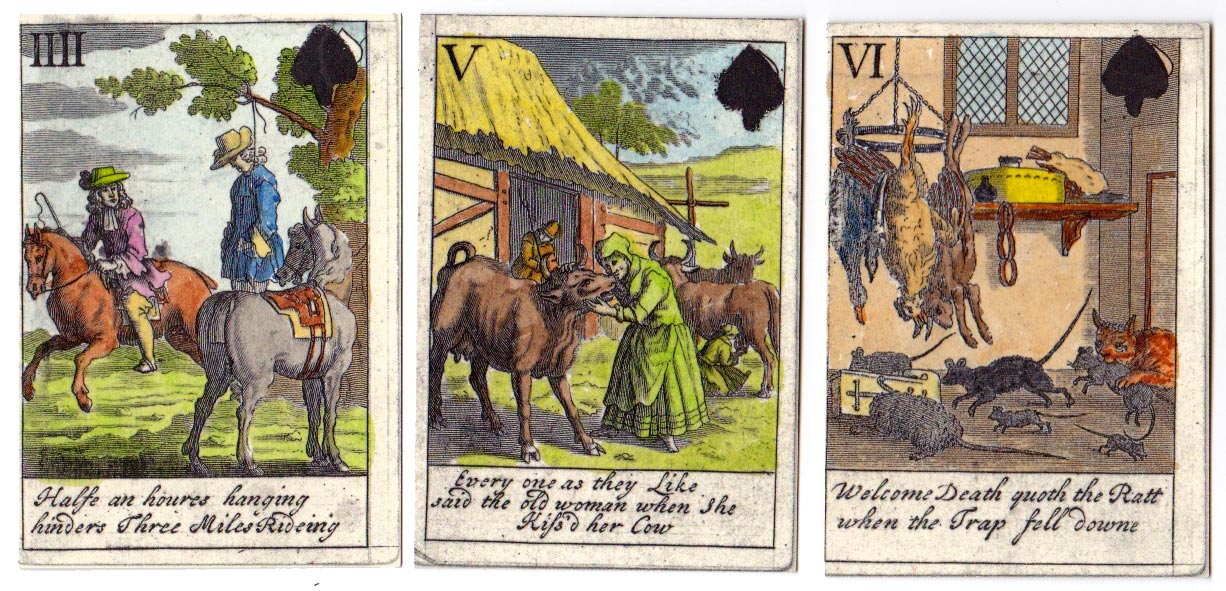
“Being in lock down has made very little difference to my daily round since retirement. I spent a lot of time driving around before that as I was a packaging salesman covering Norfolk and Suffolk doing around 20,000 miles a year. That was a big change so I had a lot more time to devote to collecting but I missed all the customers and the antique shops and charity shops I visited when travelling around (last year I did 850 miles!). I am lucky enough to have a wonderful next door but one neighbour Clare who takes me shopping with her so that she can hump all the groceries around. I have a blood condition where I have to have blood transfusions every 3 or 4 weeks and I get out of breath very quickly. Clare used also to clean my house every week but COVID-19 stopped that and she became, unofficially, my carer. I hope that soon she will be able to resume doing that when we have all been vaccinated.”
“This pandemic has brought out the best in most people and that is a gift and a reminder to us that we are part of a (mostly) friendly and helpful society.”
Rex has also made a few card games in the time he had to fill. The Gilbert and Sullivan game, 2 Old Fashioned Snap games, a copy of an Edwardian handmade pack Squires Household.

By Simon Wintle
Spain • Member since February 01, 1996
I am the founder of The World of Playing Cards (est. 1996), a website dedicated to the history, artistry and cultural significance of playing cards and tarot. Over the years I have researched various areas of the subject, acquired and traded collections and contributed as a committee member of the IPCS and graphics editor of The Playing-Card journal. Having lived in Chile, England, Wales, and now Spain, these experiences have shaped my work and passion for playing cards. Amongst my achievements is producing a limited-edition replica of a 17th-century English pack using woodblocks and stencils—a labour of love. Today, the World of Playing Cards is a global collaborative project, with my son Adam serving as the technical driving force behind its development. His innovative efforts have helped shape the site into the thriving hub it is today. You are warmly invited to become a contributor and share your enthusiasm.

Activity for William Warter
Sign in to comment or save this article.

Related Articles
Learning to play Cribbage
I learned to pay cribbage when I was very young, aged around six or seven.
Ethics Education playing cards
Ethics Education playing cards produced by the Centre for Military Ethics at King’s College London, ...
War on AIDS
War on AIDS playing cards published by ActionAid, United Kingdom, c. 2004.
Playing Cards: A Secret History
Playing Cards: A Secret History
70: Woodblock and stencil : the spade courts
This is a presentation in a more straight forward fashion of the work done by Paul Bostock and me in...
Pantheon or Heathen Mythology
Pantheon or Heathen Mythology cards for instruction of youth, c.1770.
Forrest Cards, c.1750s
Hand-coloured Forrest Cards produced for “Young Gentlemen & Ladys who are Lovers of Ingenuity”, c.17...
Nap
Nap card games published by Multum in Parvo Ltd, London, c.1900
Arms of English Peers
The Arms of English Peers playing cards were first published in 1686. Heraldry, or a knowledge of th...

University of Essex
Playing Cards produced for the University of Essex during 2005-2007.
Suicide King
The King of Hearts, holding a sword behind his head, is sometimes nicknamed the “Suicide King”. He c...
19: 19th Century Breaks with Tradition - Unusual versions of the Standard English Pattern
The centuries-long tradition of English court cards was subject to misinterpretation and in some cas...
The Beggars’ Opera
The Beggars’ Opera Playing Cards were first published in 1728. The cards carry the words and music o...
Robert Morden’s Playing Cards
The 52 Counties of England and Wales described as a pack of cards first published in London in 1676....
Cries of London
The cards were printed from copper plates, with the red suit symbols being applied later by stencil....
Hewson Replica Pack
Hand-made replica 17th century English playing cards, based on museum originals.
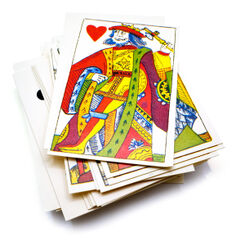
16th Century French Playing Cards based on Illustrations by Gurney Benham
This pack of cards by Rose & Pentagram is said to be based off Pierre Marechal, Rouen pack from the ...
The History of Playing Cards
Playing cards appear in European records in the late 14th century, but their earlier history lies fu...
History of English Playing Cards & Games
The History of English Playing Cards dates probably from the mid 15th century
Early English Playing Cards
Early examples of traditional, standard English playing cards of which the best known are those of H...
Most Popular
Our top articles from the past 60 days