Phelippe Ayet, 1574
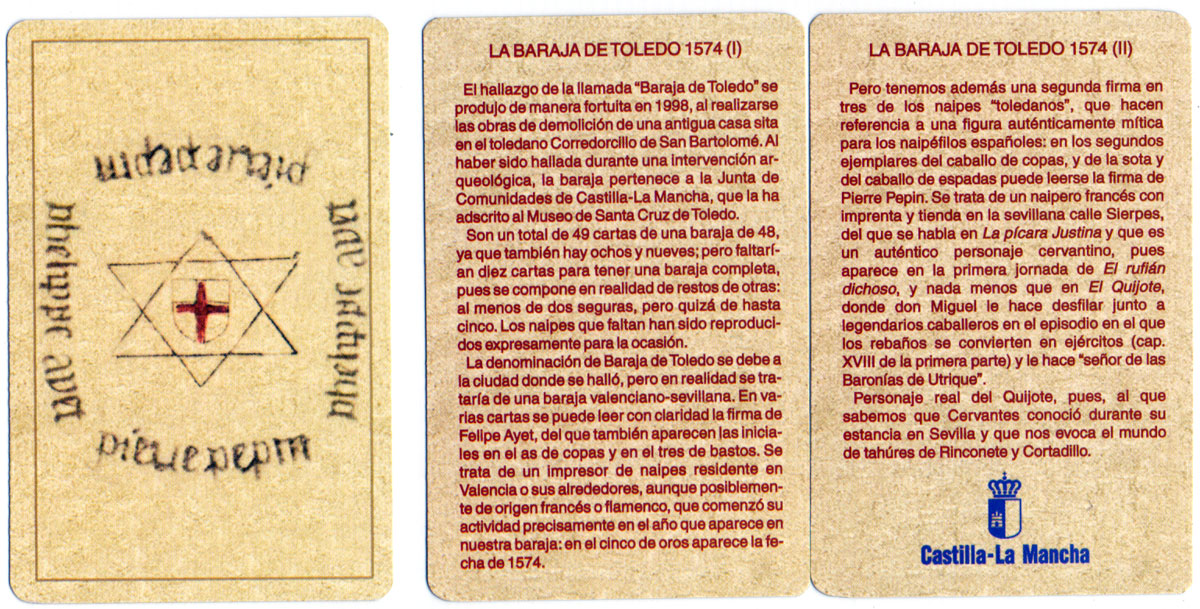
49 assorted cards were found hidden in the lintel of a doorway, in an old building in Toledo, during demolition, and are now preserved in the the Museo de Santa Cruz de Toledo.
Facsimile of Archaic Spanish-suited playing cards.
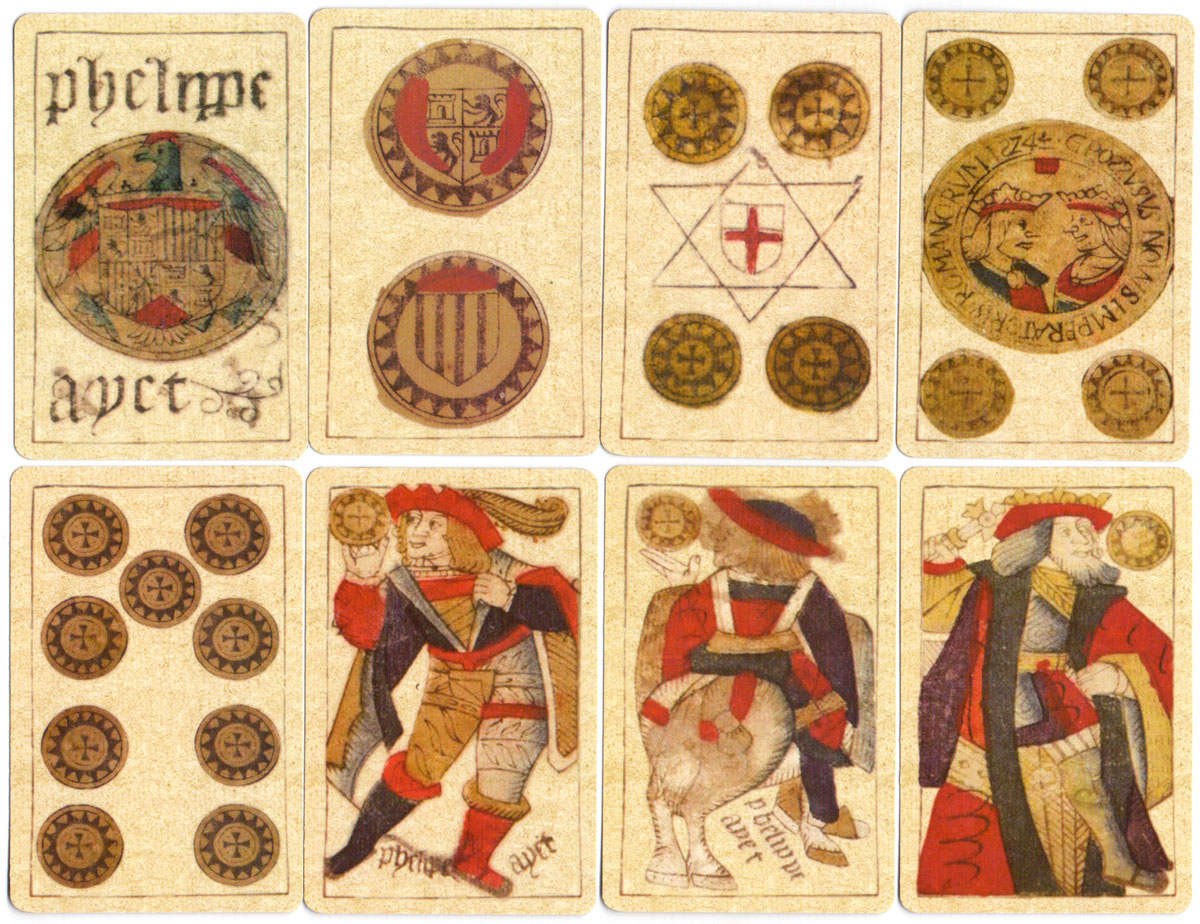
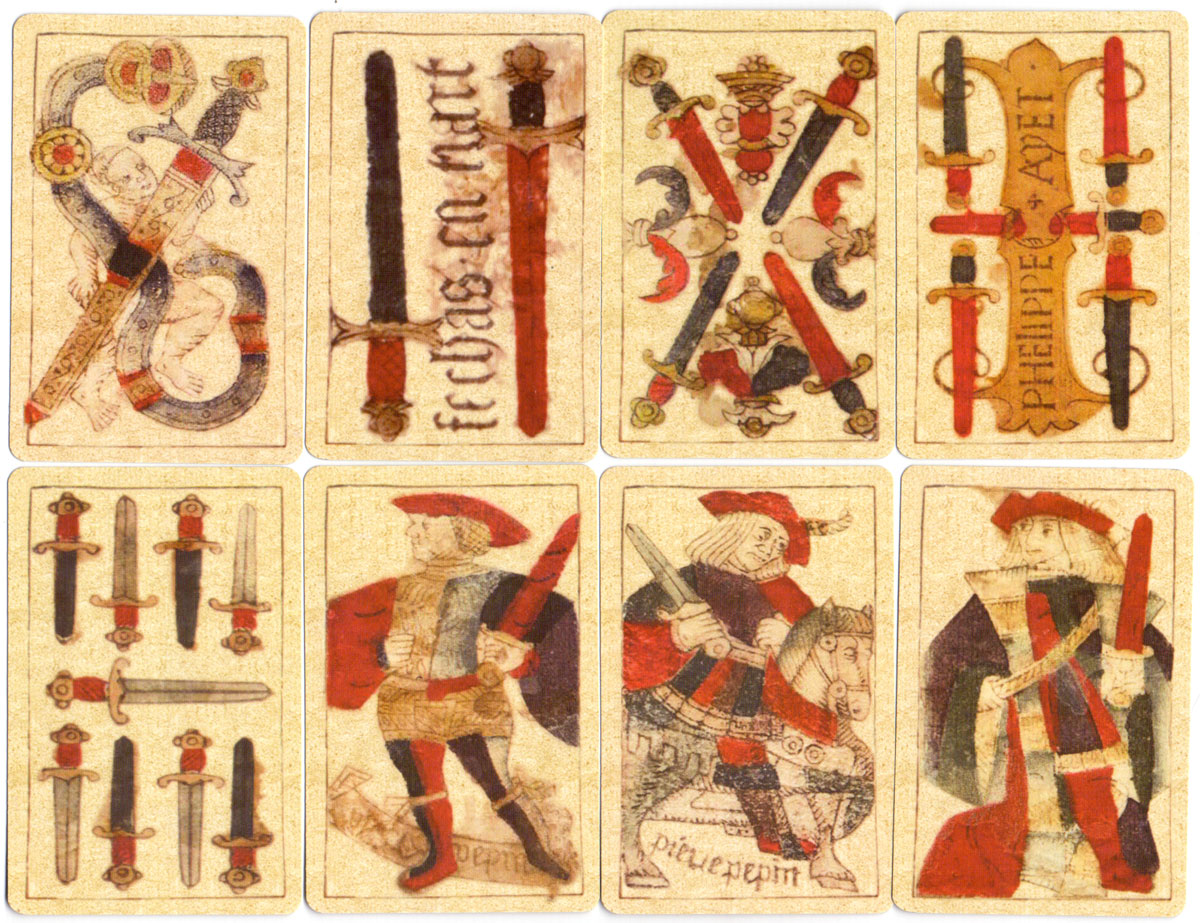
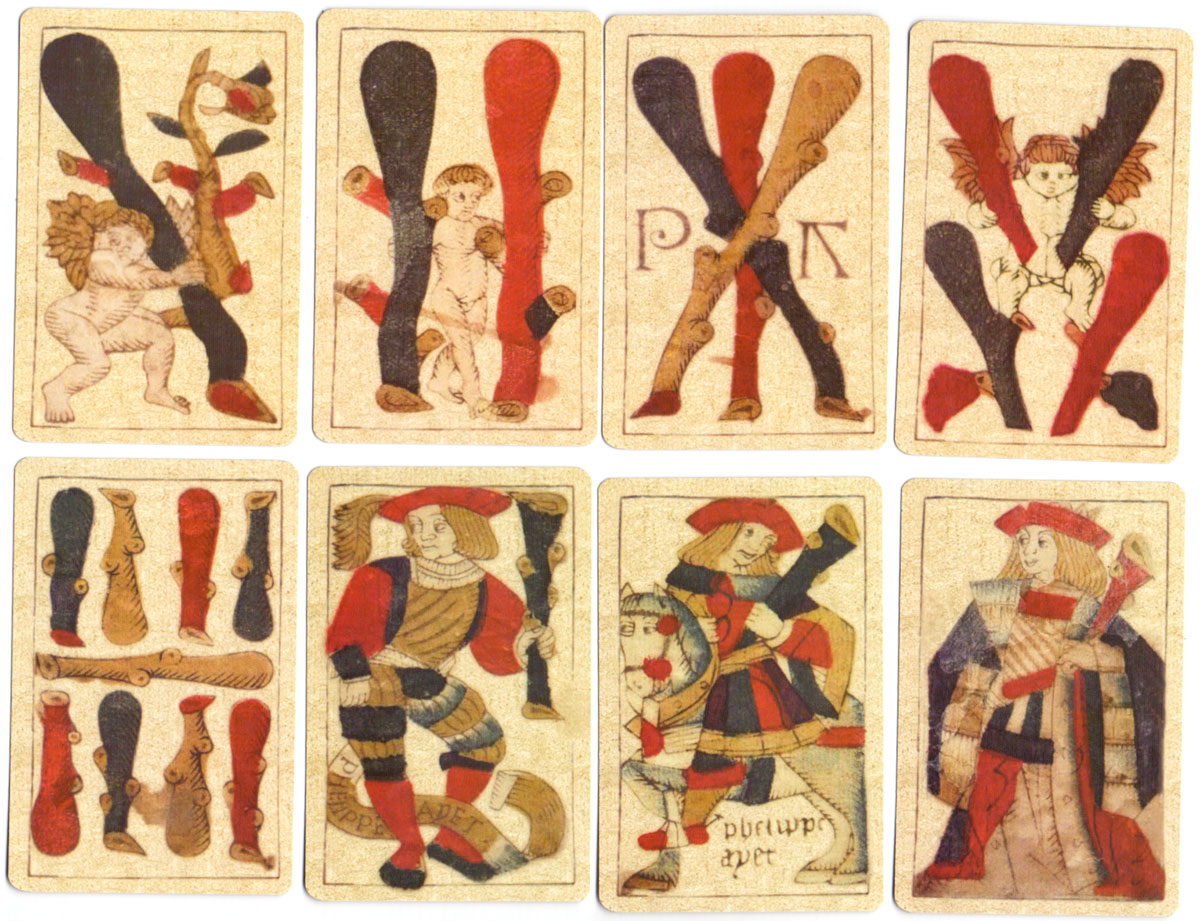
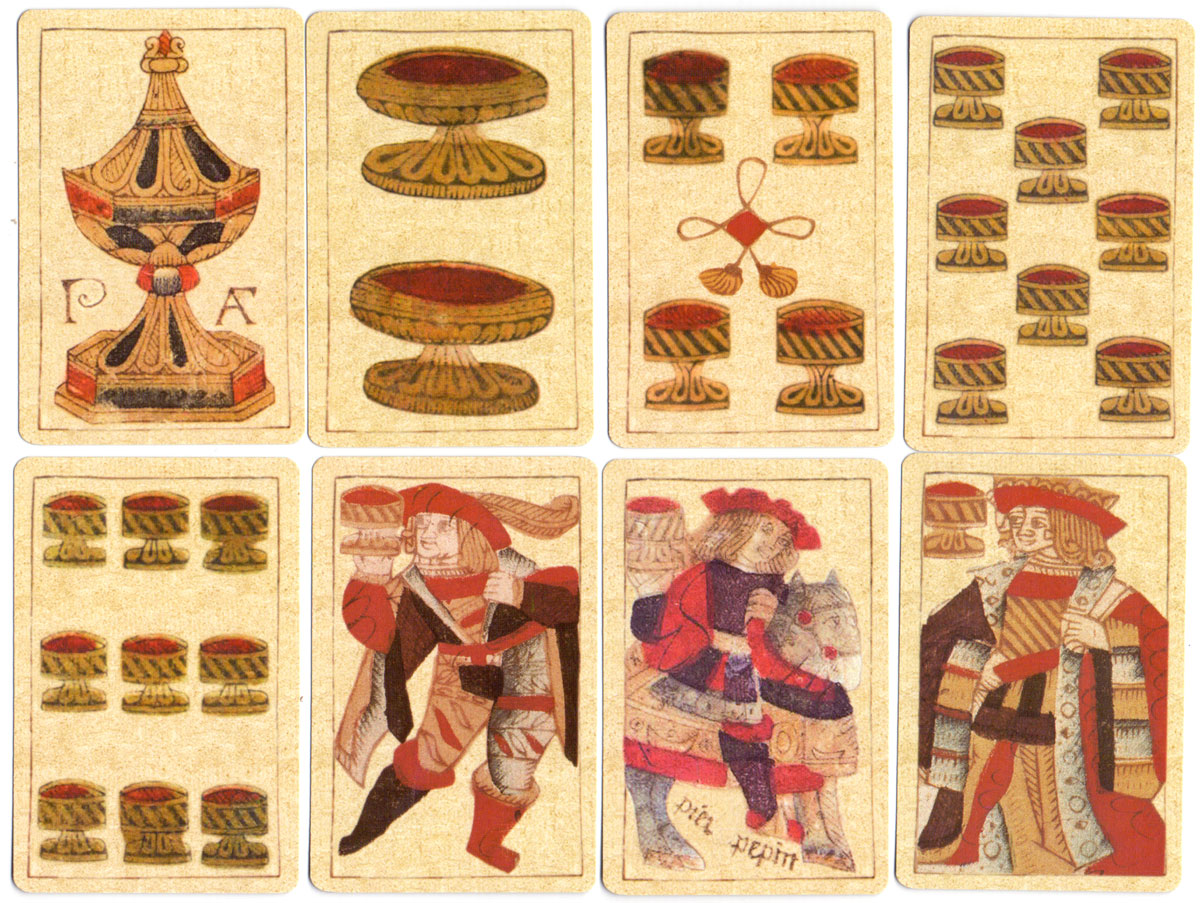
Above: facsimile cards of archaic Spanish-suited pattern, printed from woodcuts by Phelippe Ayet and and Pierre Pepin, dated 1574 with the place of issue stated as Thiers on the two of swords. Phelippe Ayet was a card maker living in Valencia. Pierre Pepin was a French card maker who operated in Seville and who was known by Miguel Cervantes. A total of 49 assorted cards by these different makers were found hidden in the lintel of a doorway, in an old building in Toledo, during demolition, and are now preserved in the the Museo de Santa Cruz de Toledo. Size: 57 x 98 mms, reverse blank. Another similar pack has been discovered in Madrid by the same maker, who was recorded as residing in the Valencia region at that time. Cards from facsimile edition by Naipes Comas, 2002. The set includes 2 explanatory cards→
The archaic Franco-Spanish pattern was produced and used in both France and Spain and several of the court card postures have survived in other regional patterns. The king of coins brandishing an axe recurs in several former French regional patterns and survives today in the king of hearts (‘suicide king’) in modern poker packs. In the example illustrated below, the ace of coins carries the coat of arms of the Catholic Monarchs, as well as the double-headed eagle of the Habsburgs topped by the crown of the empire of Charles V.
Diego del Campo
Diego del Campo is believed to have been a Frenchman who travelled to Spain in the mid-16th century fleeing political and religious unrest. A number of card makers and other artisans migrated and settled in Spain, moving through cities like Logroño, Burgos, Valladolid and Segovia, before reaching Toledo, the capital of the Empire at the time, or Sevilla. These playing cards are not solely attributed to Diego del Campo, as Guillermo Moreo is also credited on several cards.
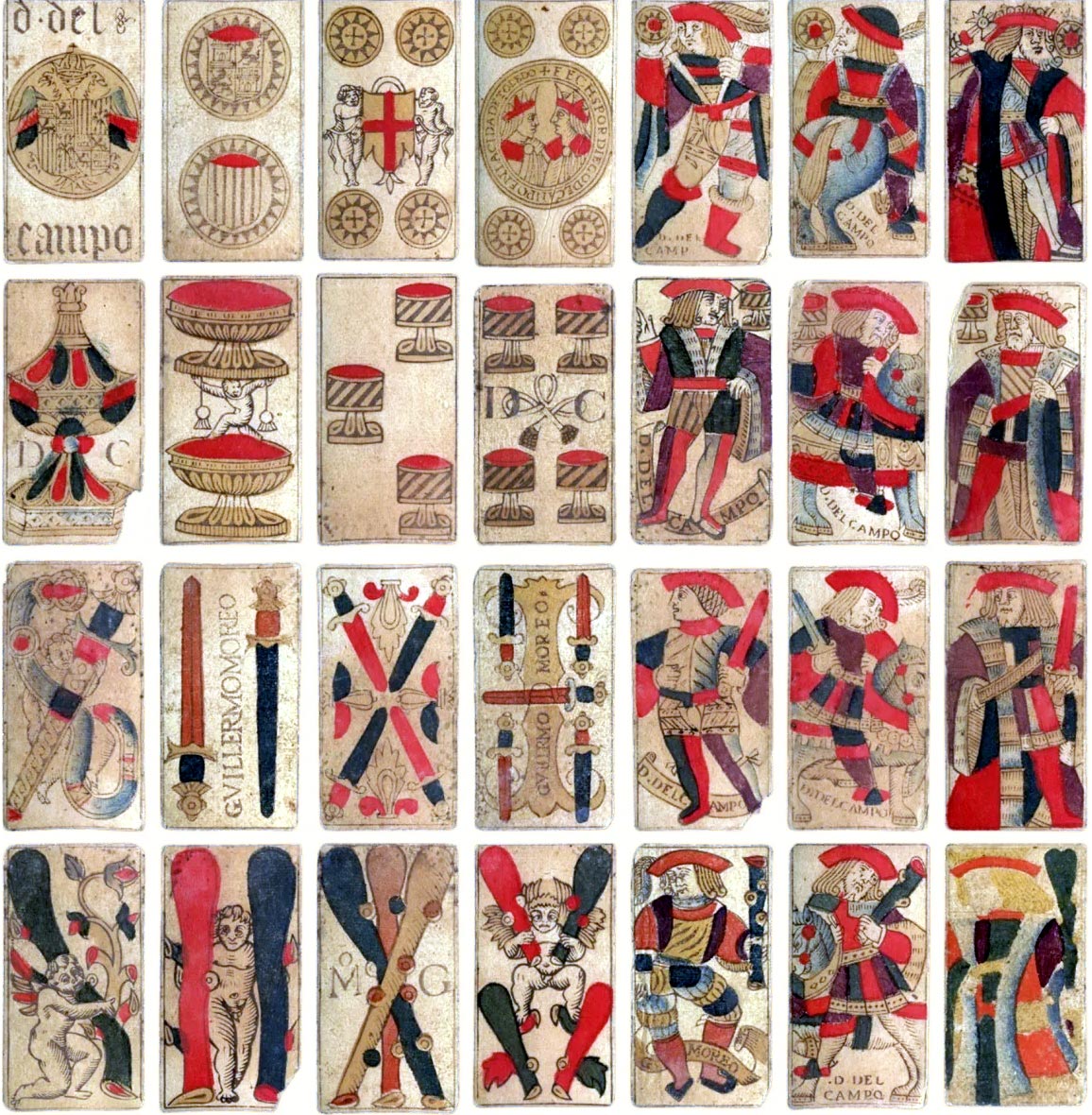
Above: 48-card Franco-Spanish pattern deck produced by Diego del Campo, Toledo, c.1550. The back pattern is a series of small, regular dots. © Museo de la Baraja de Madrid.
References
Lopez, Nacho: Descubierta la baraja más antigua del mundo, que fue fabricada en Castilla-La Mancha en 1540 in El Digital de Albacete 16 octubre, 2023►
Martín Carrillo, Alejandro: La baraja de cartas española más antigua del mundo se hizo en Toledo y data del 1540 in cadenaser.com 21/10/2023►
Pérez González, Alberto: Diego del Campo ¿El primer hombre en “hacer naipes” en España? in La Sota Nº53, Oct 2024, Asescoin, Madrid.
Denning, Trevor: The Playing-Cards of Spain, Cygnus Arts, London, 1996 - see p.46.
Anonymous uncut sheet dated 1587
On the three of clubs (first row second from the right) is the inscription F.T° that refers to Toledo. The same letters are repeated on the card with the 4 of chalices (second row fourth from the left) and on the next card at right the three of chalices is the year 1587. The profiles of the Catholic kings (Isabel and Ferdinand) on the five of coins and the coat of arms of Castilla and Leon and Aragon (partly trimmed from bottom) form the two of coins. The little naked figures are not seen in this example.
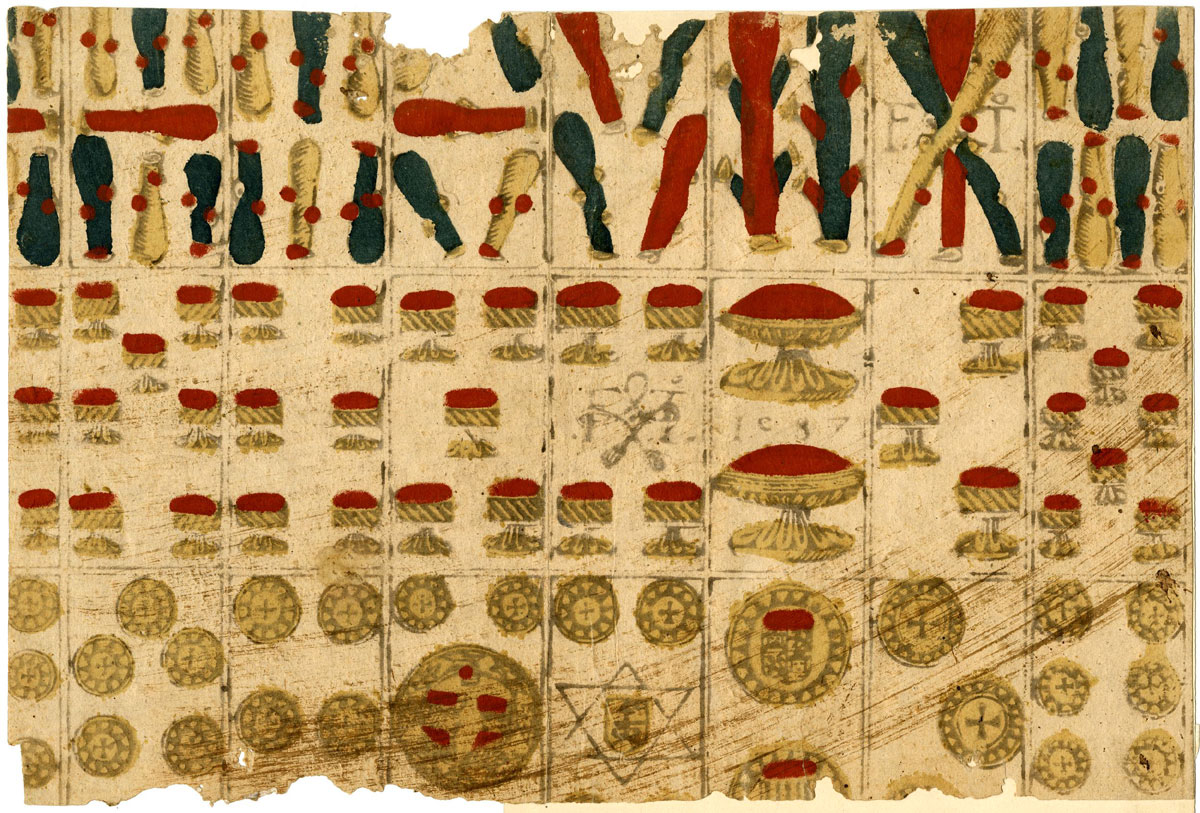
Above: on the 3 of clubs and 4 of cups are the initials F.T°. (Toledo), and the date 1587 appears on the 2 of cups. The 4 of coins bears a merchant's mark, the 2 has the arms of Leon and Castile, and on the 5 is the usual coin with two heads. Woodcut, hand coloured using stencils. © The Trustees of the British Museum • Museum number 1896,0501.1346►

By Simon Wintle
Spain • Member since February 01, 1996
I am the founder of The World of Playing Cards (est. 1996), a website dedicated to the history, artistry and cultural significance of playing cards and tarot. Over the years I have researched various areas of the subject, acquired and traded collections and contributed as a committee member of the IPCS and graphics editor of The Playing-Card journal. Having lived in Chile, England, Wales, and now Spain, these experiences have shaped my work and passion for playing cards. Amongst my achievements is producing a limited-edition replica of a 17th-century English pack using woodblocks and stencils—a labour of love. Today, the World of Playing Cards is a global collaborative project, with my son Adam serving as the technical driving force behind its development. His innovative efforts have helped shape the site into the thriving hub it is today. You are warmly invited to become a contributor and share your enthusiasm.

Activity for Phelippe Ayet, 1574
Sign in to comment or save this article.

Related Articles
Archaic Spanish-suited pattern from Bayonne
Archaic Franco-Spanish pattern from Bayonne by a manufacturer with the initals M.V.
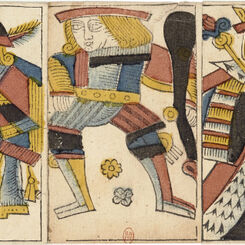
Archaic Franco-Spanish pattern
Archaic Franco-Spanish pattern by Guillaume & Jean Grossard (Bordeaux).
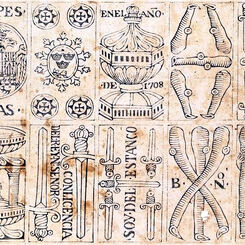
Archaic Spanish proof sheets
2 x uncoloured proof sheets of archaic Spanish-suited playing cards produced for “New Spain”, possib...
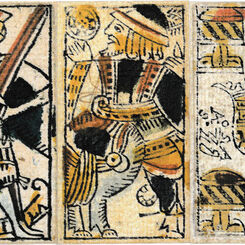
Sevilla 1647 reproduction
Facsimile of Spanish-suited pack produced in Sevilla, Spain, 1647.
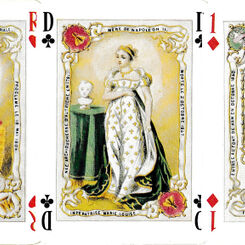
Jeu Bonaparte
Jeu Bonaparte depicting the extended family of Napoleon Bonaparte, France, 1978
Jeu des Bonnets Phrygiens
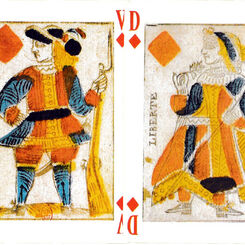
Reproduction of Jeu des Bonnets Phrygiens relating to the Phrygian cap (or liberty cap), France, 198...
Aluette by Dieudonné Jeune, Orléans, c.1850
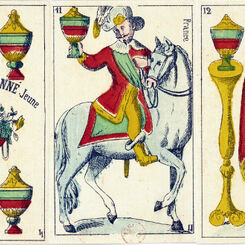
Aluette game by Fabrique Dieudonné Jeune, Orléans, c.1850.
Baraja Napoleónica
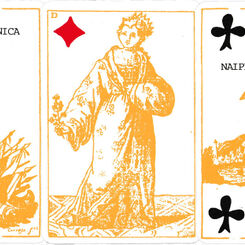
Re-edition of a French-suited Spanish pack from the Napoleonic era, with designs by J. Carrafa.
Naipes Heraclio Fournier 130th Anniversary
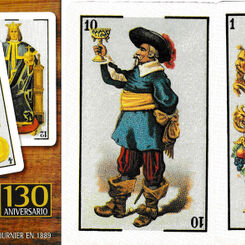
Baraja conmemorativa del 130 aniversario de naipes Heraclio Fournier (1868-1998) Spain, 1998.
The New Game of Tarot (or Tarock)
Regional costumes and alpine flora on a French Tarot game pack marking 600 years of playing cards in...
Baraja El Quijote
Baraja El Quijote, facsimile of original deck designed by E. Pastor, reprinted by Naipes Heraclio Fo...
Histoire de France
“Histoire de France” facsimile of French historical deck of 1820.
J. Deluy c.1490s
Archaic Spanish-suited cards produced by J. Deluy c.1490s.
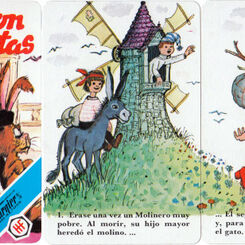
El Gato con Botas
Puss in Boots card game manufactured by H. Fournier, 1981.
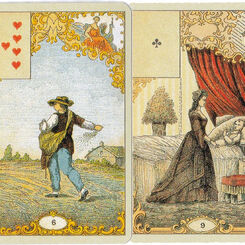
Le Destin Antique
Le Jeu du Destin Antique, originally published by Grimaud in XIX c., republished many times since......
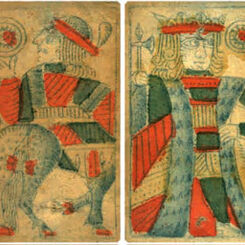
Pedro Varangot, 1786
Archaic Navarra pattern produced for the Pamplona General Hospital Monopoly by Pedro Varangot in 178...
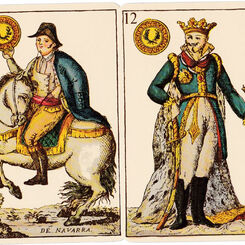
Goyesca
Baraja ‘Goyesca’ facsimile of original deck published in Madrid by Clemente de Roxas, 1814.
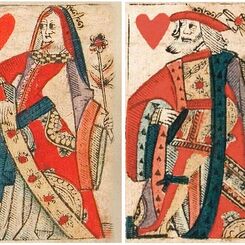
Pierre Marechal
Rouen became an important centre for card-making whose influence extended far afield. Cards from Rou...
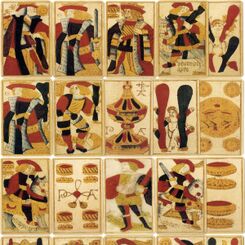
Phelippe Ayet, c.1574
Archaic, late medieval Spanish-suited playing cards printed by Phelippe Ayet, c.1574.
Hand-made Spanish Suited Playing Cards
Decks are made on two-ply pasteboard which reproduces the tactile quality of antique cards.
Most Popular
Our top articles from the past 60 days