


Transformation Playing Cards, 1811
Transformation playing cards, first published in 1811. Each card bears a picture in which the suit marks are concealed within the design. This artistic exercise began as a late 18th century pastime.
‘Metastasis’ Transformation playing cards, first published in 1811, in which each card bears an intricate and artistic or burlesque design into which the suit marks have been incorporated. This set was printed by I L S Cowell but many were hand-drawn. The artistic exercise began as a late 18th century parlour game and became a popular pastime during the Victorian era when ordinary playing cards would be transformed by illustrating them in pen and paint.
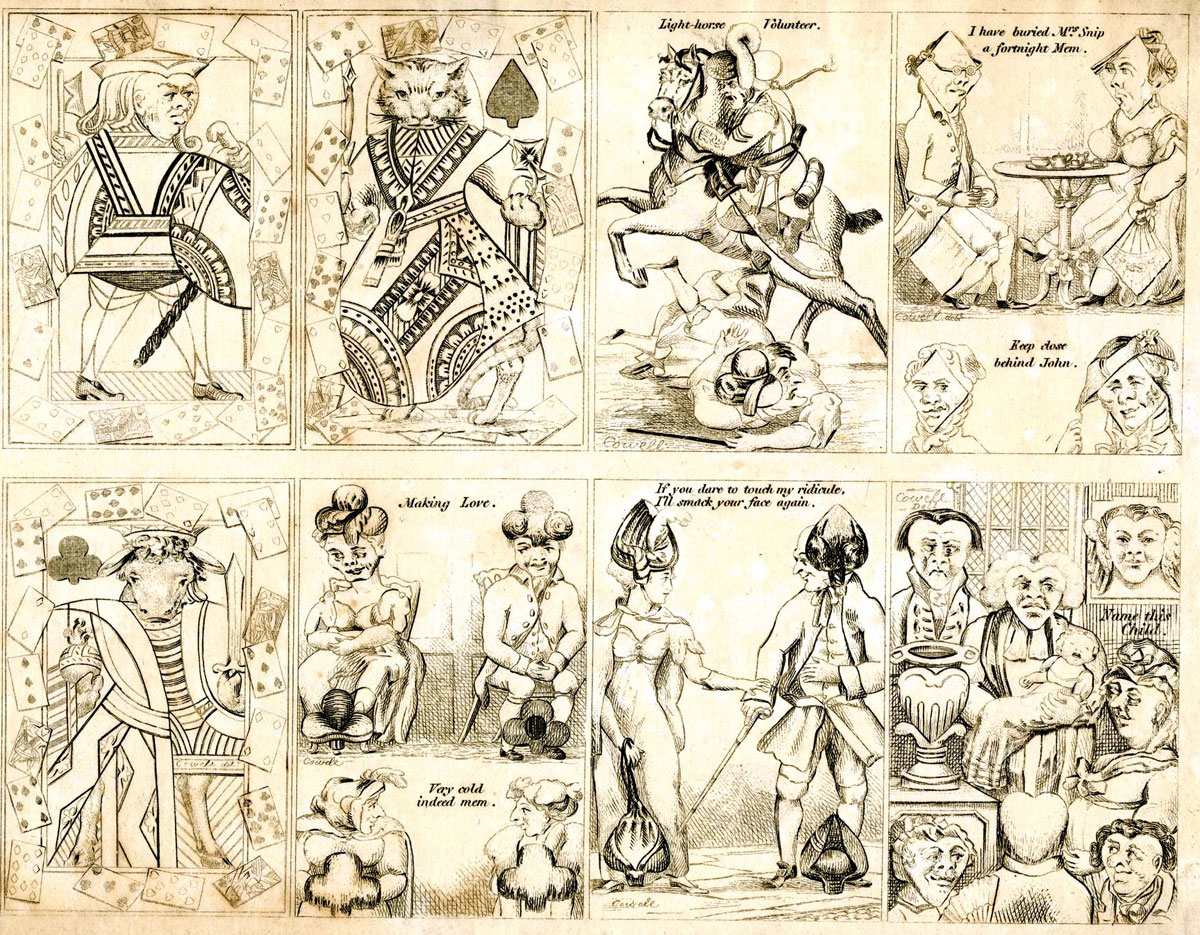
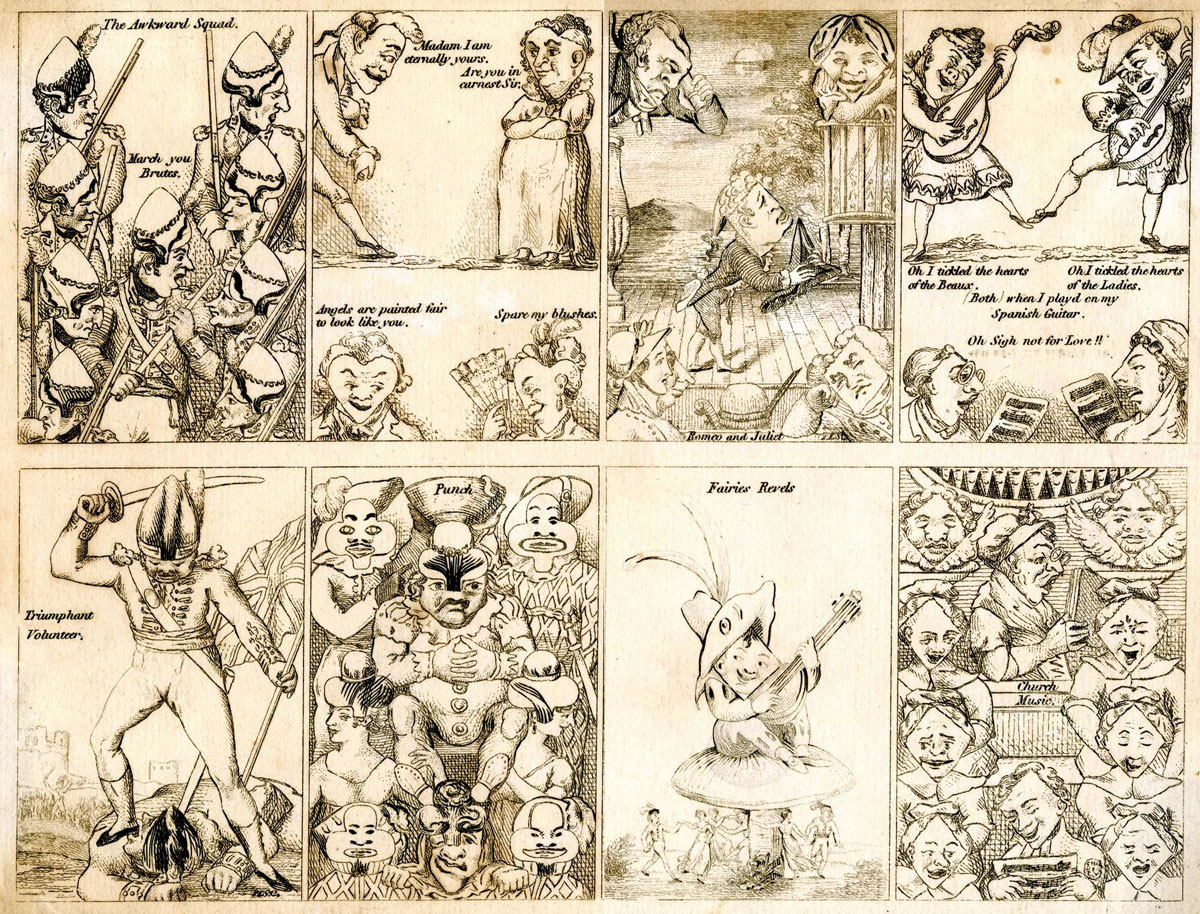
Above: 16 cards from Cowell's Transformation Cards, 1811. The complete set of five sheets is accompanied by a wrapper bearing the royal arms, with the title "Metastasis. Transformation of Playing Cards", and "Designed and Etched by I.L.S. Cowell". © The Trustees of the British Museum • Cowell's Transformation Cards►
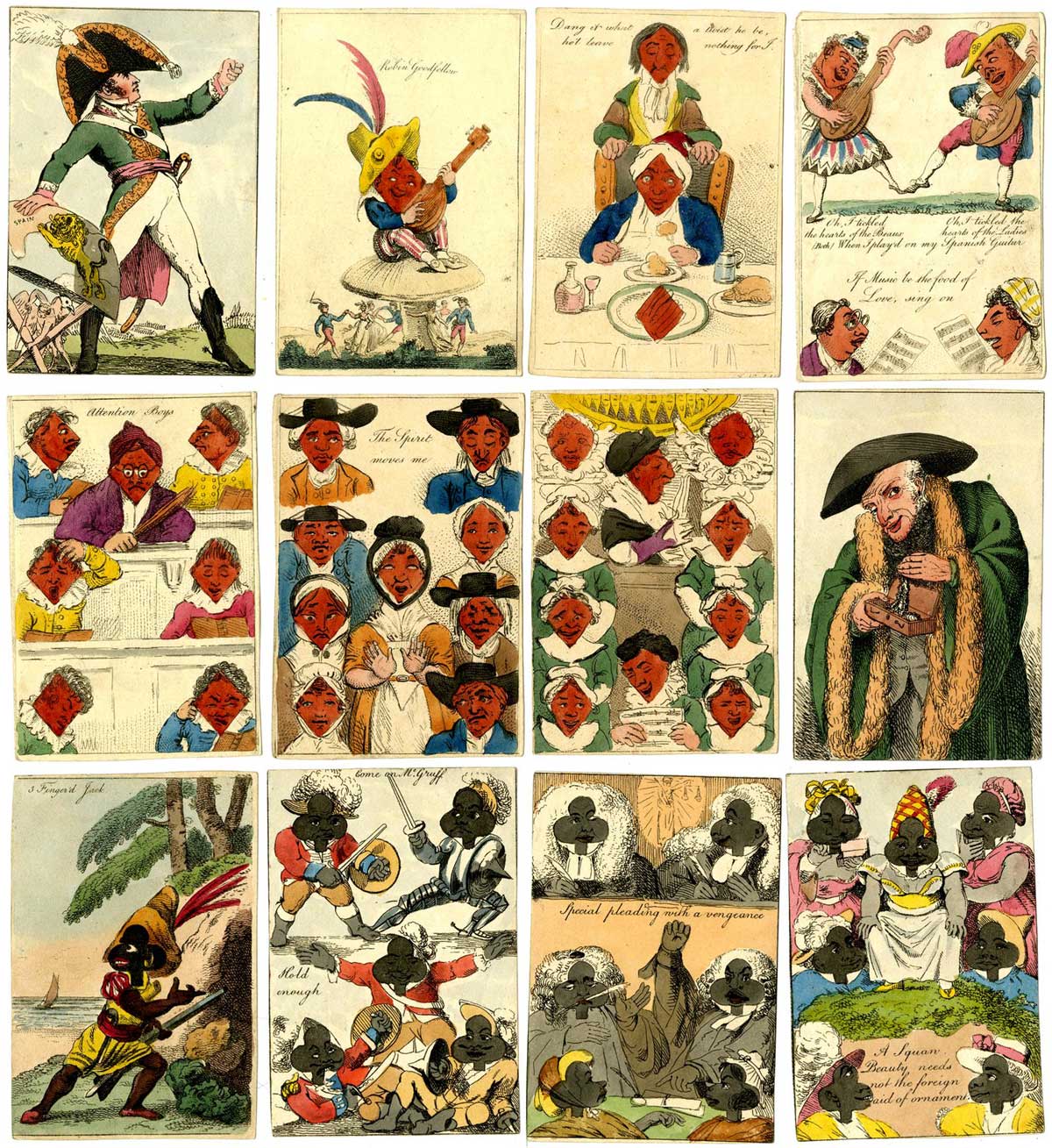
Above: same as the above, coloured version, published September 1, 1811, by S. and J. Fuller, at the Temple of Fancy, Rathbone Place, London.. © The Trustees of the British Museum • Metastasis, Transformation of Cards►
Reference
O’Donoghue, Freeman M: Catalogue of the collection of playing cards bequeathed by Lady Charlotte Schreiber, Trustees of the British Museum, London, 1901 (Sheets English 2 & English 72) [digital version here]
Facsimile edition
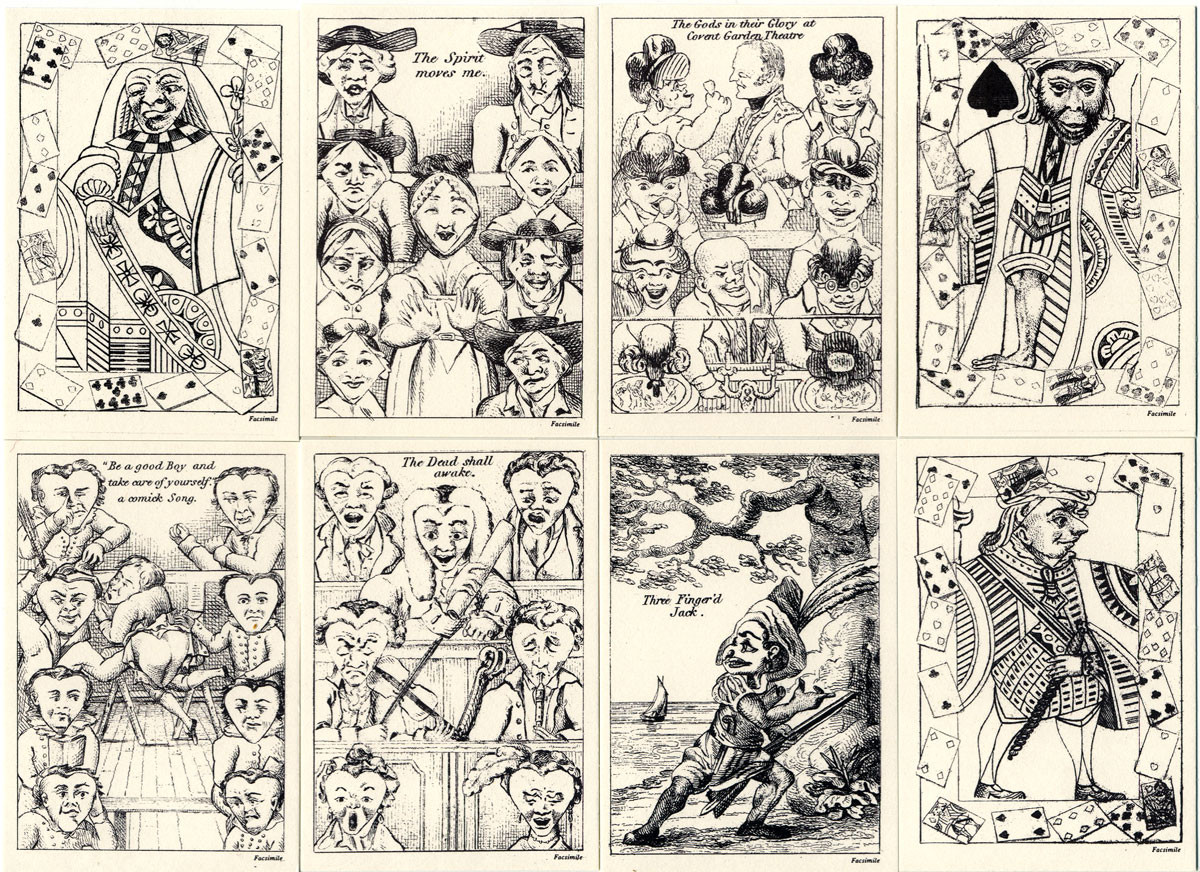
Above: cards from the facsimile edition published by Harry Margary.
A new facsimile is published by the EPCS.
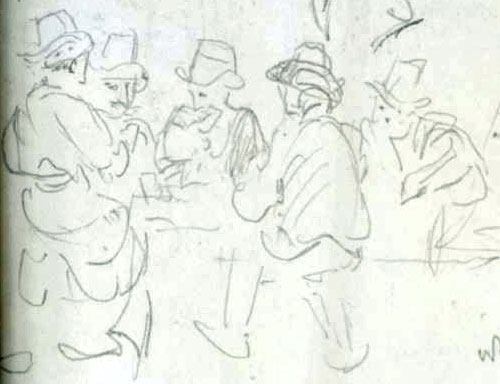
A rough but lively study of a group of men in hats playing cards by Joseph Mallord William Turner (1775–1851), 1819.

By Simon Wintle
Spain • Member since February 01, 1996
I am the founder of The World of Playing Cards (est. 1996), a website dedicated to the history, artistry and cultural significance of playing cards and tarot. Over the years I have researched various areas of the subject, acquired and traded collections and contributed as a committee member of the IPCS and graphics editor of The Playing-Card journal. Having lived in Chile, England, Wales, and now Spain, these experiences have shaped my work and passion for playing cards. Amongst my achievements is producing a limited-edition replica of a 17th-century English pack using woodblocks and stencils—a labour of love. Today, the World of Playing Cards is a global collaborative project, with my son Adam serving as the technical driving force behind its development. His innovative efforts have helped shape the site into the thriving hub it is today. You are warmly invited to become a contributor and share your enthusiasm.

Activity for Transformation Playing Cards, 1811
Sign in to comment or save this article.

Related Articles
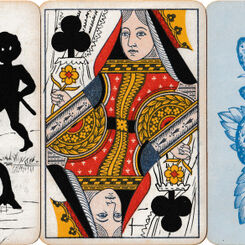
Hand-drawn transformation cards, c1875
A complete set of hand-drawn transformation cards from c1875, using a standard De La Rue pack.
Marlow playing cards
Visitor attractions and businesses to be found in Marlow, Buckinghamshire.
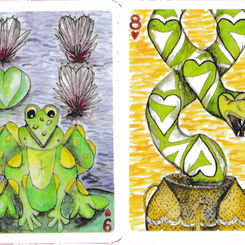
Pips in Pictures
‘Pips in Pictures’ imaginatively transformed playing cards by Jennifer Gaudion, 2001.
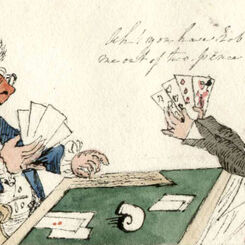
John Nixon Scrapbook, 1803
Transformation proofs from the John Nixon Scrapbook.
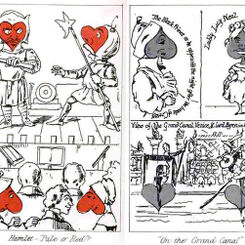
Thackeray Transformation Cards
Transformation playing cards by William Makepeace Thackeray, 1876.
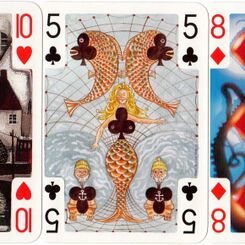
Under the Sea
“Under the Sea” transformation playing cards, published in 2005 to raise money for the Marine Stewar...
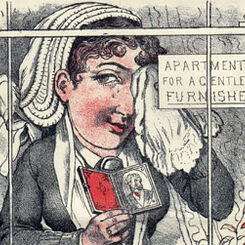
The Odd Trick
The Odd Trick - a bit of Edwardian naughtiness.
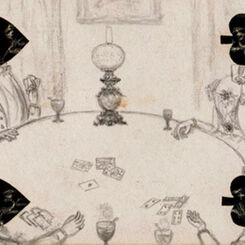
Thomas Walters Transformation
Hand-drawn transformation pack dated 1874 with the name Thomas Walters on the ace of spades.
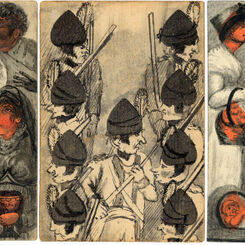
Hand-Painted Transformation, c.1800-20
An early 19th century set of hand-painted transformation playing cards depicting contemporary scenes...
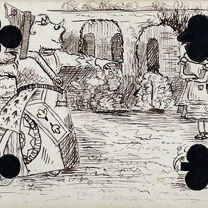
Transformation c.1880
Transformation playing cards hand-drawn on a pack manufactured by Hunt’s Playing Card Manufacturing ...
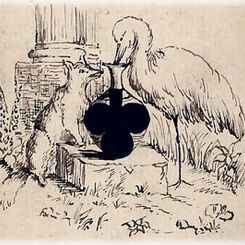
Transformation c.1880
Hand-drawn transformation cards, c.1880
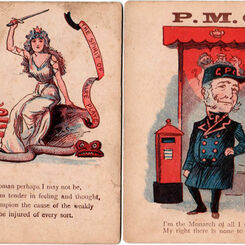
District Messenger
District Messengers were uniformed young men wearing little pill-box hats and mounted on bicycles wh...
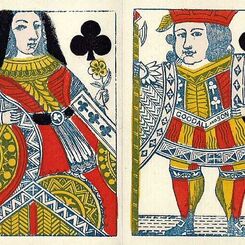
Goodall c.1845-60
Goodall’s earliest cards were traditional in appearance but in around 1845 ‘modernised’ courts were ...
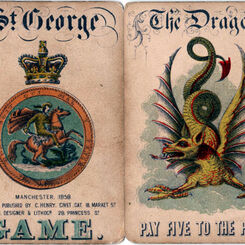
St George Game
St George Game, 1858, depicting St George and other saints engaged in battle slaying the dragon to s...
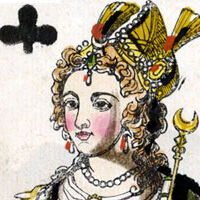
Imperial Royal Pack
Imperial Royal Playing Cards published by S. & J. Fuller, London, 1828. The court cards show portrai...
Most Laughable Thing on Earth
The Most Laughable Thing on Earth, or, A Trip to Paris published by H. G. Clarke & Co., London, c.18...
Language of Flowers
Language of Flowers by Past Times, c.1999.
Cries of London
The cards were printed from copper plates, with the red suit symbols being applied later by stencil....

Hand-made Spanish Suited Playing Cards
Decks are made on two-ply pasteboard which reproduces the tactile quality of antique cards.
Woodblock and Stencil Playing Cards
Around 1987 I decided to make a pack of playing cards from woodblocks and coloured with stencils. I ...
Most Popular
Our top articles from the past 60 days


