


Marcello Morandini
Modern designs by Italian artist Marcello Morandini using the simplest of forms and colours.
What are the essential elements required in a pack of 52 cards? Four suits of 13 cards, each readily identifiable? Yes. Suits of hearts, diamonds, clubs and spades? Not necessarily. Two red suits and two black suits? Not necessarily. Indices? Not necessarily. Strip away the non-essential elements and what are you left with? Four suits, each in a different colour (red, blue, green and yellow), with an appropriate number of lines or bars representing each numeral card, and no indices in the corners. For the King, Queen and Jack, a square, two large rectangles, and three slightly smaller rectangles, respectively. For the Joker(s), a simple circle.
That it is exactly what you will find in this pack designed by Italian artist Marcello Morandini (b. 1940). Morandini’s visual style involves assembling repetitive simple forms, as here. For him, form is more important than superficial aesthetics. Morandini began working as a graphic artist, later becoming an architect and sculptor.
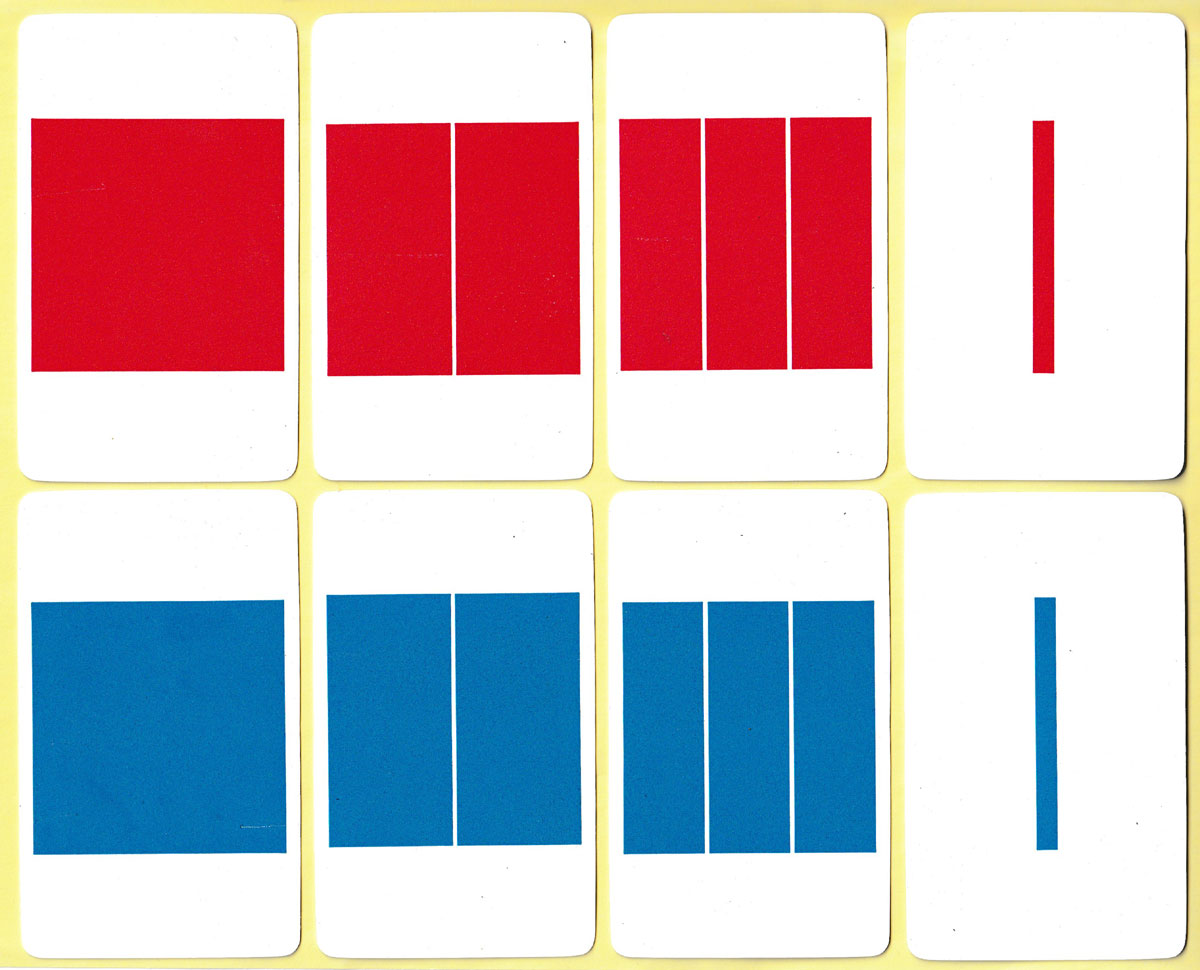
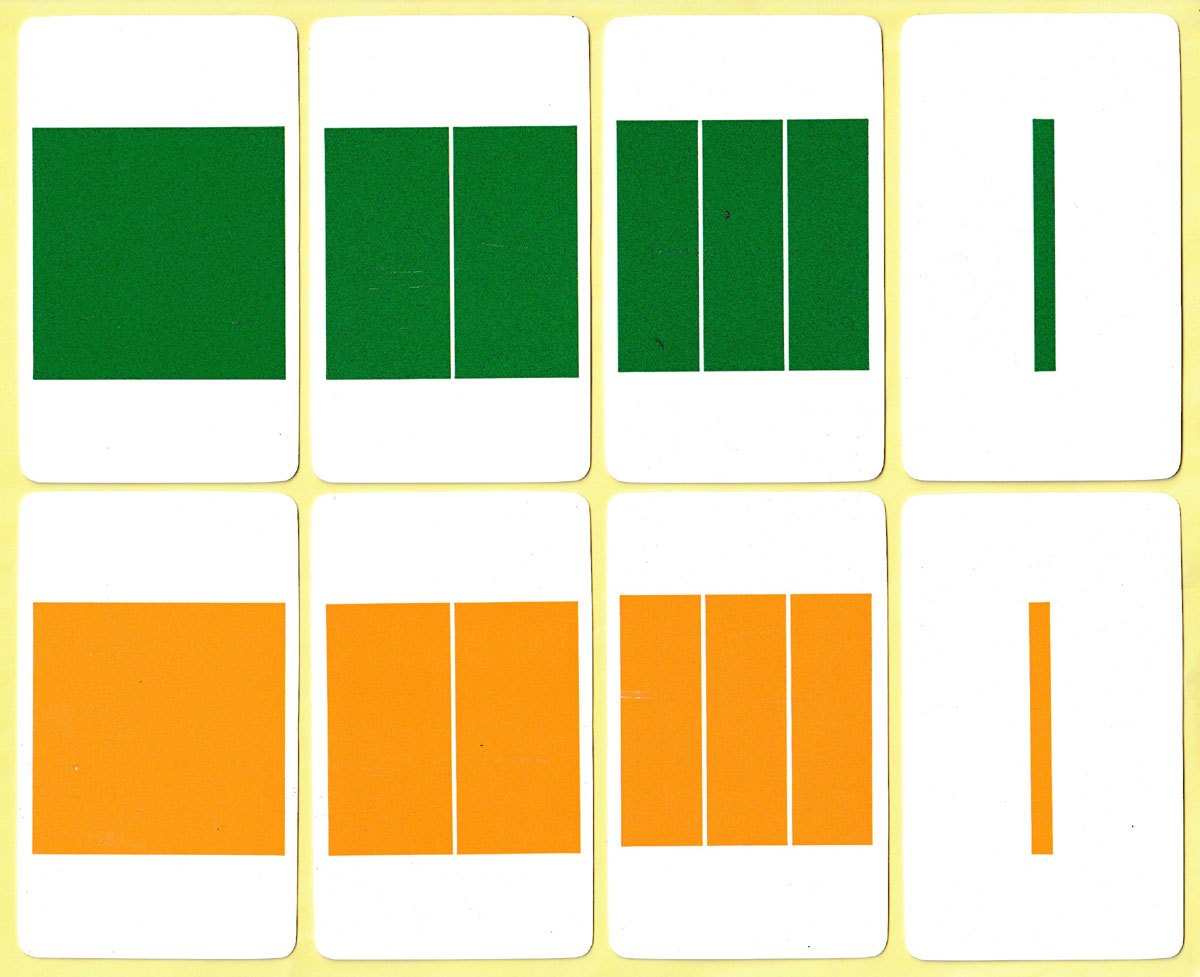
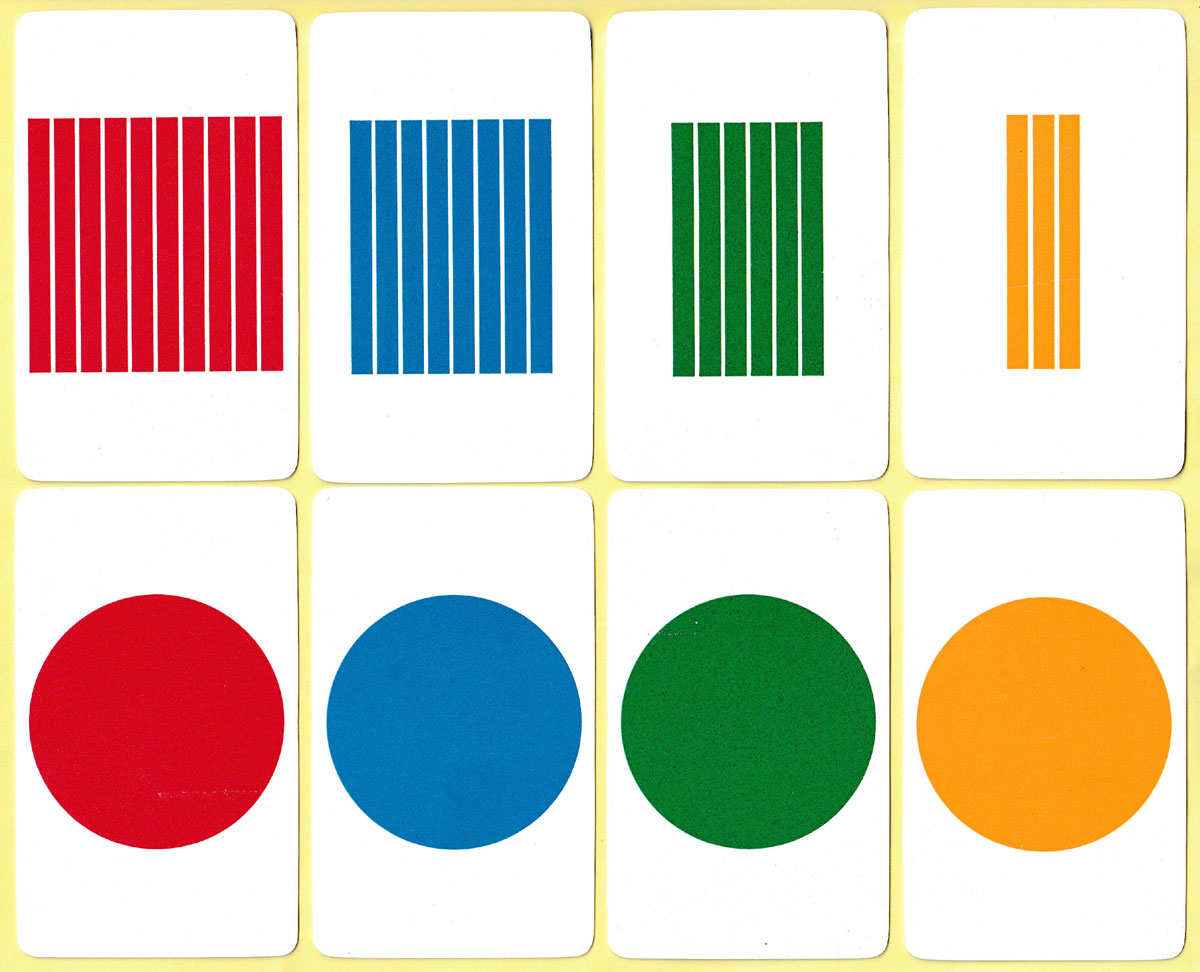
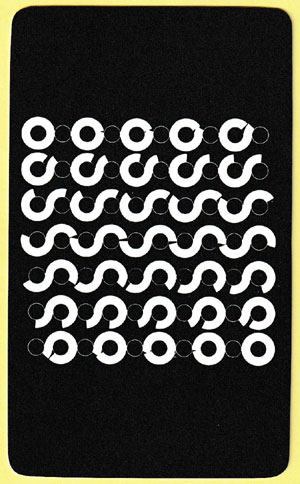
Above: plastic cards with modern abstract designs by Marcello Morandini. Published by Peter Pfeiffer, Milan, Italy. Printed by Plastic Cards, Milan, Italy, 1973. 52 cards + 2 Jokers in tuck box. Size: 60 x 100 mm.
The cards themselves are all plastic. The first edition appeared in 1973 in a numbered edition of 1,000 packs. See the box►
Note: I have two of these packs in my collection. In one, the Jokers are red and blue; in the other, they are green and yellow. The capital ‘M’s on Morandini's signature (on the box) have also been simplified into straight lines.

By Roddy Somerville
France • Member since May 31, 2022
Roddy started collecting stamps on his 8th birthday. In 1977 he joined the newly formed playing-card department at Stanley Gibbons in London before setting up his own business in Edinburgh four years later. His collecting interests include playing cards, postcards, stamps (especially playing cards on stamps) and sugar wrappers. He is a Past President of the Scottish Philatelic Society, a former Chairman of the IPCS, a Past Master of the Worshipful Company of Makers of Playing Cards and Curator of the WCMPC’s collection of playing cards. He lives near Toulouse in France.

Activity for Marcello Morandini
Sign in to comment or save this article.

Related Articles
Emilio Tadini playing cards
Beautiful dreamlike playing card designs by Emilio Tadini.
Carte di Natale
Designed by Pier Canosa as a Christmas pack for the Cortina Art Gallery in Milan.
Jeu Boléro
Sweeping, semi-abstract designs by J.L. Jolin in red and black only.
Carte Bolognesi
New designs reinforcing Bologna’s reputation as the gastronomic capital of Italy.
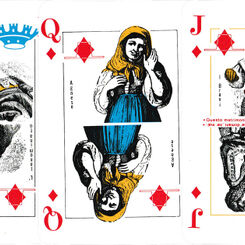
Alessandro Manzoni Centenary
Issued to mark the centenary of the death of Alessandro Manzoni, one of Italy’s greatest writers.
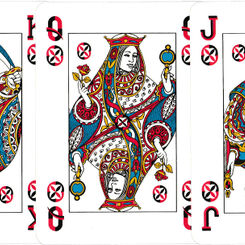
Il Quinto Seme
An Italian pack with a fifth suit of “amici” (“friends”).
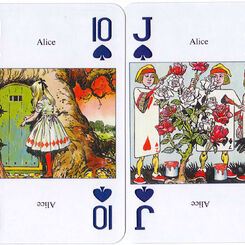
Alice in Wonderland by Jesús Blasco
Alice with artwork by Jesús Blasco, published by Lo Scarabeo, 2003.
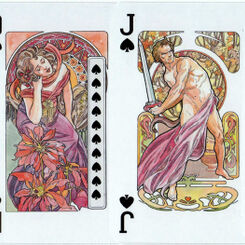
Liberty
Liberty playing cards designed by Antonella Castelli, published by Lo Scarabeo, 2003.
Baracca & Burattini
Baracca & Burattini puppetry deck printed by Dal Negro, 1998.
Martin Mystère
Martin Mystère based on the comic book by Alfredo Castelli. The cards were designed by Giancarlo Ale...
Virginie Houdet
Virginie Houdet “Cartes à Jouer” limited edition, 2017.
Pinocchio
Pinocchio fairy tale playing cards illustrated by Iassen Ghiuselev for Lo Scarabeo, 2003.
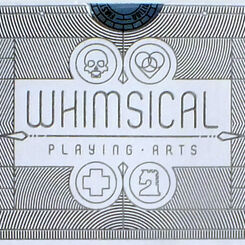
Whimsical Playing Cards
Whimsical Playing Cards by Turkish designer & illustrator Oksal Yesilok, 2016.
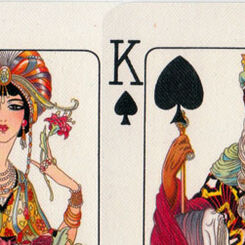
World Bridge
‘World Bridge’ produced by Modiano in Trieste, Italy, since around 1950.
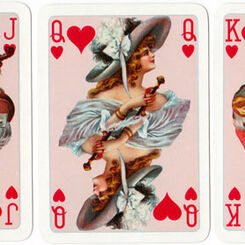
Club Bridge
Modiano’s ‘Club Bridge’ is a new edition of a stylish deck originally published in c.1895.
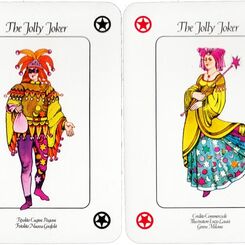
Credito Commerciale
Playing cards designed by Enzo Laurà for Credito Commerciale, 1978.
Baraja Marinera
‘Baraja Marinera’ designed by Francisco Javier San Juan, published by Asescoin (Madrid), 1995
16: European Standard Playing Cards
A brief survey of the different types of standard cards to be found in Continental Europe.
The History of Playing Cards
Playing cards appear in European records in the late 14th century, but their earlier history lies fu...
Estate Playing Cards
Estate Playing Cards with five suits designed by Keith Wilson
Most Popular
Our top articles from the past 60 days


