


Le carte da gioco Arcimboldo
Courts and suit-signs inspired by the works of the Italian Renaissance painter, Giuseppe Arcimboldo.
Giuseppe Arcimboldo (1527-1593) was an Italian Renaissance painter best known for his portrait heads made entirely of fruits, vegetables, flowers, fish and books. Twelve of those portraits can be found in full colour on the courts of this pack, with another in black and white on the Jokers. Adding to the fun are the suit-signs: hearts have become aubergines, clubs are flowers, diamonds are noses, and spades have been replaced by artichokes. These four non-standard suit-signs also make up the pattern on the reverse. The idea for the pack came from a publicity agency in Turin called Eco Pubblicità e Marketing.
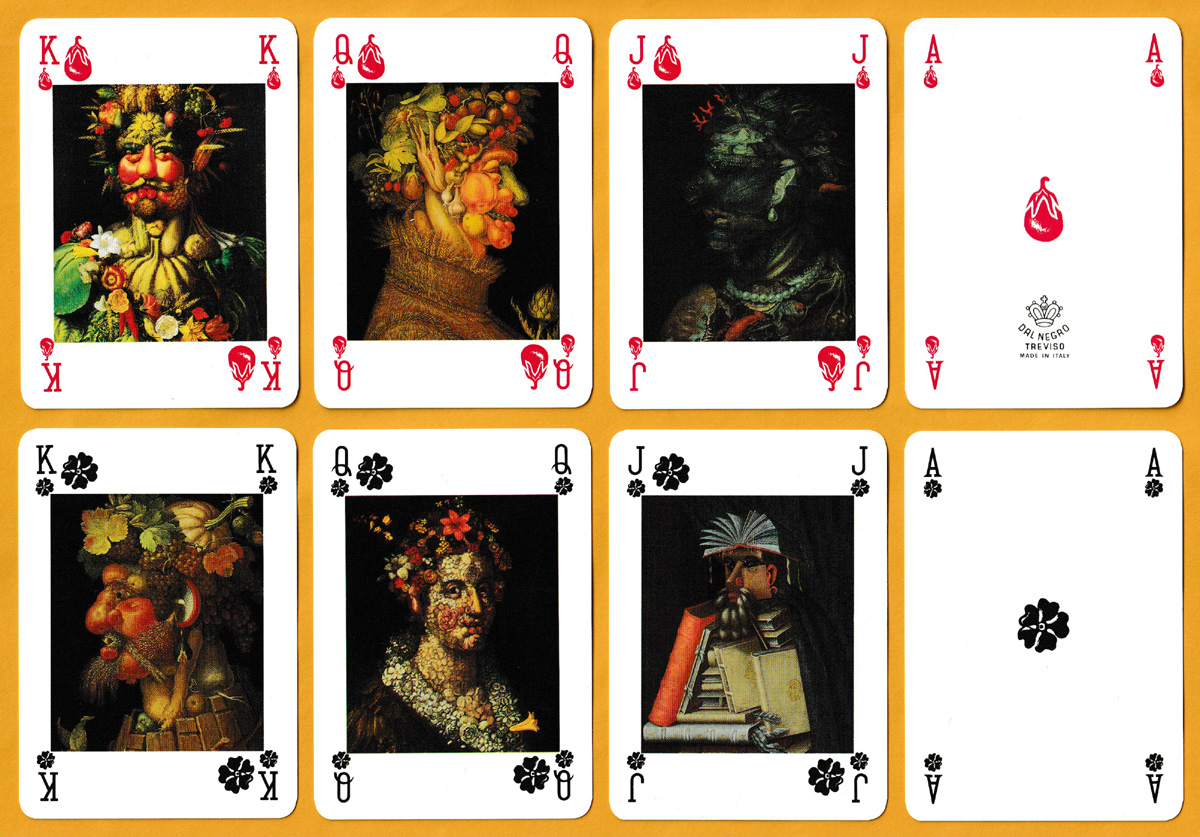
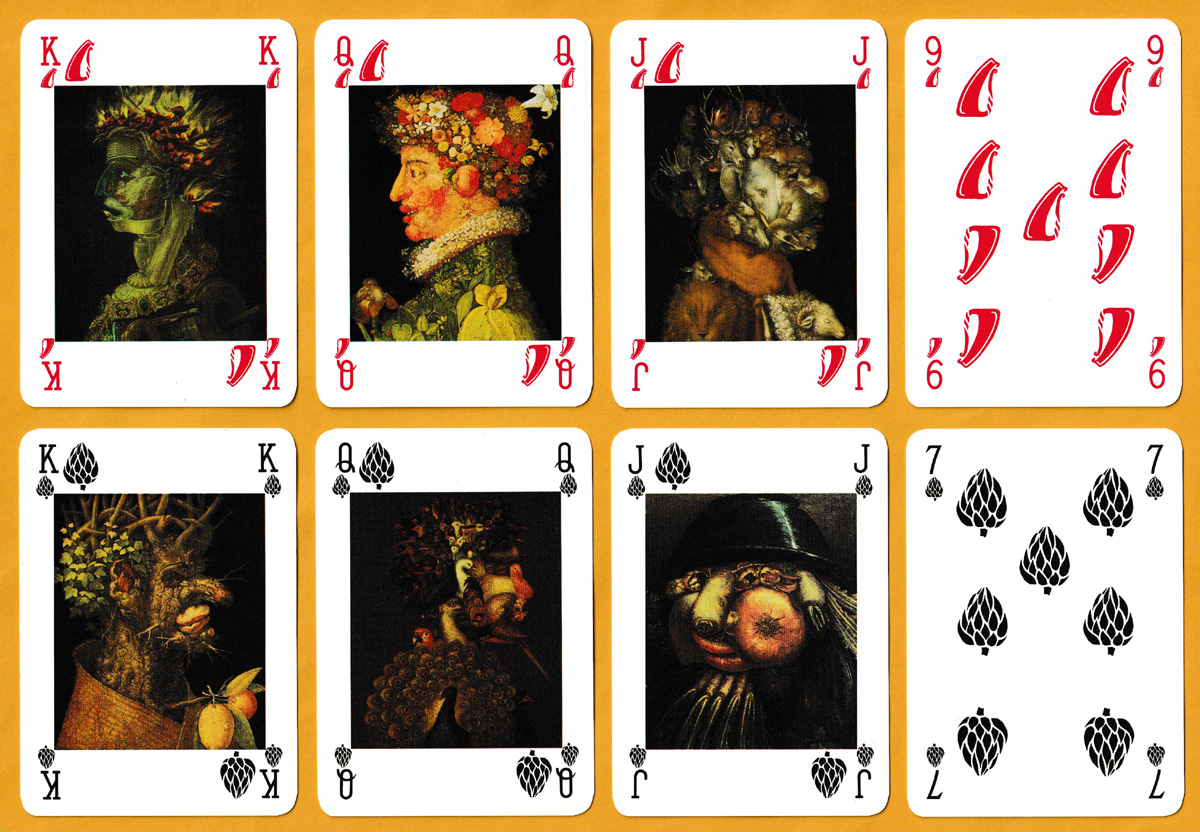
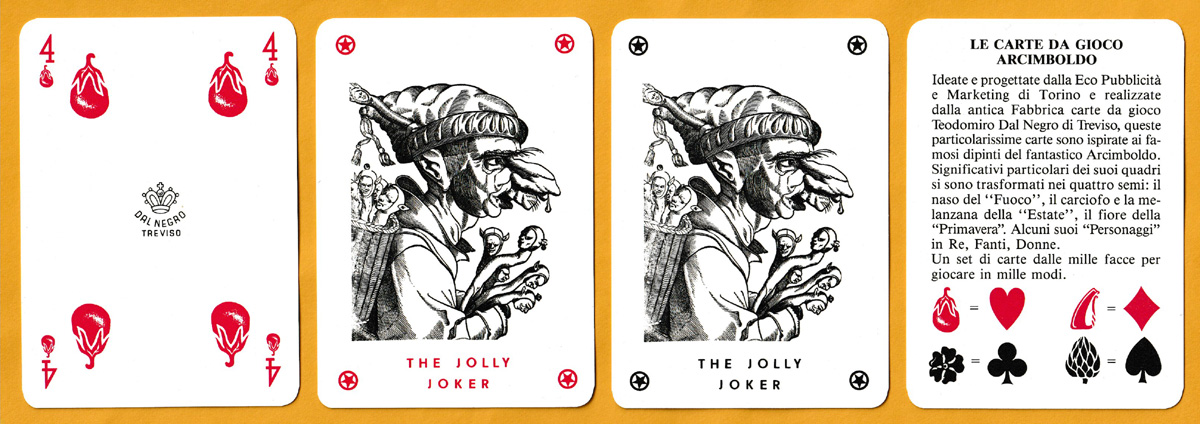
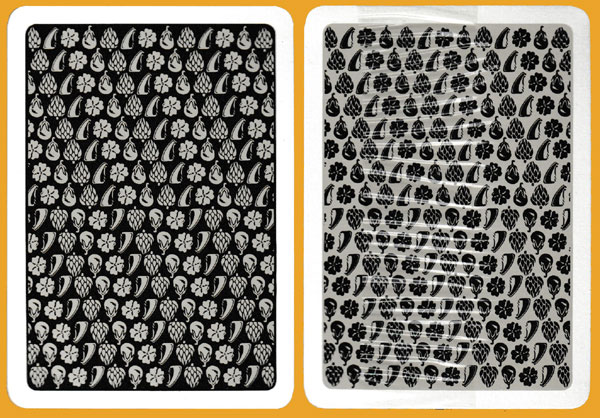
Above: Le carte da gioco Arcimboldo designed by Eco Pubblicità e Marketing, Turin, Italy. Printed by T. Dal Negro, Treviso, Italy, 1987. 2 x 52 cards + 2 Jokers + 1 extra card with text in Italian, in plastic tray within a cardboard box. Size: 63 x 88 mm.

By Roddy Somerville
France • Member since May 31, 2022
Roddy started collecting stamps on his 8th birthday. In 1977 he joined the newly formed playing-card department at Stanley Gibbons in London before setting up his own business in Edinburgh four years later. His collecting interests include playing cards, postcards, stamps (especially playing cards on stamps) and sugar wrappers. He is a Past President of the Scottish Philatelic Society, a former Chairman of the IPCS, a Past Master of the Worshipful Company of Makers of Playing Cards and Curator of the WCMPC’s collection of playing cards. He lives near Toulouse in France.

Activity for Le carte da gioco Arcimboldo
Sign in to comment or save this article.

Related Articles
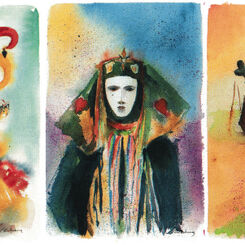
EFFEGIEFFE
Corporate gift: a non-standard "Venice Carnival" deck by Dal Negro.
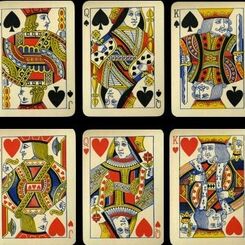
79: Goodall in Italy
A survey of the influence Goodall's courts had on Italian cards.
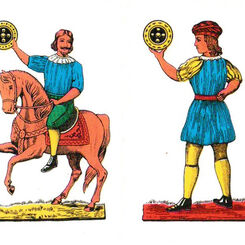
Sicilian Playing Cards
Sicilian Playing Cards by Dal Negro (Carte da Gioco).
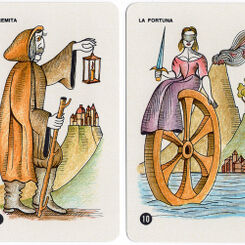
Tarocco Indovino
Sergio Ruffolo’s “Tarocco Indovino” is an expanded version of his “Lo Zodiaco” cartomancy deck.
Carte Bolognesi
New designs reinforcing Bologna’s reputation as the gastronomic capital of Italy.
Lo Zodiaco
French-suited fortune-telling pack with distinctive designs by Italian artist Sergio Ruffolo.
Modet Sardegna
Costumes, masks and symbols from the island of Sardinia, with designs by Luciano Dettori and Tonino ...
Fernando Valenti
Designs by Italian artist Fernando Valenti issued to coincide with an exhibition of his work in 1986...
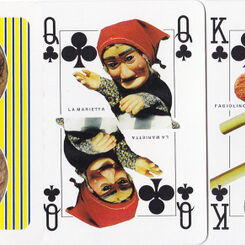
Baracca & Burattini
Baracca & Burattini puppetry deck printed by Dal Negro, 1998.
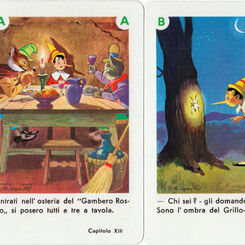
Le Avventure di Pinocchio
Avventure di Pinocchio by Dal Negro, based on Carlo Collodi’s famous 1883 novel “The Adventures of P...
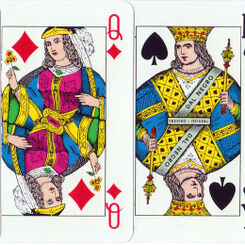
Dal Negro Bridge set
Dal Negro Bridge set featuring old Vienna pattern courts.
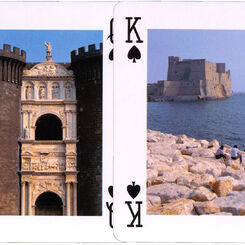
Cities of Art - Naples
Striking views of Naples, photography by Cesare Gerolimetto, produced by Dal Negro.
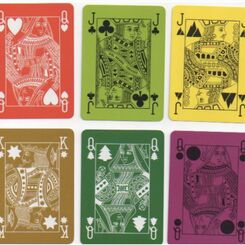
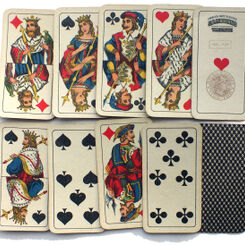
Lombardy (or Milanesi) pattern
The origins of the Lombardy pattern probably lie in the early 19th century when it was a full-length...
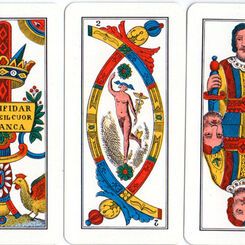
Trevisane pattern
The double-ended version of the ‘Trevisane’ pattern originated in the early 19th century.
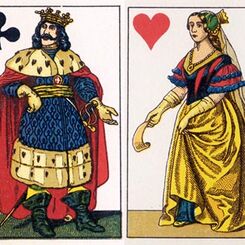
Florentine Pattern
Originally one of several designs which emerged during the nineteenth century, the Florentine patter...
Brescia pattern
The Brescia pattern contains elements which come from a past age.
Most Popular
Our top articles from the past 60 days


