Andersons of Edinburgh
Andersons of Edinburgh began publishing playing cards in the late 1920s and several brands are known, including ‘Clan Tartan’, ‘Masquerade’ and ‘Thistle’
Andersons of Edinburgh
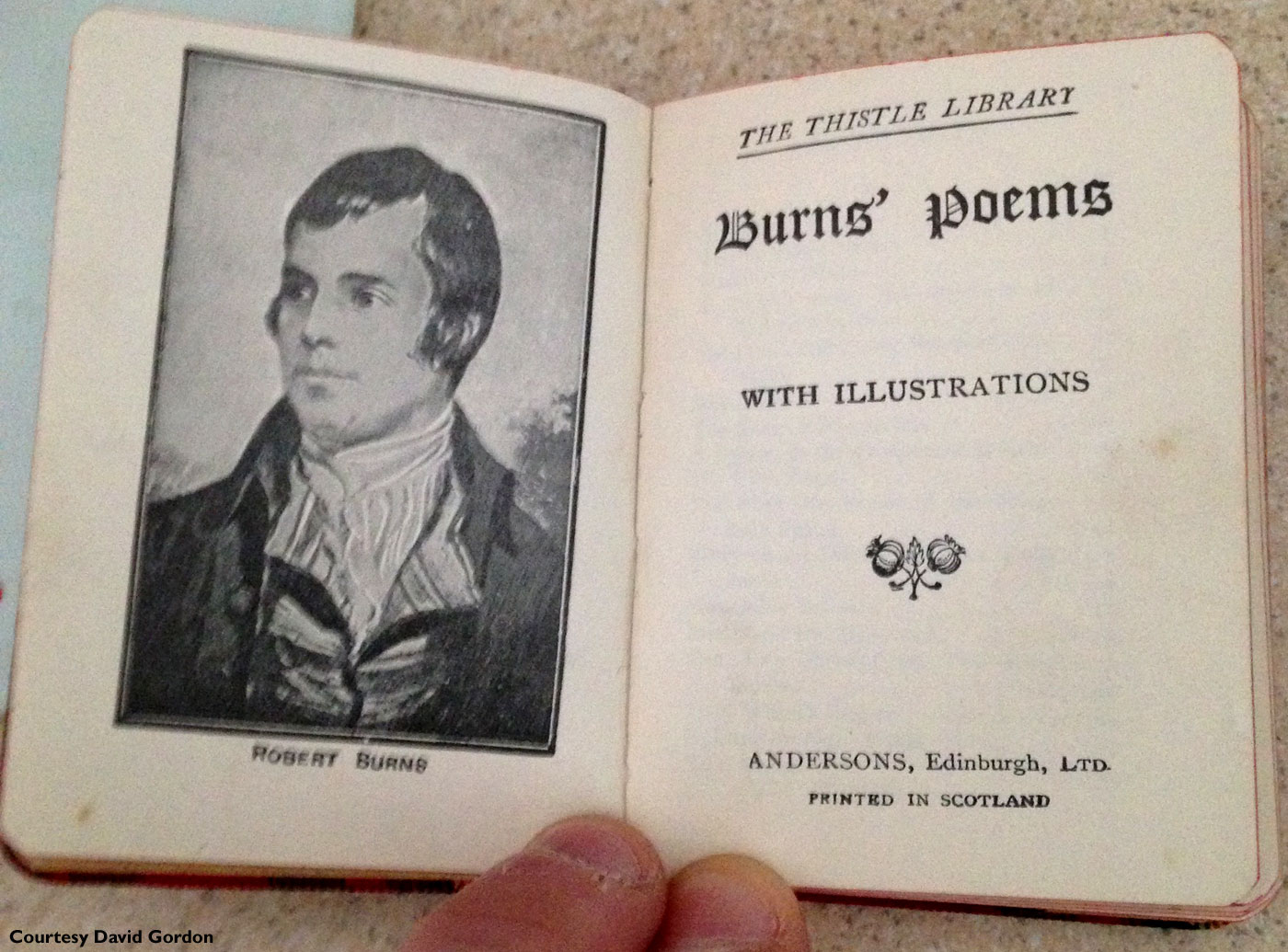
Andersons of Edinburgh began publishing playing cards in the late 1920s and several brands are known, including ‘Clan Tartan’, ‘Masquerade’ and ‘Thistle’. Many of the back designs are in Art Deco style. The design of the court cards and Joker are the same as those which were subsequently produced by Porterprint Ltd in Leeds, but the exact details of the relationship are not clear. The courts of the wide-size packs are in four colours, and there are two slightly different wide sizes. Andersons also published a double-boxed set for George VI's coronation in 1937, as well as a series of miniature Scottish books bound with cloth tartan under the name “Thistle Library”.
‘Clan Tartan’ Series
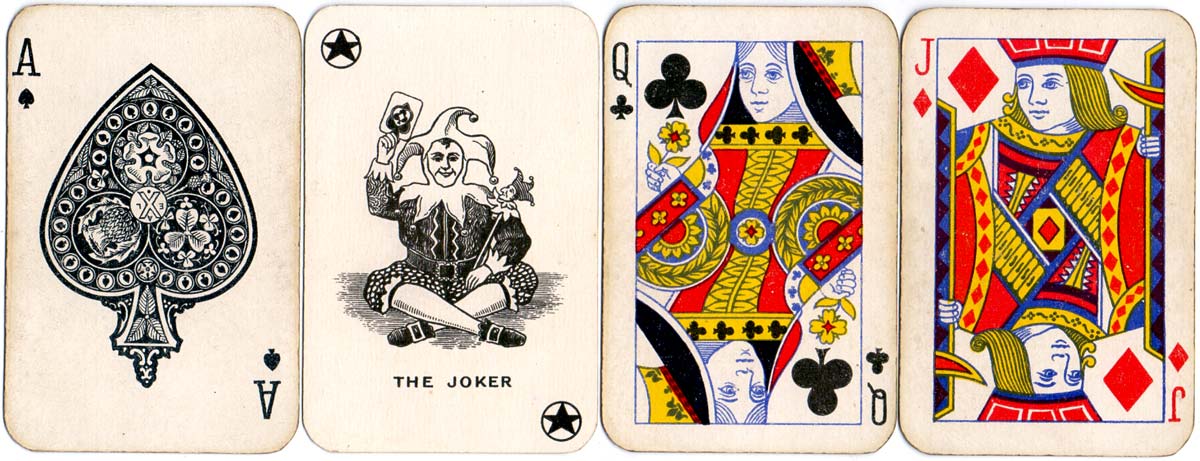
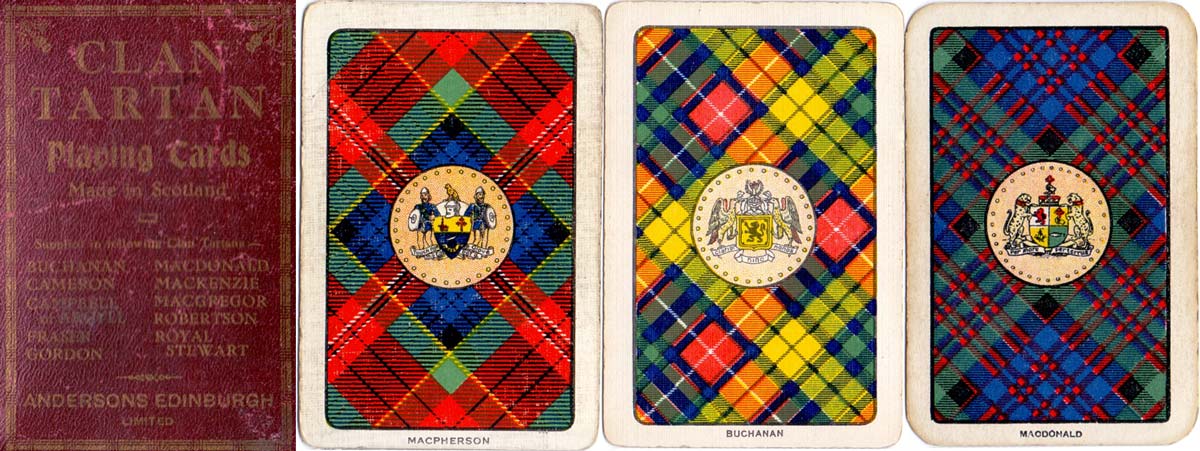
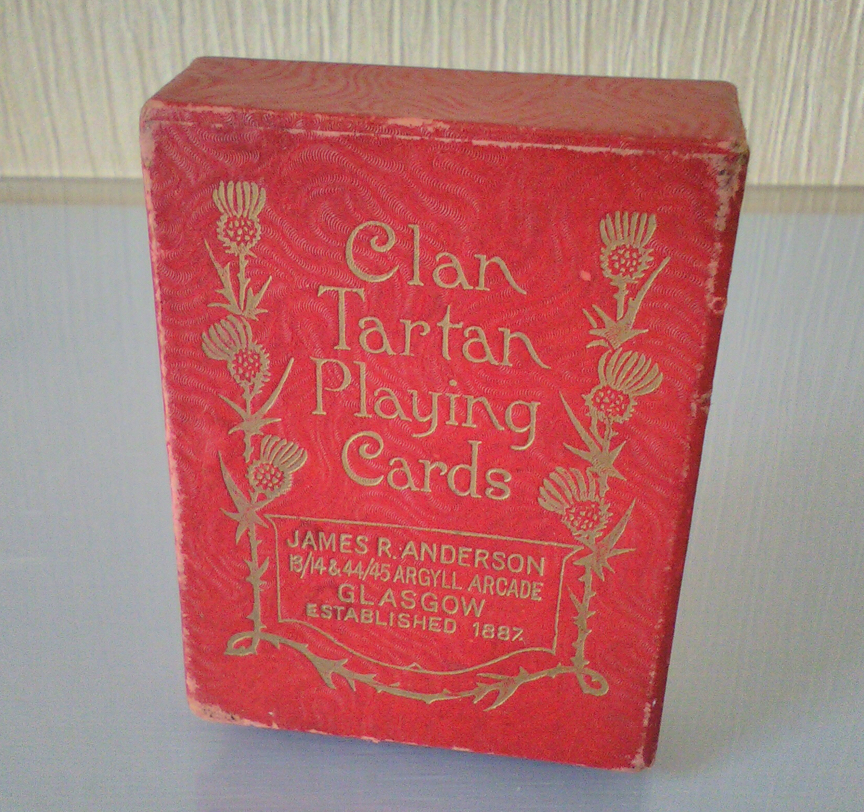
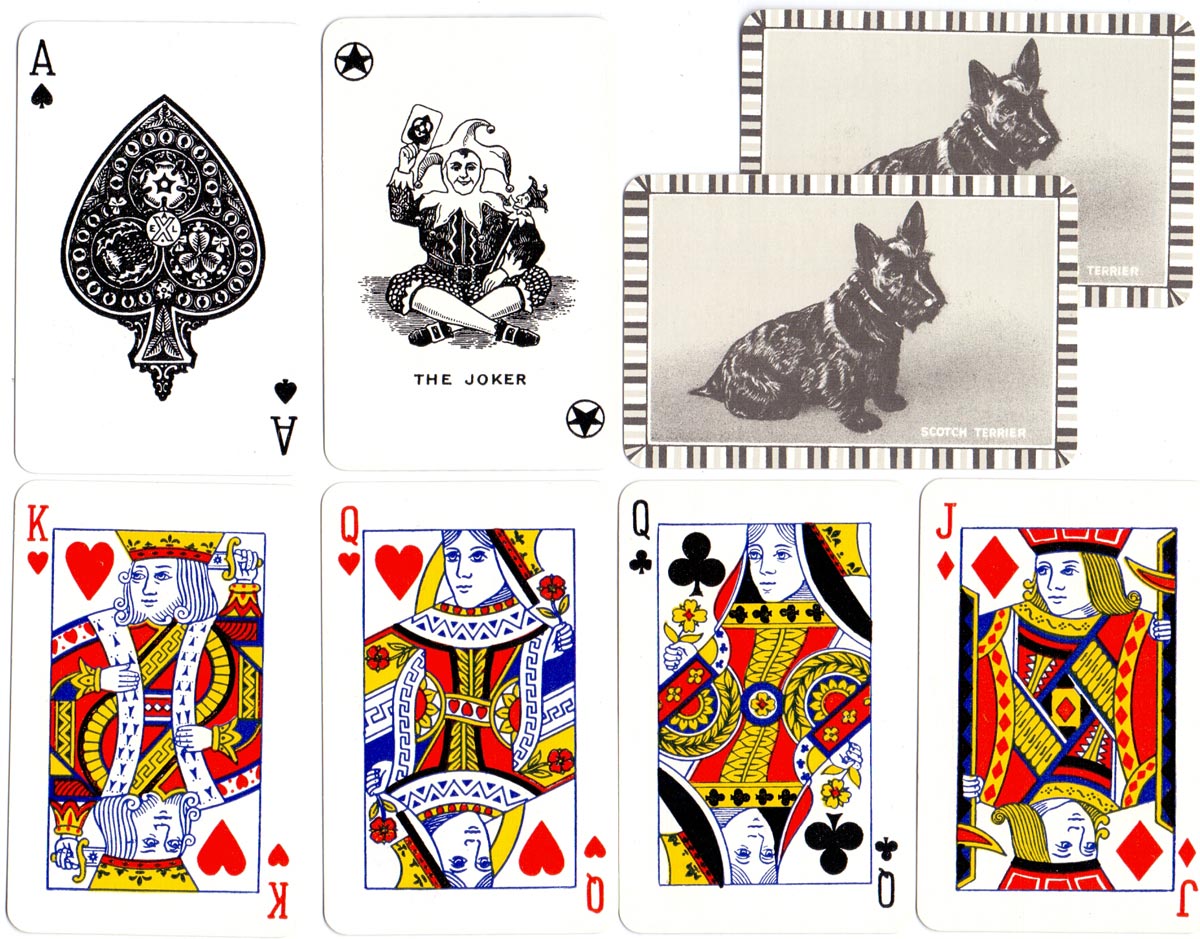
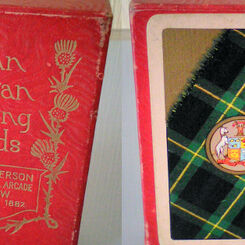
Above: ‘Clan Tartan’ series playing cards come in a maroon box, c.1930s. Curiously, the small A.E.L. lettering in the centre of the Ace of Spades is up-side-down in the top example. Clan Tartan packs by Waddingtons are also known with an unrelated retailer's address in Glasgow►
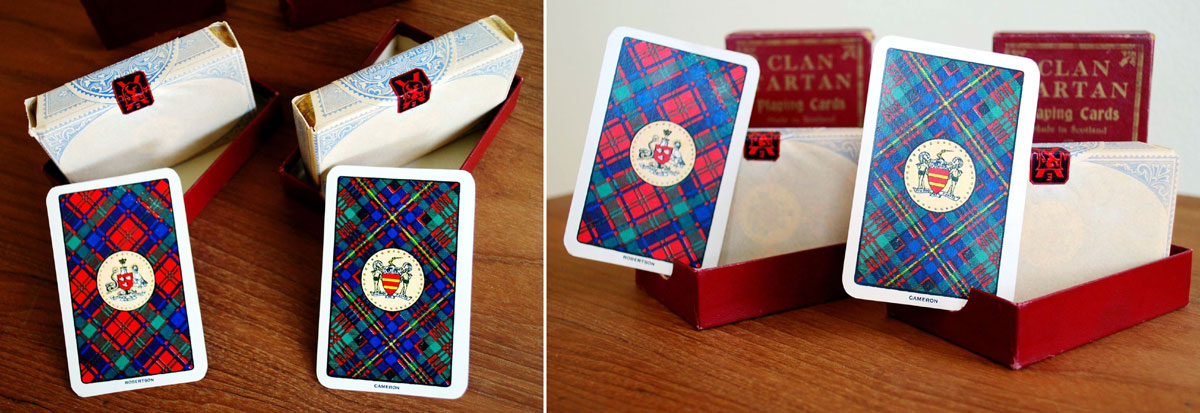
Above: Clan Robertson and Clan Cameron by Andersons of Edinburgh. Images courtesy Judy Patriarca and Sara Goodman
‘Masquerade’ Series
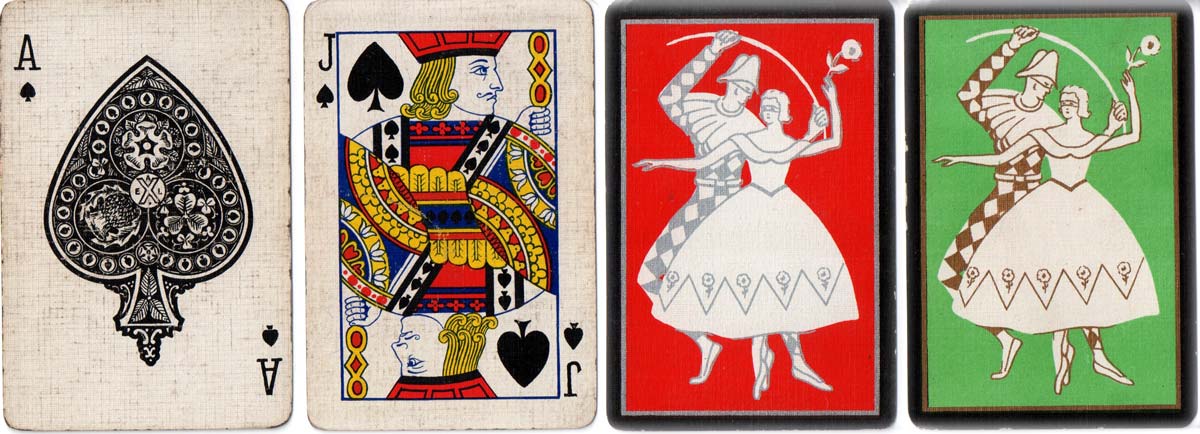
Above: ‘Masquerade’ series playing cards come in a fancy and complicated Art Deco style box (see below), c.1935. The label is inside the padded lid.
‘Thistle’ Playing Cards
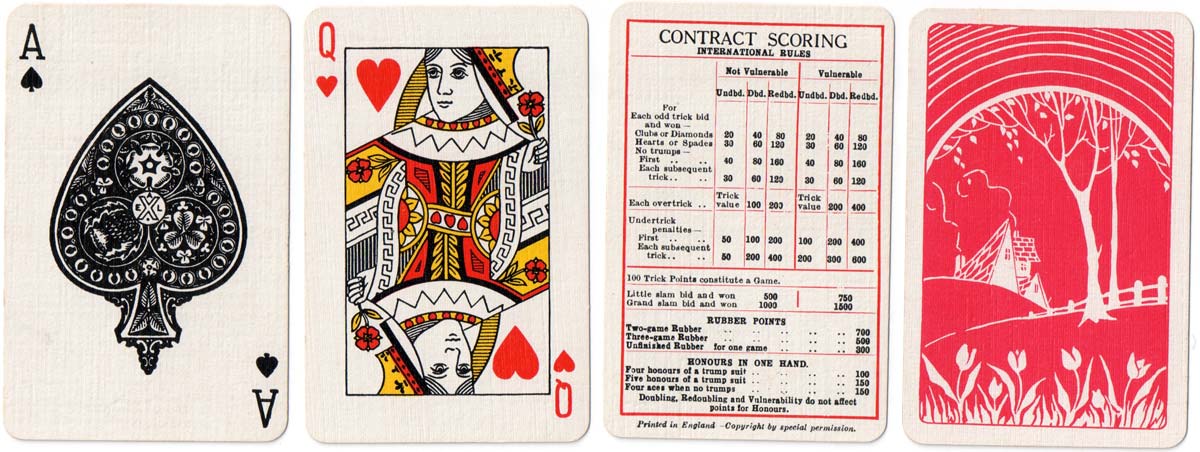
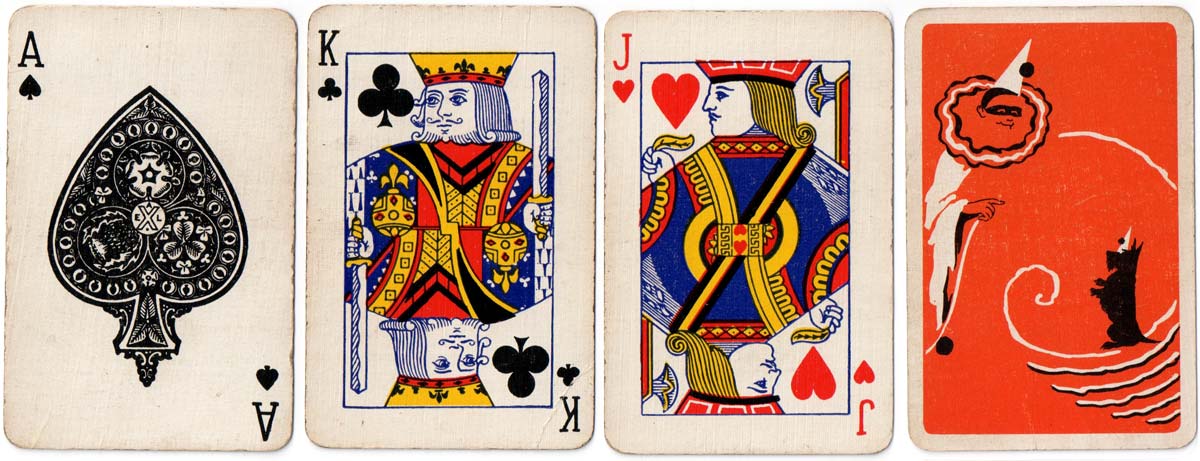
Above: 3 and 4-colour Bridge playing cards, c.1938. Note that the courts of the wide-size ones are in four colours, and there are two slightly different wide sizes. Images courtesy Ken Lodge.
Goodall’s ‘Colonials’
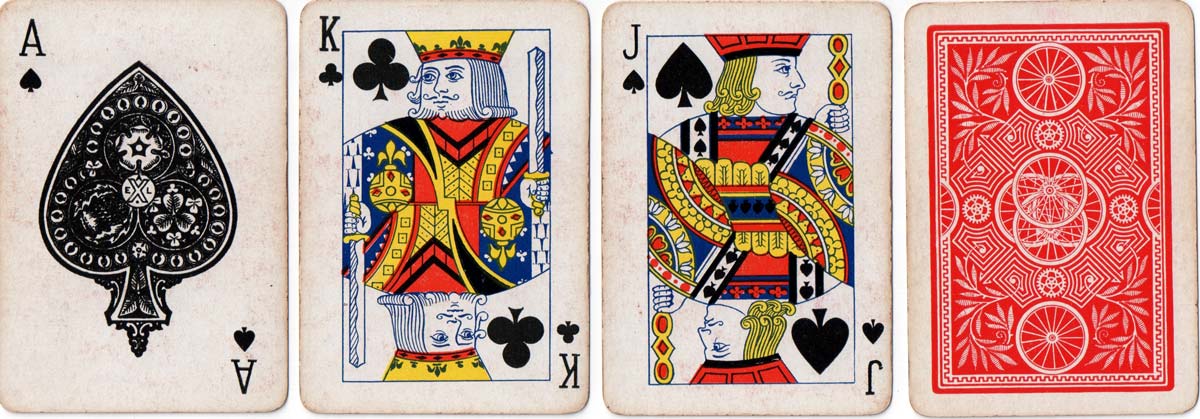
Above: the ‘Colonials’ pack is slightly bigger than the Masquerade pack and is in a Goodall box. The ‘Colonials’ box, although it says Goodall's on it, is made of very inferior card of a poor buff-grey colour, not like any we've seen by Goodall proper. The bicycle back was certainly used by Goodall/De La Rue on their ‘Colonial’ packs.
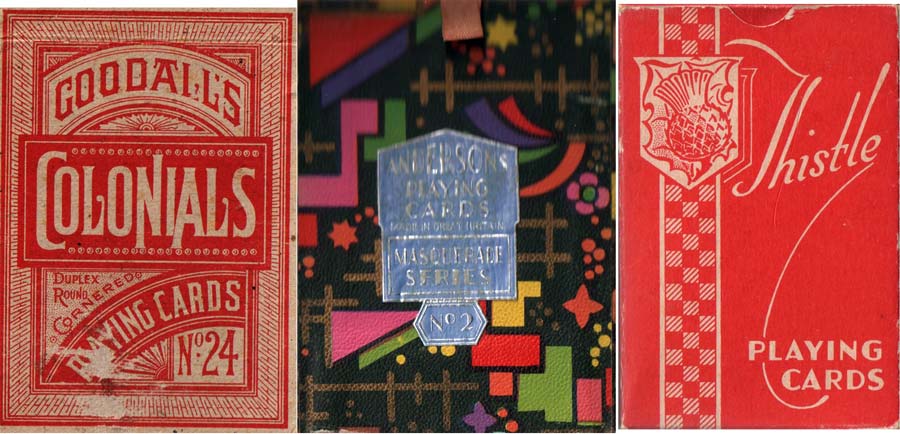
Right: boxes from ‘Colonials’, ‘Masquerade’ and ‘Thistle’ packs.
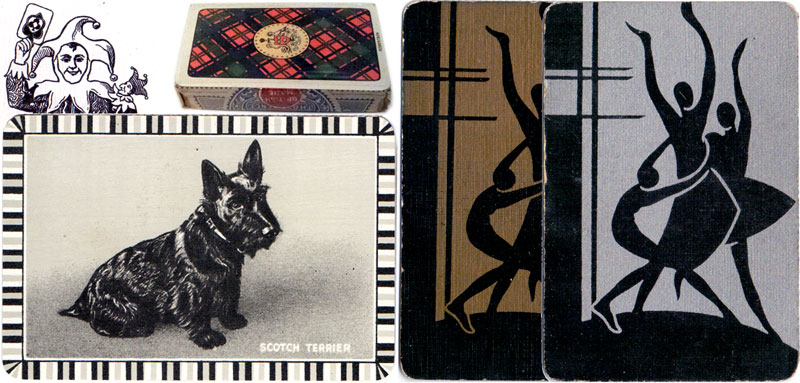
• See also: ‘Scotch Terrier’ pack►
Plastic & Miniature Playing Cards
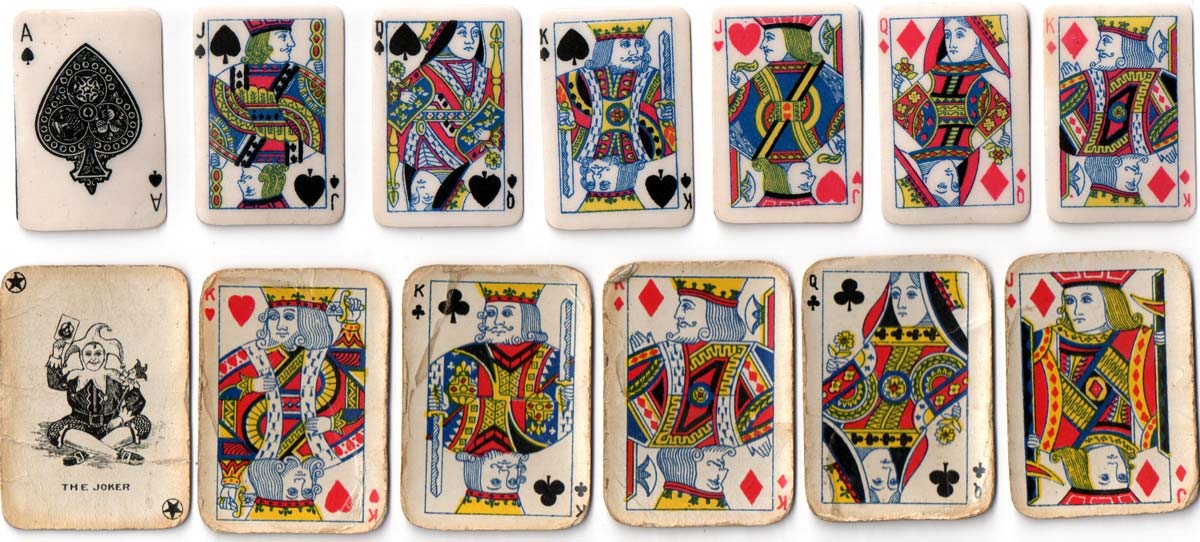
Above: plastic and miniature cards. The miniature packs are all-plastic (celluloid, probably) and come in little fold-over wallets, 1930s. The lower one looks earlier and is from different plates. Images courtesy Ken Lodge.
REFERENCES & CREDITS

Lodge, Ken: The Standard English Pattern (second revised and enlarged edition), Bungay, Suffolk, 2010
Images of ‘Colonials’, ‘Masquerade’ and ‘Thistle’ packs kindly supplied by Ken Lodge.

By Simon Wintle
Spain • Member since February 01, 1996
I am the founder of The World of Playing Cards (est. 1996), a website dedicated to the history, artistry and cultural significance of playing cards and tarot. Over the years I have researched various areas of the subject, acquired and traded collections and contributed as a committee member of the IPCS and graphics editor of The Playing-Card journal. Having lived in Chile, England, Wales, and now Spain, these experiences have shaped my work and passion for playing cards. Amongst my achievements is producing a limited-edition replica of a 17th-century English pack using woodblocks and stencils—a labour of love. Today, the World of Playing Cards is a global collaborative project, with my son Adam serving as the technical driving force behind its development. His innovative efforts have helped shape the site into the thriving hub it is today. You are warmly invited to become a contributor and share your enthusiasm.

Activity for Andersons of Edinburgh
Sign in to comment or save this article.

Related Articles
The Glasgow Pack
Issued to celebrate Glasgow’s reign as European City of Culture in 1990, with city views and works o...
The Malt Whiskies of Scotland
Three packs featuring photographs by Duncan McEwan of malt whisky distilleries in Scotland.
The Broons and Oor Wullie playing cards
Characters from The Broons and Oor Wullie comic strips on their 75th anniversary.
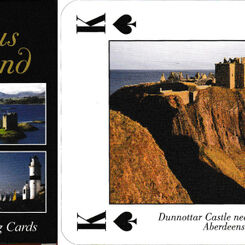
Glorious Scotland
54 photographic views of Scotland by Duncan I. McEwan.
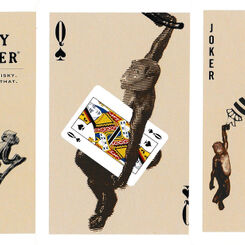
Monkey Shoulder playing cards
Monkey Shoulder whisky advertising playing cards, United Kingdom.
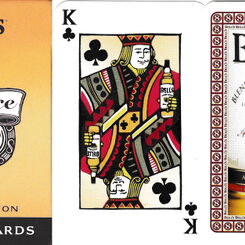
Bell’s Patience playing cards
Bell’s Patience playing cards, United Kingdom, 2006
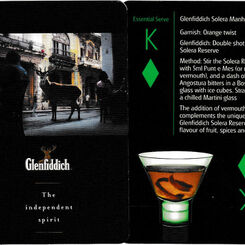
Glenfiddich the independent spirit
Glenfiddich whisky advertising playing cards from Scotland, United Kingdom.
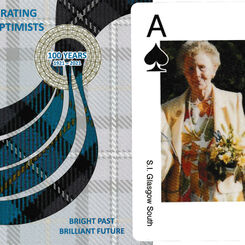
Soroptimist International Scotland South Region
Celebrating 100 years of Soroptimist International, 1921-2021.
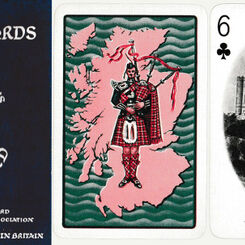
Souvenir Views of Scotland Playing Cards
52 selected views of Scotland by De La Rue (Waddingtons) for GlenAlan Ltd, Glasgow, Scotland, c.1960...
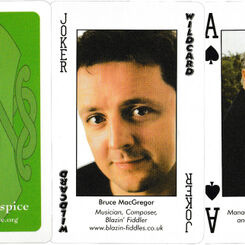
Highland Hospice
54 different personalities from the city of Inverness published by the Highland Hospice.
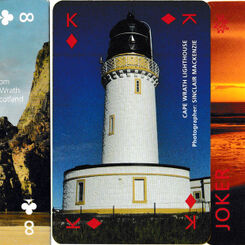
Cape Wrath
Images from the Ministry of Defence Cape Wrath Training Centre, Sutherland, Scotland. Published 2010...
Dundas & Wilson Deal Winners
“Deal Winners” promotional pack for Dundas & Wilson law firm.
Happy Guides
Happy Guides by James Brown & Son (Glasgow) Ltd. around 1910/1915.
Hendrick’s Gin
Nice advertising deck for Hendrick’s Gin, c.2015.
Caledonian Airways “European Phrases”
“European Phrase” playing cards produced for Caledonian Airways, 1994.
Souvenir of Scotland
52 Selected Views of Scotland produced for United Cigar & Tobacco Co. Ltd, Glasgow, Scotland by Raph...
Clans & Tartans of Scotland
“Clans & Tartans of Scotland” deck of cards designed and illustrated by Romilly Squire, 1997.
Perthshire Playing Cards
Perthshire Playing Cards with photography by Duncan McEwan, 2014.
Porterprint Ltd
Porterprint was a printing business based in Leeds (UK) which manufactured playing cards during the ...
Waddington’s Clan Tartan Series
Waddington’s Clan Tartan Series, 1933.
Most Popular
Our top articles from the past 60 days