


Cruiser Playing Cards
Dougherty's ‘Cruiser No.96’, first published c.1897, was dedicated to the U.S. Navy..
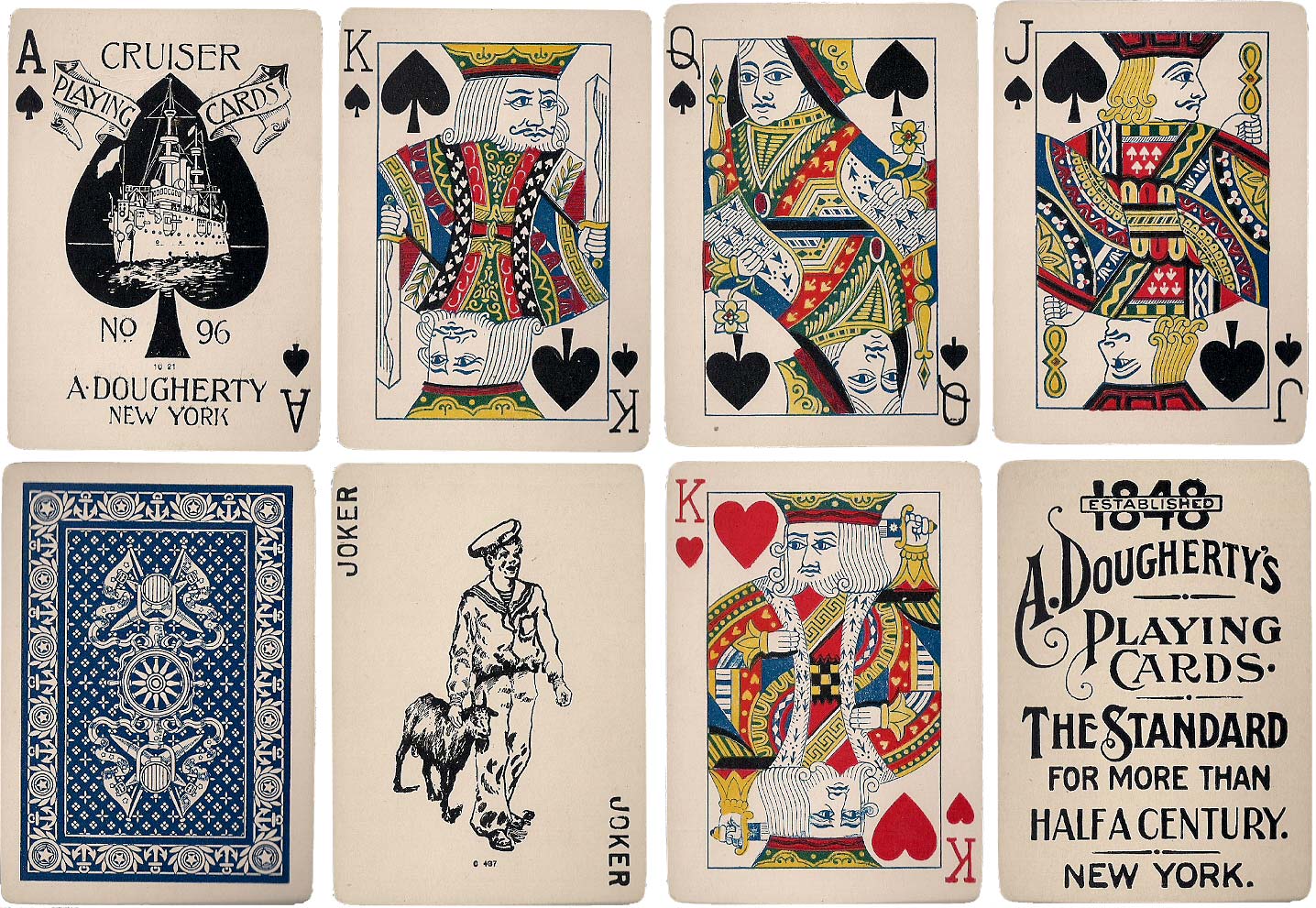
A. Dougherty: ‘Cruiser No.96’ Playing Cards
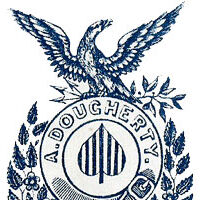
Dougherty's ‘Cruiser No.96’, first published c.1897, was dedicated to the U.S. Navy. The Ace of Spades has a warship and the Joker is a sailor walking with a goat (the mascot of the Naval Academy at Annapolis). The back design includes torpedoes. From the 1890s on Dougherty used either ‘Andrew Dougherty’ or ‘A. Dougherty’ on his Aces of Spades. As a general rule, the longer version was used on the earlier version of each brand. The later version of ‘Cruiser No.96’ came with the simpler name on the Ace of Spades (as shown here).
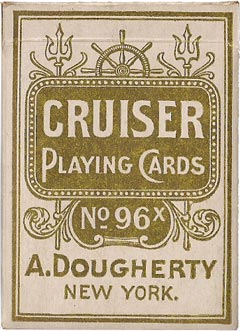
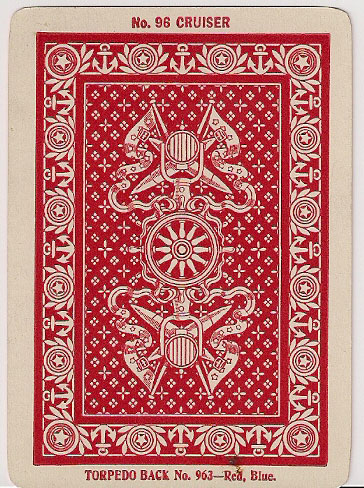
Above: Dougherty's Cruiser No.96x playing cards, c.1905, the 'x' indicating the gold edged edition. The box includes maritime artwork and the 'Torpedo' back was either red or blue. Images courtesy Rod Starling.
← Left: click image to zoom.
REFERENCES
Dawson, Tom & Judy: The Hochman Encyclopedia of American Playing Cards, U.S. Games Systems Inc., 2000

By Rod Starling (1936-2023)
United States • Member since January 09, 2013
Rod Starling was one of the founding members of the 52 Plus Joker card collectors club. He authored many articles for the club's quarterly newsletter, Clear the Decks. His collection encompasses both foreign and American decks. Rod also authored a book titled The Art and Pleasures of Playing Cards.

Activity for Cruiser Playing Cards
Sign in to comment or save this article.

Related Articles
Paper Empires by Jason McKinstry
A review of Jason McKinstry’s Paper Empires, Volume I, an illustrated study of early American...
Sailor Jerry Playing Cards
“Sailor Jerry” tattoo flash playing cards, USA.
A. Dougherty’s Triplicate Recreation
A recreated of the original 1876, No. 18, Triplicate deck by A. Dougherty by Michael Scott in 2014. ...
Anma US Armed Forces
Anma US Armed Forces, 1942.
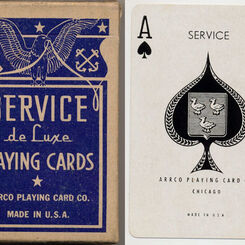
ARRCO
ARRCO Playing Card Co., Chicago, c.1935 - 1987, when acquired by USPCC.
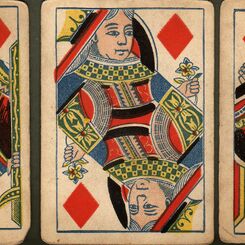
42: Andrew Dougherty
Andrew Dougherty was one of the biggest American card-makers in the 19th century
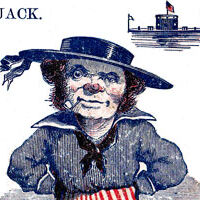
Army & Navy
Andrew Dougherty’s Army & Navy deck from the Civil War era, c.1865.
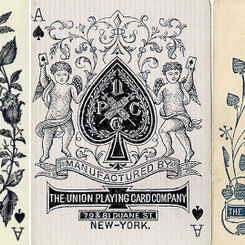
Union Playing Card Co.
Not much is known about this early manufacturer who is reckoned to have traded between c.1860s-1890s...
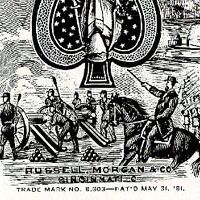
Army No.303
The Joker is particularly persuasive, whilst the Ace of Spades has a battle scene involving artiller...
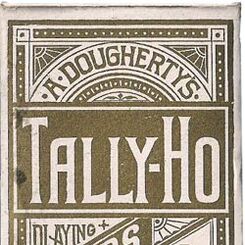
Tally-Ho
The earliest Ace of Spades had the Centre Street address and the Jolly Joker was used until the “Tal...
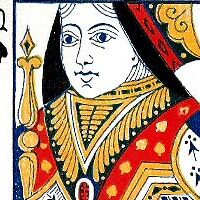
Indicator No.50
No.50 appears at the bottom of the Ace of Spades and the cards have corner indices and miniature sui...
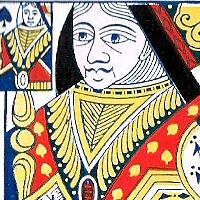
Triplicate No.18
Dougherty first secured a patent for “Triplicates” in 1876, a novel type of indices with a miniature...
Andrew Dougherty c.1850
The idiosyncratic courts used in this deck were used by several other U.S. manufacturers, including ...
Ivorette
Dougherty was at the forefront of innovation, adding Best Bowers and then Jokers, rounded corners an...
13: Some North American Cards
I deal with some of the US makers in more detail on other pages, but here is a brief introduction.
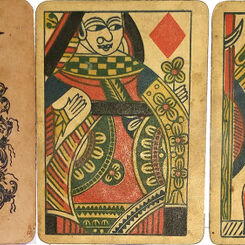
Excelsior
Excelsior by A. Dougherty, c.1870.
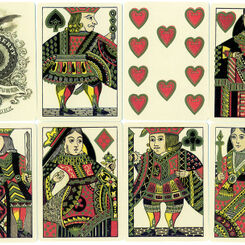
Illuminated Playing Cards, c.1865
Facsimile edition of Andrew Dougherty's Illuminated deck, c.1865, published by U.S. Games Systems, I...
Andrew Dougherty 1848-1930
Andrew Dougherty was born in Donegal in Northern Ireland in 1827. He started his playing card busine...
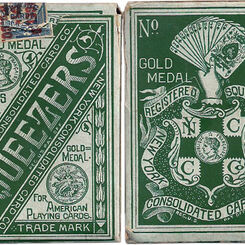
Squeezers No.35
By 1877 the New York Consolidated Card Co's "Squeezers" were a great success on account of the indic...
Most Popular
Our top articles from the past 60 days


