


Triplicate No.18
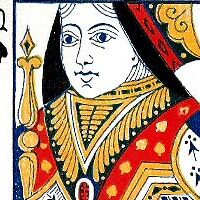
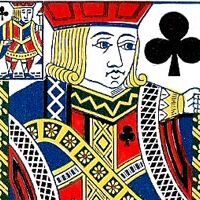
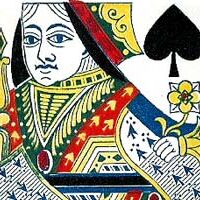
Dougherty first secured a patent for “Triplicates” in 1876, a novel type of indices with a miniature card in the top left-hand corner (and bottom right).
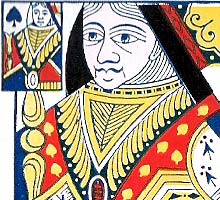
A. Dougherty’s “Triplicate No.18”
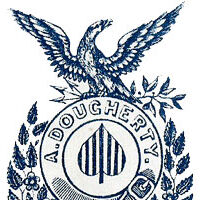
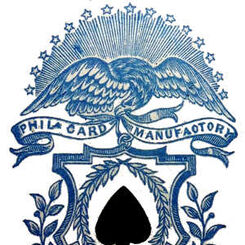
Andrew Dougherty first secured a patent for “Triplicates” in 1876, a novel type of indices with a miniature card in the top left-hand corner (and bottom right). These kept Dougherty at the forefront of innovation. There are several variations in the size and design of the “Triplicate” indices, with the smallest being the earliest. Dougherty's “Triplicate” playing cards have a specially designed Ace of Spades which was intricately engraved, with a spread of cards inside the central Spade symbol demonstrating the innovation.
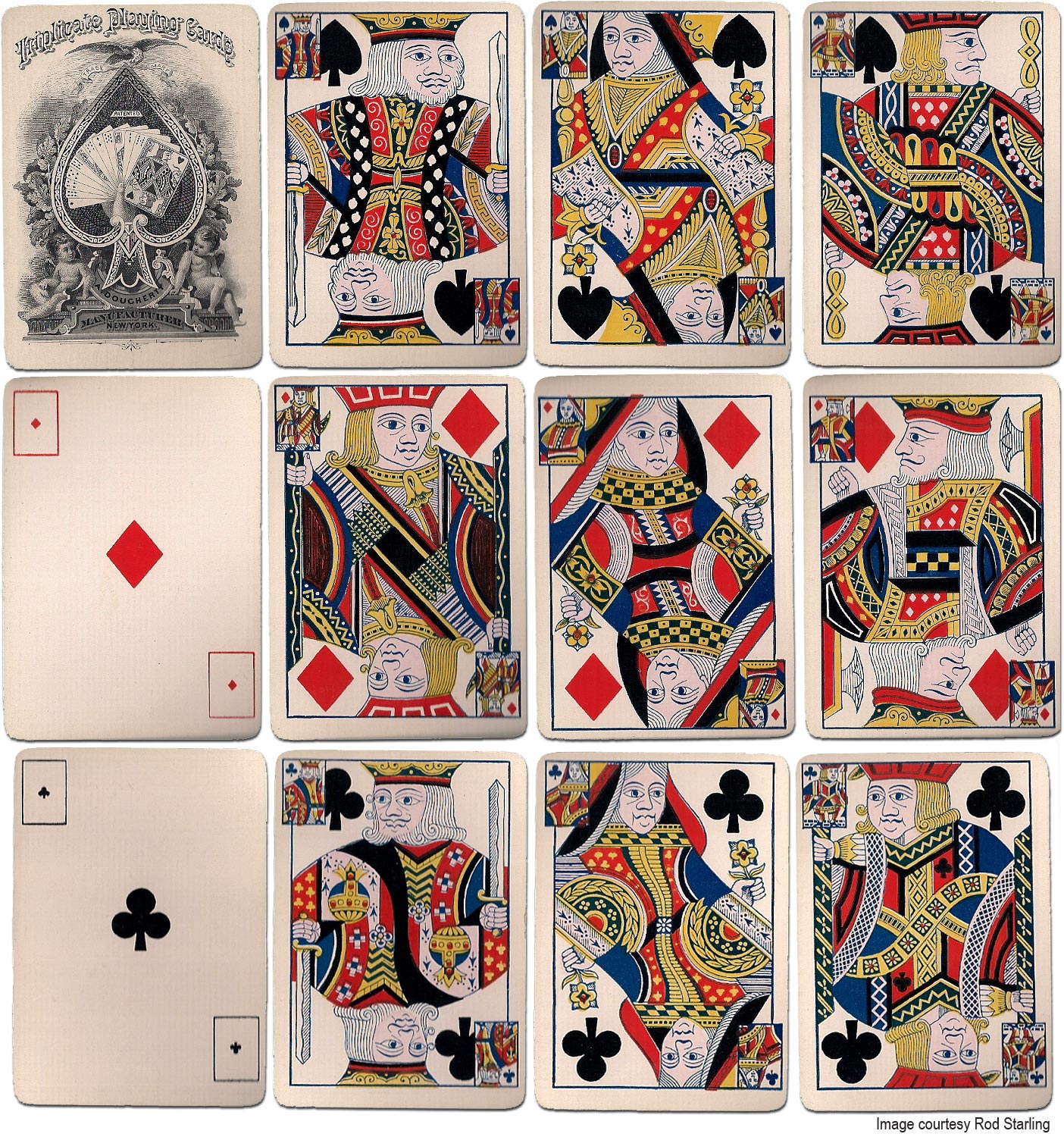
Above: Triplicate No.18' playing cards by Andrew Dougherty, c.1878. This is the second version of the brand with a 'Little Joker' card instead of a 'Best Bower' and a more elaborate Ace of Spades with the addition of two cherubs and an eagle at the top.
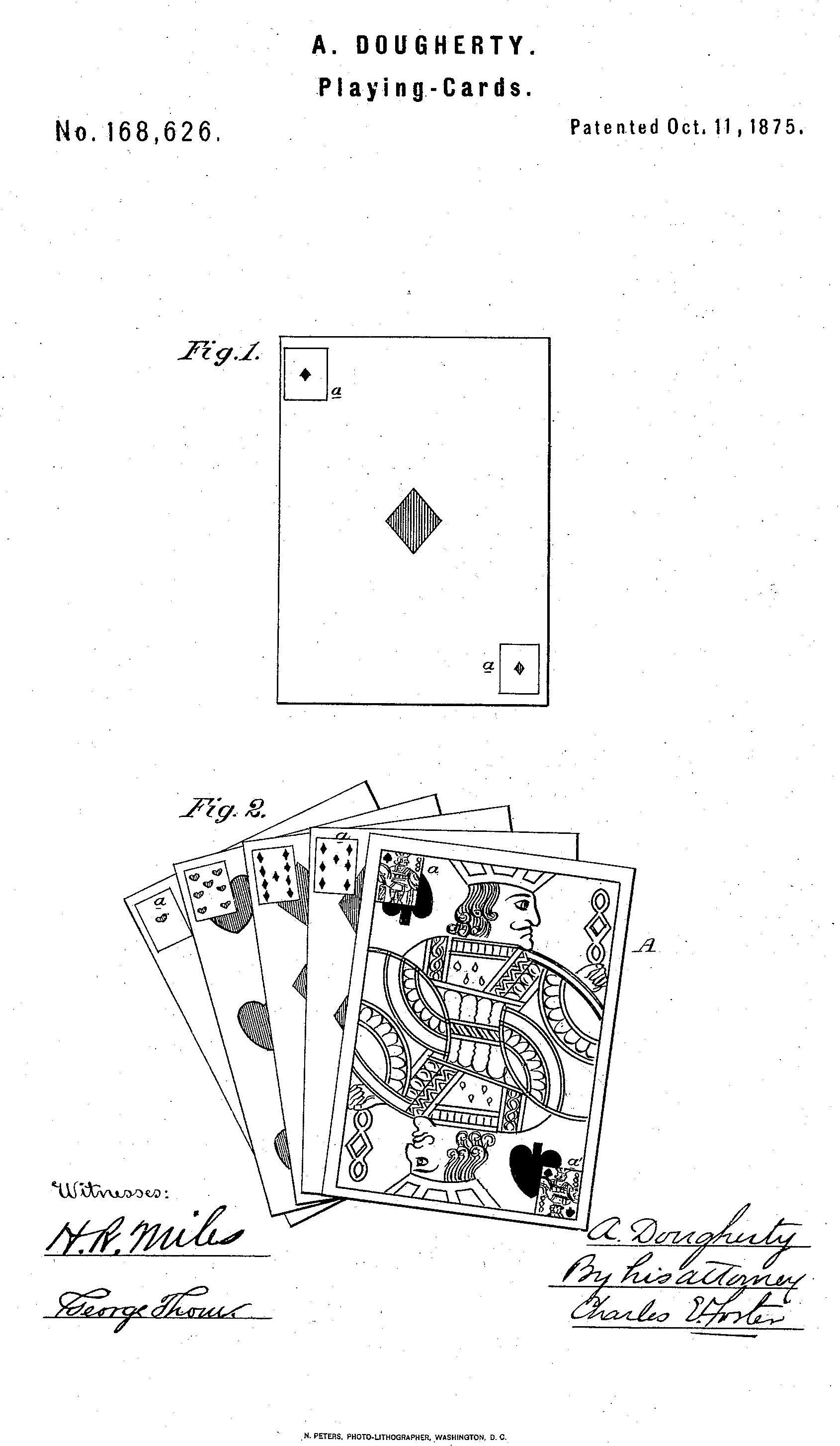
Above: Doughtery’s patent for his “Triplicates”. Specification forming part of Letters Patent No. 16S,626, dated October 11, 1875; application filed October 6, 1875. See original document here►
REFERENCES
Dawson, Tom & Judy: The Hochman Encyclopedia of American Playing Cards, U.S. Games Systems Inc., 2000
Hargrave, Catherine Perry: A History of Playing Cards and a Bibliography of Cards and Gaming, Dover Publications, New York, 1966
Images from the collection of Rod Starling, author of "The Art and Pleasures of Playing Cards". Thanks to Matt Probert for extra research.

By Rod Starling (1936-2023)
United States • Member since January 09, 2013
Rod Starling was one of the founding members of the 52 Plus Joker card collectors club. He authored many articles for the club's quarterly newsletter, Clear the Decks. His collection encompasses both foreign and American decks. Rod also authored a book titled The Art and Pleasures of Playing Cards.

Activity for Triplicate No.18
Sign in to comment or save this article.

Related Articles
Le Jeu Des Fortifications
An innovation from the time of Louis XIV by Gilles de la Boissière.
Why our playing-cards look the way they do
Analysis of early playing card designs: origins, suit differences, standardization, technological ad...
Foster’s Self-Playing Whist Cards
In 1890 R. F. Foster published the first edition of “Foster’s Whist Manual” which was to become the ...
A. Dougherty’s Triplicate Recreation
A recreated of the original 1876, No. 18, Triplicate deck by A. Dougherty by Michael Scott in 2014. ...
Corner Indices
Corner Indices were a major innovation in playing card production.
Parker Brothers
Parker Brothers, Salem, Mass., USA.
42: Andrew Dougherty
Andrew Dougherty was one of the biggest American card-makers in the 19th century
Suicide King
The King of Hearts, holding a sword behind his head, is sometimes nicknamed the “Suicide King”. He c...
Tally-Ho
The earliest Ace of Spades had the Centre Street address and the Jolly Joker was used until the “Tal...
Indicator No.50
No.50 appears at the bottom of the Ace of Spades and the cards have corner indices and miniature sui...
Andrew Dougherty c.1850
The idiosyncratic courts used in this deck were used by several other U.S. manufacturers, including ...
Ivorette
Dougherty was at the forefront of innovation, adding Best Bowers and then Jokers, rounded corners an...
Cruiser Playing Cards
Dougherty's ‘Cruiser No.96’, first published c.1897, was dedicated to the U.S. Navy..
13: Some North American Cards
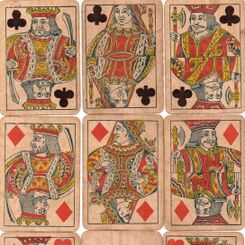
I deal with some of the US makers in more detail on other pages, but here is a brief introduction.
Excelsior
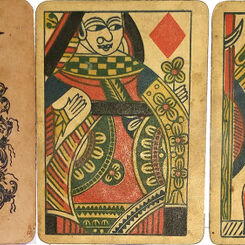
Excelsior by A. Dougherty, c.1870.
Illuminated Playing Cards, c.1865
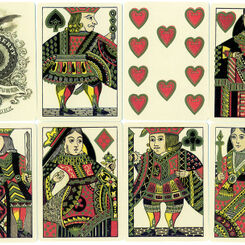
Facsimile edition of Andrew Dougherty's Illuminated deck, c.1865, published by U.S. Games Systems, I...
Lewis I. Cohen
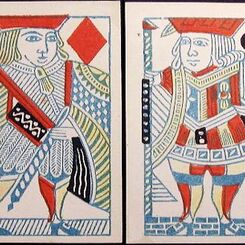
Lewis I. Cohen made his first deck of cards in 1832. In 1835 Mr Cohen invented a new machine to prin...
Samuel Hart, 1846-1871
Samuel Hart was a prolific manufacturer of playing cards who commenced business sometime around 1845...
Andrew Dougherty 1848-1930
Andrew Dougherty was born in Donegal in Northern Ireland in 1827. He started his playing card busine...
The History of Playing Cards
Playing cards appear in European records in the late 14th century, but their earlier history lies fu...
Most Popular
Our top articles from the past 60 days


