


Triton No.42
There have been at least three different versions of the Triton deck, with different Jokers, different styles of court cards and slight differences in the lettering on the Ace of Spades and/or Joker. The cards were advertised as “double enameled”.
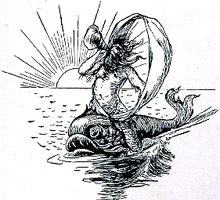
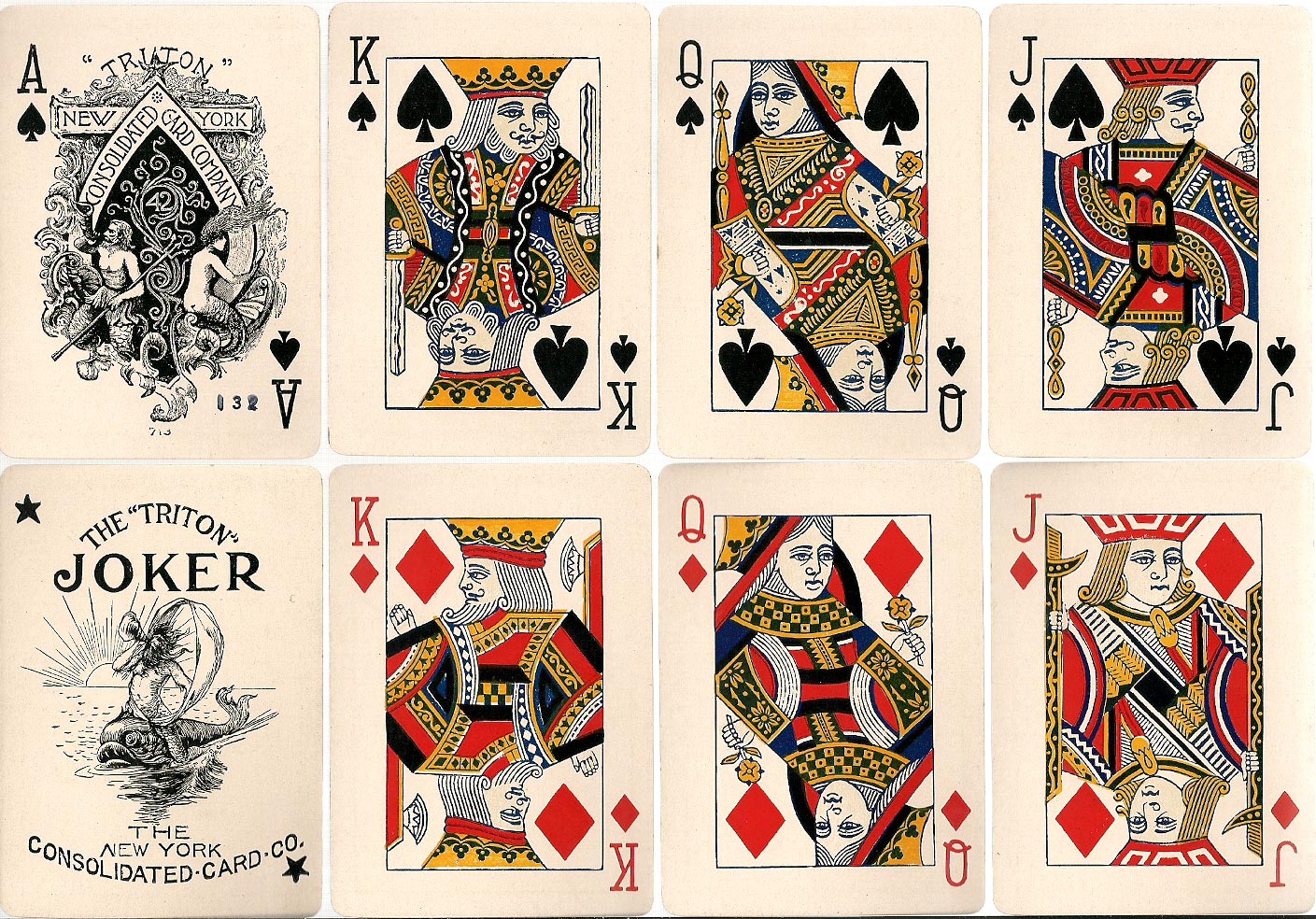
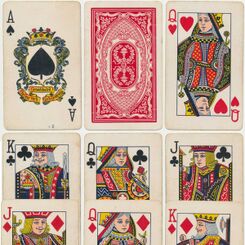
The “Triton No.42” brand was first introduced by the N.Y. Consolidated Card Co. in around 1890 as one of their more expensive brands and part of their ‘Squeezer’ range, with “perfect slip”. The cards were advertised as “double enamelled”. There have been at least three different versions of the Triton deck, with different Jokers, different styles of court cards and slight differences in the lettering on the Ace of Spades and/or Joker. Triton is a mythological Greek god, the messenger of the sea. He is usually represented as a merman, having the upper body of a human and the tail of a fish, as seen here on the Ace of Spades and Joker. Triton cards were aimed to be preferred by the leading clubs and Army and Navy.
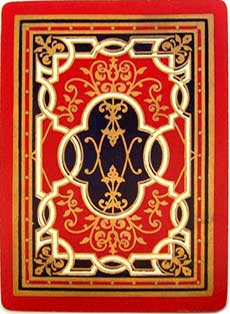
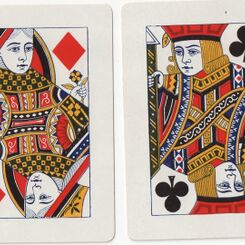
Right: another back design →
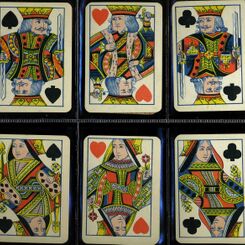
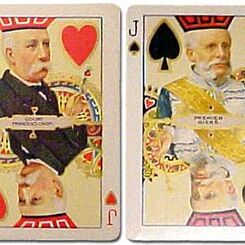
Above: N.Y. Consolidated Card Co's “Triton No.42” brand playing cards with the “Triton” Joker, c.1895. The court card designs are inspired by those of De la Rue. Images courtesy Rod Starling.
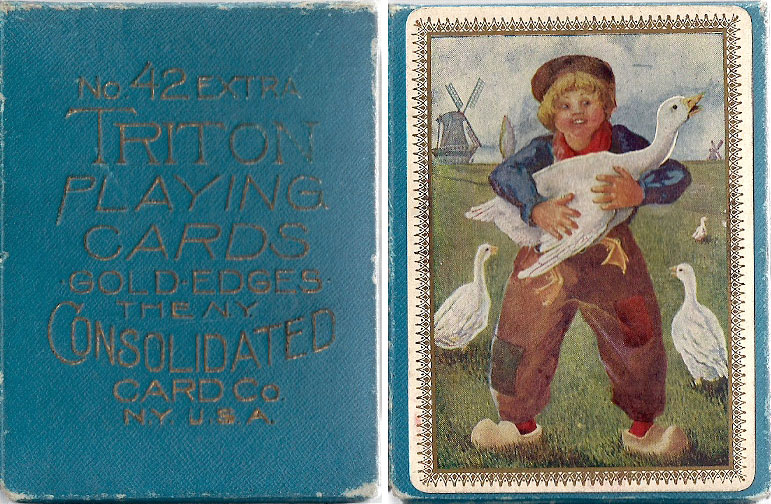
Right: Click the box to zoom →
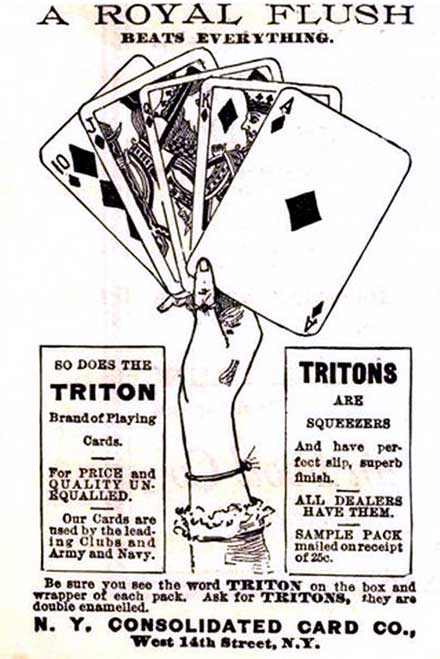
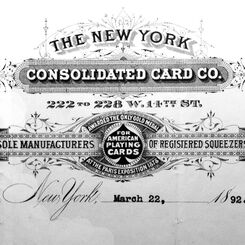
Above: Triton advert, c.1892.
REFERENCES
Dawson, Tom & Judy: The Hochman Encyclopedia of American Playing Cards, U.S. Games Systems Inc., 2000

By Rod Starling (1936-2023)
United States • Member since January 09, 2013
Rod Starling was one of the founding members of the 52 Plus Joker card collectors club. He authored many articles for the club's quarterly newsletter, Clear the Decks. His collection encompasses both foreign and American decks. Rod also authored a book titled The Art and Pleasures of Playing Cards.

Activity for Triton No.42
Sign in to comment or save this article.

Related Articles
Paper Empires by Jason McKinstry
A review of Jason McKinstry’s Paper Empires, Volume I, an illustrated study of early American...
Mediaeval Playing Cards
Finely executed late 19th century pack from the USA featuring courts in medieval costume.
The Bird by Kings Wild Project
Originally titled Oriole Playing Cards, based on a deck produced by The New York Consolidated Card C...
A Case Study
Case Study: using detective work to identify and date a pack discovered in charity shop.
43: The United States Playing Card Co.
The United States Playing Card Co. (USPCC) represents an amalgamation of all the major American card...
34: Design Copies
Some copies of the designs of Goodall and the New York Consolidated Card Co.
De Luxe No.142
A wide size version of De Luxe No.142 had been published in c.1920, with a similar Ace of Spades and...
Lighthouse No.922
“Lighthouse No.922” playing cards were introduced in c.1920.
Karl Gerich No.31: Triton
“Triton”, KG31, was published by Karl Gerich in 1989 trading as Victoria Playing Card Co with double...
Lawrence & Cohen
Lawrence & Cohen were successors to Lawrence, Cohen & Co.
Royal Playing Cards, 1890s
Royal Playing Cards, 1890s
Lewis I. Cohen
Lewis I. Cohen made his first deck of cards in 1832. In 1835 Mr Cohen invented a new machine to prin...
New York Consolidated Card Company
The New York Consolidated Card Company was formed in 1871 by the merging of Lawrence & Cohen, Samuel...
Samuel Hart, 1846-1871
Samuel Hart was a prolific manufacturer of playing cards who commenced business sometime around 1845...
Squeezers No.35
By 1877 the New York Consolidated Card Co's "Squeezers" were a great success on account of the indic...
Bertrand Domec, 1904-1970 page 2
Bertrand Domec page 2 (c.1905-1926).
Most Popular
Our top articles from the past 60 days


