


Hunting Depicted on Playing Cards
In the Middle Ages hunting was an integral part of life.

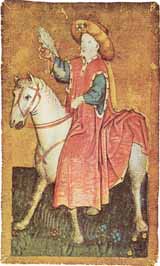

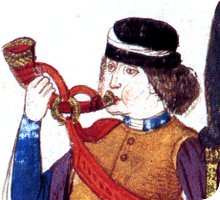
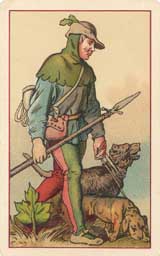

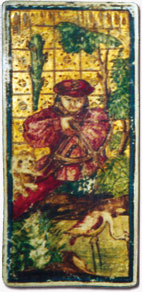
 unting animals was central to man's existence since prehistoric times, supplying materials for tools, clothes, food, fuel and medicine. Developing endurance and bravery, training for battle… Plato reckoned that hunting developed moral strength and virility.
Hunting can put life at risk: mortal injury may befall the hunter or his quarry. Face-to-face with a hungry predator your adrenaline and cortisone levels will rise sharply… there is an analogy here with gambling where fortunes may be lost or won…
In the Middle Ages hunting was an integral part of life. Animal hides also provided vellum and parchment for manuscripts and, in some instances, playing cards were made from vellum or rawhide. Most packs, however, were made on pasteboard. Several hand-made packs of playing cards from the fifteenth century based on the theme of hunting have survived.
The medieval Christian saw the struggle against sin as a test of moral strength and faith: the Church disapproved of gambling. But hunting was honourable, and animals were moralised as virtues with parallels in human nature, from demonic to divine: donkey, bull, swan, ox, unicorn, deer, dragon, elephant, fox, boar, rabbit, eagle, lion, bear, mermaid, falcon, griffin, hound, etc.
See also:
The Flemish Hunting Cards
Ambraser Hofjagdspiel
Stuttgart painted cards, c.1430
Spanish Bullfighting
Mexican Bullfighting
Waddington's Sporting Series

Above: XV century manuscript border.

Above: Whist Score Cards with a hunting theme, 1930s.

By Simon Wintle
Spain • Member since February 01, 1996
I am the founder of The World of Playing Cards (est. 1996), a website dedicated to the history, artistry and cultural significance of playing cards and tarot. Over the years I have researched various areas of the subject, acquired and traded collections and contributed as a committee member of the IPCS and graphics editor of The Playing-Card journal. Having lived in Chile, England, Wales, and now Spain, these experiences have shaped my work and passion for playing cards. Amongst my achievements is producing a limited-edition replica of a 17th-century English pack using woodblocks and stencils—a labour of love. Today, the World of Playing Cards is a global collaborative project, with my son Adam serving as the technical driving force behind its development. His innovative efforts have helped shape the site into the thriving hub it is today. You are warmly invited to become a contributor and share your enthusiasm.

Activity for Hunting Depicted on Playing Cards
Sign in to comment or save this article.

Related Articles
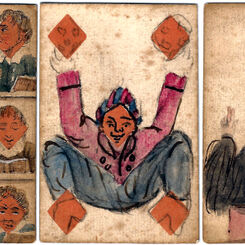
Early nineteenth-century Transformation cards
Vernacular hand-painted Transformation cards, probably early 19th century.
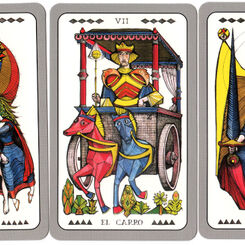
Tarot de las Coscojas
Historical playing card design, tarot symbolism and an almost psychedelic medieval surrealism.
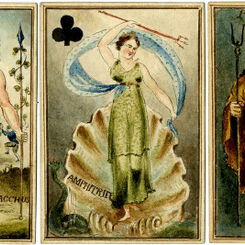
Heathen Divinities
Handmade playing cards from the British Museum depicting classical Greek and Roman gods and goddesse...

Hand-drawn set of 52 playing cards
An imaginatively hand-drawn set of 52 playing cards by an amateur artist, 18th century.
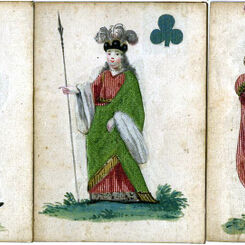
Hand-painted and Silk-inlaid playing cards
Complete pack of 36 hand-painted and silk-inlaid playing cards with French suits made in Germany.
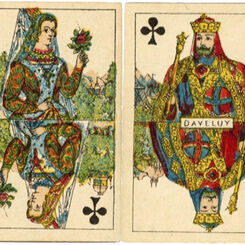
Historical Patience
Patience game with fantasy historical figures by Daveluy, Bruges, c.1875.
Chief Cities Quartettes
Hand-made ‘Chief Cities Quartettes’ card game, c.1910.

La Baraja
Anonymous “La Baraja” Spanish deck, c.2005.
Hidden meanings in painting by Jheronimus Bosch
Medieval View of Gambling in the ‘Garden of Earthly Delights’ by Jheronimus Bosch
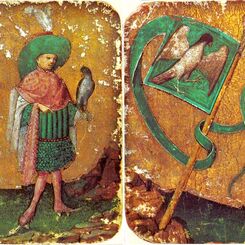
Stuttgart pack, c.1430
The luxury, hand-painted Stuttgart Cards (Stuttgarter Kartenspiel) dated c.1430, with suits of ducks...
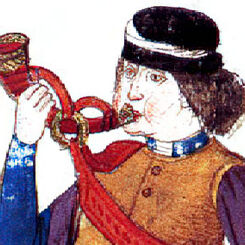
Flemish Hunting Deck
Set of medieval playing cards with King, Queen, Knave and numeral cards from one to ten in each of f...
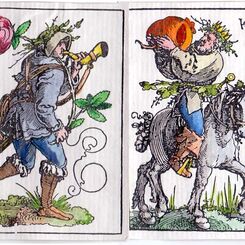
Hans Sebald Beham
Playing cards designed by Hans Sebald Beham (1500–1550).
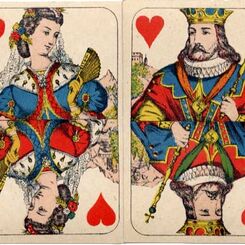
Daveluy
Daveluy produced card games between c.1840 and 1890. Many of his playing cards are in neo-medieval s...
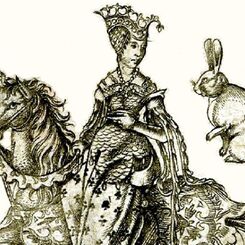
Master PW Circular Cards
Master PW Circular Playing Cards: roses, columbines, carnations, parrots and hares... everyday objec...

Waddington’s Sporting Series
Waddington’s Sporting Series, 1933.
Unsun Karuta
Unsun Karuta うんすんかるた Japan c.1780.
The Princely Hunting pack, c.1440
The Princely Hunting Pack, c.1440/45, is attributed to Konrad Witz and his workshop in Basle.
The History of Playing Cards
Playing cards appear in European records in the late 14th century, but their earlier history lies fu...
Hofamterspiel, c.1460
Hofamterspiel, c.1460
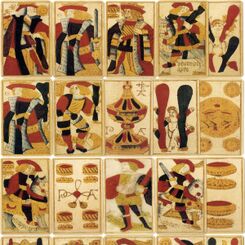
Phelippe Ayet, c.1574
Archaic, late medieval Spanish-suited playing cards printed by Phelippe Ayet, c.1574.
Most Popular
Our top articles from the past 60 days


